
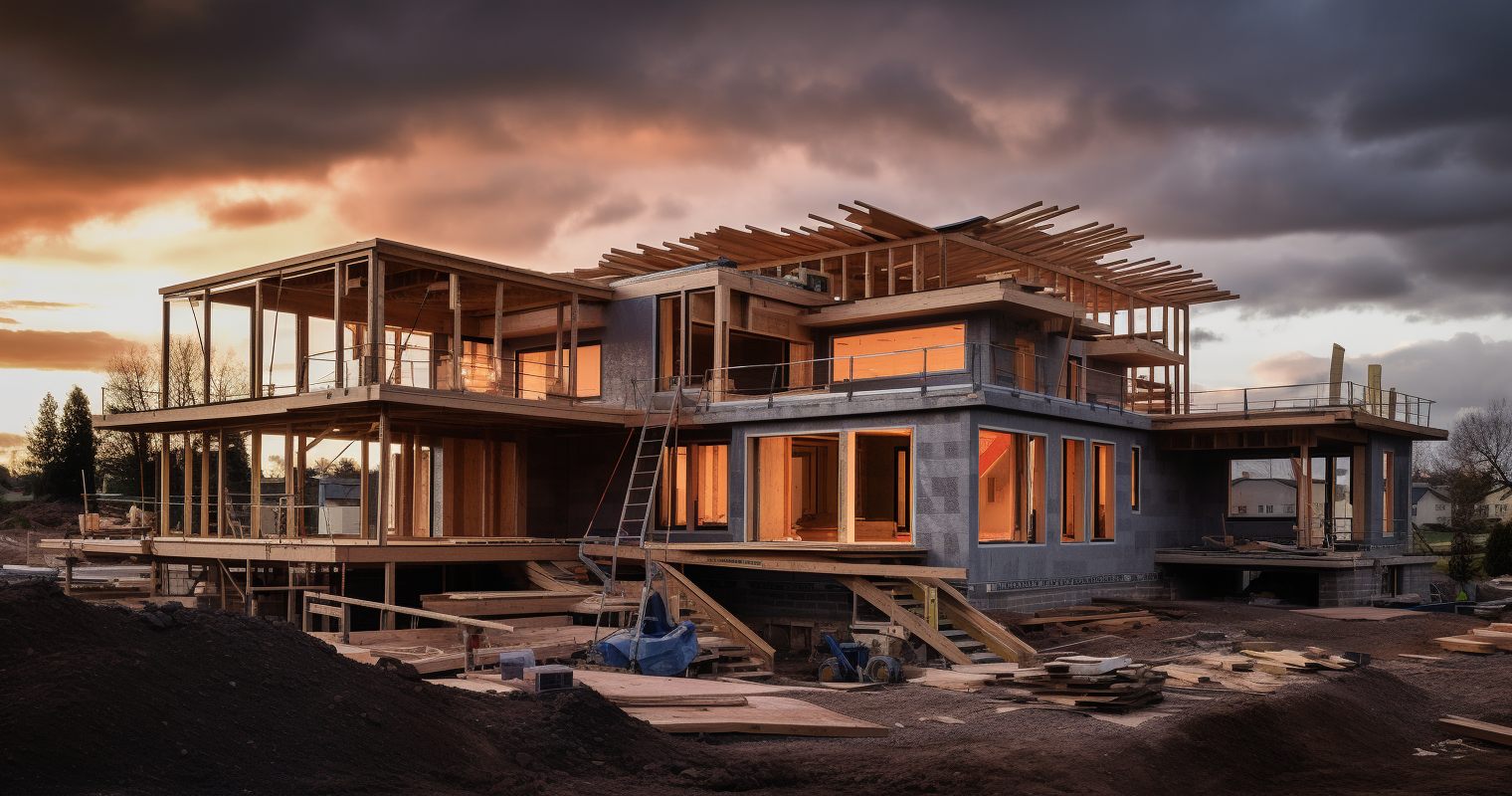
Construction and renovation in Denmark operate within a tightly regulated framework, shaped by the Danish Building Act, the Building Regulations (BR18), and the Planning Act. A building permit is generally required for new construction, extensions, and changes of use, although certain minor outbuildings fall outside this requirement. National standards are strictly applied across the sector, heritage protections carry substantial weight, and while foreign buyers encounter few obstacles when acquiring urban land, distinct rules govern rural zones and summer-house areas.
| Item | Details |
|---|---|
| Primary legislation | Danish Building Act; Building Regulations BR18; Planning Act (consolidated 29 May 2024) |
| Who issues building permits | Your local municipality (kommune) |
| Building permit validity | 1 year (as of 2024) |
| Listed buildings in Denmark | Approx. 9,000 listed; approx. 300,000 “worthy of preservation” (as of 2024) |
| Heritage authority | Slots- og Kulturstyrelsen (Danish Agency for Culture and Palaces) — slks.dk |
| Architect professional body | Akademisk Arkitektforening (Danish Association of Architects) — arkitektforeningen.dk |
Do you need planning permission to build or renovate in Denmark?
As a general principle, erecting a new building, enlarging or converting an existing one, or altering its designated use all require formal permission. This holds true whether the project involves constructing a family home from scratch, adding an extension, or repurposing an agricultural barn as a residence. The required authorisation is known as a byggetilladelse (building permit), and it is administered at the local level.
Smaller structures — sheds, canopies, carports, and similar outbuildings — do not always trigger a formal permit requirement, but they remain subject to a range of rules. Even where a permit is not strictly necessary for a minor structure, it must still conform to the Building Regulations (BR18) and any applicable local plan. It is always advisable to check with your municipality before beginning any work, even on structures that appear straightforward.
In practice, it is the individual municipality that handles building applications, and the municipal council that issues building permits and any exemptions. Denmark has 98 municipalities, each responsible for administering planning within its own boundaries. Municipalities process building applications in line with the Building Regulations, but they also have the power to adopt local plans that impose requirements stricter than, or different from, those set out in the national regulations.
The consolidated Danish Planning Act governs planning across all levels of the country. Plans operate at three tiers: national, municipal, and local. The Act establishes a hierarchy under which local authorities address regional and municipal matters and draw up both municipal plans and more detailed local plans for specific areas. While this broad structure resembles planning frameworks found in countries such as Canada or Australia, Denmark differs in that there is no separate regional consent tier — the municipality is the primary decision-making authority for most residential projects.
In rural zones, the rules are considerably more restrictive. The commercial activities typically permitted in rural zones relate to fishing, forestry, or agriculture. As a general rule, constructing new buildings or changing the use of existing buildings or land is prohibited where such development is not considered necessary for the agricultural or rural commercial use of the property. Anyone considering building a home in a rural area will likely need both a building permit and a separate rural-area planning permission from the municipality.
The process for applying for a building permit in Denmark follows these steps:
- Pre-application dialogue: Approach your municipality’s planning or technical department (teknisk forvaltning) before lodging an application. Many municipalities actively encourage — or indeed require — a preliminary discussion to review the proposed project, identify the relevant local plan, and highlight any issues at an early stage.
- Prepare your documentation: Compile site plans, architectural drawings, a description of the proposed work, and evidence of compliance with BR18 building regulations. For more substantial projects, an environmental impact assessment may also be required.
- Submit your application digitally: All building permit applications must be submitted online. If you are unable to complete the digital submission yourself, assistance is available at your local Citizen Service centre — remember to book an appointment in advance. Applications are submitted via the national portal Byg og Miljø at bygogmiljoe.dk.
- Municipal review: The municipality evaluates compliance with the Building Regulations and the relevant local plan. For larger projects, an environmental assessment may be required. Neighbouring property owners may be notified and offered the opportunity to comment.
- Permit issued or refused: If the application succeeds, a building permit is issued. A building permit is valid for 1 year, and construction must begin within that period. Fee structures vary by municipality and project scale; verify current charges before submitting.
- Completion and occupation permit: Before the building can be occupied, an occupation permit must be obtained from the municipality. This is only granted once the building works have been substantially completed.
Where an application is refused or a decision is disputed, a broad range of neighbours and organisations have the right to challenge planning decisions before the Danish Town and Country Planning Board of Appeal, a state administrative body. Building permits may also be appealed by affected parties — neighbours, for example — to the Building Complaints Unit, another state administrative board.
By comparison with systems in the UK or France, Denmark places greater emphasis on compliance with local plans and the national BR18 standards, rather than on the broad exercise of planning discretion. The process is largely digital, which simplifies submissions but requires comfort with the national portal. Always confirm current fee schedules and processing timescales with your municipality, as both vary and are subject to periodic revision.
What are the rules around listed buildings, conservation areas, and heritage protection in Denmark?
Denmark operates a formal and well-established heritage protection system that broadly parallels listed building regimes elsewhere in Europe, though the categories and terminology are specific to Danish law. There are two principal tiers of protected building, alongside separate provisions covering ancient monuments and sites.
The finest historic buildings are listed with the aim of preserving them as intact as possible. Listing is not confined to grand castles and manor houses — it also encompasses farms, merchants’ townhouses, warehouses, villas, town halls, schools, swimming baths, prisons, railway stations, and factories. Even very small structures, such as telephone booths and pavilions, may be listed. Every listed building is considered among the finest or most representative examples of its type and era.
Denmark has approximately 9,000 listed buildings in total. Beyond this, around 300,000 additional buildings have been assessed as worthy of preservation. The Danish Agency for Culture and Palaces is responsible for listed buildings, while local authorities oversee those categorised as worthy of preservation.
The scope of protection differs between the two categories: buildings designated as “worthy of preservation” are protected only in terms of their exterior appearance, whereas listing covers the building in its entirety — inside and out. This distinction matters significantly in practice. Renovating a listed building requires consent for any alteration, whether internal or external; for a building that is merely worthy of preservation, the protection is focused on maintaining outward character. A building worthy of preservation may not be demolished without special permission from the relevant local authority.
The Danish Agency for Culture and Palaces is the national body responsible for designating buildings of national significance, and it may also remove such designations. The Agency must grant consent before any construction work is undertaken on a listed building, and it provides guidance on maintenance matters. This is the central authority to contact before commissioning any work on a listed property.
Ancient monuments attract equally robust protection. Approximately 30,000 of Denmark’s heritage sites and monuments are subject to permanent protection under the Danish Museum Act. Within 100 metres of any visible site or monument, it is prohibited to build, erect fencing, park caravans, or otherwise disturb the condition of the area. This buffer zone can take buyers of rural land by surprise, particularly where burial mounds or medieval features are present but not immediately apparent on the ground.
The Danish Agency for Culture maintains an online register of buildings across Denmark, including all approximately 9,000 listed buildings. The register is available in Danish at kulturarv.dk. Many local authorities have also recorded pre-1940 buildings using the SAVE (Survey of Architectural Values in the Environment) method, covering roughly 400,000 buildings nationwide, and this information is available online.
The responsible authority is the Danish Agency for Culture and Palaces (Slots- og Kulturstyrelsen), contactable at: slks.dk/english, H.C. Andersens Boulevard 2, DK-1553 Copenhagen V. Before acquiring any property or committing to renovation works, always consult both the national register and your local municipality’s records. Violating listed building protections can lead to enforcement proceedings, mandatory reinstatement, and substantial financial penalties.
What permits and licences are required when building or renovating in Denmark?
While the building permit (byggetilladelse) sits at the heart of most construction projects in Denmark, it is far from the only approval that will be needed. Additional consents and sign-offs are required at various stages, depending on the nature and scale of the work involved.
The Building Act, the Building Regulations, and guidance from the Danish National Building Research Institute (SBi) form the foundation for all construction activity. However, a range of other laws and regulations can also have a direct bearing on a given project. These include certain Danish Standards, the norms of the Danish Engineering Association (which carry equivalent authority to SBi guidance), the Heavy Current Regulations governing electrical installations, and the Planning Act, under which the country is divided into distinct zones.
The principal approvals and permits typically required for a building or renovation project are set out below:
- Building permit (byggetilladelse): Issued by the municipality. Required before commencing most new builds, extensions, conversions, or changes of use. Applied for digitally via Byg og Miljø.
- Rural-area planning permission: In addition to a standard building permit, a separate rural-area planning permission is required for any construction or change of land use within a rural zone. This must also be obtained from your municipality.
- Environmental permits: Where a project involves industrial activity, environmental licences and permits will be necessary. The Environmental Protection Act, with amendments as of October 2024, governs environmental considerations and sustainability obligations in construction, setting out how companies must take account of environmental impacts during production and building.
- Heritage/listed building consent: Required from Slots- og Kulturstyrelsen for any works affecting a listed building. The Agency should be contacted before engaging an architect or contractor for any such property.
- Electrical installation approval: All electrical work must comply with the Heavy Current Regulations and be certified by an authorised electrician. Certification is submitted to the municipality as part of the project completion process.
- Plumbing and drainage approval: Connections to the public sewer network or the installation of private wastewater systems require approval from the municipality’s technical department.
- Occupation permit (ibrugtagningstilladelse): Before a completed building can be occupied, an occupation permit must be issued by the municipality. This is only granted once building works have been substantially finished.
- CO2 emissions compliance (new from 2025): From 1 July 2025, the construction process itself becomes subject to an independent limit value of 1.5 kilograms of CO2 equivalents per square metre. This requirement applies to buildings for which a building permit is applied for after the executive order came into force.
Infrastructure requirements — covering connections to water, electricity, district heating, and broadband — are determined individually by local authorities and may differ considerably depending on the location and scale of the project. Always establish the complete list of required approvals with your municipality and the relevant utility operators at the outset. Fees and processing timescales vary; verify current information at borger.dk or directly with your local municipality.
How do you find a reliable, trustworthy builder in Denmark?
Denmark’s construction sector is among the most professionally structured in Europe. Standard-form contracts — designated AB 18 (for traditional contracting arrangements) and ABT 18 (for design-and-build projects) — establish the legal framework that governs most construction agreements. The general conditions embedded in these standard forms rest on core principles of contract law. Consequently, even where AB 18 or ABT 18 are not expressly incorporated into a construction contract, certain provisions derived from them continue to apply as a matter of course.
Under the general conditions in AB 18 and ABT 18, any claim by the employer against the contractor relating to defects in the work must be brought within five years of practical completion. After this period, no such claim may be pursued. This five-year defects liability window is a significant safeguard for property owners — ensure it is explicitly included in any written contract before signing.
There is no single mandatory licensing regime for general builders in Denmark, but reputable contractors typically hold registration with Byggarantiordningen (a building guarantee scheme) or carry membership in established trade organisations. The key bodies are:
- Dansk Byggeri (Danish Construction Association) — the principal employers’ and trade association for the construction industry. Members are bound by codes of conduct and quality standards. Website: danskbyggeri.dk. Address: Nørre Voldgade 106, 1358 Copenhagen K. Tel: +45 72 16 00 00. Email: [email protected]
- Håndværksrådet (Danish Chamber of Skilled Trades) — represents craftspeople and smaller trade businesses. Website: hvr.dk. Address: Islands Brygge 26, 2300 Copenhagen S. Tel: +45 32 63 40 00.
Practical steps when evaluating a contractor:
- Verify the CVR number: Every Danish business is required to be registered in the Central Business Register (CVR). Registration status, ownership details, and financial information can be checked without charge at cvr.dk. Never engage a contractor who is unable to provide a CVR number.
- Insist on a written contract: A written agreement referencing AB 18 or ABT 18, clearly specifying the scope of work, payment schedule, completion date, and warranty terms is essential. Verbal arrangements carry significant legal risk and are difficult to enforce.
- Structure payments in stages: Link payments to defined completion milestones rather than advancing large sums at the outset. A typical structure ties payments to key stages such as foundation completion, roof completion, first fix, and final sign-off.
- Confirm insurance coverage: A reputable builder should hold public liability insurance and an employer’s liability policy. Request to see certificates before any work commences.
- Follow up references: Ask for contact details of recent clients in Denmark and make direct enquiries. Visiting a completed project in person remains the most reliable way to assess quality.
A recurring risk for expats is the use of informal or unregistered tradespeople — particularly for renovation projects — who may operate without insurance or proper employment status. Enforcement in Denmark functions efficiently in general, though methods vary between municipalities and can include fines and physical intervention such as the demolition of unauthorised structures. Crucially, liability for unauthorised work can fall on the property owner as well as the contractor. Always use registered tradespeople and ensure all work is properly permitted and formally signed off.
How do you find a qualified local architect in Denmark?
One aspect of building in Denmark that surprises many newcomers is that the professional title “architect” does not enjoy statutory protection in the same way it does in most other European countries. In principle, anyone in Denmark may describe themselves as an architect, regardless of their training or qualifications. This makes careful verification of credentials especially important before appointing anyone to carry out design work on your behalf.
The clearest indicator of recognised professional qualification is the designation MAA — Member of the Akademisk Arkitektforening (Danish Association of Architects). The initials stand for ‘Medlem af Akademisk Arkitektforening’. The title ‘architect MAA’ may only be used by those who hold membership of the Association. As a mark of professional standing, it functions as a protected designation, since only architects who have graduated from a recognised university are accepted into membership.
Holders of a master’s degree in architecture from a Danish architecture school, or from an internationally approved equivalent institution, are eligible to apply for membership. Most European architectural degrees — and a number of international ones — are recognised through EU mechanisms, qualifying directly for membership. Where eligibility is uncertain, applicants may submit a scanned copy of their diploma to the Association’s secretariat for individual assessment.
The Danish Association of Architects (Akademisk Arkitektforening) is the primary professional body to approach when searching for a qualified architect:
- Website: arkitektforeningen.dk
- Phone: +45 30 85 90 00
- Email: [email protected]
For architectural firms specifically, the Danish Association of Architectural Firms (Danske Arkitektvirksomheder) also maintains a searchable directory of member practices:
- Website: danskeark.com
- Address: Vesterbrogade 1E, 2. sal, 1620 Copenhagen V
- Phone: +45 32 83 05 00
- Email: [email protected]
All member firms of the Danish Association of Architectural Firms are required to have at least one person in senior management who has worked full-time as an architect for a minimum of five years, including at least two years in a self-employed capacity or leading a department within an architectural firm. All members are also required to maintain open professional indemnity insurance — an important protection for clients. Always confirm that appropriate indemnity insurance is in place before signing any engagement letter.
Language is a practical consideration for expats. While most Danish architects working on residential projects operate primarily in Danish, an increasing number have experience working with international clients and are able to communicate effectively in other languages. Raise this explicitly at initial consultations, and ensure that contracts, drawings, and permit submissions can be explained to you in a language you fully understand. Engaging an architect with direct experience of working with foreign clients and submitting applications to Danish municipalities is strongly recommended.
What are the common pitfalls when buying land to build on in Denmark?
Purchasing a plot of land with the intention of building on it carries a distinct set of risks compared to buying an existing property. Many expats discover only after completing a purchase that their land cannot be developed at all, or cannot be used as they intended, due to zoning classifications, environmental restrictions, or planning constraints they had not been aware of.
Establish zoning and zone classification at the outset. The consolidated Danish Planning Act regulates planning across national, municipal, and local levels. Whether a plot falls within an urban zone, a rural zone, or a summer-house zone determines virtually everything else about what may be built on it. In rural zones, the activities generally permitted relate to agriculture, forestry, or fishing. The construction of new buildings or a change of use is prohibited as a general rule unless it is considered necessary for the rural commercial use of the property. Always confirm the zone classification and the applicable local plan before exchanging contracts.
Be alert to ancient monument and nature protection buffers. Construction, fencing, caravanning, or any other alteration to land within 100 metres of a visible site or monument is prohibited. The consolidated Nature Protection Act, dated 28 June 2024 with later amendments, also imposes significant constraints on building near coastlines, lakes, watercourses, and protected natural habitats. Denmark has extensive coastal and riparian protection zones — confirm that none of these affect your intended plot before purchase.
Investigate recorded easements and restrictions. There may be limitations on what you are permitted to do with a property or plot. These are set out in recorded easements, also known as declarations, which are visible on a transcript from the land register. They can include rights of way, utility easements, or historical deed restrictions that run with the land and are not necessarily apparent from a site visit alone.
Establish the availability of utilities. In rural locations in particular, connection to mains water, electricity, district heating, and the public sewer network is not guaranteed. Private alternatives — boreholes, septic systems, or oil heating — carry their own permitting requirements and ongoing maintenance costs. Obtain written confirmation from the relevant network operators and the municipality before committing to a purchase.
Investigate the contamination history of the site. Denmark maintains a register of potentially contaminated land under the Soil Contamination Act (Jordforureningsloven). Your municipality can advise whether a given plot has been recorded as contaminated or is considered at risk. Remediation costs can be very substantial and are generally the responsibility of the landowner.
Engage a qualified conveyancer or lawyer. The Danish property purchase process involves a lawyer (advokat) or registered estate agent (ejendomsmægler). All ownership records, mortgages, and easements are held in the national land registry — Tinglysning — which can be searched at tinglysning.dk. Do not proceed to contract without independent legal advice from a Danish-qualified professional.
Summer-house zones and the rights of foreign buyers. National restrictions govern both permanent habitation in summer-house areas and the entitlement of non-Danish nationals to purchase property in these zones. Non-EU residents in particular may face restrictions on acquiring property in summer-house areas. Confirm your eligibility before viewing or making offers on any such property.
What are the rules around foreign ownership and financing for construction projects in Denmark?
Denmark takes a more cautious approach to foreign land and property ownership than many other EU member states, especially where second homes and rural land are concerned. Understanding the applicable rules before beginning your property search is essential.
EU/EEA residents. EU or EEA citizens who are resident in Denmark — or who work there — are generally able to purchase residential property and land in urban zones on the same footing as Danish nationals. If you are not resident, EU freedom of movement provisions may still offer some protection, but there are additional practical considerations to navigate.
Summer houses and holiday properties. Non-EU nationals, and EU nationals who are not resident in Denmark, generally require special authorisation from the Danish Ministry of Justice to purchase a holiday or summer house. In summer-house zones, national restrictions apply to both permanent habitation and the rights of foreign nationals to make purchases. The Ministry of Justice handles these applications; current rules can be checked at justitsministeriet.dk.
Agricultural land. The acquisition of agricultural land in Denmark is regulated by the Agricultural Holdings Act (Landbrugsloven). Non-residents face considerable restrictions, including an expectation that the land will be farmed personally. Anyone considering the purchase of rural land should consult a Danish lawyer with a specialism in real estate before proceeding.
Financing construction projects. Danish mortgage banks (realkreditinstitutter) — including Nykredit, Realkredit Danmark, and BRFkredit — provide long-term construction financing and mortgage products to both Danish nationals and foreign buyers, subject to residency, income, and creditworthiness requirements. Construction loans (byggelån) are typically short-term bridge facilities from commercial banks, subsequently refinanced into a long-term mortgage on completion. Non-residents may face higher deposit requirements and more stringent lending criteria. Seek independent financial advice from a Danish-regulated mortgage broker or bank before making any purchase commitments. The Danish Financial Supervisory Authority (Finanstilsynet) regulates financial institutions and can be found at finanstilsynet.dk/en.
Ownership structures. Foreign nationals are not generally required to hold residential property in urban zones through a Danish company or joint venture. Where property is being acquired for investment or development purposes, however, a Danish legal adviser can provide guidance on the most appropriate ownership structure from tax and regulatory perspectives. The Danish Business Authority (Erhvervsstyrelsen) at erst.dk/en oversees company registration and foreign investment rules.
What official sources should you consult when planning to build or renovate in Denmark?
Denmark provides a well-developed range of official online resources for property owners, developers, and newcomers to the country. The table below sets out the key bodies and portals that should be consulted both before and throughout any building or renovation project:
| Body / Portal | Role | Website |
|---|---|---|
| Borger.dk / Lifeindenmark.borger.dk | Official government portal for residents; includes guidance on building permits in English | lifeindenmark.borger.dk |
| Byg og Miljø | National digital portal for submitting building permit applications | bygogmiljoe.dk |
| Your local municipality (kommune) | Issues building permits, local plans, occupation permits; primary planning authority | Search your municipality at borger.dk |
| Slots- og Kulturstyrelsen (Danish Agency for Culture and Palaces) | Heritage authority; listed buildings register; consent for listed building works | slks.dk/english |
| Tinglysning (Land Registry) | Official land and property register; ownership, mortgages, easements | tinglysning.dk |
| Bygningsreglementet BR18 | Full text of the current Building Regulations | bygningsreglementet.dk |
| Planklagenævnet (Planning Appeal Board) | Appeals against planning decisions | naevneneshus.dk |
| Akademisk Arkitektforening (Architects) | Professional association for qualified architects (MAA designation) | arkitektforeningen.dk |
| Dansk Byggeri (Construction industry) | Main trade body for builders and construction firms | danskbyggeri.dk |
| Finanstilsynet (Financial Supervisory Authority) | Oversees mortgage lenders and financial institutions | finanstilsynet.dk/en |
| Miljøministeriet (Ministry of Environment) | Nature protection, contamination, and environmental planning rules | mim.dk |
Regulations, fees, and procedures in Denmark are subject to change, sometimes on an annual basis. Always verify current requirements directly with the relevant authority before committing to a project schedule or budget, and engage a Danish-qualified lawyer and architect at the earliest possible stage of your planning process.
Frequently asked questions
How long does it typically take to get a building permit in Denmark?
Timescales depend on your municipality and the complexity of your project. Straightforward applications for modest extensions can be determined within a matter of weeks, whereas larger or more intricate projects — especially those requiring an environmental assessment or rural-area planning permission — may take several months to resolve. Engaging in pre-application dialogue with your municipality can meaningfully reduce the risk of delays. Contact your specific municipality for an indication of current processing times, as no nationally fixed timeframe applies.
How much does a building permit cost in Denmark?
Fee levels are set individually by each municipality and are typically calculated by reference to the floor area or estimated value of the construction work. Charges differ considerably across municipalities. As of 2024, a straightforward residential permit commonly runs to several thousand Danish kroner, though the precise amount can vary widely. Request a fee estimate from your municipality or consult its website for the current fee schedule, as figures are revised periodically.
Can I manage a construction project in Denmark without speaking Danish?
It is possible but demanding. The Byg og Miljø application portal and the majority of official planning documents are in Danish. The national guidance portal at lifeindenmark.borger.dk offers some content in English, but detailed local plan documents and building regulations are almost entirely in Danish. Appointing a bilingual architect or project manager with experience of working alongside international clients is strongly recommended. Larger municipalities are more likely to have English-speaking staff in their technical departments.
Are UK or US building qualifications or standards recognised in Denmark?
Not as direct equivalents. All construction in Denmark must comply with the national Building Regulations (BR18), which draw on Danish Standards and EU harmonised standards. UK building regulations and US codes do not constitute recognised alternatives. Any contractor or engineer working on a Danish project — wherever they trained — must adhere to BR18. For architects, EU qualifications are generally accepted for MAA membership, whereas US qualifications require individual evaluation by the Danish Association of Architects. Always engage professionals with a solid grounding in Danish regulatory requirements.
What happens if you build without planning permission or breach planning rules in Denmark?
Enforcement is generally effective, though specific methods vary between municipalities and can include financial penalties as well as physical intervention — including the demolition of unauthorised structures. You may also be required to return the property to its original condition at your own cost. Unpermitted works can complicate future sales and make a property difficult to mortgage. If you have inadvertently carried out works without the necessary permissions, seek legal advice without delay and consider whether a retrospective application to regularise the position might be available.
How do I resolve a dispute with a contractor in Denmark?
Where a contract is governed by AB 18 or ABT 18, those standard terms include a structured dispute resolution procedure, typically progressing from mediation to arbitration or litigation. Under the general conditions of those standard forms, any claim by the employer for defects in the completed work must be brought within five years of handover. If your contract does not incorporate AB 18, seek advice from a Danish construction lawyer. For smaller consumer disputes between private individuals and tradespeople, Forbrugerklagenævnet (the Consumer Complaints Board) may offer a route to resolution.
Are there restrictions on permanently living in a Danish summer house?
Yes. National legislation restricts permanent year-round residence in summer-house zones. As a general rule, a holiday property may not be used as a permanent home unless the municipality grants a specific dispensation — typically reserved for those of retirement age who previously lived in the vicinity. These rules apply to all occupants, not just foreign nationals. If you intend to live in a property throughout the year, always check its permitted use category before completing a purchase.
Do I need a Danish CPR number or residency permit to apply for a building permit?
Submitting a building permit application through the Byg og Miljø digital portal generally requires a Danish digital identity (NemID/MitID) together with either a CPR (civil registration) number or a CVR number if you are applying as a company. If you do not yet have these — perhaps because you are still in the process of relocating — help is available at a local Citizen Service centre (Borgerservice), where an appointment should be booked in advance. An authorised architect or legal representative may also submit the application on your behalf. Residency requirements for property ownership are a separate matter from the permit application process; consult both your municipality and a Danish-qualified lawyer for advice tailored to your individual circumstances.