
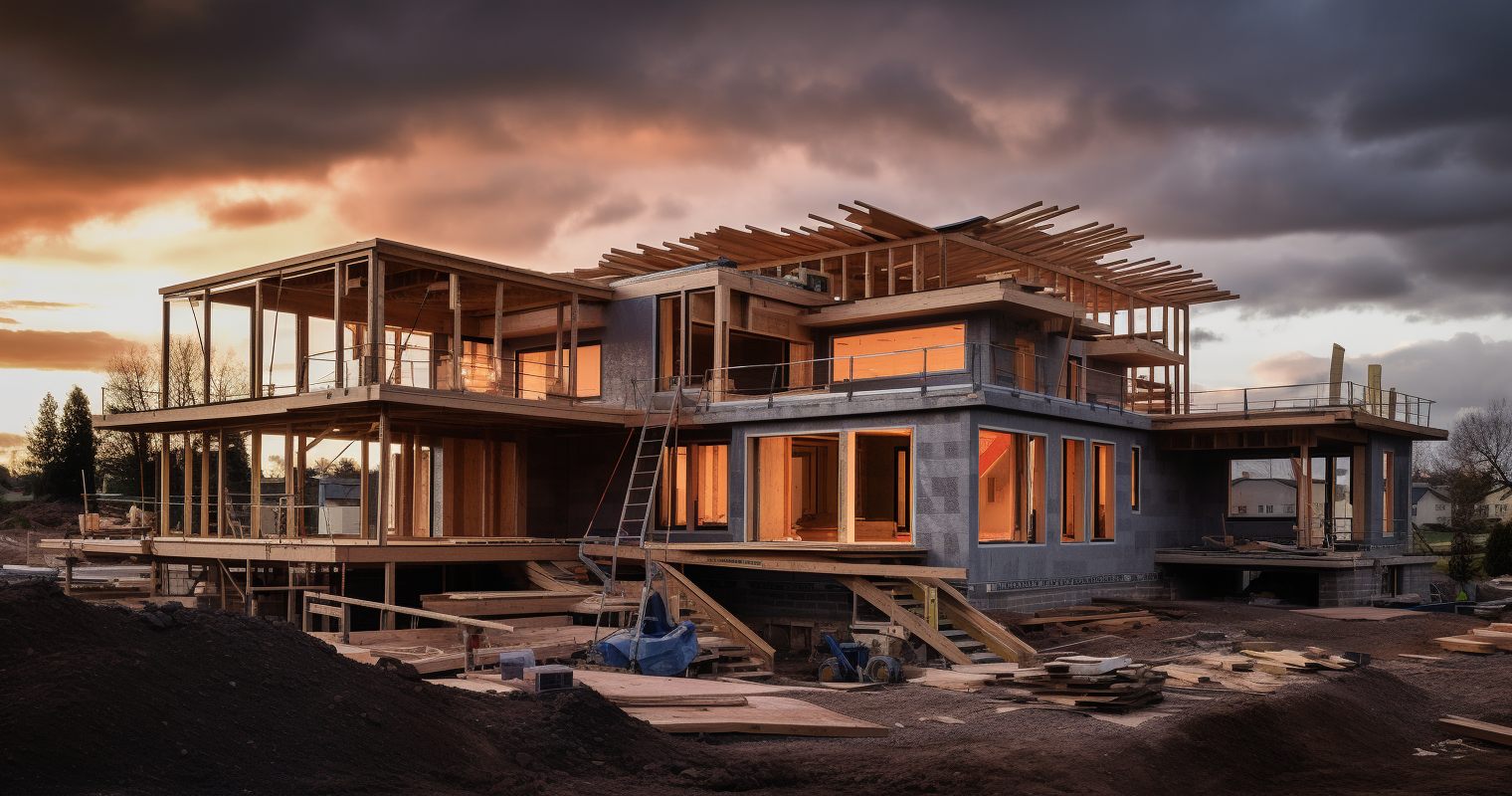
Foreign nationals are welcome to build or renovate property in the Dominican Republic on essentially the same footing as Dominican citizens — the country imposes no restrictions on foreign land ownership. That said, every construction project must navigate a multi-step approval process involving several government bodies, among them the local municipality (Ayuntamiento), the Ministry of Public Works (MOPC), and the Ministry of Housing and Buildings (MIVED). All architectural and engineering plans must bear the signature and stamp of a professional enrolled with CODIA, the national body that governs engineers and architects. Timelines tend to be long and setbacks are frequent, making thorough advance planning a necessity rather than an option.
| Item | Details |
|---|---|
| Planning permission required? | Yes — for all construction, extensions, and most renovations; even minor structures may require local approval |
| Main permit-issuing bodies | Ayuntamiento (municipality), MOPC, MIVED, Ministry of Environment (MIMARENA), Ministry of Tourism (MITUR) where applicable |
| Overall permit timeline (as of 2024) | 6–12 months under normal conditions; delays of up to 2+ years reported in some cases |
| Tourism zone preliminary permit fee (as of 2024) | RD$5,000 (standard, ~45 days) or RD$10,000 (expedited, ~15 days) for preliminary project analysis |
| No Objection to Land Use (tourist areas, as of 2024) | RD$7,000 (standard, ~60 days) or RD$10,000 (expedited, ~20 days) |
| Foreign ownership restrictions | None — foreigners may own land and commission construction on the same basis as nationals |
| Professional body for architects/engineers | CODIA (Colegio Dominicano de Ingenieros, Arquitectos y Agrimensores) — registration mandatory |
| Coastal construction rule | Presidential authorisation required for construction within 60 metres of the shoreline |
Do you need planning permission to build or renovate in the Dominican Republic?
Anyone intending to build, alter, extend, or demolish a structure in the Dominican Republic must first secure the appropriate building permits. This obligation covers residential homes, commercial premises, and even relatively minor renovation works. The Dominican Republic does not operate a system of “permitted development” comparable to those found in countries such as Canada or Australia, where defined categories of smaller works are automatically exempt from approval requirements. In some municipalities, even a pergola or boundary wall must be formally sanctioned by the local planning authority before work begins.
Building permits fall under the jurisdiction of three main bodies: the Ayuntamiento (Municipality), which handles land use, zoning classification, and local construction oversight; the Ministry of Public Works and Communications (MOPC), responsible for national infrastructure standards and technical sign-off; and CODIA (Colegio Dominicano de Ingenieros, Arquitectos y Agrimensores), which must validate all architectural and engineering drawings before they can be submitted to authorities.
Smaller renovation works may only require a minor works permit, whereas larger developments — multi-storey buildings, for example — will need a full building permit as well as environmental impact assessments. It is worth emphasising that rules and procedures can differ considerably between municipalities and provinces. Before starting any project, always confirm the specific requirements with your local Ayuntamiento.
The step-by-step planning permission process is as follows:
- Obtain a zoning certificate (Certificación de Uso de Suelo). A land-use certificate establishes that you are entitled to build on the plot in question, but does not by itself authorise construction to begin. Its purpose is to confirm that your intended project is consistent with the applicable zoning regulations, and it must be in hand before any other approvals can be sought.
- Engage a CODIA-registered architect. You must commission a licensed architect to prepare and submit your architectural drawings. These must include detailed information covering the building’s design concept, proposed materials, and structural approach.
- Submit plans to the Municipal Council. The application for approval of your project drawings must be lodged with the relevant Municipal Council together with a number of supporting documents: the property deed, the cadastral plan, and the certified project drawings signed by a CODIA-registered architect or engineer.
- Await municipal approval and MOPC inspection. Once the Municipal Council has approved the application — typically within 14 days — it passes the file to the Ministry of Public Works and Communications. An MOPC inspector then attends the site to evaluate the scale of the project and determine the applicable fees.
- Pay licence fees and taxes. Fees become payable once the licence has been approved and the inspector has completed their valuation of the project. Once the licence is issued, construction must commence within one year.
- Obtain the MIVED Building Licence. Issued by the Ministry of Housing and Buildings (MIVED), the MIVED Building Licence represents the final authorisation required before construction can lawfully proceed.
- Obtain a Certificate of Completion. When all building works are finished, you must apply for a certificate of completion or occupancy. Issuance of this certificate is conditional on the project meeting all applicable construction standards and passing a final inspection.
Under normal circumstances the entire process takes somewhere between six and twelve months. In practice, however, real-world timescales can be considerably longer. During 2024, significant delays were reported across several government agencies — including the Ministry of the Environment and Natural Resources (MIMARENA), the National District Municipality, the Ministry of Tourism, and the Ministry of Housing, Habitat, and Buildings (MIVHED) — causing widespread frustration across the construction sector. When planning your project, build in generous contingency time and check current processing timescales directly with the relevant authorities.
What are the rules around listed buildings, conservation areas, and heritage protection?
The Dominican Republic’s Constitution places the nation’s cultural heritage — both tangible and intangible — under state protection. The State bears responsibility for safeguarding, enriching, conserving, restoring, and promoting that heritage. Assets forming part of the national cultural heritage that are owned or acquired by the State are declared inalienable, unencumbered, and their title is imprescriptible.
Law No. 318-1978 on the Cultural Heritage of the Nation gives the State broad authority to regulate the protection, conservation, enrichment, and use of the country’s cultural heritage. Separately, Law No. 492-1969 designates the Colonial Zone of Santo Domingo as protected cultural heritage. This designation is broadly analogous in principle to a conservation area designation, though its specific rules differ substantially from comparable regimes in other countries, such as France’s “secteur sauvegardé” or the UK’s listed building consent system.
Properties that carry legal or administrative restrictions of a particular character — such as easements or heritage designations — have those restrictions noted against them in the title records, and such notations limit the owner’s freedom to deal with the property. If you are considering buying or renovating a property in or adjacent to an area of cultural or historical significance — especially the Colonial Zone of Santo Domingo, which holds UNESCO World Heritage Site status — you must obtain approval from the National Bureau of Architectural Heritage (Oficina Nacional de Patrimonio Cultural Urbano). Certification of approval from this body is a required document within the permit process wherever it applies.
Beyond formally designated heritage zones, environmental protections can impose additional constraints on what may be built and where. In areas such as Las Terrenas, supplementary requirements may arise from tourism development zones or environmental protection designations. Local planning offices typically require the submission of site plans, zoning verification, and in some cases environmental impact assessments — particularly for projects located near beaches or rivers.
Before buying any property that may carry heritage or conservation implications, engage a qualified local lawyer to search the land registry and to consult with the relevant municipality and the Ministry of Culture, in order to confirm whether any heritage restrictions are registered against the property. The Ministry of Culture’s website is www.cultura.gob.do. Always verify current regulations directly with the relevant authority, since designations and rules are subject to change.
What permits and licences are required when building or renovating?
Construction in the Dominican Republic requires four principal permits. The first is the Municipal Permit, issued by the local town hall. The second is the Environmental Permit, regulated by the Ministry of Environment. Projects located within tourist zones require a third authorisation — the Tourism Permit, regulated by the Ministry of Tourism — which is obligatory for any development near beaches, national parks, or established tourist destinations. The fourth and final authorisation is the MIVED Building Licence, which must be obtained before work can legally commence.
It is critical to follow the correct sequence when applying for these permits, as each one depends on the approval of the one before it. Submitting applications out of order will result in rejection and unnecessary delay. The table below summarises the key permits and their purpose:
| Permit | Issuing Authority | Purpose |
|---|---|---|
| Zoning Certificate (Uso de Suelo) | Local Ayuntamiento | Confirms land use is permitted for the proposed construction |
| Municipal Building Permit | Local Ayuntamiento / Departamento de Planeamiento Urbano | Local construction approval; verifies compliance with building codes |
| Environmental Permit / EIA | Ministry of Environment and Natural Resources (MIMARENA) | Assesses environmental impact; mandatory for larger or sensitive-area projects |
| Tourism Zone Permit (where applicable) | Ministry of Tourism (MITUR / SECTUR) | Required for projects near beaches, national parks, or tourist destinations |
| MIVED Building Licence | Ministry of Housing and Buildings (MIVED/MIVHED) | Final legal authorisation to begin construction |
| Electricity Connection Permit | Local electricity distributor (e.g. Luz y Fuerza) | Required for electrical interconnection |
| Water/Sewerage Approval | INAPA or relevant water authority | Required for residential developments above certain thresholds |
| Certificate of Occupancy | MOPC / Municipality | Final sign-off confirming completed works comply with approved plans |
For tourism zone projects, standard processing of a Preliminary Project Analysis permit takes 45 days and costs RD$5,000 (as of 2024). Expedited processing is available for RD$10,000 and reduces the timeframe to approximately 15 days. The No Objection to Land Use permit takes 60 days under normal processing and costs RD$7,000 (as of 2024); expedited processing costs RD$10,000 and takes approximately 20 days.
For the electricity connection process, the electrical or electromechanical engineer appointed to the project must submit the required documentation and request an inspection of the electrical installation by contacting Luz y Fuerza. Within approximately one week, Luz y Fuerza will provide a report identifying any corrections needed and a list of materials required for the interconnection.
Where any construction is to take place within 60 metres of the shoreline, presidential authorisation is required. This is a particularly important requirement for anyone contemplating a beachfront development, and it has no direct equivalent in many other countries’ planning frameworks. Always confirm current fees and timescales with the relevant authority before drawing up your project budget.
A digital gateway for construction permits was established under Decree 259-18. The Single Window of Building Construction Permits was created under Decree 259-18 of 11 July 2018 with the aim of streamlining certain government procedures and improving the country’s institutional regulatory framework. The Ministry of Public Works and Communications is the institution tasked with establishing the National Office responsible for this single window. Once fully operational, the Single Window is intended to simplify and speed up the process of applying for and obtaining permits and licences for building construction.
How do you find a reliable, trustworthy builder in the Dominican Republic?
The construction sector in the Dominican Republic is regulated from the design stage through to project approval and execution. Architects and engineers must hold professional licences and be affiliated with CODIA, the official body governing those professions. It is important to understand, however, that general construction workers — tradespeople such as masons, carpenters, and tilers — are not individually licensed in the way that engineers and architects are. This makes careful contractor vetting especially important for foreign property owners.
As a general principle, those commissioning construction are entitled to expect that the contractor will carry out the project faithfully and in full accordance with the agreed scope of works. The contractor must possess the necessary technical, financial, and professional qualifications for the task. Even in the private sector, where requirements are less formally codified, a contractor is still expected to demonstrate the relevant skills and experience to deliver the project.
When assessing a prospective builder, the following practical steps are recommended:
- Verify CODIA registration. Any builder, architect, or engineer bearing responsibility for your project must be registered with CODIA. Request their CODIA membership number and cross-reference it against CODIA’s official register. CODIA contact details: www.codia.org.do — Av. Tiradentes, Naco, Santo Domingo, Dominican Republic.
- Request references and inspect completed work. Ask to see a portfolio of completed projects of comparable scale and type, and speak directly to former clients. If you are managing the project from overseas, photographs and virtual tours of finished work represent the minimum you should expect.
- Insist on a comprehensive written contract. All agreements must be set out in writing to prevent disputes over hidden costs later. The contract should specify the full scope of work, materials to be used, a staged payment schedule tied to milestones, penalties for delays, and procedures for resolving disputes. Verbal agreements have no legal standing.
- Structure payments against milestones. Never pay the entire contract price in advance. Tie payment releases to independently verified milestones, and consider using an escrow arrangement managed through a reputable Dominican law firm.
- Confirm insurance and performance bond arrangements. Construction risk is typically managed through contractual provisions including penalty clauses, performance bonds, and insurance cover. Ask your contractor to provide documentary evidence of their insurance and bonding arrangements.
- Be aware of the statutory warranty on structural defects. The Dominican Civil Code imposes a warranty against structural and latent defects in property, enforceable against architects and contractors for up to ten years. Ensure this is explicitly acknowledged in your contract.
Common pitfalls for foreign property owners include contractors who submit unusually low initial quotes and then claim additional costs once work is underway, those who use inferior materials, and individuals who misrepresent their registration status. Verbal approvals or informal understandings carry no legal weight. Always wait for your official, written permit before allowing work to begin, in order to avoid legal exposure and long-term project risk. Retain an independent local lawyer throughout the duration of the project.
The Association of Builders of Santo Domingo East (ACOSDE) is among the active industry bodies in the Dominican Republic. You may also seek contractors affiliated with the Asociación de Empresas Industriales de Herrera (AEIH) or the Cámara Dominicana de la Construcción (CADOCON), the national body representing construction companies. CADOCON can be reached via www.cadocon.com.do.
How do you find a qualified local architect in the Dominican Republic?
Under Dominican regulations, any construction project must involve a licensed engineer and/or architect registered with CODIA (Colegio Dominicano de Ingenieros, Arquitectos y Agrimensores), the national professional association for those disciplines. No project may advance through the permitting process without the involvement of such licensed professionals, who must formally assume responsibility for the execution of the works.
A key point to understand is that even if the original design has been prepared overseas, Dominican law requires that all construction drawings submitted for permitting approval be signed and stamped by a CODIA-registered architect or engineer. In other words, if you commission plans from an architect in your home country, those plans cannot be submitted to Dominican authorities without first being countersigned and stamped by a locally registered professional who also confirms their compliance with local design and structural requirements.
Foreign architects and engineers are not barred from creating project plans, drawings, or construction documents intended for use in the Dominican Republic. However, for those documents to be submitted to the relevant authorities, they must be reviewed, endorsed, and stamped by locally licensed professionals, and they must conform to Dominican national regulations governing design and structure.
To locate a qualified architect, contact CODIA directly to search their register of current members:
- Website: www.codia.org.do
- Address: Av. Tiradentes No. 4, Naco, Santo Domingo, Dominican Republic
- Phone: +1 (809) 565-3535
The Sociedad Dominicana de Arquitectos (SODA) — the professional society representing architects in the Dominican Republic — is another useful resource for identifying practitioners with particular areas of expertise. When choosing an architect, prioritise one who has a demonstrable track record in projects similar to yours (for example, a coastal villa, an inland residential property, or the renovation of an older building) and, where relevant, experience working with international clients. There is no legal obligation for an architect to speak any language other than Spanish, but in popular expat areas — including Las Terrenas, Punta Cana, Cabarete, and Santo Domingo’s Piantini district — many professionals have significant experience with non-Spanish-speaking clients.
Engaging a qualified local architect is one of the first and most consequential decisions in the permit process. An experienced architect will ensure that your project is designed in accordance with local building codes and regulations, prepare the mandatory detailed plans that form part of every permit application, and draw on their familiarity with the specific requirements of the local authority to help the application process run more smoothly.
What are the common pitfalls when buying land to build on?
Purchasing land in the Dominican Republic for development purposes requires thorough due diligence. The legal and regulatory framework contains a number of features that can differ markedly from property acquisition systems in other countries, and the consequences of inadequate preparation can be both costly and difficult to undo.
Zoning and land use. Misunderstanding or overlooking zoning rules is one of the most common reasons why construction projects are refused permission or become the subject of legal proceedings in the Dominican Republic. Every parcel of land is assigned a zoning classification that determines what may lawfully be built on it, and contravening those rules can bring a project to a permanent halt. Zoning classifications typically govern: the permitted use of the property (residential, commercial, agricultural, tourist); maximum building height and footprint; setbacks from property boundaries or water sources; density restrictions, particularly relevant to multi-unit or tourism developments; and infrastructure obligations such as parking provision, road access, or green areas.
Confirm planning permission is achievable before you buy. Request a zoning certificate (uso de suelo) to establish what type of construction the land will support before contracts are exchanged. Do not assume that an apparently suitable plot will automatically be zoned for residential use. This is particularly important in coastal locations and areas adjacent to protected zones.
Title and ownership verification. Before initiating any permit process, you must be able to demonstrate legal ownership of the land. The Dominican Republic operates a Torrens-style land registration system. Title deeds are registered at the Registro de Títulos (Title Registry). Always obtain a certified copy of the title deed (Certificado de Título) and instruct a local attorney to conduct a full title search, including checks for any liens, encumbrances, easements, or prior ownership claims. Most rights affecting land — including mortgages, encumbrances, and easements — are required to be registered.
Coastal restrictions. Presidential authorisation is required for any construction within 60 metres of the shoreline. This applies regardless of what a vendor may represent about the buildability of beachfront land. Before committing to any purchase of coastal or near-coastal land, verify its coastal zone status with both the relevant municipality and the Ministry of Environment.
Environmental considerations. Depending on the size and nature of your project, an Environmental Impact Assessment (EIA) may be mandatory. An EIA is a formal evaluation of the potential environmental consequences of a development. It is required for large-scale projects and for any works in environmentally sensitive areas. Additionally, establish whether the land lies within or adjacent to a national park, a protected watershed, or a mangrove zone — all of which carry significant development restrictions.
Utility availability. Before purchasing, contact the relevant utility providers to confirm that water, electricity, and sewerage connections are available and can lawfully be connected to the plot. This cannot be taken for granted in rural or semi-rural locations. Connection costs can be substantial and should be included in your project budget from the outset.
Use qualified professionals throughout. Always engage a licensed Dominican notary and an independent local lawyer (abogado) to carry out due diligence. Do not rely solely on legal advice provided by the vendor’s own legal team. The Colegio de Notarios de la República Dominicana can assist in identifying appropriately qualified notaries. Its website is www.colegionotariord.org.
What are the rules around foreign ownership and financing for construction projects?
For international buyers, one of the most appealing features of the Dominican Republic’s property market is the complete absence of restrictions on foreign land ownership. Foreign nationals may purchase freehold land outright, commission construction, and hold property in their own name under precisely the same legal conditions as Dominican citizens. There is no requirement to obtain residency, establish a local company, or enter into any form of partnership with a Dominican national in order to own land or carry out a building project.
The Dominican Civil Code provides that all matters concerning real estate located in the Dominican Republic are governed exclusively by Dominican law, regardless of the nationality or place of residence of the owner. This means that your property and any disputes connected to it will be subject entirely to Dominican law — an important consideration for buyers accustomed to the property law of their home country, which may offer very different protections and procedures.
Property ownership is recorded at the Registro de Títulos, and the Jurisdicción Inmobiliaria (Land Court) has jurisdiction over all real estate legal matters. The principal investment promotion authority is ProDominicana (Centro de Exportación e Inversión de la República Dominicana), which offers guidance on the legal and regulatory framework for foreign investment. Its website is www.prodominicana.gob.do.
Mortgage financing from Dominican banks is available to foreign nationals, though lending criteria may differ from what borrowers encounter elsewhere. Banks typically require a larger deposit from foreign applicants — commonly 30–50% of the property value — along with proof of income and a satisfactory credit record. Interest rates in the Dominican Republic tend to be higher than in countries with more developed mortgage markets; always check current rates with individual lenders. Some buyers opt to finance their Dominican construction project through equity release or borrowing arrangements in their country of residence, which can be a more straightforward route.
If you are purchasing through a corporate structure — for example, a Dominican Sociedad de Responsabilidad Limitada (SRL) — you should consult a local lawyer regarding the tax and inheritance implications. Dominican inheritance law follows forced heirship principles under the Civil Code, which can affect how property is transferred to heirs in the absence of specific estate planning. This area can differ significantly from the rules in countries that allow full testamentary freedom, and professional legal advice is strongly recommended.
What official sources should you consult when planning to build or renovate?
Regulations, fees, and procedures in the Dominican Republic are subject to regular change. Always confirm current requirements directly with the relevant official body before making decisions, entering into contracts, or committing to a purchase. The key authorities and resources are listed below:
| Authority / Body | Role | Website |
|---|---|---|
| Ministry of Housing, Habitat and Buildings (MIVHED/MIVED) | Issues the final building licence; oversees national housing and construction standards | www.mived.gob.do |
| Ministry of Public Works and Communications (MOPC) | Reviews plans, inspects construction sites, administers the Single Window permit system | www.mopc.gob.do |
| Ministry of Environment and Natural Resources (MIMARENA) | Issues environmental permits and EIA approvals | ambiente.gob.do |
| Ministry of Tourism (MITUR) | Issues tourism zone permits for projects near beaches, parks, and tourist areas | www.mitur.gob.do |
| Local Ayuntamiento (Municipality) | Issues land-use (zoning) certificates and local building permits; first point of contact for any project | Varies by municipality — contact your local Ayuntamiento directly |
| CODIA (Colegio Dominicano de Ingenieros, Arquitectos y Agrimensores) | Professional registration body for engineers, architects and surveyors; validates all plans | www.codia.org.do |
| Registro de Títulos (Title Registry) / Jurisdicción Inmobiliaria | Land registry; issues and holds certified property title deeds | www.jurdominicana.gob.do |
| ProDominicana | Foreign investment promotion authority; guidance on investment legal framework | www.prodominicana.gob.do |
| Ministry of Culture / National Bureau of Architectural Heritage | Heritage designations and cultural property protections | www.cultura.gob.do |
| Colegio de Notarios de la República Dominicana | Register of licensed notaries for property transactions | www.colegionotariord.org |
Before taking any steps towards purchasing land or commissioning construction, it is strongly advisable to consult both a qualified Dominican lawyer and a CODIA-registered architect. The regulatory environment is multi-layered, and requirements can vary considerably from one municipality to the next.
Frequently asked questions
How much does it typically cost to build a house in the Dominican Republic?
Building costs fluctuate considerably depending on location, choice of materials, and the standard of finishes required. As a rough guide, mid-range residential construction in sought-after areas such as Las Terrenas, Punta Cana, or the suburbs of Santo Domingo is broadly estimated at between USD $700 and $1,500 per square metre as of 2024, though this figure should be treated as indicative only. Anyone expecting construction in the Dominican Republic to be cheap should think again. Set a realistic budget that includes a contingency for unforeseen expenditure, obtain detailed written quotes from several contractors before making any commitment, and always verify current cost levels with local professionals.
What happens if I build without permits or breach planning rules?
Proceeding without the correct permits can have severe repercussions. Work may be ordered to stop, financial penalties may be imposed, and in certain circumstances the unauthorised structure may be required to be demolished. Furthermore, buildings that lack the proper approvals are likely to prove very difficult to sell or let, as they fall outside the legal standards that buyers and tenants are entitled to expect. There is no mechanism for retrospective regularisation based simply on the passage of time — which makes it all the more important to have your permits firmly in place before work begins.
How long does the full building permit process take in the Dominican Republic?
The full permit process takes somewhere between six and twelve months when everything proceeds smoothly. In practice, however, protracted bureaucratic timelines have placed a significant burden on the construction sector, with certain procedures reported to extend well beyond two years in some cases without resolution. Factor generous time contingency into your project schedule and, where possible, engage a local professional who is familiar with the relevant municipal office to manage the process on your behalf.
Do I need to speak Spanish to build or renovate in the Dominican Republic?
All official processes — permit applications, contracts, legal documentation, and dealings with government agencies — are conducted in Spanish. Although many architects, lawyers, and real estate professionals in popular expat locations are able to communicate in other languages, all formal documentation will be in Spanish. It is strongly advisable to have every contract and official document reviewed by a bilingual lawyer before signing, and to avoid placing sole reliance on verbal translations offered by contractors or vendors. Never sign any Spanish-language document without access to a verified translation that you fully understand.
Are qualifications or building standards from other countries recognised in the Dominican Republic?
Foreign architects and engineers are not prevented from creating project plans, drawings, or construction documents for use in the Dominican Republic. However, before those documents can be submitted to the relevant authorities, they must be reviewed, endorsed, and stamped by professionals holding current CODIA registration, and they must be shown to comply with Dominican regulations on design and structural requirements. Building standards from other countries are not directly applicable in the Dominican Republic — all construction must conform to Dominican national building codes and the requirements of the relevant local municipality.
What should I do if I have a dispute with my contractor?
Under Dominican law, contractors and designers are not entitled to register liens or encumbrances against a property arising from non-payment, but they may bring a breach of contract claim through the courts. Should a court recognise the debt, enforcement measures including registration of a lien may then be available. If a dispute arises, instruct a Dominican lawyer without delay. It is also important to ensure that your original contract contains a clear and practical dispute resolution clause. If you are based abroad, a local legal representative holding a power of attorney can act on your behalf throughout any proceedings.
Can I manage a building project in the Dominican Republic remotely from abroad?
Remote oversight is achievable with the right arrangements in place. Maintain frequent contact with your project manager, make use of virtual site tours to track progress, and appoint a trusted local representative to handle day-to-day matters on the ground. The most prudent approach is to engage an independent local project manager — distinct from your contractor — and to make in-person visits at critical stages of the build. Sound planning combined with smart use of technology and reliable local expertise can go a long way towards minimising delays and miscommunication.
Are there any restrictions on the type of property I can build as a foreign national?
Foreign nationals face no restrictions on the type of residential property they may build. However, individual zones carry their own rules governing building type, height, density, and permitted use, and these tend to be more stringent in coastal areas or regions subject to environmental conservation or tourism development controls. In addition, any construction within 60 metres of the shoreline requires presidential authorisation. Before purchasing any land with a view to building, always consult the local Ayuntamiento and obtain a zoning certificate confirming what may lawfully be built on the plot.