
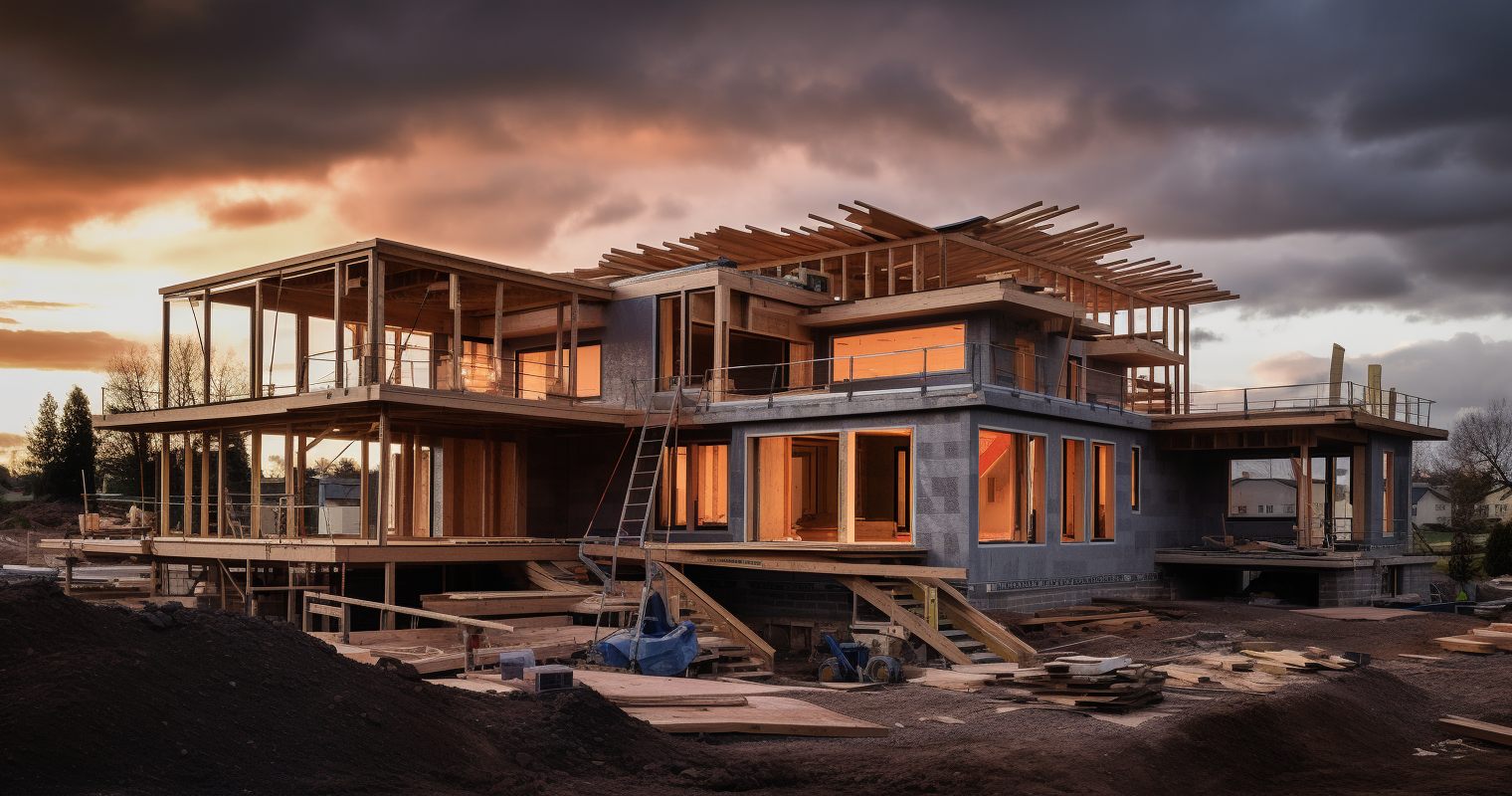
Construction and renovation in France operates within a tightly regulated framework: almost every building project or external alteration demands a formal planning consent, administered through local mairies under a single national planning code. Foreign nationals face no legal barriers to acquiring land or commissioning building work, but they must contend with intricate heritage legislation, compulsory architect involvement on larger projects, and demanding technical standards. Engaging qualified professionals — a registered notaire and a licensed architect — is not merely advisable but effectively indispensable.
| Item | Details |
|---|---|
| Main planning permit | Permis de construire (PC) — required for new constructions or works creating more than 20 m² of floor area (as of 2025) |
| Minor works permit | Déclaration préalable (DP) — applies to works under 20 m² (up to 40 m² in some urban zones); review period typically 1 month (as of 2025) |
| Architect requirement | Mandatory for projects resulting in more than 150 m² of habitable space (as of 2025) |
| Heritage buffer zone | Properties within 500 m of a listed historic monument are subject to additional restrictions |
| Notaire fees on purchase | Typically 7–10% of purchase price (as of 2024) — verify with your notaire |
| Penalty for unauthorised works | Up to €300,000 fine and/or 2 years in prison; mayors can also impose daily fines of up to €500 (as of 2025) |
Do you need planning permission to build or renovate a property in France?
In France, the overwhelming majority of construction and renovation activities require some form of planning consent, with the specific type depending on the nature and scale of the works involved. The entire system is governed by the Code de l’urbanisme, within which individual communes put their own local plans into effect — most commonly through a Plan Local d’Urbanisme (PLU).
One of the most striking differences from planning systems in countries such as Canada or Australia is that France has no equivalent of permitted development rights. Virtually any change to a building’s exterior — from a modest extension to an attic conversion, the installation of a pergola, or even repainting shutters in a different colour — will require advance authorisation. Anyone arriving in France with experience of more permissive systems should treat this as the single most important distinction to understand.
Most projects fall within one of four main consent categories: the Certificat d’urbanisme (CU) for outline or information purposes; the Déclaration préalable (DP) for smaller-scale works; the Permis de construire maison individuelle (PCMI) for homeowners undertaking major works; and the Permis de construire (PC) for commercial operators or multi-unit developments.
A CU(b) operational certificate functions in a broadly similar way to outline permission elsewhere, and is used to establish whether a particular development — for example, whether a plot can support a new dwelling, or whether an agricultural barn can be converted into residential accommodation — is viable in principle. Requesting a CU ahead of committing to either a purchase or a design is strongly recommended practice.
A Déclaration préalable is typically the appropriate route for smaller modifications to an existing property: the addition of roof windows, replacing timber windows and doors with PVC, small extensions, converting attic or garage space into living accommodation, or erecting garden outbuildings such as sheds, greenhouses, or polytunnels. As a general rule, this consent applies to works generating under 20 m² of floor space, though this threshold rises to 40 m² in certain developed areas.
A full building permit is issued by the town hall of the municipality in which the project is located, and covers all new constructions — even those without foundations — where the footprint or floor area exceeds 20 m² (or 40 m² of floor area in PLU-designated zones, or where the proposed works would bring the total surface beyond 150 m²).
Where a project results in more than 150 m² of habitable space, the planning application must be submitted by an architect registered in France. This represents a significant departure from many other countries’ residential building frameworks, where professional architect involvement is typically a matter of choice rather than obligation.
The step-by-step application process for a Permis de construire is as follows:
- Consult your local planning framework. Before purchasing a property or submitting any application, establish whether your proposed project is compatible with the planning rules currently in force locally and check whether any future developments are planned nearby. The local mairie and the relevant PLU document are your starting points.
- Request a Certificat d’urbanisme (CU). This free certificate provides authoritative guidance before you commit to a purchase or begin work. Two types exist, neither of which replaces the planning permission ultimately needed to commence works. Submit Cerfa form 13410*12 to the appropriate mairie.
- Assemble your planning dossier. A planning permission application requires a comprehensive dossier, often running to between 10 and 25 pages, incorporating the relevant application forms, scaled plans and drawings, a written project description, photographs, and any supporting documentation.
- Lodge your application. From January 2022 onwards, electronic submission has been available for communes with populations above 3,500. Smaller communes still operate on paper submissions, either delivered in duplicate or sent by registered post.
- Wait for the outcome. A DP application carries a one-month review period and is generally treated as a non-opposition process — the absence of a response from the authorities constitutes approval. A full Permis de construire normally takes two months for a standard residential project; this period is extended for sites within protected zones.
- Display the permit at the site. Once granted, the building permit must be posted visibly on site, facing the public highway, for the entire duration of the works, and must include all mandatory information enabling anyone to assess the situation.
- Submit a completion declaration. On finishing the project, a final inspection and certification process may apply before the authorities formally close the matter, and the completion notice (DAACT) cannot be validated without it.
Carrying out works that require planning permission without first obtaining it is a criminal offence. The maximum penalty is a fine of up to €300,000 and a custodial sentence of two years. Since 2020, local mayors have additionally been empowered to levy daily fines of up to €500 for unauthorised construction. (as of 2025 — always confirm current penalties with the relevant authority.)
Planning applications in France attract no submission fee, though you will normally pay professional fees if an architect or planning consultant prepares the dossier on your behalf. Consult your local mairie or the Service-Public.fr portal for the most up-to-date procedural guidance.
What are the rules around listed buildings, conservation areas, and heritage protection in France?
France has over 45,000 protected historic monuments, encompassing buildings, archaeological sites, gardens, and works of public art. The country’s heritage protection framework is one of the most exhaustive in the world, and its reach extends well beyond the protected structures themselves to affect adjacent properties across a wide area.
A historic monument in France is a building or movable object that has been granted a special legal status in recognition of its historical, artistic, architectural, technical, or scientific significance. The law draws a distinction between two categories: buildings classified as historic monuments — which attract the highest degree of protection, covering exterior, interior, and surroundings — and those merely inscribed, meaning they possess sufficient historic or artistic merit to make their preservation desirable.
The Sites Patrimoniaux Remarquables (SPR), or Remarkable Heritage Sites, designation exists to protect and promote the architectural, urban, and landscape heritage of defined territories. These protections function as public utility easements imposed by public authorities. The SPR system superseded earlier frameworks, including protected areas and the former zones for the protection of architectural, urban, and landscape heritage (ZPPAUP).
The “abords” (surroundings) protection scheme applies to buildings within roughly 500 metres of any listed historic monument. This perimeter is tailored to the specific character and challenges of each individual monument and its context. The surrounding buildings must form a coherent ensemble with the protected monument itself. The scheme applies to all buildings and spaces within 500 metres that are either visible from the monument or visible alongside it.
Many French towns and villages continue to sit within formerly designated ZPPAUP zones, and properties or land within these areas are subject to particular planning constraints designed to preserve the visual, architectural, and historical character of the locality.
Classification as a historic monument entails the most demanding constraints of all, requiring detailed prior authorisation for any works and subjecting those works to close scrutiny. Any modification to a classified property must honour its authenticity and heritage value — in practice, this can mean being required to preserve original staircases, fireplaces, or period single-glazed windows even when they are in a deteriorated state.
Heritage protection in France falls under the Ministère de la Culture, delivered through its regional arms known as the Directions Régionales des Affaires Culturelles (DRAC). The Atlas du Patrimoine offers interactive mapping of cultural and heritage data, enabling users to view, query, and download geographic information on any territory, including the protection perimeters surrounding Historic Monuments. It is accessible at culture.gouv.fr/atlas.
Specific rules and procedures govern any building works within a conservation area, on a listed building, or within 500 metres of a listed monument. In all such cases, you must consult your local mairie or préfecture, as very few exceptions or dispensations exist. It is essential to check heritage status before proceeding with any property or land purchase in France.
What permits and licences are required when building or renovating in France?
Almost any project will require at least one form of planning consent — be it a Certificat d’Urbanisme, a Permis de Voirie, a Permis de Démolir, a Déclaration Préalable, or a Permis de Construire. Beyond the primary planning consent, a range of further approvals will typically be needed, depending on the nature and location of your project.
Thermal attestation (attestation thermique): Following the introduction of thermal insulation requirements in 2012 and subsequent updates in 2023, all planning applications that create any additional living space — including conversions of existing structures — must be accompanied by a thermal attestation confirming the works will comply with current environmental standards. Where living space is increased by more than 50 m², a detailed thermal study is also required.
Demolition permit (Permis de démolir): Any project involving the demolition of an existing structure requires a separate demolition permit (Cerfa 13405*13). Where demolition forms part of a larger construction project, this permit can be submitted together with the main building permit application.
Septic system approval: Numerous rural properties are not connected to mains drainage and instead rely on individual wastewater systems (fosse septique). Where an existing system fails to meet current standards, buyers will be required to upgrade it. The local SPANC (Service Public d’Assainissement Non Collectif) is the authority responsible for approving and inspecting private drainage systems. Consult your mairie for current requirements and applicable fees.
Road access permit (Permis de voirie): Where a construction project involves creating or altering access onto a public road, a Permis de voirie must be obtained from whichever local authority — commune or département — is responsible for that road.
Utility connections: Where mains drainage is not available, a private septic tank installation will be required. For electricity, water, and gas supplies, applications must be made directly to the relevant providers — Enedis for electricity, local water authorities, and GRDF for gas — as part of the overall construction process. These steps typically arise towards the latter stages of a build.
Completion declaration (DAACT): On completing your works, you are required to file a Déclaration Attestant l’Achèvement et la Conformité des Travaux (DAACT) with the mairie. This document confirms that the completed works conform to the approved permit. Without it, the planning authority has no basis on which to formally validate the conclusion of your project.
Always contact your local mairie or the national Service-Public.fr portal to establish which permits and approvals are specifically required for your project, since requirements can differ considerably between communes and regions.
How do you find a reliable, trustworthy builder in France?
The French building industry operates within a regulated framework, and reputable contractors should hold specific registrations and insurance that you are fully entitled — and well advised — to check before entering into any agreement. Knowing what to look for will help you sidestep the problems that frequently affect foreign property owners unfamiliar with the local system.
Registrations and insurance to verify: Any builder operating lawfully in France must be registered either with the Registre du Commerce et des Sociétés (RCS) or the Répertoire des Métiers (RM), depending on whether they operate as a limited company or as a sole trader artisan. They must also carry two compulsory forms of insurance: responsabilité civile professionnelle (professional liability) and garantie décennale (ten-year structural guarantee). The garantie décennale covers major structural defects for a decade following project completion — always request the insurance certificate and confirm it is valid for your specific type of project.
Professional trade bodies: One reliable way to identify a reputable contractor is to search for members of the Fédération Française du Bâtiment (FFB), which maintains an online directory of its members. The FFB can be reached via:
- Website: ffbatiment.fr
- Address: Fédération Française du Bâtiment, 33 avenue Kléber, 75784 Paris Cedex 16, France
- Phone: +33 (0)1 40 69 51 00
The Confédération de l’Artisanat et des Petites Entreprises du Bâtiment (CAPEB) represents smaller and micro-sized enterprises in the building trades — precisely the kind of contractor often engaged for renovation work:
- Website: capeb.fr
- Address: CAPEB, 2 rue Béranger, 75140 Paris Cedex 03, France
- Phone: +33 (0)1 53 60 50 00
Practical vetting steps: Always obtain a minimum of three written estimates (devis) before selecting any contractor. Once accepted, a written devis becomes legally binding in France, so review it with care — it should specify all works to be carried out, materials to be used, timescales, and costs in full. Confirm the builder’s garantie décennale and professional liability insurance before signing anything, and request references from recent clients. Where possible, view completed projects in person.
Contracts and staged payments: For any substantial works, use a formal written contract — either a contrat de construction or a contrat d’entreprise. Paying the full amount upfront is inadvisable; staged payments tied to clearly defined milestones represent standard French practice. Any contractor insisting on full cash payment before work begins should be regarded with considerable suspicion.
Risks particular to foreign owners: Rogue operators working without valid insurance or registration are a recognised hazard, especially in rural areas where foreign-owned properties may stand empty for long stretches. Before engaging any company, use the freely accessible Verif.com or Société.com databases to check its registration status. Be wary of builders who make unsolicited approaches, quote dramatically below rival estimates, or are reluctant to provide written proof of insurance.
How do you find a qualified local architect in France?
Architecture is a regulated profession in France, and only practitioners registered with the Ordre des Architectes may legally use the professional title “architecte” or offer architectural services. This is not a formality — it is a statutory requirement under the Architecture Act 1977 (Loi sur l’Architecture).
Where a project will result in more than 150 m² of habitable space, a French-registered architect is legally required to submit the planning application. Even for smaller projects, engaging a registered architect is strongly advisable for new builds, complex renovations, or any work touching a protected or heritage area.
The professional regulator is the Conseil National de l’Ordre des Architectes (CNOA). All practising architects in France must hold registration with one of the 17 regional councils of the Ordre:
- Website: architectes.org
- Address: Conseil national de l’Ordre des Architectes, Tour Maine-Montparnasse, 33 avenue du Maine — BP 154, 75755 Paris Cedex 15, France
- Phone: +33 (0)1 56 58 67 00
- Email: [email protected]
The Ordre des architectes website hosts a searchable directory of registered architects, allowing you to filter by region, area of specialisation, and language capability at architectes.org.
Maintenance of current professional indemnity insurance is a condition of registration with the Ordre. Any architect you are considering engaging should be asked to provide written evidence of their current professional indemnity cover before a contract is signed.
Practical guidance for expats and foreign nationals: There is no requirement for an architect to be proficient in any particular language, so if your French is limited, it is worth specifically seeking out practitioners experienced in working with international clients. In areas with large expat communities — including Brittany, the Dordogne, Provence, and the Côte d’Azur — many architects have an established track record with foreign clients and may employ multilingual staff. The Conseils d’Architecture, d’Urbanisme et de l’Environnement (CAUE), which operates at département level, also provides free architectural advice and can direct you towards suitable professionals.
Architects from EU/EEA member states and Switzerland may register with the Ordre des Architectes under European mutual recognition arrangements. Professionals holding qualifications from outside the EU may be admitted under specific international agreement provisions or by ministerial decision. Always verify that any architect you intend to engage is currently listed on the Ordre’s register before signing a contract.
What are the common pitfalls when buying land to build on in France?
Acquiring land in France is a process full of potential complications, and there are several traps that frequently ensnare buyers — particularly those who are new to how the French system works. Identifying these risks before signing anything is absolutely essential.
Establish buildability before committing: A Certificat d’Urbanisme is typically the sensible first step when considering either an old property or a plot of land intended for development. A standard CU (Certificat d’Information) will establish definitively whether a given parcel can be developed and what the applicable local regulations permit. Never proceed with a land purchase on the assumption that it is buildable without first obtaining a CU. You may also wish to apply for planning permission during the conveyancing process and consider including a suspensive clause in the Compromis de Vente, allowing the sale to be withdrawn without penalty if planning permission is not forthcoming.
Zoning and land-use designations: France classifies land into planning zones — residential (U), agricultural (A), natural (N), and future development (AU) being the principal categories. Agricultural and natural land is subject to severe restrictions on construction, and achieving a re-zoning is rarely straightforward. Confirm the precise zone classification of any plot with the mairie or through the PLU before purchase.
Cross-check the cadastre and title deeds: The cadastre comprises plans of every plot and building across the country, together with a regularly updated matrix recording property information. Each commune is divided into sections, themselves broken down into sheets at varying scales. Every parcel carries a unique reference consisting of a section code and parcel number. Always reconcile the cadastral reference against the title deeds and look for any boundary disputes or shared access rights (droits de passage).
Environmental and flood-risk assessments: French law obliges sellers to furnish a set of mandatory diagnostic reports (dossier de diagnostic technique), covering flood risk, asbestos surveys, lead paint assessments, and natural or technological hazard disclosures. For land purchases specifically, consult the government’s Géorisques portal before proceeding — it maps flood plains, seismic zones, landslide hazards, and contaminated sites.
Utility availability: Where mains drainage is not accessible, a private septic tank will be required. Equally, confirm the availability of electricity, water, and broadband connections, and obtain indicative connection costs from the relevant providers before completing any purchase. In rural locations, connection costs can be substantial.
Inheritance legislation and ownership structures: French succession law (droit de succession) applies to property situated in France regardless of the owner’s nationality. Since the EU Succession Regulation (Brussels IV) took effect in 2015, foreign nationals may elect for the law of their country of habitual residence to govern their succession — but this requires specific provisions in a professionally drafted will. Always seek advice from a qualified notaire or international estate planning specialist before acquiring property in France.
The notaire’s role: A notaire is indispensable in any French property transaction. This legal professional manages all documentation, verifies the legality of the sale, and handles applicable taxes and fees. In addition to the headline purchase price, allow for notaire fees, registration costs, and taxes, which together typically add around 7–10% to the total outlay (as of 2024). Always confirm current figures directly with your notaire, as these vary according to transaction type and may change.
What are the rules around foreign ownership and financing for construction projects in France?
France places no restrictions whatsoever on foreign nationals purchasing land, acquiring property, or commissioning building work. In contrast to some countries that impose limits on non-resident land ownership, France maintains a fully open market: individuals and companies of any nationality or residency status may purchase land and develop it, provided they comply with all planning and building requirements.
Residency and visa considerations: Owning land or property in France confers no automatic entitlement to live there. If you intend to reside in France during or following your project, you must hold appropriate immigration permission. EU/EEA and Swiss citizens benefit from freedom of movement; nationals of other countries should consult the French consulate in their home country or the Service-Public.fr portal for current visa and residency requirements.
Ownership structures: Foreign buyers may take ownership in their own name, jointly with a partner, or through a legal entity such as a Société Civile Immobilière (SCI). An SCI is a widely used structure for families or groups purchasing together, as it can simplify both inheritance planning and day-to-day management, though it carries its own tax implications. Seek advice from a notaire or tax specialist before settling on a structure.
Mortgages and construction financing: Many French banks offer competitive mortgage products to foreign nationals, typically requiring proof of income, tax returns, and supporting financial records. For construction projects specifically, French lenders usually offer a prêt construction (construction loan) or a staged-release mortgage tied to build milestones. Non-residents may encounter more stringent lending conditions — lenders generally require a larger deposit (commonly 20–30% or above) and will scrutinise income and creditworthiness carefully. Some international lenders also offer cross-border mortgage products for French property; comparing offers from both French and overseas institutions is worthwhile.
Currency and exchange-rate exposure: Where your income or savings are held in a currency other than euros, movements in exchange rates can have a substantial effect on project costs. Consider using a specialist currency exchange provider or a forward contract to fix rates for significant payments, particularly for land acquisitions and builder invoices.
For authoritative guidance on property ownership and investment in France, refer to the Conseil Supérieur du Notariat (notaires.fr) and the Ministère de l’Économie et des Finances.
What official sources should you consult when planning to build or renovate in France?
French administrative processes can appear daunting, but the most important information is accessible from official sources — many of which now carry at least partial English-language content. The resources listed below are your primary references; always consult them directly for the most current requirements, since rules, fees, and procedures are revised on a regular basis.
| Body / Resource | Role | Website |
|---|---|---|
| Service-Public.fr | Central gateway for all public services, including planning permits, official forms, and procedural guidance | service-public.fr |
| Ministère de la Culture — Atlas du Patrimoine | Interactive heritage mapping tool; check proximity to listed monuments or protected zones | culture.gouv.fr |
| Cadastre.gouv.fr | National land registry; verify plot boundaries, ownership records, and cadastral references | cadastre.gouv.fr |
| Géorisques | Government environmental risk portal; check for flood, seismic, contamination, and other hazards | georisques.gouv.fr |
| Ordre des Architectes (CNOA) | Register of licensed architects in France; searchable by region and specialism | architectes.org |
| Fédération Française du Bâtiment (FFB) | Trade association for building companies; member directory assists in locating registered contractors | ffbatiment.fr |
| CAPEB | Trade body representing artisan builders and small renovation firms | capeb.fr |
| Notaires de France | Directory of notaires and guidance on property transactions, including planning and succession matters | notaires.fr |
| Ministère de la Transition Écologique | Responsible for housing policy, urban development, and building environmental standards | ecologie.gouv.fr |
| Local Mairie (town hall) | First port of call for planning applications, local zoning enquiries, and permit submissions | Search via service-public.fr |
For heritage-related enquiries, contact the DRAC (Direction Régionale des Affaires Culturelles) covering your region — these bodies are the regional offices of the Ministère de la Culture and have responsibility for listed building consents and heritage zone oversight. A directory of DRACs by region is available at culture.gouv.fr.
Frequently asked questions: building and renovating in France
How much does it typically cost to build a new house in France?
Construction costs in France vary widely according to region, specification, and materials chosen, but as a general indication, new residential builds typically fall in the range of approximately €1,200 to €2,500 per m² for a standard to high-specification home (as of 2024/2025). These figures exclude land costs, planning fees, architect’s charges, and utility connection expenses. Always obtain several written estimates and cross-check current figures with builders and architects directly, since costs fluctuate in line with material prices and labour market conditions.
How long does a typical building project take from planning application to completion?
Timescales differ considerably from one project to another. Processing a standard Permis de construire application takes two to three months (longer for projects in heritage or protected zones). Construction of a new-build house typically occupies 12–18 months, depending on scale and complexity. Several additional months should be allowed for design work, dossier preparation, and post-completion formalities. Build in contingency for potential delays, especially in areas where planning departments carry heavy workloads or where heritage consultations are involved.
Do I need to speak French to manage a building project in France?
French is not a legal prerequisite, but operating without it creates serious practical difficulties. All planning documents, contracts, and official correspondence are in French. Many architects and builders in areas with significant expat populations do speak English or other languages, but all formal paperwork will remain in French regardless. Engaging a bilingual architect, a French-registered legal adviser, or a project manager with a track record of working with foreign clients is strongly recommended. Never put your signature to any document you have not had professionally translated or thoroughly explained.
What happens if planning rules are breached or work is carried out without permission?
Undertaking works that require planning permission without first securing consent is a criminal offence. The maximum penalty is a fine of up to €300,000 and a two-year prison term. Since 2020, local mayors have also been empowered to impose daily fines of up to €500 for unauthorised construction. You may additionally receive a formal order to demolish any unlawfully constructed structure, and absent planning consents can create serious complications when the time comes to sell the property.
Are building qualifications or standards from other countries recognised in France?
As a rule, no. France has its own building regulations, governed by the Construction and Housing Code (Code de la Construction et de l’Habitation), and its own professional registration requirements. Architects from EU/EEA member states may register with the Ordre des Architectes under European mutual recognition provisions. Non-EU qualifications are considered on a case-by-case basis under specific international agreement arrangements. Builders and tradespeople originating from outside France must register with French professional bodies and hold insurance policies that comply with French requirements. Do not assume that qualifications, insurance arrangements, or technical standards from your home country will be considered equivalent.
What should I do if I have a dispute with a builder or contractor?
Begin by raising the matter formally in writing, clearly setting out the problems and citing the relevant provisions of your signed contract. If direct correspondence fails to resolve the situation, France’s Médiateur de la consommation offers free mediation for consumer contracts. More substantial disputes may require instructing a lawyer (avocat) and pursuing proceedings through the French courts. Where a builder holds a garantie décennale, claims arising from major structural defects within ten years of project completion can be made against that insurance policy. Keep thorough records of all communications and retain copies of every contract, invoice, and permit throughout the project.
Can I manage my French construction project remotely from abroad?
Remote management is feasible but considerably more complicated than overseeing a project in person. The most practical solution is to appoint a local project manager (maître d’oeuvre) or architect to supervise works on your behalf. Anyone authorised to sign documents or take decisions in your name in France will require a formal power of attorney (procuration). Regular site visits are advisable, and certain stages — such as signing the completion declaration or attending notaire appointments — may require your personal presence. Raise the question of remote management explicitly with your architect or notaire at the outset of the project.
Is there any financial assistance available for renovating older or heritage properties in France?
Yes. France operates a number of renovation grant and tax incentive schemes. MaPrimeRénov’ is the principal government renovation grant, focused primarily on energy efficiency improvements; eligibility thresholds and grant amounts vary by household income and project type — consult current rates at maprimerenov.gouv.fr. For classified heritage properties, the Fondation du Patrimoine can award a label entitling owners to a tax reduction of 50–100% on qualifying works to the exterior. This applies to buildings, parks, and gardens visible from the public highway that are of architectural or landscape interest, situated in a rural commune or a town of under 20,000 inhabitants and owned by private individuals. Always verify current eligibility conditions and funding levels with the relevant authority before committing to a project on this basis.