
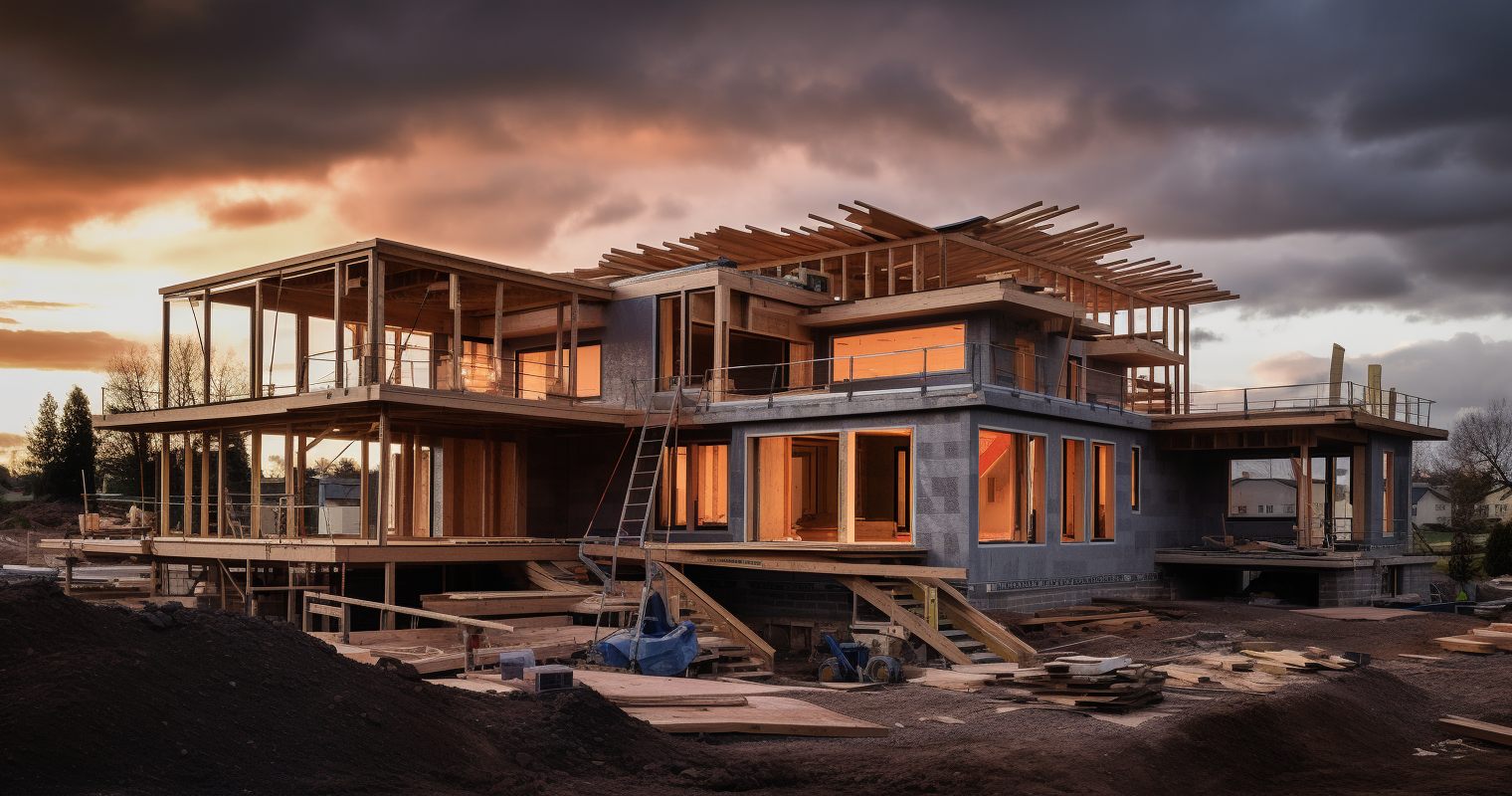
Constructing or renovating a property in Germany is a heavily regulated undertaking, governed simultaneously by federal legislation and the distinct building codes of each of Germany’s 16 states (Bundesländer). A Baugenehmigung (building permit) must be obtained before commencing most construction or substantial alteration work. While foreign nationals face no restrictions on buying land or property, successfully navigating Germany’s layered planning, heritage protection, and energy-efficiency requirements almost always demands the expertise of a registered architect and a qualified notary.
| Item | Details |
|---|---|
| Planning permission body | Local Building Supervisory Authority (Bauaufsichtsbehörde) in each municipality |
| Permit validity | Typically 1–4 years; expires if construction not started within 3 years of issue (as of 2025) |
| Heritage protection system | Denkmalschutz — administered by each of Germany’s 16 states; no single national list |
| Foreign ownership restrictions | None — foreign nationals may purchase land and property on equal terms to German citizens (as of 2025) |
| Mortgage deposit for non-residents | Typically 30–40% down payment required (as of 2026); residents usually 10–20% |
| Real estate transfer tax (Grunderwerbsteuer) | 3.5%–6.5% of purchase price, varying by federal state (as of 2025) |
Do you need planning permission to build or renovate a property in Germany?
A building permit (Baugenehmigung) is obligatory for the construction or modification of a building, with limited exceptions for certain changes of use or demolition work. Germany’s planning framework will seem broadly recognisable to those familiar with comparable regimes in France or the Netherlands, yet it is considerably more prescriptive than many other systems: even internal structural alterations and substantial renovation projects typically require formal authorisation before any work may begin.
Germany’s strategic planning and zoning framework is shaped by federal statutory law, the corresponding legislation of each of the 16 Bundesländer, and regional and local development plans (Flächennutzungsplan and Bebauungsplan). This multi-tiered structure means that the rules applicable in Bavaria may differ in important respects from those in Berlin or Hamburg, so consulting your local authority at the outset is essential.
Planning legislation establishes the legal basis for municipal land-use planning through zoning plans (Flächennutzungspläne) and building plans (Bebauungspläne). The zoning plan provides the overarching framework for land use within a community and is binding only on planning authorities, whereas the building plan directly determines the permitted use of specific parcels of land and specifies whether they may serve as residential, commercial, mixed-use, or other zones.
Certain minor works may be exempt from the full permit requirement — typically small garden outbuildings, limited internal works, and some like-for-like repairs — but these exemptions differ from state to state. Always confirm with your local Bauaufsichtsbehörde before assuming any particular work falls outside the permit regime.
Before committing to a full planning application, a developer may lodge a preliminary building enquiry (Vorbescheid) to establish whether the proposed project is fundamentally capable of receiving approval. This is an especially valuable first step for expats and foreign buyers who wish to test feasibility before investing in a purchase or commissioning detailed architectural drawings.
The application process step by step
- Consult your local planning authority. Approach the Bauaufsichtsbehörde (Building Supervisory Authority) in the relevant municipality to understand the applicable zoning provisions and any restrictions specific to your plot.
- Submit a preliminary enquiry (Vorbescheid) if appropriate. This optional step yields a binding indication of whether your project is capable of approval before you spend money on full architectural plans.
- Engage a registered architect. The application must be accompanied by a comprehensive project plan, together with supporting documentation including a site plan, construction drawings, building specifications, and — where required — documents covering heating, noise protection, and fire safety measures.
- Lodge the building application. You may submit the application together with all required documents either digitally through the building portal or in paper form.
- Await the review process. The Bauaufsichtsbehörde examines the application and forwards it to any other body with a legitimate interest in the proposed works, which may include the monument protection authority, the environmental authority, fire protection services, and water management authorities.
- Receive the decision. The responsible authority determines whether the project conforms with planning and building law. Provided it does, and provided no relevant objections are raised by other authorities, the authority is obliged to grant the permit.
- Commence construction. Building work may not begin until the permit has been issued. The permit lapses if construction has not started within 3 years of its issue date, or if works have been suspended for a continuous period of one year. In either case, the deadline may be extended by up to 2 years upon submission of a written request.
Permit fees vary by state and project scale and are not fixed at national level — always verify current figures with the relevant Bauaufsichtsbehörde. Processing times for standard residential applications generally range from a few weeks to several months, depending on project complexity and the authority’s current workload.
In October 2025, the German parliament enacted the Act to Accelerate Residential Construction and Secure Housing, which is aimed at expediting planning and permitting procedures for housing and granting municipalities and developers greater flexibility. The Act came into force on 30 October 2025. Some procedures may consequently be streamlined, so it is advisable to check with your local authority for the most up-to-date process.
What are the rules around listed buildings, conservation areas, and heritage protection in Germany?
Monument protection (Denkmalschutz) is Germany’s equivalent of listed building consent and operates within the administrative hierarchy of each of the 16 states, typically functioning as a two- or three-tier system: the local conservation authority serves as the first point of contact at the lower level, with the state executive at the apex. Unlike the approach taken in some other countries, Germany maintains no single national register of listed buildings.
Since 1900, Germany has had no centralised national heritage inventory. Each of the 16 states maintains its own registers, and many towns and cities keep additional local lists compiled according to varying criteria. This means that a property afforded protection in one state might be treated quite differently in another, making local enquiries indispensable before purchasing any older building.
Around one million sites are listed as monuments across Germany, encompassing archaeological remains, settlements, churches, farmhouses, workers’ dwellings, castles, palaces, parks, gardens, industrial premises, and administrative buildings. The sheer breadth of this heritage footprint means that buyers of older properties anywhere in Germany must verify monument status before committing to a purchase.
The 16 states regulate the protection of heritage assets through different legal approaches: some follow a constitutive process, under which structures enjoy protection only upon formal entry in the heritage register, while others apply a general-clause principle, under which any structure meeting the definition of a heritage asset is protected ipso jure. In practical terms, a building may be legally protected under Denkmalschutz even where it does not feature on a publicly available list — another compelling reason to seek specialist advice before acting.
Any works carried out on or within a listed monument require an authorisation permit for heritage buildings. The obligation to obtain a permit extends even to straightforward interventions such as restoration or repainting. This is markedly stricter than some other heritage systems, in which only structural or external alterations trigger a consent requirement.
The area surrounding a listed monument, insofar as it is materially relevant to the existence or appearance of that monument, is also subject to monument protection legislation. Accordingly, even if the property on which you intend to carry out works is not itself listed, its proximity to a listed monument may still impose restrictions on what you can do.
Owners of heritage buildings carry wide-ranging obligations relating to preservation and upkeep. The owner is required to take all reasonable measures to maintain the building. Failure to comply can lead to enforcement notices, financial penalties, and compulsory orders to reverse unauthorised work at the owner’s cost.
Both the federal government and Germany’s 16 states support the upkeep of listed monuments through dedicated subsidy programmes. Tax relief available to owners of historic monuments is also an important instrument for safeguarding cultural heritage for future generations. If you are considering purchasing a listed building for renovation, obtaining specialist tax advice is strongly recommended to ensure you take full advantage of available allowances.
To determine whether a property is protected, contact the Landesdenkmalamt (Regional Office for the Preservation of Monuments) for the state in which the property is located. Each Bundesland‘s heritage preservation legislation provides for a central specialist body — the Landesdenkmalamt — which handles all technical questions relating to monument protection. You may also contact the local lower heritage authority (district or municipality) directly, since the lower heritage preservation authorities generally implement protection and conservation measures, and enquiries, applications, and objections must be directed to them.
What permits and licences are required when building or renovating in Germany?
In addition to the core Baugenehmigung, a construction project in Germany can require a range of further approvals and clearances. The precise combination depends on the nature, scale, and location of the project, as well as the state-level building codes (Landesbauordnungen) that apply.
A building permit will only be issued if the project complies with planning and building regulation law as well as all other applicable legislation, including environmental requirements. This means that environmental permits, fire safety approvals, and other regulatory clearances are in effect preconditions for — or run in parallel with — the planning permission process.
To secure a building permit, a project must satisfy all relevant planning and building regulations as well as any other applicable rules. For instance, an Energy Performance Certificate (Energieausweis) is mandatory in order to obtain a building permit, pursuant to the Energy Saving Act and Energy Saving Ordinance.
In principle, all new buildings must be constructed as “nearly zero-energy buildings.” As of 1 January 2023, this requires annual primary energy consumption for hot water, heating, ventilation, and cooling to remain below 55% of the equivalent value of the statutory reference building (the EH55 standard). Confirm current energy requirements with your architect, since standards are subject to ongoing revision under the Buildings Energy Act (Gebäudeenergiegesetz).
In North Rhine-Westphalia, an obligation to install photovoltaic systems on suitable rooftops has been in force since 1 January 2024 for newly constructed non-residential buildings, and from 1 January 2025 for newly built residential buildings. Other states have introduced or are considering comparable requirements — verify local obligations before finalising your building design.
Any plot earmarked for development must be capable of connection to public infrastructure and utilities; otherwise the building authority may decline to issue a permit or may impose a building prohibition. Connecting the project to utility networks requires the developer to enter into agreements with the relevant utility providers.
Beyond the general duty to maintain site safety, the Ordinance on Health and Safety on Construction Sites (Baustellenverordnung) establishes the principal health and safety requirements for building sites. Where multiple contractors are engaged on a single project, the appointment of a dedicated health and safety coordinator is typically required.
Key permits to investigate for your project may include:
- Building permit (Baugenehmigung) — issued by the local Bauaufsichtsbehörde
- Monument protection approval (Denkmalschutzgenehmigung) — required where the property or its surroundings are under heritage protection
- Environmental permit — for projects near protected natural areas, water bodies, or with material environmental impact
- Fire safety clearance — coordinated through the Bauaufsichtsbehörde and the local fire authority
- Utility connection agreements — with local providers for water, electricity, gas, and sewerage
- Excavation or ground disturbance permit — where archaeological remains may be present
Fees and timescales for all supplementary permits vary by state, municipality, and project type. Always confirm current requirements and applicable fees directly with the issuing authority concerned before finalising your project programme.
How do you find a reliable, trustworthy builder in Germany?
Germany’s construction industry is regulated through a dual system comprising Chambers of Crafts (Handwerkskammern, or HWK) and Chambers of Industry and Commerce (Industrie- und Handelskammern, or IHK). Builders and tradespeople working in the construction sector are generally required to be registered with the relevant HWK, and many construction trades are classified as so-called “mastercraft” trades (Meisterberufe), which require the contractor to hold a certified Master Craftsman qualification (Meisterbrief).
The Zentralverband des Deutschen Baugewerbes (ZDB) — the Central Association of the German Construction Industry — is the principal trade body for German building firms. Membership serves as a useful indicator of a contractor’s professional standing. Member firms can be located via their website: www.zdb.de. Their postal address is Kronenstraße 55–58, 10117 Berlin. Phone: +49 30 20314-0.
The Hauptverband der Deutschen Bauindustrie (HDB) — the Main Association of the German Construction Industry — represents larger construction firms. Visit www.bauindustrie.de for member directories and guidance.
For craft-level trades — plumbers, electricians, roofers, joiners, and the like — search the HWK register for your region. The national portal for the Chambers of Crafts is available at www.handwerkskammer.de.
Practical advice for vetting a contractor
- Confirm HWK or IHK registration. Ask for written evidence of chamber membership and, where applicable, a copy of the relevant Meisterbrief.
- Insist on written contracts. The Standard Rules of Contracting and Execution of Construction Works (Vergabe- und Vertragsordnung für Bauleistungen — VOB) provide a recognised legal framework used in both private building projects and public procurement. Requiring a VOB-compliant contract gives you a clear basis for managing the works and resolving disputes.
- Check insurance cover. Verify that the contractor holds adequate public liability insurance (Haftpflichtversicherung) and, where relevant, structural warranty cover.
- Arrange staged payments. Never pay the entire contract sum in advance. Agree on a payment schedule linked to the completion of clearly defined project milestones.
- Request references. Ask for documented evidence of recently completed comparable projects and, where possible, speak directly with former clients.
- Obtain multiple quotes. Seek at least three independent quotations for any significant project to establish a realistic market benchmark.
Common pitfalls for foreign property owners include engaging unregistered cash-in-hand tradespeople who lack insurance and proper qualifications, agreeing to work on a verbal rather than written basis, and failing to account for the bureaucratic lead times involved in securing permits before work can lawfully begin. While scams targeting foreign buyers do occur in Germany, their prevalence is lower than in some markets owing to the mandatory notary-led transaction process — nevertheless, foreigners who are unfamiliar with German procedures remain vulnerable.
How do you find a qualified local architect in Germany?
In Germany, the title of architect is legally protected and restricted to those who hold registration with a provincial Chamber of Architects (Architektenkammer). Registration with a German chamber of architects is a prerequisite for practising as a professional architect. Engaging an unregistered individual who presents themselves as an architect is unlawful, and using such a person to submit planning applications will be rejected by the authorities.
There are three general requirements for registration, which vary from chamber to chamber: successful completion of a recognised four-year architectural programme, ongoing continuing professional development, and a period of practical experience under a registered architect.
All provincial Chambers of Architects are members of the Federal Chamber of Architects (BAK — Bundesarchitektenkammer), headquartered in Berlin.
The Bundesarchitektenkammer (BAK) is the national umbrella body and the best starting point for identifying a registered architect anywhere in Germany:
- Website: www.bak.de
- Address: Askanischer Platz 4, 10963 Berlin
- Phone: +49 30 263944-0
- Email: [email protected]
Each of Germany’s 16 states has its own Architektenkammer, and most operate online searchable directories of their registered members. The Architektenkammer Berlin directory, for example, can be found at www.ak-berlin.de. Architects practising in Germany must be registered in the chamber of the state where they live or work, with registration based on either the architect’s place of residence or their principal place of work.
For expats, several practical considerations should inform the choice of architect. First, although there is no legal obligation for an architect to speak any particular language, working with a professional who can communicate fluently in your language is strongly advisable given the complexity of German planning law and the sheer volume of documentation involved. Second, seek architects who can demonstrate experience of working with foreign clients or on properties with specific characteristics, such as heritage buildings or rural plots. Third, architects who have qualified abroad and gained professional experience elsewhere are able to apply for registration on the architects’ list in their German federal state, meaning internationally qualified practitioners may be available locally — but always confirm that their registration is current before engaging them.
What are the common pitfalls when buying land to build on in Germany?
Purchasing land for development in Germany involves a series of due diligence checks that extend well beyond the headline purchase price. Many expats underestimate the sophistication of German land law and proceed without the professional guidance that the German system effectively demands.
Verify planning permission before you buy
The single most critical check is whether planning permission can realistically be obtained for the type of structure you wish to build. The building plan (Bebauungsplan) governs how land may be used and specifies whether it is designated for residential, commercial, mixed-use, or another category, and defines the types of buildings permissible in that area. Request a copy of the relevant Bebauungsplan from the local planning authority before exchanging contracts.
Understand the land register (Grundbuch)
Ownership in Germany passes not at signature of the purchase contract but only upon entry of the buyer’s name in the Grundbuch (land register), a process that can take between 8 and 14 weeks after notarisation. The Grundbuch records not only title but also encumbrances, easements, mortgages, and rights of way. Always obtain a full extract (Grundbuchauszug) before committing to any purchase.
Check for Erbbaurecht (heritable building right)
Erbbaurecht (heritable building right) is sufficiently prevalent in Germany that buyers should actively establish whether they are acquiring the building and land outright, or merely a long-term ground lease on land owned by a church or local authority. Residential terms of 60 to 99 years are common, and extensions can often be negotiated contractually, though renewal is not automatic. This arrangement carries significant consequences for long-term ownership and mortgage financing.
Environmental, contamination, and flood-risk issues
Germany maintains registers of contaminated land (Altlasten) at state and municipal level. Before purchasing, check with the local environmental authority whether the plot appears on any contamination register. In flood-risk zones, additional restrictions on permissible construction — and requirements for flood-resilient building techniques — may apply. Request the flood zone classification (Überschwemmungsgebiet) of any plot under consideration from the local authority.
Utility connections
Any plot intended for development must be connectable to public infrastructure and utilities, failing which the building authority may decline to issue a permit or may impose a building prohibition. Before purchasing a rural or undeveloped plot, confirm with local utility providers and the municipality whether water, sewerage, electricity, and gas connections are accessible and establish what the cost of connection will be.
Use a qualified notary
All land and property transactions in Germany must be notarised. The notary (Notar) occupies a neutral, legally regulated role in the transaction — unlike in some other systems, the German notary does not act for either buyer or seller but is duty-bound to ensure the transaction is lawful and that both parties understand the documents they are signing. The notary does not, however, carry out all aspects of due diligence, so you should additionally retain an independent lawyer (Rechtsanwalt) with property law expertise to review the contract and advise on any risks specific to your circumstances.
Proceeding as though ownership has transferred immediately upon signing the purchase contract — for instance by beginning renovation works, changing locks, or making financial commitments — before the seller’s existing mortgages have been cleared and before legal title has passed can give rise to serious disputes if anything goes wrong during the intervening period.
What are the rules around foreign ownership and financing for construction projects in Germany?
Germany’s ownership rules are grounded in civil law and land registry entry, meaning that if a German citizen is able to purchase a property, you are generally able to do so as well, provided you follow the same notarisation and registration process. There are no nationality-based restrictions on acquiring land or commissioning construction in Germany.
In practice, the differences foreign buyers encounter relate primarily to banking and administrative matters — such as demonstrating source of funds, opening a local account, or obtaining financing as a non-resident — rather than to any underlying legal barrier to ownership.
Purchasing property in Germany does not confer residency or a pathway to citizenship, since Germany operates no golden visa programme linked to real estate investment, in contrast to countries such as Portugal or Spain. If you require a residence permit to live in Germany and supervise your construction project, consult the German immigration authorities (Ausländerbehörde) regarding the appropriate visa category.
Mortgages and construction loans for foreign buyers
Foreign buyers without German residency typically need to provide a 30–40% down payment to secure a mortgage in Germany, compared with 10–20% for residents who can demonstrate local income. As of early 2026, prevailing mortgage rates in Germany for owner-occupied homes are around 3.6%–4.2% APRC, with non-residents often facing a premium of an additional 0.2–0.7 percentage points.
The home ownership programme operated by state development bank KfW supports the purchase or construction of owner-occupied homes. Borrowers may access up to €100,000 at a favourable annual interest rate, covering the purchase price as well as renovation costs, mortgage advisory fees, and closing costs. The loan may be used to acquire a building plot, meet construction costs, and pay architect fees when building a new home. Check current KfW rates and eligibility criteria at www.kfw.de, as terms are subject to revision.
The most commonly used security interest over real estate in Germany is the land charge (Grundschuld) or mortgage (Hypothek). While the land charge is non-accessory in nature, the mortgage is accessory and linked to the underlying claim. Both are registered in the land register as encumbrances over the freehold property or a heritable building right.
Germany’s real estate transfer tax (Grunderwerbsteuer) ranges from 3.5% to 6.5% depending on the federal state, meaning buyers in Bavaria pay almost half the rate payable by buyers in Brandenburg or Thuringia for the same transaction value. Factor this into your overall budget when acquiring land for development. Always verify the current rate for the specific state with the relevant tax authority.
What official sources should you consult when planning to build or renovate in Germany?
Germany’s federal structure means that responsibility for planning and construction is distributed across national, state, and municipal bodies. The official sources below should be your primary points of reference:
| Body / Resource | Remit | Website |
|---|---|---|
| Federal Ministry for Housing, Urban Development and Building (Bundesministerium für Wohnen, Stadtentwicklung und Bauwesen) | National housing and construction policy, Buildings Energy Act | www.bmwsb.bund.de |
| Federal Portal (Bundesportal) — Building Permits | Official guidance on applying for a Baugenehmigung, required documents, and digital submission | verwaltung.bund.de |
| Local Bauaufsichtsbehörde (Building Supervisory Authority) | Grants planning permission; primary contact for all permit-related enquiries | Contact via your municipality’s website |
| Federal Chamber of Architects (Bundesarchitektenkammer — BAK) | Register of all licensed architects in Germany | www.bak.de |
| Landesdenkmalamt (Regional Office for Monument Protection) | Heritage listings and Denkmalschutz advice; one per state | Contact via your state government website |
| German Foundation for Monument Protection (Deutsche Stiftung Denkmalschutz) | Non-governmental heritage body; information and grant funding for listed building owners | www.denkmalschutz.de |
| Land Registry (Grundbuchamt) | Land register searches; confirms ownership, encumbrances, and rights | Via local district court (Amtsgericht) |
| KfW Development Bank | Subsidised loans and grants for construction and energy renovation | www.kfw.de/en |
| Central Association of the German Construction Industry (ZDB) | Trade body; member directory for locating registered building firms | www.zdb.de |
| German Federal Statistical Office (Destatis) | Building permit statistics and housing market data | www.destatis.de/en |
Regulations, fees, and procedures in Germany change frequently — particularly in light of ongoing reforms to the Federal Building Code and the Buildings Energy Act. Always consult the relevant official body directly and ask your architect or legal adviser to confirm that the information on which you are relying is current before taking any action.
Frequently asked questions
How long does it typically take to get a building permit in Germany?
Timescales vary considerably by state, municipality, and the complexity of the project. For standard residential applications, waiting times of between four weeks and six months from the submission of a complete application are common. Under the German Federal Administrative Court Procedures Code, an applicant may initiate legal proceedings if the responsible authority has not reached a decision within three months of receiving all completed application documents. Using the preliminary Vorbescheid process in advance can substantially reduce uncertainty and shorten overall project timelines.
What happens if I build or renovate without the required permits in Germany?
Undertaking work without a valid Baugenehmigung is a serious legal offence in Germany. The building authority is empowered to issue a stop-work order (Baustopp), levy substantial fines, and — in the most serious cases — order the demolition or reinstatement of unauthorised works entirely at the owner’s cost. Unauthorised alterations to listed buildings can attract significantly heavier penalties under the heritage protection legislation of the relevant state. Retrospectively regularising unpermitted work (a Baugenehmigung nachträglich) is sometimes achievable but is by no means guaranteed and can prove expensive.
Are building qualifications or standards from other countries recognised in Germany?
Professional qualifications obtained in other EU/EEA member states may be recognisable in Germany pursuant to EU mutual recognition directives, but recognition is not automatic and must be formally applied for through the relevant Architektenkammer or HWK. Qualifications from countries outside the EU/EEA are assessed individually on a case-by-case basis. Architects who have qualified abroad and accumulated professional experience elsewhere may apply for entry on the architects’ register in their German federal state. Building standards and technical norms in Germany (DIN standards) differ from those elsewhere — all construction work in Germany must comply with applicable German technical standards regardless of where the contractor was trained.
Can I manage a construction project in Germany without speaking German?
There is no legal requirement to speak German, but in practice virtually all planning documents, building regulations, contracts, and official correspondence are drafted exclusively in German. It is strongly advisable to work with a bilingual architect, a legal adviser experienced in supporting expat clients, and potentially a project manager familiar with the needs of international clients. While professionals accustomed to working with foreigners are relatively easy to find in major German cities, they are considerably less common in rural areas.
How much does it typically cost to build a house in Germany?
Construction costs in Germany vary markedly by region, specification, and prevailing material and labour market conditions. As a broad indication, new residential construction has in recent years typically fallen in the range of approximately €2,000 to €4,000 or more per square metre of gross floor area, exclusive of land acquisition costs, planning fees, architect fees (which typically amount to 10–15% of the construction cost), and ancillary expenses such as utility connections and landscaping. Costs are generally higher in major cities including Munich, Hamburg, and Frankfurt than in rural locations. Always obtain detailed quotations from registered builders and include a contingency of at least 10–15% for unforeseen expenditure.
What should I do if I have a dispute with my contractor in Germany?
Begin by documenting everything in writing — photographs, email correspondence, and written records of all relevant conversations. If the contractor holds membership of the ZDB or the relevant HWK, a formal complaint may be lodged with that body. The VOB (Standard Rules of Contracting and Execution of Construction Works) is used in both private building contracts and public procurement and sets out a recognised framework for addressing defects and resolving disputes. German law also encourages mediation and arbitration ahead of formal litigation, and many contractor agreements contain dispute resolution provisions. If the matter remains unresolved, seek guidance from a German-qualified construction law solicitor (Fachanwalt für Bau- und Architektenrecht).
Is it possible to get a mortgage or construction loan in Germany as a non-resident?
Foreign buyers without German residency typically need to provide a deposit of 30% to 40% to secure a mortgage in Germany, compared with just 10% to 20% for residents with demonstrable local income. German lenders will generally expect evidence of stable income, a satisfactory credit history, and valid proof of identity. Non-residents are advised to approach multiple lenders — including international banks with German operations — and to consider engaging an independent mortgage broker with expertise in non-resident financing. KfW subsidised loans may also be available to eligible buyers; check current terms and conditions at www.kfw.de/en.
Do I need a notary to buy land in Germany, and what is their role?
Yes. Every land and property transaction in Germany must be notarised. The principal documents requiring signature include the notarised purchase deed (Kaufvertrag) and, where the purchase is being financed, any mortgage or land charge documentation required by the lender, which is likewise typically notarised. The German notary is a state-appointed, neutral legal official — not an advocate for either side in the transaction — whose function is to ensure that the deal is legally sound, that both parties are fully informed, and that the transfer is correctly recorded in the Grundbuch. Notary fees are set by statute and are generally calculated as a percentage of the transaction value. You should also retain an independent property lawyer to advise exclusively in your interests before signing any documentation.