
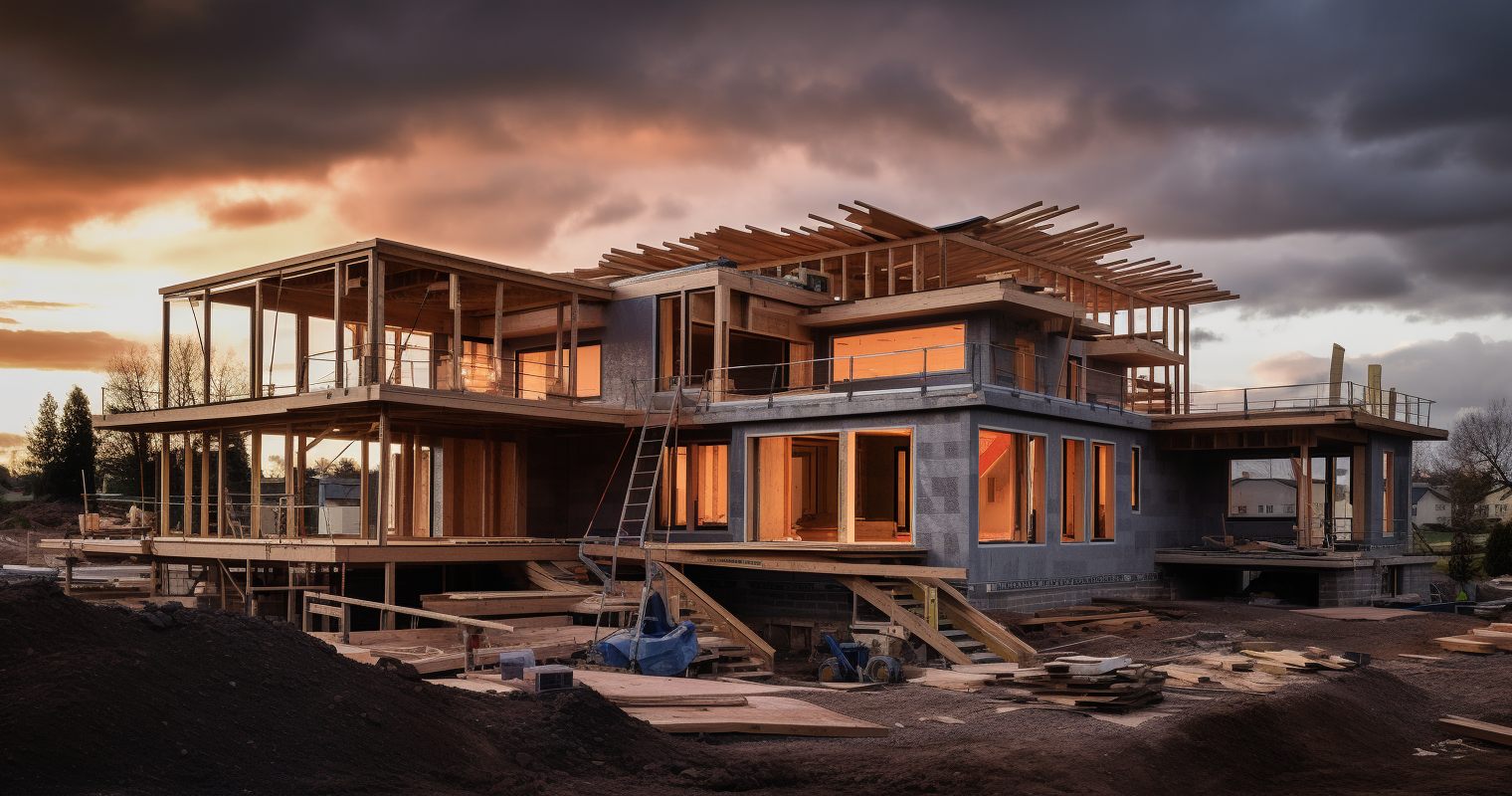
Anyone planning to build or renovate a property in Greece must work within a formalised permit framework established under Law 4495/2017 and the General Building Regulations. Virtually all structural construction activity requires planning permission, and every application must now be lodged through the Technical Chamber of Greece’s digital platform. While foreign nationals are broadly permitted to purchase land and undertake construction projects in Greece, a thorough assessment of zoning classifications, heritage obligations, and legal due diligence is essential before any commitment is made.
| Item | Details |
|---|---|
| Full Building Permit processing time (as of 2025) | Up to 45 working days, provided documentation is complete |
| Small-Scale Permit processing time (as of 2025) | Approximately 3–4 weeks |
| Full permit validity (residential) | 4 years; up to 6 years for larger projects |
| Small-scale permit validity | 1 year, with possibility of renewal |
| Indicative building permit cost for 100m² (as of 2025) | Approx. €16,000 including design, state fees, and technical oversight |
| State permit fee (as of 2025) | €20–€50 depending on licence type |
| Construction cost estimate (as of 2025) | Approx. €1,700–€2,400 per m² for traditionally built housing |
| Key regulatory platform | My TEE / e-Άδειες (Technical Chamber of Greece) |
Do you need planning permission to build or renovate a property in Greece?
Greece operates two principal categories of construction authorisation: the Full Building Permit (Οικοδομική Άδεια) and the Small-Scale Building Permit (Έγκριση Εργασιών Μικρής Κλίμακας). Identifying which category your project falls into is the critical first step before any work can legitimately begin. While the distinction broadly parallels the difference between full planning consent and permitted development rights seen in countries such as France or Germany, the Greek framework is more prescriptive in its requirements and is administered entirely through digital channels.
A Full Building Permit is mandatory for significant construction activity — erecting a new dwelling, extending an existing building, or undertaking structural alterations that affect a building’s stability. It is equally required for major earthworks, excavation exceeding 0.8 metres in depth, and the construction of swimming pools or retaining walls. Put simply, whenever a project alters the structural footprint, volume, or integrity of a building, a Full Building Permit is non-negotiable.
Where work does not affect a building’s structure or increase its volume, a small-scale permit may suffice. This covers internal refurbishment that leaves load-bearing walls untouched, and repairs to external finishes such as stone or plasterwork. Painting interior surfaces, carrying out minor internal repairs, or repainting an exterior facade accessible without scaffolding generally fall outside the permit requirement. That said, a qualified architect or civil engineer should always be consulted to confirm this, since unauthorised works can attract fines and create serious complications when the property is eventually sold.
Obtaining a full permit requires the submission of a comprehensive technical dossier containing architectural drawings, structural calculations, energy performance assessments, geotechnical reports where applicable, and a range of supporting plans. These materials are reviewed by the local Building Service via the national online permitting platform, My TEE.
The step-by-step process for obtaining a Full Building Permit is as follows:
- Appoint a licensed architect or civil engineer. Engineers are the sole applicants for the preliminary approval of a building permit and must hold passwords to the digital services of the Technical Chamber of Greece. You cannot submit the application yourself.
- Gather property documents. Collect essential details about your property, including land ownership documents, zoning classification, and existing structures. Forestry and archaeological clearance certificates are also typically required at this stage.
- Prepare technical studies. The dossier must include architectural designs, structural calculations, energy efficiency studies, geotechnical reports if needed, and various technical plans.
- Submit the application electronically. The procedure for submitting, checking, and issuing acts for the performance of building works is carried out exclusively online via the electronic platform of the Technical Chamber of Greece.
- Municipal review. The competent bodies for issuing administrative acts relating to building works are the City Planning Agencies of municipalities, unless specific provisions provide otherwise. They will check the completeness of the dossier and compliance with urban planning provisions.
- Permit issued. The building permit number issued electronically shall be posted online without delay and construction works may commence. The checks shall be carried out within three working days of the date of submission of the dossier.
Once granted, a residential building permit is ordinarily valid for four years, extending to six years for larger or more complex projects. Processing typically takes up to 45 working days when all documentation is in order and complies with current legislation, though in practice, intricate schemes or those affecting protected areas may take considerably longer.
The Greek authorities have intensified enforcement against illegal construction in high-demand locations such as Mykonos, resulting in suspended or prolonged permit reviews in those areas. Municipalities with particularly stringent planning rules — including Chania in Crete, the historic core of Corfu Town, and Oia on Santorini — tend to involve lengthier approval timelines.
In terms of costs, industry sources indicate that a building permit for a 100m² property runs to approximately €16,000. On top of this, VAT, owner insurance, a state fee, and inspection charges may apply. The state fee ranges between €20 and €50 depending on the licence type (as of 2025). Always confirm current figures with the relevant City Planning Agency or a licensed professional, as these amounts are subject to regular revision.
What are the rules around listed buildings, conservation areas, and heritage protection in Greece?
Greece operates a formally structured and wide-ranging heritage protection system — a direct consequence of its unparalleled archaeological and architectural legacy. Protection extends well beyond individual structures, encompassing entire zones, ancient sites, and forested land across the country.
The Central Archaeological Council and Museums Council (commonly known as KAS) is the supreme advisory body for all matters pertaining to the protection of antiquities and cultural patrimony in general in Greece. Sitting within the Ministry of Culture and Sports, it advises on policy, excavations, restoration projects, and any interventions affecting heritage assets, ensuring that preservation considerations take precedence in development decisions. A comparable body, the Central Council of Modern Monuments (ESANM), fulfils the same function for modern monuments and traditional settlements.
Properties designated as historic monuments are subject to legal protection and carry additional regulatory obligations. The Greek government’s website provides a search tool allowing users to enter a postcode or address and check whether a property appears on the protected buildings register — note that this tool operates in Greek. Before purchasing or planning any works, buyers should also approach the relevant local ephorate of antiquities under the Ministry of Culture and Sports for a definitive assessment.
Proximity to historic monuments, archaeological sites, the coastline, or areas of natural beauty typically triggers additional documentation requirements. In certain cases, simply assembling the paperwork necessary to lodge an application can be a protracted process in itself. Unlike jurisdictions where heritage protection operates on a simple listed or unlisted basis, Greece applies overlapping protection zones — a single property may simultaneously fall under archaeological, forestry, and coastal restrictions.
When acquiring real estate outside the city plan in areas where archaeological remains may be present, the Archaeological Service should be consulted directly. Land classified as forestry land carries significant development restrictions, since forestry land — alongside coastland and archaeological sites — is legally regarded as belonging to the state for common use.
It is worth noting that even isolated groupings of rocks, vegetation, or shrubs may be classified as forestry land. The status of any land should be independently verified using the official Forest Service mapping tool rather than relying solely on information provided by the seller. You can check the classification of your land at https://gis.ktimanet.gr/gis/forestfinal.
Where heritage protection rules are breached, authorities hold wide-ranging enforcement powers — these include conducting inspections, issuing stop-work orders, imposing administrative fines, revoking permits, and requiring the demolition of unauthorised structures. Criminal sanctions may follow in cases of serious zoning or environmental violations. The potential consequences are severe and may include forced demolition at the property owner’s expense. Consulting the Ministry of Culture and Sports before commencing any work near a protected site is therefore not merely advisable — it is essential.
What permits and licences are required when building or renovating in Greece?
A construction project in Greece requires more than just the core building permit. A variety of additional certificates, clearances, and approvals must typically be assembled throughout the process. While your appointed architect or engineer will coordinate many of these as part of the permit application, understanding the full picture of what is required at each stage is important for any property owner.
Before a building permit can be issued, clearance certificates must be obtained from the forestry department confirming that the plot is not classified within the Greek forestry fund, and from the archaeology department confirming that the site presents no archaeological concerns. These are prerequisite conditions, not secondary approvals sought after the permit is granted.
During and after construction, the following are typically required:
- Energy efficiency certificate: An energy construction certificate costs an average of €100 and takes 5–15 days to obtain (as of available industry data; verify current fees with your engineer).
- Plumbing installation certificate: Average cost €50, taking 5–15 days.
- Electricity installation certificate: Costs are in a similar range.
- Swimming pool permit: Swimming pool construction requires a separate permit. In Greece, a swimming pool is regarded as a luxury element, and costs for the respective building permit may seem unreasonably high. These costs can be significantly reduced if the pool licence is obtained as part of the main construction permit.
- Technical oversight during construction: Average cost is €240 per day plus travelling expenses for on-site inspections at the foundation and completion stages (as of available industry data).
- Demolition waste contract: A written contract for the management and disposal of waste created from demolition and/or construction is a legal requirement.
During earthworks, the presence of an archaeological service representative is mandatory. This is a distinctive and significant requirement specific to Greece — any excavation may uncover ancient remains, which can bring work to a temporary or even permanent halt if finds of sufficient importance are made.
Once a building permit has been issued, any deviations from the approved design can only be formalised through agreement with the relevant authorities. Each modification incurs additional cost, the amount of which depends on the nature and extent of the changes involved. On-site design alterations should never be assumed permissible without a formal revision permit being obtained first.
As sustainability requirements become increasingly prominent in Greek construction law, projects targeting energy efficiency compliance may require supplementary documentation and attract higher permit fees. Meeting standards for energy-saving building techniques, integrating renewable energy installations, or incorporating bioclimatic design principles can add both complexity and cost to the overall permitting process.
How do you find a reliable, trustworthy builder in Greece?
Professionals engaged in preparing and submitting land use applications in Greece must be licensed and registered with their respective professional chambers and fulfil ongoing regulatory requirements. The construction sector is therefore formally governed — but formal regulation does not guarantee uniform standards across all contractors. Careful vetting is particularly important for projects in remote locations or on the islands, where oversight may be less readily available.
The primary professional and regulatory body for the construction industry in Greece is the Technical Chamber of Greece (TEE — Τεχνικό Επιμελητήριο Ελλάδας). All licensed civil engineers, structural engineers, and construction professionals must be registered with TEE. Contact details:
- Address: 4, Karageorgi Servias Street, 102 48 Athens, Greece
- Website: web.tee.gr
- Telephone: +30 210 329 1364 / +30 210 329 1351
- Email: [email protected]
When assessing a potential contractor, the following practical steps are recommended:
- Verify TEE registration. Any reputable builder or engineer working on your project should hold a current TEE registration. Request their TEE registration number and confirm it directly with the Chamber.
- Insist on written contracts. Always require a detailed written agreement specifying the scope of work, materials to be used, the payment structure, start and completion dates, and procedures for resolving disputes. Verbal arrangements carry no weight in a legal dispute.
- Adopt staged payments. Avoid paying the full contract sum upfront. Structure payments around agreed milestones — for instance, at foundation completion, at first-floor completion, and at final handover — giving you meaningful leverage if work falls below the expected standard.
- Confirm insurance cover. Establish that the contractor holds both professional indemnity and public liability insurance, and request documentary evidence of this before any work begins.
- Seek references. Ask for at least two or three references for completed projects in Greece and speak with those clients directly. Expat community networks and local online forums can be a useful source of warning about contractors to avoid — those who have navigated the process themselves are usually willing to share candid assessments of local tradespeople.
Watch out for contractors who offer to proceed without obtaining a building permit — the assurance that “everyone does it here” is never a safe basis for proceeding. Similarly, be wary of those demanding large upfront payments or refusing to provide a written contract. Under Greek law, any construction carried out without the required permit is automatically classified as an unauthorised structure, exposing the property owner to substantial fines and criminal prosecution. Furthermore, an unauthorised property cannot be transferred. Legal liability falls squarely on the owner, not the contractor — so any suggestion of working without permits should be treated as a serious warning sign.
How do you find a qualified local architect in Greece?
Architects bear responsibility for producing designs that conform to Greek building regulations. Licensed architects and engineers produce the plans, drawings, and supporting documentation required for permit applications, and are authorised to submit these materials electronically and manage the administrative process through the Technical Chamber of Greece’s My TEE platform. Notably, the boundary between the architectural and engineering professions in Greece is less rigid than in some other countries — architects frequently hold civil engineering qualifications as well, and the TEE serves as the regulatory authority for both disciplines.
To practise lawfully in Greece, an architect must be licensed and registered with the relevant professional body — which is again the Technical Chamber of Greece (TEE). The TEE’s online directory at web.tee.gr can be used to verify whether a given architect holds a current registration in good standing.
Contact details for the Technical Chamber of Greece (for architect and engineer registration enquiries):
- Address: 4, Karageorgi Servias Street, 102 48 Athens, Greece
- Website: web.tee.gr
- Telephone: +30 210 329 1364 / +30 210 329 1351
- Email: [email protected]
A locally registered Greek architect will be familiar with applicable building regulations and local planning requirements, ensuring your project is designed in accordance with the law. While there is no legal obligation for an architect to speak any particular language, an expat client will benefit considerably from working with a professional who can communicate fluently in a shared language — or from engaging a bilingual project manager to bridge any communication gaps. Foreign architectural qualifications are not in themselves sufficient; the architect or engineer responsible for signing off any Greek permit application must hold TEE registration.
Architect’s fees may be structured as a fixed sum, charged at an hourly or daily rate, or calculated as a proportion of total construction costs. As a broad guide, pre-construction architectural fees tend to run to approximately 4% of the overall build cost (as of available industry data). Always agree on the fee structure in writing before any work is commissioned, and ensure that the contract clearly delineates which services are included — design work, permit applications, site supervision, and completion certificates each constitute distinct workstreams with their own associated costs.
What are the common pitfalls when buying land to build on in Greece?
A number of technical and legal due diligence checks should be carried out before acquiring a plot of land with the intention of building, or before extending an existing structure. The assumption that any given plot can be built on, or that a swimming pool can be added, must be verified before any deposit is paid.
Understand the land classification. Establish whether the plot is treated as being within a settlement (“Ikopedo”) or outside one (“Agrotemahio”), as this directly affects the ease with which building consent can be obtained. Rules introduced in 2024 further subdivided settlements into distinct development zones — consolidated, scattered, and sparsely built — each with additional sub-categories including suburban, coastal, mountainous, and traditional, and each carrying its own set of building restrictions. For instance, land outside a town or village can only be developed on a plot of at least 4,000 sqm that borders a public road, with height restrictions of 4m for single-storey buildings and 7.5m for two-storey structures.
Check for forestry classification. Land classified as forestry land cannot be built on, regardless of whether any trees are actually present. Even scattered rocks, shrubs, or plant groupings may be sufficient for land to receive a forestry classification. A forestry certificate should be obtained from the relevant authority before any purchase proceeds.
Check for archaeological restrictions. Land in the vicinity of an archaeological site may be eligible for a special permit, but this is by no means guaranteed and will extend the timeframe considerably. An archaeological clearance certificate should be sought from the local ephorate of antiquities.
Verify boundaries and title. Confirm that the topographic survey corresponds to what you are being told is included within the plot. Establish clearly who holds ownership — where multiple owners exist, all must consent to the sale. Any debts registered against the property must also be identified. Greece’s cadastral system remains incomplete in certain areas, and unclear or disputed title represents a genuine risk that should not be underestimated.
Confirm utility availability. Verify that the plot benefits from road access, clarify the ownership of adjacent land, and confirm whether right of way exists. For rural properties or island plots, the expense of establishing water, electricity, and sewerage connections can be considerable — this should be ascertained before purchase, not after.
Engage professional advisors. A property lawyer will protect your interests by scrutinising deeds, ownership records, registered debts, and zoning regulations, as well as preparing contractual documentation. A notary is a legal requirement for completing any property transaction in Greece, but their function is essentially to authenticate the deal — engaging a separate lawyer acting exclusively in your interests provides an additional and important layer of protection. Obtain written confirmation from the local planning authority that the specific plot is buildable and establish the likely permit timeline before any money changes hands.
The national land registry and cadastral authority, Hellenic Cadastre (ktimanet.gr), holds records of property ownership and boundaries. This register should always be checked before any funds are transferred.
What are the rules around foreign ownership and financing for construction projects in Greece?
Greece is broadly welcoming to foreign property ownership, and EU nationals face no general restrictions on purchasing land or commissioning construction projects. Article 17 of the Hellenic Constitution enshrines the right to property as a fundamental right protected by the state, and the principal legislation governing real estate transactions is the Hellenic Civil Code.
Non-EU nationals may encounter additional requirements, particularly in areas designated as “border zones” near national boundaries, where ministerial approval for foreign ownership has historically applied. These requirements have been eased across many locations in recent years, but prospective buyers should confirm the current position with a local lawyer before proceeding, as the designation of specific border zones remains subject to change.
Foreign direct investment in Greek real estate exceeded €2.75 billion in 2024, with Golden Visa-linked purchases from a wide range of nationalities sustaining strong demand and contributing to both urban regeneration and resort development. The Greek Golden Visa programme — which provides residency rights to qualifying property investors — has been a significant catalyst for foreign-led construction activity. Commissioning a new build grants its owner the same entitlement to apply for a residency permit as purchasing a completed property. For current Golden Visa investment thresholds and eligibility criteria, consult Enterprise Greece or a licensed immigration lawyer, as these conditions are revised on a regular basis.
There is no requirement to hold a Greek bank account in order to undertake a construction project, though you will need one to purchase land or property in the first place, and managing ongoing payments and invoices without a local account is impractical. Foreign buyers must obtain a Greek Tax Identification Number (AFM) before completing any property transaction or opening a Greek bank account. This is issued by the local tax authority (AADE).
Access to Greek bank financing for construction projects can be more restricted for foreign nationals than in many comparable markets. Rising inflation and elevated interest rates over recent years have dampened development activity, increased the cost of borrowing, moderated property price growth, and reduced demand for mortgage products — while also contributing to delays in the issuing of new building permits. Many foreign buyers fund their projects through self-financing or offshore arrangements, and it is strongly advisable to seek guidance from a financial adviser with expertise in both the Greek banking environment and your own home financial system before depending on locally sourced mortgage products.
When acquiring land or property in Greece, property transfer tax of between 3% and 24% is payable depending on the value of the transaction, together with notary fees of 0.5% to 1% and Land Registry fees of 0.5% to 1%. These acquisition costs are separate from all construction and permit expenses and should be incorporated into your overall financial planning from the very beginning.
What official sources should you consult when planning to build or renovate in Greece?
Given that regulations, fees, and procedures in Greece are subject to frequent change, consulting official sources is not optional — it is indispensable. The following bodies and registers should be reviewed before any purchase or construction project is confirmed:
| Body / Register | Role | Website |
|---|---|---|
| Technical Chamber of Greece (TEE) | Regulates architects and engineers; administers the electronic permit platform (My TEE / e-Άδειες) | web.tee.gr |
| Ministry of Environment and Energy (ΥΠΕΝ) | Responsible for building regulations, urban planning, and the General Building Regulations | ypen.gov.gr |
| Hellenic Cadastre (Ktimatologio) | National land registry and cadastral authority; check title, boundaries, and ownership | ktimanet.gr |
| Ministry of Culture and Sports | Heritage and archaeological protection; consult before any work near protected sites | culture.gov.gr |
| National Registry of Administrative Services (Mitos) | Official step-by-step guides to permit procedures in Greece | en.mitos.gov.gr |
| Enterprise Greece | Investment authority; information on Golden Visa and strategic investment procedures | enterprisegreece.gov.gr |
| Local City Planning Agency (Poleodomia) | Grants building permits at municipal level; consult for local zoning rules and permit queries | Contact your local municipality directly |
| Forest Service (Dasarchio) / Forest Map GIS | Check whether land is classified as forestry land before purchase | gis.ktimanet.gr/gis/forestfinal |
Building regulations in Greece are liable to change quickly and can differ substantially from one location to another. Any investigation should be entrusted to professionals with current, location-specific knowledge. Official sources should always be consulted for the most up-to-date requirements — information from a previous transaction, an online forum post, or advice given in relation to a different part of the country cannot be relied upon.
A proposal for a simplified Building Code by 2026, put forward by the Technical Chamber of Greece, is intended to modernise the country’s construction framework, reduce bureaucratic burdens, and introduce greater legal clarity around how building permits are issued and managed. Updates from the Ministry of Environment and Energy and the TEE should be monitored for further developments to the regulatory landscape.
Frequently asked questions
How much does it typically cost to build a house in Greece from scratch?
Construction costs in Greece vary considerably depending on location, property size, and the specifications of the project. As a working estimate, expect to pay in the region of €1,700 to €2,400 per square metre for a traditionally built house (as of 2025). Architect’s fees — typically around 4% of the build cost — building permit costs, taxes, and utility connection charges all come on top of this. For a 150m² house, the total spend including all professional fees and permits could readily reach €350,000–€500,000 or more in sought-after locations.
How long does the entire build process take in Greece, from buying land to moving in?
For a straightforward new build, a realistic minimum timeframe from land purchase through to completion is 18–24 months. Land due diligence and purchase generally takes 2–4 months. Once all documentation is assembled and compliant, the full building permit can take up to 45 working days to process — though in some instances planning consent for an extension has taken seven months or more, even when owners have actively chased documentation themselves. Construction time is additional, and depends on the complexity of the build and the availability of contractors.
Are there language barriers when dealing with Greek planning authorities?
All official permit submissions and communications with planning bodies are conducted in Greek. The entire process of lodging and receiving approval for building works takes place exclusively through the Technical Chamber of Greece’s online platform, which operates primarily in Greek. Your appointed architect or engineer will handle these interactions on your behalf — which underlines the importance of choosing a professional who is also able to communicate clearly with you in a shared language. Engaging a bilingual lawyer and architect from the outset will spare you considerable time and difficulty throughout the process.
What happens if I carry out construction work without a permit in Greece?
Any construction undertaken without the required building permit is automatically classified as an unauthorised structure under Greek law, exposing the owner to substantial fines and criminal prosecution. In addition, an unauthorised property cannot be sold or transferred. The consequences — which may include demolition orders — apply to the property owner regardless of whether the work was carried out by a third-party contractor. Unpermitted construction is among the gravest risks facing foreign property owners in Greece, and any contractor who suggests proceeding without a permit should be regarded with serious suspicion.
Are foreign building qualifications or standards recognised in Greece when working with foreign contractors?
No. All architects, engineers, and other professionals submitting construction applications in Greece must be licensed and registered with the relevant Greek professional chamber. A foreign-qualified engineer or architect cannot sign off on permit applications unless they hold TEE registration. EU-qualified professionals may in principle apply for recognition of their credentials under EU mutual recognition directives, but this is a distinct and separate process. In practice, all permit-related work must be overseen and authenticated by a TEE-registered professional. Foreign contractors may be engaged for decorative or non-structural interior work, but any activity requiring a permit must involve duly licensed local professionals.
Can I dispute or complain about a contractor who has done poor work in Greece?
Yes — legal recourse is available. Where a contractor has failed to honour the terms of a written agreement, a civil claim may be brought through the Greek courts. Enforcement action can also be sought through administrative or civil channels to ensure compliance with building requirements. If the contractor in question is TEE-registered, a formal complaint may additionally be lodged with the Technical Chamber of Greece, which exercises disciplinary authority over its members. A detailed written contract, documented records of agreed standards, and evidence of staged payments are all essential if a dispute arises. Engaging a Greek lawyer before signing any contractor agreement — rather than waiting until problems emerge — is strongly advisable.
What are the restrictions on building near the coast in Greece?
Construction directly on beach land is prohibited, as the beach is classified as public space. When acquiring real estate outside the city plan in coastal locations, a mandatory minimum setback distance from the shoreline must be observed. The exact distance required varies according to the specific coastal zone classification and can differ significantly between sites. Coastal land in Greece is subject to extensive regulatory controls, and any project in proximity to the sea requires dedicated permits from the relevant port authority and the Ministry of Environment and Energy. Exact setback requirements should always be confirmed with your architect and the local planning authority before any coastal land is purchased.
What is the Golden Visa programme and how does property construction relate to it?
Greece’s Golden Visa programme offers a five-year renewable residency permit to non-EU nationals making qualifying property investments in the country. Commissioning a new build confers the same entitlement to apply for a property owner’s residency permit as purchasing an existing property, meaning new construction can qualify alongside the acquisition of completed homes. Eligibility thresholds and qualifying conditions have been revised on multiple occasions in recent years — for the rules currently in force, consult Enterprise Greece or a licensed immigration lawyer, as the position at the time of reading may differ from that described in this article.