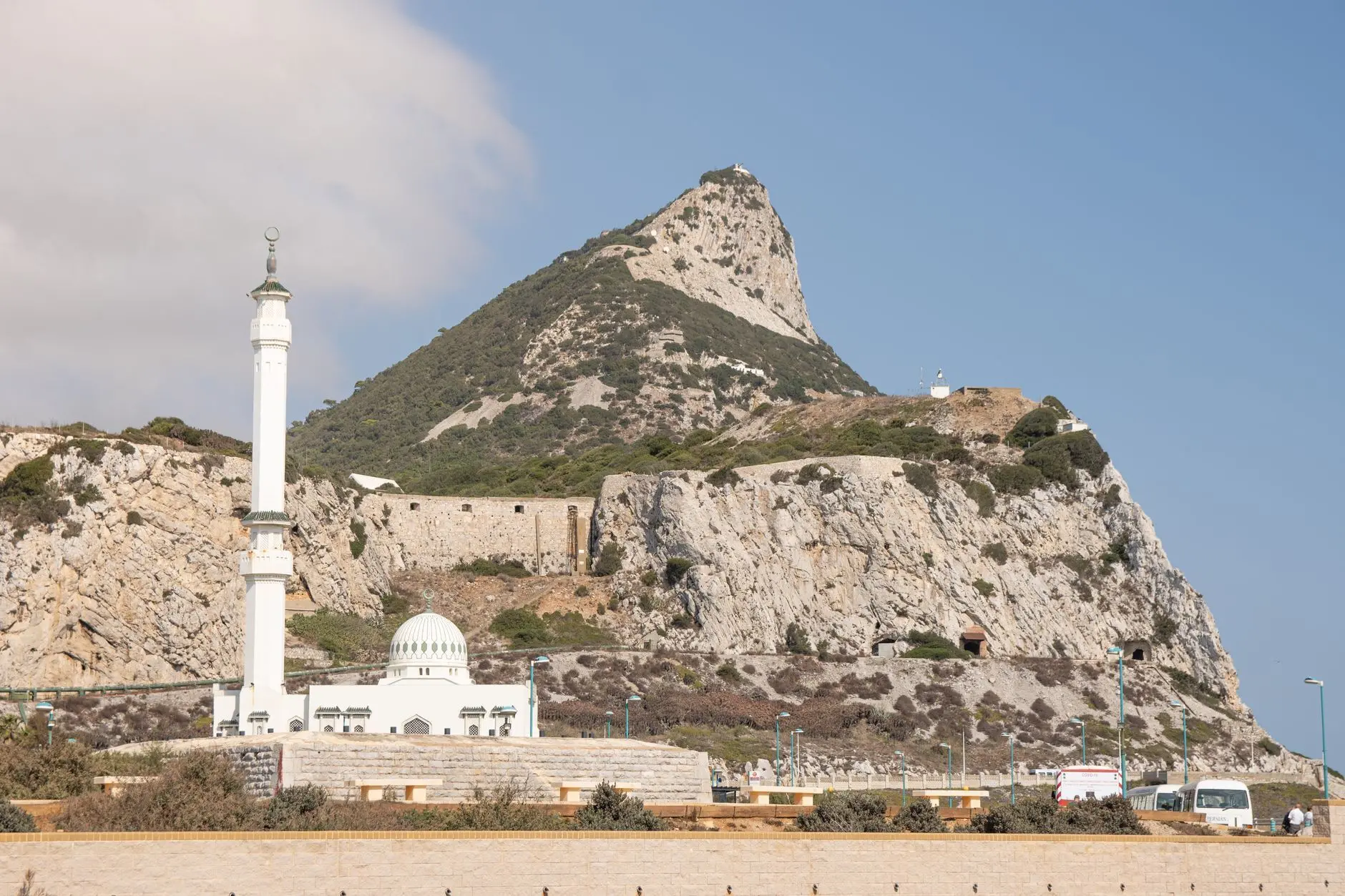
Anyone wishing to build or renovate a property in Gibraltar must carefully navigate a strictly regulated planning environment. Every form of development — from entirely new structures to significant modifications — demands planning permission from the Development & Planning Commission, along with a separate building regulations approval. Heritage protections carry considerable weight, developable land is in extremely short supply, and while foreign nationals are permitted to acquire property, they must first come to grips with Gibraltar’s distinctive land tenure and leasehold arrangements before embarking on any project.
| Item | Details |
|---|---|
| Planning authority | Development & Planning Commission (DPC), Suite 631 Europort, Gibraltar |
| Planning permission requirement | Required for all “development” before works begin (as of 2025) |
| Building regulations authority | Building Control Section, Department of Town Planning & Building Control |
| Heritage legislation | Heritage and Antiquities Act 2018; scheduled monuments and listed buildings apply |
| Land registry | Land Property Services Ltd (lps.gi) administers title searches and property registration |
| New Development Plan | New Gibraltar Development Plan under preparation; public consultation expected in 2025 |
01Do you need planning permission to build or renovate a property in Gibraltar?
Every form of “development” in Gibraltar requires planning permission — alongside approval under the building regulations where applicable — before any work may commence. The scope of “development” is intentionally wide: it encompasses any material change in the use of land, and covers demolition, building, engineering, mining, and other operations carried out in, on, over, or under land. As a consequence, even substantial internal works that alter a building’s structural integrity or fundamentally change the character of a space will ordinarily require formal permission. If there is any doubt about whether your intended works fall within this definition, approach the Town Planning Division for pre-application guidance before anything else.
In contrast to many other countries — England and Wales, for instance, where the General Permitted Development Order automatically permits certain minor works such as modest rear extensions or loft conversions — Gibraltar does not publish a broadly applicable permitted development framework that exempts everyday household projects. The safe assumption is that any structural alteration, extension, change of use, or modification to a building’s external appearance will require formal approval. Given that Gibraltar’s new Development Plan is currently in preparation and policies may shift accordingly, always confirm the current position with the Town Planning Division.
Larger or more involved projects typically begin with an outline planning application. Under Section 18 of the Town Planning Act, an applicant may seek Outline Planning Permission; if granted, this establishes approval in principle for the proposed development subject to conditions, but does not authorise work to begin on site. Following the outline stage, the applicant must proceed with a detailed application covering both a Planning Permit and Building Control approval.
A Planning/Building Control application is a combined submission seeking a Planning Permit under Section 17 of the Town Planning Act and Building Control Approval under Section 45 of the Public Health Act. The Planning Permit confirms that all planning considerations relating to the development have been addressed and may be issued subject to specified conditions. Building Control Approval confirms that the proposal satisfies the Gibraltar Building Regulations and may similarly be issued with conditions attached.
Certain categories of development — commonly referred to as “Section 19 developments” — must undergo a more extensive publicity process before a decision is reached. Typical examples of Section 19 developments include buildings exceeding four metres in height, extensions adding one or more additional storeys where the resulting height surpasses four metres, and swimming pools. For a complete list, consult the Town Planning Division directly or refer to the Town Planning (General Procedures) Regulations, 2001, available at www.gibraltarlaws.gov.gi.
The step-by-step planning application process is as follows:
- Pre-application enquiry: Contact the Town Planning Division at Suite 631, Europort, Gibraltar (tel: +350 20075483; email: [email protected]) to establish whether planning permission is required and to obtain informal guidance prior to commissioning any drawings.
- Prepare application documents: Engage an architect or planning consultant to produce drawings, a design statement, and any required sustainability or heritage assessments. All plans and documentation must be prepared in English.
- Submit via ePlanning: Most applications should be submitted through the ePlanning service available on the Gibraltar government’s planning portal. Major applications may also require hard copies.
- Notify owners and neighbours: If you are not the sole owner of the site, you must serve notice on all other landowners using Form S21A. Section 19 developments additionally require a public notice to be displayed on site and published in the Gibraltar Gazette and local newspapers.
- Validation and consultation: Once the Town Planner validates the application under section 24, interested parties have 21 working days in which to submit representations. The Commission consults relevant bodies — including the Heritage Division, Environmental Agency, and Civil Aviation Authority — as the nature of the project requires.
- Decision by the Development & Planning Commission: All planning decisions rest with the Development & Planning Commission. The Commission meets regularly, and its agendas and approved minutes are published on the Gibraltar government website.
- Discharge conditions and begin works: Where permission is granted subject to conditions, each condition must be formally discharged — that is, approved in writing by the relevant authority — before work on the relevant elements of the project can commence.
Tall building proposals attract additional scrutiny. The Development and Planning Commission expects a comprehensive design statement to accompany any such application and, even at outline stage, requires sufficient detail to allow full consideration of the scheme. Beyond securing the Commission’s permission, Government approval is also required for tall buildings.
Application fees are governed by the Town Planning (General Procedures) Regulations, 2001. The precise fee depends on the type and scale of the development; confirm the current schedule with the Town Planning Division or at www.gibraltar.gov.gi/town-planning, as figures are updated periodically. For uncomplicated applications, decisions are typically issued within eight to thirteen weeks of validation, though contested or complex proposals can take considerably longer. Timescales should always be verified with the Department directly, particularly given the potential impact of the new Development Plan process on workloads in 2025.
02What are the rules around listed buildings, conservation areas, and heritage protection in Gibraltar?
Gibraltar operates a formal statutory heritage protection framework broadly comparable — though not identical — to the listed building and conservation area regimes found in the UK or Ireland. The role of the Archaeological Officer is a statutory one, with obligations enshrined in the Heritage and Antiquities Act 2018. That officer is responsible for advising Government on archaeological, heritage, and conservation matters and answers directly to the Minister in this capacity.
Heritage protection law and policy in Gibraltar is set out across a number of documents, including legislation that provides a statutory basis for safeguarding the territory’s urban heritage. That legislation includes two Schedules — A and B — listing monuments, buildings, sites, and antiquities afforded formal protection. If a property appears on either schedule, any works that would affect its character, structure, or setting require consent from the Heritage Division, over and above the ordinary planning permission process.
The Ministry for Heritage carries responsibility for the protection, upkeep, and restoration of all of Gibraltar’s heritage assets. It works alongside heritage partners including the Gibraltar Heritage Trust, the Gibraltar National Museum, the UNESCO World Heritage Office, the Gibraltar National Archives, and the Garrison Library. The Heritage Division is based at Napier of Magdala Battery and can be reached by email at [email protected].
The Heritage Division’s responsibilities span conservation of the built environment, the adaptive reuse of historic structures, development in sensitive locations, and the management of heritage assets. Among the Archaeological Officer’s functions are advising Town Planning and the private sector on building applications, overseeing restoration works at listed sites and historically significant areas, and conducting Desk-Based Assessments and Heritage Impact Assessments.
The Historic Old Town is subject to particularly significant development constraints. The Heritage Management Plan, currently being compiled by the Heritage Division, will set out in greater detail how the Government intends to see the built heritage managed going forward. The Development and Planning Commission seeks to preserve what is most valuable in the existing environment while accommodating change that is sensitive and constructive, and its policies are directed at ensuring that new development meets a high design standard.
Trees are also subject to their own protection regime. From 27 September 2021, applications relating to works on trees are no longer directed to the Development and Planning Commission but to the Department of the Environment, Sustainability, Climate Change and Heritage. Always check whether trees on a site under consideration are protected before planning any removal or pruning works.
The consequences of breaching heritage protections are severe. Enforcement notices may be issued, unauthorised works can be ordered to be undone, and criminal prosecution is available under Gibraltar law. Before acquiring any property that may be of heritage significance, commission a Heritage Impact Assessment and seek the Heritage Division’s guidance. The Heritage Division’s contact page can be found on the Gibraltar government website. The Gibraltar Heritage Trust (John Mackintosh Square, Gibraltar) is also an excellent resource for understanding the protections that apply to a particular site.
03What permits and licences are required when building or renovating in Gibraltar?
Planning permission alone does not authorise construction to begin. Multiple parallel consents are required, and failing to secure them in the right sequence can result in work being stopped, financial penalties, or an inability to obtain a Certificate of Fitness upon completion. This is comparable in some respects to the two-track process in Australia, where development approval and a building permit are separate steps — in Gibraltar, planning approval and building regulations approval proceed alongside one another but remain formally distinct instruments.
The Building Control Section’s core responsibilities include administering and enforcing building regulations made under the Public Health Act, reviewing deposited plans, and carrying out site inspections to confirm that works have been executed in accordance with approved specifications. Building Control can be contacted at Suite 631, Europort, Gibraltar (tel: +350 20075483; email: [email protected]).
Once works are satisfactorily completed, the Building Control Section coordinates a joint assessment with the Environmental Agency and the Fire Prevention Department to determine whether the new building is suitable for occupation. A Certificate of Fitness is issued if the outcome is satisfactory. Building Control also holds responsibility for overseeing demolition operations. Since a new building cannot legally be occupied without this Certificate, planning for the final inspection and sign-off well in advance of any intended move-in date is essential.
The principal approvals and permits required at each stage of a typical project are:
- Planning Permit — issued by the Development & Planning Commission under the Town Planning Act 2018. Must be obtained before any development begins.
- Building Control Approval — issued by the Building Control Section under the Public Health Act. Confirms that the proposed works comply with the Gibraltar Building Rules. This is ordinarily applied for at the same time as the Planning Permit using the combined application form.
- Heritage Licence — issued by the Heritage Division where works affect listed monuments, buildings, or sites under the Heritage and Antiquities Act 2018. This is required in addition to, and not as a substitute for, planning permission.
- Tree Works Consent — required from the Department of the Environment, Sustainability, Climate Change and Heritage where any protected tree is to be felled, pruned, or otherwise affected by construction activity.
- Fire Safety Sign-off — the Fire Prevention Department is consulted during the Certificate of Fitness process and must confirm that the finished building meets fire safety standards.
- Environmental Agency approval — the Environmental Agency participates in the Certificate of Fitness process and may also act as a statutory consultee at the planning stage for larger or potentially polluting developments.
- Aviation Safeguarding clearance — the Director of Civil Aviation publishes policy and procedures governing development that may affect aviation safety. Buildings above a certain height in proximity to Gibraltar International Airport require clearance from the DCA ([email protected]).
- Utility connection permits — connections to water, electricity, and sewerage networks are arranged separately with the relevant providers. Contact Gibraltar Electricity Authority, Gibraltar Waterworks, and Gibraltar Sewage Services to establish connection requirements and timescales for your specific project.
Always confirm current fee levels and processing timescales for each of these approvals directly with the issuing authority, as they are subject to revision. Refer to the Building Control page on the Gibraltar government website for up-to-date information.
04How do you find a reliable, trustworthy builder in Gibraltar?
Gibraltar’s construction sector operates in a small, interconnected market. Given the territory’s limited geographical footprint and the high demand for skilled tradespeople, reputable contractors are frequently in short supply. This imbalance can place pressure on foreign property owners to accept informal arrangements or make substantial upfront payments — both of which carry real risk. Taking time to thoroughly vet any prospective contractor before signing anything or handing over money is time very well spent.
There is no single mandatory statutory licensing scheme covering all building contractors in Gibraltar equivalent to, for example, CPCB licensing in parts of Australia or state contractor licensing in the United States. Nevertheless, reputable builders working on projects that require planning permission and building control approval will be subject to ongoing inspections by the Building Control Section throughout the course of the works. Ask any contractor you are considering to show you evidence of recent projects that received a Certificate of Fitness — this is a practical signal that the contractor operates within the formal approval system.
The Gibraltar Federation of Small Businesses and the Gibraltar Chamber of Commerce are useful starting points for identifying established local firms. The Chamber of Commerce is located at: www.gibraltarchamber.gi, Watergate House, 2/8 Casemates Square, Gibraltar GX11 1AA; tel: +350 200 78376; email: [email protected]. Members are generally expected to adhere to professional standards and hold appropriate insurance coverage.
Practical measures for vetting a contractor include:
- Request references — ask for the contact details of at least two or three clients for whom the contractor has recently completed work in Gibraltar, and follow up with each of them. Ask specifically whether the project was finished on time and within budget, and whether the Certificate of Fitness was obtained without complications.
- Verify public liability insurance — ask to see the contractor’s current certificate of public liability insurance and employer’s liability insurance. Do not accept verbal assurances in lieu of documentation.
- Insist on a written contract — a thorough contract should define the scope of works, materials to be used, the payment schedule, start and completion dates, a dispute resolution mechanism, and the consequences of overruns. Avoid arrangements requiring large upfront payments; staged payments linked to verified milestones are standard practice among reputable contractors.
- Engage an independent clerk of works or project manager — for major projects, particularly if you are not based in Gibraltar throughout the build, consider appointing an independent professional to supervise works on your behalf.
- Check company registration — confirm that the contractor is a registered company with the Companies Registry, which is accessible via the Gibraltar government website. Having a legal entity to pursue in the event of problems provides an important layer of protection.
- Treat cash-only requests as a warning sign — requests for all payments to be made in cash, especially for large amounts, are a red flag. Legitimate contractors accept bank transfers and issue VAT receipts.
A common error made by foreign property owners is accepting an informally recommended contractor without carrying out independent checks, only to discover partway through the project that the contractor lacks the capacity or expertise to deliver the finished work. Retaining an architect or project manager who operates independently of the builder provides vital oversight and is strongly recommended for any project going beyond routine maintenance.
05How do you find a qualified local architect in Gibraltar?
The architectural profession in Gibraltar is governed by the Architects Act, which requires anyone wishing to use the title of architect and to practise professionally in the territory to be registered accordingly. The body responsible for maintaining this register is the Gibraltar Society of Architects (GSA). You should always check that any architect you are considering appointing is listed on the GSA register before engaging them. For the most current contact details for the GSA, consult www.gibraltar.gov.gi or search the Gibraltar Companies Registry.
Architects practising in Gibraltar are required to hold professional indemnity insurance. Before formalising any appointment, ask to see the architect’s current indemnity certificate and satisfy yourself that the level of cover is commensurate with the scale of your project. Professional indemnity insurance is your primary protection if errors in design or specification result in financial loss.
When selecting an architect for a project involving planning permission, it is strongly advisable to choose someone with direct experience of navigating the Gibraltar planning system and engaging with the Development & Planning Commission. The DPC’s approach to heritage considerations, urban design, and sustainability in such a compact and densely developed territory is highly specialised, and an architect well acquainted with local expectations will be far better placed to produce an application that succeeds at the first attempt.
For projects touching on heritage properties or listed structures, seek out an architect with a proven track record of working with the Heritage Division and familiarity with the Heritage and Antiquities Act 2018. Heritage restoration in Gibraltar is technically demanding and calls for sensitivity to local materials and historical context that may differ markedly from professional practice elsewhere. All documentation and plans submitted to the DPC must be in English, so language presents no barrier for architects working in Gibraltar, but knowledge of the local planning system is indispensable.
For expats who will not be based in Gibraltar throughout the project, clarify from the outset how the architect intends to manage the scheme during your absence — including attending DPC hearings, liaising with Building Control, and coordinating with the contractor on site. Establish whether the architect offers full project management services or whether a separate project manager will need to be appointed.
06What are the common pitfalls when buying land to build on in Gibraltar?
Land in Gibraltar is in exceptionally short supply. The territory spans just 6.7 square kilometres, and virtually all developable land is already built upon. Genuinely available building plots are rare, and any that do come to market tend to generate intense interest, creating pressure on buyers to commit rapidly without conducting proper due diligence. That pressure should be resisted — the cost of getting things wrong is substantial.
Confirm that planning permission can actually be obtained before you exchange. The fact that land is marketed as a building plot does not guarantee that planning permission will be forthcoming. Examine the Gibraltar Development Plan — currently under review, with the Department of Town Planning and Building Control working alongside planning consultants Lichfields to revise the existing 2009 plan and produce a new Development Plan — to understand what uses and densities are permitted on the site in question. Consider making any purchase contract conditional on securing at least outline planning permission before completion.
Understand the land tenure system. A large proportion of land in Gibraltar is held on Crown leasehold rather than freehold. The length and conditions of a lease, and any restrictions placed on the leaseholder’s right to develop or modify the property, can have a profound effect on what you are actually permitted to do. Before exchanging contracts, instruct a Gibraltar solicitor to review the full terms of the lease, its remaining duration, and any landlord consent requirements for development. Where land is held on a freehold basis, development must still proceed through the established Development and Planning Commission process, but leaseholders must additionally comply with any development-restricting covenants embedded in the lease.
Investigate title at the Land Registry. The Land Registry’s online portal allows property professionals to carry out title searches, for a fee. Land Property Services Ltd (lps.gi) administers the Land Registry. Always commission a comprehensive title search before exchanging contracts to verify ownership history, any existing charges, easements, rights of way, and any registered restrictions affecting the site.
Assess environmental and contamination risks. Certain parts of Gibraltar — in particular former military and industrial zones — may carry contamination issues. Commission an environmental survey before committing to the purchase of any site with a military or industrial past. The Environmental Agency, contactable through the Gibraltar government website, can advise on whether an Environmental Impact Assessment is likely to be needed for your intended development.
Confirm utility availability. Even where a plot exists, connections to water, electricity, and sewerage may not be straightforward and could carry significant costs. Clarify availability and connection costs with the relevant utility providers before completing any purchase.
Appoint a qualified Gibraltar solicitor. Property conveyancing in Gibraltar is governed by local law, which draws on elements of both Spanish and English legal traditions and is distinct from either. Never attempt to handle a purchase without a Gibraltar-qualified solicitor. The Gibraltar Law Society (www.gilawsoc.gi) maintains a directory of qualified solicitors and can help you identify a firm with the right conveyancing expertise.
07What are the rules around foreign ownership and financing for construction projects in Gibraltar?
Gibraltar imposes no nationality-based restrictions on the purchase of property or land by foreign nationals. There is nothing equivalent to the restrictions on overseas land ownership found in certain other jurisdictions — such as Denmark’s requirement for special government approval before non-residents may purchase property, or New Zealand’s constraints on overseas investors. Any individual, regardless of nationality or place of residence, may in principle acquire property in Gibraltar, subject to complying with the same legal processes that apply to all buyers.
Several practical considerations are, however, of particular relevance to overseas buyers. First, as noted elsewhere in this guide, a significant portion of Gibraltar’s residential property is held on Crown leasehold, and the terms and conditions of the lease are critical to understanding what may lawfully be done with a given property. Second, anti-money laundering regulations in Gibraltar are robust, and solicitors and financial institutions are required to carry out thorough know-your-customer checks. Buyers should be prepared to produce extensive documentation evidencing the source of funds for the purchase.
On the question of financing, Gibraltar has a functioning mortgage market, with institutions including Barclays Gibraltar and NatWest (Coutts) Gibraltar offering mortgage products. Some international banks with a presence in Gibraltar may also provide construction finance. Mortgage and construction loan products available to non-residents are, however, typically more restricted than those offered to Gibraltar residents, and lenders will require detailed planning and building documentation before advancing funds. Loan-to-value ratios for non-resident buyers may also be lower than those offered to residents. Independent financial advice from a Gibraltar-regulated adviser should always be obtained before entering into any financing arrangement.
There is no requirement for a foreign buyer to use a local company or joint venture structure to acquire or develop property in Gibraltar, though some investors choose to hold property through a Gibraltar company for tax or estate planning purposes. The tax implications are complex and should be explored with a Gibraltar-qualified tax adviser. The Gibraltar Financial Services Commission (GFSC) regulates financial services in the territory; for information on regulated financial advisers, visit www.fsc.gi.
On the question of residency: there is no residency requirement for a foreign national to purchase property or commission construction work in Gibraltar. If, however, you intend to occupy the completed property as your main residence, you will need to apply for the appropriate residency status. Gibraltar’s immigration and residency requirements are distinct from those of both the United Kingdom and the European Union; current requirements should be confirmed with the Civil Status and Registration Office via www.gibraltar.gov.gi.
08What official sources should you consult when planning to build or renovate in Gibraltar?
Given that Gibraltar’s planning framework is currently under active review — once a draft of the new Development Plan is ready, a two-month public consultation is anticipated later in 2025, giving everyone the opportunity to submit views, suggestions, and concerns about proposed policies and the territory’s future development — it is particularly important to check official sources for the most current requirements rather than depending on secondary information. The key authorities and resources are as follows:
| Authority / Resource | Role | Contact / Website |
|---|---|---|
| Department of Town Planning & Building Control | Planning permission, building regulations, ePlanning portal | www.gibraltar.gov.gi/town-planning | Suite 631, Europort, Gibraltar | Tel: +350 20075483 | [email protected] |
| Development & Planning Commission (DPC) | Decision-making authority for all planning applications | Same contact as above; agendas and minutes published at www.gibraltar.gov.gi/town-planning |
| Building Control Section | Building regulations approval, inspections, Certificate of Fitness | Suite 631, Europort, Gibraltar | Tel: +350 20075483 | [email protected] |
| Heritage Division (Ministry for Heritage) | Listed buildings, heritage licences, archaeological advice | www.gibraltar.gov.gi/heritage | Napier of Magdala Battery | [email protected] |
| Gibraltar Heritage Trust | Non-governmental heritage conservation body; advice on heritage properties | gibraltarheritagetrust.org.gi | John Mackintosh Square, Gibraltar |
| Land Property Services Ltd (Land Registry) | Title searches, property registration, Register of Property Occupation | www.lps.gi |
| Department of the Environment, Sustainability, Climate Change and Heritage | Tree works consent, environmental permits, EIA requirements | www.gibraltar.gov.gi/environment |
| Gibraltar Law Society | Directory of qualified solicitors for conveyancing and legal advice | www.gilawsoc.gi |
| Gibraltar Chamber of Commerce | Business directory including construction and building trades | www.gibraltarchamber.gi | Watergate House, 2/8 Casemates Square, Gibraltar GX11 1AA | Tel: +350 200 78376 |
| Gibraltar Financial Services Commission (GFSC) | Regulates financial advisers and mortgage lenders | www.fsc.gi |
| Gibraltar Laws (legislation database) | Full text of all Gibraltar statutes including Town Planning Act 2018 and Heritage and Antiquities Act 2018 | www.gibraltarlaws.gov.gi |
Official sources should always be consulted for the most current requirements, as rules, fees, and procedures are revised from time to time. In particular, monitor the progress of the new Gibraltar Development Plan, which is expected to refresh planning policy across the territory. Sign up for news alerts via www.gibraltar.gov.gi to keep abreast of regulatory changes that could affect your project.
09Frequently asked questions
How much does it cost to apply for planning permission in Gibraltar?
Planning application fees in Gibraltar are established by the Town Planning (General Procedures) Regulations, 2001 and are calculated on the basis of the type and scale of the development involved. Fees differ considerably between minor householder applications and large commercial schemes. Since fees are reviewed periodically, always confirm the current schedule directly with the Department of Town Planning & Building Control (tel: +350 20075483) or through the ePlanning portal at www.gibraltar.gov.gi/town-planning before lodging an application.
How long does the planning permission process take in Gibraltar?
Decision timescales depend on the complexity of the proposal, whether it constitutes a Section 19 development requiring public notification, and the current caseload of the Development & Planning Commission. Uncomplicated householder applications may receive a decision within eight to thirteen weeks of validation, whereas larger or more complex proposals — especially those involving heritage assets or requiring Environmental Impact Assessments — can take substantially longer. The DPC convenes regularly, and its agendas are published in advance on the Gibraltar government website. Engaging in pre-application discussions with the Town Planning Division can help streamline the process and reduce the likelihood of delays.
Are UK or European building qualifications and standards recognised in Gibraltar?
Gibraltar’s building regulations — the Gibraltar Building Rules — are closely based on the UK’s Approved Documents framework, giving them a broadly familiar character for those with experience of UK construction practice. That said, Gibraltar maintains its own statutory building regulations under the Public Health Act, and compliance must be demonstrated specifically to Gibraltar’s Building Control Section. Professionals holding UK qualifications may work in Gibraltar, but they must familiarise themselves with local requirements and ensure that any use of the architect title is consistent with Gibraltar’s Architects Act. Always verify that any professional engaged on your project holds the registrations required in Gibraltar.
What happens if I carry out building work without planning permission in Gibraltar?
Proceeding with development without the necessary planning permission constitutes a criminal offence under the Town Planning Act 2018. The Development & Planning Commission holds enforcement powers that include issuing Enforcement Notices requiring unauthorised works to be reversed, Stoppage Orders to halt ongoing works, and — in the most serious cases — authority to order the demolition of unauthorised structures. Prosecution may result in fines. While it is sometimes possible to apply retrospectively for permission to retain works already completed, this is not guaranteed and carries significant legal and financial exposure. Under no circumstances should any development begin before all required consents are confirmed to be in place.
Can I build on or renovate a property in Gibraltar if I am not a resident?
Yes. No residency requirement applies to the purchase of property, the submission of a planning application, or the commissioning of construction work in Gibraltar. Non-residents undertake property development in Gibraltar regularly. Managing a project remotely is, however, genuinely demanding, and appointing a local architect, project manager, or solicitor to act on your behalf is strongly advisable. Bear in mind that if you intend to use the completed property as your primary residence, you will need to satisfy Gibraltar’s residency requirements, which are administered by the Civil Status and Registration Office.
What should I do if I have a dispute with a contractor in Gibraltar?
The first step is to raise the dispute directly with the contractor in writing, setting out your position clearly and allowing a reasonable period for a response. If this approach fails, mediation by a neutral third party often provides a faster and less expensive resolution than formal court proceedings. Where mediation does not resolve matters, disputes may be taken to the Gibraltar civil courts. The Gibraltar Law Society (www.gilawsoc.gi) can refer you to a solicitor with experience in construction disputes. Where a licensed tradesperson is involved, lodging a complaint with the relevant professional body may also be appropriate. This underscores why it is so important to have a comprehensive written contract with a clear dispute resolution clause in place from the very beginning of any engagement.
Is it possible to buy a freehold building plot in Gibraltar?
While freehold properties do exist in Gibraltar, a substantial portion of the territory’s land and buildings is held on Crown leasehold. Freehold building plots are extremely scarce given the territory’s size, and any that become available attract premium prices. Before purchasing any plot, verify the tenure carefully by commissioning a title search through the Land Registry (lps.gi) and seek legal advice from a Gibraltar solicitor on the implications of leasehold terms, the length of any lease, and any restrictions on development contained within the lease documentation.
Are there any language requirements when dealing with Gibraltar’s planning and building authorities?
All formal documentation submitted to the Development & Planning Commission — including drawings, plans, design statements, and application forms — must be in English. English is Gibraltar’s official language, and all government services, planning authorities, and courts conduct their business in English. This means the planning process presents no language barrier for those communicating in English. Applicants who are not confident in English may wish to engage a local architect or planning consultant to handle communications with the authorities on their behalf.