
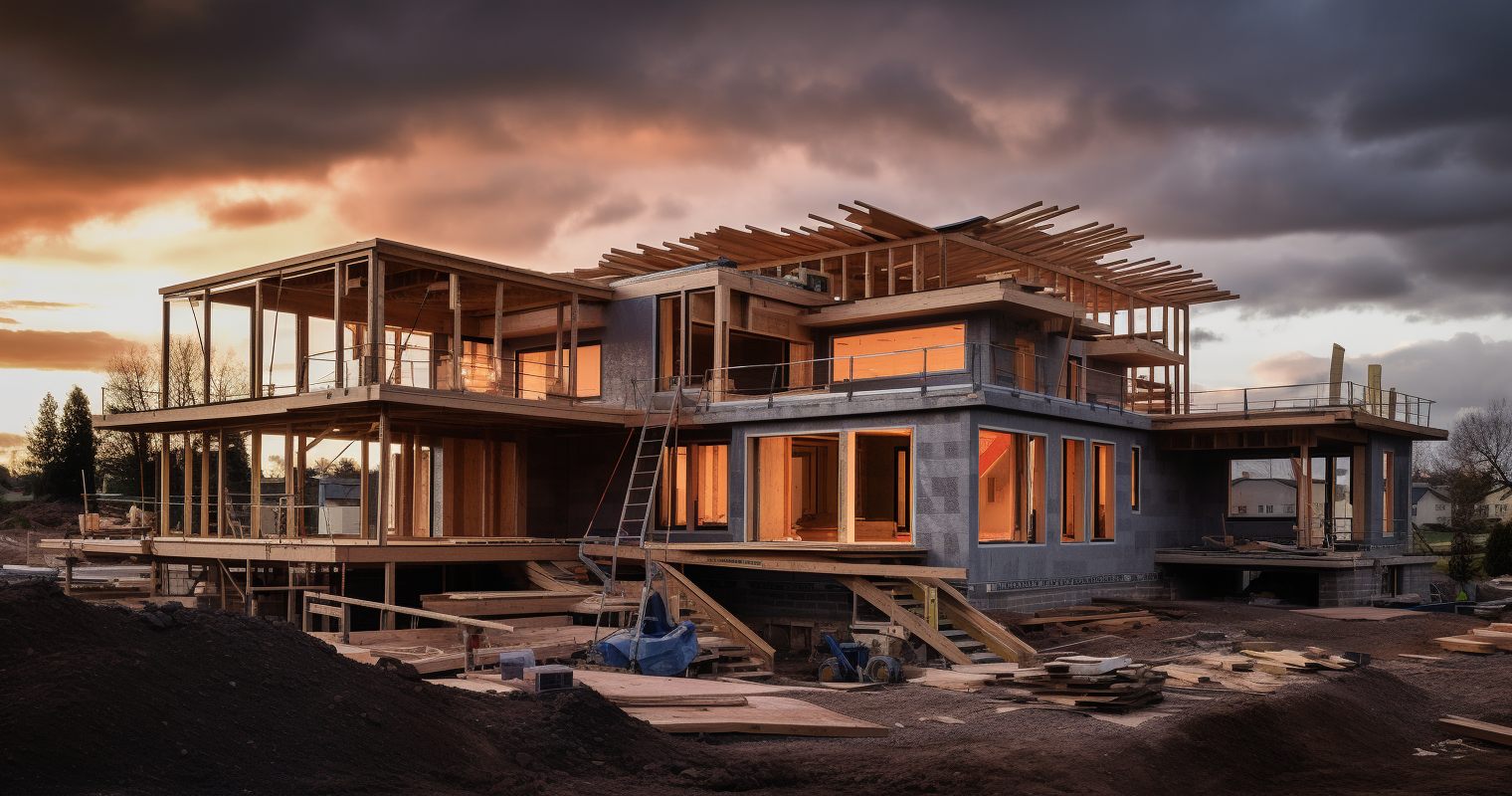
Constructing or renovating a property in Monaco involves navigating one of the most tightly regulated built environments in the world. Formal building authorisation is required for nearly every structural modification, interior reconfiguration, or exterior alteration — only the most trivial cosmetic work falls outside this requirement. The construction sector operates under strict controls: solely Monegasque-registered firms are permitted to work on site, and every application must bear the signature of an architect enrolled with the local professional register. Although foreign nationals face no nationality-based obstacles to purchasing or developing property, they must follow exacting administrative procedures and engage exclusively with qualified local practitioners.
| Item | Details |
|---|---|
| Planning authority | Direction de la Prospective, de l’Urbanisme et de la Mobilité (DPUM), 5 Promenade Honoré II, Monaco |
| Permit requirement | Authorisation required for virtually all interior layout and exterior changes; cosmetic-only works may be exempt (as of 2024) |
| Architect requirement | All applications must be signed by an architect registered with the Ordre des Architectes de Monaco |
| Builder restriction | Only Monegasque building companies may operate on site without special government approval (as of 2024) |
| Property purchase costs | ~6.25% for individuals (4.75% transfer duty + ~1.5% notary fees); 9% for foreign companies (as of 2024) |
| Foreign ownership | No nationality-based restrictions; all transactions must be executed before a Monegasque notary |
Do you need planning permission to build or renovate a property in Monaco?
Regardless of the extent or duration of proposed works, no alterations — whether to the interior layout or the external appearance of an existing building — may proceed without prior official authorisation. This rule covers both residential and commercial premises and is considerably more demanding than the “permitted development” frameworks found in countries such as the UK, where many minor changes to private homes can be made without any formal application to a planning body.
This obligation is established in Article 1 of Sovereign Ordinance No. 3.647 of 9 September 1966 on urban planning, construction and roadways, as amended, which forms the cornerstone of Monaco’s building regulations and is further supplemented by Sovereign Ordinance No. 3.966 of 10 October 2012.
The precise nature of the proposed works determines whether a full building permit or a simpler administrative authorisation is needed. Both are issued by the Direction de la Prospective, de l’Urbanisme et de la Mobilité (“DPUM”), the body responsible for evaluating and approving all construction and renovation projects in the Principality.
Works that may fall under a basic declaration or require no formal process include minor aesthetic interventions — for example, replacing kitchen fittings, changing floor surfaces, refreshing a bathroom, or repainting walls — and electrical or gas compliance upgrades supervised by an approved inspection body. Even in these straightforward cases, it is prudent to notify the building manager (syndic) and review the co-ownership regulations for the building in question.
By contrast, the installation or removal of full-height partitions — even where the main structure is unaffected — constitutes a modification to the general layout or appearance of a property and therefore requires the submission of a building authorisation application. This application must be signed by an architect enrolled with the Order of Architects of the Principality of Monaco.
The step-by-step process for applying for planning permission in Monaco is as follows:
- Engage a locally registered architect. Whatever the nature of the request, it must be the subject of a file signed by an architect registered with the Order of Architects of the Principality of Monaco.
- Compile the application file. Each application must be made in accordance with the application form for authorisation to build and/or demolish or for a preliminary agreement, including a summary table of the documents to be attached, according to the type of work envisaged.
- Prepare supporting plans and drawings. Documents must be in A4 format, folded into a pocket file, dated, numbered and signed by the applicant, the owner and an architect authorised to practice in the Principality. A declaration provided by the owner authorising you to carry out the proposed work and declaring their right of ownership is also required.
- Submit to the DPUM. Four copies of the application file must be submitted to the Department of Forward Studies, Urban Planning and Mobility — one original and three copies, which must be certified by the architect.
- Await review. Once the application is submitted, it undergoes a thorough review process by the local planning department, which examines compliance with current zoning regulations, land use policies, and municipal guidelines.
- Receive authorisation and begin work. Once approval is granted, works may commence in accordance with the conditions set out in the authorisation.
- Request a final inspection visit. Once the work has been completed, it is necessary to request a verification visit from the DPUM within one month in order to obtain final authorisation to occupy the modified premises.
- Obtain a compliance certificate. The inspection verifies adherence to all applicable health, safety, and environmental requirements, as well as all conditions attached to the building permit. The DPUM will require certificates from approved inspection bodies confirming, in particular, the compliance of electrical and fire safety installations.
Planning applications attract stamp duty; always confirm the precise current fee schedule directly with the DPUM or the official Monaco public service portal before lodging any application, as amounts are periodically revised. Applications must include the applicant’s full name, address, and proof of their connection to the property.
Those unfamiliar with Monaco’s administrative culture should be forewarned: every project generates a file, every file passes through a committee, every committee issues an order, and every order takes time. Expect the overall process to be more protracted than comparable systems in France, where simpler works may need only a déclaration préalable rather than comprehensive authorisation.
What are the rules around listed buildings, conservation areas, and heritage protection in Monaco?
The Principality maintains a framework of listed buildings, conservation zones, and preservation orders to safeguard its architectural heritage. Anyone planning to build or renovate within these designated areas will face additional layers of regulation. This is broadly analogous to listed building consent in the UK or heritage overlay controls in Australian planning systems, though Monaco’s rules are particularly exacting given the density of the Principality and the prestige attached to its built fabric.
Specific authorisations may be required directly from the Princely Government for protected structures or those with a special status. Any intervention affecting a listed building — whether internal reordering, external alterations, or the introduction of new features — will typically require sign-off beyond the standard DPUM building authorisation.
Land use controls play a central role in preserving Monaco’s organised development pattern and architectural coherence. Zoning classifications fall into three principal categories: residential, commercial, and mixed-use zones. Each is governed by its own regulations, designed to ensure that land use aligns with the Principality’s overarching development strategy and community priorities.
Within residential zones, rules commonly dictate permissible building heights, construction styles, and development density. Preserving the visual character of each neighbourhood is a declared priority, meaning that specific architectural guidelines must be observed so that new construction integrates harmoniously with existing buildings.
The Direction de la Prospective, de l’Urbanisme et de la Mobilité (DPUM) is the principal regulatory body overseeing both urban planning compliance and heritage matters. Before acquiring any property or commissioning works, consult the DPUM and the Monaco Urban Planning Regulations — accessible through the official government business portal — to establish whether any heritage or conservation designation affects the property in question.
The consequences of violating heritage rules are severe. Any beneficiary of the works, together with architects, contractors, or other persons responsible for their execution who fail to comply with the provisions of the Ordinance or with the conditions of any issued authorisation, may be subject to a fine of between €18,000 and €90,000. A court may order either the demolition of unauthorised works to restore the property to its prior condition, or the execution of remedial measures required by law, or the bringing of works into conformity with the conditions of the building authorisation. A deadline is set for compliance, failing which a daily financial penalty accrues. Should the situation remain unresolved at the expiry of that deadline, the Minister of State may direct that the necessary works be carried out ex officio, at the cost and risk of the offenders.
What permits and licences are required when building or renovating in Monaco?
Given the range of administrative permits, safety requirements, and energy standards that apply, property owners must have a thorough understanding of local procedures and regulations before undertaking any works — particularly those affecting common parts of a building, its exterior appearance, or involving a change in the use or internal arrangement of any space.
Monaco’s building permit system encompasses several distinct categories. The principal types include a full building permit, a provisional permit, and a simplified permit, each calibrated to the scale and complexity of the project. A full building permit is required for substantial developments and triggers a comprehensive review process covering both design and wider impact.
In addition to the core building authorisation from the DPUM, further permits and approvals may be necessary depending on the scope of the works:
- Worksite permit: A separate permission for a worksite must be obtained from the relevant authority, which is listed under the official permits section of the government portal.
- Work on public roads: If your project involves access to or affects public roads or underground infrastructure, you must apply for authorisation to carry out work on and under public roads and adjacent buildings.
- Pipe gallery access: For utility connections involving underground infrastructure, an authorisation to access pipe galleries may be required.
- Swimming pool or environmental works: If you are building a swimming pool, you may need to obtain a separate permit from the Department of Environment.
- Earthquake-resistance compliance: Ministerial Decree No. 2016-556 of 13 September 2016 pertains to the classification of and regulations concerning earthquake-resistant construction applicable to buildings. Plans must address seismic standards.
- Thermal and energy standards: Ministerial Decree No. 2012-596 of 10 October 2012 relates to the thermal characteristics of new buildings and to the extension and refurbishment of existing buildings.
- Final occupancy approval: Once the work is complete, it is necessary to request an inspection visit in order to obtain definitive authorisation to occupy the premises.
Every construction or real estate renovation project in Monaco must secure approval from the relevant local authorities, and all works must conform to the Principality’s exacting architectural and environmental standards. Fees and processing timescales for each permit category vary and should be confirmed directly with the DPUM or the relevant department before any project is initiated. Current application forms and detailed requirements are available through the official construction work portal.
How do you find a reliable, trustworthy builder in Monaco?
Monaco operates a stringent regulatory framework governing all construction and renovation activity, whether for residential apartments or commercial premises. A fundamental point to understand is that only Monegasque-registered building companies are permitted to operate within the Principality — unless foreign firms have received specific governmental approval and have formally declared every worker deployed to the site. This is a critical distinction: unlike many countries where cross-border contractors can be freely engaged, Monaco’s rules substantially restrict who may lawfully carry out works on your property.
To identify reputable and trustworthy builders, you may approach the Chambre Monégasque du Bâtiment (Monaco Building Association), which represents local construction firms, architects, and other professionals active in the sector.
The Chambre Monégasque du Bâtiment is the principal trade body for Monaco’s construction industry. Contact details:
- Address: 17 rue Princesse Florestine, MC 98000 Monaco
- Website: www.cmb.mc
Always verify current contact details directly with the organisation, as they may change.
When assessing a prospective builder, the following practical steps are advisable:
- Confirm registration: Establish that the company is a Monegasque-registered firm duly authorised to operate in the Principality. Request their business registration number and verify it with the relevant commercial registry.
- Check references: Ask for references from comparable projects previously completed in Monaco — such as apartment renovation, structural works, or new construction. Follow up with those clients directly rather than relying solely on testimonials supplied by the contractor.
- Request a written contract: Ensure the contract clearly sets out the scope of works, materials to be used, projected timescales, the payment schedule, and the procedures to be followed in the event of delays or disagreements. All contracts should be drawn up in French, Monaco’s official language; commission a certified translation if required.
- Verify professional insurance: Any reputable firm should carry public liability insurance and, for larger-scale projects, decennial liability insurance (assurance décennale), which covers structural defects for ten years following completion — a standard obligation under Monaco’s civil law framework, closely aligned with the system in France.
- Use staged payments: Avoid paying the full contract sum in advance. Structure payments in tranches linked to verified progress milestones, retaining a portion until the DPUM’s final inspection confirms that works comply with the authorisation.
- Beware of unlicensed operators: A frequent hazard for property owners unfamiliar with Monaco’s regulations is being approached by contractors who are not Monegasque-registered companies. Engaging such contractors is unlawful, can invalidate your authorisation, expose you to fines, and jeopardise your ability to obtain the final occupancy certificate.
For any property owner, having the support of a qualified local professional significantly reduces the risk of errors, helps expedite procedures, and ensures full regulatory compliance throughout the project.
How do you find a qualified local architect in Monaco?
Any project requiring authorisation demands an application file compiled and signed by an architect enrolled with the Association of Architects of the Principality of Monaco (L’Ordre des Architectes de la Principauté de Monaco). This requirement is absolute: files that do not carry the signature and certification of a locally registered architect will be rejected by the DPUM without further consideration.
The architectural profession in Monaco is governed by Ordinance-law. Ordinance-law no. 341 of 24 March 1942 regulates both the professional title and the practice of architecture, and establishes the “Ordre des Architectes” within the Principality. The Ordre des Architectes de Monaco is therefore the sole body responsible for licensing and supervising all practising architects in the Principality.
The Ordre des Architectes de la Principauté de Monaco can be contacted at:
- Website: www.architectes-monaco.com
- Address: Ordre des Architectes de Monaco, Monaco
Consult the website directly for current telephone and email contact details, as these are subject to change.
Careful preparation, the involvement of a Monegasque architect, and rigorous adherence to procedural requirements are the cornerstones of a successful renovation project. When choosing an architect, international clients should give particular weight to the following considerations:
- Local registration is non-negotiable: Only architects appearing on the Ordre des Architectes de Monaco’s register are legally authorised to sign planning applications. Architects who practise in France or anywhere else, regardless of their experience or reputation, cannot serve as a substitute for a locally registered professional.
- Language: All official submissions, technical drawings, and correspondence directed to the DPUM must be in French. If your command of French is limited, seek an architect who has a demonstrable track record of working with international clients and who can manage communication effectively throughout the process.
- Specialist experience: Monaco’s urban environment is unique — space is so scarce that the future of real estate increasingly depends not on building new structures but on imaginatively reinventing the existing built stock. Prioritise architects with proven experience in renovation, co-ownership buildings, and working within Monaco’s demanding height, density, and aesthetic constraints.
- Fee structures: Architectural fees in Monaco are typically calculated as a percentage of the total construction cost. Agree and document the full fee structure in writing before any engagement begins.
What are the common pitfalls when buying land to build on in Monaco?
Monaco is the world’s most densely populated sovereign state, which means that genuinely vacant, undeveloped land is extraordinarily rare. In practice, most “building opportunities” in the Principality involve the demolition or extensive redevelopment of existing structures rather than construction on empty plots. This reality makes thorough pre-purchase due diligence especially essential.
Confirm planning viability before exchanging contracts. Even following preliminary approvals, there may be further conditions to satisfy, including the securing of full construction permits and compliance with local building codes. Always obtain written confirmation from the DPUM — in the form of a preliminary agreement (accord préalable) — that your intended development is permissible under the current zoning framework before legally committing to a purchase.
Understand zoning classifications in detail. Land use controls are central to maintaining Monaco’s structured development pattern and architectural coherence. Zoning categories comprise residential, commercial, and mixed-use zones, each governed by specific rules designed to ensure that land use aligns with the Principality’s planning vision and community values. Obtain written confirmation of which zone applies to a given property and precisely what forms of development are permitted within it.
Consult the land registry and cadastral records. All real estate in Monaco is recorded with the Monaco Land Registry (Cadastre Monégasque), which holds detailed records of ownership, transfers, and boundary definitions. This registry provides the legal clarity underpinning property transactions. The land register of Monaco falls under the jurisdiction of the Department of Tax Services, and the mortgage department is specifically engaged in the administration of the land register.
Engage a Monegasque notary from the very start. Every real estate transaction must be conducted before a Monegasque notary, thereby guaranteeing its legal validity. Notaries play a central role by confirming the compliance of the transaction and ensuring that all legal obligations are fulfilled, protecting both purchaser and vendor. Before signature, the notary verifies title of ownership, mortgage status, the existence of easements, and the co-ownership regulations. Technical inspections and administrative compliance are also checked to safeguard the investment. These verifications are designed to identify potential issues or constraints and confirm the lawfulness of the transaction.
Note the absence of a cooling-off period. While French property law affords buyers ten days after acceptance of an offer to withdraw without penalty, Monaco has no equivalent provision. Once an offer has been accepted in writing, both parties are legally bound. This represents a significant procedural difference from many other property markets and underscores the importance of thorough due diligence before making any offer.
Account for co-ownership obligations. Apartment buildings in Monaco commonly operate under co-ownership arrangements (known as “copropriété”), where multiple owners share responsibility for common areas such as lobbies and lifts while retaining individual ownership of their units. Any renovation work touching shared or structural elements requires the consent of the co-owners’ general assembly, a process that can take many months to complete.
Budget fully for transaction costs. Notary fees represent approximately 1.5% of the purchase price, producing an indicative total acquisition cost of approximately 6.25% for a standard purchase (as of 2024). Verify all current figures with your notary, as rates are subject to revision.
What are the rules around foreign ownership and financing for construction projects in Monaco?
Foreign nationals are entirely free to own property in Monaco without encountering any nationality-based barriers. Unlike certain jurisdictions — such as New Zealand or specific Swiss cantons — that impose restrictions on property acquisition by overseas buyers, Monaco places no such limitations on foreign nationals wishing to purchase, hold, or develop property.
Property acquisition in Monaco is open to both residents and non-residents alike. No particular restrictions apply to foreign purchasers, which has long made the Principality an attractive destination for international investors. That said, the transaction process is strictly regulated regardless of the buyer’s nationality.
Foreign nationals may own property in Monaco provided they meet the specific residency or business criteria applicable to their circumstances. The purchase process involves signing a preliminary agreement, undertaking due diligence, executing the deed of sale before a notary, and registering the transaction with the Monaco Property Registry.
Purchase structure and company ownership. For a standard resale property, total acquisition costs amount to approximately 6% of the purchase price, comprising registration duty of 4.5% and notarial fees of 1.5%. This rate applies where the buyer is an individual or a Monaco SCI (société civile immobilière). A higher rate applies where the purchaser is a foreign company: registration duty rises to 7.5%, and with notarial fees of 1.5%, the total reaches 9%. (As of 2024; verify current rates with a Monegasque notary before proceeding.)
New build and VAT. Where the property is newly constructed or under construction, registration duty will not apply. Instead, value-added tax (TVA) at 20% will be incorporated into the sale price, and notarial fees together with transcription duty amounting to 2.5% will be payable by the buyer.
Financing and mortgages. Prospective purchasers should assemble their financial documentation before taking any active steps in the market, consult a recognised local real estate agent to avoid the pitfalls associated with Monaco’s constrained supply, and open a Monegasque bank account if they intend to use local credit facilities, bearing in mind that a substantial initial deposit will typically be required. Monaco’s banks do extend mortgage products to non-residents, but eligibility criteria are demanding and loan-to-value ratios tend to be lower than in many other markets. Consult a Monegasque bank or an independent financial adviser for up-to-date terms, as these change regularly.
Anti-speculation measures. Monaco’s property market is highly constrained — only a few hundred transactions take place each year — with prices that are among the highest globally. New financial obligations introduced since 2024 are designed to limit opportunistic market activity and make housing more accessible to local buyers and permanent residents while moderating runaway price inflation. Anyone considering investment should seek current legal advice regarding any regulatory requirements introduced since 2024.
For official guidance on foreign investment and property acquisition, consult monservicepublic.gouv.mc, the Prince’s Government’s official portal for citizens and residents.
What official sources should you consult when planning to build or renovate in Monaco?
Monaco’s government publishes extensive official guidance online in both French and English. The bodies and resources listed below represent the primary references for anyone planning a construction or renovation project. These sources should always be consulted for the most current requirements, since fees, application forms, and procedural rules are updated on a regular basis.
| Body / Resource | Role | Website / Contact |
|---|---|---|
| Direction de la Prospective, de l’Urbanisme et de la Mobilité (DPUM) | Planning authority; issues all building authorisations and permits; conducts final compliance inspections | monservicepublic.gouv.mc — 5 Promenade Honoré II, Hall A (3rd floor), MC 98013 Monaco Cedex |
| Official Government Business Portal (construction permits) | Forms, permit types, regulatory references, and step-by-step guides for all construction-related authorisations | monentreprise.gouv.mc |
| Monaco Land Registry / Cadastre Monégasque | Records of property ownership, boundaries, mortgages, and encumbrances; under the Department of Tax Services | Contact via the Prince’s Government official portal: monservicepublic.gouv.mc |
| Ordre des Architectes de la Principauté de Monaco | Registers all practising architects; mandatory register for anyone signing planning applications | www.architectes-monaco.com |
| Chambre Monégasque du Bâtiment | Trade body for Monaco’s construction sector; directory of authorised building firms | www.cmb.mc |
| Monegasque Notaries | Required for all property transactions; verify title, encumbrances, planning status, and register the deed | Listings available via the Prince’s Government portal |
| Department of Environment | Issues environmental permits for swimming pools and works with environmental impact; part of the Prince’s Government | monentreprise.gouv.mc |
The monservicepublic.gouv.mc portal provides authoritative English-language guidance on planning permission, residential works, and property transactions. All official ordinances, ministerial decrees, and application forms can be downloaded from monentreprise.gouv.mc. These official resources should always take precedence over third-party sources, including this article.
Frequently asked questions: building and renovating in Monaco
How much does it typically cost to renovate a property in Monaco?
Renovation costs in Monaco rank among the highest anywhere in the world, a reflection of the Principality’s premium labour market, the obligation to engage registered Monegasque building firms, and the logistical challenges inherent in working within such a densely built-up environment. High-specification interior renovations can readily exceed €5,000–€10,000 per square metre, depending on the quality of finishes, structural complexity, and the authorisations required. Always obtain several detailed written quotations from authorised Monegasque contractors before making any commitment. No official cost schedule is published; verify current market rates directly with local professionals.
How long does the planning permission process take in Monaco?
Timescales are highly variable and depend on the complexity of the project. Straightforward renovation authorisations may be resolved within a matter of weeks to a few months, whereas major structural developments, or projects requiring approval from a co-owners’ assembly, can extend considerably beyond that. The time needed to prepare a fully compliant application file in collaboration with your architect must also be factored in. The DPUM does not currently publish a statutory decision period; contact them directly for an indicative timeframe applicable to your specific project.
Can I use a builder or architect from outside Monaco?
Only Monegasque building companies are authorised to operate within the Principality, unless foreign firms have obtained specific governmental approval and have formally declared all workers deployed to the site. Equally, all planning applications must be signed by an architect registered with the Ordre des Architectes de Monaco. Foreign-qualified builders and architects cannot transfer their credentials to Monaco — local registration is a legal requirement in both cases. Always confirm the registered status of any firm or individual before engaging their services.
Are building qualifications or standards from other countries recognised in Monaco?
Monaco does not operate a mutual recognition framework for foreign construction qualifications equivalent to, for instance, the EU’s Professional Qualifications Directive — which does not apply to Monaco as a non-EU state. Foreign architects and builders must each seek individual authorisation from the relevant Monegasque bodies. In practice, this means that qualifications held by professionals from the US, UK, Australia, or elsewhere confer no automatic right to practise in Monaco. Contact the Ordre des Architectes de Monaco directly for information on any available recognition pathways.
What happens if I carry out work without the required authorisation in Monaco?
Persons who fail to comply with the provisions of the Ordinance or with the conditions of any issued authorisation — whether they are the beneficiary of the works, an architect, a contractor, or another individual responsible for execution — may be subject to a fine of between €18,000 and €90,000. A court may additionally order the demolition of unauthorised works to restore the property to its previous condition, require the execution of prescribed remedial measures, or direct that the works be brought into conformity with the building authorisation. A compliance deadline is set, and a daily financial penalty applies if it is not met. Unauthorised works can also render a property extremely difficult or impossible to sell, since notaries will identify any non-compliance during pre-sale checks.
What if I have a dispute with my contractor in Monaco?
Contractor disputes in Monaco are governed by the Principality’s civil law — which shares many characteristics with French civil law — and are typically resolved through the Monegasque courts. Where structural defects emerge after completion, decennial liability insurance (assurance décennale) provides a ten-year window during which the contractor remains responsible for structural faults. Always insist on a written contract, obtain proof of insurance before works begin, and maintain comprehensive records of all correspondence and site activity. If direct resolution proves impossible, consult a Monegasque lawyer (avocat) with specialist expertise in construction law.
Are there language barriers I should be aware of when renovating in Monaco?
French is Monaco’s official language, and every official document — from planning applications and contracts to regulatory correspondence and notarial deeds — will be drafted in French. While many professionals active in Monaco’s international property sector speak other languages, this cannot be relied upon for legal or administrative purposes. If your French is insufficient, engage a certified translator to handle all contractual and regulatory documentation. Your architect or notary may also be in a position to recommend bilingual professionals with experience of working alongside international clients.
Can I get a mortgage in Monaco to fund a construction or renovation project?
Monegasque banks do provide financing to non-residents and foreign nationals, but the criteria applied are rigorous. Anyone intending to use local credit should open a Monegasque bank account and be prepared for a substantial initial deposit requirement. Loan-to-value ratios for construction or renovation finance tend to be lower than those available in many other markets. Lenders will scrutinise the source of funds thoroughly, particularly in the case of international buyers. Consult a Monegasque bank or an independent financial adviser for current terms, as these evolve regularly and are not published by any official authority.