

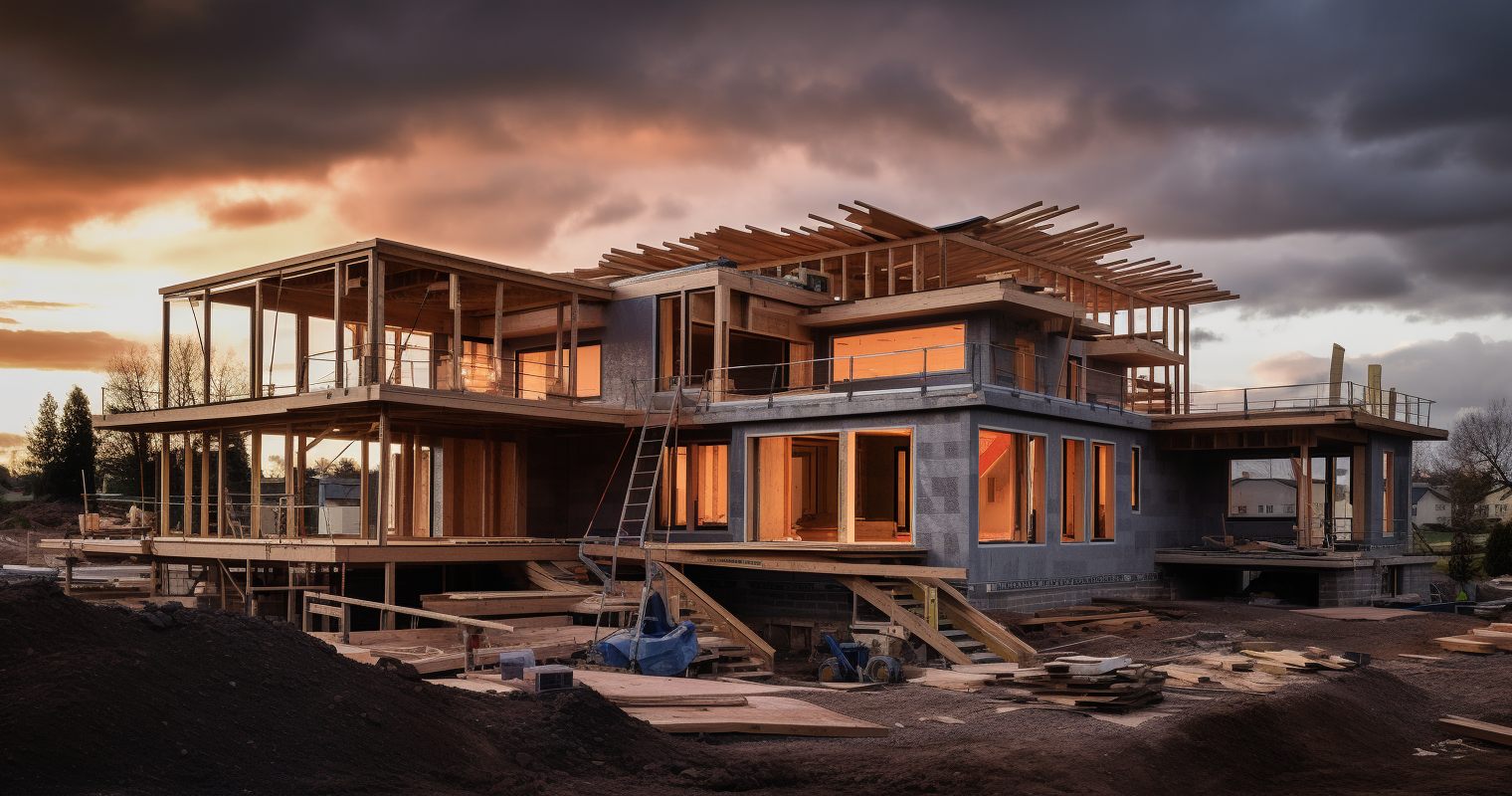
Foreign nationals are fully entitled to build or renovate property in Mexico, though doing so means working within a decentralised permit system in which each municipality maintains its own rules and procedures. A licencia de construcción — the Mexican equivalent of planning permission — is almost universally required for new construction and substantial renovation work. Heritage protection legislation is rigorous, foreign ownership in coastal and border regions operates through a trust arrangement known as a fideicomiso, and engaging a licensed local architect is not optional — it is a legal requirement.
| Item | Details |
|---|---|
| Building permit (licencia de construcción) | Required for virtually all new builds and significant renovations; issued by the local municipality |
| Land use permit (uso de suelo) | Required before a construction licence can be granted; as of 2024, approximately USD $180 in Mexico City |
| Average permit costs | Typically 3–5% of total project budget in administrative fees; average around USD $3,500 (as of 2024) |
| Heritage authority | INAH (archaeological and historical monuments); INBA (artistic monuments) |
| Foreign restricted zone | 50 km from any coastline and 100 km from any international border — fideicomiso trust required |
| Fideicomiso trust cost | Approximately USD $1,000–$3,000 to establish; annual bank fees of USD $500–$1,000 (as of 2025) |
Do you need planning permission to build or renovate in Mexico?
A construction permit is the official government authorisation needed to modify, repair, expand, install, demolish, or erect a property. In Mexico this document is called a licencia de construcción and, in contrast to the centralised national planning systems found in countries such as France or Australia, it is issued and managed at the local level.
Zoning and permitting rules are set independently by each state and each municipality. Before any development work can begin, a property must hold a land use permit — the uso de suelo — which defines what activities or uses are permissible on that land (for instance, residential versus commercial), and which is granted in line with the relevant State and Municipality Urban Development Plan.
A construction licence, which similarly varies according to the state and municipality where the property sits, must then be obtained before any work begins. This requirement covers new builds, extensions, structural changes, and, in most circumstances, significant renovation projects. Minor cosmetic works — repainting interior walls or swapping floor tiles, for example — are generally not subject to permitting, but if there is any uncertainty, it is always worth confirming with the local municipal planning office (Dirección de Obras Públicas) before any work commences.
Planning approvals also depend on the zone in which a site falls — permission to build a structure cannot be granted in an area where the intended development is inconsistent with local zoning rules. Zoning classifications govern not only what may be built, but also height limits, density restrictions, and how close structures may be positioned to plot boundaries.
The standard application process unfolds as follows:
- Obtain the uso de suelo (land use certificate). This document establishes what development is lawfully permitted on the plot. In Mexico City, the land permit fee is approximately USD $180 (as of 2024), while land alignment costs approximately USD $2.90 per square metre. These figures differ considerably across other states and municipalities.
- Commission architectural plans. Mexican law mandates that permit applications be signed by a licensed Mexican architect or engineer. Foreign architects are not legally permitted to approve construction documents in Mexico.
- Lodge the permit application. Applications are submitted to the municipal Dirección de Obras Públicas, accompanied by architectural drawings, structural calculations, evidence of land use compliance, and documentary proof of property ownership.
- Pay the relevant fees. Each municipality requires payment for the building permit, environmental compliance, and urban alignment. Administrative fees typically amount to around 3–5% of your total project budget.
- Await approval and undergo inspections. The construction must be inspected both during the build and upon completion to verify compliance with national, regional, and local building codes.
- Obtain the occupancy certificate. Once building work is finished, an occupancy certificate (confirming completion of the construction works) must be obtained from the municipal authority.
Permit costs vary considerably depending on the region and the nature of the project, with an average permit cost of around USD $3,500 (as of 2024). Additional charges may arise from environmental or geological studies. Always confirm current fees directly with the relevant municipal authority, as these figures are subject to regular revision.
Building without a permit can lead to financial penalties and, where unauthorised work cannot be brought into compliance with code, demolition orders. Starting construction without authorisation may trigger fines that introduce unnecessary additional costs into the project budget.
What are the rules around listed buildings, conservation areas, and heritage protection in Mexico?
Mexico maintains a comprehensive legal framework for the protection of its built and archaeological heritage, comparable in effect to listed building and conservation area regimes elsewhere, though overseen by two distinct federal bodies rather than through a single local authority register.
The primary legislation governing this area is the Federal Law on Archaeological, Artistic and Historical Monuments and Sites (Ley Federal sobre Monumentos y Zonas Arqueológicos, Artísticos e Históricos) and the National Assets Law (Ley de Bienes Nacionales).
INAH — the Instituto Nacional de Antropología e Historia — has at its core the mission of safeguarding Mexico’s archaeological sites and artefacts through conservation, protection, maintenance, and restoration. INAH holds authority over archaeological monuments (pre-Hispanic ruins, sites, and associated zones) and historical monuments, broadly defined as structures constructed before the nineteenth century. The Instituto Nacional de Bellas Artes (INBA) plays a role in stimulating, creating, and promoting the arts, and additionally oversees buildings that have been designated for their artistic significance.
Real estate classified as a national asset cannot be transferred to a private individual or entity, as it remains the property of the State. Real estate classified as a historical monument that is privately owned, however, may be sold to a third party, but cannot be altered and must be preserved in its existing state.
In coastal and protected areas, both an environmental authority permit and a municipal building permit are required; in historic centres, approval from INAH is also necessary. This parallels the effect of conservation area consent requirements but operates at a federal rather than local level — meaning that even a sympathetic municipality has no power to override INAH’s jurisdiction.
Historic Monuments Zones are formally designated under federal law, with INAH and INBA jointly bearing management responsibility. Mexico contains many such zones, including UNESCO World Heritage historic centres such as those of Oaxaca, Guanajuato, and Morelia.
The Federal Law stipulates that anyone who undertakes archaeological works without proper authorisation from INAH may face imprisonment of between three and ten years along with a financial penalty. INAH holds the power to suspend projects that lack the appropriate authorisation.
Before purchasing any older property, or any property in the vicinity of a colonial centre, archaeological zone, or formally declared monument zone, you should consult the INAH register. The INAH website is www.inah.gob.mx and the INBA website is www.inba.gob.mx. Both bodies can be contacted through their respective websites for specific enquiries about a property’s designation status.
What permits and licences are required when building or renovating?
A construction project in Mexico typically requires a range of permits and approvals beyond the basic licencia de construcción. The precise combination depends on the location, land use classification, scale, and character of the project.
At municipal level, land use and construction licences are commonly required, as are an occupancy certificate on completion, an operating or business licence where the premises will be used for activities beyond residential occupation, and an internal civil protection programme.
The principal permits that may be required include:
- Uso de suelo (land use certificate): Establishes what category of development is legally permitted on the land. This must be in place before any construction licence can be issued.
- Environmental impact assessment (Manifestación de Impacto Ambiental): Additional fees may apply for environmental or geological studies. Coastal areas, forested land, and ecologically sensitive zones typically require a formal environmental impact study approved by SEMARNAT (the Secretariat of Environment and Natural Resources).
- Fire safety compliance: The Official Mexican Standard NOM-002-STPS-2010 sets out the conditions for safety and fire prevention in the workplace, including requirements that every workplace must fulfil to prevent fires and to respond effectively should one occur.
- INAH or INBA approval: Mandatory where the property or site is designated as a historical, archaeological, or artistic monument zone.
- Utility connection permits: Separate applications are required for water and sewerage connections (generally handled through the local SAPAM or the equivalent municipal water authority) and for electricity connections (processed through CFE — Comisión Federal de Electricidad).
- Operating licence: For any use other than residential, owners must hold an operating licence issued by the municipality.
Exact licence requirements vary with the nature of the intended use and the location of the property, as each municipality maintains its own specific rules. Always confirm the complete list of required permits with the local Dirección de Obras Públicas and, for larger projects, engage a specialist lawyer alongside your architect to manage the permit process.
Legal and notary fees for a construction project in Mexico average USD $1,500–$3,000 (as of 2025). Confirm current figures with the relevant local authority before preparing your budget.
How do you find a reliable, trustworthy builder in Mexico?
Mexico’s construction sector is extensive but unevenly regulated. While architects and engineers are required to hold professional licences, there is no equivalent compulsory national licensing system for general building contractors comparable to contractor licensing schemes operating in Australian states or Canadian provinces. This makes thorough due diligence all the more critical.
It is common in Mexico for architects or engineers to take on the combined roles of construction manager and general contractor. In this capacity they handle all required local documentation, licences, and permits, and manage compliance with Mexican requirements for hiring labour and providing the mandatory regulatory insurance through IMSS.
Construction companies are legally required to provide workers’ compensation insurance, which limits injury risks and ensures compliance with legal obligations. When interviewing a contractor, always ask for confirmation that their workforce is enrolled in Mexico’s IMSS (Instituto Mexicano del Seguro Social) social security system. It is the contractor’s responsibility to secure all necessary building permits and to ensure that their workers are contributing to the social security system.
The national industry body representing the construction sector is the Cámara Mexicana de la Industria de la Construcción (CMIC). Membership of CMIC is a positive sign that a contractor operates within a recognised professional framework.
- Website: www.cmic.org.mx
- Address: Periférico Sur No. 4839, Col. Parque San Andrés, Coyoacán, C.P. 04040, Ciudad de México
- Phone: +52 (55) 5615-3535
Practical steps to check a contractor thoroughly before entering into any agreement:
- Request references from a minimum of three recently completed projects of broadly comparable scale and, where feasible, visit those sites in person.
- Verify CMIC membership or equivalent professional affiliation through the body’s online directory.
- Require a comprehensive written contract that clearly sets out the scope of work, materials specifications, payment schedule, start and end dates, and provisions for penalties in the event of delays.
- Always insist on a factura (official tax receipt) for all payments made. A factura is the only legally recognised proof of payment in Mexico; handwritten or informally printed receipts do not satisfy fiscal requirements and carry no weight in legal proceedings.
- Structure payments around project milestones rather than releasing large sums at the outset. General contractor fees in Mexico typically fall in the range of 15% to 30% of the total construction cost.
- Consider appointing a lawyer or project manager to oversee financial disbursements, particularly if you are managing the project from another country.
Frequently encountered problems include contractors who vanish after receiving a sizeable advance payment, the use of inferior or substituted materials without prior notification, and failure to obtain the required permits — leaving the property owner exposed to penalties. Foreign owners who are unfamiliar with local practices and do not speak fluent Spanish are especially vulnerable to such risks. Setting aside a contingency of 10–20% of total costs is advisable to absorb unforeseen expenses such as permit revisions or fluctuations in material prices.
How do you find a qualified local architect in Mexico?
Architecture is a regulated profession in Mexico. To practise, architects must hold a degree (licenciatura en arquitectura) from a recognised Mexican institution and obtain a professional licence (cédula profesional) issued by the Secretaría de Educación Pública (SEP). This licence is a legal prerequisite for practising architecture and for signing construction documents.
Mexican law requires building permit applications to be signed by a licensed Mexican architect or engineer. Foreign architects are not legally permitted to approve construction documents in Mexico. This means that even if you bring in an architect from your home country to contribute ideas to the project’s design, a Mexican-licensed professional must formally endorse and take responsibility for all permit submissions.
The primary professional body for architects is the Sociedad de Arquitectos Mexicanos (SAM), which is affiliated with the Federación de Colegios de Arquitectos de la República Mexicana (FCARM).
- FCARM Website: www.fcarm.org.mx
- Address: Federación de Colegios de Arquitectos de la República Mexicana, Venustiano Carranza 55, Col. Centro, C.P. 06060, Ciudad de México
- Phone: +52 (55) 5521-5706
You can verify an individual architect’s professional licence number through the SEP’s official Cédula Profesional register at www.cedulaprofesional.sep.gob.mx. This is a free, publicly accessible database — searching by name or licence number will confirm whether the individual holds a valid, current licence.
Working with locally licensed architects and engineers is essential both for securing the necessary permits and for ensuring that your project meets all applicable building codes. Engaging a certified local architect means your plans are more likely to receive smooth municipal approval, reducing delays in the build process.
For expats who are not fluent in Spanish, seek out architects who offer bilingual services. Many practices in well-established expat destinations such as Puerto Vallarta, San Miguel de Allende, Mérida, and the Riviera Maya are experienced in working with international clients and can communicate in multiple languages. A number of architects and builders in these areas also provide virtual supervision and bilingual progress reporting, which can be particularly valuable when managing a project from abroad.
Architectural design fees in Mexico typically range from USD $7,000 to USD $15,000, depending on the complexity of the project and the level of design specification required (as of 2024). Always agree on fees in writing before any work begins.
What are the common pitfalls when buying land to build on in Mexico?
Acquiring land for development in Mexico carries a number of risks that differ considerably from land purchase processes in many other countries. The issues outlined below are among the most significant to investigate before committing to any purchase.
Confirm the uso de suelo before exchanging contracts. Every property must hold a land use permit (uso de suelo) that sets out what activities or uses are permitted — residential, commercial, and so on — issued in accordance with the relevant State and Municipality Urban Development Plan. The fact that a plot appears ready to build on does not guarantee it is zoned for the type of development you have in mind. Verify the zoning classification with the municipality before proceeding with any purchase.
Investigate title history thoroughly. Mexico’s land tenure history is complex, and includes ejido communal land that was historically not transferable to private ownership. Reforms introduced in 1992 opened a pathway for ejido land to be privatised, but where this conversion has been carried out improperly, title disputes can arise that are extremely difficult to resolve. A Notario Público verifies property title, confirms the history of ownership, and confirms that the land can legally be sold. This role is not equivalent to that of a common-law solicitor — a Mexican Notario Público is a government-appointed legal officer with broad statutory powers.
Assess environmental and contamination risks. The General Law for the Prevention and Integral Management of Waste establishes that where land contamination exceeds applicable standards, remediation is required. Other forms of pollution may require a risk assessment to determine whether clean-up is necessary. Coastal plots in particular may carry complex environmental designations.
Be aware of coastal zone considerations. Coastal areas may be subject to federal maritime zone rules, environmental restrictions, or tourist-zone regulations. There are often restrictions on how close to the high-tide line construction may take place, and certain beachfront parcels may require a separate federal maritime land concession in addition to the lot itself.
Check utility availability. In rural and semi-rural locations, do not take for granted that mains water, electricity, and sewerage are accessible. Confirm the feasibility of connections — and the associated costs — with CFE (for electricity) and the local municipal water authority before completing any purchase.
Make sure that any structures already on the land hold the appropriate permits, and that any future plans — adding a swimming pool or additional rooms, for instance — are achievable under local planning rules. Commissioning a survey and, where applicable, an environmental impact report is advisable, especially for undeveloped plots.
Use a qualified Notario Público alongside a separate property lawyer. In Mexico, a Notario Público — a government-appointed legal officer — oversees all real estate transactions, verifies that the transaction is lawful, and ensures that all applicable taxes are settled. However, the Notario functions as a neutral state officer rather than as your personal representative. Appointing an independent property lawyer to review contracts and advance your interests throughout the purchase and construction process is strongly recommended.
What are the rules around foreign ownership and financing for construction projects?
Foreign nationals may legally purchase land and commission construction projects across the great majority of Mexico. However, constitutional restrictions apply in what is known as the “restricted zone.”
The restricted zone is defined in the Mexican Constitution as all land within 50 kilometres of any coastline and 100 kilometres of any international border. All foreign nationalities face the same constitutional restrictions when acquiring property in Mexico — the same ownership limitations apply regardless of a purchaser’s nationality, with no country-specific distinctions.
Within the restricted zone, the mechanism for foreign ownership is the fideicomiso — a bank trust arrangement. A fideicomiso confers on foreign nationals the right to use and benefit from property situated within restricted zones. The property is held in a real estate trust, registered in the name of a Mexican trustee, typically the trust department of a Mexican bank.
The fideicomiso grants the trust beneficiary full use rights, including the ability to sell, lease, inherit, or otherwise transfer the property, for a renewable period of 50 years. As beneficiary, you hold all the substantive rights of an owner — you may reside there, let it, renovate it, sell it, or pass it to your heirs.
Establishing a fideicomiso typically costs between USD $2,000 and USD $3,000 (as of 2025), covering the bank’s administrative work and legal filings. Ongoing annual expenses comprise property taxes (0.1–0.2% of the property value) and the trust fee (approximately USD $350–$650 per year).
A permit from the Secretaría de Relaciones Exteriores (SRE) is required to set up the fideicomiso. Buyers must secure this permit from Mexico’s Ministry of Foreign Affairs before completing a purchase within a restricted zone, a process that typically adds 30–60 days to the transaction timeline.
Outside the restricted zone, foreign nationals may hold land title directly and in their own name, on the same basis as Mexican citizens, without any requirement for a trust structure.
Property ownership in Mexico is treated as a foreign investment matter rather than an immigration matter. You do not need residency, a visa, or even to have visited Mexico to make a lawful purchase. That said, if you intend to occupy the property year-round or to let it on a long-term basis, holding the appropriate residency visa can simplify practical matters such as utility registration, local banking, and tax compliance.
Regarding construction financing, foreign nationals can access mortgages in Mexico, though domestic banks typically apply more rigorous criteria and charge higher interest rates than those available to Mexican borrowers. As of September 2025, annual mortgage interest rates for foreigners range from 8–12%, with loan terms generally spanning 10–20 years and down payment requirements of 30–50% of the property value. Mexican banks including BBVA, Santander, and HSBC offer mortgages to applicants who can demonstrate income and a credit history in Mexico, and developer financing arrangements are also available for off-plan new builds.
What official sources should you consult when planning to build or renovate?
Given that rules, fees, and procedures change regularly across Mexico’s 31 states and many municipalities, consulting primary official sources before committing to any project is essential. The table below lists the key bodies and resources:
| Body | Role | Website |
|---|---|---|
| Secretaría de Desarrollo Agrario, Territorial y Urbano (SEDATU) | National ministry responsible for housing and urban development policy | www.gob.mx/sedatu |
| Local Municipal Dirección de Obras Públicas | Issues construction licences, land use permits, and occupancy certificates at municipal level | Consult your specific municipality’s official website |
| Registro Público de la Propiedad (Public Land Registry) | Official land registry for verifying title, ownership history, and registered liens | Varies by state; search via www.gob.mx |
| Instituto Nacional de Antropología e Historia (INAH) | Heritage authority for archaeological and historical monuments and zones | www.inah.gob.mx |
| Instituto Nacional de Bellas Artes y Literatura (INBA) | Heritage authority for artistically designated buildings | www.inba.gob.mx |
| SEMARNAT (Secretaría de Medio Ambiente y Recursos Naturales) | Environmental permits and impact assessments, particularly for coastal and ecological zones | www.gob.mx/semarnat |
| Secretaría de Relaciones Exteriores (SRE) | Issues permits for fideicomiso establishment and foreign investment in restricted zones | www.gob.mx/sre |
| Comisión Federal de Electricidad (CFE) | National electricity provider; oversees utility connection applications | www.cfe.mx |
| FCARM (Federación de Colegios de Arquitectos) | Professional body for licensed architects; maintains a directory of member firms | www.fcarm.org.mx |
| SEP Cédula Profesional register | Verify an architect’s or engineer’s professional licence number | www.cedulaprofesional.sep.gob.mx |
| CMIC (Cámara Mexicana de la Industria de la Construcción) | National construction industry chamber; directory of registered contractors | www.cmic.org.mx |
Official websites should be checked regularly for the most current requirements, as rules, fees, and procedures are subject to change at both federal and municipal level. The central Mexican government portal www.gob.mx provides a useful starting point for locating the official website of any state, municipality, or federal authority.
Frequently asked questions: building and renovating in Mexico
How much does it typically cost to build a house in Mexico?
The cost of building a house in Mexico generally falls somewhere between USD $100,000 and USD $500,000, with the final figure shaped by factors such as location, choice of materials, and labour costs. Basic-specification finishes run to roughly USD $70–$100 per square metre, while premium finishes can exceed USD $120 per square metre (as of 2024). It is prudent to set aside an additional 10–20% of your total budget as a contingency to cover unforeseen circumstances such as permit amendments, unexpected ground conditions, or movements in material prices.
How long does a construction project typically take in Mexico?
Most construction projects in Mexico take between 9 and 16 months from start to completion, with the timeline influenced by the complexity of the design and the time required to process permits. Processing times at the municipal level vary considerably — some municipalities issue licences within a few weeks, while others, particularly in high-demand tourist destinations, can take substantially longer. Where a project also requires approvals from INAH, SEMARNAT, or the SRE, additional time must be factored into the schedule.
Do I need to speak Spanish to manage a building project in Mexico?
All permit applications, official contracts, and communications with authorities are conducted in Spanish. You are not obliged to be a Spanish speaker yourself, but you will need either a bilingual architect or a trusted Spanish-speaking representative who can act on your behalf throughout the process. Many architects and builders working in popular expat locations offer virtual supervision and bilingual progress reports. Engaging a bilingual notary and lawyer is equally important when it comes to contracts and property transactions.
Are building standards or qualifications from other countries recognised in Mexico?
No — overseas professional qualifications are not recognised for the purpose of signing building permit applications in Mexico. All permit applications must bear the signature of a Mexican-licensed architect or engineer. If you wish to involve an architect or designer from your home country in the creative process, they are free to contribute to the design, but a Mexican-licensed professional must take formal legal responsibility for all submissions to the authorities.
What happens if planning rules or permit requirements are breached?
Proceeding without the required permits can result in fines, financial penalties, and, where the unauthorised work cannot be brought into compliance, demolition orders. In heritage zones the consequences are particularly severe: the Federal Law provides for custodial sentences of three to ten years and a financial penalty for anyone who damages, alters, or destroys protected monuments without the appropriate authorisation. Retrospectively legalising unauthorised work is sometimes achievable but is expensive, time-consuming, and by no means guaranteed.
What is the biggest financial risk for foreign buyers commissioning construction?
The most frequently cited financial risk is paying large sums upfront to contractors who subsequently abandon the project or deliver work of unacceptably poor quality. To protect yourself, structure payments around agreed project milestones, insist on a factura for every payment, engage a reputable architect to act as project manager, and have a lawyer review all contracts before you sign anything. Avoid any contractor who declines to issue official invoices or insists exclusively on cash payments.
Can I get a mortgage in Mexico as a foreign national to fund construction?
Foreign nationals can obtain mortgages from Mexican banks, though lenders generally apply stricter eligibility criteria and charge higher rates than those available to domestic borrowers. As of September 2025, annual interest rates for foreign borrowers range from 8–12%, with down payment requirements of 30–50% of the property value and loan terms typically running between 10 and 20 years. Cross-border financing from lenders in your home country, or developer payment plans for off-plan construction, are often used as alternatives. A qualified Mexican financial adviser can help identify the most appropriate structure for your circumstances.
What is the difference between a Notario Público and a solicitor in Mexico?
A Notario Público in Mexico is a government-appointed legal officer who oversees all real estate transactions, confirms their legality, and ensures that all applicable taxes have been paid. Unlike a common-law solicitor or conveyancer, the Notario fulfils a neutral, state-officer role — they do not act as your personal advocate. For this reason, it is important to also appoint a separate, independent property lawyer who will review contracts, conduct title due diligence, and represent your specific interests throughout the purchase and construction process.