
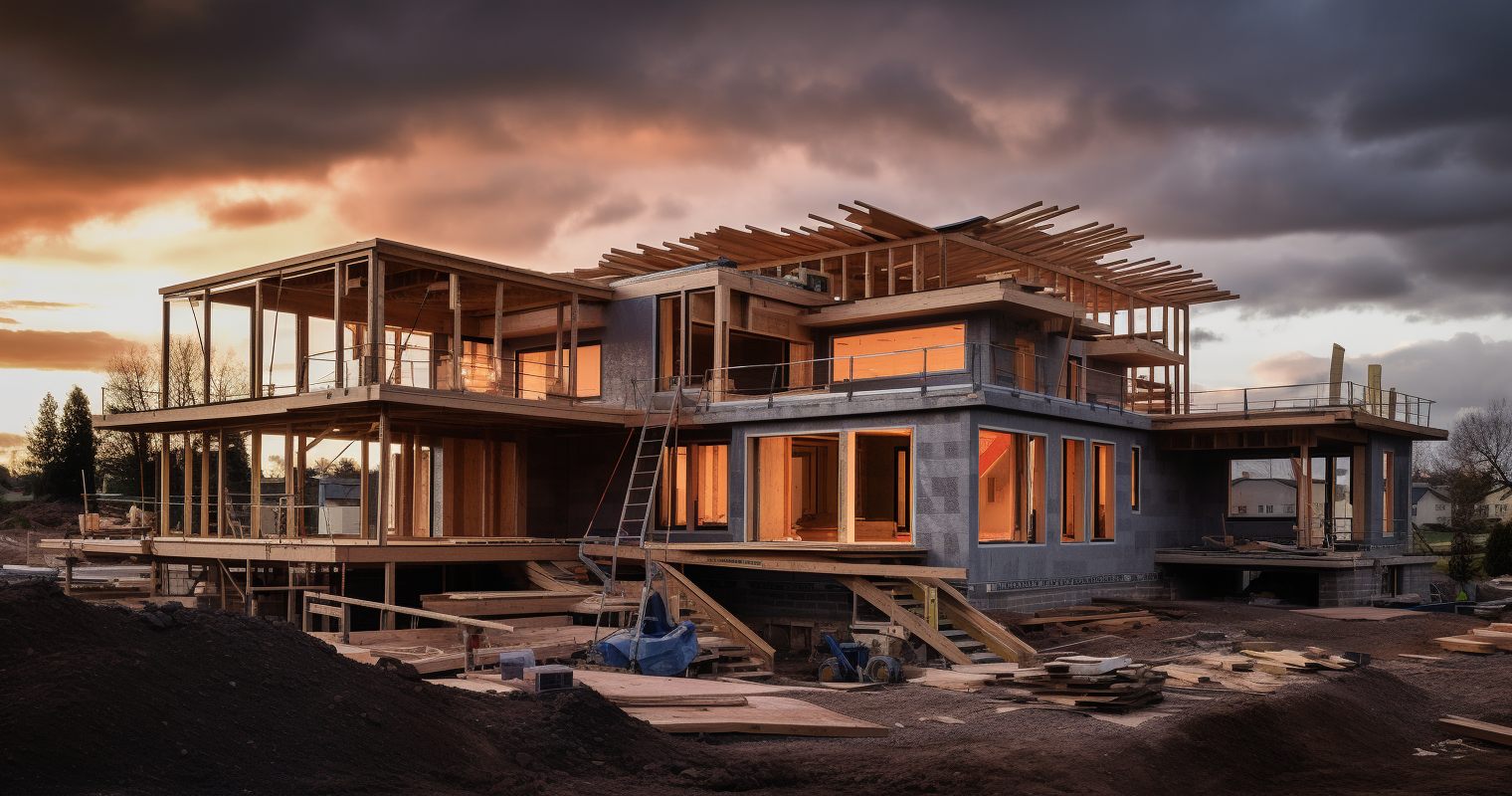
Constructing or renovating a property in Norway is a thoroughly regulated undertaking governed primarily by the Planning and Building Act (Plan- og bygningsloven). Planning permission is required for most construction and substantial renovation work, with approvals issued at the municipal level. The construction sector operates under strict oversight, heritage protection legislation is rigorous, and foreign nationals may generally purchase and develop land without significant barriers — though careful due diligence remains indispensable.
| Item | Details |
|---|---|
| Primary legislation | Planning and Building Act (Plan- og bygningsloven), 2008 |
| Who grants planning permission | Local municipality (kommune) |
| Standard processing time | Up to 12 weeks for applications requiring neighbour consultation (as of 2024); 3 weeks for simpler cases |
| Heritage authority | Riksantikvaren (Directorate for Cultural Heritage); website: riksantikvaren.no |
| Automatic heritage protection threshold | All buildings pre-dating 1537; Sámi buildings pre-dating 1917 (as of 2024) |
| Foreign ownership restrictions | Generally none for residential/commercial property; agricultural land has separate rules |
Do you need planning permission to build or renovate a property in Norway?
Before erecting a new structure or undertaking significant alterations to — or in the vicinity of — an existing building, a permit from the local planning and building authority (the municipality) will generally be required. This obligation is broad in scope, encompassing not only entirely new homes but also extensions, changes to external facades, and demolition work.
Strategic planning and land-use regulation in Norway is shaped by a combination of statute and government policy. The central legislative framework for planning and building permits is the Planning and Building Act (Plan- og bygningsloven) and its associated regulations. The Act empowers the state, county, and municipality to regulate land use within their respective spheres of responsibility, with the authority to oversee development and property use resting primarily with county and municipal bodies.
Certain smaller-scale projects are exempt from the requirement to obtain a formal permit, though they must still be undertaken lawfully and in conformity with the Planning and Building Act, its subsidiary regulations, and the relevant zoning plan. Minor outbuildings within specified size limits are among the types of work that may qualify for exemption, but current thresholds should always be confirmed with your local municipality before any work begins.
Municipalities are obliged to guide local urban development by producing municipal master plans (kommuneplan), area zoning plans (områdeplan), and detailed zoning plans (detaljregulering). A detailed zoning plan sets out the specific terms governing land use within a confined geographic area — often covering only a handful of properties — and may address permitted building types, height and footprint limits, aesthetic standards, restrictions on development and use, sequencing of construction, and parking arrangements.
Unlike some planning frameworks — for instance, Australia’s Development Assessment system or Canada’s building permit regime, where a single approval often addresses both planning policy and building standards simultaneously — larger building projects in Norway ordinarily proceed through two distinct stages: the general permission (rammetillatelse), which constitutes an in-principle decision conferring a conditional right to proceed with the project, followed by the project start-up permission (igangsettingstillatelse), which is issued once the conditions set in the general permission have been satisfied.
Before the developer or responsible applicant begins preparing a building application, a preliminary conference with the local planning and building authority can be arranged to clarify the project’s scope and overall content. This pre-application meeting is strongly recommended for anything beyond the most straightforward proposals.
The step-by-step application process in Norway typically works as follows:
- Preliminary conference (forhåndskonferanse): Arrange a meeting with your local municipality’s planning and building department to discuss your project’s scope, applicable zoning rules, and what documentation will be required.
- Check the zoning plan: Confirm that the land or property is zoned for your intended use. Any new or changed use must accord with the permitted usage specified in the relevant land-use plan — for example, commercial premises may not be erected in an area designated exclusively for housing.
- Engage a responsible applicant (ansvarlig søker): For most applications, Norwegian regulations require a formally approved professional — typically an architect or engineer registered with the municipality — to submit the application on the developer’s behalf. This individual assumes legal responsibility for ensuring the application satisfies all applicable requirements.
- Submit the building application: The application process is often detailed and time-intensive, requiring comprehensive plans and specifications of the proposed work together with documentation demonstrating compliance with local regulations. Applications are submitted through the municipality’s online portal or, in some cases, by post.
- Neighbour notification: The municipality will notify neighbouring property owners, who generally have three weeks in which to raise objections.
- Receive general permission: The municipality evaluates whether the project accords with the applicable area plan and satisfies planning and building legislation requirements. Objections from neighbours and adjoining owners are also considered at this stage. Processing typically takes up to 12 weeks for applications requiring consultation (as of 2024); less complex cases may be resolved within three weeks.
- Obtain project start-up permission: Following the grant of general permission, the project start-up permission is issued once the building authorities have approved the contractors responsible for the various elements of the work.
- Commence construction: Work may commence after the project start-up permission has been issued. The permit is generally valid for three years; check with your municipality for the current validity period.
- Certificate of completion: Once the work is finished, a certificate of completion (ferdigattest) must be issued by the building authorities before the completed building or works may be occupied or used. If the authorities are satisfied that the development has been carried out in accordance with the permit and with the general requirements of planning and building legislation, the ferdigattest will be issued accordingly.
Permit fees are determined by each municipality individually and vary according to project size and complexity. Always verify current fee schedules directly with your local municipality, as these figures are subject to regular revision.
The planning and building authorities have the power to grant a dispensation permitting a building that does not comply with the applicable land-use plan. However, a dispensation may not be granted where the considerations underlying the provision in question, or the objectives of the Act itself, would be materially compromised.
What are the rules around listed buildings, conservation areas, and heritage protection in Norway?
Norway operates a well-developed heritage protection framework that has parallels with, but differs in meaningful respects from, the listed building regimes found in countries such as the UK or France. Rather than a straightforward tiered classification (such as Grade I, II*, and II in England), Norway combines automatic statutory protection with individual protection orders under the Cultural Heritage Act (Kulturminneloven) of 1978.
The Cultural Heritage Act of 1978 is the principal Norwegian statute safeguarding heritage sites and cultural environments. The structures and spaces it covers are considered to hold cultural or architectural significance, and the Act extends to built structures and sites, the surroundings of monuments in some cases, protected buildings, vessels, shipwrecks, and cultural landscapes.
In Norway, cultural monuments and objects originating before 1537 (the Reformation) and buildings dating from before 1650 receive automatic legal protection. This automatic protection is a significant feature of the Norwegian system: no formal designation process is required for the oldest structures — their protection takes effect by operation of law. Buildings predating 1537 are automatically protected; those from the period 1537 to 1649 may be formally declared protected; and Sámi buildings older than 1917 also receive automatic protection.
The Act prohibits any modification of automatically protected cultural heritage monuments and sites. This encompasses a ban on activities that could damage, destroy, excavate, relocate, alter, conceal, or otherwise inappropriately change the character of such heritage, or create a risk that such harm might occur.
Unless an exemption has been granted under the Cultural Heritage Act, the demolition, relocation, addition to, alteration, substitution of materials or colours, or any intervention beyond routine maintenance is prohibited. Any measures affecting a protected building must be handled through the cultural heritage authorities.
The Directorate for Cultural Heritage (Riksantikvaren) is responsible for the administration of all archaeological and architectural monuments, sites, and cultural environments in Norway in accordance with applicable legislation. The Directorate is a government body under the Ministry of Climate and Environment and acts as adviser to the Ministry on all matters relating to cultural monuments, sites, and environments, and is the national authority on cultural environments, charged with implementing Norway’s national cultural environment policy.
As a general rule, county authorities are responsible for administering protected cultural monuments and sites, processing exemption applications, and ensuring cultural heritage is given due weight in land-use planning. This means that anyone planning work on or in proximity to a potentially protected property should first approach the county municipality’s cultural heritage officer, and then the Riksantikvaren if the property appears in the national register.
To establish whether a property or area is subject to heritage protection, consult the national database Askeladden, administered by the Riksantikvaren and containing records of all known protected monuments, sites, and environments in Norway. It can be accessed at askeladden.ra.no. This search should be carried out before completing any purchase and certainly before commissioning design work.
Properties designated as heritage sites may not be altered. Those responsible for causing damage to heritage sites are liable to fines or imprisonment of up to two years for serious violations. These are substantial consequences, and ignorance of a building’s protected status is not generally accepted as a defence.
The Riksantikvaren can be contacted at: Riksantikvaren (Directorate for Cultural Heritage), Dronningens gate 13, 0152 Oslo, Norway. Reception: +47 22 94 04 00. Website: riksantikvaren.no.
What permits and licences are required when building or renovating in Norway?
Beyond the core planning and building permit, a construction or renovation project in Norway may require a number of additional approvals from other public bodies. In certain circumstances, it is necessary to apply for separate licences or permissions — for example, a discharge permit from the Norwegian Pollution Control Authority, or a permit for connecting the development to a publicly classified road or county road from the public roads administration.
The most commonly required additional permits and approvals include:
- Building permit (byggetillatelse): Required for most categories of building work, including new construction, alterations, and extensions. This is the primary consent granted by the municipality.
- Electrical permit (el-tillatelse): Required for any electrical work carried out as part of the construction or renovation. Electrical installations must be performed by, or under the supervision of, a licensed electrical contractor registered with the Norwegian Directorate for Civil Protection (DSB).
- Plumbing and drainage permit: Required for any plumbing work undertaken as part of the project. Such work must be carried out by approved professionals.
- Road access permit: Where construction requires a new or altered connection to a public road, approval must be obtained from Statens vegvesen (the Norwegian Public Roads Administration) or the municipality, depending on the road classification.
- Water and sewerage connection: There is a requirement to lay down public water and drainage pipes in the immediate vicinity of the site. Connecting to public systems requires approval from the municipal water and wastewater authority.
- Environmental and discharge permits: Projects that may affect watercourses, wetlands, or ecologically sensitive habitats may require permits from the Norwegian Environment Agency (Miljødirektoratet) or county environmental authorities.
- Fire safety compliance: All buildings must meet the technical fire safety requirements set out in the Technical Regulations (Byggteknisk forskrift, TEK17). Fire safety sign-off forms part of the certificate of completion process.
- Waste management plan: For larger projects, a waste management plan is required, along with surveys for hazardous materials and environmental remediation plans.
The Planning and Building Act of 2008 and its related regulations establish formal standards applicable to all construction projects, covering building safety, technical requirements, aesthetics, and functionality. These standards are elaborated in the Technical Regulations (TEK17), which address structural integrity, energy efficiency, accessibility, indoor climate, and fire safety. Norway imposes demanding energy efficiency requirements for new buildings, and compliance is verified during the permit process.
A certificate of completion or provisional permission for a building is generally not issued until infrastructure requirements relating to roads, water supply, and drainage have been satisfied. This is a particularly important consideration for those building on rural or undeveloped land, where utility connections may need to be installed entirely at the developer’s cost.
The Norwegian Directorate for Building Quality (Direktoratet for byggkvalitet, DiBK) oversees building regulations and publishes guidance in English at dibk.no/en. The relevant municipal building office (plan- og bygningsetaten or teknisk etat) is the primary point of contact for all permit applications.
How do you find a reliable, trustworthy builder in Norway?
Norway’s construction sector is regulated through a combination of national legislation, mandatory approvals, and professional certification schemes. Minimum wage rates apply to both skilled and unskilled workers on construction sites. These minimums are mandatory across all construction projects, and the relevant regulations have been updated on multiple occasions, with the most recent revision entering into force in April 2025. This framework protects workers and preserves fair competition, but it also means that unusually low quotations from informal or unregistered contractors should be treated as a warning sign.
For most building projects in Norway, all contractors and subcontractors must be approved as ansvarlig utførende (responsible for execution) by the municipality. This approval is project-specific and requires the contractor to demonstrate relevant qualifications and quality assurance systems. Without this approval, a contractor may not legally carry out notifiable construction work.
One of the most significant credentials to look for is the Mesterbrev — a Norwegian master craftsman’s certificate awarded to tradespeople who have demonstrated high levels of practical competence and business management ability in their trade. Builders, plumbers, electricians, and other tradespeople may hold this qualification. Whether a contractor holds a Mesterbrev can be verified at mesterbrev.no.
The principal professional and trade bodies for construction in Norway include:
- Byggmesterforbundet (Norwegian Master Builders Association): The main association for builders and contractors. Members are typically master builders (byggmestre) who hold relevant qualifications. Website: byggmesterforbundet.no. Address: Essendrops gate 3, 0368 Oslo. Tel: +47 23 08 75 00.
- Byggenæringens Landsforening (BNL — Norwegian Construction Industry Association): The principal employers’ organisation representing the broader construction sector. Website: bnl.no. Address: Næringslivets Hus, Middelthuns gate 27, 0368 Oslo.
- Mesterbrev-nemnda: The body responsible for administering and verifying master craftsman qualifications. Website: mesterbrev.no.
Practical steps to vet a contractor before signing anything:
- Check registration: Every business operating in Norway must be registered in the Register of Business Enterprises (Foretaksregisteret). You can verify a company’s registration number, ownership structure, and financial standing at brreg.no. An unregistered construction business is a serious cause for concern.
- Request proof of insurance: A reputable contractor should hold both liability insurance (ansvarsforsikring) and, for larger companies, employer’s liability insurance. Request copies of relevant policy documents before work begins.
- Ask for references: Request contact details for recent, comparable projects. Speaking directly with previous clients remains one of the most dependable ways to assess a contractor’s quality and reliability.
- Use a written contract: Always insist on a written contract before work commences. Standard-form contracts (NS-contracts, such as NS 8406 for smaller projects) are widely used in the Norwegian construction industry and provide a balanced framework of rights and obligations for both parties.
- Staged payments: Avoid paying large sums upfront. Structure payments in stages tied to clearly defined project milestones, retaining a sum (typically 5–10%) until the certificate of completion has been issued and any identified defects remedied.
- Be cautious of very low quotes: Quotations significantly below market level may indicate the use of unlicensed labour, substandard materials, or a plan to seek additional payments once work has commenced — a problem frequently encountered by foreign property owners unfamiliar with prevailing local rates.
Verify that all contractors and workers involved in your project are licensed and qualified to carry out the work assigned to them. If a contractor is unable to produce evidence of their qualifications, approvals, and insurance, do not engage them.
How do you find a qualified local architect in Norway?
In Norway, engaging an architect is not always a strict legal requirement for smaller projects, but for any notifiable construction work an approved ansvarlig prosjekterende (responsible designer) must receive formal approval from the municipality. In practice, this role is almost always fulfilled by a qualified architect or engineer.
The title “architect” is not legally protected in Norway in the same manner as in certain other countries — meaning that, technically, any individual could describe themselves as one. Nevertheless, membership of the relevant professional body and possession of a recognised qualification remains the practical benchmark for credible professionals in the field.
The key professional body for architects in Norway is:
- Norske Arkitekters Landsforbund (NAL — Norwegian Association of Architects): The principal professional association for practising architects in Norway. Membership signifies adherence to professional standards and a code of ethics. NAL maintains a searchable directory of member architects on its website. Website: arkitektene.no. Address: Josefines gate 34, 0351 Oslo. Tel: +47 23 33 25 00. Email: [email protected].
For those seeking an architect with a particular specialism — such as passive house design, the restoration of protected buildings, or rural and agricultural construction — NAL’s member directory enables filtering by area of expertise and geographic region. Norway’s architecture schools (notably NTNU Trondheim and the Oslo School of Architecture and Design) produce graduates who must hold a relevant university degree; many Norwegian architects additionally hold the European professional qualification, facilitating cross-border recognition within the EEA.
Expats commissioning construction projects in Norway should bear in mind the following practical considerations:
- Language: Most Norwegian architects working in larger cities have a good command of English, and many possess international experience. However, all official planning submissions must be made in Norwegian, so your architect will need to manage this regardless of the language in which you and they communicate.
- Local knowledge: Choose an architect with recent, direct experience of the planning department in the specific municipality where you intend to build. Requirements, design expectations, and the pace of decision-making can vary considerably between municipalities.
- Heritage experience: If you are renovating an older or potentially protected property, seek out an architect with demonstrable experience of working within Norway’s Cultural Heritage Act framework and of liaising with the Riksantikvaren or county cultural heritage officers.
- Foreign qualifications: Architects who qualified in EEA member states can generally have their credentials recognised in Norway under the mutual recognition framework. Architects from outside the EEA may need to have their qualifications assessed; contact NAL for current guidance on this process.
What are the common pitfalls when buying land to build on in Norway?
Purchasing property in Norway as a foreign national is achievable, but requires careful navigation of permission requirements and financing considerations. For those intending to acquire undeveloped land for construction, the due diligence process is especially important and should not be rushed.
Key risks and pitfalls to be aware of include:
- Unverified planning status: Never assume that a plot is suitable for development simply because it is being marketed for sale. Any new or amended use must conform to the permitted usage specified in the applicable land-use plan. Review the municipal zoning plan (arealplan) before making any offer. If land is currently designated as agricultural, forest, or recreational, obtaining planning permission for residential development may be impossible or may require a protracted and uncertain rezoning process.
- The 100-metre shoreline rule: In the 100-metre belt along the coast and riverbanks, particular consideration must be given to the natural and cultural environment, outdoor recreation, landscape, and other public interests. Construction within this zone is generally prohibited unless specific exemptions apply. This frequently surprises buyers drawn to coastal or lakeside plots.
- Land boundaries and title: Norway manages land registration through Kartverket (the Norwegian Mapping and Cadastre Authority). Always verify plot boundaries using the official cadastral map (matrikkelkart) and confirm that the vendor holds clear title. Boundary disputes are not uncommon in rural areas where historical records may be imprecise.
- Underground and environmental issues: Norway’s varied geology means that certain plots may be susceptible to ground instability, elevated radon levels, or flood risk. A ground survey (grunnundersøkelse) is strongly recommended before purchasing any plot. Check the Norges vassdrags- og energidirektorat (NVE) flood maps at nve.no for flood risk data.
- Utility availability: In rural and remote locations, connection to the public water supply, sewerage network, and electricity grid may be unavailable or prohibitively expensive. Confirm availability and the likely cost of connections with the local municipality and relevant utility providers before committing to a purchase.
- Archaeological remains: Where land has not been previously developed, there is a possibility of undiscovered archaeological remains. When planning, the responsible manager or authority is obliged to investigate how a proposed building measure affects automatically protected cultural monuments and to inform the relevant ministry of steps taken to preserve or investigate them prior to any clearance. Encountering protected archaeological remains during construction can bring work to a complete halt and generate substantial additional costs.
- Agricultural land restrictions: Agricultural land (landbrukseiendommer) is subject to additional requirements under the Agricultural Holdings Act (Konsesjonsloven), which may restrict who may acquire such land and what purposes it may serve. This is a particularly important consideration for those seeking rural plots. Always obtain specific legal advice if the land carries any agricultural classification.
- Contract structure: Property purchases in Norway are ordinarily completed by way of a deed of transfer (skjøte) registered with Kartverket. Unlike some systems where a notary plays a central role in verifying the transaction, in Norway an estate agent (eiendomsmegler) or solicitor commonly handles the conveyancing process. Always use a licensed megler or a qualified Norwegian lawyer (advokat) to manage the transaction.
National land registry and cadastral information is accessible through seeiendom.kartverket.no, which provides ownership details, boundary maps, and registered information for individual properties. This resource should be consulted before committing to any purchase.
What are the rules around foreign ownership and financing for construction projects in Norway?
Non-residents are free to purchase residential and commercial property in Norway without any specific restrictions. Norway does not impose a general prohibition on foreign property ownership, which means that — unlike some countries in the region — there is no requirement to obtain government approval simply on account of being a foreign national purchasing a home or building plot for residential purposes.
There are, however, important nuances to be aware of:
- Agricultural and forest land: The acquisition of agricultural or forest holdings may trigger consent requirements under the Agricultural Holdings Act (Konsesjonsloven). The rules are complex and depend on the size and classification of the land, and in some cases residency obligations or farming commitments may be attached to ownership. Always obtain legal advice specific to the particular plot under consideration.
- Residency is not required for ownership: You do not need to be a Norwegian resident to own property or land in Norway. However, if you intend to spend extended periods in Norway, visa and residency requirements under immigration legislation will apply separately. Citizens of EEA/Schengen countries enjoy free movement rights; those from outside these areas should check current rules with the Norwegian Directorate of Immigration (UDI) at udi.no.
- Financing and mortgages: Foreign nationals can in principle apply for Norwegian mortgages (boliglån) or construction loans (byggelån), but in practice lenders typically require income generated in Norway, a Norwegian personal identification number (personnummer or D-nummer), and in many cases a Norwegian tax record. Non-residents may find it considerably more difficult to access local financing and may need to rely on equity or borrowing from their country of residence. Approach several Norwegian banks and consult an independent financial adviser before assuming that local financing will be available.
- Company structures: Some foreign investors choose to acquire Norwegian property through a Norwegian limited company (AS — aksjeselskap). This may offer tax and liability advantages in certain circumstances but introduces additional administrative complexity. Seek Norwegian tax and legal advice before adopting this approach.
- Tax and registration costs: The purchase of property in Norway attracts a document tax (dokumentavgift) of 2.5% of the purchase price (as of 2025), payable upon registration of the deed. Verify the current rate with Kartverket or a local lawyer, as tax rates are set by Parliament and may change from year to year.
For official guidance on property ownership and registration, consult Kartverket (the Norwegian Mapping and Cadastre Authority) at kartverket.no/en. For investment and business-related enquiries, the Norwegian Investment Promotion Agency Invest in Norway provides guidance at investinnorway.no.
What official sources should you consult when planning to build or renovate in Norway?
Regulations, fees, and procedures within Norway’s planning and construction system are subject to regular change, and certain requirements differ between municipalities. Always verify current obligations directly with the relevant authority. The key official sources to consult are:
| Authority / Resource | Role | Website |
|---|---|---|
| Your local municipality (kommune) | Planning permission, building permits, zoning information, fee schedules | Find via regjeringen.no or your municipality’s own website |
| Direktoratet for byggkvalitet (DiBK) | National building regulations (TEK17), guidance on technical requirements | dibk.no/en |
| Riksantikvaren (Directorate for Cultural Heritage) | Heritage protection, Askeladden register, listed buildings | riksantikvaren.no/en |
| Kartverket (Mapping and Cadastre Authority) | Land registration, property boundaries, ownership records, cadastral maps | kartverket.no/en |
| Norges vassdrags- og energidirektorat (NVE) | Flood risk maps, water resource management | nve.no |
| Miljødirektoratet (Norwegian Environment Agency) | Environmental permits, pollution control, protected habitats | miljodirektoratet.no/en |
| Statens vegvesen (Public Roads Administration) | Road access permits, connection to classified roads | vegvesen.no/en |
| Norwegian Directorate of Immigration (UDI) | Residency and visa requirements for foreign nationals | udi.no/en |
| Norske Arkitekters Landsforbund (NAL) | Architect directory and professional standards | arkitektene.no |
| Byggmesterforbundet | Builder directory and professional standards | byggmesterforbundet.no |
| Mesterbrev-nemnda | Verify master craftsman qualifications | mesterbrev.no |
| Lovdata | Full text of Norwegian legislation including the Planning and Building Act | lovdata.no |
The Norwegian government’s official information portal at norge.no/en also offers public-facing guidance in English across a range of topics including property and construction. For the most authoritative and current information on any specific requirement, always go directly to the original source — whether that is your municipality, DiBK, or another regulatory body — rather than relying solely on third-party guides or online forum discussions.
Frequently asked questions: building and renovating in Norway
How much does it typically cost to build a new home in Norway?
Building costs in Norway rank among the highest in Europe, reflecting elevated labour costs, demanding technical requirements, and the country’s general cost of living. As a very approximate guide, new residential construction in 2024–2025 typically falls in the range of NOK 30,000 to NOK 60,000 or more per square metre (including VAT), depending on location, specification level, and site conditions. These figures exclude land acquisition costs, architect and engineering fees, utility connections, and landscaping. Always obtain multiple detailed quotations from registered contractors before drawing up a project budget, and cross-check current figures with local architects or quantity surveyors.
How long does the building permit process take in Norway?
Applications that require neighbour notification and consultation typically receive a response within 12 weeks (as of 2024). Simpler applications that do not require neighbour notification may be decided within three weeks. Complex projects, applications seeking a dispensation from the zoning plan, or projects involving heritage-protected buildings can take considerably longer. Delays are also more frequent in municipalities with high planning workloads or limited departmental resources. It is advisable to build contingency time into your project schedule from the outset.
Do I need to speak Norwegian to navigate the planning and building permit process?
All official planning applications and permit submissions must be made in Norwegian. If you are not a Norwegian speaker, you will need to work with a qualified architect, engineer, or legal adviser who can manage all submissions on your behalf. The majority of professional architects and lawyers in Norway’s larger cities have a strong command of English, and translation services are widely available. It is nonetheless worthwhile learning at least basic Norwegian planning and construction terminology, to help you understand key documents and engage effectively with local authorities.
What happens if I renovate or build without the required permits in Norway?
Undertaking construction or renovation without the necessary permits is treated seriously in Norway. The municipality may issue a stop-work order (stansing), require that any unauthorised work be undone at the owner’s expense (retting), and impose financial penalties. Where unauthorised construction cannot be brought into compliance with regulations, an order to demolish may be issued. Carrying out work on a heritage-protected building without the requisite consent can lead to criminal prosecution, with fines or imprisonment of up to two years for the most serious breaches. Unauthorised work can also render a property extremely difficult or impossible to sell in future, as any prospective buyer would inherit the outstanding liability.
Are building qualifications and standards from other countries recognised in Norway?
Norwegian building standards — in particular TEK17 — are established domestically and do not automatically incorporate the requirements of other countries. All construction in Norway must comply with Norwegian technical regulations irrespective of the system under which the builder or designer trained. For architects and engineers, EEA-qualified professionals can generally have their credentials recognised through the EEA mutual recognition framework. Tradespeople from outside Norway must demonstrate competence in order to be approved as responsible for execution (ansvarlig utførende) on a notifiable project. Qualifications obtained outside the EEA are assessed individually. Contact DiBK and NAL respectively for current guidance on professional recognition procedures.
Can I manage a building project in Norway myself, or do I need to hire a professional manager?
For notifiable building projects, Norwegian regulations require formal approval of all responsible parties — including the responsible applicant (ansvarlig søker), responsible designer (ansvarlig prosjekterende), and responsible contractor (ansvarlig utførende). Each of these roles must be filled by suitably qualified professionals who bear legal responsibility for their respective areas of work. A private individual may in limited circumstances be approved for certain roles on their own single-family home project, but this is uncommon and depends on the specific municipality. In practice, professional support is almost invariably required for anything beyond the smallest exempt projects.
What should I do if I have a dispute with a builder or contractor in Norway?
If a dispute arises with a contractor, begin by raising the matter formally in writing, with clear reference to the terms of your written contract. If direct resolution proves impossible, Norway offers consumer dispute resolution channels: for disputes involving tradespeople, the Forbrukerrådet (Norwegian Consumer Council) at forbrukerradet.no can offer guidance and mediation support. The Forbrukerklageutvalget (Consumer Disputes Commission) has powers to adjudicate in such matters. Pursuing the dispute through the courts is also an option, and given the complexity of construction contracts, engaging a Norwegian lawyer (advokat) with experience in construction law is strongly advisable. This underlines the critical importance of ensuring that a written NS-standard contract is in place before any work begins.
Are there any particular risks for expats or foreign nationals buying land to build on in Norway?
The principal risks for foreign buyers stem from inadequate due diligence rather than legal discrimination. Common pitfalls include committing to a purchase without confirming that residential planning permission is actually obtainable; overlooking heritage protection designations, environmental restrictions, or the 100-metre shoreline rule; failing to establish whether utility connections are available; and misunderstanding the consent requirements applicable to agricultural land. Foreign buyers may also be less familiar with Norwegian conveyancing practice and may face language barriers when reviewing key documents. Always instruct a licensed Norwegian estate agent (eiendomsmegler) or lawyer (advokat), and ask them to carry out comprehensive due diligence on any plot before you commit to purchase.