
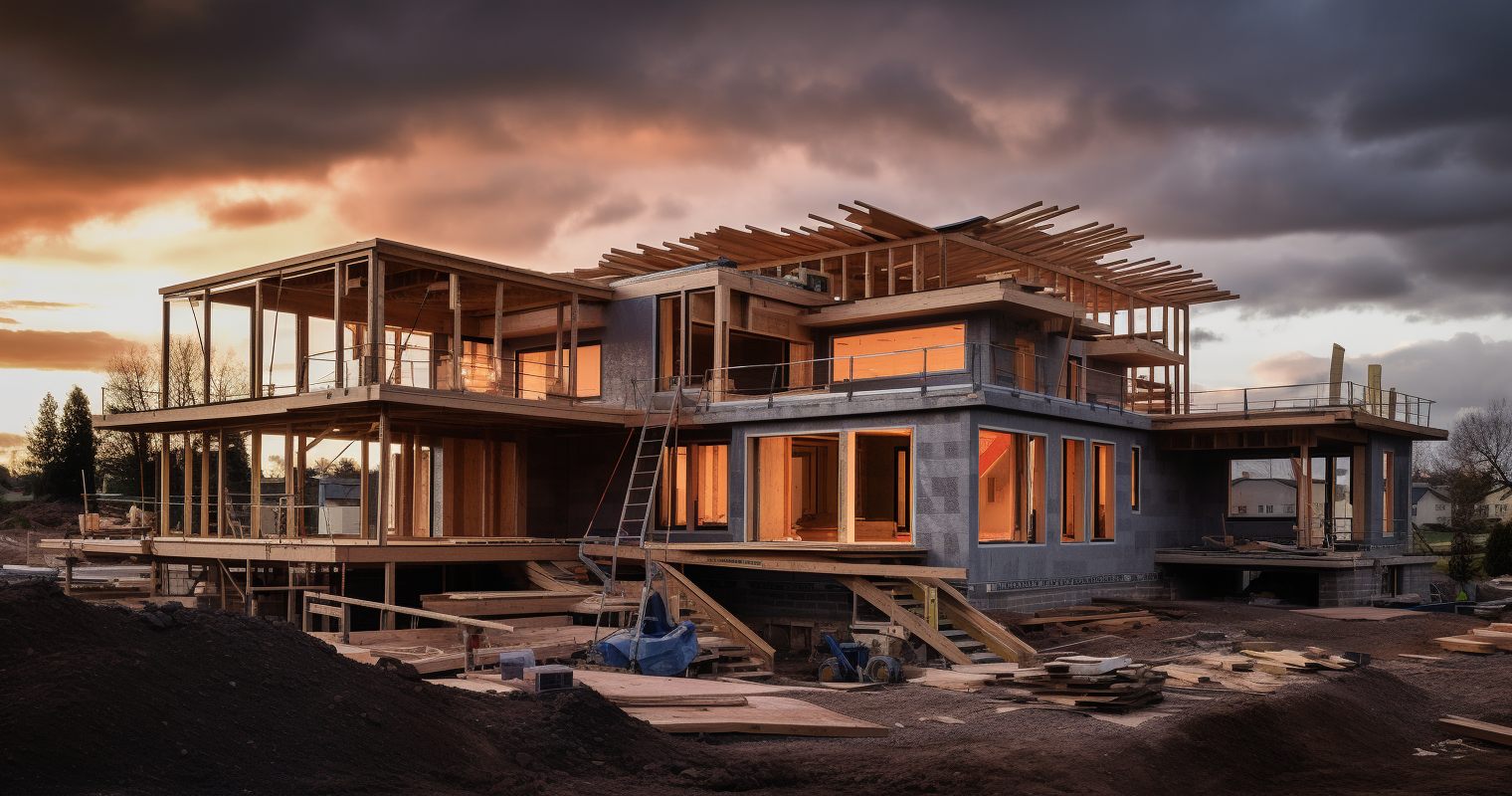
When building or renovating property in New Zealand, you will encounter two distinct approval frameworks: a building consent (confirming that work satisfies the New Zealand Building Code) and, where applicable, a resource consent (addressing land-use and environmental considerations under the Resource Management Act 1991). The sector is subject to rigorous regulation, overseas land acquisition is legally constrained, and more than six thousand places benefit from heritage protection. Getting to grips with all three frameworks before breaking ground is not optional — it is essential.
| Item | Details |
|---|---|
| Building consent statutory processing time | 20 working days (as of 2025); complex projects may take longer |
| Resource consent processing time | 20–60 working days, longer if public notification required (as of 2025) |
| Resource consent fee range | From approx. NZD $1,000 for simple land use to $10,000+ for complex subdivisions (as of 2025; varies by council) |
| Key legislation | Building Act 2004; Resource Management Act 1991; Heritage New Zealand Pouhere Taonga Act 2014 |
| Heritage register entries | Over 6,000 entries on the New Zealand Heritage List / Rārangi Kōrero |
| Foreign land ownership | Significantly restricted under the Overseas Investment Act; seek legal advice before purchasing |
Do you need planning permission to build or renovate a property in New Zealand?
New Zealand does not employ the phrase “planning permission” in the way countries such as the UK or Canada do. Instead, anyone contemplating a construction project must familiarise themselves with two parallel approval mechanisms — a building consent and, in many situations, a resource consent. Both are administered primarily at the local council level, and the same project may trigger both requirements simultaneously.
Building consents exist to confirm that construction work satisfies the New Zealand Building Code, thereby ensuring that finished structures are durable, safe, and healthy for all occupants. They are compulsory for most new builds and substantial renovation projects, and are issued by your local council in its capacity as a Building Consent Authority (BCA).
Resource consents govern land use, environmental consequences, and whether a proposed activity is consistent with the relevant District or Regional Plan under the Resource Management Act 1991. Applications are submitted to your council and must include an Assessment of Environmental Effects (AEE) alongside the relevant fees. Not every construction project triggers the need for a resource consent; the answer depends on what the operative District Plan says about your particular site and the nature of the proposed activity.
Exemptions from building consent: A building consent is not required for every type of work. The Building Act 2004, as updated by 2024 reforms, catalogues exempt work in Schedule 1, accessible via building.govt.nz. Exempt categories typically cover minor, low-risk projects such as small single-storey detached outbuildings below a specified floor area, garden sheds, pergolas, and certain repair and maintenance tasks. The 2024 reforms also relaxed requirements for minor variations during construction, meaning that builders will no longer need to apply for fresh consents when making minor product or design changes. Always consult the current Schedule 1 exemptions at building.govt.nz or speak directly with your local council before treating any work as exempt — getting this wrong carries real legal consequences.
How to apply — step by step:
- Determine which consents apply. Your council can advise you on any district or regional plan requirements that may necessitate a resource consent or other approvals. Use the consent checker at building.govt.nz and talk to your council’s planning team.
- Book a pre-application meeting. It is strongly recommended that you schedule a pre-application appointment with both the resource consent and building teams at your council before lodging formal documents. This is particularly valuable for larger or more complex projects.
- Compile your application. A building consent application demands detailed plans and specifications demonstrating compliance with the New Zealand Building Code. A resource consent application additionally requires a comprehensive Assessment of Environmental Effects (AEE).
- Submit your application and settle fees. For the council to grant a building consent, it must be satisfied on reasonable grounds that the Building Code would be met if the work were carried out properly. The council is not obliged to issue the consent until all applicable fees and levies have been paid.
- Wait for a decision. The statutory processing period for a building consent is ordinarily 20 working days; resource consents require between 20 and 60 working days, with longer timeframes when public notification or formal hearings become necessary. The 2024 reforms have expedited minor works processing.
- Commence work within 12 months. Building work must begin within 12 months of consent being granted, otherwise the consent lapses. If you require more time, contact your council before that 12-month window closes.
- Arrange inspections and obtain a Code Compliance Certificate (CCC). Council inspections are conducted at prescribed stages throughout construction. On satisfactory completion, you receive a Code Compliance Certificate confirming the finished work meets the Building Code. Selling or mortgaging a property without a CCC is extremely difficult.
Fees: Costs differ considerably — from approximately NZD $1,000 for straightforward land-use resource consents to NZD $10,000 or more for complex subdivision applications, based on Auckland Council guidelines. Building consent fees are set individually by each council and vary markedly from one district to another, unlike the nationally standardised fee structure used in the UK. Always confirm current figures with your local council before drawing up a project budget.
Larger projects or those of national significance may also benefit from the Fast-track Approvals Act 2024, which offers a permanent, consolidated pathway for obtaining resource consent and various other approvals through a single streamlined process.
What are the rules around listed buildings, conservation areas, and heritage protection in New Zealand?
New Zealand operates a formal heritage protection framework, though it diverges considerably from the listed building and conservation area designations common in the UK or the National Register of Historic Places in the United States. The principal national body is Heritage New Zealand Pouhere Taonga (HNZPT), an autonomous Crown entity established under the Heritage New Zealand Pouhere Taonga Act 2014.
HNZPT’s mandate encompasses identifying, preserving, and promoting the country’s heritage. The organisation offers heritage advice and administers Rārangi Kōrero / The New Zealand Heritage List, which records Historic places, Historic areas, Wāhi tūpuna, Wāhi tapu, and Wāhi tapu areas.
Historic places on the register fall into two classifications: Category 1 — places of “special or outstanding historical or cultural heritage significance or value” — and Category 2 — places of “historical or cultural heritage significance or value.” The register contains over 6,000 entries. This two-tier arrangement is broadly analogous to Grade I/II listed buildings in England or Category A/B listings in Scotland, although the legal mechanisms underpinning the New Zealand system operate quite differently.
What restrictions apply? If you own a recognised heritage building — whether HNZPT Category 1 or 2, or a structure designated as Locally Significant within the District Plan — you may need land use consent before undertaking any work. Under most District Plans, altering, adding to, or affixing signage to an HNZPT building, structure, or place constitutes a discretionary activity requiring land use consent, with HNZPT treated as an affected party in all such applications. These obligations extend to both interior and exterior works.
Archaeological sites carry separate and additional obligations that apply regardless of whether building or resource consents have been secured. An archaeological site is defined as any place in New Zealand — including buildings, structures, or shipwrecks — that was associated with pre-1900 human activity and where evidence relating to the country’s history can be investigated using archaeological methods. It is unlawful to modify or destroy such a site without the consent of Heritage New Zealand.
Heritage covenants represent a further mechanism to bear in mind. HNZPT has the power to register a heritage covenant against a property. These are voluntary agreements designed to protect and conserve a historic place, historic area, wāhi tūpuna, wāhi tapu, or wāhi tapu area. A heritage covenant is usually permanently registered against the land title and imposes conditions on the management and use of the place. Such covenants appear on the Land Information Memorandum (LIM) report for the relevant property and should surface during standard conveyancing checks.
How to confirm heritage status: Statutory protection for heritage sites and areas is contained within the District Plan. Most significant heritage items appear on both the District Plan schedule and the HNZPT register, though there are instances where a place appears on one list but not the other. Always search the HNZPT online register at heritage.org.nz and request a LIM report from your council before purchasing or planning any work on a property that may carry heritage significance.
The Heritage New Zealand Pouhere Taonga Act 2014 provides for substantial penalties in cases of unauthorised destruction or modification of archaeological sites. Proceeding with construction without first clarifying heritage obligations is a serious legal risk — particularly for properties located on land with pre-1900 associations.
What permits and licences are required when building or renovating in New Zealand?
A construction project in New Zealand may require a range of approvals and permits beyond the core building and resource consents. Identifying these early will help you avoid costly programme delays.
Code Compliance Certificate (CCC): Issued by your council at the conclusion of construction, the CCC confirms that the completed work is consistent with the Building Code. Keep your plans, permits, and inspection records throughout the project, as these are essential both for obtaining your CCC and for demonstrating compliance when you eventually sell. Banks and prospective purchasers routinely require a CCC, and properties without one present real difficulties when it comes to selling or financing.
Fire safety approvals: For certain building projects, the Building Consent Authority must forward a copy of the consent application to Fire and Emergency New Zealand. This obligation applies where there is an alteration, change of use, or subdivision that affects a building’s fire safety systems. Fire and Emergency New Zealand has 10 working days to communicate any specific fire-related requirements, such as provisions for means of escape.
Smoke alarms: Interconnected smoke alarms are mandatory in all new residential units and in homes undergoing renovations that require a building consent or a change of use. This requirement took effect following amendments to the Acceptable Solutions introduced in 2023/2024.
Environmental and resource consents: Regional councils — as distinct from district councils — are responsible for consents relating to water, air, and coastal environments. If your project involves earthworks near waterways, discharge of contaminants, or activity on coastal land, you must engage with your regional council regarding resource consents under the Resource Management Act 1991. These obligations are entirely separate from, and additional to, district-level planning and building consent requirements.
Utility connections: Water supply, wastewater, and stormwater connections are ordinarily managed by your territorial authority or, in certain areas, by a dedicated water services entity. All electrical work must be carried out and certified by a registered electrician, and installations must comply with the Electricity Act 1992 and applicable standards. Plumbing and drainlaying must be performed by a licensed practitioner under the Plumbers, Gasfitters, and Drainlayers Act 2006.
Building levy: A levy is payable on consented building work that exceeds a threshold value. As of 2024, small building projects valued under NZD $65,000 were exempted from this levy as part of Government reforms — verify current thresholds at building.govt.nz.
Project Information Memorandum (PIM): Before lodging a building consent application, it is highly advisable to obtain a PIM from your council. This document details any resource consent requirements, heritage restrictions, natural hazards, and other council-held information relevant to your site. While not legally compulsory, a PIM is a valuable risk-management tool, especially for buyers unfamiliar with the property’s background and history.
How do you find a reliable, trustworthy builder in New Zealand?
New Zealand’s construction sector is governed by a licensing framework overseen by the Ministry of Business, Innovation and Employment (MBIE). The foundation of this system is the Licensed Building Practitioner (LBP) scheme.
LBPs are building practitioners who have demonstrated competence to carry out work that is critical to the structural integrity or weathertightness of residential buildings. Under the “Restricted Work” requirements of the Building Act, only a registered Architect or a Licensed Building Practitioner — Design may design and obtain a building consent for a standalone home or a small residential apartment. This means that for the vast majority of residential construction, you are legally required to engage an LBP for specific categories of work.
You can confirm an LBP’s licence status, check the class of licence held, and review any disciplinary record via the official LBP register at lbp.govt.nz, which is publicly searchable by name or licence number. Verifying a builder’s LBP status before entering into any engagement is an essential step.
Key professional and trade bodies:
- Registered Master Builders Association (RMBA) — members are required to meet defined professional and trade standards and offer a Master Build Guarantee on new homes and substantial renovation projects. Website: masterbuilder.org.nz. Phone: 0800 269 119. Postal address: PO Box 1796, Wellington 6140, New Zealand.
- Certified Builders Association of New Zealand (CBANZ) — represents qualified, LBP-certified builders. Website: certifiedbuilders.co.nz. Phone: 0800 237 843. Postal address: PO Box 13405, Tauranga 3141, New Zealand.
- New Zealand Specialist Trade Contractors Federation (NZSTCF) — represents specialist trade contractors including plumbers, electricians, and other licensed tradespeople. Website: nzstcf.co.nz.
Practical vetting guidance:
- Always insist on a written contract. Standard contract forms published by the New Zealand Institute of Architects (NZIA) or those structured under the Construction Contracts Act 2002 provide important protections, including mandatory payment provisions and access to adjudication for disputes.
- Confirm that the builder holds adequate public liability insurance and, where relevant, evidence of current professional indemnity cover.
- Request at least three recent references from clients whose projects were similar in scale and nature, and take the time to follow them up.
- Structure payments in staged instalments tied to clearly defined construction milestones rather than large upfront sums. The Construction Contracts Act 2002 governs payment claims and provides a rapid adjudication mechanism for resolving payment disputes.
- Exercise caution around builders who cannot supply their LBP licence number or who are reluctant to apply for building consents in their own name — both can indicate unlicensed or non-compliant activity.
Particular risks for foreign property owners: Expats and overseas buyers can be targeted by unscrupulous operators who offer to carry out work without applying for consents, representing this as a quicker and cheaper option. Unconsented work creates severe legal and financial exposure — it can render a property unmortgageable, compromise insurance cover, and invite enforcement action by the council that may ultimately require demolition. Always demand that every piece of work is properly consented before it begins.
How do you find a qualified local architect in New Zealand?
In New Zealand, the designation “architect” is a legally protected title. Only individuals registered with the New Zealand Registered Architects Board (NZRAB) are entitled to use it. The NZRAB is the statutory body responsible for registering architects and upholding professional standards under the Architects Act 1963.
Building design is not an activity restricted exclusively to architects in New Zealand — any person may design a building. However, the “Restricted Work” provisions in the Building Act mean that only a registered Architect or a Licensed Building Practitioner — Design can design and obtain a building consent for a standalone home or small residential apartment. For larger or more intricate projects, the involvement of a registered architect is strongly advisable.
New Zealand Registered Architects Board (NZRAB)
Website: nzrab.nz
Postal address: PO Box 2492, Wellington 6140, New Zealand
The NZRAB maintains a publicly accessible register of registered architects on its website, searchable by name or location, allowing you to identify a suitably qualified practitioner and verify their registration status.
Registered architects are typically also members of the New Zealand Institute of Architects (NZIA), the sector’s professional body. The NZIA provides a “Find an Architect” directory at nzia.co.nz, which can be searched by location and project type. Phone: 04 473 5169. Postal address: PO Box 2516, Wellington 6140, New Zealand.
International mutual recognition: With effect from 6 November 2024, the Architects Accreditation Council of Australia (AACA), the New Zealand Registered Architects Board (NZRAB), and the National Council of Architectural Registration Boards (NCARB) brought into force a revised Mutual Recognition Agreement (MRA) superseding the previous arrangement, with updated language to broaden licensure access for international architects. As a result, architects registered in Australia or holding an active NCARB Certificate (USA) may be eligible for an expedited registration pathway in New Zealand. The new agreement recognises the competency standards established through each country’s initial licensure processes and acknowledges the various pathways to licensure within each jurisdiction.
There is no formal requirement for architects working in New Zealand to conduct their practice solely in English, though the practical reality is that council submissions, technical documentation, and contracts are almost exclusively in English. If you have specific language requirements, raise them openly with prospective architects or contact the NZRAB for guidance. When appointing an architect as an expat, look for practitioners with a track record of advising overseas clients on visa and ownership matters — familiarity with Overseas Investment Act requirements and resource consent processes for foreign buyers will be a considerable advantage.
What are the common pitfalls when buying land to build on in New Zealand?
Acquiring land for construction in New Zealand demands thorough due diligence. The legal, environmental, and planning environment contains several features that can surprise buyers, particularly those more familiar with property systems in other countries.
1. Verify that your intended development is achievable before exchanging contracts. Not every parcel of land zoned for residential use will automatically accommodate the type of project you have in mind. District Plans distinguish between permitted activities and those requiring resource consent — and for the latter, approval is never guaranteed. Always instruct a planner or solicitor to review the District Plan rules applicable to the specific site before you commit.
2. Obtain a Land Information Memorandum (LIM) report. A LIM is issued by the territorial authority and discloses essential information about the property, including the history of resource and building consents, rating information, drainage details, special land features such as flood or erosion risk, heritage status, and any notices affecting the title. This is the single most critical document to obtain before purchasing — broadly equivalent to a local authority search in the UK or a title search in Australia. Your lawyer should procure a LIM as a matter of course.
3. Verify title and boundaries through the Land Information New Zealand (LINZ) register. New Zealand employs a Torrens title system, similar to Australia, under which ownership is registered and guaranteed by the Crown. Search the title at linz.govt.nz to confirm ownership, identify mortgages, easements, covenants, and caveats, and ensure that the registered boundaries correspond to the physical site. Survey plans are also held by LINZ.
4. Understand zoning and land-use classifications thoroughly. Zoning rules vary across districts. Common residential zone types include low-density, medium-density, and rural-residential, each carrying different minimum lot sizes, height limits, setbacks, and permitted activities. The Medium Density Residential Standards (MDRS), which substantially altered what could be developed as of right in many urban areas, continue to evolve — Auckland Council, for example, has made amendments — so always check the current operative District Plan for the specific site rather than relying on general assumptions.
5. Investigate natural hazards. New Zealand occupies a seismically active and volcanically complex part of the world. Flood-prone areas, liquefaction-susceptible land (especially in Canterbury following the 2011 earthquakes), steep slopes, coastal erosion zones, and tsunami inundation areas are all subject to regulation. The LIM report will flag recorded natural hazards, but additional research using regional council hazard mapping and GeoNet data is advisable for sites in vulnerable locations.
6. Screen for contamination. New Zealand maintains a Hazardous Activities and Industries List (HAIL). Land with a history of farming (particularly involving organochlorine pesticides), timber treatment, dry cleaning, or fuel storage may be contaminated. A contaminated land investigation can add significant cost — and in some scenarios, render development entirely unviable. Check your regional council’s register of potentially contaminated sites before committing to a purchase.
7. Confirm the availability of utility connections. In rural and semi-rural settings, mains water, reticulated sewerage, and even electricity connections may not be present at the boundary. Confirm availability, connection costs, and technical feasibility with the relevant service providers and your territorial authority before entering into any purchase agreement.
8. Engage a qualified solicitor and consider a registered valuer. New Zealand does not use notaries in the European civil-law tradition — property transactions are handled by solicitors. Always instruct a New Zealand-qualified property lawyer to conduct due diligence and review all contracts, and do not rely solely on a real estate agent whose duty of care runs to the vendor. A registered valuer can provide an independent assessment of market value and any factors likely to affect it.
9. Establish whether foreign ownership restrictions apply to you. These rules are addressed in detail in the section below, but be aware that restrictions may prevent you from purchasing certain categories of land altogether. Clarify your position on ownership eligibility before incurring meaningful legal or design expenditure.
What are the rules around foreign ownership and financing for construction projects in New Zealand?
New Zealand imposes some of the most stringent restrictions on foreign land acquisition in the Asia-Pacific region, and these rules carry significant implications for expats and overseas nationals seeking to purchase land for development or renovation.
The Overseas Investment Act 2005 (as amended): Under the Overseas Investment Act, “overseas persons” — broadly, non-residents and individuals who are neither New Zealand citizens nor holders of New Zealand resident visas — face restrictions on acquiring “sensitive land.” Residential land is classified as sensitive, which means that most foreign nationals cannot freely purchase residential property or bare development land without first obtaining consent from the Overseas Investment Office (OIO). The OIO is administered by Land Information New Zealand (LINZ), and applications must be made and approved before any purchase takes place. Refer to linz.govt.nz/overseas-investment for current guidance and application forms.
Who qualifies for an exemption? Certain categories of buyer are exempt or subject to lower thresholds. New Zealand citizens are always exempt regardless of where they are resident. Australian and Singaporean citizens and permanent residents benefit from exemptions under free trade agreements, though these rules have evolved in recent years and must be verified with the OIO before any transaction proceeds. Individuals holding a New Zealand resident visa who are ordinarily resident in New Zealand are also generally exempt for residential purchases. The rules are complex and subject to change — always obtain specific legal advice from a New Zealand property lawyer before relying on any exemption.
OIO consent criteria: Where OIO consent is required, applicants must demonstrate that the transaction will generate a benefit to New Zealand. For residential land, this threshold is high, and consent is typically only available where the purpose is development — for example, constructing new homes for sale. Passively holding residential land as a foreign investor is generally not permissible.
Visa and residency conditions: The type of visa you hold can affect both your right to own property and your ability to commission construction work. If you are present in New Zealand on a temporary visa, you should seek specific legal advice regarding your standing under the Overseas Investment Act. Those on work visas or investor visas may have different entitlements from one another.
Financing — mortgages and construction loans: New Zealand banks generally extend mortgage facilities to New Zealand citizens and residents. Securing a mortgage as a non-resident is considerably more difficult, and several major banks will decline to lend to overseas-based buyers for residential property altogether. For those who do qualify, construction loan products are available, typically structured around staged drawdowns aligned with construction milestones — a format similar to construction loans in Australia. Loan-to-Value Ratio (LVR) restrictions imposed by the Reserve Bank of New Zealand apply to all borrowers and are revised periodically; check the current LVR rules at rbnz.govt.nz.
Ownership structures: Some overseas investors use New Zealand-registered companies or trust structures to hold property. However, the Overseas Investment Act looks through such structures to identify underlying overseas persons, meaning this approach does not circumvent OIO consent requirements. Take specific advice from a New Zealand solicitor before establishing any ownership vehicle.
What official sources should you consult when planning to build or renovate in New Zealand?
The following official bodies, registers, and websites should be consulted before and throughout any building or renovation project in New Zealand. Rules, fees, and procedures are subject to regular change — always check official sources for the most up-to-date information.
| Body / Register | Role | Website |
|---|---|---|
| Building Performance (MBIE) | National authority for Building Act, Building Code, and LBP scheme | building.govt.nz |
| Your local territorial authority (city or district council) | Issues building and resource consents, LIM reports, enforces District Plan | Search your council name — each has its own website |
| Your regional council | Issues resource consents for environmental matters (water, earthworks, coastal) | Search your regional council name |
| Land Information New Zealand (LINZ) | Land title register, cadastral survey, Overseas Investment Office | linz.govt.nz |
| Heritage New Zealand Pouhere Taonga (HNZPT) | National heritage register, archaeological authorities, heritage advice | heritage.org.nz |
| Ministry of Business, Innovation and Employment (MBIE) | Building and construction policy, LBP scheme oversight | mbie.govt.nz |
| Ministry for the Environment | Resource Management Act policy, environmental guidance | mfe.govt.nz |
| Licensed Building Practitioners (LBP) register | Search and verify LBP licences | lbp.govt.nz |
| New Zealand Registered Architects Board (NZRAB) | Register of registered architects | nzrab.nz |
| Reserve Bank of New Zealand (RBNZ) | LVR rules, financial regulation relevant to mortgages | rbnz.govt.nz |
| GeoNet / GNS Science | Earthquake, volcano, and natural hazard information | geonet.org.nz |
| Fast-track Approvals | Streamlined consenting for large or nationally significant projects | fasttrack.govt.nz |
Frequently asked questions
How much does it typically cost to build a new home in New Zealand?
Building costs in New Zealand fluctuate considerably depending on location, specification, and the materials selected. As a general indication (as of 2025), standard residential construction in major urban centres typically falls in the range of NZD $3,000 to $5,000 or more per square metre for a turn-key build, though higher-specification or remotely located projects can exceed this by a substantial margin. Always obtain multiple fixed-price quotes and ensure your contract precisely defines what is and is not included. Set aside separate budget lines for land acquisition, consent fees, professional charges (architect, engineer, surveyor), and utility connection costs.
How long does the entire building process typically take in New Zealand?
Data from Stats NZ indicates that building a home in New Zealand takes an average of 569 days, rising to close to 600 days when building consent processing time is factored in. The actual duration for any given project will depend on its complexity, the current workload of your council, and whether a resource consent is also required alongside the building consent. When setting your overall programme, allow time for pre-application meetings, the design phase, consent processing, construction itself, and the issue of your Code Compliance Certificate.
Are overseas building qualifications or standards recognised in New Zealand?
A Mutual Recognition Agreement for architects — linking New Zealand, Australia, and the United States through the NZRAB, AACA, and NCARB — came into effect in November 2024, creating a streamlined pathway to New Zealand registration for qualified architects from those countries. Builders and tradespeople from other jurisdictions must apply for a Licensed Building Practitioner licence through MBIE’s assessment process, with overseas trade qualifications evaluated individually. Following 2024 reforms, building materials sourced from certain approved overseas jurisdictions (initially focused on Australia) may now be used without separate domestic certification, which may benefit those importing specific products. Always verify the current recognition position with the relevant New Zealand authority before making any commitments.
What happens if I carry out building work without a consent?
Undertaking work that requires a building consent without first obtaining one constitutes a serious breach of the Building Act 2004. The council may issue a Notice to Fix compelling you to rectify the non-compliance — which can include demolishing the unauthorised work entirely at your own cost. The property may become uninsurable or impossible to mortgage. Substantial fines may also be imposed. Retrospective consent — sometimes referred to as “as-built” consent — is possible in limited circumstances but is far from guaranteed and can be both costly and protracted. Never carry out consent-required work without securing proper approval in advance.
Can I resolve a dispute with a builder in New Zealand without going to court?
Yes. The Construction Contracts Act 2002 establishes a fast-track adjudication mechanism for payment disputes between parties to a construction contract, offering a significantly quicker and less expensive alternative to court proceedings. For wider disputes concerning building defects, the Disputes Tribunal (now administered through the national Disputes Tribunal network) can hear claims of up to NZD $30,000. More substantial defect claims may need to be pursued in the District Court or High Court. Complaints about LBPs should be directed to the MBIE/LBP disciplinary process; complaints about registered architects are handled by the NZRAB.
Are there any language barriers to navigating the building consent process?
All official council processes, building consent application forms, and technical documentation are produced in English. If you are not comfortable operating in English, it is strongly recommended that you appoint a registered architect or professional planner to prepare and manage consent applications on your behalf — a common approach even among native English speakers on complex projects. In New Zealand’s main centres, the profession is diverse and many architects and planning consultants have considerable experience advising clients from a wide range of linguistic backgrounds. The NZIA or your council’s planning team can provide referrals.
What if I want to renovate a heritage-listed property?
Repair and maintenance work that preserves the integrity of a listed building, carried out using the same type of materials as those originally used while retaining the original design, form, and texture, is generally treated as a permitted activity. However, any work that goes beyond straightforward like-for-like maintenance will typically require land use consent, with HNZPT acting as an affected party for Category 1 and Category 2 buildings. Engage a conservation architect with specific heritage expertise before initiating any work on a listed property, and make contact with your local HNZPT regional office at an early stage in the planning process.
What should I do if I discover an archaeological site during construction?
If anything emerges on site that could constitute an archaeological site — such as old foundations, artefacts, or human remains — all work must stop immediately in that area. It is unlawful to disturb or destroy an archaeological site without Heritage New Zealand’s consent. Notify Heritage New Zealand Pouhere Taonga without delay at heritage.org.nz and act in accordance with their instructions. Where human remains are uncovered, the New Zealand Police must also be notified. Non-compliance with archaeological authority requirements can result in serious penalties under the Heritage New Zealand Pouhere Taonga Act 2014.