
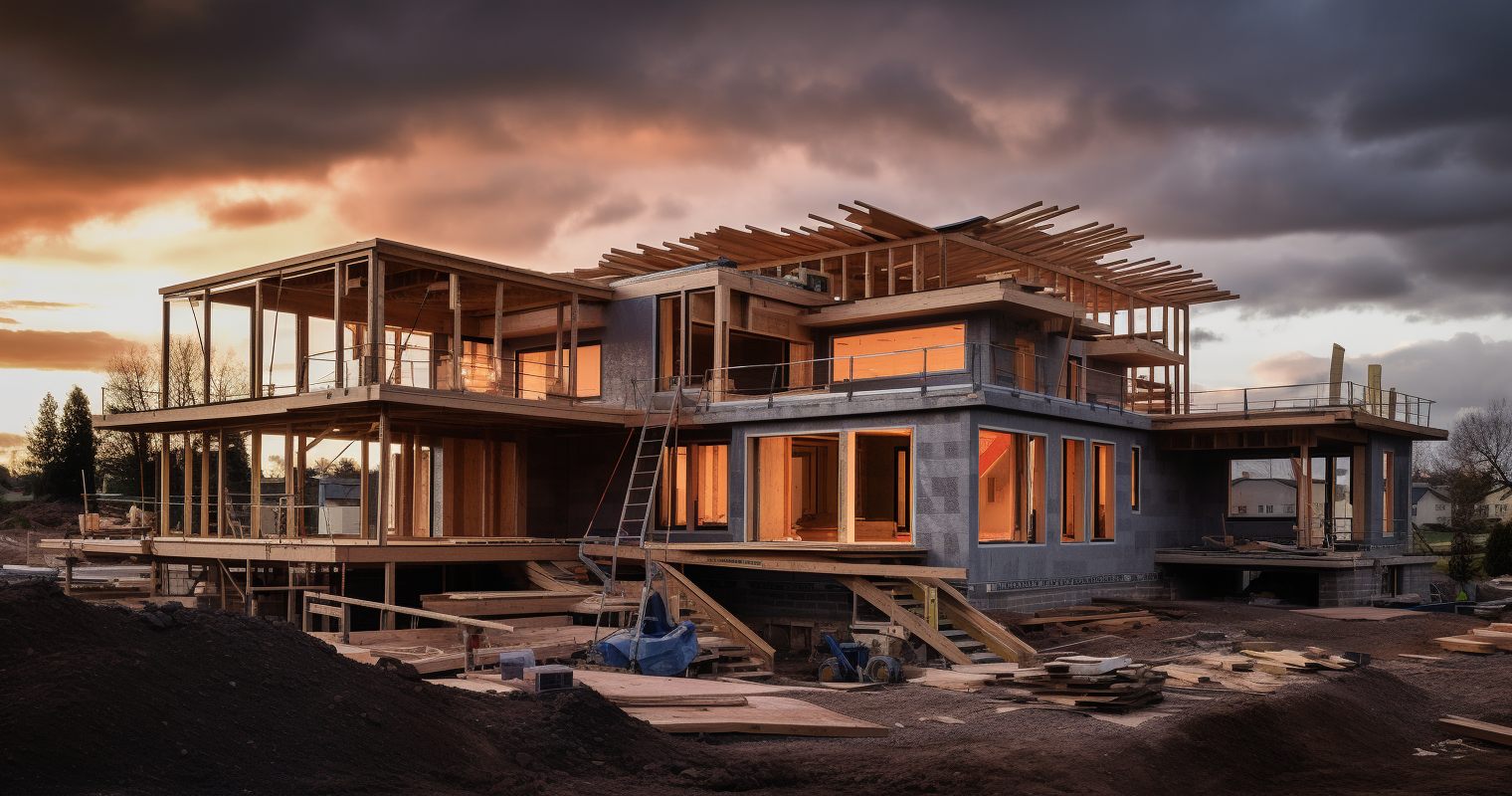
Building or renovating property in Russia is an intricate, multi-phase undertaking governed by the City Planning Code, federal decrees, and local municipal regulations. A construction permit — or a notification procedure for individual dwellings — is required for virtually all substantial work. While foreign nationals may own most residential and commercial property, they face critical restrictions concerning agricultural land and border zones, and citizens of countries labelled “unfriendly” by Russia face additional requirements as of 2024. Engaging professional legal and architectural support is highly recommended.
| Item | Details |
|---|---|
| Main regulatory framework | City Planning Code of the Russian Federation; technical standards SNIP & GOST (as of 2025) |
| Planning permission / notification | Construction permit required for most new builds; notification procedure (uvedomleniye) used for individual residential houses up to 3 storeys (as of 2025) |
| Processing time | Several months typically; Moscow and large cities may have additional requirements (as of 2025) |
| Heritage register | National cultural heritage register (Unified State Register of Cultural Heritage Objects) maintained by the Ministry of Culture |
| Builder/contractor regulation | Self-Regulating Organisation (SRO) membership mandatory since 2010; individual house construction may be exempt |
| Foreign land ownership | Permitted for most residential/commercial land; prohibited within 150 km of state borders and for agricultural land; “unfriendly country” nationals require special permission (as of 2024) |
Do you need planning permission to build or renovate a property in Russia?
Construction and development in Russia is an elaborate, multi-stage undertaking that requires adherence to numerous regulatory obligations and the acquisition of approvals from a wide range of authorities at federal, regional, and local levels. Identifying which approvals apply to your particular type of project is an indispensable starting point.
The legal architecture governing construction in Russia encompasses federal urban development legislation (most notably Decree No. 87/2008), land use and urban planning rules specific to each municipality (referred to as “PPZ”), technical standards SNIP and GOST addressing construction safety, utility networks, and material quality, along with additional sector-specific regulations applicable in protected or industrial zones.
For the majority of new construction — whether a home, a commercial building, or a substantial extension — a formal construction permit is mandatory. Developers must also obtain the city development plan for the relevant land plot, undertake engineering surveys, and produce full design documentation. Before a construction permit application can be submitted, the design documentation must receive sign-off from a state or non-state expert body confirming compliance with all applicable regulations.
Receiving the construction permit represents the concluding stage of the construction approval sequence. It authorises the developer to begin building on the plot. To obtain this permit, the developer must apply to the local administration — typically the construction or architecture department of the municipality — and furnish the documents required under the City Planning Code.
For individual residential houses (referred to as “individual housing construction,” or IZhS plots), a streamlined notification procedure has been introduced. Rather than obtaining a full construction permit, the owner submits a notification (uvedomleniye) to the local authority describing the intended property. To have the parameters of the proposed construction approved, the owner must provide identity documents and documentation for the land plot, such as an extract from the Unified State Register of Real Estate (EGRN). The notification can be submitted in paper form through a Multifunctional Centre (MFC).
Expect timescales that may run to several months; in Moscow, supplementary documentation requirements may apply. Minor internal cosmetic works that leave the structural fabric of a building untouched — such as repainting, changing floor coverings, or updating plumbing fixtures without modifying pipe routes — are generally exempt from permitting obligations, but this should always be confirmed with the local municipal authority before any work commences. Unlike, for example, the UK system where a defined “permitted development” list precisely sets out what is exempt, Russian rules on exemptions are largely determined at municipal level and can differ considerably across regions.
The application process for a full construction permit follows these steps:
- Submit an application to the local planning authority detailing the proposed construction or renovation project.
- Provide detailed plans, designs, and any other necessary documentation that outlines the scope of the project. This must include design documentation that has already passed a state expert assessment.
- The local planning authority reviews the application and assesses its compliance with zoning regulations and building codes.
- In some cases, public consultation might be required, especially for larger projects or those located in sensitive areas.
- The local planning authority will make a decision on whether to grant or deny planning permission based on the submitted information.
- The construction permit is issued for the estimated duration of construction according to the design documentation and can be extended on application by the developer.
- Once construction is complete, you must obtain an operating permit (commissioning permit) before legally occupying or registering the property.
Where permission is refused, there is ordinarily an appeals mechanism enabling applicants to challenge the decision. Fees for planning-related services differ by municipality and project scale; always verify current charges directly with the relevant local administration, as these are subject to change.
From January 1, 2025, new regulations governing thermal protection in low-rise construction have entered into force under the updated code of practice SP 50.13330.2024. These measures are designed to improve energy efficiency and enhance operating conditions in residential and public buildings. A key new requirement is mandatory thermal imaging inspection upon project completion. All new builds and significant renovations must comply with these updated standards.
What are the rules around listed buildings, conservation areas, and heritage protection in Russia?
Russia operates a formal heritage protection framework that is broadly comparable in intent — though distinct in structure — to listed building systems found in countries such as France, Germany, or Canada. The system is primarily regulated by Federal Law No. 73-FZ “On the Objects of Cultural Heritage (Monuments of History and Culture) of the Peoples of the Russian Federation,” enacted in 2002.
Russia’s national cultural heritage register (Russian: Единый государственный реестр объектов культурного наследия) is a registry of historically or culturally significant immovable man-made properties — landmark buildings, industrial facilities, memorial homes of notable historical figures, monuments, cemeteries and burial sites, archaeological sites, and cultural landscapes.
The register continues a tradition that originated in 1947 and is governed by the 2002 law “On the objects of cultural heritage” (Law 73-FZ). It is administered by the Federal Service for Monitoring Compliance with Cultural Heritage Legislation, a division of the federal Ministry of Culture; the publicly searchable online database is hosted by the Ministry of Culture.
Properties on the register are graded at federal, regional, or local level. Each constituent subject of the Russian Federation maintains its own register of cultural heritage objects. Properties situated within or adjacent to protected zones face the most rigorous restrictions. Areas carrying special designations — including conservation, historical heritage, and protected environmental categories — impose further constraints, including outright prohibition or significant restrictions on the demolition, modification, or extension of existing structures.
In St. Petersburg alone, 7,783 cultural heritage properties — approaching 10 percent of state-protected landmarks across the entire Russian Federation — are under state protection. These encompass architectural ensembles, buildings and engineering structures, gardens and parks, ponds and canals, monumental and garden sculpture, historical burial sites, and archaeological locations.
If your property is listed or falls within a heritage zone, any work affecting the character, structure, facades, or significant interior elements will require specialist consent from the competent heritage authority — either the federal Ministry of Culture or the relevant regional heritage protection body. Work undertaken without such consent can attract enforcement action, substantial fines, and a compulsory restoration requirement at the owner’s cost. Federal Law governs relations in the field of preserving, using, promoting, and state protection of cultural heritage objects, and imposes on everyone an obligation to care for the preservation of historical and cultural heritage.
Before acquiring a property in Russia, consult the online database of the Ministry of Culture’s Cultural Heritage Register to determine whether the property or surrounding area carries protected status. Regional heritage bodies should also be consulted, as they hold responsibility for regionally significant objects. Demolishing or substantially altering a listed building without consent constitutes both a criminal and civil offence under Russian law.
What permits and licences are required when building or renovating in Russia?
Developers are required to secure multiple permits covering land use, environmental compliance, safety requirements, and adherence to evolving building codes. Beyond the core construction permit, a range of further approvals is typically needed at various stages of a project.
The Ministry of the Russian Federation for Construction, Housing and Utilities Infrastructure is the principal regulator of construction, architecture, and city planning, responsible for formulating and implementing state policy in these areas. It is empowered to issue construction and operating permits.
The key permits and licences likely to be encountered include:
- City Development Plan (GPZU): A document issued by the municipality specifying the permitted uses, building lines, and development parameters for a particular land plot. This must be obtained before design documentation can be produced.
- State Expert Assessment (Gosekspertiza): The Federal Autonomous Institution Main Directorate of the Russian Federation for State Expert Assessments conducts state expert assessments of design documentation. This assessment is a prerequisite for a construction permit in the case of most significant structures.
- Construction Permit (Razresheniye na Stroitelstvo): Required for new construction or substantial renovation works.
- Land Use Permit: If the designated use of the land is to be altered, a permit for this change will likely be necessary.
- Environmental Permits: Depending on a project’s environmental footprint, specific environmental permits may be required. These are issued by regional environmental authorities and are particularly relevant near water bodies, national parks, or ecologically sensitive areas.
- Utility Connection Permits: Separate approvals are required from the respective utility providers for connection to water, sewerage, electricity, and gas networks. The gas supply process involves submitting an application for gas provision, typically done online through the Unified Gasification portal.
- Operating Permit (Razresheniye na Vvod v Ekspluatatsiyu): Issued by the local administration once construction is finished and a final inspection has been passed. Without this permit, the building cannot be lawfully registered or occupied.
- Fire Safety Sign-Off: Construction and renovation projects must satisfy fire safety regulations, and an inspection by the State Fire Service (under the Ministry of Internal Affairs) is required prior to commissioning.
Regulatory complexity, including extensive permitting obligations and bureaucratic inefficiencies, continues to present significant challenges, extending project timelines and inflating costs. The permitting process is further complicated by inconsistent regulatory enforcement across different regions. Variations in how local authorities interpret national regulations can give rise to project delays, cost escalations, and administrative uncertainty. Always verify current fee schedules and timescales directly with the relevant municipal or federal authority, as these are subject to regular change.
How do you find a reliable, trustworthy builder in Russia?
Since 1 January 2010, construction activities have ceased to be licensed in the conventional sense. Instead, contractors engaged in engineering surveys, architectural and civil engineering design, and construction must belong to a self-regulating organisation (SRO) in the construction sector.
From 1 July 2017, in order to join an SRO, a company must employ at least two specialists recorded on the National Register of Construction Specialists. The City Planning Code sets out the minimum educational, professional, and qualification criteria that a candidate must satisfy in order to be entered on the register.
SROs and their members must be registered. The register of SROs is maintained by the Federal Service for Ecological, Technological and Nuclear Supervision, while the register of SRO members is kept by the relevant national association of SROs. Both registers are publicly accessible. Before appointing any contractor, request their SRO membership certificate, verify it against the public register, and confirm that the work you require falls within their certificate of admission.
The categories of work a contractor is authorised to carry out are ordinarily specified in the certificate of admission issued by the SRO to which it belongs. Each SRO sets its own insurance requirements for members, along with minimum charter capital requirements and other criteria that contractors must satisfy to maintain membership.
Note that SRO membership is not required for individual residential house construction where the homeowner acts as a self-developer, but any contractor engaged commercially should nevertheless hold SRO membership for professional credibility. Practical steps for vetting a builder include:
- Check SRO membership via the public register at NOSTROY (National Association of Builders)
- Request details of recently completed projects and speak with former clients
- Insist on a written contract (договор подряда) specifying scope, timeline, stage payments, and warranties
- Adopt a staged payment structure linked to milestones, and never pay the full amount in advance
- Confirm that the contractor holds liability insurance
- Consider retaining an independent technical supervision specialist (строительный контроль) to monitor work quality on your behalf
Foreign property owners in Russia are frequently targeted by fraudulent contractors who may demand large upfront deposits, use substandard materials, or walk away from projects midway through. Seek assistance from a local professional with a track record of working with foreign clients. A staged or escrow-style payment arrangement, clearly articulated in the contract, is strongly advisable. Where disputes arise, construction law is enforced through the state courts.
The National Association of Builders (NOSTROY) is the principal national body for construction SROs. Website: nostroy.ru. The public SRO register is searchable at reestr.nostroy.ru. For design and engineering SROs, the National Association of Designers and Surveyors (NOPRIZ) maintains a separate register at nopriz.ru.
How do you find a qualified local architect in Russia?
To carry out construction work, architects, designers, and engineers must belong to one of the self-regulating organisations (SROs) in the construction sector. Architecture and design SROs fall under the oversight of the National Association of Designers and Surveyors (NOPRIZ), and SRO membership is a statutory requirement for architects working on projects that necessitate formal design documentation or expert assessment.
The Union of Architects of Russia (Soyuz Arkhitektorov Rossii) is the primary professional membership body for architects in the country. The Union of Architects of Russia (www.uar.ru) can be used to locate licensed architects. The Union maintains a directory of member architects and can provide referrals to practices with expertise in particular project types or geographical areas.
Union of Architects of Russia contact details:
Website: www.uar.ru
Address: 7 Granatny Lane, Moscow, 123001, Russian Federation
Always consult the official website for the most current contact information, as details may change.
NOPRIZ (National Association of Designers and Surveyors):
Website: nopriz.ru
The NOPRIZ public register enables searches for SRO-registered architectural and design firms by region and area of specialisation.
When choosing an architect, the following considerations are particularly pertinent for those relocating from abroad:
- Confirm SRO membership through the NOPRIZ register before entering into any agreement
- Russian design documentation must conform to Russian technical standards (SNIP, GOST, and SP codes); overseas qualifications and building standards are not directly recognised, making it essential to use a locally qualified architect for all formal submission work
- If you wish to incorporate international design approaches or styles, an internationally experienced architect may collaborate with a locally licensed professional, but the Russian-qualified architect must be the signatory on all official documents
- Enquire about the architect’s experience with foreign clients and their familiarity with the translation and legalisation requirements for documents in foreign languages
- Factor in the time and cost of translating and legalising foreign-language documents when planning your project timeline and budget
What are the common pitfalls when buying land to build on in Russia?
Acquiring land for construction in Russia carries a distinct set of risks that differ substantially from land-purchase processes in many other countries. Foreign buyers in particular should conduct thorough due diligence before committing to any transaction.
Zoning and land-use classification represents one of the most frequent pitfalls. Urban zoning determines the range of construction that is permitted — residential, commercial, industrial, and so on. Land is categorised according to its designated use, and building a home on commercially or agriculturally designated land without the appropriate reclassification is not lawful. Always establish the land’s category and sub-category in advance, and verify that your intended use is permitted under local planning rules (PPZ).
Title and ownership history must be rigorously examined. Property boundaries and title documentation should be verified to prevent future disputes, and local zoning regulations must be checked to confirm the land is suitable for your intended purposes. Use an extract from the Unified State Register of Real Estate (EGRN/USRN) to confirm ownership, boundaries, and any encumbrances or mortgages registered against the plot. This register is maintained by Rosreestr, the federal property registration authority.
Infrastructure availability is a critical issue that is often underestimated in Russia. The presence of essential services — water supply, electricity, and sewage connections — must be assessed before any purchase is finalised. In rural areas and dacha (country plot) communities, mains connections may be non-existent or require significant capital investment to establish. A gas main can only be extended to the boundaries of a garden non-commercial partnership (GNCP) at no charge; within the partnership, each owner must arrange and fund connection to their own plot independently.
Protected and restricted zones must be identified before any purchase is completed. Land situated within protected areas — including national parks, nature reserves, and specially designated natural territories — is governed by strict environmental rules. Construction may be severely restricted or entirely forbidden in such locations, even where the land appears freely available on the open market.
Confirming buildability before purchase is strongly advisable. Ensure that the land is capable of receiving the planning approvals needed for your intended project. In Russia, it cannot always be assumed that a plot marketed as a building plot will in fact obtain construction approval. Engage a local lawyer or planning consultant to carry out a pre-purchase assessment of what can realistically be built on the site.
Always involve a qualified Russian notary in the purchase transaction, and instruct a property lawyer experienced in Russian real estate law to carry out comprehensive due diligence. Lawyers specialising in Russian real estate can assist with verifying land status, drafting contracts, and navigating the permits process. The Rosreestr cadastral map (pkk.rosreestr.ru) is a publicly accessible tool providing boundary information, land category, and ownership status for registered plots throughout Russia.
What are the rules around foreign ownership and financing for construction projects in Russia?
There are no general restrictions on foreign nationals purchasing residential property in Russia, and several laws expressly provide for the sale and acquisition of real estate for residential purposes by foreigners. However, land ownership by foreign nationals is subject to significant restrictions, and the geopolitical context as of 2024–2025 has introduced supplementary requirements for nationals of certain countries.
Foreign buyers are prohibited from owning agricultural land or land plots situated within 150 km of the Russian state border. Additionally, some protected zones may entirely exclude foreign ownership. Only particular categories of land — those designated for residential or commercial use, excluding border or strategically sensitive zones — may be acquired and developed by foreign nationals, and agricultural land remains generally inaccessible to direct foreign ownership.
Since March 2022, additional measures have been introduced governing property purchases by citizens of countries classified by Russian authorities as “unfriendly.” As of December 2024, these include all 27 European Union member states. Other countries on this list include Australia, the United Kingdom (including crown dependencies and overseas territories), Canada, the USA, Japan, South Korea, Norway, Switzerland, and others. For nationals of these countries, acquiring property requires obtaining special permission through an application to the Government Commission for the Control of Foreign Investment. Those intending to acquire land or commence construction should seek specialist legal advice regarding the current status of these requirements before taking any steps.
In certain investment or commercial contexts, there may be an obligation to use a Russian legal entity (corporate body) for acquisition or construction purposes. Establishing a Russian LLC (OOO) structure is one approach through which some foreign nationals manage land and construction ownership, though this introduces additional administrative complexity and ongoing compliance obligations.
Access to Russian bank mortgages and construction finance for foreign nationals is limited and has become significantly more constrained since 2022, particularly for nationals of countries subject to sanctions. In the second half of 2024, Russia planned to introduce a unified mortgage programme for individual home construction, though eligibility for foreign nationals under this programme is uncertain and should be confirmed directly with Russian lenders. Currency risk is an additional consideration: since the Russian ruble fluctuates, foreign buyers should account for exchange rate exposure when preparing budgets.
There is a risk of permit refusal or revocation in cases of irregularities relating to residency status or land ownership. Ensuring that your residency status and visa conditions remain in order throughout the construction process is essential, as violations can jeopardise both the permit and the registration of ownership.
What official sources should you consult when planning to build or renovate in Russia?
Successfully navigating Russia’s regulatory environment requires engagement with multiple official bodies. The following are the key institutions and resources for anyone planning to build or renovate property in Russia:
| Body / Resource | Role | Website |
|---|---|---|
| Ministry of Construction, Housing and Utilities Infrastructure (Minstroi) | Main regulator of construction, architecture, and city planning; issues construction and operating permits | minstroyrf.gov.ru |
| Rosreestr (Federal Service for State Registration, Cadastre and Cartography) | Maintains the Unified State Register of Real Estate (EGRN); land title and boundary registration | rosreestr.gov.ru |
| Public Cadastral Map | Searchable map of registered land plots, boundaries, and use categories | pkk.rosreestr.ru |
| Ministry of Culture (Cultural Heritage Register) | Maintains the national cultural heritage register; approvals for heritage property works | mkrf.ru / okn.mkrf.ru |
| Rostekhnadzor (Federal Service for Ecological, Technological and Nuclear Supervision) | Federal executive authority responsible for oversight of state construction; maintains the register of SROs in the construction sector | gosnadzor.ru |
| NOSTROY (National Association of Builders) | National association of construction SROs; public register of SRO-member contractors | nostroy.ru |
| NOPRIZ (National Association of Designers and Surveyors) | National association of design and survey SROs; register of SRO-member architects and engineers | nopriz.ru |
| Union of Architects of Russia | Professional body for architects; directory of member practices | uar.ru |
| Gosuslugi (State Services Portal) | Online portal for submitting applications including construction notifications and permit requests | gosuslugi.ru |
| Local Municipal Administration | Issues city development plans (GPZU), construction permits, and local planning decisions; varies by region | Check your municipality’s official website |
Frequent amendments to construction-related legislation — and abrupt policy changes, particularly in the context of environmental and urban planning law — can disrupt ongoing developments and undermine investor confidence. Always consult official sources for the most current requirements, as rules, fees, and procedures are subject to regular revision. Official sources should always take precedence over third-party information, blogs, or online forums.
Frequently asked questions: building and renovating in Russia
How long does it typically take to get a construction permit in Russia?
The time required to process a construction permit application varies considerably but commonly extends over several months, with additional requirements applicable to non-citizens in certain circumstances. The overall timeline encompasses obtaining the city development plan, commissioning and submitting design documentation, securing the state expert assessment, and ultimately filing the permit application itself. In Moscow and St. Petersburg, additional local regulations may make the process more demanding. Prospective builders should budget a minimum of six to twelve months from land acquisition to permit issuance for a new residential project.
Do overseas building qualifications or construction standards apply in Russia?
No. Russia operates its own technical standards — the SNIP and GOST codes, along with updated SP codes of practice. From January 1, 2025, revised regulations governing the thermal protection of low-rise buildings have come into force under the updated code of practice SP 50.13330.2024. Foreign qualifications are not formally recognised for the purpose of signing off on design documentation in Russia. All official design and construction work must be carried out by locally qualified, SRO-registered professionals.
What happens if I carry out building work without the required permits in Russia?
Unauthorised construction — known in Russian as “samovol’naya postroyka” — is treated as a serious legal matter. A structure erected without the necessary permits may be classified as unauthorised and rendered subject to a court-ordered demolition. In certain circumstances, owners may seek to retrospectively legalise unauthorised construction through the courts, but this outcome is not guaranteed and can prove expensive. Potential consequences include fines, compulsory restoration orders, and the loss of ownership rights.
Can I manage a construction project in Russia without speaking Russian?
In practical terms, this is extremely challenging. All official documentation, contracts, permits, and regulatory submissions must be produced in Russian. The translation and legalisation of foreign-language documents is a necessary part of any project. A certified translator is required for any non-Russian documents submitted to Russian authorities, and all contracts should be professionally translated before signature. Employing a Russian-speaking project manager or local legal representative to act on your behalf is strongly recommended.
How do disputes with contractors typically get resolved in Russia?
Construction disputes fall under Russian civil law, principally governed by Articles 740–757 of the Civil Code, which regulate construction contract relationships. Such disputes are adjudicated by the state courts. For commercial matters, arbitration through Russian arbitration institutions is an available alternative. The single most effective protection is a detailed written construction contract (договор подряда) that clearly defines scope, timelines, payment terms, defect liability provisions, and dispute resolution procedures. Preserving all correspondence, invoices, and inspection records throughout the project is equally important.
Are there restrictions on what I can do with a dacha or country plot?
Dacha and garden plots have historically been subject to more relaxed construction rules than urban residential land. Under the “dacha amnesty” (дачная амнистия) programme — extended on several occasions and still in operation as of 2025 — it is possible to register certain categories of residential structure on garden (SNT) and dacha land through a simplified notification procedure, without requiring a full construction permit. However, these plots remain subject to their own zoning rules, and substantial or permanent structures must still comply with building codes. Before commencing any work, confirm your plot’s classification and the applicable rules with the local municipal authority and Rosreestr.
What are the main financial risks for foreign buyers undertaking construction in Russia?
Since the Russian ruble is subject to fluctuation, foreign buyers face currency exchange risk when budgeting for a project. Further financial risks include cost overruns arising from bureaucratic delays, contractor fraud (particularly demands for large upfront payments), unanticipated infrastructure connection costs, and expenditure on remedying unauthorised or poor-quality work. Tighter requirements for residential construction funded through off-plan purchases have been introduced, including minimum developer capital obligations and an escrow account model that affords some protection on new-build purchases from developers — but this does not extend to private construction contracts.
What are the rules if my property is near a heritage-protected area or listed building?
Properties situated within or adjacent to heritage protection zones are governed by stringent controls on construction, alteration, and demolition. Areas bearing conservation, historical heritage, or protected environment designations impose further constraints, which may include an outright ban or significant restrictions on demolishing, modifying, or extending existing buildings. Consent from the competent heritage authority — the Ministry of Culture at federal level, or the applicable regional heritage body — must be obtained before any work is undertaken. Consult the Ministry of Culture’s online heritage register at okn.mkrf.ru and engage the regional heritage committee before acquiring or planning any work on a property in a historically significant area.