
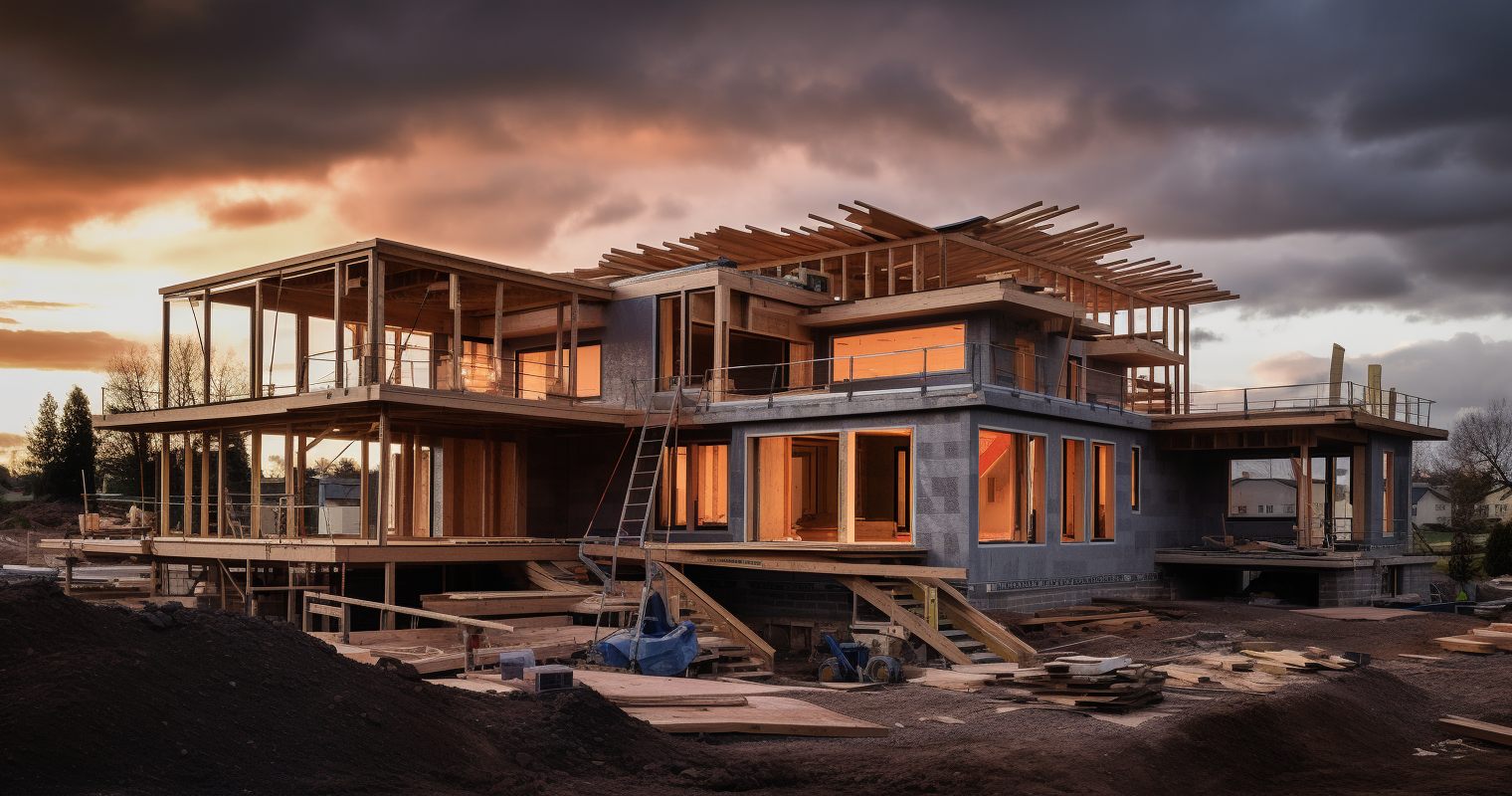
Any construction work in Saudi Arabia — including substantial renovations — requires a formal building permit. This process is governed by the Ministry of Municipal, Rural Affairs and Housing (MOMRAH) and administered through the national digital platform known as Balady. Historically, foreign nationals faced considerable restrictions on property ownership, but a landmark piece of legislation enacted in 2025 substantially broadens access for non-Saudis, taking effect from January 2026.
| Item | Details |
|---|---|
| Building permit authority | Ministry of Municipal, Rural Affairs and Housing (MOMRAH) via Balady platform |
| Permit fees (as of 2025) | SAR 0.60–SAR 600 per sqm depending on building type |
| Permit validity | 3 years, renewable via Balady |
| Construction standard | Saudi Building Code (SBC) — mandatory for all projects |
| Foreign ownership law | New Law of Real Estate Ownership by Non-Saudis effective January 2026 |
| Heritage authority | Saudi Heritage Commission (formerly SCTH) — approval required for protected sites |
Do you need planning permission to build or renovate in Saudi Arabia?
A building permit is an official authorisation from the relevant municipal body, required before undertaking construction, demolition, renovation, or alteration works on any property. Its purpose is to verify that the planned work aligns fully with the Saudi Building Code and applicable local planning frameworks. Unlike some other countries where minor extensions or small outbuildings may be carried out without formal approval, Saudi Arabia applies its permit requirements broadly. The safest approach is to assume that any structural or materially significant work will require advance authorisation.
Building permits serve as the mechanism by which the Ministry of Municipal, Rural Affairs and Housing confirms that a project satisfies all legal, technical, and safety requirements. The Ministry has embraced digitalisation as a core element of the Vision 2030 reform programme, and the entire permit application and management process now takes place online.
All applications must be lodged through the Balady platform, which provides a centralised, nationally managed interface — broadly analogous to online local council portals in countries like Australia or Canada, though Saudi Arabia’s system operates at the national rather than local authority level.
Before submitting a full application, you must confirm that your land qualifies. The key conditions are: the applicant must be an individual or a legally recognised entity; documented proof of ownership or usufruct rights must be provided; the property must lie within an approved planning zone; and the plot must not fall within any restricted areas.
The documentation requirements for a building permit application are extensive. You will need to supply: detailed architectural and structural plans compliant with the Saudi Building Code; evidence of land ownership or a valid lease agreement; a location map and site plan indicating the building’s exact position, surrounding infrastructure, and applicable zoning classifications; an environmental impact assessment for commercial or industrial projects; a fire safety compliance certificate; and infrastructure and utilities plans confirming the availability of electrical, water, sewerage, and telecommunications connections.
Step-by-step: How to apply for a building permit in Saudi Arabia
- Obtain a preliminary site approval to verify that the proposed development is consistent with zoning requirements. You will need to submit basic project details alongside documentation evidencing land ownership.
- Once preliminary site approval is secured, upload detailed structural drawings and design documentation to MOMRAH’s Balady platform. All designs must conform to Saudi Building Code requirements.
- At this stage, municipal authorities examine the submitted plans for compliance with fire safety standards, environmental impact requirements, and accessibility guidelines.
- The application is forwarded to the insurance company, which assigns it to an accredited technical inspection firm. The inspector reviews the application against Saudi Building Code requirements. Any deficiencies result in the application being referred back to the design office for correction; if no issues are identified, the designs are approved and the application proceeds to the municipality.
- Municipal staff conduct their own review. Where amendments are required, the application is returned to the design office for revision and resubmission. If the application passes without comment, a design approval certificate is issued.
- Both the design office and the property owner are notified by text message to proceed to the contracting stage, which involves selecting a supervising office and appointing a contractor. The design office identifies the supervising office, which is then contacted for its acceptance.
- Following contractor appointment and submission of insurance documentation, an automated process initiates the insurance request and payment stage. A municipal fee invoice is generated, the permit is printed, and the relevant utility and service authorities are notified accordingly.
Regarding fees and validity: as of 2025, permits are valid for three years. Fee rates are as follows — residential buildings: SAR 0.60 to SAR 300 per sqm; residential commercial buildings: SAR 0.80 to SAR 400 per sqm; commercial buildings: SAR 1.20 to SAR 600 per sqm; fences: SAR 0.40 to SAR 200 per sqm. Always confirm the current fee schedule directly with the Balady platform or your local municipality, as rates are subject to revision.
What are the rules around listed buildings, conservation areas, and heritage protection in Saudi Arabia?
Saudi Arabia maintains a formal framework for safeguarding its historic built environment, though it differs considerably from the tiered listed building and conservation area systems used in countries such as France or the United Kingdom. Rather than a graded classification structure, protection is exercised at the national level through a single dedicated authority.
Responsibility for heritage protection, listed properties, and conservation zones in Saudi Arabia rests with the Saudi Commission for Tourism and National Heritage (SCTH). Properties and areas afforded protected status are shielded by law, meaning that any construction or renovation affecting them must receive prior approval from this body. The SCTH has since been reorganised as the Saudi Heritage Commission; its official website should be consulted for the most current information regarding protected sites and applicable procedures.
Preservation orders may additionally be issued by a local municipality or governorate, meaning a property could simultaneously be subject to national heritage protection and local planning constraints. In practice, this means you may need to obtain clearances from both levels of authority before work can lawfully proceed.
Saudi Arabia holds a rich and varied heritage landscape, including UNESCO World Heritage Sites such as Hegra (AlUla) and Diriyah, as well as historic urban districts including Al-Balad in Jeddah. If you are purchasing or undertaking works on a property located in or near such areas, approval from the Heritage Commission is not optional. Violations of heritage protection requirements can result in project suspension, financial penalties, and compulsory demolition or remediation works carried out at the property owner’s cost.
Before acquiring any property in an older urban neighbourhood or in proximity to a known archaeological site, commission an independent heritage assessment and contact the Saudi Heritage Commission to establish whether the property or surrounding land carries any protected designation. Do not rely solely on reassurances from a vendor; obtain written confirmation from the relevant authority.
What permits and licences are required when building or renovating?
Construction projects in Saudi Arabia typically require a combination of authorisations: a building permit, environmental clearances, and approvals for specific activities such as demolition or excavation. Although the building permit issued by MOMRAH is the principal document, it does not substitute for the supplementary approvals that other regulatory bodies may require.
Achieving full regulatory compliance in Saudi Arabia involves coordination across multiple government agencies, each responsible for a distinct domain — from zoning and land use to fire safety and material standards. MOMRAH serves as the central regulatory authority for building permits and oversees adherence to the Saudi Building Code across all project types.
In addition to the primary building permit, the following approvals are commonly required:
- Fire safety approval: Saudi Civil Defense is responsible for enforcing fire safety and emergency preparedness standards. It carries out inspections and approves fire safety plans for both residential and commercial buildings, ensuring ongoing compliance with updated safety protocols.
- Environmental permit: An environmental impact assessment (EIA) evaluating potential environmental hazards and the measures required to mitigate them is principally required for industrial and commercial construction. Residential projects located in environmentally sensitive areas may also be subject to EIA requirements.
- Utility connections: Infrastructure and utility plans must confirm that electrical, water, sewerage, and telecommunications connections meet required standards. Coordination with the Saudi Electricity Company and the relevant water authority is necessary before construction begins.
- Technical standards compliance: The Saudi Standards, Metrology, and Quality Organization (SASO) establishes technical specifications for construction materials. All materials used on a project must conform to SASO standards.
- Occupancy certificate: On completion of works, the supervising engineer must upload final completion and safety reports and coordinate utility connections; the occupancy certificate is then issued. A newly constructed building must not be occupied until this certificate has been obtained.
Responsibility for securing the necessary permits is typically shared between the client (employer) and the contractor. Legal obligations require compliance with permit conditions, while the construction contract may allocate specific responsibilities for permit procurement and set out procedures for obtaining required approvals. Clarify in writing at the outset which party is responsible for each permit, before signing any agreement.
As part of Vision 2030, Saudi Arabia has revised its building regulations to advance sustainability, safety, and modernisation. Updated requirements mandate the installation of advanced fire suppression systems, compliant emergency egress, and adherence to seismic safety standards. Always verify the current permit requirements with your local municipality or through the Balady platform.
How do you find a reliable, trustworthy builder in Saudi Arabia?
Saudi Arabia’s construction sector is extensive and expanding rapidly, propelled by the large-scale infrastructure and urban development ambitions of Vision 2030. As in any sizeable construction market, contractor quality and reliability vary considerably, and careful due diligence is especially important for foreign property owners who may be less familiar with local practices and norms.
Under Saudi regulations, engineering and consultancy offices bear legal responsibility for any violations of rules and requirements reflected in the drawings they submit, while the supervising engineer carries responsibility for regulatory breaches during the implementation phase. This creates a clear accountability structure: your design office is answerable for the drawings, and your supervising engineer is answerable for on-site compliance throughout construction.
Registration with the Saudi Council of Engineers (SCE) is compulsory for all engineers and engineering professionals practising within the Kingdom, a requirement established under Royal Decree 36/M and Article 27 of the SCE bylaws. When evaluating a contractor, confirm that their technical and engineering personnel hold current SCE registration — this is both a legal baseline and a basic indicator of compliance.
The Saudi Council of Engineers (SCE) is the key professional body to verify:
Website: www.saudieng.sa
Email: [email protected]
Address: Prince Turki bin Abdulaziz Al Awwal Road, Al Maather Area, P.O. Box 9975, Riyadh 11423, Saudi Arabia
Practical steps for vetting and appointing a contractor include:
- Verify SCE registration: SCE registration is mandatory for all engineers working in Saudi Arabia, whether Saudi or foreign. Request that any prospective contractor shows evidence of their engineers’ valid SCE membership.
- Check for an engineering consulting office licence: The SCE issues licences to engineering consulting offices, covering both main and sub-offices. Any firm undertaking design or supervisory work should hold the appropriate licence.
- Request references and arrange site visits: Ask for a minimum of three references from comparable recent projects and, where feasible, visit completed buildings in person to assess quality.
- Use formal written contracts: The most widely used construction contracts in Saudi Arabia derive from the International Federation of Consulting Engineers (FIDIC) suite — the Red Book, Yellow Book, and Silver Book are the most prevalent. Using a recognised contract format provides a structured basis for managing disputes and allocating liability.
- Structure staged payments with retention: Tie payments to clearly defined project milestones and retain a percentage — typically 5–10% — until the defects liability period has expired. Never release the full contract value before completion.
- Confirm adequate insurance: Ensure your contractor carries sufficient professional indemnity and public liability cover. Accidents or damage during construction can have serious financial consequences for all parties.
Common difficulties for foreign property owners include contractors commencing work without a valid building permit — which exposes the owner to fines and potential demolition orders — the use of materials that do not comply with SASO specifications, and reliance on informal verbal agreements rather than enforceable written contracts. A valid permit protects owners, contractors, and investors alike from project suspension, financial penalties, and legal liability. Always insist on proper documentation at every stage of the project.
How do you find a qualified local architect in Saudi Arabia?
Registration with the Saudi Council of Engineers (SCE) is obligatory for all engineers and engineering professionals practising in the Kingdom, as established by Royal Decree 36/M and Article 27 of the SCE bylaws, which require both Saudi and foreign engineers to be registered before practising legally. Architects are included within this mandatory registration requirement.
The SCE’s professional register encompasses 136 distinct disciplines, including architecture, surveying, electrical engineering, and telecommunications. An architect who does not hold current SCE registration cannot practise lawfully in Saudi Arabia, and designs prepared by an unregistered architect will not be accepted on the Balady platform or by municipal authorities when a building permit is sought.
To identify a qualified architect:
- Use the member directory or e-services portal on the SCE website to search for registered architects in your area.
- Ask any candidate to provide their SCE membership number and cross-check it via the SCE portal before entering into any engagement.
- Engineers and architects in Saudi Arabia seeking professional licences must successfully complete QiyAS competency assessments. Confirming that a candidate has passed the relevant examination provides additional assurance of their professional standing.
- Foreign-trained architects wishing to work in Saudi Arabia must hold an attested engineering degree (where the qualification is from outside the Kingdom), present valid identity documentation such as a passport and Iqama, and obtain SCE registration. Foreign architects may therefore practise legally in Saudi Arabia, provided all registration and work authorisation requirements are met.
When selecting an architect as an expatriate, consider their proficiency in both Arabic and English — Arabic is the official language of all permit applications and official correspondence — their practical familiarity with the Balady submission process, and their track record managing residential projects for international clients. A competent architect should be capable of handling all permit applications and liaising directly with inspecting engineers and municipal officials on your behalf.
The SCE can be contacted directly for professional enquiries:
Website: www.saudieng.sa
Email: [email protected]
Address: Prince Turki bin Abdulaziz Al Awwal Road, Al Maather Area, P.O. Box 9975, Riyadh 11423, Saudi Arabia
What are the common pitfalls when buying land to build on in Saudi Arabia?
Acquiring land in Saudi Arabia with the intention of building carries a distinct set of risks that do not always arise when purchasing an existing property. Understanding these risks thoroughly before committing to any transaction can prevent significant financial loss and legal complications.
Zoning and planning permission: A building permit can only be granted if the property lies within an approved planning zone and outside any restricted areas. Before exchanging contracts, obtain written confirmation from the local municipality that your intended use can in principle receive planning approval for the specific plot in question.
Land boundaries and title clarity: Boundary disputes are not uncommon in Saudi Arabia, making an independent, certified land survey an essential step before any purchase. Working with a lawyer who has detailed knowledge of local property law is strongly advisable to ensure that the title you are acquiring is clearly defined and unencumbered.
Mandatory registration: All acquisitions of real estate or property rights by non-Saudis must be registered with the competent authority and recorded in the national Real Estate Registry to carry legal effect. A transaction that is not properly registered is not legally recognised, leaving ownership in an uncertain position.
White land tax: Saudi Arabia applies a tax on undeveloped urban land to discourage speculation and land banking. Owners of vacant urban plots may be liable for an annual levy of 2.5% of the land’s assessed value until development commences. This recurring cost should be factored into your financial planning if you do not intend to build immediately.
Environmental and infrastructure availability: Verify with the relevant authorities — including the Saudi Electricity Company and the National Water Company — that mains electricity, water, and sewerage connections are either already available at the plot or can be extended to it at a practical and proportionate cost. In some peri-urban and outer suburban areas, utility infrastructure may be limited or expensive to connect.
Restricted areas: Certain parts of Saudi Arabia are subject to specific restrictions, including military exclusion zones, heritage protection buffer areas, and land in proximity to the Two Holy Mosques. Ownership of real estate in Makkah and Madinah is highly restricted; foreign nationals are generally prohibited from owning property in the two holy cities, with very narrow exceptions permitting ownership by foreign Muslims only in specific circumstances such as inheritance or recognised religious endowments (waqf).
Transfer fees: Under the new legal framework, the Real Estate General Authority is empowered to impose a real estate transfer fee on disposals of property by non-Saudis, capped at a maximum of 5% of the property’s value. This cost should be anticipated and included in your transaction budget.
Always engage a qualified Saudi property lawyer and, where necessary, a notary to carry out comprehensive title due diligence before making any purchase commitment. Consult the Real Estate General Authority (REGA) for authoritative guidance on registration requirements and ownership rights for non-Saudis.
What are the rules around foreign ownership and financing for construction projects?
Saudi Arabia’s framework governing foreign property ownership has undergone its most far-reaching transformation in a generation. A landmark law regulating real estate ownership by non-Saudis was approved and published in the official gazette on 25 July 2025. The Law of Real Estate Ownership by Non-Saudis comes into force 180 days after its publication date, anticipated in January 2026. It establishes a more coherent and accessible structure enabling foreign individuals and entities — whether residing in the Kingdom or abroad — to own and invest in real estate within specifically designated zones throughout Saudi Arabia.
This reform is closely aligned with the objectives of Vision 2030, designed to attract international capital, deepen the real estate market, and stimulate urban development, while preserving appropriate regulatory oversight. The new law supersedes the previous 2000 Law of Real Estate Ownership and Investment by Non-Saudis, representing a substantial policy shift towards opening the property sector to global participation.
Who may own property? Non-Saudi individuals with legal residency status in Saudi Arabia will be entitled to own property within designated zones, as well as a single residential property for personal use located outside those zones. Non-resident foreign nationals may acquire property exclusively within the designated zones.
Where may foreign nationals own property? The Council of Ministers, in coordination with the Real Estate General Authority and other bodies, will define specific geographic zones in which non-Saudis are permitted to acquire property or property rights. These zones are expected to encompass high-demand urban centres such as Riyadh and Jeddah, but to exclude sensitive cities and regions including Makkah and Madinah.
Foreign companies: Foreign-owned commercial entities have been accorded broader real estate rights in support of their operational requirements. Both listed and unlisted foreign companies, along with licensed investment funds and special-purpose vehicles, may acquire real estate necessary for their business activities and for housing their employees. Such entities may purchase property within the designated zones and, where the acquisition serves an approved purpose and satisfies regulatory conditions, potentially within Makkah and Madinah as well.
Financing: Among the sectors expected to benefit most immediately from the 2025 law are construction, banking — particularly the residential mortgage market — and insurance. Saudi banks have historically extended mortgage lending predominantly to Saudi nationals, but the regulatory environment is now evolving. Saudi banks hold the capacity and credit standing to expand their long-term mortgage book. Foreign nationals considering construction financing should consult a Saudi-licensed bank or qualified financial adviser directly, as the products and eligibility criteria available to non-Saudi borrowers are still being defined under the new framework.
Implementation details: Companies and investors should closely follow the Implementing Regulations, which will set out detailed procedures for registration, fee structures, the geographic scope of permitted zones, and conditions applying to various property rights. These regulations are to be issued within 180 days of the law’s publication. Consult the Real Estate General Authority (REGA) for authoritative and current guidance as it becomes available.
What official sources should you consult when planning to build or renovate?
The regulatory environment for construction in Saudi Arabia spans multiple ministries, authorities, and digital platforms. Before embarking on any project, consult the key official sources listed below and make a point of verifying that you have the most current information — rules, fees, and procedures are reviewed and updated regularly.
| Authority | Role | Website |
|---|---|---|
| Ministry of Municipal, Rural Affairs and Housing (MOMRAH) | Primary building permit authority; sets the Saudi Building Code; manages urban planning | momah.gov.sa |
| Balady Platform | National digital portal for building permit applications, renewals, and approvals | balady.gov.sa |
| Saudi Building Code (SBC) National Committee | Publishes and updates the Saudi Building Code — mandatory technical standard for all construction | sbc.gov.sa |
| Real Estate General Authority (REGA) | Regulates the property sector; oversees the national Real Estate Registry; administers foreign ownership law | rega.gov.sa |
| Saudi Council of Engineers (SCE) | Registers and accredits engineers, architects, and technical professionals | saudieng.sa |
| Saudi Heritage Commission | Oversees protection of heritage sites, listed buildings, and conservation areas | saudiheritage.gov.sa |
| Saudi Civil Defense (General Directorate) | Issues fire safety approvals for buildings; enforces fire and emergency preparedness regulations | 998.gov.sa |
| Saudi Standards, Metrology and Quality Organization (SASO) | Sets technical standards for building materials | saso.gov.sa |
| Ministry of Investment (MISA) | Issues investment licences for foreign businesses operating in Saudi Arabia, relevant for company-owned construction projects | investsaudi.sa |
Always access Saudi government information directly through official websites — their addresses end in .gov.sa. All official websites of government agencies in the Kingdom of Saudi Arabia carry this domain. Exercise caution with third-party intermediaries who may charge fees for services that are available free of charge through official portals.
Frequently asked questions
How long does it typically take to get a building permit in Saudi Arabia?
Processing timescales depend on the scale and complexity of the proposed project and the completeness of the submitted documentation. The digitisation of the permit process through the Balady platform has considerably improved efficiency, enabling both local and international applicants to manage applications online. For straightforward residential applications with all documentation in order, approval may be granted within a few weeks; larger or more complex developments typically take longer. Always check current processing timescales with your local municipality or via the Balady platform, as these are subject to change.
Can I carry out minor renovations without a permit?
Building permits in Saudi Arabia are required for construction, demolition, renovation, and modification works alike, ensuring compliance with the Saudi Building Code and local planning rules. Unlike some planning systems — such as Permitted Development rights in England — Saudi Arabia does not publish a clearly defined general exemption for very minor works. If your plans involve any structural changes, electrical or plumbing modifications, or significant internal alterations, the safest course is to seek written confirmation from your local municipality on whether a permit is required before any work begins.
Are qualifications and building standards from other countries recognised in Saudi Arabia?
Academic degrees obtained outside Saudi Arabia must be formally attested before they can be submitted as part of an SCE registration application. Foreign architects and engineers must hold SCE registration to practise legally in the Kingdom, regardless of the qualifications they hold elsewhere. The Saudi Building Code is the binding technical standard for all construction; plans drafted to other national standards — such as British Standards or US codes — will require translation, attestation, and SBC compliance review before they are accepted by authorities. Engaging a locally registered architect or engineer to prepare and submit Saudi-compliant documentation is strongly advisable.
What happens if I build without a permit or breach planning rules?
Building without a valid permit or in breach of planning requirements exposes the property owner to penalties, fines, and potential project suspension. A valid permit protects all parties — owners, contractors, and investors — from legal liability and financial exposure. In the most serious cases, unauthorised structures may be subject to compulsory demolition carried out at the property owner’s expense. If you discover that a contractor has begun work without the necessary permits in place, halt works immediately and seek legal advice without delay.
How do I resolve a dispute with a builder or contractor in Saudi Arabia?
Saudi Arabia has an established court system for civil and commercial disputes. Construction contracts based on the FIDIC framework typically contain formal dispute resolution provisions. For lower-value disputes, Saudi Courts of First Instance have jurisdiction over contractual claims. If the disagreement relates to permit compliance or alleged construction defects, the relevant municipality may also be a point of contact. To maximise the enforceability of your position, ensure that all contracts, instructions, variations, and correspondence are in writing and, wherever possible, in Arabic. Engaging a bilingual Saudi lawyer as early as possible in any dispute is highly recommended.
How much does it typically cost to build a house in Saudi Arabia?
Construction costs vary considerably by region, specification, and project complexity. In major cities such as Riyadh and Jeddah, mid-range residential construction with standard finishes generally falls in the range of approximately SAR 1,000 to SAR 3,000 per sqm, with premium or bespoke villas commanding considerably higher figures. These are indicative estimates only — always obtain multiple detailed quotations from registered contractors and incorporate a contingency allowance of at least 10–15% to cover unforeseen works and cost variations. Current permit fee schedules as of 2025 are available on the Balady platform.
Do I need to speak Arabic to manage a building or renovation project in Saudi Arabia?
Arabic is the official language of all building permits, planning submissions, regulatory correspondence, and contracts in Saudi Arabia. While English is widely spoken among construction professionals in major cities, all official documentation is issued in Arabic, and contracts generally need to be in Arabic to be legally enforceable. It is strongly advisable to appoint a bilingual architect, project manager, or legal adviser who can handle communications with authorities and contractors on your behalf, and to have all key documents professionally translated and verified.
What should I check before signing a contract to buy land in Saudi Arabia?
Before committing to any land purchase, you should: obtain written confirmation from the local municipality that your intended development can in principle receive planning approval for the specific plot; commission an independent land survey to verify boundaries; review the land’s classification and zoning through the Balady platform or local municipality; confirm the availability of utility connections with the Saudi Electricity Company and the National Water Company; verify through REGA’s Real Estate Registry that the title is free from charges, mortgages, or unresolved disputes; and engage a qualified Saudi property lawyer to conduct full due diligence. All acquisitions of real estate or property rights by non-Saudis must be recorded in the national Real Estate Registry to have legal effect — a transaction is not legally recognised until registration is completed.
Can foreign nationals access mortgages or construction loans in Saudi Arabia?
Saudi Arabia’s real estate transaction volumes grew by 37% in 2024, reaching almost 237,000 transactions. Saudi banks have both the capacity and the credit profile to extend their mortgage lending, including potentially to foreign nationals under the new 2025 ownership law framework. However, mortgage and construction loan products for non-Saudi borrowers are still being developed, and eligibility criteria, deposit requirements, and loan-to-value ratios will vary between lenders and depend on the applicant’s residency status. Consult Saudi-licensed banks directly and obtain independent financial advice from a professional with expertise in the Saudi market before making any financial commitments.