
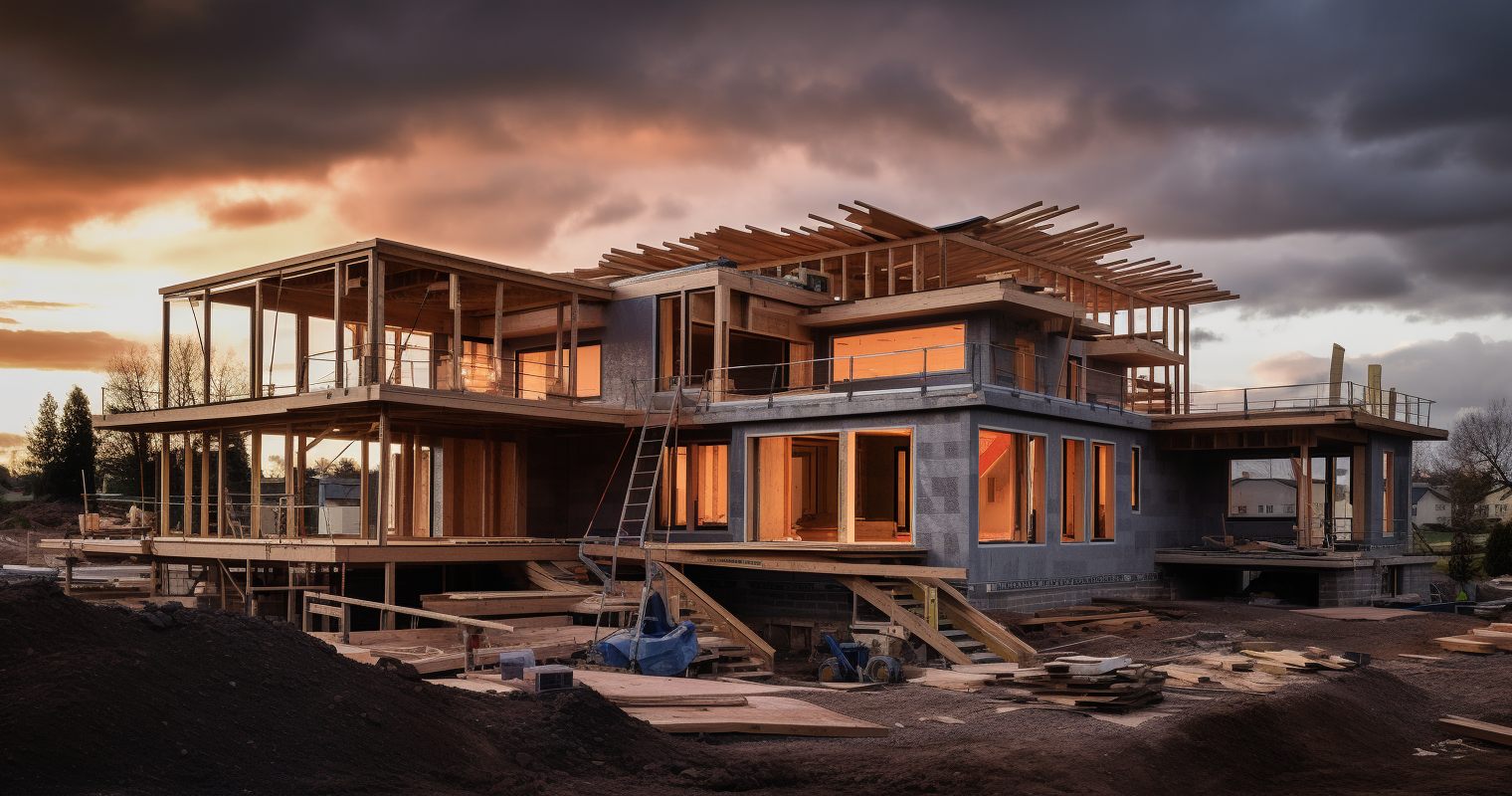
Building or renovating property in Singapore is subject to detailed oversight by multiple government agencies — most notably the Urban Redevelopment Authority (URA) and the Building and Construction Authority (BCA). Planning permission is obligatory for most work that alters a building’s footprint, height, or land use, though it is not required for purely internal works that leave the gross floor area unchanged. Foreign nationals encounter strict constraints on land ownership, and all significant construction activity must be carried out with the involvement of a licensed Qualified Person.
| Item | Details |
|---|---|
| Planning authority | Urban Redevelopment Authority (URA) — ura.gov.sg |
| Building safety regulator | Building and Construction Authority (BCA) — bca.gov.sg |
| URA change-of-use application fee | S$500 (non-refundable, as of 2024) — verify current fee at ura.gov.sg |
| BCA standard building plan processing | Approx. 7 working days if documents are in order (as of 2025) |
| Full rebuild timeline | Typically 18–24 months including design, approvals, and construction (as of 2025) |
| Foreign land ownership | Foreigners generally cannot purchase landed residential property without government approval; condos permitted with restrictions |
Do you need planning permission to build or renovate a property in Singapore?
Singapore’s planning system operates at the national level — there are no separate municipal planning departments of the kind found in countries such as the US or Australia. Obtaining planning permission is a statutory obligation that property owners must fulfil before commencing any development or building works. Permission is granted by the relevant authorities, principally the Urban Redevelopment Authority (URA) or the Building and Construction Authority (BCA). This centralised structure produces a single, uniform national framework, which stands in contrast to the UK’s network of local planning authorities where requirements can differ from one borough or council to the next.
For interior works that do not alter the Gross Floor Area (GFA) and leave the property functioning as a self-contained home, planning permission is generally not necessary. Reconstruction, however — which involves replacing more than 50% of an existing structure or adding a storey — requires tearing down substantial portions of the building, obtaining planning permission, and complying with envelope control guidelines. It is important to recognise that “interior only” is not always a safe assumption: even internal structural modifications or the addition of partition walls can attract scrutiny from URA or BCA.
Any alteration, addition, or reconstruction affecting a private property’s gross floor area, height, setbacks, or external profile requires URA’s Written Permission (WP). Where planned renovation work in a condominium or flat will not increase the GFA, planning permission is not needed — but where GFA would increase, permission must be secured before work begins.
For HDB (public housing) flats, a separate permit regime applies. Most renovation works — including structural changes, plumbing, and electrical alterations — require an HDB Renovation Permit. You must engage an HDB Registered Renovation Contractor to carry out any work that falls under this permit requirement. Applications can be submitted online through the APEX (Application for Renovation Permit via Electronic Transaction) system via HDB’s InfoWeb portal.
How to apply for planning permission: step by step
- Check your property’s approved use and zoning. Before making any application, establish the approved use of your property. The URA’s URA SPACE portal lets you look up land use zoning and planning parameters for any plot in Singapore.
- Engage a Qualified Person (QP). Property owners cannot apply for permits directly in cases involving A&A or Reconstruction works. A QP is a Registered Architect or Professional Engineer (PE) holding a current practising certificate. Your QP will prepare and certify all plans prior to submission.
- Submit plans through CORENET. All formal building plan submissions are lodged electronically via Singapore’s CORENET e-Info system, the national one-stop portal for construction-related submissions. Your QP will ordinarily manage this process on your behalf.
- Obtain URA Written Permission (where required). Where your proposed works require planning permission, you will need a Grant of Written Permission (WP) from URA. This document authorises you to proceed with the proposed works within the conditions set out in the Planning Act 1998.
- Await BCA building plan approval. Landed projects involving structural changes or extensions require a Qualified Person to submit structural plans to BCA and obtain approval before work commences. BCA processes standard building plan applications within approximately 7 working days when all documentation is in order (as of 2025).
- Commence works and obtain completion certificates. Once renovation or fitting-out works are complete, your consultant must apply to the relevant authorities for a Temporary Occupation Permit (TOP) and/or a Certificate of Statutory Completion (CSC) before the property may be occupied.
Fees: The processing fee for a change of use application is S$500 and is non-refundable. Assessment takes approximately 10 working days (as of 2024). For new build and addition-and-alteration (A&A) planning applications, fees vary according to project size and type — the URA’s website provides a fee calculator to help you determine the applicable amount. Always confirm current figures at ura.gov.sg.
A complete reconstruction or rebuild typically requires 18–24 months from demolition through design, approvals, and construction to completion (as of 2025). It is advisable to set aside at least 4–6 weeks for planning and permit preparation before any construction work begins.
What are the rules around listed buildings, conservation areas, and heritage protection in Singapore?
Singapore has a well-established heritage protection framework, though it functions differently from those in countries such as the UK — where Historic England administers a national listed buildings register — or the US, with its National Register of Historic Places. In Singapore, protection is administered principally by two bodies: the URA for conserved buildings and conservation areas, and the National Heritage Board (NHB) for National Monuments.
In broad terms, you will encounter URA-conserved buildings either within designated conservation areas or as standalone conserved structures, alongside National Monuments that are protected under the Preservation of Monuments Act and regulated by the NHB. The Planning Act empowers the Minister for National Development to designate areas in the Master Plan as conservation areas on the grounds of “special architectural, historic, traditional or aesthetic interest” — designations that can apply to an entire district, a cluster of buildings, or a single structure.
URA imposes specific design controls across a range of areas — particularly in relation to the conservation of houses, historic districts, and certain residential estates — to preserve uniformity and safeguard built heritage. Conserved projects generally require development consent from URA for design and conservation compliance, followed by regulatory approvals through BCA covering building, structural, and construction safety.
Singapore’s conservation programme remains active. As part of its Draft Master Plan 2025, URA proposed designating five heritage-rich sites across the country for conservation — including the Singapore Badminton Hall and Jurong Hill Tower. Properties that are adjacent to or located within such areas may consequently face additional planning constraints.
Before purchasing or commissioning any work on a property, you should:
- Check URA’s conserved buildings register and the URA SPACE portal to establish whether a property carries conservation status.
- Review National Monuments and their statements of significance through NHB’s Roots portal to understand the scope and intent of any protection in place.
- Consult URA’s published Conservation Guidelines, which define the works that are permissible to retain essential architectural features while still accommodating adaptive reuse.
Certain projects may additionally require clearances from NParks for tree conservation, from PUB for drainage and stormwater detention, or from LTA for driveway modifications. Singapore does not operate a tree preservation order system identical to that of the UK, but NParks regulates trees on State land and within parks, and specific trees are protected under the Heritage Trees programme.
The consequences of breaching conservation rules are serious. Proceeding without approvals can result in substantial fines, mandatory rectification works, or forced demolition. For National Monuments, the Preservation of Monuments Act provides for criminal penalties in cases of unauthorised interference. Always engage an architect with genuine conservation experience before proposing any changes to a heritage property.
What permits and licences are required when building or renovating in Singapore?
URA planning permission is only one component of the approvals process. Depending on the scope and nature of your project, clearances from several agencies will typically be required. After obtaining landowner consent, your consultant must submit renovation or fitting-out plans to the relevant authorities for approval, which may include the Urban Redevelopment Authority (URA), the Fire Safety and Shelter Department (FSSD), and the National Environment Agency (NEA).
The key permits and approvals you are likely to need include:
- BCA Building Plan Approval: For any structural alteration, A&A works, or new construction, a Qualified Person (QP) must submit structural plans to BCA and obtain approval before works begin.
- Fire Safety Certificate (SCDF): BCA carries out fire safety inspections during construction to verify compliance with the Fire Code. This can require submission to the Fire Safety and Shelter Department, which works in close coordination with BCA.
- Electrical and plumbing permits: Alterations to plumbing and drainage systems require Plumbing and Drainage Permits, while changes to electrical wiring and fixtures require Electrical Works Permits. These are issued by the Public Utilities Board (PUB) and the Energy Market Authority (EMA) respectively, through licensed contractors.
- Environmental compliance: Certain renovation activities — including waste disposal and pollution control — are subject to environmental regulations overseen by the NEA.
- Specialist builder licences: A Specialist Builder Licence is required for specialised systems including HVAC, electrical, and mechanical work. A Minor Specialist Licence covers specific trades within larger renovation projects, while a Regulatory Trade Licence is required for plumbing, electrical, and gas installation work.
- Sustainability compliance: Under Singapore’s Green Plan 2030, BCA has raised mandatory sustainability requirements to their highest level, meaning that newer projects and larger-scale renovations may need to satisfy Green Mark environmental standards.
For HDB flats specifically, an HDB Renovation Permit is the official authorisation document issued by the Housing and Development Board that legally enables homeowners to carry out designated renovation works within their flats. This system ensures that all renovations meet Singapore’s rigorous building safety standards and regulatory requirements.
HDB renovation permit applications are submitted via the APEX system, through which the contractor accesses HDB InfoWeb using a business account and completes the electronic application form with project details. General renovation work may be undertaken between 9:00 AM and 6:00 PM on weekdays and Saturdays; noisy activities such as hacking and drilling are restricted to 9:00 AM to 5:00 PM on weekdays only. No renovation work is permitted on Sundays, public holidays, or the eve of major holidays (as of 2025).
Always confirm current permit requirements, fees, and timescales directly with the relevant authority, as these are subject to regular change. The GoBusiness Licensing portal serves as the government’s one-stop platform for many business and building-related licences.
How do you find a reliable, trustworthy builder in Singapore?
Singapore’s construction industry operates under tight regulation. Commercial renovation work falls within BCA’s jurisdiction, and contractors must hold the appropriate BCA registration to operate legally. Under the Building Control Act, only BCA-registered contractors may lawfully undertake commercial renovation projects involving structural modifications, major electrical work, or the installation of mechanical systems.
For HDB flat renovations, the requirements are even more specific. Where renovation plans include structural, water, or electrical works, an HDB Renovation Permit is required. Toilet, kitchen, bathroom, and structural renovations in HDB flats must be carried out by HDB-registered contractors. You can search for registered renovation contractors through the HDB website.
The principal professional and regulatory body for Singapore’s construction industry is:
- Building and Construction Authority (BCA)
Website: bca.gov.sg
Address: 52 Jurong Gateway Road, Singapore 608550
Phone: +65 1800 342 5222
BCA maintains the Register of Contractors and Licensed Builders, which should be your first port of call when verifying whether a contractor holds proper registration. Always confirm that registration is current and covers the category of work you require.
When evaluating any contractor, follow these practical steps:
- Verify BCA or HDB registration: Request the contractor’s registration number and cross-check it against the BCA or HDB directory before signing any agreement.
- Insist on written contracts: Your contract should specify the scope of work, materials to be used, timelines, payment schedule, and procedures for resolving disputes. Verbal agreements afford very little protection.
- Use staged payments: Never pay the full contract sum in advance. A typical payment schedule ties instalments to project milestones — for example, at commencement, on structural completion, and at final handover.
- Confirm insurance: A reputable contractor should hold public liability insurance and workmen’s compensation insurance. Request certificates before any work begins.
- Seek references: Ask for two or three recent project references and, where practicable, visit completed properties or speak directly with former clients.
- Treat unusually low quotes with caution: Prices significantly below the market average may indicate unlicensed operators, substandard materials, or undisclosed additional costs further down the line.
Foreign property owners commonly encounter contractors who claim connections or special approvals that do not in fact exist, requests for large cash advances, or verbal assurances to handle permits that are never actually submitted. Always insist on seeing approved plans and copies of permits before any structural work begins, and never permit a contractor to commence structural work without confirmed written approvals from BCA or URA.
How do you find a qualified local architect in Singapore?
Architects in Singapore must be registered before they may practise. For any work classified as A&A or Reconstruction, the involvement of a Qualified Person (QP) is mandatory. A QP is a Registered Architect or Professional Engineer (PE) holding a current practising certificate — this is a legal requirement rather than a matter of professional preference.
The regulatory body for architects in Singapore is:
- Board of Architects (BOA)
Website: boa.gov.sg
Address: 5 Maxwell Road, #01-03 Tower Block, MND Complex, Singapore 069110
Phone: +65 6222 5295
Email: [email protected]
The BOA holds the official register of architects licensed to practise in Singapore. You can search the register online to verify that an architect holds a current practising certificate. Only those listed in the register may legally submit plans to BCA and URA on your behalf.
The professional association for architects is:
- Singapore Institute of Architects (SIA)
Website: sia.org.sg
Address: 79B Neil Road, Singapore 088904
Phone: +65 6226 2668
Email: [email protected]
The SIA’s online directory allows you to search for member architects by name or practice. Membership of the SIA reflects professional standing, though BOA registration remains the legal prerequisite for practice.
You must engage a consultant and submit an application for landowner consent in order to proceed with fitting-out or renovation plans. The consultant may be a professional engineer, registered architect, or Qualified Person (QP). For complex projects — particularly those involving conservation buildings, new builds, or full reconstruction — an architect is strongly recommended over a professional engineer alone, given that architects bring both technical and design expertise to bear.
There is no language requirement for architects practising in Singapore, and the profession is internationally diverse. English is the working language for all submissions and official documents. Many Singapore-registered architects are well accustomed to working with international clients and understand the expectations of property owners relocating from overseas. When meeting architects, it is worth asking specifically about their experience with permit submissions, conservation projects, or landed property construction, depending on your particular needs.
Overseas architectural qualifications are not automatically recognised in Singapore. A foreign-trained architect must apply to the BOA for registration and will, in most cases, be required to sit a registration examination and complete a period of supervised practice before receiving a practising certificate. Consult the BOA website for the current registration pathway.
What are the common pitfalls when buying land to build on in Singapore?
Purchasing land in Singapore for development is not a straightforward process — especially for foreign nationals — and a number of important checks must be completed before any commitment is made.
Confirm that planning permission is achievable before you buy. It is essential to establish that your intended use for a property will actually be permissible before entering into any tenancy or purchase agreement. Development Control (DC) ensures that all properties are developed and used in accordance with the Master Plan land use zoning, gross plot ratio, building height controls, and other DC guidelines. Use the URA SPACE portal to verify zoning and permissible uses for any plot before exchanging contracts.
Understand zoning and land-use restrictions. Every site in Singapore is approved for a particular purpose in accordance with its land use zoning. Switching the approved use of a property to a different use can cause amenity difficulties for neighbouring properties. Unless specifically exempted, planning permission is required whenever there is a change from one use class to another.
Check title, boundaries, and ownership history. Engage a Singapore-qualified conveyancing solicitor to conduct thorough title searches through the Singapore Land Authority (SLA), which maintains the land register. Confirm that the land boundaries correspond with the title deeds and that there are no encumbrances, caveats, or outstanding charges registered against the property. Singapore operates a Torrens-style land registration system, which generally makes registered titles reliable — but professional legal advice remains essential.
Check for tree protection and environmental constraints. Some projects require clearance from NParks for tree conservation and from PUB for drainage and stormwater detention. Singapore’s National Parks Board regulates trees in public spaces and may issue tree conservation notices. Confirm with NParks before assuming that any vegetation on a site can be cleared.
Confirm utility availability. Across developed land in Singapore, connections to PUB’s water and sewerage networks and to SP Group’s electricity grid are generally available. However, for rural or industrial sites being converted to residential use, connection costs and timescales can be substantial. Verify availability and connection requirements with PUB and SP Group before proceeding with any purchase.
Understand leasehold versus freehold tenure. Much of Singapore’s land is sold on 99-year or 999-year leasehold rather than freehold tenure. The remaining lease term has a significant bearing on financing options, future resale value, and — critically — whether banks are prepared to lend against the property. Check the remaining lease carefully. Land for commercial, hotel, private residential, and industrial development is made available through the Government Land Sale (GLS) programme.
Always instruct a qualified Singapore solicitor for any land purchase. The Law Society of Singapore (lawsociety.org.sg) maintains a directory of practising lawyers, including those who specialise in conveyancing.
What are the rules around foreign ownership and financing for construction projects in Singapore?
Foreign nationals face substantial restrictions when acquiring land or residential property in Singapore, and it is vital to understand these before making any commitment.
Landed residential property: Under the Residential Property Act, foreigners generally cannot purchase landed residential properties — such as detached houses, semi-detached houses, or terraced houses — without specific approval from the Singapore Land Authority (SLA). Approval is typically granted only to permanent residents who have made an exceptional economic contribution to Singapore. Good Class Bungalows (GCBs), the most prestigious category of landed property, are restricted to Singapore citizens exclusively.
Non-landed private property: Foreigners may generally acquire non-landed private residential properties — such as condominium units and apartments — without prior government approval, subject to payment of the applicable Additional Buyer’s Stamp Duty (ABSD). As of 2023, the ABSD rate for foreigners purchasing any residential property in Singapore is 60%. Always verify current rates with the Inland Revenue Authority of Singapore (IRAS), as these are subject to change.
HDB flats: Foreign nationals who are not permanent residents generally cannot purchase HDB (public housing) flats on the open resale market, and new HDB flats are available only to eligible Singapore citizens and permanent residents.
Commercial and industrial property: Foreigners face fewer restrictions when acquiring commercial, retail, or industrial properties, which are generally available for purchase, though stamp duties still apply.
Financing: Property owners must seek financing from commercial banks, financial institutions, or licensed moneylenders. Major Singapore banks offer specialist renovation loans, but these are typically available only to Singapore Citizens or Permanent Residents. Foreign nationals without permanent residency may find access to local mortgage or construction financing more difficult and may need to turn to international lenders or private financing. Loan-to-value limits are regulated by the Monetary Authority of Singapore (MAS) — visit mas.gov.sg for current rules.
Ownership structures: Some investors use Singapore-incorporated companies to hold property, but foreign-owned companies that purchase residential property remain subject to the Residential Property Act and ABSD. Professional legal and tax advice is essential before selecting any ownership structure. The Singapore Land Authority and the Ministry of Law are the key official contacts for queries relating to foreign ownership.
What official sources should you consult when planning to build or renovate in Singapore?
Singapore’s regulatory framework is thoroughly documented online, with most official bodies maintaining detailed and current guidance on their websites. The following are the key contacts for anyone intending to build or renovate in Singapore:
| Body | Role | Website |
|---|---|---|
| Urban Redevelopment Authority (URA) | Land use planning, planning permission, conservation, Master Plan | ura.gov.sg |
| Building and Construction Authority (BCA) | Building plan approval, contractor licensing, building safety, Green Mark | bca.gov.sg |
| Housing and Development Board (HDB) | HDB flat renovation permits, public housing rules | hdb.gov.sg |
| Singapore Land Authority (SLA) | Land titles, land registry, foreign ownership approvals | sla.gov.sg |
| National Heritage Board (NHB) | National Monuments, heritage protection, Roots portal | nhb.gov.sg |
| Board of Architects (BOA) | Architect registration and directory | boa.gov.sg |
| National Parks Board (NParks) | Tree conservation, Heritage Trees programme | nparks.gov.sg |
| Public Utilities Board (PUB) | Water, drainage, and sewerage connections and permits | pub.gov.sg |
| Inland Revenue Authority of Singapore (IRAS) | Stamp duty, ABSD rates, property tax | iras.gov.sg |
| CORENET e-Info | Electronic submission portal for building plans | corenet.gov.sg |
| GoBusiness | Licensing portal for construction and business licences | gobusiness.gov.sg |
Rules, fees, and procedures in Singapore change regularly, sometimes at short notice. Always verify current requirements directly with the relevant authority rather than relying on third-party guides, including this article. Where possible, seek a pre-application consultation with URA or BCA before committing to a design or purchase — doing so early can surface potential issues and save considerable cost and delay down the line.
Frequently asked questions
How much does it typically cost to build a new house in Singapore?
Construction costs in Singapore vary considerably depending on property type, location, and specification. For landed property, a full rebuild can cost anywhere from approximately S$300 to S$600 or more per square foot for the construction itself, not including land, professional fees, and permit costs. A complete reconstruction or rebuild typically takes 18–24 months from demolition through design, approvals, and construction to completion (as of 2025). Obtain at least three quotes from BCA-registered contractors and engage a Qualified Person to arrive at a realistic cost estimate tailored to your specific project.
How long does a typical renovation take in Singapore?
Minor interior upgrades such as painting, flooring, and light carpentry typically conclude within 1–2 months. Moderate works covering kitchens, bathrooms, and major carpentry should be allocated 4–6 months from start to completion. Full whole-house A&A works require 9–13 months for interior-only renovation, while projects involving partial structural works should allow 11–14 months (as of 2025). Build in additional time for permit applications before construction gets under way.
What happens if I carry out unauthorised building works in Singapore?
Proceeding without the necessary approvals can result in substantial fines, mandatory rectification requirements, or forced demolition. Under the Building Control Act, owners who undertake or permit unauthorised works face significant financial penalties, and BCA may issue a Rectification Order requiring all works to be reversed at the owner’s expense. For conservation buildings, penalties under the Planning Act are especially severe and can extend to criminal prosecution. Ignorance of the applicable rules is not accepted as a defence.
Are overseas building qualifications or standards recognised in Singapore?
Overseas architectural and engineering qualifications are not automatically recognised in Singapore. A foreign-trained architect must apply to the Board of Architects for registration, which typically involves sitting a registration examination and completing a period of supervised practice before a practising certificate is issued. Likewise, a foreign Professional Engineer must register with the Professional Engineers Board Singapore. Building standards from other jurisdictions — such as British Standards or US building codes — have no standing in Singapore; all work must comply with the Building Control Act and BCA’s Approved Documents and codes of practice.
Can I manage a building project in Singapore myself, without an architect?
For works classified as A&A or Reconstruction, Singapore’s regulations make the involvement of a Qualified Person (QP) a legal requirement — property owners cannot apply for the relevant permits directly. Only for minor interior works that do not affect the GFA or building structure can you proceed without a QP. For anything more substantial — structural changes, extensions, or new builds — engaging a registered architect or professional engineer is not a matter of choice but of legal obligation.
What should I do if I have a dispute with my contractor in Singapore?
If a dispute arises with a contractor, your first step should be to review your written contract and attempt to resolve the matter directly. Should this prove unsuccessful, you may approach the Consumers Association of Singapore (CASE) (case.org.sg) for mediation, or lodge a claim with the Small Claims Tribunal for disputes of up to S$20,000, or through the Singapore Mediation Centre for larger amounts. For construction-specific disputes involving more substantial sums, the Security of Payment Act framework and adjudication through the BCA are also available routes.
Are there any language barriers when building or renovating in Singapore?
English is the official working language for all government submissions, building plans, and contracts in Singapore, so language is rarely an obstacle for most international buyers. Official government portals, BCA codes, and URA guidelines are all published in English. The construction industry is multilingual, and many contractors and architects in Singapore are well practised at working with international clients. Translation assistance may occasionally be needed for specialist contractors or subcontractors, but this is the exception rather than the norm.
Can a foreign national get a mortgage or construction loan in Singapore?
Property owners must seek financing from commercial banks, financial institutions, or licensed moneylenders. Foreign nationals without Singapore permanent residency will find their mortgage options more constrained. Local banks typically require permanent residency or citizenship for standard home loans, though some foreign nationals purchasing private condominiums may be eligible for loans through international bank branches operating in Singapore. Loan-to-value ratios are regulated by the Monetary Authority of Singapore (MAS) — consult mas.gov.sg for current limits and eligibility criteria. The 60% Additional Buyer’s Stamp Duty payable by foreign purchasers of residential property also materially increases the overall cost of any acquisition.
How do I know if a property I want to buy is in a conservation area?
URA-conserved buildings appear either within designated conservation areas or as standalone conserved structures, while National Monuments are protected under the Preservation of Monuments Act and regulated by the NHB. The most straightforward way to check is to use the URA SPACE portal, which overlays conservation area boundaries on a map of Singapore, and to consult the URA’s conserved buildings register. These checks should always be completed before signing any sale and purchase agreement, and conservation status should be factored into your due diligence and cost planning from the outset.