
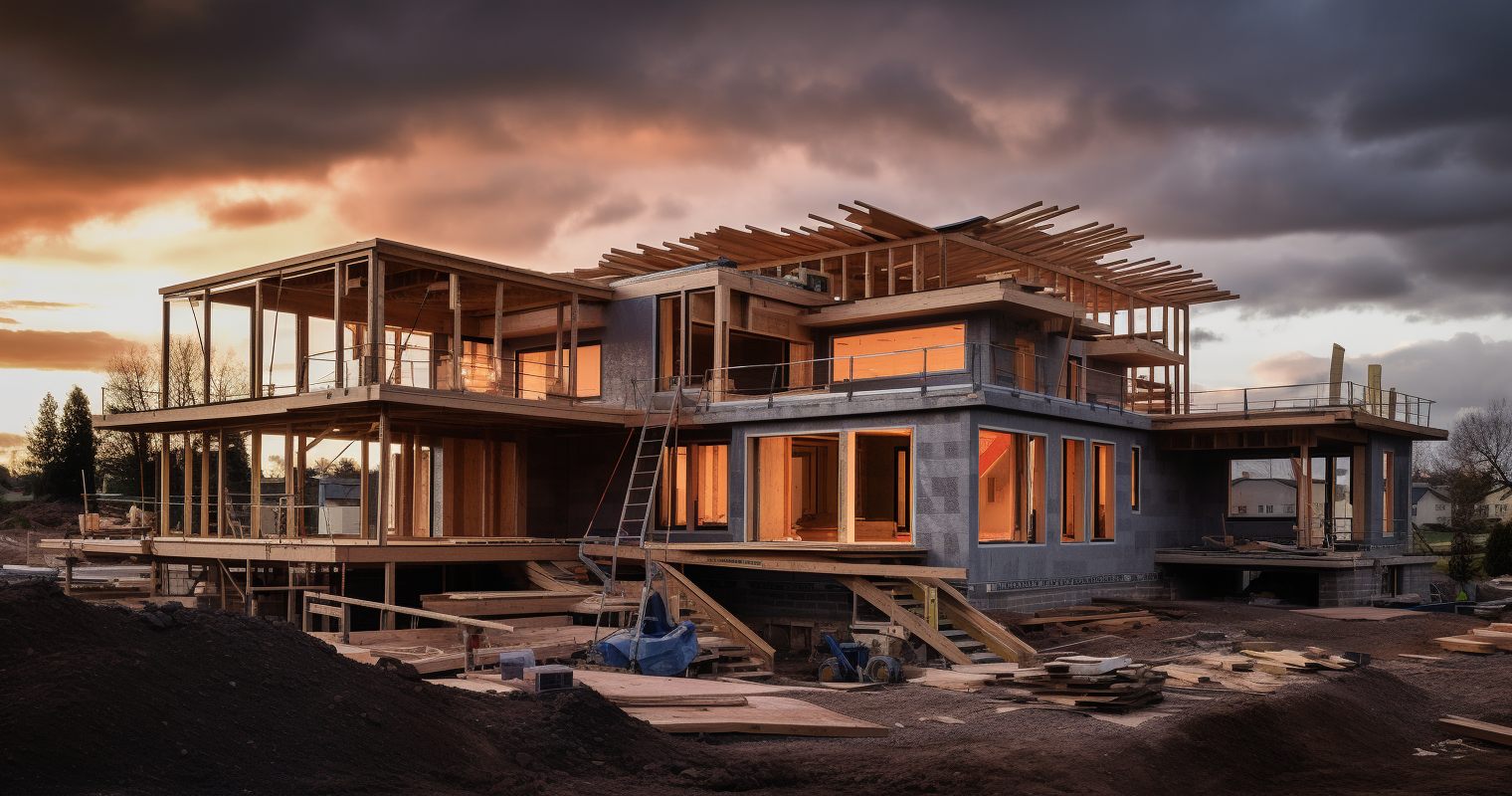
Undertaking construction or renovation work in Spain means engaging with a tightly regulated but geographically variable planning framework. Almost all building and major renovation activity requires formal planning permission, which is issued by the relevant local town hall (ayuntamiento). Both national and regional legislation govern the construction sector, and overseas nationals face no barriers to purchasing land or commissioning building work in Spain — though careful due diligence is indispensable before making any commitment.
| Item | Details |
|---|---|
| Planning permission body | Local town hall (Ayuntamiento) — permission required for most works |
| Licence fee (as of 2025) | Typically 2%–6% of declared construction budget (varies by municipality) |
| Processing time (as of 2025) | 4–6 weeks (smaller municipalities); 3–6+ months (major cities) |
| Highest heritage protection | Bien de Interés Cultural (BIC) — approx. 18,000 properties nationally |
| Governing building code | Código Técnico de la Edificación (CTE) — updated 2025 |
| Key land classifications | Urbano, Urbanizable, No Urbanizable (protected rural land) |
Do you need planning permission to build or renovate a property in Spain?
Whether you are breathing new life into a rural farmhouse or constructing a brand-new home from the ground up, the legal dimension of building in Spain demands serious attention. Obtaining the correct planning permission is a firm legal requirement, not a bureaucratic formality that can be sidestepped. Local authorities across Spain enforce planning rules actively, and non-compliance can bring severe consequences — including substantial financial penalties, orders to tear down unauthorised structures, or complications when you try to sell the property further down the line.
Spanish law recognises two principal categories of building licence. A Licencia de Obra Mayor (major works licence) is required whenever you extend, structurally alter, or newly build a property. A Licencia de Obra Menor (minor works licence) covers smaller-scale interventions such as maintenance tasks, electrical or plumbing upgrades, or retiling a bathroom or kitchen. At the very low end of the scale — painting interior walls, rearranging furniture — no licence is normally needed.
Spain’s approach to planning permission is considerably more demanding than that of many comparable countries. Where systems in places such as Canada or Australia routinely permit minor internal works without any formal approval process, Spain requires even fitting a new kitchen or swapping out windows to be notified to or sanctioned by the local authority. Before lifting a tool, always check your proposed works with your local ayuntamiento to confirm what approvals are needed.
The legal foundation for construction in Spain rests primarily on the Spanish Civil Code and the Building Act 38/1999 of 5 November 1999 (Ley de Ordenación de la Edificación), which sets out the construction process in detail and defines the duties and liabilities of each party involved. Technical requirements for buildings are established by the Código Técnico de la Edificación, while regional urban planning legislation and individual municipal building ordinances add further layers of regulation.
The step-by-step application process for a major works licence is as follows:
- Engage a licensed architect — Any application for a works permit must include detailed plans signed by an architect holding a current licence from the appropriate professional association. This requirement applies to new construction, refurbishment of existing buildings, and demolition alike.
- Obtain a town planning certificate (Certificado Urbanístico) — Before committing to any land purchase, request a Certificado Urbanístico from the relevant town hall. This signed document from the planning authority confirms the plot’s designated zone, permitted uses, allowable building footprint, and applicable building type.
- Commission technical drawings and documentation — Your architect will produce a Proyecto Básico (outline project) for submission with the licence application and, either separately or as part of the same package, an Ejecutivo (full working documentation). The local board of architects — the Colegio de Arquitectos — checks this documentation for compliance with the CTE in a procedure called Visado, which attracts a modest fee.
- Submit the application to the town hall — All urban planning information is legally required to be publicly accessible and free of charge, available on request from the relevant district town hall. A growing number of municipalities now offer online submission and guidance portals.
- Pay the licence fee — Fees differ between regions and are generally set at between 2% and 6% of the declared budget for the project as of 2025. When architect, engineer, and legal fees are included, larger projects will cost considerably more. Always confirm the precise rates with your local authority, as they are subject to change.
- Await decision — Approval timescales vary widely. Smaller town halls may issue a decision within four to six weeks, while in major urban centres such as Madrid, Valencia, or Málaga the process routinely takes three to six months — and longer if the application is incomplete or triggers a technical review (as of 2025).
- Commence works and arrange inspections — With the licence in hand, construction may proceed. Your architect or technical architect will monitor adherence to the approved drawings. Every company carrying out significant works must also produce a health and safety plan assessing the specific risks of the project and specifying preventative measures.
As of 2025, Spain’s Ley de Ordenación del Territorio, Urbanismo y Paisaje (LOTUP) is actively enforced across the country. Under the previous regime, illegal works that had stood for more than four years could frequently be retrospectively legalised. That route has now been closed off — enforcement proceedings may now be brought for up to 15 years after the completion of unauthorised works. This is a material difference from some other jurisdictions where the passage of time alone can regularise unlicensed construction; no such assumption should be made in Spain.
What are the rules around listed buildings, conservation areas, and heritage protection in Spain?
Spain operates a thorough and formally structured system of heritage protection, broadly comparable to listed building regimes in other countries but administered simultaneously at national and regional level. A Bien de Interés Cultural (BIC), translated as Cultural Asset of Interest, designates movable or immovable properties officially recognised as possessing exceptional cultural, historical, artistic, architectural, archaeological, scientific, ethnographic, or anthropological value. This designation carries the highest tier of legal protection available within Spain’s heritage framework.
Around 18,000 properties across Spain hold Bien de Interés Cultural (BIC) status, representing the country’s most stringently protected heritage assets. The number of BIC-designated monuments has grown steadily since 2000, reflecting Spain’s sustained commitment to preserving its built heritage. The BIC category embraces a wide spectrum of property types: alongside secular buildings such as museums and libraries, the framework assigns specific classification codes to castles, palaces, and historic estates — notably Monumento (General Monument) and Conjunto Histórico (Protected Ensemble).
BIC status confers the most rigorous degree of legal protection under Spain’s Ley 16/1985. This legislation prohibits any modifications to immovable BIC properties that could threaten their integrity — whether internal or external, structural or affecting their immediate surroundings. Once a property has been declared a national cultural asset, any structural intervention of any scale requires the explicit prior approval of the competent heritage authority. Owners are also obliged to keep the property in good repair and to open it to the public on designated days — generally four days per month — unless it already serves a tourism or public function.
The designation process involves systematic cataloguing and formal entry into the Registro General de Bienes de Interés Cultural, overseen by the Ministry of Culture and conducted in coordination with Spain’s autonomous communities, which carry significant independent authority in identifying and safeguarding heritage assets. Each autonomous community also maintains its own regional register alongside the national one. In Andalucía, for instance, the Ley 14/2007 del Patrimonio Histórico de Andalucía establishes the Catálogo General del Patrimonio Histórico Andaluz and mandates administrative authorisation for any works affecting a BIC, prioritising the conservation of both physical fabric and intangible heritage elements.
Properties situated within historic city centres are subject to strict building controls. The applicable regulations can be obtained from the relevant town hall. In many cases, consent from the Ministry of Culture of the appropriate regional government must also be secured for any structural changes before the town hall can issue the building licence.
Anyone considering purchasing an older property should check the national register via the Spanish Ministry of Culture’s heritage portal and seek advice from the relevant regional heritage body. A BIC or heritage listing in Spain is a binding legal constraint, not a label of prestige alone — you cannot renovate at will, routine repairs may fall within the scope of heritage controls, and changes will routinely require formal approval. Breaching these rules can lead to substantial fines, compulsory reinstatement at the owner’s cost, and in serious cases criminal prosecution.
What permits and licences are required when building or renovating in Spain?
There are four main permits required in Spain to carry out construction works and to operate the resulting building. These are all granted by the local authorities. A clear understanding of what each document covers and when it is needed is essential before any project gets under way.
- Licencia de Obra (Works Permit / Licencia Urbanística) — The primary planning and building consent issued by the local town hall. Its function is to verify that the proposed works conform to the applicable urban planning regulations. It is obligatory for all forms of construction, including the refurbishment or fitting-out of existing buildings and demolition works.
- Licencia de Actividad (Activity Licence) — This permit establishes that the completed project meets the health and safety standards contained in urban planning regulations. The permitted use of the building will be determined by the uses allowed under those regulations. It is especially relevant when a property’s designated use is being changed — for example, converting a residential dwelling into a tourist rental property.
- Cédula de Habitabilidad (Certificate of Habitation) — Any building intended for residential occupation requires a Cédula de Habitabilidad, confirming that it meets the minimum standards for human habitation. When purchasing a property, you should ensure this document forms part of the paperwork presented to you — its absence may signal an underlying administrative problem. The certificate is also a prerequisite for obtaining connections to mains water and electricity.
- Energy Performance Certificate (Certificado de Eficiencia Energética) — Mandatory for all property sales and rentals since 2013, the Energy Performance Certificate assesses a building’s insulation, ventilation, air conditioning, and hot water systems, and sets out recommended improvements alongside estimated costs. On completion of any new build, the energy certificate forms part of the handover documentation and is prepared by your architect.
- Coastal Law Authorisation (Ley de Costas) — Construction or renovation near Spain’s coastline must comply with the Ley de Costas. Additional restrictions apply within the protected coastal zone — 100 metres from the start of the beach in rural areas, or 20 metres within a town — and further controls apply within the 500-metre influence zone measured from the start of the beach.
- Environmental Permits — Properties in coastal proximity may require further authorisation under Spain’s Coastal Law, which typically involves environmental assessments by the regional government and input from the Coastal Authority before any licence is issued. Large-scale rural construction projects may also require a full environmental impact assessment.
The Código Técnico de la Edificación continues to develop in 2025 with strengthened provisions on energy efficiency and sustainability (as of 2025). These include tighter requirements to reduce energy consumption — particularly in air conditioning and thermal insulation — and expanded obligations for solar panel and geothermal energy installations in new buildings. Check all current technical requirements with your architect and the relevant local authority, as these standards are updated on a regular basis.
How do you find a reliable, trustworthy builder in Spain?
Spain’s construction industry operates within a framework of national and regional regulation. The Building Act 38/1999 defines the construction process and allocates responsibilities among the parties involved. However, unlike professions such as medicine or law, individual builders (constructores) are not required to hold a state-issued licence to trade in Spain — which makes thorough personal vetting by clients all the more important before any contractor is appointed.
The key professionals you are likely to encounter on a Spanish construction project include: the Aparejador/Arquitecto Técnico (Technical Architect), who oversees the build and ensures regulatory compliance; the Director de Obra (Works Director), typically the architect, who bears responsibility for ensuring the project matches approved plans; the Coordinador de Seguridad y Salud (Health and Safety Coordinator), whose appointment is compulsory on all major projects; and the Constructor (Builder/Contractor), who carries out the actual construction.
When assessing a prospective builder, the following practical steps are advisable:
- Ask for evidence of insurance. Any reputable builder should carry public liability insurance. For projects involving major structural work, a ten-year structural warranty (seguro decenal) is a statutory requirement under the Ley de Ordenación de la Edificación.
- Request references and inspect finished work. Verify the contractor’s licences, insurance coverage, and track record. A dependable builder will have no hesitation in providing a clear written contract and a realistic project timeline.
- Insist on a comprehensive written contract. All works must be covered by a detailed agreement specifying the full scope, materials to be used, timelines, and a structured payment schedule linked to agreed milestones. Never hand over the full sum in advance.
- Consider appointing a project manager. A project manager is particularly valuable if you do not live in Spain full-time — they can oversee contractors, coordinate logistics, and keep the project on budget.
- Verify the builder’s tax registration. Any legitimate contractor should be registered with the Spanish tax authority (AEAT) and able to supply a valid tax identification number (CIF/NIF).
While opting for the lowest-priced professional may be tempting, experience handling the needs of international clients and a thorough command of local regulatory requirements often justify a higher fee. Ask explicitly about prior experience dealing with foreign clients and navigating planning complexities on their behalf.
One of the most serious risks for owners who are not based in Spain full-time is paying for work that is shoddy, unfinished, or never begun at all. Always tie payments to clearly defined milestones, withhold a final retention sum until snagging is fully resolved, and consider using a trusted local solicitor to review contracts or hold funds. The Confederación Nacional de la Construcción (CNC) — the principal national employers’ federation for the building industry — is reachable through its website at www.cnc.es. For complaints or disputes, the Colegio de Aparejadores (College of Technical Architects) in your area can also offer assistance.
How do you find a qualified local architect in Spain?
A works permit application in Spain must include plans and documentation signed by an architect holding a current licence from the relevant professional body. Architecture is a regulated profession in Spain: every practising architect must possess a recognised degree in architecture and be enrolled with their regional Colegio de Arquitectos (College of Architects). This closely mirrors arrangements in France, Germany, and other EU member states, where independent practice requires formal registration.
The Consejo Superior de los Colegios de Arquitectos de España (CSCAE) — the Supreme Council of the Colleges of Architects of Spain — serves as the overarching professional body for Spanish architects and the single established national organisation of the profession. Its headquarters are on the Paseo de la Castellana in Madrid. Founded in 1931, the CSCAE brings together all the Official Colleges of Architects and their Autonomous Community Councils throughout Spain.
The CSCAE can be contacted as follows:
- Website: www.cscae.com
- Address: Paseo de la Castellana, 12-4°, 28046 Madrid, Spain
- Telephone: +34 91 435 22 00
Each province and principal town operates its own local Colegio de Arquitectos, whose membership directory can be searched to find registered practitioners in your area. In Catalonia, for example, the relevant body is COAC (Colegio de Arquitectos de Cataluña) at www.coac.net; in Andalucía, the COAA is contactable at www.arquitectosandalucia.es; and in Madrid, the COAM is found at www.coam.org. Links to all regional colleges are available through the CSCAE’s main website.
Selecting an architect on price alone carries real risks. Knowledge of local planning procedures and experience working with international clients are attributes worth prioritising. Raise specifically whether the architect has handled projects for foreign clients before and how they typically manage the regulatory challenges that arise. While there is no legal requirement for a Spanish architect to speak any language other than Spanish, expats will often find that engaging a bilingual architect — or one with a proven track record of internationally funded projects — substantially reduces the risk of costly misunderstandings at the planning and construction stages.
What are the common pitfalls when buying land to build on in Spain?
Purchasing land with the intention of building on it in Spain is among the most legally intricate property transactions you can enter into, and the consequences of errors are potentially very serious. Over the years, tens of thousands of properties have been constructed illegally on rural land across the country, creating lasting difficulties for both owners and authorities. Ensure you have a thorough understanding of what can and cannot be built before signing anything.
Understand land classifications first. Spanish land falls into three principal categories: Urbano (urban — fully serviced, developed land with water, electricity, and sewerage connections already in place); Urbanizable (developable — land earmarked for future development in planning schemes); and No Urbanizable (non-developable — protected or rural land subject to strict restrictions on construction). Rural land, also known as suelo no urbanizable, is regulated by national land legislation and by the land laws of the relevant autonomous community. Certain rural land is completely off-limits for construction, while other parcels may allow building subject to specific conditions being satisfied — for example, a minimum plot size of 10,000 m².
Always obtain a Certificado Urbanístico before committing. The town hall can issue a planning certificate for any plot within its jurisdiction. This signed document from the planning authority confirms the plot’s designated zone, its permitted uses, the permissible building area, and the applicable building category. Obtaining this certificate is essential before purchasing any land in Spain on which you intend to build.
Commission a topographical survey. Topographical surveys are carried out by specialist surveyors or engineers, who measure the plot’s dimensions, distances, and level changes. The survey must be commissioned and funded by the client, although your architect will be able to recommend suitable professionals. Costs are typically around €1 per square metre.
Check the cadastre and land registry. Every property in Spain is identified by an alphanumerical cadastral reference number. You can search for this via the official Sede Electrónica del Catastro website. Cross-reference what you find there with the Registro de la Propiedad (Land Registry) to verify plot boundaries, ownership history, and any charges or encumbrances. The two databases do not always correspond with each other, and inconsistencies can generate serious legal difficulties.
Confirm utility availability. Serviced residential plots on housing developments will typically have access roads, water, and electricity already installed. For rural land, there is no automatic entitlement to connect to mains water, electricity, or sewerage networks — connection costs can be extremely high, and on protected land, connection may not be feasible at all.
Check for environmental and flood-risk designations. Land adjoining rivers, coastlines, or areas of ecological importance may carry constraints under environmental or coastal legislation. Spain’s national flood-risk mapping tool (MITECO) and the national environmental ministry can provide plot-specific information on these risks.
Use a qualified local lawyer and notary. Legal professionals are indispensable for navigating Spain’s property laws, securing the necessary permits, and avoiding legal entanglements. The Spanish notary (notario) authenticates the final purchase deed but does not act in your personal interest — their role is distinct from that of a solicitor. Appoint an independent Spanish property lawyer (abogado) to examine all documentation, title deeds, and planning status thoroughly before exchange.
What are the rules around foreign ownership and financing for construction projects in Spain?
Spain imposes no blanket restrictions on foreign nationals purchasing land or property, or instructing construction works. The right to own real estate is available to all nationalities. There are, however, important procedural and financial matters that need to be addressed.
NIE number. Any foreign national who buys property, commissions construction, or enters into contracts in Spain must first obtain a Número de Identificación de Extranjero (NIE) — the tax identification number issued to non-residents. This is a prerequisite for all financial and legal transactions involving property in Spain and is obtained either at a Spanish consulate abroad or, within Spain, at a National Police station (Comisaría de Policía Nacional). Apply at the earliest opportunity, as the process can take several weeks.
Non-resident mortgages and construction loans. Non-residents can obtain Spanish mortgages, although the conditions offered tend to be less favourable than those available to residents. Most Spanish lenders will advance non-residents up to 60–70% of the property or land value, compared with up to 80% for residents. Construction loans (préstamo promotor or self-build mortgages) are available from certain lenders. Financing a heritage or listed property can present additional challenges, as some banks are reluctant to lend against such assets — though specialist divisions within institutions such as BBVA or Banco Santander may be more receptive where the circumstances are favourable. Always take advice from an independent financial adviser with expertise in the Spanish mortgage market.
Non-resident property taxes. Non-resident property owners are liable for a range of Spanish taxes, including Impuesto sobre Bienes Inmuebles (IBI — the annual property tax), capital gains tax on disposal, and potentially non-resident income tax (IRNR) where the property is rented out. The plusvalía municipal (municipal land value increment tax) is payable upon sale. Consult a qualified Spanish tax adviser (asesor fiscal) to understand your full obligations.
Inheritance and ownership structures. Foreign nationals should seek legal advice at an early stage on how best to structure ownership of Spanish property, particularly with regard to inheritance. Spain’s succession laws can diverge significantly from those in other countries, and the rules that apply will depend on your nationality and country of residence. Preparing a Spanish will (testamento) covering your Spanish assets is strongly recommended. The Colegio de Registradores de España (Association of Land and Mercantile Registrars) can provide guidance on title registration and ownership structures.
What official sources should you consult when planning to build or renovate in Spain?
Because planning rules, fees, and technical requirements in Spain change regularly at both national and regional level, always confirm what applies to your specific project with the relevant official sources before committing to anything. The key authorities and resources are set out below:
| Body / Resource | Role | Website |
|---|---|---|
| Local Town Hall (Ayuntamiento) | Grants all building licences and planning permissions | Find yours via administracion.gob.es |
| Sede Electrónica del Catastro | Official cadastral register — land classification, boundaries, reference numbers | sedecatastro.gob.es |
| Registro de la Propiedad (Land Registry) | Ownership, title deeds, encumbrances — via Colegio de Registradores | registradores.org |
| Ministry of Housing and Urban Agenda (MIVAU) | Oversees housing policy, the CTE, and urban regeneration law | mivau.gob.es |
| Ministry of Culture — Heritage | BIC register, heritage protection, national cultural assets | cultura.gob.es |
| CSCAE (Architects’ Council of Spain) | Find a registered architect; professional standards | cscae.com |
| Confederación Nacional de la Construcción (CNC) | National construction industry employers’ body | cnc.es |
| MITECO (Ministry for Ecological Transition) | Environmental permits, flood risk, coastal protection | miteco.gob.es |
| Agencia Tributaria (AEAT) | Tax registration, NIE requirements, property taxes | aeat.es |
Urban planning information is, by law, a matter of public record, available free of charge on request from the town hall of any district. An increasing number of municipalities now publish zoning maps and planning rules on their websites, though the quality and completeness of online provision varies considerably. For all specific figures — fees, thresholds, and timescales — always verify directly with the relevant authority, as regulations are revised on a regular basis.
Frequently asked questions
How much does it typically cost to build a house in Spain from scratch?
Build costs fluctuate considerably depending on the region, the specification, and the type of land involved. As a general indication, basic construction costs along the Mediterranean coast run from roughly €900 to €1,800 per square metre as of 2025, before accounting for land acquisition, professional fees, taxes, and licences. The price of building materials in Spain rose sharply in the wake of the pandemic and the period of high inflation, with the construction cost index reaching a record peak in early 2024 — though some stabilisation occurred during 2023, prices remain above pre-pandemic levels. Always gather several itemised quotations from different contractors and set aside a contingency budget of at least 15–20%.
What happens if planning rules are breached in Spain?
The repercussions extend well beyond a financial penalty. Enforcement authorities can require the demolition of any unlicensed structure; in serious cases, criminal charges may follow; and illegal works may prevent utility connections from being established. Unauthorised works will also come to light during the conveyancing process and can severely diminish resale value — or prevent a sale entirely. As of 2025, enforcement action may be initiated for up to 15 years after the completion of unlicensed works. The former rule under which structures older than four years were frequently eligible for automatic legalisation no longer applies.
Is there a language barrier when dealing with planning authorities in Spain?
All formal planning procedures in Spain are conducted in Spanish, with co-official regional languages used in areas such as Catalonia, the Basque Country, and Galicia. It is strongly recommended that you appoint a bilingual Spanish lawyer or architect to handle communications with the town hall on your behalf. Do not rely on informal translations of official documents — inaccuracies can carry serious legal weight. Many architects and solicitors active in areas with large expat populations routinely work with international clients and can offer services in several languages.
Are building qualifications or standards from other countries recognised in Spain?
Spain’s own technical building standards — the Código Técnico de la Edificación (CTE) — take precedence over any foreign norms. Architects who qualified in other EU member states may seek recognition of their qualifications under EU mutual recognition directives, but must still register with the relevant Spanish Colegio de Arquitectos before practising. Professionals from outside the EU are required to have their qualifications formally assessed and homologated by the Spanish Ministry of Education before they may practise in Spain. In practice, foreign property owners almost universally work with locally qualified architects and builders who are already well versed in Spanish requirements.
Can I renovate a rural property (finca) in Spain?
Rural land (suelo no urbanizable) falls under the national land law and the corresponding legislation of the relevant autonomous community. Certain categories of protected rural land cannot be built on under any circumstances, while others permit construction subject to conditions being satisfied — such as a minimum plot size of 10,000 m². The precise rules governing rural building vary from region to region. Before purchasing a rural property or committing to any programme of works, obtain a Certificado Urbanístico from the local town hall and take specialist legal advice on exactly what works are permissible.
What should I do if I have a dispute with a builder in Spain?
Start by putting your concerns in writing and referring to the specific terms of your signed contract. If that approach fails to produce a resolution, mediation may be available through your regional Colegio de Aparejadores (College of Technical Architects), which handles complaints arising from construction supervision. For financial disputes, the Spanish consumer arbitration system (Sistema Arbitral de Consumo), administered by regional consumer offices (OMIC), offers an alternative to formal litigation. For substantial disputes, retaining a Spanish litigation solicitor with construction experience is advisable. From the outset, keep thorough documentary records of all payments, agreements, and correspondence.
Do I need to be resident in Spain to commission a construction project?
No. Non-residents are fully entitled to commission and own construction projects in Spain. You will, however, need an NIE number for all legal and financial transactions related to the project. Many non-resident clients find it most practical to grant power of attorney (poder notarial) to their Spanish lawyer or architect, authorising them to act on their behalf for tasks such as signing documents at the town hall or before a notary. Non-resident owners are also subject to specific Spanish tax obligations, so obtaining tax advice at the outset is strongly recommended.
How do I check whether a property I am buying has all its permits in order?
Before exchange, ask the vendor to provide the following documentation: the building licence (licencia de obra); the first occupation certificate or certificate of habitation (cédula de habitabilidad); the energy performance certificate; and the title deed (escritura de propiedad) as registered with the Land Registry. Your Spanish lawyer should verify all of these against the Registro de la Propiedad and the Catastro to check that the registered description of the property matches what exists on the ground. It is common in Spain for owners to carry out works without registering them with the town hall, meaning undeclared extensions or alterations are a widespread issue that can complicate ownership and create difficulties at resale.
Are there grants or incentives available for renovation projects in Spain?
Yes. In recent years Spain has launched a range of grant and subsidy programmes — partly drawing on EU recovery funding — aimed at improvements in energy efficiency, enhanced accessibility, and the renovation of primary residences. Depending on the region, financial support may be available towards repair and conservation costs, the restoration of architectural features, and preliminary technical studies ahead of renovation works. Local councils sometimes offer complementary tax reductions. The specific schemes available, their eligibility criteria, and application deadlines change frequently — contact your regional government (comunidad autónoma) and local town hall for up-to-date information, and check the Ministry of Housing’s website at mivau.gob.es for programmes administered at national level.