
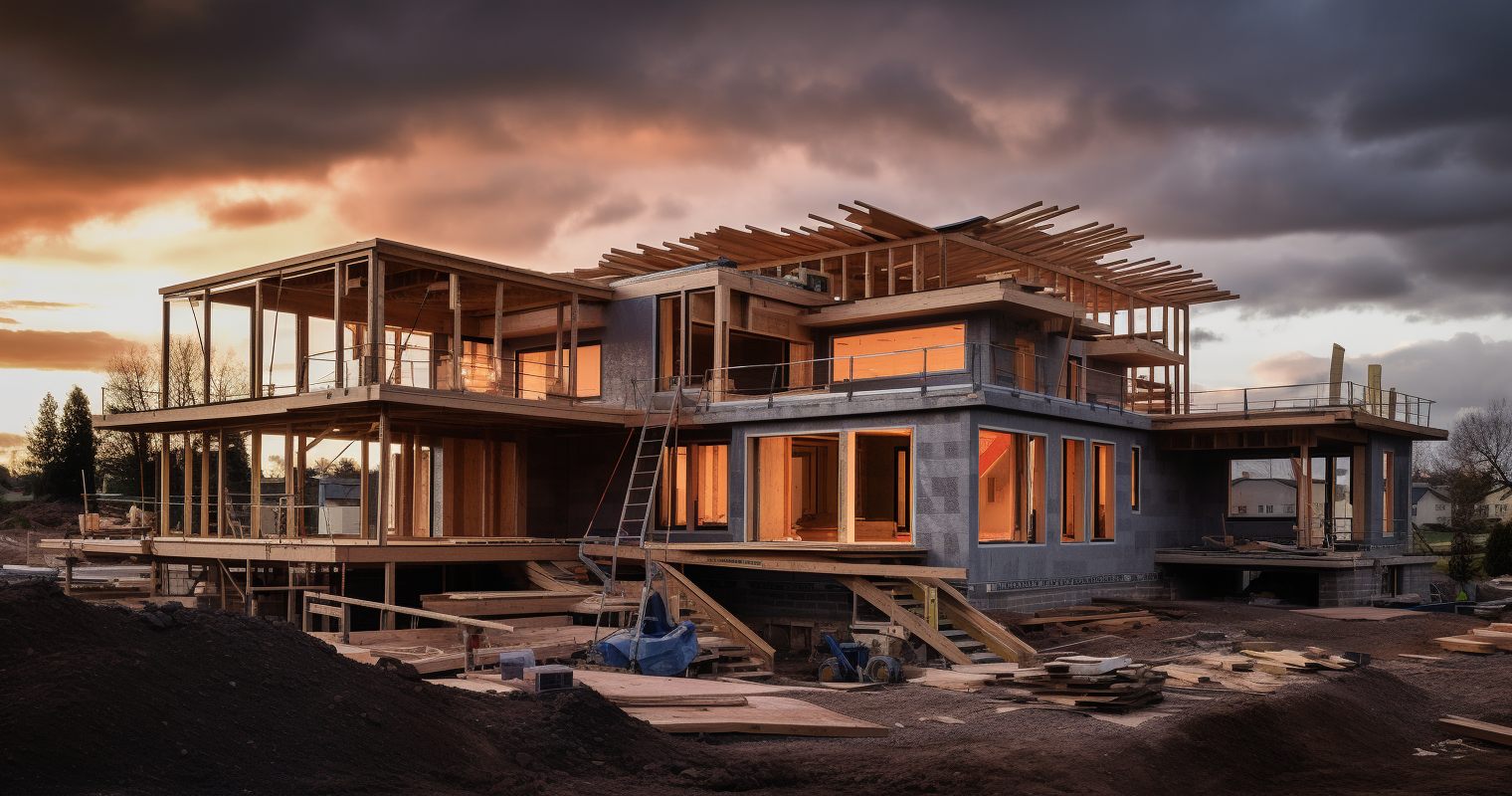
Constructing or renovating property in Sweden is a carefully regulated undertaking, governed principally by the Planning and Building Act (Plan- och bygglagen). The vast majority of construction activity — from purpose-built new homes to substantial renovation projects — requires a bygglov (building permit) issued by the relevant local municipality. Sweden’s building sector operates according to rigorous national standards, and people from overseas encounter no particular barriers when it comes to acquiring land or engaging construction professionals.
| Item | Details |
|---|---|
| Primary legislation | Planning and Building Act (Plan- och bygglagen, PBL 2010:900) |
| Permit authority | Local municipal building committee (byggnadsnämnd) |
| Standard processing time (as of 2025) | Up to 10 weeks for a complete application; may extend to 20 weeks for complex cases |
| Construction start deadline (as of 2025) | Must begin within 2 years of permit; complete within 5 years |
| Small outbuildings (Attefall) — permit-free threshold (as of 2025) | Up to 30 m² (detached supplementary building); notification to municipality still required |
| Shoreline building restriction | No construction within 100 m of shoreline (300 m in some areas); exemptions possible |
| Foreign ownership restrictions | None — foreign nationals may buy land and commission construction freely |
| Heritage authority | Riksantikvarieämbetet (Swedish National Heritage Board): www.raa.se |
Do you need planning permission to build or renovate a property in Sweden?
A building permit (bygglov) is obligatory for both new construction and significant renovation works in Sweden. Local municipalities bear primary responsibility for overseeing the development and designated use of land parcels, and the governing legislation is the Planning and Building Act (Plan- och bygglagen 2010:900), though locally adopted policy decisions may also impose specific requirements on individual plots.
A building permit is typically needed if you intend to erect a new structure, extend an existing building to increase its size, change a building’s use to something substantially different, alter a building to create new dwellings or premises, modify an exterior feature (such as repainting the façade or replacing roof covering), or install a storage yard, advertising sign, solid fence, or wall.
There are limited exceptions to the permit requirement, which generally apply to minor works with negligible impact on the surrounding environment. The so-called “Attefall” provisions allow certain small-scale projects to proceed without a formal building permit, though an advance notification must still be submitted to the municipality, and you must wait for a start permit before commencing any work. These provisions apply to single-family and two-family dwellings, and to accessory structures on plots that already contain a residential building.
Under proposals due to take effect on 1 October 2025, it will become possible to erect a supplementary building of up to 30 square metres within a detailed plan area (and up to 50 m² outside it) without a permit, and extensions of up to 30 square metres will likewise be permit-free. Furthermore, the obligation to obtain a building permit for façade alterations on one- and two-dwelling houses — including the installation of solar panels — is being abolished. Since these rules were still passing through the legislative process at the time of writing, always verify the current thresholds directly with your municipality.
Compared to the UK, where planning permission is administered at the local council level and permitted development rights allow many minor works to proceed without a formal application, Sweden’s approach is broadly analogous in structure — yet the Attefall notification system introduces a layer of municipal oversight even for exempt works that has no direct equivalent in the UK. Unlike Canada’s provincial frameworks, which diverge substantially from one province to the next, Sweden’s system is nationally standardised under the PBL, with municipalities applying locally adopted detail plans on top of that foundation.
The permit application process in Sweden follows these steps:
- Check the detailed development plan (detaljplan): Each municipality produces a binding detailed development plan (detaljplan) and a non-binding overall plan (översiktsplan). Establish whether your land lies within or outside a plan area, as this has a significant bearing on how your application will be assessed.
- Consider a preliminary decision (förhandsbesked): Before lodging a full permit application, you may request a conditional approval (förhandsbesked) from the local building committee, which establishes whether your proposed development is permissible at your chosen site. A favourable preliminary decision remains valid for two years, within which you must submit a formal building permit application.
- Prepare and submit your application: Lodge a permit application with the local building committee in the municipality where the work is to be undertaken. The application must be in writing and include all necessary information, drawings, and supporting documents. You will generally need to nominate an inspection manager (kontrollansvarig) at this stage, who assists in preparing an inspection plan and ensures that required inspections are carried out.
- Initial review: As soon as reasonably possible after receipt, the building committee undertakes a preliminary review to determine whether a permit is actually required and whether the application contains all necessary materials.
- Neighbour consultation (if required): In certain cases, the municipality will initiate a neighbour consultation process, notifying adjoining landowners of the proposed works and inviting them to raise any objections or concerns, which will be taken into account during the permit assessment.
- Decision: The maximum permitted processing time for a building permit application is ten weeks from the date the application is deemed complete, though this may be extended by a further ten weeks where a more thorough assessment is necessary (as of 2025).
- Technical consultation and starting clearance (startbesked): Once a building permit has been granted, a technical consultation is required — normally held at the municipality with the inspection manager and building official present. Further technical documentation must be submitted in advance of this meeting, including engineering plans and a preliminary energy declaration. If the consultation is successful, starting clearance is issued.
- Final clearance (slutbesked): Final clearance is a formal document issued by the municipality confirming that a building has been constructed in accordance with its permit — broadly equivalent to a certificate of occupancy. It must be obtained before the building can be occupied.
Unless the permit specifies otherwise, construction must commence within two years of the permit being granted and must be completed within five years.
The fees associated with a building permit depend on the scope and scale of the project. The building committee may levy charges for decisions on starting clearance and final clearance, as well as for technical consultations, site inspections, and other oversight activities. Contact the local building committee in the relevant municipality for precise fee information before drawing up your budget.
What are the rules around listed buildings, conservation areas, and heritage protection in Sweden?
Sweden operates a formal heritage protection framework that is broadly comparable in purpose to listed building status in the UK or heritage designation in Australia, though the mechanisms differ in meaningful ways. Protection is governed by the Historic Environment Act (Kulturmiljölagen, 1988:950) and overseen at the national level by the Swedish National Heritage Board.
Sweden recognises two categories of listed buildings: individually listed and government-listed. The County Administrative Boards hold the authority under the Cultural Memory Law to designate buildings and sites whose “cultural and historical value is especially notable or which are part of an especially notable site.” This designation can apply to private homes, industrial structures, parks, and bridges alike. The decision to list a building rests with the County Administrative Boards.
The Swedish government itself decides whether a state-owned building or site should be government-listed. The Swedish National Heritage Board proposes new candidates for government listing and holds responsibility for the maintenance of such properties.
Listed buildings in Sweden are protected under the Cultural Heritage Law (kulturminneslagen or KML) and the ordinance on government-listed buildings. Listing decisions are published by the Administrative Board in the relevant county, with records maintained by the National Heritage Board.
The Swedish National Heritage Board, which operates under the Ministry of Culture, functions as Sweden’s central administrative body for cultural heritage and the historic environment. Its mandate encompasses the preservation and management of sites with historical, architectural, or archaeological significance.
If you wish to renovate or alter a listed building, an application must first be submitted to the County Administrative Board. Any works must respect the building’s character and historic integrity — much like the listed building consent requirement found in many other countries — and works carried out without approval may result in enforcement action and financial penalties. Even buildings that are not formally listed may be subject to additional restrictions if they are situated within an area of recognised cultural-historical value, as municipalities may incorporate such constraints into their local detailed development plans.
To determine whether a property or area enjoys heritage protection before purchasing or undertaking any work, consult the Bebyggelseregistret (BeBR) — Sweden’s national register of built heritage. Bebyggelseregistret (BeBR), the Database of Built Heritage, is a national registry containing information about the built environment’s heritage value. It is accessible through the Swedish National Heritage Board’s website at www.raa.se. The Cultural Environment Department at the National Heritage Board oversees matters relating to buildings, landscape, and digital cultural history records, including the Cultural Environment Register with its Fornsök and Bebyggelseregistret search tools.
Heritage-related provisions are also embedded in other legislation, including the Environmental Code, the Planning and Building Act (2010:900), and the Forestry Act (1979:429). This means that even an unlisted property may face restrictions on what can be done with it if it falls under environmental or forestry designations. It is essential to search multiple registers before committing to any purchase or renovation project.
What permits and licences are required when building or renovating in Sweden?
A construction project in Sweden may require a range of approvals beyond the core building permit (bygglov), covering different stages from demolition and groundwork through to occupation. Understanding which approvals your project requires from the outset will avoid costly delays and surprises.
Starting Clearance (Startbesked): Starting clearance is the municipality’s formal authorisation to begin physical construction under a building permit. Beginning work before this clearance has been issued will expose you to a financial penalty known as a sanction fee (byggsanktionsavgift). This is a crucial distinction: holding a building permit does not in itself authorise you to start work.
Demolition Permit: Any demolition carried out within a detailed development plan area requires a demolition permit. This requirement applies even to partial demolition, and the application must be accompanied by an environmental inventory and a demolition plan.
Site Improvement Permit: Major earthworks and groundworks that substantially alter the topography of a plot — such as large-scale excavation — require a separate site improvement permit.
Notification for Certain Works: Specific categories of work — including modifications affecting fire safety, ventilation systems, water and sewage installations, or structural elements — require a notification to be submitted to the municipality. Work may not begin until a start permit has been received in response.
Environmental Permits: Depending on the character of the development, environmental licences and permits may be required, as may approvals from authorities responsible for cultural and historical interests. Projects situated near water bodies, wetlands, or protected natural areas are particularly likely to require environmental authorisations under the Environmental Code (Miljöbalken).
Shoreline Protection: Swedish law prohibits construction within 100 metres of any shoreline — and in certain areas this buffer extends to 300 metres — under legislation dating to 1975 that safeguards the Swedish coastline. Exemptions can be sought in specific circumstances. This restriction catches many buyers of lakeside or coastal plots off guard and should be investigated at the earliest possible stage of planning.
Climate Declaration: The Act on climate declarations for new buildings entered into force on 1 January 2022. Its purpose is to reduce the environmental impact of the construction phase, and it applies to new buildings that require a building permit.
Inspection Manager (Kontrollansvarig / KA): The inspection manager (kontrollansvarig), commonly referred to as a KA, is an accredited specialist who draws up the project inspection plan. For most projects requiring a building permit, appointing a KA is a statutory obligation. The KA must hold certification from an approved accreditation body and must be independent of both the contractor and the property owner.
All applications and notifications are directed to the local building committee (byggnadsnämnden) in the municipality where the works are to be carried out. In Sweden, primary responsibility for land use planning rests with the municipalities. The national regulator Boverket publishes comprehensive guidance in English on its website and sets the national building code (Boverkets byggregler, BBR) with which all construction must comply.
How do you find a reliable, trustworthy builder in Sweden?
Sweden’s construction sector is subject to regulation at both national and local levels. Construction methods must comply with statutory building rules as well as standards established by trade associations. While there is no single mandatory licence that every builder is required to hold, reputable contractors typically belong to recognised professional organisations and hold relevant certifications.
The principal professional and trade bodies for the construction sector in Sweden include:
- Sveriges Byggindustrier (BI) — Swedish Construction Federation
The industry body representing construction contractors throughout Sweden. Membership reflects a commitment to professional standards and ethical codes of practice.
Website: www.sverigesbyggindustrier.se
Address: Box 7835, 103 98 Stockholm, Sweden
Phone: +46 8 698 58 00 - Byggföretagen (the Construction Employers’ organisation, formerly part of BI)
Represents construction companies and provides guidance on contractor standards.
Website: www.byggforetagen.se - Hantverksföretagen
Represents smaller specialist trade businesses, including plumbers, electricians, painters, and general contractors.
Website: www.hantverksforetagen.se
When assessing any contractor, ask for their F-skatt certificate. This Swedish tax registration certificate confirms that the contractor is responsible for managing their own tax obligations. If you engage a contractor who does not hold F-skatt, you as the client may be held legally liable for deducting and paying their tax on their behalf. Always request and verify this certificate before signing any agreement.
Sweden also has the ROT-avdrag (ROT deduction) — a tax reduction on labour costs for renovation, conversion, and extension work on homes. As of 2025, homeowners may deduct 30% of eligible renovation labour costs from their tax bill (subject to a maximum limit). Only contractors registered with the Swedish Tax Agency (Skatteverket) are able to apply for this on your behalf. When engaging any contractor, ask whether the planned work qualifies and whether they are registered for the scheme — it can make a substantial difference to your overall costs.
Practical steps for vetting a builder:
- Request references from at least two or three recent projects of a comparable nature and follow these up personally, either by phone or in person.
- Confirm the contractor’s F-skatt registration with the Swedish Tax Agency (Skatteverket) at www.skatteverket.se.
- Ensure the contractor carries adequate insurance, including third-party liability cover (ansvarsförsäkring) and all-risk construction project insurance (allriskförsäkring för byggnation).
- Always enter into a written contract. The standard consumer contract for residential construction work in Sweden is the ABS 18 (Allmänna bestämmelser för småhusentreprenader), published jointly by Konsumentverket and Sveriges Byggindustrier. Insist on this or a comparable formal agreement for any residential build or renovation project.
- Use staged payments linked to verified completion of specific milestones, rather than large upfront lump sums. Limit any initial deposit to a modest amount before work begins.
- Be aware that some contractors specifically target newly arrived foreign property owners with inflated estimates or requests for substantial cash payments before work starts. If anything feels hurried or informal, seek an independent second opinion.
For disputes with contractors, the Allmänna reklamationsnämnden (ARN — the National Board for Consumer Disputes) provides free adjudication for consumer disputes in the construction sector. Website: www.arn.se.
How do you find a qualified local architect in Sweden?
In Sweden, the title “architect” does not enjoy statutory protection in the same manner as in some other countries — there is no single legislative licence required to use the designation. However, the professional body for qualified architects is Sveriges Arkitekter (SAR) — the Swedish Association of Architects — and membership serves as a reliable indicator of formal academic training and professional standing.
Sveriges Arkitekter (SAR)
Website: www.arkitekt.se
Address: Box 5027, 102 41 Stockholm, Sweden
Phone: +46 8 505 577 00
Email: [email protected]
SAR maintains a searchable online directory of registered member architects, enabling you to identify professionals by geographical area and area of specialism. Member architects will have completed accredited university-level programmes in architecture — typically at one of Sweden’s architecture schools at KTH, Chalmers, or Lund University — and are bound by the association’s code of ethics and professional conduct.
For building permit applications in Sweden, submitted drawings must satisfy the technical requirements set by Boverket. Architects are best placed to handle this work, given their established working relationships with local planning departments. Engaging an architect who has direct familiarity with your specific municipality’s interpretation of national planning rules is especially advantageous — practical requirements can vary even though the underlying legislation is uniform across the country.
For expats and overseas property buyers, several practical considerations deserve attention. All permit documentation and official correspondence with the municipality will be in Swedish. While a great many Swedish architects speak fluent English and other languages and can guide clients through the process effectively, official documents will still be issued in Swedish, so you should factor translation costs and time into your planning. Some firms operating in Sweden have particular expertise in working with international clients and offer bilingual project management services — it is worth raising this during initial meetings. Swedish architectural qualifications are not automatically equivalent to those from other countries, though EU/EEA-qualified professionals may have the right to practise under EU mutual recognition of professional qualifications rules.
What are the common pitfalls when buying land to build on in Sweden?
Purchasing land for development is a major financial commitment, and Sweden has a number of specific rules and practical hazards that are not immediately apparent to buyers unfamiliar with the local system. The issues set out below are among the most important to investigate before completing any purchase.
Confirm that the land can actually be built on before purchasing: A preliminary decision (förhandsbesked) is particularly important when there is any uncertainty about whether the municipality will approve your project, or when you are buying or selling land where the development potential is unclear. A preliminary decision is not a building permit — a separate building permit application must be submitted before construction can commence. Never assume that because a plot is undeveloped it is therefore developable. Always obtain a förhandsbesked or equivalent formal confirmation before exchanging contracts.
Understand the planning and zoning framework: Land that has been incorporated into a detailed development plan has been divided into zones reflecting the municipality’s intentions for how that land should be developed. Land falling outside a detailed plan is subject to different and often more complex requirements for obtaining approval. Verify whether the land sits within a plan area, and what the plan permits, by contacting the municipal planning office directly.
Shoreline and environmental restrictions: As noted above, Swedish law prohibits construction within 100 metres of any shoreline — and in some areas up to 300 metres — under legislation that has been in force since 1975. Many buyers of scenic lakeside or coastal plots are entirely unaware of this rule. In addition, check for Natura 2000 designations, declared nature reserves, and contaminated land records held by the County Administrative Board and the Swedish Environmental Protection Agency (Naturvårdsverket).
Land title and boundary verification: Sweden’s land registration system is administered by Lantmäteriet (the Swedish Mapping, Cadastral and Land Registration Authority). Before proceeding with any purchase, verify the title deed, registered plot boundaries, and any easements or rights of way through Lantmäteriet’s register. Sweden’s cadastral register (fastighetsregistret) is generally dependable, but boundary disputes do arise, particularly with older rural properties.
Utility availability: Access to roads, water supply, and sewage infrastructure is assessed by the municipality as part of any site evaluation. In rural locations especially, connection to the public water and sewage network may not be feasible, necessitating a private well and septic system — both of which require environmental permits from the municipality. Clarify the costs and timeframe for connecting to the electricity grid with the local network operator before finalising any purchase.
Contracts and legal advice: Unlike property transactions in France or Spain, which require a notaire, or in Australia where a licensed conveyancer manages the legal process, Sweden does not require a notary or solicitor to complete a property purchase. This does not make legal advice unnecessary, however — particularly for foreign buyers unfamiliar with Swedish property law. Consider engaging a Swedish advokat (lawyer) or specialist property conveyancer to review the sale agreement, examine the title, and advise on any conditions or encumbrances attached to the land. Lantmäteriet records all property transactions and maintains the definitive land register: www.lantmateriet.se.
Inheritance and ownership structure: Swedish inheritance rules may differ markedly from those in your country of origin. If you are purchasing property as a couple or in joint ownership with family members, seek advice from a Swedish lawyer on how ownership should be structured to minimise complications in the event of death or the breakdown of a relationship.
What are the rules around foreign ownership and financing for construction projects in Sweden?
Sweden ranks among the most open countries in Europe in terms of foreign property ownership. There are no general restrictions preventing foreign nationals — whether from within the EU/EEA or from elsewhere — from acquiring land, purchasing buildings, or commissioning construction work. This sets Sweden apart from countries where local partnerships, government authorisation, or specific residency status are prerequisites for foreign nationals to own real estate.
Foreign nationals are not required to be resident in Sweden in order to purchase land or property, and there is no requirement to operate through a local company or joint venture arrangement for private residential construction. The same planning and building rules apply regardless of the buyer’s nationality or residency status.
Mortgages and construction loans for non-residents: Obtaining Swedish mortgage finance as a non-resident is possible but subject to more demanding conditions than for Swedish residents. Swedish banks — including Swedbank, SEB, Handelsbanken, and Nordea — will generally consider applications from non-residents, but typically require a larger deposit (often 25–40% or more for non-residents, compared to the standard minimum of 15% for residents), evidence of stable income from a credible source, and in many cases some form of connection to Sweden — such as employment, tax registration, or a Swedish personal identity number (personnummer). Construction loans (byggnadskreditiv) are available through the same institutions but operate differently from conventional mortgages — funds are released in tranches as construction advances, and the loan typically converts to a standard mortgage upon completion. Engage directly with Swedish banks and consider consulting a Swedish mortgage broker, as market conditions and lending criteria vary between providers.
Tax identification: To open a Swedish bank account, enter into property contracts, and access the ROT deduction for renovation work, you will generally need a Swedish personal identity number (personnummer) or, where this is not available to you, a coordination number (samordningsnummer). Both are issued by the Swedish Tax Agency (Skatteverket): www.skatteverket.se.
Investment and commercial construction: If you are developing property for commercial purposes or as part of a business venture, the Swedish investment promotion agency Business Sweden and the Swedish Companies Registration Office (Bolagsverket) can advise on the appropriate corporate structure: www.bolagsverket.se. The Swedish Financial Supervisory Authority (Finansinspektionen) regulates banking and lending activities: www.fi.se.
What official sources should you consult when planning to build or renovate in Sweden?
Sweden’s regulatory environment for building and construction draws in several national and local bodies. The key official sources to consult before embarking on any project are listed below. Always confirm that you are consulting the most current version of any guidance, as rules, fees, and procedures are subject to change.
| Body | Role | Website |
|---|---|---|
| Boverket (Swedish National Board of Housing, Building and Planning) | National regulator; publishes building code (BBR), planning guidance, and permit guidance in English | www.boverket.se/en |
| Your local municipality (kommun) | Issues building permits, starting clearance, and final clearance; holds the local detailed development plan | Find via www.skr.se (Swedish Association of Local Authorities and Regions) |
| Lantmäteriet (Swedish Mapping, Cadastral and Land Registration Authority) | Land title registration, property boundaries, cadastral data | www.lantmateriet.se |
| Riksantikvarieämbetet (Swedish National Heritage Board) | Heritage protection; BeBR register of built heritage; Fornsök register of ancient monuments | www.raa.se/in-english |
| Naturvårdsverket (Swedish Environmental Protection Agency) | Environmental designations, shoreline protection, contaminated land | www.naturvardsverket.se |
| Skatteverket (Swedish Tax Agency) | F-skatt registration checks, ROT deduction, personnummer/samordningsnummer | www.skatteverket.se |
| Konsumentverket (Swedish Consumer Agency) | Consumer rights in construction, standard contract guidance (ABS 18) | www.konsumentverket.se |
| Allmänna reklamationsnämnden (ARN) | Dispute resolution for consumer construction matters | www.arn.se |
| Sveriges Arkitekter (SAR) | Architect register and directory | www.arkitekt.se |
| Sveriges Byggindustrier / Byggföretagen | Contractor standards and construction industry trade body | www.byggforetagen.se |
Boverket is the national authority responsible for rules and guidance on building permits, and publishes comprehensive information in English on its website. For processes specific to your municipality, contact the building committee (byggnadsnämnden) at the local kommunhus (municipal office) directly — many municipalities now operate online application portals, and some provide guidance in English for international applicants.
Frequently asked questions: building and renovating in Sweden
How much does it typically cost to build a house in Sweden?
Construction costs in Sweden vary considerably depending on location, specification, and the contractor engaged. As a broad indication, new residential construction typically falls in the range of SEK 20,000 to SEK 40,000 per square metre for a turnkey build, with prices in Stockholm and other large cities tending towards the upper end of that range. These figures are indicative only and fluctuate with materials and labour markets — always obtain a minimum of three written quotations from contractors. Remember to budget separately for permit fees, architect fees, site surveys, utility connections, and landscaping, all of which can add substantially to total project costs.
How long does the full building process take in Sweden, from buying land to moving in?
The entire process rarely takes fewer than 18 months and can readily extend to three or four years for a custom-designed new build. The processing time for a bygglov application varies according to the project’s complexity, ranging from a matter of weeks to several months, with larger or more unusual projects potentially exceeding a year. Time must also be allowed for site preparation, utility connections, construction itself, and the issue of final clearance. Seasonal factors are relevant too — Swedish winters can halt or significantly slow outdoor construction, especially in the northern regions.
Do I need to speak Swedish to navigate the building and planning process?
All formal dealings with the municipality, planning committee, and other public authorities are conducted in Swedish. Official permit decisions and associated documents are issued in Swedish. Although many architects, contractors, and municipal officers speak good English, you should not rely on this for matters with legal significance. Engaging a Swedish architect or project manager who has experience with international clients is strongly advisable — they can manage official correspondence and draw your attention to issues that might otherwise be obscured by the language barrier. Budget for the translation of key documents where necessary.
What happens if I carry out work without the required building permit in Sweden?
The building committee is required to impose a construction sanction fee (byggsanktionsavgift) for violations of planning and building legislation — for instance, beginning work that requires a permit or notification before starting clearance has been received, or occupying a building before final clearance is in place. Even after paying a fine, you will still need to apply for a retroactive permit. Where a permit cannot be granted retrospectively, the municipality has the power to order the demolition of the unauthorised structure. These are serious consequences — no work should begin without all necessary clearances in hand.
Are foreign qualifications or building standards recognised in Sweden?
All construction in Sweden must meet Swedish building regulations (Boverkets byggregler, BBR), regardless of the nationality or country of training of the designer or builder. Foreign construction industry qualifications are not automatically recognised in Sweden, though EU/EEA professionals benefit from rights under EU mutual recognition of professional qualifications rules. In practice, working with Swedish-qualified professionals — or alongside them as part of an international team — is the safest way to ensure full compliance with the local regulatory framework. Building codes from other countries, whether from the US, UK, or Australia, cannot substitute for compliance with BBR.
Can I renovate a property myself, or do I need to hire licensed tradespeople?
Swedish law does not bar homeowners from undertaking DIY work on their own property, but significant structural alterations, electrical installations, plumbing, and gas work must be performed by certified professionals. For projects subject to a building permit, the appointment of a certified inspection manager (kontrollansvarig) is a legal requirement regardless of who physically carries out the work. It is also worth noting that DIY labour does not qualify for the ROT tax deduction — the deduction is available only in respect of work carried out by a registered contractor.
What should I do if I have a dispute with a contractor in Sweden?
Begin by attempting to resolve the matter in writing, citing the relevant terms of your contract. If the work was carried out under a standard consumer contract (ABS 18), that agreement includes warranty provisions and a dispute resolution procedure. Should direct negotiation prove unsuccessful, the Allmänna reklamationsnämnden (ARN) offers free adjudication for consumer disputes with traders, including construction companies. Its decisions are advisory in nature but are observed by the great majority of reputable businesses. For larger commercial disputes, arbitration through the Stockholm Chamber of Commerce Arbitration Institute is a well-established route. In all cases, maintain thorough written records of all instructions, agreements, and payments from the very outset of the project.
Is the ROT deduction available to non-residents or foreign property owners?
The ROT-avdrag (deduction for renovation, conversion, and extension work) is a Swedish tax credit set against your Swedish income tax liability. To benefit from it you must be subject to income tax in Sweden — meaning you will generally need Swedish tax residency or another form of taxable Swedish income. Non-residents who do not pay Swedish income tax are unable to benefit directly from this scheme, though this consideration may be a factor when deciding whether to establish Swedish tax residency. The Swedish Tax Agency (Skatteverket) publishes current eligibility guidance at www.skatteverket.se. Always verify the current rules with a Swedish tax adviser, as the terms of the scheme have been amended on previous occasions and may be subject to further change.