

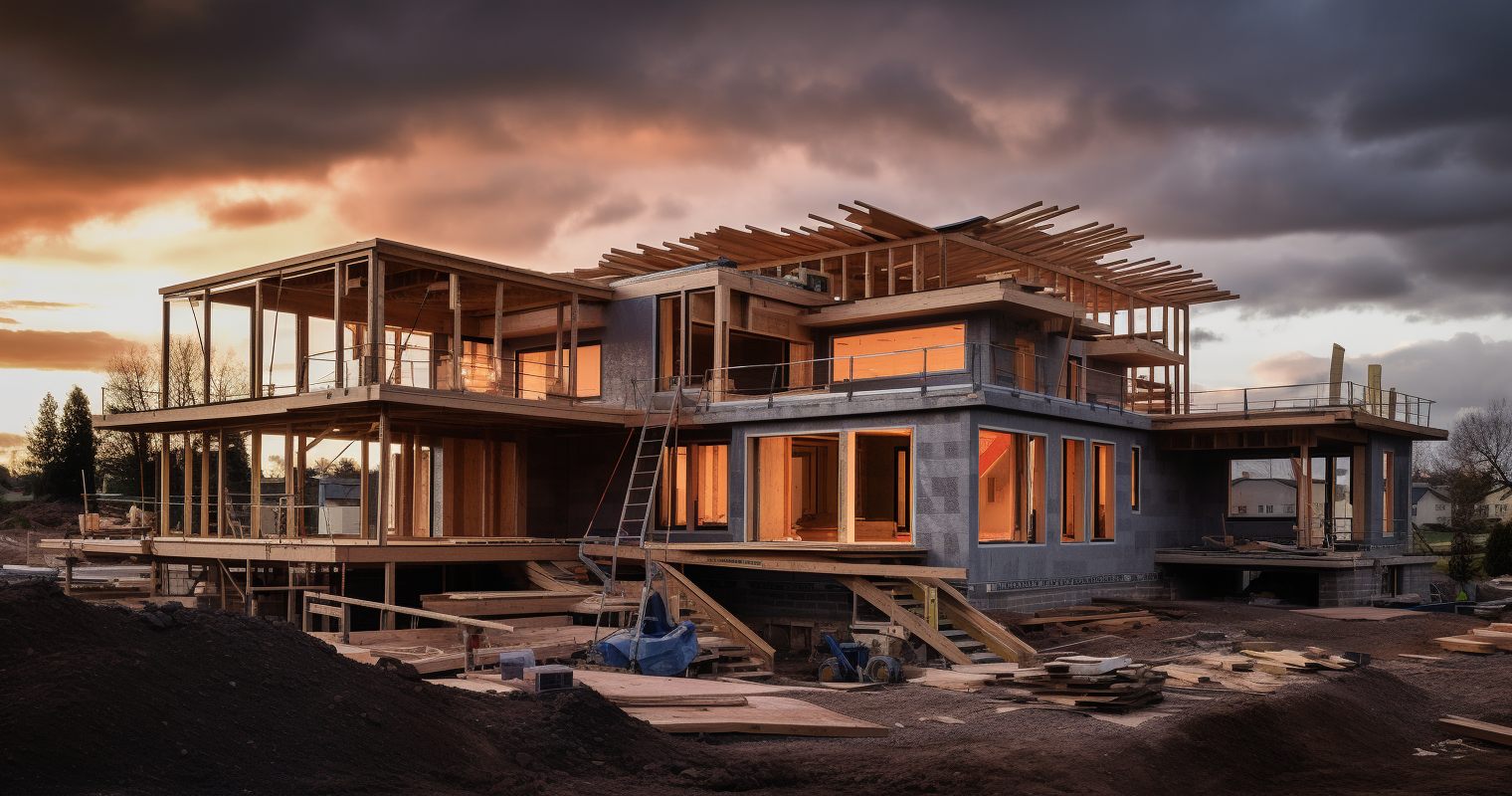
Almost every building or renovation project in Switzerland will require some form of official permission — even relatively modest structural changes usually need at minimum a notification procedure. Construction is tightly controlled through a layered system of federal, cantonal, and municipal regulations. Non-resident foreign buyers are subject to additional constraints under the Lex Koller legislation, and every application must be lodged in the official language of the relevant canton.
| Item | Details |
|---|---|
| Planning permission required? | Yes, in almost all cases; exemptions vary by canton |
| Ordinary procedure processing time (as of 2025) | Typically 2–4 months depending on project scale |
| Notification procedure processing time (as of 2025) | Approximately 30 days for minor/interior works |
| Permit fee (as of 2023) | Usually a few hundred CHF for standard projects; verify locally |
| Permit validity | 2–3 years in most cantons |
| Foreign ownership law | Lex Koller (ANRA) — restrictions apply to non-resident foreign buyers of residential property |
Do you need planning permission to build or renovate a property in Switzerland?
As a general principle, any activity that physically alters a site — even on a temporary basis — will require a permit of some kind. Switzerland interprets the concept of a “building activity” very broadly, and the scope of what falls within the permission regime is considerably wider than frameworks such as the permitted development rights system used in the UK, where many minor works can proceed without a formal application. In Switzerland, the starting position is that authorisation is needed, and this should always be verified before any work commences.
As a federal state made up of 26 cantons, Switzerland operates under 26 distinct sets of building legislation. Permits are generally sought from the local authority in whose territory the planned works are situated, and that authority then coordinates with cantonal bodies and any other relevant agencies involved in granting approval. This means the regulatory landscape in Geneva will diverge from that of Zurich, Bern, or Ticino, and cantonal and municipal guidance should be treated as the definitive reference for any given project.
A straightforward interior redecoration or a new kitchen installation does not generally require a permit. However, improvements to a building’s energy performance — fitting new insulation or installing a heat pump, for example — will typically require authorisation. Interior works ordinarily fall outside the permit requirement, unless the building in question is listed. A bathroom or kitchen renovation does not require a permit unless the layout is being reconfigured to incorporate an adjoining room into heated living space.
Activities that generally fall outside the permit requirement include: interior painting and basic cosmetic improvements; repainting an exterior façade, provided the colour and outward appearance remain unchanged; and window replacement, where neither the external appearance is altered nor specific technical requirements such as noise insulation come into play.
Many cantons treat garden outbuildings and small shelters below a specified footprint as exempt. However, the thresholds differ considerably between cantons. In Zurich, a permit is required once a structure exceeds 6 m² in floor area or 2.5 m in height, while Bern sets the threshold at 10 m².
Following amendment of the Spatial Planning Act, a building permit is no longer required for photovoltaic installations — unless the property lies in a core protection zone or is a listed building. The solar installation must be deemed “sufficiently integrated” into the building’s appearance to qualify for this exemption.
The three types of permit procedure
Planning and building legislation defines three categories of permit procedure, each calibrated to the nature and complexity of the project. The Ordinary Procedure (“Ordentliches Verfahren”) is the standard route for the majority of construction projects, encompassing new builds and substantial renovation works. The preliminary examination phase typically runs to two months, rising to four months for larger or more complex developments.
The Notification Procedure (“Anzeigeverfahren”) is a streamlined process reserved for smaller projects that have no significant impact on third parties. Processing takes approximately 30 days and is primarily applicable to minor modifications and internal renovation works.
How to apply — step by step
- Check your zoning and local rules. Construction regulation operates simultaneously at municipal, cantonal, and federal levels. The municipality’s urban planning office should be the first port of call. Requirements vary substantially — something permissible in Vaud may be prohibited in Ticino. The local zoning maps will clearly show what categories of construction are permitted on any given plot.
- Consult the building authority before applying. Depending on the municipality, engage with the building authority, district architect, or building permit office. Their specialists can advise whether a permit is required, highlight potential issues, and guide you in the right direction. When uncertain, submitting an application is always the safer approach.
- Prepare your documents. Complete the building application form and assemble all required supporting materials. At a minimum, you will need a current land register extract, an official cadastral plan, and project drawings at a scale of 1:100 covering floor plans and elevations. Submit the full package to the municipal administration.
- Public inquiry period. The application will be reviewed by the municipal building commission and published in the official gazette for a 30-day consultation period, during which any member of the public may lodge written objections. Once this period has elapsed without objection — or all objections have been resolved — the municipality will issue the building permit.
- Await the decision and any additional approvals. An officer from the urban planning department will conduct a thorough review of the application. Where necessary, it will be referred to relevant cantonal services — covering environmental protection, forestry, water management, roads, and so on — for their individual sign-off.
- Receive occupancy permit on completion. Once the municipality has inspected the finished works and confirmed that any required modifications have been made, it will issue the occupancy permit. This marks the conclusion of the formal process, and the project documentation is then archived by the authorities.
All applications must be submitted in the local official language — French, German, or Italian, according to the canton. Anyone who is not comfortable in the relevant language would be strongly advised to engage a bilingual architect or specialist. In most cantons, a building permit remains valid for two to three years from the date of issue.
With regard to fees, the municipal charge collected upon permit issuance generally does not exceed a few hundred Swiss francs for a standard-sized project (as of 2023). Additional charges may arise depending on the specifics of the project — for instance, surveyor fees where the cadastral plan is affected, or fire safety specialist fees where there is a particular hazard risk. Current fee schedules should always be confirmed with the local municipal building authority, as these vary by canton and municipality.
Carrying out works without a building permit constitutes a violation of the Planning and Building Act and can result in prosecution. If the unauthorised construction would have been permissible under the applicable planning rules, it may be possible to seek a compliance inquiry — a process that enables retrospective legalisation of the works. However, this route is both legally complex and costly, and avoiding the situation entirely is always preferable.
What are the rules around listed buildings, conservation areas, and heritage protection in Switzerland?
Switzerland operates a sophisticated multi-tiered heritage protection system spanning federal, cantonal, and municipal levels. While the country does not maintain a single national register of listed buildings as exists in the UK or Australia, the decentralised framework is no less thorough in its reach.
Cultural affairs — including heritage matters — fall principally within the remit of the 26 cantons. Since the cantons hold sovereign authority over culture, they bear primary responsibility for monument conservation and the protection of built heritage; federal involvement is limited to a subsidiary role. Both levels of government maintain specialist services covering monument conservation, archaeology, and the protection of built settlements.
The Inventory of Heritage Sites of National Importance (ISOS) catalogues approximately 6,000 heritage sites distributed across almost 3,000 Swiss municipalities. The ISOS encompasses towns, villages, and hamlets throughout Switzerland and serves as a reference document for planning decisions at national, cantonal, and municipal levels, as well as providing a basis for heritage protection assessments relating to entire neighbourhoods or individual structures.
The Swiss Federal Act on the Protection of Nature and Cultural Heritage sets out the framework for conserving and maintaining Switzerland’s natural landscapes, historic sites, and cultural monuments. It defines the responsibilities of federal and cantonal authorities for safeguarding these assets and covers financial support mechanisms, legal protections, and public awareness measures.
Monument protection is regulated differently across Switzerland’s cantons. In Bern, for example, the key provisions are contained in the Monument Preservation Act and the relevant building legislation. If a property carries listing at cantonal or communal level, the protected buildings register maintained by the relevant cantonal authority should be consulted before any purchase or planned works are progressed.
Internal alterations to a property generally do not require a building permit — unless the building is listed, in which case internal works also fall within the permit requirement. This distinction is critical for anyone considering a historic property: works that would be unremarkable on an unlisted building may require full consent and specialist heritage assessments on a protected one.
The key to successfully converting a listed property lies in engaging heritage conservation specialists from the outset. There is a legal obligation to produce a technical report on the proposed works. The building permit itself is then issued by the municipality or the regional governor.
An advantage of involving conservation authorities at an early stage is access to potential financial support. Works that preserve existing value are eligible for contributions, whereas value-enhancing measures do not qualify for grant funding. As a general illustration, on eligible costs of CHF 100,000, monument preservation authorities typically contribute between CHF 20,000 and CHF 40,000. These figures are indicative only; current grant levels should always be confirmed with the relevant cantonal authority.
At the federal level, the principal bodies are the Federal Office of Culture (OFC), responsible for cultural heritage; the Federal Office for the Environment (OFEV), covering the protection of nature and landscape; and the Federal Office for Civil Protection (OFPP), which administers the protection of cultural assets under the Hague Convention. The ISOS database can be searched via the Federal Office of Culture website at www.bak.admin.ch. Before acquiring any older property or land in the vicinity of historic settlements, always cross-reference both the federal ISOS inventory and the relevant cantonal monument protection register.
What permits and licences are required when building or renovating in Switzerland?
In addition to the main planning or building permit, a construction project in Switzerland may require a variety of supplementary approvals depending on the character, scale, and location of the works. Identifying these requirements in advance will help avoid costly interruptions once a project is underway.
Depending on where a project is located and how extensive it is, additional authorities may need to provide clearance before work can begin. These can include environmental agencies, water protection services, forestry authorities, and highway bodies — all coordinated through the municipal building office.
Most significant renovation works require formal approval, particularly those involving energy-related measures. When a heat pump with a geothermal probe is to be installed, for instance, the system must first be assessed against water protection and environmental requirements, and compliance with applicable cantonal building and energy legislation must be confirmed. The suitability of the ground for a geothermal probe also needs to be established.
Key additional permits and approvals typically required include:
- Building regulations compliance sign-off: Structural integrity, fire safety, and energy efficiency requirements must all be satisfied. Building authorities are responsible for applying fire protection regulations, building laws, environmental legislation, and energy standards to both new construction and conversions.
- Environmental and water protection permits: Mandatory for any works in proximity to watercourses, wetlands, or involving ground excavation, heating installations, or underground infrastructure.
- Utility connection consents: Connections to mains water, sewerage, electricity, and gas networks each require separate approvals from the relevant utility providers and local authority.
- Fire safety approval: Where a project presents a specific fire risk, fire specialist fees will apply, and fire safety sign-off forms a standard component of the completion process for most new builds and major renovations.
- Cantonal energy certificate: New builds and substantial renovations typically require an energy performance certificate under cantonal building energy regulations (Mustervorschriften der Kantone im Energiebereich, MuKEn). Requirements should be confirmed with the relevant cantonal authority.
- Occupancy permit: The occupancy permit is issued by the municipality once the completed works have been inspected and any required adjustments confirmed, marking the formal close of the process.
All fees associated with supplementary permits and inspections vary by canton and municipality. As of 2023, fees for individual specialist reports — covering fire safety, environmental assessment, or surveying — can range from several hundred to several thousand Swiss francs depending on the complexity of the work. Current requirements and applicable fees should always be confirmed with the local municipal building office before any project begins.
How do you find a reliable, trustworthy builder in Switzerland?
Switzerland’s construction sector ranks among the most regulated in Europe, underpinned by robust professional structures and well-established trade bodies. Even so, expats — particularly those overseeing projects remotely or unfamiliar with local custom — can encounter real difficulties when assessing prospective contractors.
The principal trade organisation for general contractors and the broader construction industry in Switzerland is the Schweizerischer Baumeisterverband (SBV) — the Swiss Contractors’ Association. Registered member firms can be searched through their website:
- Website: www.baumeister.ch
- Address: Schweizerischer Baumeisterverband, Weinbergstrasse 49, 8042 Zürich
- Phone: +41 44 258 81 11
- Email: [email protected]
For specialist tradespeople — electricians, plumbers, carpenters, and others — the relevant umbrella organisation is Gewerbeverband Schweiz (the Swiss Trade and Industry Association), accessible at www.sgv-usam.ch. Individual trades maintain their own professional bodies; suissetec, for example, covers HVAC and plumbing contractors (www.suissetec.ch).
When assessing any contractor, the following practical steps are recommended:
- Check trade registration: Confirm that the contractor is listed in the Swiss commercial register (Handelsregister), which is accessible at www.zefix.ch. This is a straightforward but essential due diligence measure.
- Request and follow up references: Ask for a minimum of three recent references for comparable projects and make direct contact with those clients. Testimonials posted on the contractor’s own website should not be the primary basis for a decision.
- Verify insurance: Confirm that the contractor holds adequate professional liability insurance (Haftpflichtversicherung) and, for larger projects, construction all-risks cover. Written confirmation of the policy should be obtained before works begin.
- Insist on a written contract: A properly drafted contract should define the scope of works, materials to be used, programme, payment schedule, and dispute resolution mechanism. For larger projects, the Swiss standard for construction contracts is SIA 118, produced by the Swiss Society of Engineers and Architects — ask whether your contractor adheres to this standard.
- Use staged payments: Avoid making substantial upfront payments. Agree a payment schedule tied to clearly defined milestones — for example, completion of foundations, completion of superstructure, completion of roof — and release each payment only following a satisfactory inspection of the relevant stage.
- Be wary of unusually low quotes: In Switzerland, quotes that appear significantly below market rates can indicate the use of unregistered labour, inferior materials, or absent insurance coverage. Obtain at least three competing quotes and treat any that are markedly cheaper with caution.
A particular risk for foreign property owners is contractors who take advantage of language barriers or a lack of familiarity with local procedures. All contracts and technical specifications should be reviewed by a qualified local professional — your architect, or a lawyer for larger projects — prior to signing. If you are managing a project from abroad, appointing a local project manager or Bauherrenbegleiter (client’s representative) to supervise works on your behalf is worth serious consideration.
How do you find a qualified local architect in Switzerland?
Where a project requires a full planning application, professional expertise — typically an architect — will be essential. To sign off on the project and submit the permit application, the architect must hold a licence and be registered with the REG. The REG (Register of Architects) is the national professional register for architects operating in Switzerland.
The primary professional and regulatory body for architects in Switzerland is the SIA — Schweizerischer Ingenieur- und Architektenverein (Swiss Society of Engineers and Architects). The SIA sets professional and ethical standards and provides a searchable directory of its members:
- Website: www.sia.ch
- Address: SIA, Selnaustrasse 16, 8001 Zürich
- Phone: +41 44 283 15 15
- Email: [email protected]
The national registration body for architects is the REG — Schweizerisches Register der Ingenieure, Architekten und Techniker (Swiss Register of Engineers, Architects and Technicians):
- Website: www.reg.ch
- Address: REG, Selnaustrasse 16, 8001 Zürich
- Phone: +41 44 283 15 08
- Email: [email protected]
Both the SIA member directory and the REG register can be searched online to locate a qualified, registered architect in the relevant canton. When choosing an architect as an expat, the following factors deserve particular attention:
- Language: Permit applications must be submitted in the official cantonal language — French, German, or Italian. A multilingual architect is a considerable asset. If you are based abroad, power of attorney can be granted to your architect to act on your behalf.
- Local knowledge: Planning requirements differ substantially between cantons and even between individual municipalities within the same canton. Select an architect with a demonstrable track record in the specific canton where your project will be located.
- Experience with international clients: Some architects regularly act for foreign clients and are well versed in the additional complexities this involves — including working under power of attorney, obtaining remote approval for decisions, and coordinating with overseas mortgage providers.
- Check qualifications: Ensure the architect holds a recognised Swiss diploma or an equivalent qualification accepted under the bilateral agreements applicable to EU/EFTA nationals. Architectural qualifications from outside Switzerland are not automatically recognised and may require assessment by the REG or the competent cantonal authority.
For projects involving listed or heritage-protected buildings, appointing an architect with specialist experience in monument conservation (Denkmalpflege) is advisable. Standard practice architects may lack the specialist technical skills or working relationships with conservation authorities that protected-building projects require.
What are the common pitfalls when buying land to build on in Switzerland?
Acquiring land for development in Switzerland presents particular risks that are distinct from those associated with purchasing an existing property. The interaction of federal, cantonal, and municipal planning rules makes comprehensive due diligence indispensable before any commitment is made. The most significant issues to investigate are outlined below.
Verify that planning permission can actually be granted
The regulatory position differs markedly between cantons — a project that would be approved in Vaud might be refused in Ticino. Local zoning maps define precisely what types of construction are permitted on any individual plot. Before contracts are exchanged, written confirmation should be obtained from the relevant municipal planning office that your intended use is authorised on the specific site. The fact that a plot is available for purchase should never be taken as evidence that it can be built upon.
Understand zoning classifications
The rules that govern what may be built depend on the canton, district, and municipality concerned, and on the specific zone in which a plot is classified — whether central, residential, industrial, or other. This is particularly significant for land lying outside the designated building zone: because development in such areas can affect the character of the landscape and the intended use of the land, even minor structures require permission. Switzerland applies strict zoning controls — agricultural land cannot simply be reclassified for residential development.
Check title, boundaries, and the land register
All privately held land is in principle recorded in the land register. A current extract from the land register (Grundbuchauszug) should be obtained before any purchase is completed. This will disclose existing encumbrances, easements, rights of way, mortgages, and any constraints on the title. The Swiss land register is maintained at cantonal level; access is available through cantonal land registry offices or the national portal www.cadastre.ch.
Environmental, flood-risk, and contamination checks
Switzerland has significant areas exposed to flood risk, landslide hazard, and ground contamination — particularly in the vicinity of former industrial sites. The Federal Office for the Environment (BAFU/OFEV) maintains a public contaminated sites register (Kataster der belasteten Standorte, KbS), which is accessible via cantonal authorities. Your architect or notary should be asked to conduct a formal hazard assessment as part of the pre-purchase due diligence process.
Confirm utility availability
In rural or mountain locations, access to mains water, sewerage, electricity, and broadband cannot be assumed. The availability and cost of utility connections should be verified with local service providers before any purchase is made. Connection costs in remote locations can be substantial and may significantly affect the feasibility of a project.
Use a qualified notary
In Switzerland, all property transactions must be completed before a notary (Notar), who authenticates the transaction and registers the change of ownership in the land register. Unlike some other jurisdictions where conveyancers or solicitors manage the full transaction process, the Swiss notary occupies a central but neutral role — representing neither buyer nor seller exclusively. Foreign buyers should consider instructing their own independent legal adviser to review all documentation before signing.
Risks specific to foreign buyers
Foreign ownership of residential real estate and, to some degree, land reserves is restricted by Lex Koller. A transaction that infringes these rules can be rendered void, with potential criminal consequences. Legal advice on Lex Koller status should always be obtained before any commitment to a land purchase is made.
What are the rules around foreign ownership and financing for construction projects in Switzerland?
The purchase of real estate in Switzerland by foreign nationals, entities domiciled abroad, or Swiss-domiciled companies under foreign control is governed by the Federal Act on the Acquisition of Immovable Property in Switzerland by Foreign Non-Residents (ANRA; widely known as Lex Koller). Such acquisitions generally require authorisation from the competent cantonal authority.
As of early 2026, Switzerland maintains a formal foreign acquisition restriction regime under Lex Koller that specifically constrains property purchases by foreigners residing abroad and certain foreign nationals living in Switzerland without a C settlement permit. The legislation regulates eligibility to purchase residential property on the basis of residency status rather than nationality alone.
EU/EFTA nationals residing in Switzerland and holders of a permanent residence permit (C permit) may purchase residential properties without requiring special authorisation, on the same footing as Swiss citizens. UK nationals resident in Switzerland enjoy equivalent rights to EU/EFTA nationals by virtue of the Agreement on Acquired Citizens’ Rights.
Non-residents may freely acquire commercial property in Switzerland without restriction — unlike residential property, which is subject to strict controls. EU/EFTA nationals and permanent residents face fewer constraints than non-EU/EFTA nationals and non-residents when purchasing property in Switzerland.
For those classified as a “person abroad,” the available options are considerably narrowed, and cantonal authorisation will typically be required for any purchase, with realistic opportunities generally confined to designated holiday home zones in tourist areas. The category of property is also relevant: purchasing an apartment in a resort municipality is often achievable for non-residents, while acquiring a detached house or building land typically faces more stringent scrutiny or outright restrictions.
Not every property acquisition by a foreign national falls within the authorisation requirement. Where a person purchases a property at their actual and legal place of residence in Switzerland in order to live there as their main home, no authorisation is needed. The same applies where a foreign national acquires land with the intention of constructing their primary residence on it, provided that building work commences within one year of acquisition.
Lex Koller limits the total plot area that may be sold to foreign nationals to 1,000 m², and the net habitable floor area to 200 m² (which in practice may be extended to 250 m²). These limits apply specifically to authorised holiday home purchases by non-residents; current thresholds should always be verified with the cantonal authorisation authority.
Once lawful ownership of Swiss property has been established, foreign and domestic owners alike enjoy identical rights to use, let, renovate, and sell their property, with equal protection under Swiss civil law.
Financing construction projects as a foreign buyer
The use of residential real estate financing from foreign lenders will need careful analysis in the context of Lex Koller. However, standard financing arrangements in the Swiss residential mortgage market — a typical security package, a loan-to-value ratio below 80%, and so on — should not ordinarily give rise to concerns under the legislation. Swiss banks will generally require evidence of legal residency and income documentation. Construction loans (Baukredite) are available from Swiss lenders but are typically structured differently from standard mortgages — funds are released in tranches as the build progresses. A Swiss mortgage broker or your selected bank should be consulted for current lending terms and conditions.
For official guidance on Lex Koller, contact the Federal Office of Justice (FOJ/BJ) at www.bj.admin.ch, or the cantonal authorisation authority in the canton in which the property is situated.
What official sources should you consult when planning to build or renovate in Switzerland?
Switzerland’s federal structure means there is no single national planning portal covering all cantons. Nevertheless, the following official sources represent essential starting points for any building or renovation project:
| Authority / Body | Role | Website |
|---|---|---|
| ch.ch (official Swiss government portal) | General guidance on planning applications and building permits | ch.ch |
| Federal Office of Culture (BAK/OFC) | ISOS heritage register; cultural heritage protection | www.bak.admin.ch |
| Federal Office for the Environment (BAFU/OFEV) | Environmental permits; contaminated land register; nature protection | www.bafu.admin.ch |
| Federal Office of Justice (BJ/OFJ) | Lex Koller guidance; foreign land acquisition | www.bj.admin.ch |
| Swiss Land Register / Cadastre (swisstopo) | Cadastral maps; land register information | www.cadastre.ch |
| Swiss Register of Architects (REG) | Architect registration and qualification verification | www.reg.ch |
| SIA (Swiss Society of Engineers and Architects) | Professional standards; architect directory; SIA 118 contract standard | www.sia.ch |
| Swiss Contractors’ Association (SBV) | Builder trade body; member directory | www.baumeister.ch |
| Swiss Commercial Register (Zefix) | Verify contractor registration | www.zefix.ch |
| Your cantonal building authority | Building permits; zoning; local rules — first point of contact for all project queries | Search via your canton’s official website |
Regulations, fees, and procedures in Switzerland are subject to change at both federal and cantonal level. Official sources should always be checked for the most up-to-date information before submitting any application, entering into contracts, or committing to a purchase. What was accurate at the time this article was written may no longer reflect the current position — official sources should be the definitive point of reference.
Frequently asked questions: building and renovating in Switzerland
How much does it typically cost to build a house in Switzerland?
Switzerland consistently records some of the highest construction costs anywhere in the world. As a broad indication, new build costs typically fall between CHF 3,000 and CHF 6,000 or more per square metre, depending on specification, location, and materials chosen — with city locations and alpine settings at the upper end of the range. This figure does not include land costs, planning fees, architect fees, or utility connection charges. Detailed, itemised quotes from qualified contractors should always be obtained, and current market rates verified with your architect, before finalising any project budget.
How long does the whole build or renovation process take in Switzerland?
The Ordinary Procedure — the standard route for most construction projects including new builds and significant renovation works — has a preliminary examination phase that typically runs to two months, extending to four months for larger-scale developments. Time must also be allowed for document preparation, resolution of any objections, completion of specialist technical reviews, and the construction works themselves. For a new house build, a realistic total timeline from first planning enquiry to receipt of the occupancy permit is one to two years, and considerably longer for complex or heritage-sensitive projects.
Do I need to speak German, French, or Italian to manage a building project in Switzerland?
Applications must be submitted in the relevant local official language — French, German, or Italian, depending on the canton. You do not personally need to be fluent in that language, but all formal documentation and correspondence with the authorities must be prepared in it. Anyone who is not confident in the applicable cantonal language is strongly advised to engage a bilingual architect or a local project manager capable of handling all communications with the authorities on their behalf.
Are UK or US building qualifications or standards recognised in Switzerland?
Swiss building regulations are established at cantonal level and are entirely separate from the construction standards of other countries. Structural calculations, building materials, energy efficiency requirements, and fire safety standards must all comply with Swiss and cantonal rules — certificates of compliance issued in another country carry no automatic recognition in Switzerland. Equally, architectural qualifications from outside the EU/EFTA area are not automatically accepted; they must be assessed by the REG or the relevant cantonal authority. Whether a particular professional’s qualifications are recognised in the specific canton where you plan to build should always be confirmed in advance.
What happens if I breach planning rules or build without permission in Switzerland?
Carrying out works without a building permit is a violation of the Planning and Building Act and can lead to prosecution. Unauthorised construction may cause issues with neighbours, but it also poses potential risks to the environment, future occupants, and the architectural character of the local area. The competent authority is entitled to take enforcement action, which can include requiring the demolition or reinstatement of the structure at the owner’s expense, the imposition of substantial fines, and in serious cases, criminal proceedings. Retrospective legalisation is possible in some circumstances but is a complex process with no guaranteed outcome.
What should I do if I have a dispute with a contractor in Switzerland?
Should a dispute arise with a contractor, the first step is to seek resolution through written communication, keeping a thorough record of all exchanges. Swiss construction contracts drawn up under the SIA 118 standard incorporate dispute resolution provisions. If informal resolution is unsuccessful, mediation may be sought through the SBV, or a formal claim may be brought before the cantonal courts. Engaging a Swiss construction lawyer is advisable in cases involving significant sums. Maintaining comprehensive records throughout the project — including all contracts, invoices, correspondence, and photographic evidence of each construction stage — is essential should any formal dispute arise.
Can I get a mortgage in Switzerland as a foreign national?
Swiss banks do extend mortgage lending to foreign nationals, but the eligibility criteria depend on residency status and the type of property being purchased. Standard financing arrangements in the Swiss residential mortgage market — a conventional security package with a loan-to-value ratio below 80% — should not ordinarily raise issues under Lex Koller. Lenders will typically require documentation of income and legal residency status, along with a detailed property valuation. Non-residents face a more restricted range of options and stricter underwriting criteria. An independent Swiss mortgage broker and a Lex Koller specialist should be consulted before agreeing to any purchase terms.
Is it possible to buy agricultural land and convert it for residential use in Switzerland?
This is an extremely difficult proposition in Switzerland. The federal Spatial Planning Act (Raumplanungsgesetz, RPG) applies rigorous controls to the conversion of agricultural land into designated building zones, and rezonings of this kind are uncommon and require both federal and cantonal approval. Outside the building zone, even small structures are not possible without authorisation, because development can materially affect the landscape’s character and the intended land use. Agricultural land should never be acquired on the assumption that a residential rezoning will follow — written confirmation from the cantonal planning authority that the envisaged use is permissible must be obtained before any purchase is committed to.
Do expats face any extra complications when renovating a property they already own in Switzerland?
Once lawful ownership of a Swiss property is established, foreign and domestic owners share the same rights to use, let, renovate, and sell it, on equal terms under Swiss civil law. In practice, the principal complications that expats encounter when renovating an existing property relate to language barriers in navigating the planning process, co-ordinating contractors from abroad, and ensuring that the work satisfies Swiss building and energy standards rather than those of another country. Appointing a local architect and, where appropriate, a local project manager substantially reduces these practical risks.