
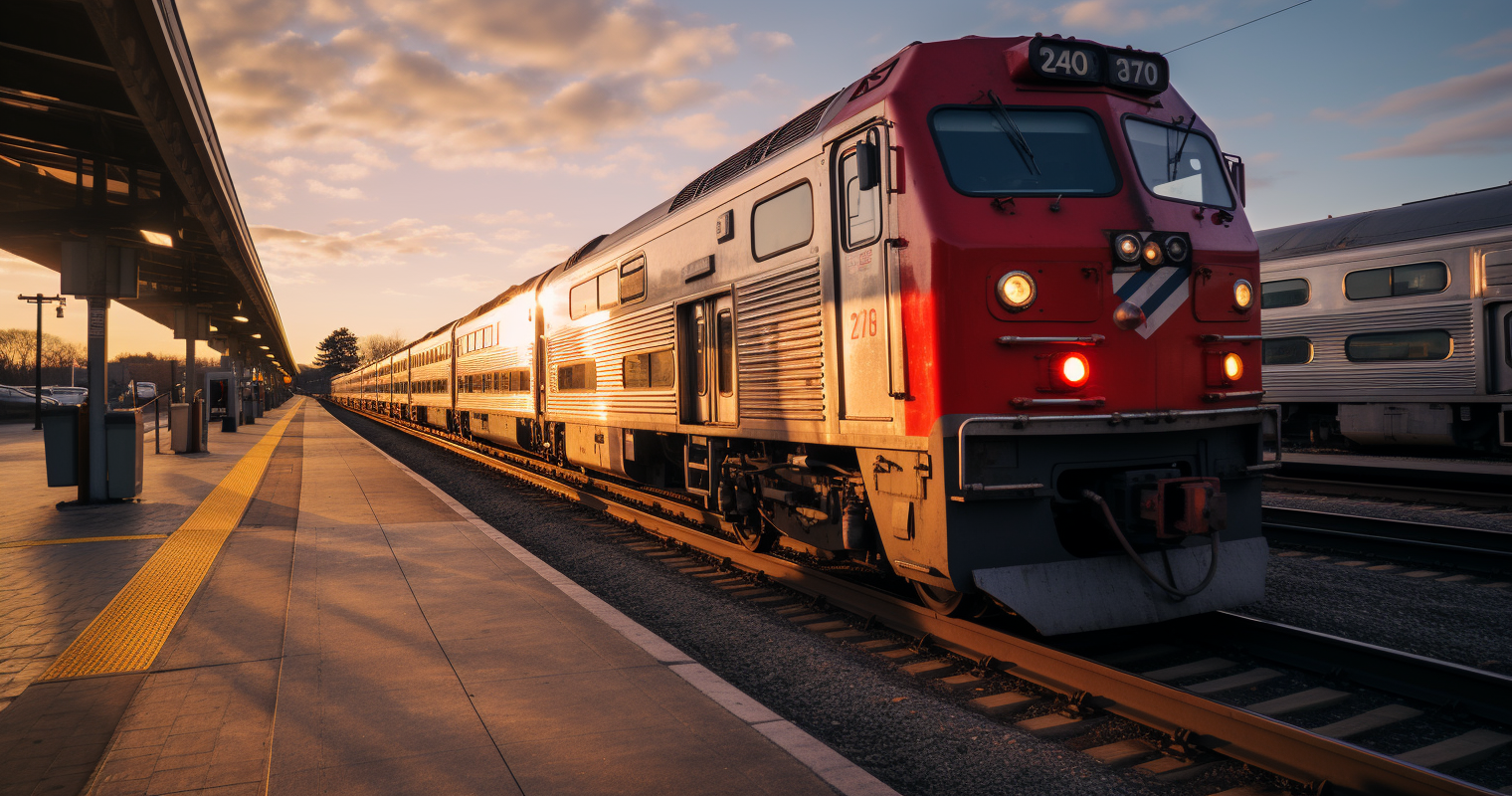
Brunei operates no passenger rail service of any description. The sultanate has no intercity trains, no metro system, no light rail, and no urban commuter lines. All day-to-day movement depends on road transport, taxis, ride-hailing services, and water taxis. Expats relocating to Brunei should build their commuting arrangements entirely around private vehicles or buses rather than any form of rail.
| Item | Details |
|---|---|
| Passenger rail network | None — no operational passenger trains as of 2025 |
| Metro / light rail | None operational; proposals discussed but not developed |
| Main public transport | Franchise buses (approx. BND 1 per ride, as of 2025) |
| Ride-hailing app | Dart app (local equivalent of Uber/Grab) |
| Future rail project | Trans-Borneo Railway — in early feasibility stage as of 2025 |
| Key transport authority | Ministry of Transport and Infocommunications (MTIC) — mtic.gov.bn |
What is the overall standard of rail travel in Brunei?
Any discussion of rail travel in Brunei must begin with a clear statement: the sultanate does not have a single operational rail line. This is the most essential fact for anyone preparing to move there. In contrast to countries like Germany, Japan, or neighbouring Malaysia — where passenger rail forms the spine of both local commuting and long-distance travel — Brunei offers no train services whatsoever. There is no way to commute by rail, travel between districts by train, or board any form of intercity service.
Despite its considerable wealth and well-developed modern infrastructure, Brunei remains among the very few nations in Southeast Asia that has never established a passenger railway. For an affluent, orderly microstate at the heart of the region, this absence can catch newcomers off guard — so what explains why a country with vast oil revenues and a reputation for modern amenities has never invested in rail?
The answer lies primarily in the combination of a small, dispersed population and an overwhelming reliance on road travel. Brunei records approximately 721 cars per 1,000 residents — the highest car ownership rate in Southeast Asia. This entrenched car culture, set against a modest total population, has meant there has been little commercial or political pressure to develop a rail system.
Rail infrastructure has existed in Brunei before, though never in a public passenger capacity. The country’s earliest railway connected the Brooketon Colliery to Muara Port — roughly 2.5 km — constructed in the 1880s and upgraded with steel rails in the 1890s for steam locomotives. The mine and its railway were abandoned in 1924. Separately, in the early 1930s, Royal Dutch Shell built a 600 mm gauge industrial railway spanning approximately 19 km between its Seria refinery and a water pumping station at Badas, used for transporting water and construction materials. Both lines were narrow industrial operations, never open to the public, and both have long since been decommissioned.
In practical terms, the standard of rail travel in Brunei today is simply non-existent. Expats arriving from countries with well-established rail networks — Japan’s Shinkansen, India’s vast Indian Railways system, or Europe’s cross-border rail connections — will need to entirely rethink how they approach daily transport planning.
What classes of rail travel are available in Brunei, and what are the differences between them?
With no trains of any kind operating in Brunei — no passenger railway, no metro, and no light rail — the question of travel classes has no meaningful answer. There are no ticket categories, no seating tiers, and no distinctions between standard and premium travel. Concepts such as first class, business class, or economy class rail travel are entirely inapplicable in the Brunei context.
To illustrate what is absent: in the United Kingdom or France, rail passengers routinely choose between standard and first-class carriages, with premium seating offering extra space, quieter environments, and sometimes complimentary refreshments. In Japan, the Shinkansen features both ordinary coaches and the Green Car for those seeking a more spacious journey. None of these frameworks have any relevance to Brunei, simply because no such services exist.
Should Brunei’s transport landscape eventually shift — particularly if the proposed Trans-Borneo Railway or any domestic light rail initiative advances beyond its current early stages — class structures may at some point be introduced. For now, however, anyone travelling within or departing from Brunei must work within a transport environment where service quality is determined by the mode of travel itself — a private taxi versus a shared bus, for instance — rather than by any rail carriage class designation.
Where can you find rail timetables and ticket prices in Brunei?
Rail timetables and ticket prices do not exist in Brunei, as no public rail service is currently in operation. There is no national rail operator, no train ticketing platform, and no government rail portal — because none is required.
For broader transport information, the responsible official body is the Ministry of Transport and Infocommunications (MTIC), which oversees maritime and aviation sectors alongside the planning and regulation of all land-based transportation. The MTIC can be found at mtic.gov.bn. Its operational arm for land transport matters is the Land Transport Department (JPD), the government agency charged with ensuring that transportation systems and services across Brunei and the surrounding region are available, effective, safe, and satisfactory for the movement of both people and goods. Bus route information maintained by the JPD is accessible at jpd.gov.bn.
For bus timetables and routes — currently the main form of scheduled public transport in the country — the Moovit app can be downloaded for route and timing information. The TransportBN mobile application, a Brunei government service, provides users with transport information covering all modes of travel within Brunei Darussalam. The official Brunei Tourism website at bruneitourism.com also offers a helpful general guide to getting around the country.
In the event that a rail service is established in the future, timetables and fares would most likely be published through the MTIC and JPD portals. Expats intending to remain in Brunei for the long term would be well advised to monitor those channels for any official developments.
How do you buy rail tickets in Brunei, and can you book in advance?
Because Brunei has no intercity or urban rail services, there are no train tickets to purchase, no ticket offices to locate, no rail booking apps, and no advance reservation systems. Online rail booking platforms familiar to travellers in Europe or Asia — such as SNCF in France, Deutsche Bahn in Germany, or KTM in Malaysia — have no counterpart in Brunei’s transport landscape.
For everyday public transport, tickets are purchased directly on the bus. Brunei operates a single form of public bus service — the Franchise Bus, formerly known as the Purple Bus — which offers the most affordable way to travel around town, with a typical fare of BND 1 per ride (as of 2025). Services run from 6:00 to 18:00, covering fixed routes at fixed fares, and payment is cash only.
For journeys that fall outside bus coverage, the Dart ride-hailing app provides a practical alternative. Dart functions as Brunei’s local equivalent of Uber or Grab — neither of which currently operates in the country — and can be competitively priced compared with metered taxis, with the added advantage of booking via a smartphone. While most transport in Brunei operates on a cash basis, the Dart app accepts both cash and local payment cards. It is available for download on the Apple App Store and Google Play Store.
For any future rail developments, the MTIC website at mtic.gov.bn and the JPD portal at jpd.gov.bn are the best places to watch for official announcements regarding ticketing systems.
What types of rail tickets are available in Brunei, and are there discount schemes?
Given that Brunei operates no passenger rail network, there are no rail ticket types to speak of — no single or return tickets, no weekly or monthly rail passes, no railcards, and no concession fares for elderly passengers, students, or families. Discount frameworks linked to rail travel, such as those offered in Australia through Opal card concessions, in the UK through railcard schemes, or in Singapore through adult and concession EZ-Link cards for the MRT, have no equivalent in Brunei.
For bus travel, fares are fixed at approximately BND 1 per ride (as of 2025) — a flat, accessible rate that applies regardless of the distance covered within any given route. There is currently no reported multi-trip or discount card scheme for bus users; the JPD website and MTIC website should be consulted for any updates to concessionary travel arrangements, as these can change over time.
For taxi journeys, metered fares apply, with a base rate of BND 3.50 for the first minute or kilometre, followed by BND 0.20 for every subsequent 250 m or 15 seconds; additional surcharges include BND 3 for trips to and from the airport and BND 8 for travel between districts (as of 2025). No formal discount schemes for taxi travel have been reported.
Should a rail network be developed in the future, concessionary pricing structures would likely be communicated through the MTIC. Always verify current fares and any applicable concession eligibility through official government sources before making transport decisions.
How accessible is the rail network in Brunei for disabled passengers?
Since Brunei has no passenger rail network, there are no rail accessibility features to describe — no platform ramps for wheelchair users, no onboard audio announcements, no assistance booking services, and no equivalent of accessibility programmes such as the UK’s Passenger Assist scheme or Germany’s DB Assistance service.
Accessibility provisions across Brunei’s existing public transport and taxi network are limited for travellers with disabilities or mobility challenges. This is a significant practical concern for expats with such needs. The road-centred nature of the country’s transport system means that personal vehicle use or private hire through the Dart app currently represents the most adaptable option for those requiring tailored transport arrangements.
Brunei’s government has recognised the importance of improving land transport through its Land Transport Master Plan, a long-term framework for sustainable and inclusive transport development extending to 2035. The executive summary of this plan is available via the MTIC website. However, detailed accessibility standards for public transport — including any future rail infrastructure — remain to be formally articulated and put into practice as part of these wider reform efforts.
Expats with disabilities considering a move to Brunei are strongly encouraged to contact the MTIC directly for the most up-to-date guidance on accessible transport options, via mtic.gov.bn. In the meantime, Brunei’s relatively compact geography and the availability of private hire through the Dart app may help address some of the practical gaps created by the absence of formal rail infrastructure.
Are there metro or urban rail systems in Brunei’s cities?
Brunei has no metro, tram, or intra-country flight services. Bandar Seri Begawan — the capital and primary urban centre — has no underground rail, no light rail transit, and no urban commuter rail of any description. Unlike regional capitals such as Kuala Lumpur, which operates the MRT, LRT, and KTM Komuter, or Singapore with its MRT, or Bangkok with its BTS Skytrain and MRT, Bandar Seri Begawan has no urban rail system whatsoever.
Since June 2021, a proposed urban rail concept referred to as the Brunei Metro has been under consideration for Bandar Seri Begawan. Official statements have been made on the subject at various points over the years, but as of 2025 nothing has advanced to a concrete development stage. The case for such a system faces structural challenges — Brunei is a microstate with a population of just over 400,000, meaning that without substantial government subsidy, an urban railway would be difficult to justify on commercial grounds alone.
The most plausible near-term rail development would likely take the form of a light rail line within the capital, aimed at easing growing road congestion. Beyond the capital, a short regional corridor connecting Bandar Seri Begawan with the oil and gas towns of Seria and Kuala Belait is another scenario that has been discussed, though it remains speculative.
In the absence of urban rail, Brunei’s public transport network consists primarily of buses, taxis, and water taxis, each offering affordable ways to navigate the country. In Kampong Ayer — Brunei’s celebrated water village — water taxis are the principal mode of transport, with traditional wooden boats ferrying passengers across the Brunei River to different parts of the settlement. These vessels represent one of the most distinctive and culturally significant aspects of daily life in the capital, functioning as both a practical and characterful alternative to road travel.
There is no integrated travel card or urban rail app, since no urban rail system exists. For bus information, the government’s JPD bus route portal provides official maps and routes, while the Moovit app can assist with real-time navigation.
What should expats know about using the rail network day-to-day in Brunei?
The single most important piece of day-to-day advice for expats is simple: structure your life in Brunei without any expectation of trains. There are no rail timetables to learn, no monthly travel passes to purchase, and no stations to find your way around. Daily life in Brunei is organised around cars, buses, taxis, and — in the capital — water taxis.
For expats who are comfortable driving, Brunei’s road network is well maintained and its driving regulations are relatively straightforward. Those holding a valid international driving licence or a current licence issued by their home country may drive in Brunei for up to three months. Beyond that period, obtaining a Brunei driving licence through the JPD is the most practical course of action for residents. Given how thoroughly the country depends on private vehicles, securing a local licence sooner rather than later is strongly advisable.
For those who prefer public transport, the bus system is the primary option. Routes cover major corridors across the Brunei-Muara, Tutong, and Belait districts, with the central terminal located in Bandar Seri Begawan. All buses depart from the terminal on Jalan Cator and are generally comfortable and well-kept, but services cease by 6:00 pm. This early cut-off is an important practical detail — evening travel after that time will require a taxi or the Dart app.
Signage throughout Brunei is generally provided in Malay, the official national language, alongside some English, reflecting the country’s bilingual administrative environment. The bus terminal and public spaces in Bandar Seri Begawan are reasonably easy to navigate. That said, bus route information can occasionally be hard to decipher without local knowledge, so downloading the Moovit app or the government’s TransportBN app before arrival is recommended. It is worth noting that user reviews have flagged intermittent technical problems with the TransportBN app, so testing it ahead of any time-sensitive journey is sensible.
Water taxi fares typically fall between BND 2 and BND 5, though these can be subject to negotiation. Unlike a scheduled train service, water taxis do not operate to a fixed printed timetable, and negotiating fares — especially as a newcomer — is easier with local advice on hand. Payment is in cash only; card payment is not accepted on water taxis.
The limited public transport offering has reinforced Brunei’s already high levels of car dependency, a trend acknowledged in the Ministry of Communication’s Land Transport Master Plan. For most expats, access to a private vehicle is, in practical terms, close to indispensable — particularly for those living outside central Bandar Seri Begawan or needing to move between districts regularly.
For the most current transport information, refer to the official government resources: the Ministry of Transport and Infocommunications (MTIC), the Land Transport Department (JPD), and the official Brunei Tourism getting-around guide.
Frequently Asked Questions
Does Brunei have any trains?
No. Brunei has no operational passenger trains of any kind — no national rail network, no intercity trains, no metro, no light rail, and no tram system. The entire public transport system is road-based (buses and taxis) and water-based (water taxis). This is not expected to change in the near future.
Is there a metro or underground rail in Bandar Seri Begawan?
No. Bandar Seri Begawan has no metro, underground, light rail, or commuter rail system. A concept called the “Brunei Metro” has been discussed over the years, but as of 2025 nothing has been formally developed or approved. Day-to-day travel in the capital relies on buses, taxis, the Dart ride-hailing app, and water taxis.
What is the Trans-Borneo Railway, and will it affect Brunei?
The Trans-Borneo Railway is a proposed high-speed rail network that would link Brunei with the Malaysian states of Sabah and Sarawak, and with Kalimantan in Indonesia. It was announced by a Brunei-based private company in 2024 and is estimated to cost around US$70 billion. As of March 2025, Brunei’s government was still studying its possible involvement, and a feasibility study was underway. This project is many years from becoming reality, if it proceeds at all.
How do expats get around Brunei without trains?
The vast majority of residents in Brunei use private cars as their primary mode of transport. Buses operate on fixed routes across the main districts from around 6:00 am to 6:00–8:00 pm, with a flat fare of approximately BND 1 per ride (as of 2025). The Dart app offers ride-hailing across the country. Water taxis are available in Bandar Seri Begawan for river crossings, particularly to Kampong Ayer.
Is driving in Brunei practical for expats?
Yes — driving is effectively essential for most expats. Brunei has well-maintained roads and one of the highest car ownership rates in Southeast Asia. Holders of a valid international driving licence or a home-country licence can drive for up to three months; after that, a Brunei driving licence issued by the Land Transport Department (JPD) is required. Check the JPD website at jpd.gov.bn for current licence requirements.
Are there bus passes or travel cards for public transport in Brunei?
There are no reported multi-journey bus passes or travel cards in Brunei as of 2025. Bus fares are paid in cash at a flat rate of approximately BND 1 per ride. There is no equivalent of an Oyster card, Octopus card, or similar integrated travel card system. Check the JPD portal at jpd.gov.bn for any updates to fare or payment arrangements.
Where can I find official transport information for Brunei?
The primary official sources are the Ministry of Transport and Infocommunications (MTIC) at mtic.gov.bn and the Land Transport Department (JPD) at jpd.gov.bn. The official Brunei Tourism website at bruneitourism.com also provides a useful practical overview. For bus navigation, the Moovit app and the government’s TransportBN app are available for download.
Is public transport in Brunei accessible for passengers with disabilities?
Accessibility provision across Brunei’s public transport is limited. There is no rail network, and buses and taxis have limited formal accessibility features. Private hire through the Dart app offers more flexibility. Expats with specific mobility or accessibility needs are advised to contact the MTIC directly via mtic.gov.bn for the latest guidance, and to factor transport accessibility into their broader housing and location planning when moving to Brunei.