
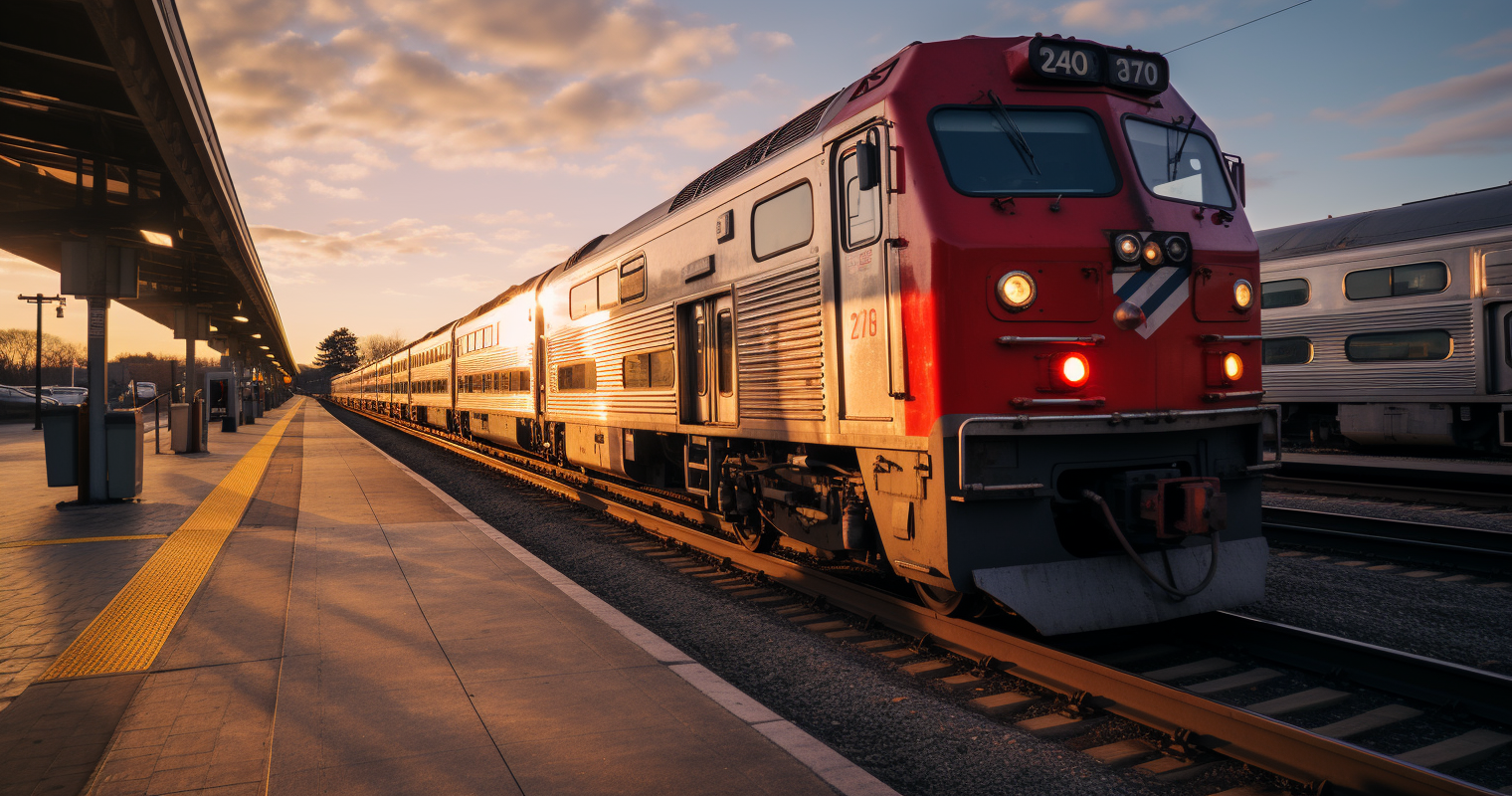
Portugal’s national rail network, run by CP – Comboios de Portugal, links the country’s principal cities and numerous smaller communities at reasonable prices. Although its reach and speed fall short of networks found in Germany or Japan, it provides a dependable and budget-friendly way to get around — whether for daily commuting or longer journeys — with metro systems in Lisbon and Porto adding important coverage on top of intercity services.
| Item | Details |
|---|---|
| National rail operator | CP – Comboios de Portugal (cp.pt) |
| Lisbon–Porto (Alfa Pendular), as of 2026 | From approx. €35.70 tourist class one-way |
| Lisbon–Porto (Intercidades), as of 2025 | From approx. €27.40 second class one-way |
| Senior discount (65+) | 50% off most CP intercity fares; ID required |
| Under-25 discount | 25% off CP fares |
| Lisbon Navegante card (occasional) | €0.50 card fee; Zapping top-up from €3 |
| Porto Andante monthly pass (3 zones), as of 2024 | €30 (Andante 3Z) |
What is the overall standard of rail travel in Portugal?
Portugal has seen a surge in popularity in recent years, and its train network is ready to carry both new arrivals and long-term residents across the country. The national operator is CP – Comboios de Portugal, which runs everything from fast intercity trains to slower regional services reaching smaller communities. The network spans the main urban centres along the western coast — Lisbon, Porto, Coimbra, Faro — as well as various inland destinations.
Portugal’s rail service is functional and reliable enough for everyday needs, though journey times tend to be longer than those found on the high-speed networks of France, Germany, or Japan. Travellers arriving from countries with cutting-edge rail infrastructure will notice the difference in speed and rolling stock, but for getting around within Portugal, the network serves its purpose well. Rail lines extend across the country and link all major regions, though not every settlement has a station.
If your destination lacks a rail connection, a bus or hired car may be the better option. It’s also worth confirming where the station is located relative to the town centre before you book — in some places, the station sits 5 or 10 kilometres away, making a taxi or other onward transport necessary. For those living in or near Lisbon and Porto, urban rail and metro services greatly extend the network’s overall reach. For travel between major cities over longer distances, the Alfa Pendular and Intercidades trains offer a solid combination of reliability and comfort.
The high-speed Alfa Pendular covers the Porto–Lisbon route in under three hours, with a comprehensive timetable and the best onboard facilities of any Portuguese service. This places it broadly on a par with intercity trains in countries such as Spain or the Netherlands, though it remains well below the speeds achieved by Germany’s ICE or Japan’s Shinkansen. For most expats, the network comfortably supports a combination of regular urban commuting and the occasional longer trip.
What classes of rail travel are available in Portugal, and what are the differences between them?
Portugal operates several train categories — Alfa Pendular, Intercidades, Regional (R), InterRegional (IR), and Urban (U) — of which only the Alfa Pendular and Intercidades trains offer passengers a choice between first and second class. Regional, InterRegional, and Urban services all operate as a single undifferentiated class.
On CP’s Alfa Pendular and Intercidades trains, the two travel classes are known as Conforto (First Class) and Turística (Standard Class), each with different levels of comfort and service. Aboard the Alfa Pendular — Portugal’s flagship service — a first-class ticket typically includes a complimentary drink, a newspaper or magazine, and headphones. Free Wi-Fi is available throughout all Alfa Pendular trains, while internet access is only provided on certain Intercidades services at no charge.
First-class travel on Portuguese trains can feel somewhat modest compared to equivalents in countries such as the UK or Spain, where a meal and refreshments are frequently included — on some services, it may amount to little more than wider seats and extra legroom. That said, the price gap between first and second class is often under five euros, making the upgrade a minor expense for a noticeable improvement in comfort.
First-class fares run roughly 50% above those for second class, yet Turística seats are comfortable enough for most journeys. For regular urban commuters, standard class will suit perfectly well. The class distinction matters most on longer routes — such as Lisbon to Porto — where the Conforto upgrade represents a more meaningful improvement across a journey of two and a half to three hours.
Where can you find rail timetables and ticket prices in Portugal?
The definitive and most reliable source for timetables and fare information is the official CP website at cp.pt. This platform lists all domestic services, up-to-date pricing, and live schedule details. Tickets can be purchased directly through cp.pt using a credit or debit card or via PayPal. Fares are revised from time to time — with effect from 1 January 2025, new pricing came into force across all CP services, reflecting an average rise of 2.02% — so it is always advisable to check the official site for current figures rather than trusting those cited in third-party publications.
Some travellers find that foreign credit or debit cards are occasionally declined on the CP website; if this happens, paying through PayPal (no PayPal account required) is a practical workaround. For those who prefer a more streamlined booking experience, third-party sites such as Omio and Trainline also list CP services, though a modest booking fee applies.
For urban transport timetables and fares in Lisbon, the authoritative sources are Metro de Lisboa and Carris. In Porto, the relevant portals are Metro do Porto and STCP. As with intercity fares, urban transport pricing is subject to periodic adjustment — always confirm current figures through these official channels before travelling.
How do you buy rail tickets in Portugal, and can you book in advance?
CP tickets can be purchased through several different channels to suit a range of situations and preferences. The most widely used methods are set out below.
- Online via cp.pt: The CP website is the official booking platform for Comboios de Portugal services, and purchasing directly through it is generally the best approach for booking Alfa Pendular and Intercidades journeys in advance.
- Via third-party platforms: Tickets booked through services such as Omio are typically sent electronically to your phone by email or through the platform’s app — you simply show the conductor the ticket on your screen. If e-tickets are unavailable, you can print your ticket at any station using the booking reference code.
- At station ticket machines: Self-service ticket machines at stations are a quick in-person option, all offering English as a language choice. However, these machines do not always accept cards issued outside Portugal.
- At station ticket offices: Staff at ticket counters across Portugal are available to help with more complex bookings, discount applications, and group travel arrangements.
- On board (regional and urban trains only): Tickets for Regional (R) and Urban (U) services are generally not sold in advance — passengers buy them on the day at the station, or directly on the train where no ticket office exists.
Booking ahead can unlock cheaper “Promo” fares, whereas “Normal” fares provide greater flexibility. Discounts of up to 56% are on offer when purchasing at least five days ahead, and up to 65% when buying at least eight days in advance — though these savings are not available on every departure. On high-speed Alfa Pendular and long-distance Intercidades trains, seat reservations are mandatory and typically attract an additional charge, even for holders of a rail pass.
Mandatory reservations for Alfa Pendular and Intercidades trains cost €5 and must be purchased in Portugal; reservations for overnight trains crossing into Spain are also required. Always check reservation requirements at the time of booking, particularly if you are travelling with a Eurail or Interrail pass.
What types of rail tickets are available in Portugal, and are there discount schemes?
CP provides a variety of ticket types designed to accommodate different travel needs. “Promo” fares offer the lowest prices but are non-refundable and non-exchangeable — an excellent choice when your plans are fixed, but risky if your schedule is uncertain. Normal fares allow more latitude for changes and refunds. Both single and return tickets are available on intercity routes.
For residents who travel frequently, CP and local transport bodies offer a range of pass options. A national Green Rail Pass (Passe Verde Nacional) was introduced at €20 per month, although it is not valid on urban trains within the Lisbon and Porto metropolitan areas — meaning passengers in those cities who already hold an intermodal pass such as the Navegante Municipal (€30) in Lisbon or Navegante Metropolitano (€40) in Porto will face an additional cost. Always check the current status and price of the Green Rail Pass directly at cp.pt, as the scheme was continuing to develop as of 2024–2025.
CP runs a number of discount programmes for particular passenger groups (as of 2025 — verify current details at cp.pt):
- Senior citizens (65+): Passengers aged 65 and over receive 50% off. An ID number (from a passport, driving licence, or national identity card) must be provided during online booking and will appear on the issued ticket.
- Under-25s: Travellers under the age of 25 benefit from 25% off.
- European Youth Card holders (12–30): Cardholders aged between 12 and 30 are entitled to 25% off.
- Passengers with disabilities: Those with special needs can receive up to 75% off, with an accompanying carer entitled to 25% off.
- Group travel: Groups of 3 or 4 travelling together on Alfa Pendular or Intercidades trains may receive up to 50% off.
- Young children (under 3): Children under 3 who do not occupy a separate seat can travel at half price.
In Lisbon, an under-23 pass provides free travel throughout the Lisbon metropolitan area for all individuals up to the age of 23. Students enrolled in longer degree programmes such as Medicine, Dentistry, or Veterinary Medicine may qualify for this benefit up to the age of 24. All specific prices and eligibility thresholds should be confirmed through official sources before being relied upon, as they are subject to periodic revision.
How accessible is the rail network in Portugal for disabled passengers?
The level of accessibility across Portugal’s rail network varies considerably depending on whether you are travelling on an urban or rural line, and whether the station in question is newly built or dates from an earlier era. Both Lisbon and Porto’s metro systems have made significant strides in accessibility over recent years. Every station on both networks is fully wheelchair-accessible, equipped with lifts, tactile paving, and audio announcements. Lisbon’s Red Line, which opened in 2007, was the first line in the country to be designed from the outset with universal access as a guiding principle.
The picture across the wider CP national network is more varied. Major intercity stations — such as Lisbon Oriente and Porto Campanhã — are well equipped with lifts, ramps, and tactile guidance systems, but many smaller stations on rural lines offer limited or no step-free facilities. Passengers with mobility requirements are strongly encouraged to research the accessibility of their planned route and specific stations well before travelling.
CP provides passengers with special needs discounts of up to 75% on fares, and any accompanying carer benefits from 25% off. For those who require physical assistance when boarding or alighting, CP operates a dedicated passenger assistance service. Requests can be made through the CP website at cp.pt or by contacting CP’s customer helpline — ideally no less than 24 hours before departure. This service is broadly comparable to the advance-notice assistance schemes operated by rail operators elsewhere in Europe, where prior arrangement enables station staff to have ramps ready and provide personal guidance.
Visual and auditory aids — including electronic departure boards, audio announcements, and tactile paving — are standard features at newer urban stations. On older rolling stock and rural lines, such provisions may be minimal or absent altogether. Expats with specific accessibility needs are advised to consult the CP accessibility pages at cp.pt and to speak directly with CP before making any booking.
Are there metro or urban rail systems in Portugal’s cities?
Portugal’s two largest cities — Lisbon and Porto — each have well-developed metro and urban rail systems that form the core of everyday commuting. Smaller cities such as Coimbra are served by CP urban trains in place of a dedicated metro network.
Lisbon is served by a four-line metro network operated by Metro de Lisboa, with colour-coded lines extending across the city and a Red Line connection to the airport. Beyond the metro zone, CP suburban trains depart from major stations including Santa Apolónia, Cais do Sodré, Rossio, and Oriente, reaching destinations such as Cascais, Sintra, and further afield. Passengers can transfer directly between the metro and CP urban rail services (for Sintra, Cascais, and Setúbal), as well as the city’s historic trams and funiculars.
Lisbon’s ticketing is built around the Navegante card. This unified rechargeable card — carrying a €0.50 acquisition fee — is available at metro stations, kiosks, and online through the Portal VIVA, and can be loaded with individual journey credits, day passes, or pay-as-you-go “Zapping” balance. Contactless bank card payments are now accepted on Lisbon buses, trams, and at metro turnstiles, providing a handy fallback when Navegante credit is exhausted. Note that CP trains do not support contactless payment — tickets must be bought at stations before boarding. The official Carris app (CarrisWay) allows NFC-enabled smartphones to top up Zapping credit remotely.
Porto is served by an extensive light metro network operated by Metro do Porto, reaching across the city and into the surrounding suburbs. Line E (violet) connects the airport with the city centre via Trindade, covering four fare zones. Porto’s transit operates on the Andante card system. Monthly passes simplify regular travel: the Andante 3Z (€30) is valid across any three consecutive zones, the Municipal pass (€30) covers a single city zone, and the Metropolitano (€40) encompasses all zones in the Porto area (as of 2024). The official Anda app (Move-me) provides journey-planning information and online ticket purchasing for Porto’s network.
Both city metro systems connect with CP urban rail services to varying degrees, and monthly passes can sometimes cover more than one mode of transport. It is important to note that the national Green Rail Pass is not valid on urban trains in either the Lisbon or Porto metropolitan areas — residents commuting daily in these cities must hold a separate urban transport pass. Official information can be found at Metro de Lisboa and Metro do Porto.
What should expats know about using the rail network day-to-day in Portugal?
Getting to grips with Portugal’s rail network as a new resident is generally a smooth process, though there are a few practical details worth keeping in mind from the outset. Larger intercity stations such as Lisbon Oriente, Lisbon Santa Apolónia, and Porto Campanhã are clearly signposted, with departure boards showing platform numbers and any delays. Smaller regional stations tend to be more lightly staffed and signed.
Ticket machines at all stations include English as a language option, and staff at major hubs usually have enough English to handle straightforward queries. Onboard announcements on intercity services are made in Portuguese, though key stops are generally called out clearly enough to follow. Metro station signage in both Lisbon and Porto is displayed in Portuguese and English, making navigation intuitive for newcomers.
On Alfa Pendular and Intercidades trains, seat reservations are compulsory, so your ticket will specify both your seat number and carriage. Regional and urban trains operate on an open-seating basis — passengers may sit wherever they choose. It is considered courteous to give up your seat for elderly travellers, people with disabilities, pregnant women, and passengers accompanying small children; priority seats are clearly marked throughout all carriages.
CP’s luggage policy is fairly relaxed — passengers may bring a sensible amount of hand luggage and are expected to stow bags in overhead racks or at the end of the carriage without obstructing aisles. There are no rigid size restrictions comparable to those imposed by budget airlines, though oversized items should be placed in the designated storage areas. Wi-Fi availability is growing across the network, particularly on Alfa Pendular services, though the connection is not always consistent enough to depend on for work purposes.
In all transit settings, always validate your ticket or card when boarding. Retaining proof of purchase until the end of your journey is good practice. Travelling without a valid ticket is an offence throughout Portugal, and penalties typically range from €100 to €200 or higher. If you rely on a Navegante or Andante card, ensure it is sufficiently loaded before passing through the gate — top-up machines are found at all metro stations and many convenience stores and kiosks.
Train travel in Portugal has a calm, unhurried character. Loud phone calls and music played without headphones are considered antisocial, especially on longer journeys. Orderly queuing at ticket windows and platforms is standard practice. During morning and evening rush hours, commuter services in Lisbon and Porto can become quite crowded — travelling just outside peak times (before 08:00 or after 09:30 in the morning) can make the experience noticeably more pleasant.
Frequently Asked Questions
Is it possible to travel the full length of Portugal by train?
Rail routes cover all of Portugal’s major regions. The main north–south corridor from Porto to Faro can be completed entirely by train, though a change of service in Lisbon is required. Journey times are considerable but fares are reasonable, and the views along the way make the trip worthwhile. Smaller communities away from this main axis may require a connecting regional train or bus.
How far in advance can I book train tickets in Portugal?
Alfa Pendular and Intercidades tickets can be reserved well ahead of travel through cp.pt, and early booking is strongly recommended for the most competitive prices. Booking in advance typically secures cheaper “Promo” fares, while “Normal” fares provide greater flexibility for changes. Regional and Urban train tickets cannot be pre-booked and are purchased on the day of travel.
Do I need to print my train ticket, or is a mobile ticket accepted?
Tickets booked through third-party platforms such as Omio are generally issued electronically, delivered to your phone via email or app — you simply display the ticket on screen when the conductor comes around. Tickets purchased directly through cp.pt can likewise be presented digitally or printed out. Always verify the accepted ticket format at the point of booking.
Are there monthly rail passes suitable for regular commuters in Portugal?
The national Green Rail Pass (Passe Verde Nacional), available at €20 per month, covers intercity CP services but does not extend to urban trains within the Lisbon and Porto metropolitan areas. Residents in those cities must additionally hold a separate urban pass such as the Navegante Metropolitano (€40) for Porto or the equivalent Lisbon product. Check current pass availability and pricing at cp.pt, as these schemes continue to develop.
Is the senior discount available to non-residents visiting or living in Portugal?
On non-urban rail services — such as the Lisbon to Porto route — any passenger aged 65 or over qualifies for a 50% reduction on most fares. To claim the discount, an ID number must be supplied when booking online, or valid identification shown at the ticket office or to the on-board conductor where no office exists. The discount is open to all nationalities on intercity services. Discounts on urban transit for seniors are generally limited to residents.
Can I take a bicycle on the train in Portugal?
CP allows bicycles on selected services, though the rules vary by train type. On long-distance trains, advance booking of a bicycle space may be required, and a modest supplementary fee could apply. Urban and metro services provide designated bicycle areas on certain trains, usually outside peak hours. Consult the CP website at cp.pt for the specific bicycle policy applicable to your route, as conditions differ across service categories.
How does the Navegante card work, and do I need one as a resident in Lisbon?
Lisbon’s public transport network operates on a unified Navegante card, which covers the metro, trams, buses, and funiculars. The card is obtained for a €0.50 fee at metro stations, kiosks, or through the Portal VIVA online, and can be loaded with single-journey credits, day passes, or pay-as-you-go “Zapping” balance. For anyone commuting regularly within Lisbon, a personalised monthly Navegante pass will almost always prove more economical than purchasing individual fares. Cards are available at metro stations and Navegante service points across the city.
What happens if my train is delayed or cancelled in Portugal?
CP is obliged to inform and support passengers affected by significant delays or service cancellations. Where a delay exceeds 60 minutes, travellers may be entitled to partial reimbursement under EU rail passenger rights legislation (EU Regulation 1371/2007), which is in force throughout Portugal. Compensation claims can be submitted via the CP website at cp.pt or through CP’s customer services team. Delays occur more frequently on regional and urban services than on intercity routes, and real-time updates are generally displayed on station departure boards and through the CP app.