
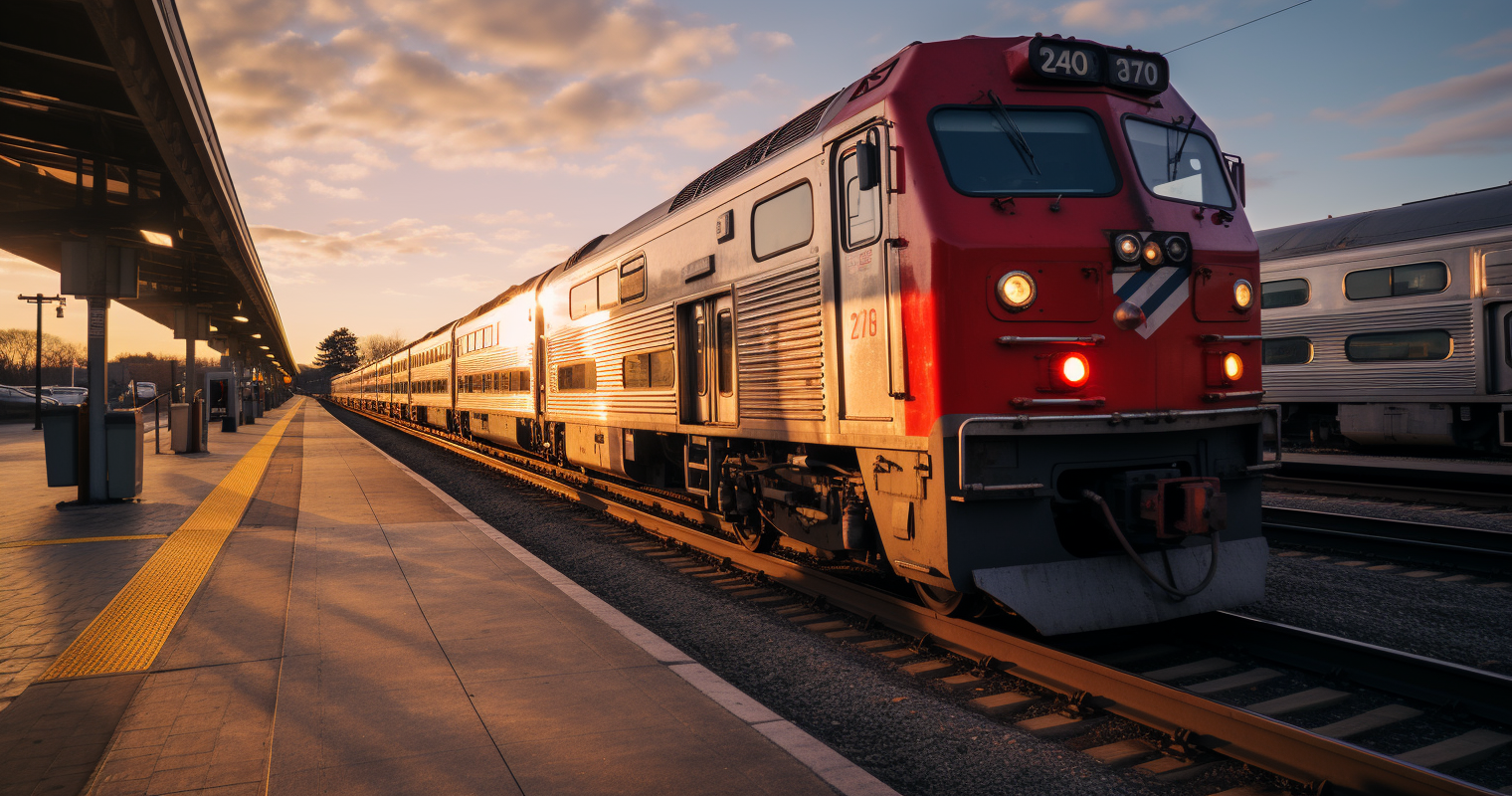
Switzerland boasts one of the most extensive and dependable rail networks anywhere on the planet, run chiefly by Swiss Federal Railways (SBB/CFF/FFS) alongside numerous regional carriers. The network reaches virtually every part of the country — from major urban centres to remote alpine valleys — and serves equally well for daily commutes, cross-country journeys, and everything in between. For anyone making Switzerland their new home, the train will almost certainly become a cornerstone of everyday life.
| Item | Details |
|---|---|
| Main operator | Swiss Federal Railways (SBB/CFF/FFS), plus ~73 regional operators |
| Network punctuality (2025) | 94.1% of trains on time (record high as of 2025) |
| Half Fare Travelcard (residents) | CHF 190/year for adults (as of 2025); 50% off most fares |
| GA Travelcard (unlimited travel) | Annual pass for unlimited travel on SBB and most operators; check sbb.ch for current prices |
| Ticket classes | 2nd class (standard) and 1st class available on most routes |
| Official timetable & booking | sbb.ch and the free SBB Mobile app |
What is the overall standard of rail travel in Switzerland?
Switzerland’s rail network is among the most tightly integrated and reliably punctual in the world, combining dense route coverage, precisely coordinated timetables, and remarkable feats of mountain railway engineering — all managed principally by SBB/CFF/FFS. Those arriving from countries where train travel is plagued by delays or sparse services frequently find the Swiss system a revelation.
In 2025, Switzerland’s state railway achieved its highest-ever punctuality figures, with just 5.9% of trains running late — an improvement on the 6.8% recorded in 2024. Notably, SBB applies a tighter definition of “on time” than most other European rail operators, who typically allow a five-minute or greater margin. Against that backdrop, the numbers are all the more remarkable.
To put this in everyday terms: a Swiss commuter travelling to and from work throughout 2025 would have experienced a late arrival on just 28 occasions over the entire year. For those making multi-leg trips, SBB’s 2024 figures showed a connection punctuality rate of 98.7%, meaning the overwhelming majority of onward connections were successfully caught. Missed connections are genuinely rare on this network.
Switzerland’s railway density is exceptionally high at 122 kilometres of track per 1,000 km² of territory, compared to an EU average of just 46 km per 1,000 km². Only Japan surpasses Switzerland in per-capita rail travel. The network is almost entirely electrified, with the sole exception being a handful of tracks used exclusively by steam locomotives for tourist services.
The SBB network is structured around a polycentric model, creating an interconnected web of lines stretching from St. Gallen in the northeast through to Geneva in the west and Lugano in the south. Unlike rail networks in some larger countries that focus primarily on linking major cities, Switzerland’s system extends meaningful, regular services to smaller towns and rural communities throughout the country.
Swiss Federal Railways operate approximately 5,000 passenger train services each day, collectively covering around 274,000 kilometres — split roughly evenly between long-distance and regional or suburban services. The network genuinely caters to the full spectrum of travel needs, from short urban hops to lengthy cross-country trips.
Although Switzerland’s trains are run by a variety of companies depending on the region, these operators have long coordinated their timetables to enable smooth nationwide travel. There are 74 railway companies in Switzerland in total. Schedules are built on a “clock-face” principle, whereby trains depart at the same minutes past the hour throughout the day — a straightforward pattern that quickly becomes easy to memorise.
What classes of rail travel are available in Switzerland, and what are the differences between them?
The great majority of SBB long-distance and intercity trains offer two travelling classes: 2nd class (standard) and 1st class. Swiss domestic rail has no dedicated business class, though 1st class effectively fills that role for passengers seeking greater comfort and space.
Second class is thoroughly comfortable, well-maintained, and the choice of the vast majority of commuters and occasional travellers alike. Seating is arranged in a combination of forward-facing pairs and four-person table bays. Carriages are modern and kept in good condition. On intercity services, 2nd class compares very favourably with equivalent standard-class accommodation elsewhere in Europe.
First class provides wider seating, more generous legroom, and an appreciably quieter atmosphere. The reduced density of passengers in 1st class makes it particularly appealing for those who regularly make longer intercity trips and want space to focus on work or simply unwind. On well-patronised routes during peak times, the difference in comfort between classes can be quite pronounced.
With SBB, fare levels are determined by the route taken rather than by the category of train service used (InterCity, InterRegio, RegioExpress, etc.). This means a journey from Geneva to Zurich costs the same whether you board an IC or an IR. That said, 1st class always commands a higher fare than 2nd class on the same route — typically around 60–70% more for a point-to-point ticket. Whether that premium represents good value depends on your travel frequency and personal priorities.
It is worth noting that travelcards — including the GA Travelcard and the Half Fare Travelcard used by residents — are available in both 1st and 2nd class versions. Holding a 1st or 2nd class GA Travelcard entitles you to unlimited travel on SBB trains and most other Swiss railways, as well as on other public transport throughout the country. On regional and narrow-gauge railways serving alpine areas, rolling stock and class distinctions may differ, so it is advisable to check the specifics with individual operators for particular routes.
Where can you find rail timetables and ticket prices in Switzerland?
For timetable searches and fare information, the SBB website and its companion app are by far the most comprehensive and authoritative resources available. The integrated timetable covers not only SBB trains but virtually all trains, buses, boats, trams, and mountain transport services regardless of which operator runs them — making it the definitive planning tool for public transport across Switzerland.
The key resources are:
- SBB website: sbb.ch — the official SBB portal covering timetables, ticket purchases, travelcards, and live disruption updates. Available in German, French, Italian, and English.
- SBB Mobile app: Available free for both iOS and Android, the app replicates the website’s timetable functions while adding real-time tools: nearby stations and services, live delay information, trip planning, and an interactive map for exploring connections across the whole network.
- Switzerland Travel Centre: swissrailways.com — an official retail channel for Swiss rail products, particularly handy for purchasing passes before you arrive in the country.
One important detail: the fares displayed by default on the SBB timetable site are already discounted by 50%, reflecting the price for holders of a Swiss Half Fare Card. If you do not hold one, you will need to adjust the settings to see full standard fares. Always consult the official SBB website for up-to-date pricing, as fares can change.
Third-party platforms such as Trainline also offer SBB tickets and may be useful for comparing options or consolidating bookings. However, purchasing directly through sbb.ch or the SBB app gives you access to the complete range of Swiss ticket types and travelcard products. General public transport policy information is provided by the Federal Office of Transport (BAV/OFT) at bav.admin.ch.
How do you buy rail tickets in Switzerland, and can you book in advance?
One of the most refreshing aspects of Swiss rail for new arrivals is its inherent flexibility. Domestic journeys require no advance reservation — trains cannot sell out, and standard full-price tickets are issued in unlimited quantities, valid on any departure during that day. You can simply arrive at the station, purchase a ticket, and board the next available train. This stands in clear contrast to systems such as those in the UK or Italy, where early booking is often essential to secure lower fares or even a guaranteed seat.
Here is an overview of the main ways to buy tickets:
- Online via sbb.ch: SBB.ch provides the widest range of public transport tickets online — whether it’s tickets, travelcards, seat reservations for Switzerland, subscriptions for regional fare networks, or tickets for travel to Europe. You can buy point-to-point tickets, supersaver tickets, and tickets for European travel directly via the timetable. Tickets can be saved digitally on your phone or printed at home.
- Via the SBB Mobile app: The free app allows you to search timetables, purchase tickets, store digital passes, and receive real-time journey updates. All tickets bought through the app are held on your device — there is no need to print anything.
- At ticket machines in stations: Automated machines are found at stations, tram stops, and on some buses, and are provided not only by SBB but by local and regional transport companies as well. Most machines accept both credit and debit cards.
- At staffed ticket counters: Larger stations maintain staffed service desks where you can buy tickets and travelcards and seek journey advice in person. Queues can build during peak hours at busy interchanges, so it pays to allow a little extra time.
- Advance booking for discounted fares: If you wish to take advantage of Supersaver fares (discussed in the following section), online purchase in advance is required. Tickets can be booked up to 6 months before departure.
For international routes — such as services to France, Germany, Italy, or Austria — advance booking is strongly advisable, as capacity is limited and early fares are often substantially lower than walk-up prices. International tickets can be booked via sbb.ch or through operators such as Trainline. For assistance, contact SBB customer service through the help section at sbb.ch/en/help-and-contact.html.
What types of rail tickets are available in Switzerland, and are there discount schemes?
Switzerland’s ticketing offering is extensive and carefully structured, with products to suit travellers of all frequencies. For residents in particular, travelcards tend to be far more economical than purchasing individual point-to-point tickets.
Point-to-point tickets
Standard point-to-point tickets cover a single journey on a specified date. For trips exceeding 115 km, an ordinary ticket remains valid for up to 10 days, providing some useful flexibility on longer routes. Children under 6 travel free of charge, while those aged 6 to 16 receive a 50% fare reduction.
Supersaver tickets
Supersaver tickets are discounted fares sold exclusively online, with reductions of up to 70% off the regular price. They are personalised, non-refundable, and cannot be exchanged. These cannot be purchased on the day of travel, so forward planning is essential. They represent excellent value for anyone with confirmed, fixed travel plans.
Half Fare Travelcard (Halbtax / Demi-Tarif)
The Half Fare Travelcard is the single most popular discount product among Swiss residents. Priced at CHF 190 per year for adults (as of 2025), it entitles holders to half-price travel throughout Switzerland. From the second year of renewal onwards, a loyalty discount reduces the price by a further CHF 20, bringing the renewal cost to CHF 170. The card applies not only to trains but to buses, boats, most mountain railways, panoramic train services, and urban public transport systems. For most residents who travel regularly, the card recoups its cost within a matter of weeks. Always verify the current price at sbb.ch.
GA Travelcard (General Abonnement)
A 1st or 2nd class GA Travelcard grants unlimited travel on SBB trains and most other Swiss railways, as well as on other public transport throughout the country. It is the ultimate product for frequent travellers — effectively a nationwide unlimited annual season ticket. The GA comes in different versions for adults, seniors, young people, and people with disabilities. A senior version is available for women from age 64 and men from age 65. Prices vary considerably by age category and class — consult sbb.ch for current figures, which are revised periodically.
Youth and family discounts
Young people aged 16–25 qualify for both a reduced-price GA Travelcard and a discounted Half Fare Travelcard. Families benefit from SBB’s “Family Card” arrangement: when a parent travels on a valid SBB travelcard, their children under 16 may travel free on the same public transport network. Junior Day Pass products and group tickets are also available for more occasional use. A GA Travelcard is additionally available for passengers with a disability.
Regional passes
Various regions offer dedicated passes for concentrated travel within a defined area — examples include the Berner Oberland Pass and the Tell Pass covering the Lake Lucerne region. These can deliver strong value for residents whose travel is largely concentrated in one part of the country. Check the relevant cantonal transport authority or sbb.ch for current options and pricing, as these are updated each year.
How accessible is the rail network in Switzerland for disabled passengers?
SBB has made sustained investment in accessibility across the Swiss network. Major stations and newer rolling stock are generally well equipped, though — as with most national rail systems — the level of provision can vary between large urban interchange stations and smaller rural stops, and between modern and older train fleets.
Key accessibility features across the SBB network include:
- Wheelchair access: Most intercity and regional trains include dedicated spaces for wheelchair users, with level or near-level boarding available at major stations. Gaps between platform and train may be more pronounced at older or smaller stations.
- Assistance service: SBB runs a dedicated travel support service called SBB Handicap. Staff can help passengers with reduced mobility to board and disembark, guide them through stations, and support them through connections. The service can be reserved in advance or requested on the day where staffing permits. Full details and booking information are available at sbb.ch/en/travel-information/travelling-with-sbb/handicap.
- Auditory and visual aids: Major stations are equipped with visual departure displays, audio announcements, tactile guidance surfaces, and hearing loops at ticket counters. Onboard announcements are made at each station stop.
- Discounted travelcards: A GA Travelcard is available for passengers with a disability, offering unlimited travel at a reduced rate — a benefit integrated into the broader GA scheme rather than treated as a separate product.
Accessibility standards at major stations including Zurich HB, Geneva Cornavin, Bern, and Basel SBB are generally excellent, with lifts, tactile floor markings, and accessible toilet facilities readily available. Smaller rural and mountain stations may offer more limited provision — step-free platform access is not guaranteed across every part of the network. SBB publishes detailed station-by-station accessibility information on its website, and the SBB Handicap page provides route-specific guidance. Passengers planning more complex journeys involving connections at smaller stations are strongly advised to book assistance in advance.
Are there metro or urban rail systems in Switzerland’s cities?
Switzerland’s cities are served by a diverse mix of urban rail, tram, light metro, and S-Bahn (suburban rail) systems that work in close coordination with the national SBB network. These services are generally well integrated, sharing ticketing platforms and connecting directly at major interchange stations.
Zurich
Zurich is home to one of the most highly regarded urban public transport systems anywhere in the world, administered by ZVV (Zürcher Verkehrsverbund). The network encompasses an extensive tram system, trolleybuses, the Zürich S-Bahn suburban rail network, and the Zürich Stadtbahn. The S-Bahn makes use of a central underground through-section beneath Zurich HB to link all its lines, delivering highly frequent services across the city and into the wider canton and adjacent regions. On core lines, trains can run as frequently as every five to seven minutes during peak periods.
Geneva
Geneva is served by TPG (Transports Publics Genevois), which operates trams, buses, and the LÉMAN EXPRESS cross-border suburban rail network — a landmark system linking Geneva with the French Haute-Savoie region. Launched in December 2019, the LÉMAN EXPRESS has grown into one of the busiest cross-border rail operations in Europe and connects seamlessly with SBB services at Geneva Cornavin station.
Lausanne
Lausanne holds the distinction of being home to Switzerland’s only true rapid transit metro: the Lausanne Métro, operated by TL (Transports Lausannois). Line M2 is a fully automated, rubber-tyred metro connecting the lakeside with the city’s elevated districts, while M1 functions as a light rail line. The metro links directly to Lausanne main station, providing swift onward connections to national rail services.
Basel, Bern, and other cities
Basel operates an extensive tram network run by BVB, which uniquely extends across national borders into both France and Germany — a significant convenience for the city’s many cross-border commuters. Bern is served by trams and an S-Bahn network, and the city’s compact layout makes tram travel particularly practical. Other cities including Lucerne, St. Gallen, and Winterthur all benefit from integrated bus and tram systems.
Switzerland operates a national integrated ticketing framework for public transport, organised through zonal tariff networks covering train and bus services and many boat lines, cable cars, and funiculars. In most cities, a single ticket or travelcard therefore covers trams, buses, and trains within the relevant zone — a seamlessly joined-up experience that contrasts favourably with cities where separate urban and national rail tickets are required.
What should expats know about using the rail network day-to-day in Switzerland?
Once you have familiarised yourself with its conventions, the Swiss rail system becomes highly intuitive to navigate. Below are the key practical points that new residents are likely to find most useful.
Language and signage
Switzerland recognises four national languages — German, French, Italian, and Romansh — and station signage generally reflects the language of the local region. At major stations and on intercity trains, information is displayed in multiple languages, and the SBB website and app are fully available in English. Ticket machines at most larger stations offer an English-language interface. Onboard announcements on intercity services are typically delivered in German, French, and Italian; English announcements are common on routes with high volumes of international passengers.
Seat reservations
Reservations are not required on the vast majority of Swiss trains and buses. Seating on domestic services is unreserved — you simply board and choose any available seat. The exceptions are certain scenic tourist trains such as the Glacier Express and Bernina Express, where reservations are mandatory and carry a supplementary fee. Requirements for seat reservations on international services vary depending on the route and operator.
Navigating stations
Swiss stations are clearly signed and equipped with colour-coded departure boards. Platform numbers are prominently displayed, and the SBB app provides live platform information. Larger stations such as Zurich HB, Geneva Cornavin, and Bern also contain shops, supermarkets, and a range of services, making them genuinely useful during the daily commute. Each train carriage displays a network map in the entry area, helping passengers quickly identify possible connections along the route.
Luggage policies
There are no restrictions on the amount of hand luggage you may bring on board a Swiss train, provided it fits in the overhead racks or beneath your seat. Bicycles may be carried on many services, either free of charge or with an additional bike ticket depending on the route — consult SBB’s bicycle travel pages for current guidance. Larger items of luggage can also be dispatched ahead via SBB’s luggage forwarding service (Gepäck/Bagage).
Cultural norms
Swiss train etiquette is quietly consistent. Designated quiet zones are marked in certain carriages and are taken seriously — phone calls and animated conversations are considered inappropriate there. Mobile phone use is perfectly acceptable in standard carriages, though loud calls tend to attract disapproving glances. Priority seating near doors is observed for older passengers, pregnant women, and people with disabilities. Platform queuing is orderly, and punctuality is genuinely prized — where connections are tight, SBB systems are generally designed to hold services and facilitate onward travel where possible.
The SwissPass card
As a resident, you will manage your travelcards — whether a GA, Half Fare Card, or other products — through a personalised SwissPass, a card that serves as a digital wallet for all your public transport credentials. Issued by SBB and manageable online or via the app, the SwissPass consolidates all your entitlements in one place. When your GA or Half Fare Travelcard is loaded onto your SwissPass, you simply present or scan the card when required.
Frequently asked questions about rail travel in Switzerland
Do I need to validate my ticket before boarding a Swiss train?
No. Switzerland has no separate ticket validation step prior to boarding, unlike some European networks such as those in Italy or France. Your ticket is valid exactly as issued — whether displayed on your phone, printed, or held on your SwissPass. Conductors check tickets during the journey, so make sure yours is readily accessible when you travel.
Is the Half Fare Travelcard worth buying as a new resident?
The Half Fare Travelcard costs CHF 190 per year for adults (as of 2025) and reduces the price of virtually every train, bus, and boat journey in Switzerland by half. For most residents who use public transport with any regularity, the card pays for itself within the first couple of months. It is widely regarded as the single most important purchase for anyone newly settled in Switzerland.
Can I use my Swiss rail travelcard on trams and buses in cities?
Yes. The Half Fare Card provides a 50% discount on urban public transport throughout Switzerland, while the GA Travelcard includes most city transport networks within its unlimited travel coverage. Thanks to Switzerland’s integrated ticketing framework, a single pass typically covers trains, trams, and buses within the appropriate zone in most cantons.
Are Swiss trains safe to use at night?
Yes. Most routes are served well into the evening, with night services operating across many regions at weekends. Trains are well-lit, staffed, and have an excellent safety record. Urban networks — including trams and S-Bahn lines — typically run until midnight or beyond on Friday and Saturday nights in major cities, with all-night services available in some locations.
How do I travel with a bicycle on Swiss trains?
Bicycles are accepted on many SBB services, either free of charge or with a bicycle day pass, depending on the specific route and time of travel. Not every train or carriage accommodates bikes — the SBB app and website clearly flag which services do. During peak commuter hours, carriage of bicycles may be restricted. Consult sbb.ch for the latest regulations and to purchase a bike ticket where required.
Do Swiss trains run on public holidays?
Yes, train services continue to operate on Swiss public holidays, though a reduced Sunday or holiday timetable may apply. The SBB timetable website and app always reflect the correct schedule for any specific date, including public holidays. Planned engineering works may occasionally be scheduled during holiday periods — it is worth checking for any notified disruptions in advance at sbb.ch.
What happens if I miss my connecting train?
SBB recorded a connection punctuality rate of 98.7% in 2024, reflecting that the overwhelming majority of connections were successfully made. Should a delay on one SBB service cause you to miss an onward train, station staff and automated systems will redirect you on the next available departure. Your original ticket remains valid for the alternative journey, and in the event of a significant delay you may be entitled to compensation — full details are available on the SBB website.
Can I bring pets on Swiss trains?
Small pets travelling in carriers are generally carried free of charge on Swiss trains. Dogs are permitted but require a separate dog ticket, purchasable online or at ticket machines. Dogs must travel on a lead and may in some circumstances be required to wear a muzzle. Check the current pet travel policy at sbb.ch, as specific rules can vary slightly between operators and routes.