
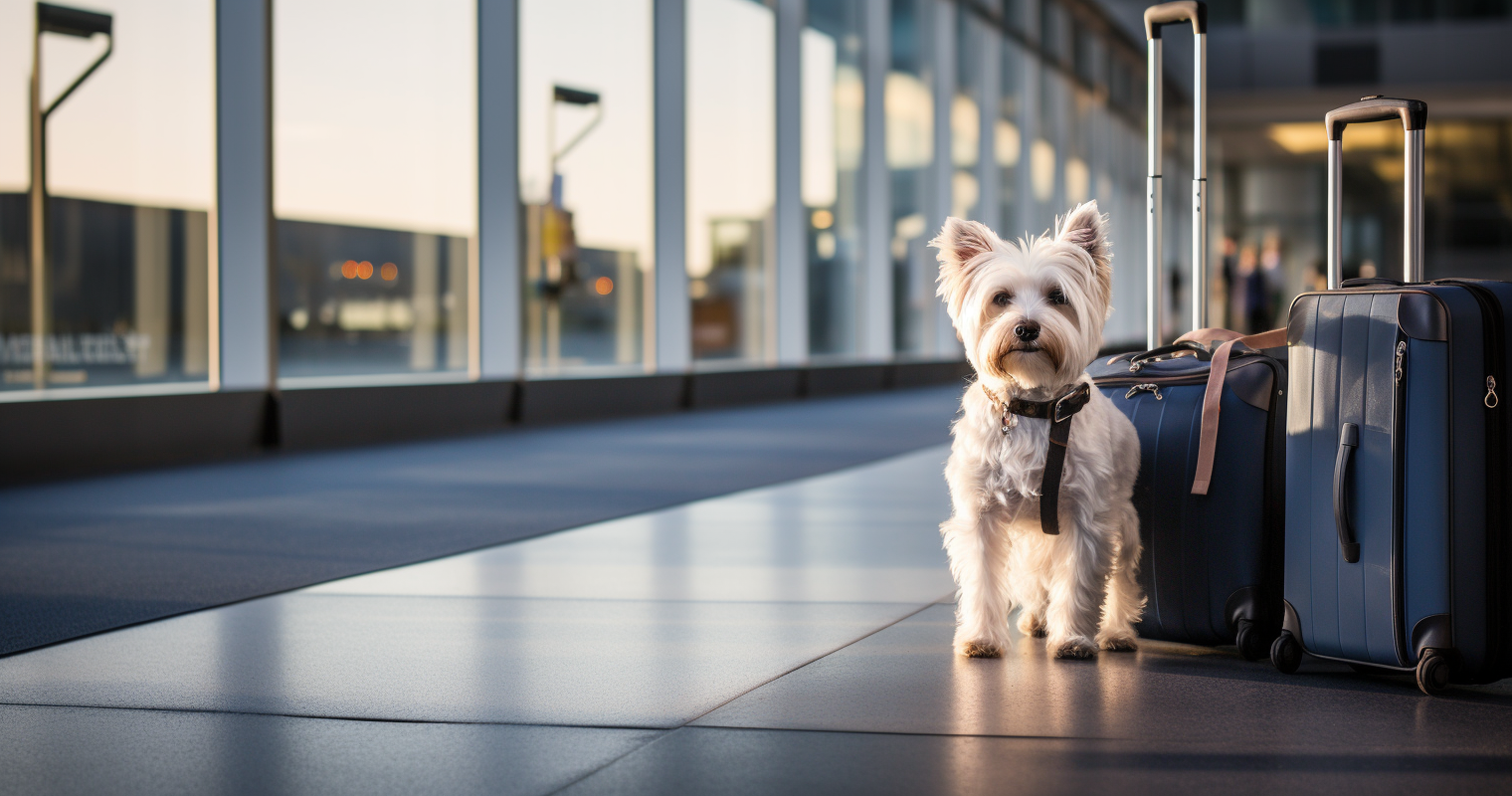
Switzerland welcomes the import of domestic pets, including dogs, cats, ferrets, and the majority of other common companion animals, though the level of regulation involved ranges from moderate to considerable depending on your country of departure. Swiss veterinary requirements are closely harmonised with EU legislation, and the preparation involved grows substantially more complex for animals originating in countries identified as high-risk for rabies. Provided all documentation is correctly assembled before departure, no quarantine period will be imposed on arrival.
| Item | Details |
|---|---|
| Microchip standard | ISO 11784/11785 compliant; must be implanted before rabies vaccination |
| Rabies vaccination wait | At least 21 days before travel (as of 2025) |
| Rabies titer test | Required for pets from high-risk (unlisted) countries; blood draw at least 30 days after primary vaccination, then 3-month wait |
| Maximum pets per person | 5 dogs, cats, or ferrets under non-commercial rules (as of 2025) |
| Approved air entry points | Zurich, Geneva, and Basel airports (direct flights only from third countries) |
| Annual dog tax | Approx. CHF 50–200 per year, varies by municipality (as of 2024) |
| No quarantine | No quarantine required if all import conditions are met on arrival |
Does Switzerland allow pets to be imported, and are there restrictions on which animals are permitted?
Switzerland is generally open to the import of domestic pets across a wide range of species, including dogs, cats, ferrets, rabbits, rodents, reptiles, amphibians, and most pet birds. Dogs, cats, and ferrets are subject to particularly detailed regulations, however, because these species are susceptible to rabies and the rules are designed to prevent the disease from being introduced to Swiss territory. Most other familiar household pets, such as guinea pigs and hamsters, encounter far fewer obstacles at the border.
There are firm prohibitions on certain dogs. It is forbidden to bring dogs with docked ears and/or tails into the country. Dogs that have been docked will be refused entry at the border. A narrow exception exists for individuals relocating to Switzerland on a permanent basis, but advance authorisation is required — consult the Federal Food Safety and Veterinary Office (FSVO) before making any travel arrangements.
Beyond the docking prohibition, ownership of certain breeds considered potentially dangerous or aggressive is subject to restrictions, and the rules differ from one canton to the next. Breeds that appear on cantonal lists include the Pit Bull, American Staffordshire Terrier, Bullmastiff, Thai Ridgeback Dog, and Rottweiler. Owners of these breeds must be at least 18 years old, may keep only one such animal, and are required to hold liability insurance. The dog must be neutered and pass a behavioural assessment, and it must be kept on a lead and wear a muzzle whenever it is in a public space. Always contact the cantonal veterinary authority in your destination canton before attempting to import a restricted breed.
Wolf hybrids, Savannah cats, and Bengal cats (unless at least five generations removed from the wild ancestor) cannot be imported under standard pet regulations. Animals protected under CITES — the Convention on International Trade in Endangered Species — such as certain parrot and reptile species, require additional ownership certificates. For holidays or short-stay travel with a CITES-protected animal, however, approval is not mandatory provided the animal is travelling with its owner and that owner holds a valid certificate of ownership.
What vaccinations and health requirements do pets need before entering Switzerland?
Before a dog, cat, or ferret can travel to Switzerland, the animal must at minimum have a pet passport, an implanted microchip, and a valid rabies vaccination. The microchip must conform to the ISO 11784/11785 standard and be a 15-digit chip, and it must be inserted before the rabies vaccine is given — this sequence is a legal requirement, and reversing the order invalidates the vaccination record for import purposes.
Following the rabies vaccination, a minimum waiting period of 21 days must elapse before the animal is permitted to enter Switzerland. Where booster vaccinations are administered before their due date, this waiting period does not apply. The 21-day minimum is current as of 2025 — always confirm timelines directly with the FSVO before finalising your travel plans.
Switzerland does not recognise any country as fully rabies-free. All dogs, cats, and ferrets entering the country are therefore subject to rabies vaccination requirements. That said, the extent of documentation demanded varies considerably depending on how the FSVO classifies your country of origin. Countries are categorised according to their rabies infection risk, and this classification determines exactly which conditions you must satisfy.
For animals arriving from countries classed as high-risk for rabies, additional requirements apply. These animals must carry documentation confirming a sufficiently high rabies antibody titre. The blood draw for the titre test may not take place until at least 30 days after the primary vaccination course has been completed, and a further 3-month waiting period must then pass from the date of blood collection before entry into Switzerland is permitted. This means that, for animals coming from a high-risk country, entry is only possible once the animal is approximately 7 months old at the earliest. These requirements are current as of 2025 — confirm directly with the FSVO before planning your journey.
Beyond rabies, veterinary best practice strongly recommends that dogs also receive vaccinations against distemper, hepatitis, leptospirosis, parainfluenza, parvovirus, and bordetella, and that cats be vaccinated against feline viral rhinotracheitis, calicivirus, and panleukopenia. These vaccinations should be valid at the time of import and, for maximum effectiveness, administered no later than two weeks before the export date. Although they are not invariably checked at the Swiss border, they protect your pet’s wellbeing and may be required by your veterinarian when completing the health certificate.
Where an animal cannot satisfy all the conditions for entry, an application for an exemption permit may be submitted. Exemptions are granted only in genuinely exceptional circumstances — for example, where a veterinary certificate confirms that an animal is medically unable to receive the rabies vaccine.
What is the application process for importing a pet into Switzerland, and what paperwork is required?
Every step needed to comply with Swiss import regulations for dogs, cats, and ferrets must be completed in the country of origin, and they must be carried out in a prescribed sequence. Beginning preparations early is crucial — a minimum of 30 days ahead of travel is advisable, though for animals from high-risk countries the complete process can extend over several months.
The full process for importing a dog, cat, or ferret into Switzerland from a third country (outside the EU) is as follows:
- Microchip your pet. Your pet must be implanted with an ISO 11784/11785 compliant 15-digit microchip before the rabies vaccination is administered. This is required for all pets entering Switzerland.
- Administer the rabies vaccination. The vaccine must be given after microchipping. The animal must be vaccinated against rabies, and it cannot enter the country until the 21-day waiting period after vaccination has elapsed.
- Rabies titre test (if required). If your country is classified as a high-risk country, blood may be drawn for the titre test at the earliest 30 days after the primary vaccination, and a 3-month waiting period from blood collection then applies before entry is permitted.
- Apply for an import permit from the FSVO (if required). All animals being imported into Switzerland from countries with high rabies risk need an import permit issued by the FSVO. The application must be submitted at least three weeks before entry into the country. This is as of 2025 — check the FSVO website for current processing times.
- Obtain a health certificate and declaration of ownership. When arriving from a third country, pet owners must provide Swiss authorities with a “health certificate and declaration of ownership” issued by the official veterinary service of the country of origin. This certificate is valid for 10 days from the date of issue. Timing this correctly is critical — the certificate must be current on the day of arrival.
- Complete customs form 18.44 (if relocating). When a pet owner is moving to Switzerland, customs will ask for a completed form 18.44. This is separate from veterinary documentation and is handled by the Federal Office for Customs and Border Security (FCBS).
- Arrange travel and notify the airline. Book your pet’s travel with the airline in advance and confirm all documentation requirements. Ensure your pet’s travel crate meets IATA standards.
- Present the animal at the Swiss border. Pets entering with their owners from third countries must be presented at the red customs exit, where customs checks the animal on entry.
For travel originating in EU member states, the process is considerably simpler. An EU Pet Passport with the owner details, animal description, microchip marking, issuing information, and rabies vaccination records all completed in full is sufficient. In Switzerland, pet passports may be issued only by veterinarians holding a cantonal professional licence, or by colleagues working within such a practice.
Any documentation not already written in one of Switzerland’s national languages — German, French, Italian, or Romansh — or in English must be accompanied by a certified translation when presented to Swiss veterinary and customs authorities.
Does Switzerland require pets to undergo quarantine on arrival?
Provided all Swiss pet import requirements have been fulfilled before departure, no quarantine will be imposed on your animal upon arrival. This is a considerable benefit for owners relocating from countries with comparable veterinary standards. Unlike jurisdictions such as Australia and New Zealand, which enforce mandatory quarantine periods of up to 10 days even for fully compliant animals, Switzerland places the entire burden of compliance on pre-travel preparation rather than post-arrival detention.
The consequences of arriving with incomplete or incorrect documentation are, however, severe. An animal that fails to meet entry requirements will be confiscated by the Border Veterinary Service and must immediately return to its country of origin at the expense of the person who brought it. Where return is not immediately possible, the animal may be held in quarantine if facilities allow, and in the worst case may be euthanised. All resulting costs are borne by the importer and can run into five figures.
The key lesson is that compliance must be achieved before travel, not attempted at the border. There is no mechanism for resolving documentation shortfalls after arrival, and the consequences of non-compliance are both serious and costly.
Is Switzerland part of any international pet travel scheme?
While Switzerland is not a member of the European Union, it belongs to the European Free Trade Association (EFTA) and has incorporated the bulk of EU legislation governing the import of dogs, cats, and ferrets. In practical terms, this means Switzerland participates in and accepts the EU Pet Travel Scheme for inbound movements from EU member states, placing it in a similar position to Norway in this respect.
If you are travelling with a pet from an EU country, the standard EU Pet Passport is accepted at the Swiss border, provided the sections covering the owner’s details, animal description, microchip marking, passport issue, and rabies vaccination are all fully completed. Young animals under 12 weeks of age travelling from the EU are not required to have a rabies vaccination before entry, as long as no titre test requirement applies.
For owners arriving from countries outside the EU Pet Travel Scheme — including nations in Asia, the Americas, Africa, and other regions — Switzerland applies a separate framework based on country-level risk classification. A government-issued pet passport from a “Part 1 listed” third country may be accepted, while pets travelling from Great Britain require an Animal Health Certificate. UK Pet Passports are no longer accepted as a substitute for an Animal Health Certificate. Owners arriving from non-listed third countries must also produce the health certificate and ownership declaration described in the paperwork section above.
The FSVO offers an online entry check tool — “Crossing the border with dogs/cats” — on its website, enabling owners to identify exactly which documents they need based on their country of origin. This interactive tool is the most dependable starting point when planning your pet’s journey to Switzerland.
Do pet owners need to register or licence their pet after arriving in Switzerland?
Once your dog has entered Switzerland, a short window exists in which you must fulfil several legal obligations. Dogs imported from outside Switzerland must be presented to a Swiss veterinarian within 10 days of arrival. That veterinarian is then required to register the animal in the AMICUS database — including any foreign microchip or tattoo number — within the following 10 days. No automatic transfer of data held in foreign registers takes place, so this registration step must be actively completed.
Dog owners must also register their animal with the local commune and pay the annual dog tax. Once registered, you will receive an annual invoice from your commune or canton. The tax rate varies from one commune to another and typically falls between approximately CHF 100 and CHF 200 per year (as of 2024), with some communes also adjusting the figure according to the size or weight of the animal. Guide dogs and rescue dogs are frequently exempt from the tax.
Whether you have imported your dog from abroad or acquired one within Switzerland, registration with the local commune is mandatory. If you subsequently move to a new address or your dog passes away, you are required to notify the cantonal authorities within 10 days, since the annual dog tax is linked to your registered address.
Dogs are the only pets for which Swiss law requires both microchip data and the owner’s address to be registered nationally. Cats have no equivalent mandatory national registration requirement, though it is good practice to ensure your current address is recorded in the ANIS database if your cat is microchipped. Regardless of species, microchipping any pet and recording it in a database significantly improves the chances of recovery if the animal is lost.
It is strongly advisable to enquire with your local authority about any cantonal or municipal regulations regarding permitted breeds, lead requirements, or muzzle obligations before your pet arrives. Given Switzerland’s federal structure, cantonal and communal rules sit alongside national requirements, and the rules governing dog ownership can vary considerably from one municipality to another.
Are there any additional rules or costs expats should be aware of when bringing a pet to Switzerland?
Approved entry points and routes: Pets may only enter Switzerland through authorised points of entry. For animals arriving directly from outside the EU, this means air travel into Basel, Geneva, or Zurich airports. Where an animal arrives in Switzerland overland via an EU country, the primary veterinary inspection takes place at the point of entry into the EU; the animal must still pass through Swiss customs when crossing the Swiss border.
Indirect flights and stopovers: Where possible, flights to Switzerland should be direct or transit through a listed third country or another EU member state. If transit through an unlisted country is unavoidable, a transit declaration is required, confirming that your pet had no contact with potentially rabies-carrying animals and remained secured within the aircraft or airport throughout.
The 5-day rule: Dogs and cats being transported on a non-commercial basis must fly within five days of their owner. If this window cannot be met, the movement is reclassified as commercial, which increases costs and changes the applicable import requirements.
Number of pets: No more than five animals may be brought into Switzerland under the standard non-commercial pet regulations. Importing more than five animals triggers the requirements for commercial importation. An exception is available for owners who apply to the FSVO for a licence to bring more than five dogs, cats, or ferrets into Switzerland on a temporary basis for competitions or comparable events.
VAT on imported animals: Animals purchased abroad and brought into Switzerland are duty-free but attract VAT at 8.1% on the value of the goods (as of 2024). This charge does not ordinarily apply to pets relocating with their permanent owners under household effects provisions, but it is worth confirming your specific situation with the Federal Office for Customs and Border Security (FCBS).
Airline and transport requirements: All pets flying into Switzerland must travel in an IATA-compliant crate that provides sufficient room for the animal to stand, turn around, and lie down comfortably. Your pet must be clean, healthy, and not dangerous, must not be pregnant, and must travel in an appropriate crate. Whether your pet travels in the cabin or in the hold depends on its size and weight — each carrier sets its own limits, so confirm these details with your airline at the time of booking.
Cantonal breed restrictions: Switzerland operates breed-specific legislation restricting the import and ownership of certain dog breeds. Before travelling to Switzerland with your dog, verify whether the breed appears on any restricted list in your destination canton. If you wish to keep a listed dog, you will need to apply to your municipality, providing your criminal record and paying a processing fee of CHF 250 (as of 2023 — confirm the current fee with your municipality before applying).
Where can expats find official information about importing a pet into Switzerland?
Pet import policy in Switzerland is administered by two federal bodies, with additional responsibilities resting at the cantonal level. Consulting these official sources directly — rather than depending solely on third-party summaries — is the most reliable way to remain up to date, as requirements are subject to change, sometimes at short notice.
Federal Food Safety and Veterinary Office (FSVO / BLV) — This is the principal authority for all veterinary import conditions in Switzerland. The FSVO website covers microchipping requirements, vaccination rules, country risk classifications, import permit applications, health certificate templates, and the interactive entry check tool for dogs and cats. The legal basis for Swiss pet import rules is the Ordinance of 28 November 2014 on the Import, Transit and Export of Pet Animals (IETPO). You can also contact the FSVO directly at Schwarzenburgstrasse 155, 3003 Bern; Tel: +41 (0) 58 463 30 33; Email: [email protected].
Federal Office for Customs and Border Security (FCBS / BAZG) — The FCBS is the second federal body involved in the pet import process, responsible for document verification at the border. Its website addresses customs declarations, VAT on imported animals, the rules on docked dogs, form 18.44 for owners who are relocating, and retroactive customs clearance procedures. For customs-specific questions, this is the appropriate source.
Cantonal Veterinary Offices — As is typical within Switzerland’s federal system, national rules are supplemented by varying cantonal and communal regulations. The FSVO recommends contacting the veterinary service of the canton in which the animal will be residing to identify any local restrictions. This is particularly important for owners of breeds subject to cantonal-level controls.
ch.ch — Switzerland’s Official Federal Portal — This government portal provides accessible summaries of dog registration obligations, AMICUS database registration, and the annual dog tax. It is a useful starting point for understanding post-arrival administrative requirements.
Always verify all requirements directly with official sources before finalising your travel arrangements. Pet import regulations can change at short notice — particularly during disease outbreaks — and only the FSVO and FCBS publish authoritative, current guidance.
Frequently asked questions
What happens if my pet arrives in Switzerland without the correct paperwork?
An animal that does not meet Switzerland’s entry requirements will be confiscated by the Border Veterinary Service and must return immediately to its country of origin at the importer’s expense. Where return is not immediately possible, the animal may be placed in quarantine if space is available, and in the most serious cases euthanasia is a possible outcome. The financial consequences can be substantial. There is no possibility of resolving documentation problems at the border — everything must be correctly in place before departure.
How long does the full process take from start to finish?
The timeline depends heavily on the country of origin. For pets travelling from EU member states or low-risk listed countries, preparations can typically be completed within 3–4 weeks, assuming the rabies vaccination is administered at least 21 days before the planned travel date. For pets originating in high-risk countries, the mandatory 3-month waiting period following the titre blood draw means entry is only possible once the animal is approximately 7 months old at the earliest. It is advisable to begin planning as far in advance as possible.
Are the rules the same for cats and dogs?
The fundamental requirements — microchip, rabies vaccination, and a pet passport or health certificate — apply equally to dogs, cats, and ferrets. However, a number of dog-specific obligations do not extend to cats: dogs must be registered in the AMICUS database and with the local commune, and their owners are liable for an annual dog tax. Breed restrictions and the prohibition on docked animals apply exclusively to dogs. Young animals under 12 weeks of age do not have to be vaccinated against rabies before being brought into Switzerland from the EU.
Can I import a rescue animal I adopted abroad?
Yes, rescue animals can be brought into Switzerland, but they must satisfy precisely the same veterinary requirements as any other pet. A frequent complication with rescue animals is an incomplete or uncertain vaccination history, which may trigger the high-risk country requirements even if the animal was sourced from a lower-risk country. Make sure any rescue organisation provides full, certified documentation, and allow additional time to complete any outstanding vaccinations and titre tests before travel.
Does Switzerland recognise the EU Pet Passport for animals travelling from the EU?
Although Switzerland is not an EU member state, it has adopted the majority of EU regulations for importing dogs, cats, and ferrets. The EU Pet Passport is accepted at the Swiss border for animals travelling from EU countries, provided the sections covering owner details, animal description, microchip marking, passport issue, and rabies vaccination are all fully completed.
Do I need to notify Swiss authorities before arriving with my pet from a high-risk country?
Yes. All animals being imported from countries classified as high-risk for rabies require an import permit issued by the FSVO before arrival. The application must be submitted at least three weeks before the intended date of entry (as of 2025). Arriving without this permit in place is likely to result in your pet being refused entry.
Are there any restrictions on how many pets I can bring?
Under the standard non-commercial pet regulations, a maximum of five animals may be brought into Switzerland at one time. Importing more than five animals is treated as a commercial import, which carries different and more demanding requirements. A specific exception applies if you obtain a licence from the FSVO to bring more than five dogs, cats, or ferrets into Switzerland on a temporary basis in connection with competitions or similar events.
Is there a dog tax in Switzerland, and how much is it?
Dog owners in Switzerland are required to register their animal with the local commune and pay an annual dog tax. The amount varies according to the commune and its regulations, and typically ranges from CHF 50 to CHF 200 per year (as of 2024). In some areas, the rate also varies according to the dog’s size or weight. Assistance dogs, including guide dogs and signal dogs, are often exempt from the tax or qualify for a reduced rate. Contact your local commune for the precise current figure applicable in your area.