
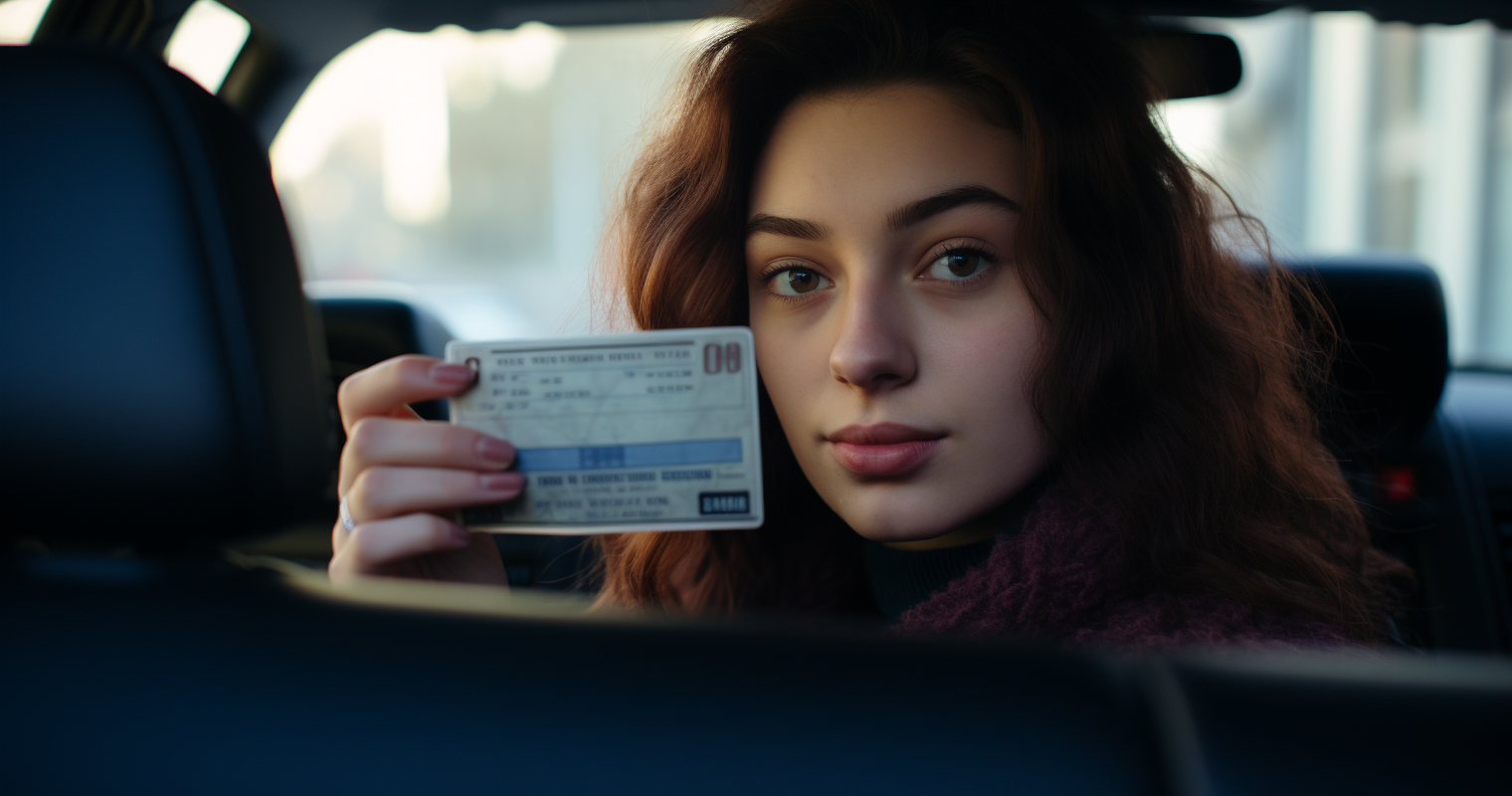
Foreign nationals who reside in Switzerland are permitted to drive using their home country licence for up to 12 months from the date they officially register as a resident. Once this period expires, they must obtain a Swiss licence in exchange. Those holding licences from EU or EEA countries can make this switch without sitting a driving test, whereas most other nationalities are required to undergo a practical assessment. Visitors who are not residents may continue to drive on a valid foreign licence for the entire duration of their stay.
| Item | Details |
|---|---|
| Grace period to drive on foreign licence | 12 months from date of Swiss residency registration (as of 2025) |
| Exchange fee | More than CHF 100 (varies by canton; as of 2025) — check your cantonal Road Traffic Office for current figures |
| Eye test required? | Yes, for all applicants exchanging a foreign licence |
| EU/EEA licence holders | Can exchange without sitting a driving test |
| Swiss licence validity | No expiry date until age 75 (as of 2025) |
| Renewal age threshold | Medical check and renewal required from age 75, then every two years |
Can foreign nationals drive in Switzerland on their home country licence, and for how long?
Residents of Switzerland are entitled to drive on their foreign licence for a period of 12 months, after which they must convert it to a Swiss one. This grace period begins not from the date of physical arrival in the country, but from the moment you formally register your address as a resident in a Swiss canton.
Once you have completed cantonal registration and been issued a B or C permit, your foreign licence remains valid for 12 months. You must use this one-year window to complete the exchange for a Swiss driving licence. The countdown begins on your official registration date.
For those who are simply passing through or visiting Switzerland without taking up residence, a valid national or international driving licence is fully accepted throughout the country. Short-term tourists face no obligation to exchange their licence and may drive for the duration of their visit without restriction.
Professional drivers are subject to stricter rules: they must exchange their licence before they begin driving professionally, rather than being permitted to wait out the 12-month grace period. Additionally, if your licence is issued in a language other than German, French, Italian, or English, you are required to carry an official translation or an International Driving Permit alongside it — further details on this are provided in the IDP section below.
Certain categories of international diplomats and civil servants benefit from an exemption that allows them to continue driving on their foreign licence indefinitely, without any obligation to exchange it. If you hold a B, C, D, E, or P-type carte de légitimation issued by the Swiss Federal Department of Foreign Affairs, this exemption is likely to apply in your case — confirm the details with your cantonal Road Traffic Office.
Does Switzerland have licence exchange agreements with other countries?
Switzerland has established mutual recognition arrangements with a number of countries — among them EU member states, the United States, and Japan — under which citizens of those countries may obtain a Swiss licence without being required to sit a test. The precise scope and conditions of each arrangement differ, however, so it is always advisable to verify current terms with your cantonal Road Traffic Office.
If your licence was issued by an EU or EEA country (Iceland, Liechtenstein, or Norway), you will receive a Swiss licence without any requirement to take a driving test. This is the most straightforward exchange pathway available. Although broadly similar in principle to how licence portability operates within the EU, it is worth noting that Switzerland is not itself an EU member state.
Holders of foreign driving licences from the following countries are entitled to a Swiss driving licence covering categories A, B, B1, F, G, and M without a control drive: Andorra, Australia, Israel, Japan, Canada, Korea (Republic), Morocco, Monaco, New Zealand, San Marino, Singapore, Taiwan, Tunisia, and the United States. For applicants from these countries, the process is largely administrative, though individual cantonal offices may still request a practical control drive assessment in some circumstances.
Applicants from countries not covered by any such arrangement are required to sit both the theory and practical tests. If you are uncertain whether the country that issued your licence has an agreement with Switzerland, the Federal Roads Office (ASTRA) and your cantonal Road Traffic Office (Strassenverkehrsamt) are the authoritative sources — since agreements can be revised over time, checking directly is always the safest approach.
One important restriction to be aware of: an exchange will not be permitted if the foreign licence was obtained during a stay of less than six months in the issuing country while the applicant was officially resident in Switzerland, or if the foreign licence was issued less than one year before the applicant took up Swiss residency.
How do you exchange or convert a foreign driving licence in Switzerland?
Converting a foreign driving licence into a Swiss one is administered by your local Cantonal Road Traffic Office (Strassenverkehrsamt or Office cantonal des véhicules). While the general procedure is consistent across cantons, the specific documentation required may vary. Unlike countries where a single national authority oversees all licence exchanges, Switzerland’s federal structure means that certain aspects of the process differ depending on your canton of residence. Always confirm exact requirements with your own cantonal office before proceeding.
The step-by-step exchange process is as follows:
- Gather your documents. The standard set of required documents includes your original, valid foreign driving licence, your Swiss residence permit (B or C), a recent passport-sized photograph, and a completed official application form. If your foreign licence is not written in one of Switzerland’s national languages (German, French, or Italian), a certified translation may be required.
- Book and complete an eye test. Every applicant must have an eye test carried out by an authorised Swiss optician. The optician will generally record the results directly on your application form. A full medical examination is only required where specifically mandated — for example, for those aged 75 or older, or for applicants seeking a licence to drive professional or heavy vehicles.
- Submit your application. The completed application form and all accompanying documents must be submitted in person to the Road Traffic Office in the canton where you are officially registered. In some less populous cantons, postal submission may be accepted, but in larger cities an in-person appointment is usually necessary.
- Complete a control drive if required. Applicants from countries outside the EU/EFTA area are generally required to pass a “control drive” — a practical assessment of their ability to navigate Swiss road conditions and rules. This assessment typically lasts between 45 and 60 minutes. Once your documents have been submitted, you will receive a formal invitation specifying a final deadline of up to three months within which to complete the control drive. Be aware that you are generally permitted only one attempt; failing it means you will be required to take the full Swiss driving tests.
- Surrender your original licence. At this point, you must hand over your foreign licence to the authorities. Licences from EU/EFTA countries are normally returned by Switzerland to the issuing authority. Licences from countries outside the EU/EFTA area are stamped “not valid in Switzerland” and returned to you.
- Receive your Swiss licence. You will be issued a Swiss driving licence, either on a three-year probationary basis or with no expiry date, depending on your circumstances. The document is dispatched by post, and the processing time varies from canton to canton.
Regarding costs: the fee for exchanging a foreign licence for a Swiss one exceeds CHF 100 (as of 2025). Each canton sets its own fee schedule — in Basel-Landschaft, for example, the fee is CHF 80, while in the canton of Solothurn it ranges from CHF 200 to CHF 500 (as of the time of publication). Always consult the official website of your cantonal Road Traffic Office for the most current figures. On average, exchange fees fall between CHF 80 and CHF 140, with an additional CHF 20 for the eye test (as of the time of publication).
One further point worth bearing in mind: if you seek to exchange your licence more than five years after establishing Swiss residency, you may be required to sit a driving test. Acting promptly within the 12-month window is strongly recommended.
How do you apply for a driving licence in Switzerland from scratch?
If you do not hold a foreign licence that Switzerland recognises for exchange purposes — or if your licence cannot be exchanged, for instance because you were unsuccessful at the control drive — you must follow the full Swiss process to obtain a Category B licence. This route is more involved than a straightforward exchange, and includes completing a first-aid course, passing an eye test with a specialist, and successfully sitting both theory and practical examinations.
The full process works as follows:
- Meet the minimum age requirement. To obtain a Swiss driving licence as a foreign national, you must be at least 18 years old. Applicants under 20 who are granted a provisional licence are required to hold it for a minimum of 12 months before attempting the practical test.
- Complete a first-aid course. Completing a mandatory emergency aid course (Nothelfer-Kurs) is a prerequisite for applying for a provisional licence. These courses are delivered by certified instructors — your cantonal Road Traffic Office can provide details of accredited providers in your area.
- Pass the theory test. The theory examination consists of 50 questions, with a maximum of 15 incorrect answers permitted. The test is available in several languages. Official preparation materials can be accessed through the Federal Roads Office (ASTRA) and the Association of Road Traffic Offices (ASA).
- Obtain a provisional licence (learner’s permit). Having passed the theory test, you will be issued a provisional licence that authorises you to drive on public roads under the supervision of a qualified instructor.
- Complete the compulsory traffic skills course (VKU). This mandatory course runs for eight hours spread over two to four days and is delivered by driving schools and licensed instructors. A valid provisional licence is required to enrol, and you may only register for the practical driving test once the course has been completed.
- Take driving lessons. There is no fixed minimum number of lessons required, but the Swiss Council for Accident Prevention recommends accumulating at least 3,000 kilometres of practice before sitting the practical exam. Lesson prices are set individually by driving schools and vary considerably — consult local schools in your canton for current rates.
- Pass the practical driving test. Minimum test durations were revised in 2024; practical tests for Category A and B licences must now include at least 45 minutes of driving on open roads.
- Complete the advanced driving course (WAB). Following your practical test, you must attend a further training course (WAB) within 12 months of passing. This requirement remains in effect throughout the subsequent three-year probationary period.
The overall cost of obtaining a Swiss driving licence varies significantly between cantons, and the most substantial variable expense is typically driving lessons themselves. Total costs can be considerable — broadly comparable to those involved in obtaining a first licence in Germany or France, where combined fees, courses, and testing frequently amount to several thousand euros. Always refer to your cantonal Road Traffic Office for the current official fee schedules and test registration procedures.
How do you renew a driving licence in Switzerland?
One of the most distinctive aspects of the Swiss licensing system is that routine renewal — common in many countries where licences expire every five or ten years — is not required in Switzerland.
Swiss driving licences carry no expiry date. Once issued, a licence authorises you to drive the vehicle categories for which you are qualified for the remainder of your driving life, without any need for renewal, until you reach the age of 75. If you have recently passed your driving test, you will be subject to a three-year probationary period, but otherwise your Swiss licence remains valid indefinitely until the age threshold is reached.
The sole circumstance requiring renewal is when you turn 75. At that point, you will receive a letter from your local traffic office inviting you to attend a medical assessment and eye test. Following this initial review, medical checks are then required at two-yearly intervals, in line with the requirements applied to all other drivers over the age of 75.
It is also worth noting that paper driving licences ceased to be valid on 1 November 2024. Drivers who still hold an old blue paper licence must exchange it for the current credit-card format document. To do so, contact your cantonal Road Traffic Office. Replacement or updated licences cost approximately CHF 30 (as of 2025) — check the official website of your canton’s Road Traffic Office for the most up-to-date fee.
For foreign nationals who have obtained a Swiss licence through the exchange process, the same no-expiry rules apply as for any other Swiss licence holder. Whether the three-year probationary period applies will depend on the circumstances under which your original licence was issued — confirm the specifics with your cantonal office.
Is an International Driving Permit valid in Switzerland?
An International Driving Permit (IDP) is recognised in Switzerland, but its role is specific and limited in scope. If you reside abroad and your driving licence does not describe the authorised vehicle categories in Latin characters, you may need an international licence in order to drive in Switzerland.
Holders of licences issued in a language other than one of Switzerland’s four official languages (French, German, Italian, Romansh) or English are advised to obtain an IDP from the relevant licensing authority in the canton where they live. The IDP functions as a standardised translation of your national licence and must always be presented together with it — it holds no independent legal validity on its own.
Switzerland is a signatory to both the 1949 and 1968 Vienna Conventions on Road Traffic. A 1949 Convention IDP is valid for a maximum of one year from the date of issue, while a 1968 model IDP is valid for up to three years. In all cases, the validity of an IDP cannot exceed the validity of the underlying national driving licence.
The IDP is primarily of relevance to tourists and short-term visitors whose licence is not in one of the accepted languages. For those taking up longer-term or permanent residence in Switzerland, an IDP does not substitute for the obligation to exchange your licence once you become a resident. Swiss licensing law applies from the point at which you establish residency, and an IDP will not satisfy that requirement.
To obtain an IDP before travelling to or arriving in Switzerland, you must apply through the authority in the country where your national licence was issued — IDPs cannot be obtained in Switzerland for use there. For use abroad, Swiss residents can obtain an IDP through their canton’s Road Traffic Office, the Automobile Club of Switzerland (ACS), or the Touring Club of Switzerland (TCS).
What are the penalties for driving licence offences in Switzerland?
Switzerland applies its licensing regulations with considerable rigour. Missing prescribed deadlines or continuing to drive on a foreign licence that is no longer valid can result in serious consequences — both financial and legal. Adhering to the required timeframes is essential.
While it is technically possible to exchange your licence even after the one-year grace period has elapsed, doing so late is likely to incur a fine. The amount of any such fine is determined at cantonal level — check with your local Road Traffic Office for the current applicable penalty.
Once twelve months have passed, your foreign driving licence is no longer recognised as valid in Switzerland. Driving on an expired foreign licence can result in heavy fines and, in the most serious cases, imprisonment. Switzerland’s Road Traffic Act treats this matter seriously: operating a vehicle without a valid licence constitutes a misdemeanour. Depending on the offender’s income, fines may reach up to 360 daily rates of a maximum of CHF 3,000 each. For repeat offenders, a custodial sentence of up to three years may be imposed, and a six-month driving ban will be applied (as of the time of publication).
The consequences of failing or failing to attend a control drive without a valid excuse are particularly severe under Switzerland’s system. A missed or failed control drive is treated as a failure with no right to retry, and results in an immediate prohibition from driving in Switzerland. The foreign licence will be revoked and rendered permanently invalid for use in the country. This stands in sharp contrast to many other jurisdictions where a failed test simply triggers the right to rebook — in Switzerland, the stakes of the control drive are significantly higher.
Beyond licensing-specific infringements, Switzerland applies stringent traffic regulations generally, including in areas such as speed limits, right-of-way rules, and alpine driving conditions. Foreign drivers must be aware of these requirements to avoid substantial fines and licence penalties. Specific penalty amounts are subject to periodic revision — always verify current figures with the Federal Roads Office (ASTRA) or your cantonal Road Traffic Office.
During the three-year probationary period following the award of a Swiss driving licence, more stringent standards apply: the permitted blood alcohol limit is 0.1 parts per thousand (compared to 0.5‰ for fully licensed drivers). If your licence is withdrawn during this period, the probationary term will be extended; a second revocation results in permanent cancellation of the licence.
Which government departments or agencies handle driving licences in Switzerland?
Switzerland’s federal structure means that responsibility for driving licences is distributed between national and cantonal authorities. Knowing which body handles which aspect of the process will help you avoid confusion and unnecessary delays.
Federal Roads Office (ASTRA / FEDRO)
The Federal Office of Roads (ASTRA/FEDRO) oversees driving test administration in Switzerland in conjunction with the cantonal road traffic offices. ASTRA establishes the national regulatory framework, including rules governing licence exchanges, testing standards, and bilateral agreements with other countries. Their official website is astra.admin.ch.
Cantonal Road Traffic Offices (Strassenverkehrsamt / Service des automobiles / Ufficio della circolazione)
For most expats, the cantonal Road Traffic Office will be the principal point of contact. The exchange process is administered by the traffic office of the canton in which you are registered — known variously as the Strassenverkehrsamt, Service des automobiles, or Ufficio della circolazione depending on the language region. Each canton operates its own office with its own fee structures, procedures, and contact details. Always verify requirements directly with your cantonal office, as individual cantons may have their own specific requirements. A comprehensive directory of cantonal offices is available through the Association of Road Traffic Offices (ASA).
ch.ch — the Swiss government information portal
The official Swiss government portal ch.ch provides clear and regularly updated guidance on all aspects of driving licences — including exchange procedures, lost or stolen licence protocols, and links to cantonal offices. It is an excellent starting point for any enquiry.
Automobile Club of Switzerland (ACS) and Touring Club of Switzerland (TCS)
In a number of cantons, international driving licences can be obtained through either the Automobile Club of Switzerland or the Touring Club of Switzerland, both of which can also provide guidance on the necessary documentation. Both organisations offer practical support to drivers and can assist with queries about Swiss road regulations.
If you are a member of a permanent diplomatic mission or an international organisation, your employer’s administrative team will typically manage liaison with the Federal Department of Foreign Affairs (FDFA/DFAE), which maintains separate guidance for diplomatic personnel — see the FDFA website for further information.
Frequently Asked Questions
Can I drive in Switzerland immediately after moving there on my foreign licence?
From the moment you complete cantonal registration and receive your B or C permit, your foreign driving licence is valid for 12 months, and you must exchange it for a Swiss licence within that period. You may drive immediately from the date of your residency registration, but you must ensure the exchange is completed before the 12 months expire.
Do I need to retake my driving test in Switzerland?
This depends on the country that issued your licence. If you hold a licence from an EU or EEA country (Iceland, Liechtenstein, or Norway), you will receive a Swiss licence without any requirement to take a driving test. Holders of licences from countries including Australia, Canada, Japan, the USA, New Zealand, Singapore, and several others are also entitled to a Swiss licence covering standard categories without a control drive. All remaining licence holders must demonstrate their driving competence through a practical assessment.
How long does the licence exchange process take in Switzerland?
The process typically takes several weeks, so beginning well ahead of your deadline is advisable. Where a control drive is required, once your documents have been submitted you will receive a formal invitation specifying a maximum deadline of three months within which to complete the practical assessment. Processing times differ across cantons — contact your local Road Traffic Office at the earliest opportunity.
What documents do I need to exchange my foreign licence in Switzerland?
You will need: a completed application form for your canton of residence; your original foreign driving licence, together with a translation or IDP if it is not written in English, German, French, or Italian; a completed eye test from an optician; two passport-sized photographs; evidence of a Swiss residence permit or long-term visa; and a form of identification such as a passport.
Will I get my original foreign licence back after exchanging it in Switzerland?
For licences issued by EU/EFTA countries and certain third-country exceptions, the Road Traffic Office will return your foreign driving licence to the issuing authority. For licences from other third countries, the document is endorsed with a stamp reading “not valid in Switzerland” and returned to you directly.
How long is a Swiss driving licence valid for?
Swiss driving licences carry no expiry date. Once issued, a licence permits you to drive the vehicles for which you are qualified without any renewal requirement until you reach the age of 75. If you have recently passed your driving test, a three-year probationary period will apply.
Can I use an International Driving Permit instead of exchanging my licence?
No. While an IDP is helpful for tourists and for those whose licence is not in an accepted language, it does not replace the legal obligation to exchange your licence once you become a resident. If you are residing in Switzerland on a longer-term or permanent basis, Swiss licensing law applies, and you will be required to obtain a local licence once you take up employment and/or residency.
What happens if I miss the 12-month deadline to exchange my licence?
Late exchange may still be possible, but is likely to attract a fine. More significantly, continuing to drive beyond the deadline on a foreign licence that is no longer valid in Switzerland is treated as driving without a licence. Depending on your income, fines can reach up to 360 daily rates of a maximum of CHF 3,000 each. Repeat offenders may face a custodial sentence of up to three years and will receive a six-month driving ban (as of the time of publication). Always verify the current penalty levels with the relevant official authority.