
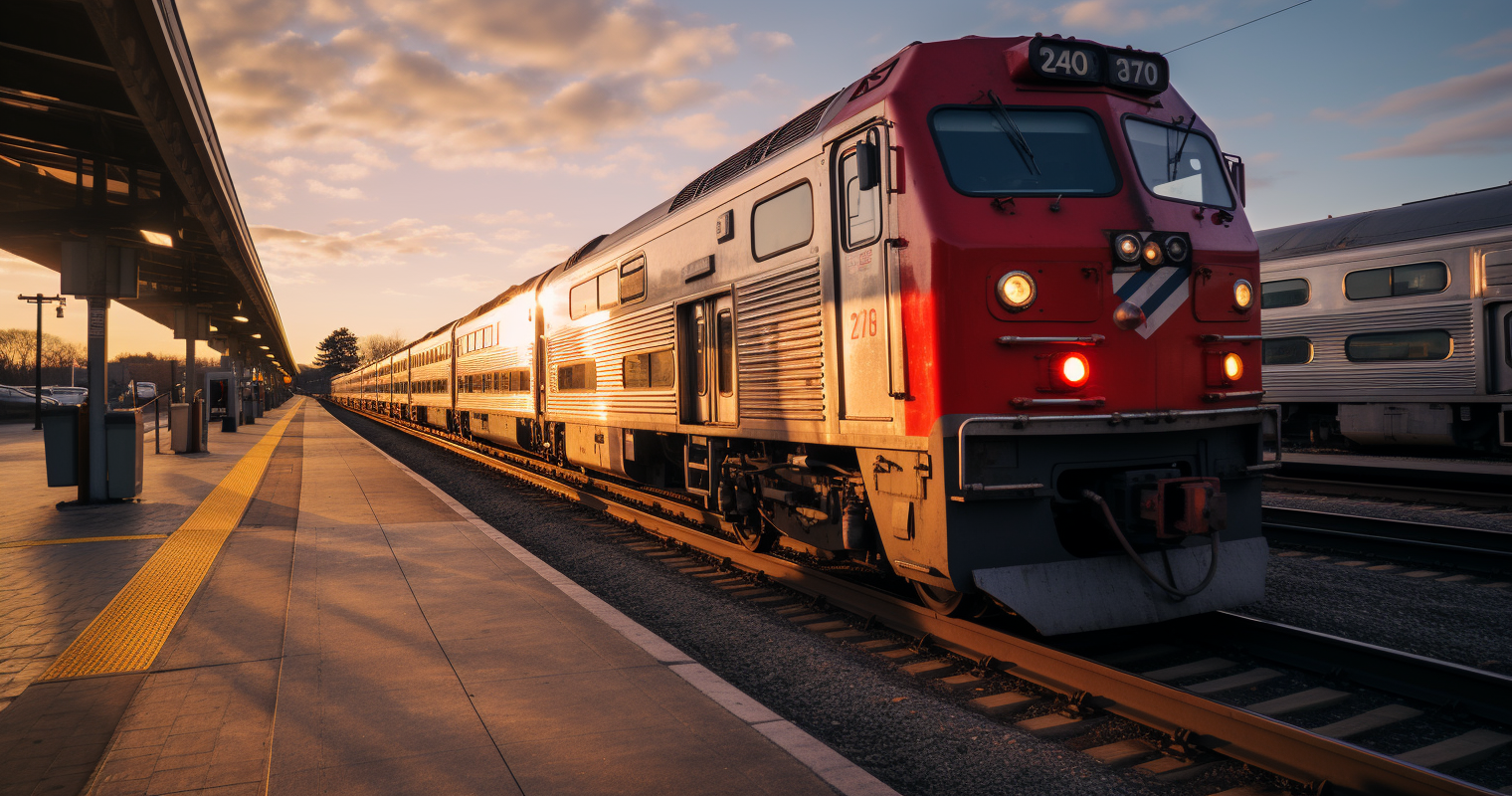
Venezuela’s rail network is remarkably narrow in both reach and dependability. The sole active intercity passenger service operates on the corridor between Caracas and Cúa, run by the state agency Instituto de Ferrocarriles del Estado (IFE). Urban metro systems in Caracas, Valencia, and Maracaibo partially compensate for this gap, yet all face serious upkeep difficulties. Rail travel is simply not a practical choice for journeys across the country.
| Item | Details |
|---|---|
| National rail operator | Instituto de Ferrocarriles del Estado (IFE) |
| Active intercity passenger line | Caracas – Cúa (approx. 30 minutes), as of 2025 |
| National passenger network length | 682 km of standard gauge rail, majority freight or under development, as of 2025 |
| Urban metro systems | Caracas (4 lines, 48 stations), Valencia (Line 1 operational), Maracaibo (limited) |
| International rail connections | None active |
| Caracas Metro operating hours | 5:30 am – 11:00 pm daily, as of 2025 |
What is the overall standard of rail travel in Venezuela?
Venezuela’s rail infrastructure is severely constrained, with large portions either still under development or awaiting rehabilitation, all overseen by the Instituto de Ferrocarriles del Estado (IFE). For anyone relocating to Venezuela and expecting a broad intercity rail system on par with those found in Germany, Japan, or Spain, the contrast will be stark.
By the 1990s, the country’s public railway had been whittled down to just a single route connecting Barquisimeto and Puerto Cabello. The opening decades of the 21st century brought the launch of several freight rehabilitation and new construction projects, yet passenger services have remained confined to the solitary Caracas–Cúa corridor, even as some cities have developed modern metro systems.
Rail transport in Venezuela entered a prolonged period of neglect from the 1950s onward, ceding ground to bus and road travel. This decades-long decline means that, in contrast to well-integrated national networks like those of France or Switzerland, Venezuelan rail has never truly re-established itself as a mainstream means of public transport.
After more than seven decades without meaningful investment in the country’s rail infrastructure, the Caracas–Cúa line was inaugurated for public service on 15 October 2006. In 2023, responding to mounting passenger demand, the IFE eventually introduced Sunday services — a welcome development, though one that highlights just how modest the national passenger offering continues to be.
Venezuela’s railway sector contends with a range of deep-rooted problems: chronic underinvestment that has left rolling stock and infrastructure in poor condition, corruption permeating the sector, and a prolonged economic crisis that has severely curtailed both freight and passenger activity. For daily commuters, national rail is simply not an option beyond the greater Caracas region. There is no rail connection between major cities, and residents depend overwhelmingly on long-distance bus services for intercity trips.
No international passenger rail services operate out of Venezuela. Although a rail link to Colombia exists on paper, it has not functioned in any operational capacity. Anyone wishing to travel regionally will need to seek alternative transport entirely.
What classes of rail travel are available in Venezuela, and what are the differences between them?
In contrast to rail systems across much of the world — where first class, business class, and standard carriages are routine — Venezuela’s national passenger rail service runs on an elementary model, with no formal multi-tier class structure on the Caracas–Cúa corridor.
The principal terminus is situated alongside the Caracas Metro Line 3 at La Rinconada Terminal Station. The entire north–south journey takes roughly 30 minutes. The service functions essentially as a commuter shuttle rather than a long-haul rail connection, making the notion of first class or premium seating entirely irrelevant.
On the urban metro systems in Caracas, Valencia, and Maracaibo, there is equally no distinction between passenger classes. All travellers share the same carriages, and fares are flat-rate irrespective of journey length or any class tier. This model mirrors the approach of many metro networks worldwide — the Paris Métro or Mexico City Metro, for instance — where the priority is moving large numbers of people efficiently rather than providing differentiated comfort levels.
Priority seating is set aside on trains for elderly travellers, pregnant women, and passengers with disabilities. While this does not constitute a separate commercial class, it is an important social convention observed across both metro and rail services, and newly arrived residents would do well to familiarise themselves with it.
Given the absence of any formal travel class distinctions on Venezuelan rail, passengers seeking greater comfort for longer journeys will generally find that some of the country’s private long-distance bus operators — several of which provide reclining seats and air conditioning — offer a more comfortable experience than anything currently available by rail.
Where can you find rail timetables and ticket prices in Venezuela?
Locating current, trustworthy timetable and fare information for rail travel in Venezuela can be a frustrating exercise. The national operator does not maintain a fully functional, user-friendly online booking portal comparable to those provided by countries with larger and more developed rail networks.
The Instituto de Ferrocarriles del Estado (IFE) is the state body responsible for managing the country’s railway systems, with its head office in Caracas. IFE is the primary official source for information relating to the Caracas–Cúa line. That said, given the persistent infrastructure and economic difficulties the sector faces, any timetable details should be confirmed directly at the station or through reliable local contacts, as schedules are prone to change without notice.
Published times are subject to revision at any point — whether due to special events, system works, or management decisions. This means that even officially stated schedules should be treated as indicative rather than definitive.
For the Caracas Metro, the official operator is Compañía Anónima Metro de Caracas. Their official website is www.metrodecaracas.com.ve. The Moovit app is also widely relied upon in Caracas: metro line schedules, timetables, operating hours, and real-time departure and arrival information are updated continuously within the app and can be accessed by selecting a specific line.
For the Valencia Metro, which operates under the Ministry of Infrastructure, the official portal at www.metrodevalencia.gob.ve carries the most current service details. Because fare structures and timetables in Venezuela can shift rapidly — particularly in light of ongoing currency volatility — always confirm current prices directly at ticket offices or station counters before travelling. Relying solely on third-party websites for fare details is inadvisable.
How do you buy rail tickets in Venezuela, and can you book in advance?
Ticket purchasing in Venezuela is largely cash-based and conducted in person — a significant departure from the norm in many countries where online or app-based booking has become standard. Advance online booking is not a feature of the current Venezuelan passenger rail experience.
For the Caracas–Cúa intercity service, tickets are bought at the station ticket window at La Rinconada in Caracas prior to boarding. No nationwide online ticketing platform exists. Given the limited number of daily departures on this route, arriving early is advisable, especially during peak commuting periods.
For urban metro systems, the process works as follows:
- Make your way to the metro station and go to the ticket sales booth or, where one is available, an automated ticket machine.
- Purchase a single-trip ticket, a multi-trip card, or a rechargeable MetroCard (Tarjeta MetroCard) at the booth.
- If opting for a rechargeable card, load your preferred amount onto it — cards can be topped up at sales booths or at electronic ticket offices distributed throughout the metro network.
- Use your ticket or card at the turnstile to gain access to the platform.
- Board the train and hold onto your card for future journeys if it is a multi-trip or rechargeable variety.
A notable aspect of the Caracas Metro’s distribution model is the wholesale supply of tickets to authorised intermediaries, including kiosks and other commercial outlets. This arrangement enables passengers to buy tickets outside of stations. These authorised retailers are identified by the “Metroseñal” sign, making them relatively easy to spot.
When travelling on the Valencia Metro, cash is the only accepted payment method. This guidance applies broadly across Venezuela’s rail and metro infrastructure — card payment facilities are either absent or unreliable at the vast majority of stations.
What types of rail tickets are available in Venezuela, and are there discount schemes?
The ticket options within Venezuela’s urban rail and metro systems are fairly straightforward, though specific products and their prices are subject to regular change given the country’s volatile currency environment. Always verify current fares at the station before travelling.
For the Caracas Metro, several ticket formats have historically been on offer:
- Single trip (Simple): A standard one-ride ticket valid for a single journey anywhere within the metro network.
- Return trip: Provides the holder with access to two journeys within the Caracas Metro system. Particularly suited to occasional travellers who board the trains only twice in a day.
- Return trip Integrated: Equivalent to the standard return ticket, granting two trips — one outward and one return — with no restrictions on stations or route transfers, and additionally covering two trips on MetroBus services.
- MultiAbono (10-trip card): This orange-coloured card is recommended for regular commuters, covering ten journeys with no restrictions on stations or transfers between lines.
- MetroCard (rechargeable): These red cards bearing the transport company logo can be loaded with 20, 30, or 40 trips according to need, and are designed for frequent users of the network.
Venezuela’s recent history of severe hyperinflation means that any specific fare figures cited in external sources should be approached with considerable caution. Metro fares are generally affordable, which represents a meaningful advantage for daily commuters, but the precise cost can fluctuate, so consulting the latest pricing at the station or on the metro’s official website is always the wiser approach.
There is no widely publicised national rail pass in Venezuela, nor anything resembling a railcard scheme of the kind found in the Netherlands or Switzerland. Concessionary fares for groups such as senior citizens, students, and people with disabilities have been mentioned in local sources, but formal documentation of these schemes is not readily accessible through official online channels. New residents are best advised to enquire directly at metro ticket offices about any applicable discounts. The official Caracas Metro website at www.metrodecaracas.com.ve is the most reliable source for up-to-date information.
How accessible is the rail network in Venezuela for disabled passengers?
Accessibility across Venezuela’s rail and metro network is uneven and falls considerably short of the standards found in systems such as those in Germany, the Netherlands, or the United Kingdom, where comprehensive step-free access and passenger assistance are legally required and broadly implemented.
Venezuelan law prohibits discrimination against persons with physical and mental disabilities, yet enforcement of this legislation remains weak. Accessibility in public transportation, accommodation, communication and information infrastructure, and general public facilities is limited. Where accessible features do exist, they are far more likely to be found in Caracas than anywhere else in the country.
The Caracas Metro has undertaken efforts to improve conditions for passengers with disabilities, though significant gaps remain. Some stations are fitted with elevators and ramps to support passengers with mobility impairments, but full accessibility is by no means universal across the network. It is worth checking in advance whether the stations on your intended route have the facilities you require.
Newer stations — particularly on sections of Line 3 and Line 4 — tend to include elevators and ramps, while accessibility features at older stations are being introduced only gradually. This inconsistency means that the level of accessibility varies considerably depending on which part of the network is being used, and passengers with mobility limitations should plan their routes with care.
Priority seating is designated on trains for elderly passengers, pregnant women, and individuals with disabilities. If you find yourself occupying one of these seats and someone who needs it boards the train, offering it up is the expected and appreciated course of action. Metro staff are also on hand to provide assistance where possible.
The availability of rental, repair, and replacement services for mobility aids and equipment — as well as specialist support such as sign language interpreters or personal assistants — is restricted. Passengers who rely on specialised mobility or communication aids should factor in the possibility that replacements or professional support could be difficult to obtain in Venezuela. No centralised passenger assistance booking system exists on the national rail or metro network comparable to those offered by several European rail operators.
Are there metro or urban rail systems in Venezuela’s cities?
Venezuela has metro systems operating in Caracas, Valencia, and Maracaibo, all with extensive histories of development but currently facing notable maintenance and operational pressures. For day-to-day residents, these urban systems represent the most practically useful element of Venezuela’s overall rail offering.
Caracas Metro
The Caracas Metro is a rapid transit system serving the capital. It opened in 1983 and currently operates 48 stations. It was built and is run by Compañía Anónima Metro de Caracas, a state-owned enterprise. The system began with 11.5 km of track and has since grown to a total network length of 106.5 km.
The Caracas Metro currently comprises 4 main lines (Lines 1–4), 1 branch line (Los Teques Metro), and 1 cable car line (Cabletren), serving major areas of the capital and connecting to neighbouring satellite towns. The system runs seven days a week, including public holidays, from 5:30 am to 11:00 pm.
Many stations display works by celebrated Venezuelan artists, giving commuters an incidental cultural experience. However, the system has encountered serious operational problems in recent years. The Venezuelan economic crisis took a heavy toll: by October 2018, approximately 25% of Caracas Metro trains had been taken out of service due to insufficient maintenance. By 2020, only nine trains remained in operation. In 2022, the figure stood at just 23 of the original fleet of 169 trains. The resulting overcrowding and delays have been most acute on Line 1.
Line 3’s La Rinconada station serves as the interchange between the Caracas Metro and the Libertador Simón Bolívar intercity train station, where passengers can connect to and from Charallave and Cúa. Line 2 links with the Los Teques Metro at its terminal stop at Las Adjuntas. Line 4 connects at the Parque Central station with the MetroCable, a gondola system serving the San Agustín neighbourhood.
The Caracas Metro operates on a flat fare basis — a single journey costs a fixed bolivar amount regardless of the distance travelled. The system also provides a rechargeable smart card (Tarjeta MetroCard) for regular users. Visit the official website at www.metrodecaracas.com.ve for current fare details, as prices are subject to frequent revision.
Valencia Metro
The Valencia Metro is the urban mass transit system serving Valencia, Carabobo, and its surrounding suburbs. It was officially inaugurated on 18 November 2006, initially with just 3 of the 7 stations on the original 4.7-kilometre Line 1 route open and service provided free of charge. Full revenue service covering all 7 stations commenced on 18 November 2007.
At present, the Valencia Metro operates Line 1. An additional 4.3-kilometre segment (Line 2) along the same north–south alignment is currently under construction, while a further 5.6-kilometre section (Line 3) remains in the engineering and environmental assessment phases. The fleet consists of twelve Siemens SD-460 two-car light rail vehicle trainsets; the Valencia system functions as a light metro running on a fully grade-separated alignment.
Valencia Metro operates Monday to Friday from 6:00 am to 8:30 pm, and on Saturdays, Sundays, and public holidays from 6:00 am to 7:30 pm. For current fare and service information, consult the official website at www.metrodevalencia.gob.ve.
Maracaibo Metro
Among Venezuela’s urban rail systems, the Caracas Metro has been in service since 1983, while the Maracaibo Metro and Valencia Metro are more recent additions. The Maracaibo system is considerably smaller in scope than its Caracas counterpart. Like the other urban networks in Venezuela, it faces ongoing maintenance and operational challenges. Residents in Maracaibo should verify current service availability locally before depending on the metro for regular commuting.
For real-time journey planning in Caracas, the Moovit app is a widely used and practical resource. Metro line schedules, timetables, service hours, and live departure and arrival data are all updated within the app in real time.
What should expats know about using the rail network day-to-day in Venezuela?
Settling into Venezuela’s rail and metro culture requires new residents to grasp both the practical workings of the systems and certain important local conventions. The day-to-day experience differs considerably from the largely automated, self-service rail environments common in many other countries.
Language: All station signage, onboard announcements, and ticketing materials are exclusively in Spanish. No English-language signage or audio is provided on any Venezuelan rail or metro service. Newcomers who do not yet speak Spanish would benefit from learning basic Spanish transport vocabulary and station names before travelling independently.
Navigation: Finding your way around Caracas Metro stations is generally manageable, thanks to clear directional signs and colour-coded lines. Each line carries a distinct colour and number — an approach familiar from metro systems in other major cities — making route-finding relatively intuitive even for first-time users.
Luggage: Bags and packages must not obstruct the free movement of other passengers. The metro can become extremely congested during peak hours, so travelling with large items of luggage is strongly discouraged. When accompanying young children in a pushchair or stroller, it must be folded before entering the station premises, or passengers may be asked to leave.
Behaviour and etiquette: Passengers are not permitted to enter the metro while under the influence of alcohol, narcotics, or hallucinogenic substances. Running through stations, platforms, and train carriages is prohibited except in situations involving an immediate threat to personal safety. The use of audio devices without headphones is not allowed, as it causes disturbance to fellow passengers. Pets are also prohibited on the metro.
Safety: The metro employs a considerable number of security staff and is monitored by surveillance cameras, making it generally a safe environment. Nevertheless, remain attentive to your personal belongings during busy periods, as pickpocketing can occur in crowded conditions, as it does on urban transit networks in most large cities worldwide.
Seat reservations: Reserved seating does not apply on either the metro or the Caracas–Cúa commuter train. All seats are available on a first-come, first-served basis, with the exception of priority seats designated for elderly passengers, pregnant women, and individuals with disabilities.
Currency and payment: Cash in bolívares is the predominant — and often only — payment method across Venezuela’s rail and metro network. Reliable card payment infrastructure is largely absent at stations. Carry adequate small-denomination notes when travelling, and bear in mind that ATM availability and general banking conditions in Venezuela can be unpredictable for newly arrived residents.
Connectivity and apps: Moovit is the most widely used urban mobility app in Caracas. The Moovit platform provides real-time information on metro status, service delays, route changes, and any disruptions, making it a valuable tool for planning daily journeys.
Frequently asked questions: rail travel in Venezuela
Is there a national train network I can use to travel between Venezuelan cities?
Passenger rail services are confined to a single corridor between Caracas and Cúa. No functioning intercity rail network exists linking Venezuela’s major cities such as Maracaibo, Valencia, Barquisimeto, or Maturín. Long-distance bus services represent the principal alternative for travel between cities.
How long is the journey on the Caracas–Cúa train?
The north–south line takes approximately 30 minutes to traverse. The service calls at four stations and links the La Rinconada area of Caracas with the town of Cúa in Miranda State.
Can I use the Caracas Metro to connect to the suburban commuter train?
Yes. La Rinconada station on Line 3 acts as the transfer point between the Caracas Metro and the Libertador Simón Bolívar intercity train station, from which connections run to and from Charallave and Cúa. This is the primary integration point between the metro and the national rail service.
Are rail fares in Venezuela expensive?
Metro fares in Caracas are generally affordable, representing a genuine advantage for daily commuters. However, Venezuela’s prolonged history of hyperinflation means that specific fare figures change frequently. Always check the most current prices at station ticket offices or on the official metro website rather than relying on figures published elsewhere.
Does Venezuela have a rail pass for frequent travellers?
There is no national rail pass scheme in Venezuela of the kind available in several European countries. The Caracas Metro does offer a rechargeable MetroCard for regular users, which can be loaded with 20, 30, or 40 trips as required. This is currently the closest equivalent to a frequent traveller product available in the country.
Are Venezuela’s train and metro stations wheelchair accessible?
The Caracas Metro has taken steps to improve conditions for passengers with disabilities, but considerable gaps remain. Certain stations are equipped with elevators and ramps, while others are not yet fully accessible. Accessibility within public transportation is broadly limited and is more developed in Caracas than elsewhere in the country.
Are there trains from Venezuela to neighbouring countries?
No international passenger train services operate from Venezuela. Although a rail link to Colombia exists, it is not in operation. All cross-border travel must be undertaken by air or road.
What app should I use to plan my metro journeys in Caracas?
Moovit is the most popular urban mobility app for navigating Caracas. The platform delivers real-time information on metro status, delays, and route changes, and is free to download. It supports journey planning across both the metro and the Metrobus network.