

Monaco’s end-of-life care infrastructure is compact yet well-developed, anchored by the Centre Hospitalier Princesse Grace (CHPG), which houses a dedicated palliative and supportive care unit. In a landmark vote in June 2025, the Principality enacted its first specific end-of-life legislation — Law No. 1081 — enshrining the right to palliative care and giving legal recognition to advance directives. Deaths must be formally declared at the Mairie de Monaco within 24 hours, after which an official acte de décès is issued without delay.
| Item | Details |
|---|---|
| End-of-life law | Law No. 1081 (adopted June 2025) — first dedicated legal framework for palliative care and advance directives in Monaco |
| Death registration deadline | Within 24 hours at the Mairie de Monaco (Town Hall) |
| Death certificate | Issued by the Etat Civil of the Mairie de Monaco; usually available immediately |
| Funeral provider | SOMOTHA (Société Monégasque de Thanatologie), 14 Avenue Pasteur — official funeral association |
| Cremation/burial facility | Monaco has a single crematorium and cemetery |
| Public health insurer (CSM) | Caisses Sociales de Monaco covers workers and legal residents; palliative care at CHPG covered for eligible patients |
What end of life care options are available in Monaco, and how does the system work?
End-of-life care in Monaco is shaped by a commitment to dignity, comfort, and emotional support during a patient’s final period of life. The Principality’s central medical facility, the Centre Hospitalier Princesse Grace (CHPG), operates a Mobile Palliative and Supportive Care Unit dedicated to this purpose. For a territory of such modest dimensions, Monaco offers a notably thorough range of services — and those services have been substantially reinforced by recent legislation.
On 11 June 2025, Monaco’s National Council passed Law No. 1081 in a historic vote, establishing a dedicated legal framework for end-of-life support and palliative care for the very first time. Previously, the Principality had no formal statute addressing the medical, legal, or ethical dimensions of dying; palliative treatment was available in practice, but patients held no guaranteed entitlement to it, and clinical decisions at the end of life were often made in the absence of clear regulatory guidance.
Palliative care in Monaco is delivered through several channels, encompassing specialist units within the hospital and community-based outreach teams. Treatment can take place in an inpatient setting or, where clinically suitable, in the patient’s own home. The Principality’s extraordinarily small footprint — a little over two square kilometres — means that specialist services are concentrated in one primary hospital, making the care pathway considerably more straightforward to navigate than in larger nations where provision is dispersed across many regional centres.
What is palliative care in Monaco, and who is eligible for it?
Alongside hospice provision, palliative care represents a fundamental strand of end-of-life support in Monaco. Its purpose is to relieve pain and distressing symptoms and to enhance quality of life for anyone living with a serious or life-limiting condition — including illnesses such as cancer or advanced heart disease. Critically, palliative care is not reserved solely for those in the final days of life; it can be introduced at the point of diagnosis and delivered in parallel with curative or disease-modifying treatment.
Law No. 1081 formally establishes every patient’s right to receive palliative care — oriented towards relief and comfort rather than cure. This right applies to all patients in Monaco irrespective of nationality or residency. In practical terms, an expatriate being treated at the CHPG or supported by a community care team is fully entitled to palliative services once there is a clinical indication for them.
Palliative care in Monaco is delivered by multidisciplinary teams comprising doctors, nurses, social workers, and chaplains. This integrated approach ensures that physical, psychological, social, and spiritual dimensions of the patient’s experience are all attended to — a model closely aligned with palliative practice in France and Switzerland. Under the new law, the number of dedicated palliative beds is set to increase significantly: the existing hospital’s four reserved beds are planned to triple in the new hospital facility. Families and carers are considered active participants in care planning, and the legislation formally recognises the contribution of voluntary organisations in this process.
Are there hospices in Monaco, and how do you access them?
Monaco has a small number of hospice facilities providing dedicated care to terminally ill patients. These establishments are generally operated by non-governmental bodies and are situated within the Principality’s urban area. Given Monaco’s exceptionally compact geography, all inpatient care facilities are within very close proximity of one another.
Hospices in Monaco provide a comprehensive array of services: pain control, palliative support, emotional and psychological assistance for patients and their loved ones, and spiritual care. These services are delivered by teams that include doctors, nurses, social workers, and chaplains working in close coordination.
Access to inpatient palliative or hospice-type care is normally arranged through a referral from a treating physician at the CHPG or a private specialist. Expats should raise the subject of end-of-life care with their registered doctor (médecin traitant), who can advise on whether an inpatient or community-based approach is most suitable. The 2025 law guarantees that individuals approaching the end of life are treated with respect, dignity, and appropriate compassion. For those who prefer to remain at home in their final weeks, the CHPG’s Mobile Palliative and Supportive Care Unit can extend support into the community through outreach visits.
Is palliative or hospice care covered by public health insurance or the national health system in Monaco, or does it need to be funded privately?
Monaco’s state-funded healthcare system is administered by the Caisses Sociales de Monaco (CSM). All employed and self-employed individuals — whether Monegasque nationals or resident expatriates — are required to make contributions. Legal residents registered with the CSM are broadly entitled to access public healthcare at the CHPG, including palliative care services, on the same terms as Monegasque citizens. This arrangement bears resemblance to social insurance frameworks in France and Belgium, where contribution records unlock entitlement to a wide spectrum of healthcare benefits.
French and Italian nationals may also access public healthcare facilities in Monaco provided they can demonstrate regular contributions to their home country’s state healthcare scheme. Other foreign nationals who are lawfully resident in Monaco and registered with the CSM will similarly be covered for treatment at the CHPG.
Many residents take out supplementary health insurance (mutuelle) to cover any costs not met by the state scheme. Expats who are not yet registered with the CSM — perhaps because they have only recently arrived, or because they hold private healthcare arrangements — will need to fund palliative care personally or through international health insurance. It is always prudent to verify your coverage directly with the CSM or your insurer before a care need emerges, as entitlements and policy terms can change over time.
A range of private hospitals and clinics offering premium care are also accessible for those wishing to pay privately. Some expatriates living in Monaco hold comprehensive international private medical insurance that extends to end-of-life and palliative care; policy documentation should be reviewed carefully, as certain plans exclude terminal care entirely or impose waiting periods before such cover takes effect.
What legal documents should expats have in place before the end of life in Monaco — such as a living will, advance directive, power of attorney, or healthcare proxy — and how do these work?
Law No. 1081 enables individuals to prepare legally recognised written statements about their wishes for treatment at the end of life. These declarations assist doctors and family members in making care decisions that genuinely reflect the patient’s own values. Before this legislation, Monaco had no formal mechanism giving such declarations binding legal status. The 2025 law marks a substantial change in that regard.
An advance directive — known in French as directives anticipées — enables you to record in writing whether you wish to accept or refuse particular medical interventions in the event that you become incapable of expressing your views. Under the new law, this document carries genuine legal weight and treating physicians are obliged to take it into account. The document should be prepared in French, duly witnessed, and shared with both your doctor and your immediate family.
A power of attorney (procuration) or healthcare proxy enables you to designate a trusted individual to make medical decisions on your behalf should you lose mental capacity. This is particularly important for expats whose family members reside overseas and who therefore need a locally available person to liaise with medical staff. A Monegasque notary (notaire) can prepare these instruments, and it is advisable to lodge copies with your doctor and the CHPG as well.
Beyond healthcare-related documents, expats should ensure they hold an up-to-date will (testament). Monegasque law applies forced heirship rules to immovable property, meaning that a will drafted without specialist legal input may not achieve the outcome intended. Consulting a qualified Monegasque lawyer or notary at the earliest opportunity — ideally before or shortly after relocating — is strongly recommended.
Are documents such as advance directives or powers of attorney made in another country legally recognised in Monaco?
Monaco operates as a civil law jurisdiction, and the question of whether foreign legal documents are recognised is governed by principles of international private law. As a general rule, a document validly executed under the law of its country of origin may be afforded effect in Monaco, but this is not automatic — each document must be assessed individually by Monegasque authorities or courts.
In relation to advance directives specifically, the 2025 legislation establishes a domestic framework for the first time. A foreign advance directive presented to clinical staff at the CHPG may be treated as an expression of the patient’s wishes, but it is unlikely to carry the same formal legal standing as a document prepared in accordance with Monaco’s new law. To eliminate uncertainty, expatriates who already hold advance directives issued in another country are strongly encouraged to also prepare a document that satisfies the requirements of Monaco’s 2025 end-of-life legislation.
Wills executed in a form recognised by a foreigner’s national law are also acknowledged in Monaco, but establishing the validity of a foreign will through Monegasque processes can be both slow and costly. The same broad principle applies to other legal instruments such as powers of attorney: recognition is achievable, but it requires additional procedural effort. For the greatest peace of mind, key documents should be prepared or formally ratified by a Monegasque notary. Documents in any language other than French will generally need to be accompanied by a certified French translation before they can be acted upon.
What are the laws around euthanasia or assisted dying in Monaco?
Through its 2025 legislation, Monaco has joined a growing cohort of jurisdictions that have chosen to regulate end-of-life care without extending the law to encompass euthanasia. Both euthanasia — the deliberate termination of a patient’s life to end their suffering — and assisted dying — where a person is supplied with the means to end their own life — remain unlawful in Monaco. The Principality has drawn a firm legal distinction between ensuring a comfortable death and actively bringing death about.
The law introduces compassionate, clearly defined safeguards for some of the most difficult circumstances that families and healthcare providers face. What it expressly permits includes the right to refuse unwanted treatment, the right to comprehensive pain and symptom management, and — where clinically warranted — the right to palliative sedation to address otherwise intractable suffering. These provisions closely mirror the approach taken in France, which similarly prohibits euthanasia while guaranteeing robust palliative entitlements.
Expats arriving from countries where assisted dying is legally sanctioned — such as the Netherlands, Belgium, Canada, or Switzerland — should understand clearly that those options have no legal standing in Monaco. Decisions about the withdrawal of treatment or “do not resuscitate” (DNR) orders may be included in an advance directive, but any deliberate act to hasten death falls outside the boundaries of the law.
What are the local customs, traditions, and religious practices around death and dying in Monaco?
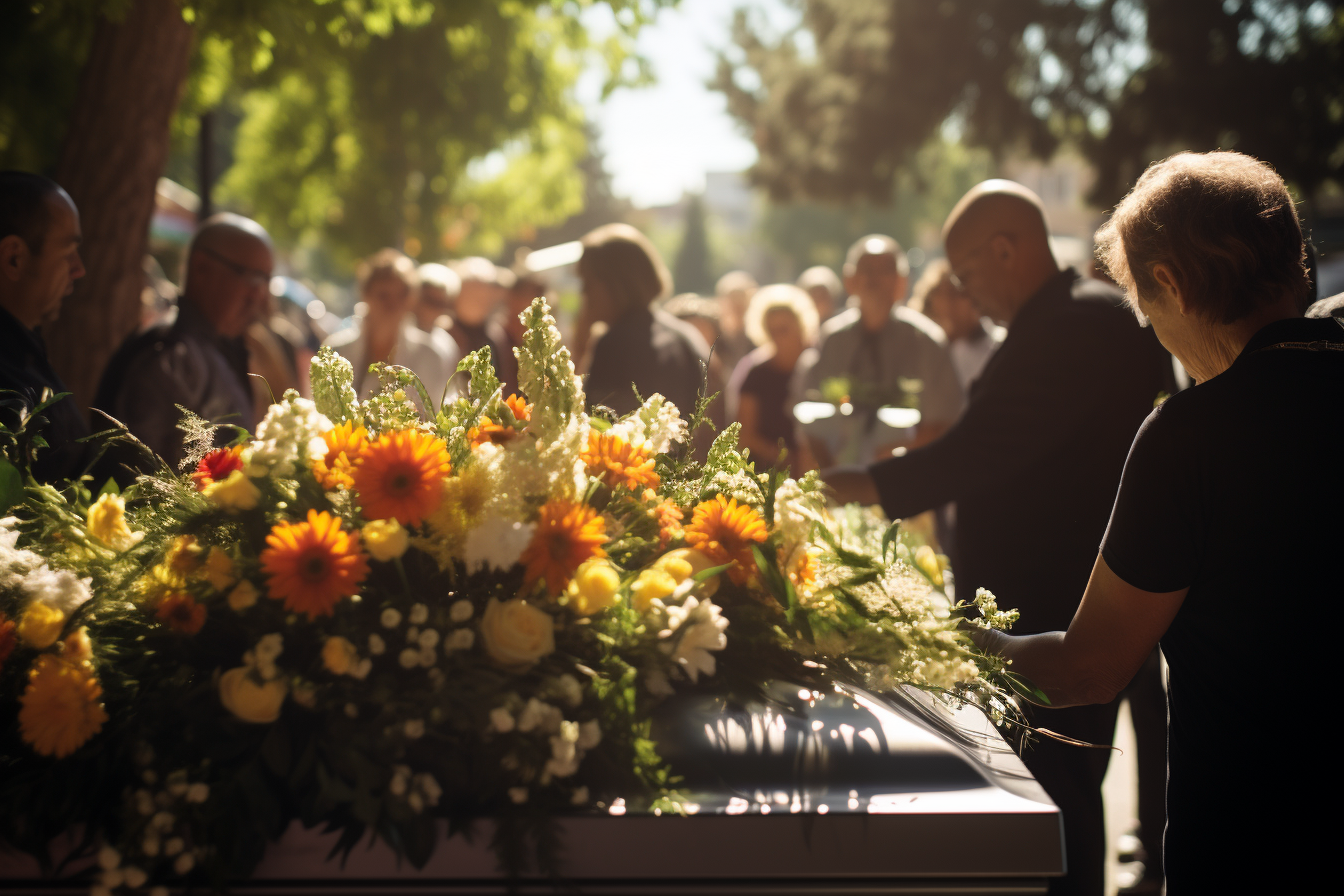
Roman Catholicism is Monaco’s state religion, and it exerts a strong cultural influence on attitudes and practices surrounding death. Catholic funeral rites are deeply embedded in Monegasque tradition, and it is customary for a funeral Mass to be celebrated at one of the Principality’s historic churches. The Cathedral of Our Lady of the Immaculate Conception — the Cathédrale Notre-Dame-Immaculée — is the same cathedral that serves as the setting for the royal family’s most significant religious ceremonies and holds particular cultural resonance.
A mourning period following a death is observed in Monaco, its duration shaped by the religion, cultural background, and personal traditions of the individual and their family. This period may last from a few days to several weeks, during which close relatives commonly wear black or subdued clothing as an outward expression of grief.
Funeral customs vary considerably according to the deceased’s religion, cultural heritage, and personal preferences. Burial is the more traditional method of disposition in Monaco, and bodies are typically prepared by a qualified funeral director or mortician before services are held in a church or other religious venue.
Monaco’s population is highly cosmopolitan and international, and non-Catholic or entirely secular funeral traditions are entirely commonplace. Jewish, Muslim, Protestant, and non-religious funerals are all conducted in the Principality, and the community is well accustomed to this diversity. Funeral providers and healthcare professionals are experienced in accommodating a broad spectrum of cultural and religious requirements. Expats should communicate any specific religious or cultural wishes to the hospital, palliative care team, and funeral director as early as possible in the process.
What must you do when someone dies in Monaco?
Following a death in Monaco, a prescribed sequence of notifications and registrations must be completed, some subject to strict time limits. The steps below apply whether the death takes place at home, in a hospital, or in a care facility.
- Obtain medical certification without delay. A doctor must be contacted immediately to examine the deceased, certify the death, and issue a medical death certificate (certificat de décès). Where the deceased was already a CHPG patient, hospital staff will manage this step directly.
- Report unexplained or suspicious deaths to the police. If the circumstances of the death are unclear or suspicious, or if the identity of the deceased is unknown, the matter must be reported to the Urban Police (Division de Police Urbaine), reachable in an emergency on 17 or at +377 93 15 30 15.
- Declare the death at the Mairie within 24 hours. The death must be formally declared at the Monaco Town Hall (Mairie de Monaco) within 24 hours of occurrence. The Mairie is situated at Place de la Mairie, 98000 Monaco, and is open Monday to Friday, 08:30–16:30.
- Designate a representative where necessary. The declaration is usually made by a close relative or a formally appointed representative. A licensed funeral director may also carry out this step on the family’s behalf.
- Obtain the official death certificate (acte de décès). Once all required information has been provided, a certified copy of the civil register entry — the acte de décès — is normally issued on the spot. Request several certified copies at this stage, as they will be required for insurance claims, estate administration, and any repatriation proceedings.
- Inform relevant institutions within seven days. Within seven days, the following should be notified of the death — a certified copy of the death certificate will usually be required: the deceased’s employer or pension provider; the CSM (Caisses Sociales de Monaco); the deceased’s bank; and any insurance companies holding policies in the deceased’s name.
- Contact the relevant foreign embassy or consulate where applicable. If the deceased was a foreign national, the appropriate embassy or consulate should be notified as soon as possible. Further detail on this process is provided in the dedicated section below.
- Commission a funeral director. Once death has been certified and the essential legal formalities are in hand, funeral arrangements should be made through SOMOTHA or another licensed provider. The funeral director can assist with numerous administrative tasks, including international repatriation if that is required.
How is a death officially registered in Monaco, and what documents are needed?
Every death occurring in Monaco must be officially registered. The Registry Office of the Mairie (City Hall) is responsible for issuing the death certificate, and in most cases this document is produced immediately upon registration. Certificates may be collected in person or, for a small fee, delivered by post.
Death certificates in Monaco are issued by the Etat Civil of the Mairie de Monaco on standardised forms broadly comparable in format to birth certificates. They measure approximately 8 x 10 inches and bear the signature of an officer from the Mayor’s office, typically an Adjoint or occasionally a Membre de la Délégation Spéciale.
To complete the registration, you will normally need to present the medical death certificate signed by the attending physician, the deceased’s identity documents (passport or residence card), and — where available — their birth or marriage certificate. The individual registering the death should also bring personal identification. All documentation should be in French or accompanied by a certified translation. No charge is made for the medical certificate itself, though a modest fee applies if the death certificate is to be sent by post.
Several certified copies of the acte de décès should be obtained at the time of registration, as they will be needed for settling the estate, closing bank accounts, pursuing insurance claims, terminating pension payments, and — where relevant — organising repatriation. Current procedural guidance is available on the official Monegasque public services portal at monservicepublic.gouv.mc.
What happens if a foreign national dies in Monaco — what are the specific steps for notifying their home country’s embassy or consulate, and what role does the consulate play?
When a foreign national dies in Monaco, the family or next of kin should contact the relevant embassy or consulate at the earliest practicable opportunity — ideally within the first 24 to 48 hours, running in parallel with the domestic registration process. The consulate serves as an essential link between Monaco’s administrative and legal requirements and those of the deceased’s home country.
Because Monaco is entirely surrounded by France on land and sea, at least two national borders will need to be crossed whenever remains are repatriated to a country other than France. Most countries do not maintain a resident embassy within Monaco itself, so contact is generally made with the relevant embassy in Paris. Consular officials operating in Monaco typically do so through the French embassies of their respective countries, and repatriation procedures generally follow the same processes as they would within France.
Consular officers are equipped to assist families navigating the death of a citizen abroad. They can liaise with local authorities and the deceased’s legal representative to facilitate the return of remains, supply contact details for local funeral homes and lawyers, help trace and notify next of kin who may not yet have been informed, and advise on the documentation that the home country will require to formally register the death on its own records.
In general, four documents are needed to transfer remains to another country: a consular mortuary certificate (issued by a consular officer), the local death certificate, an embalming certificate, and a certificate of non-contagious disease. The local death certificate is issued by the registrar and identifies the deceased by name, place, date, and cause of death. Because requirements differ from country to country, it is essential to contact your national embassy or consulate at the earliest opportunity for country-specific guidance.
How are funerals typically arranged in Monaco, and what are the usual options for burial or cremation?
Funeral arrangements in Monaco, including both burial and cremation, are handled through the Société Monégasque de Thanatologie (SOMOTHA), the official Monegasque funerary organisation. SOMOTHA is located at 14 Avenue Pasteur, 98000 Monaco, and can be contacted at +377 97 98 40 40. The Principality has a single crematorium and a single cemetery, making SOMOTHA the principal licensed provider of funeral services.
Both burial and cremation are legally permitted. Given Monaco’s extremely restricted land area, burial plots are finite and highly sought after, meaning that space is scarce and costs reflect this scarcity. Families may choose to bury the deceased locally or arrange for the body or ashes to be transferred to another country. Cremation followed by repatriation of ashes is a practical option that many expat families prefer, largely because transporting ashes is logistically simpler and less costly than transporting a body.
Bodies are typically prepared for burial by a funeral director or mortician, and the service itself may take place in a church, another religious venue, or a secular setting. SOMOTHA and other licensed funeral providers in Monaco have broad experience in catering to diverse cultural and religious requirements, covering Muslim, Jewish, and non-religious ceremonies among others. If particular religious rites are needed, it is advisable to contact the relevant religious community in Monaco or the wider region as early as possible to coordinate the arrangements effectively.
What are the approximate costs of a funeral in Monaco, and are there any state or insurance-based funds that can help cover them?
Monaco consistently ranks among the most expensive places in the world, and funeral costs are no exception. As of 2025, a straightforward funeral in Monaco — encompassing the coffin, preparation of the body, and local burial — is likely to run to several thousand euros, with more elaborate arrangements costing considerably more. For accurate and up-to-date pricing, contact SOMOTHA or another licensed provider directly before committing to any arrangements, as costs are subject to change.
Cremation is generally the more affordable option, particularly in light of the limited availability and elevated cost of burial plots in Monaco. Repatriation of remains introduces additional expense, including embalming, specialist transport containers, and international transfer or freight charges.
Where the deceased held insurance, the relevant insurer should be contacted promptly so that appropriate arrangements can be initiated. If no insurance cover is in place, the costs of repatriation or local funeral services will fall to the family. Where insurance does apply, accommodation and travel expenses for bereaved relatives are frequently included in the cover.
A number of international life insurance policies and expat health insurance plans incorporate a specific death and repatriation benefit. Any policies held by the deceased should be reviewed carefully, and insurers notified as soon as possible. The CSM does not typically provide a direct funeral grant in the manner of some national social security systems; current CSM survivor benefits and any applicable lump-sum payments can be verified at caisses-sociales.mc.
What is the process for repatriating the remains of a foreign national from Monaco to another country?
Repatriating a body from Monaco to the deceased’s country of origin requires the involvement of the relevant embassy or consulate. The process should begin immediately: notify both the Monegasque authorities (Mairie) and the embassy or consulate simultaneously, since both sets of documentation must be progressed concurrently.
A close relative or formally appointed representative must instruct a funeral director — based in Monaco, France, or the destination country — to manage the repatriation. SOMOTHA has extensive experience in international repatriation and is well placed to coordinate with funeral directors, embassies, and transport operators. The appointed funeral director will typically oversee embalming, specialist coffin requirements, and the assembly of the necessary paperwork.
The key documents typically required for repatriation include: the Monegasque acte de décès; a medical certificate stating the cause of death; an embalming certificate; a certificate of non-contagious disease; a consular mortuary certificate or laissez-passer mortuaire (transit permit); and any documentation specifically required by the destination country. All documents may need to be officially translated into the language of the receiving country before they will be accepted.
Because Monaco is geographically enclosed by France, any repatriation to a country other than France will involve crossing at least two international borders. Most consular officials operating in Monaco work through the French embassies of their respective countries, and repatriation procedures generally mirror those applied within France. The overall process typically takes between one and several weeks, depending on the destination country, the pace of document preparation, and whether the remains are being transported by air or by road. Families who hold travel insurance or specialist repatriation cover are likely to find the process considerably more manageable.
What happens to the estate of someone who dies in Monaco — how does probate or estate administration work, and are there inheritance taxes?
In principle, Monegasque law provides for a deceased person’s estate to pass automatically to all eligible beneficiaries — either in accordance with a valid will or under the intestacy rules — once they have reached legal age. In practice, however, where real estate in Monaco is being inherited, sold, mortgaged, or transferred, legal proceedings are required to establish and formally transfer title, and to execute any other relevant documentation.
Monaco levies no general income or wealth tax on individuals, and this philosophy broadly extends to the inheritance context. There is no inheritance tax applicable between spouses or between direct ascendants and descendants (parents and children). The inheritance of assets by more distant relatives or unrelated individuals may, however, attract transfer duties. Rates and thresholds are subject to change; always confirm the current position with a Monegasque notary or tax adviser before finalising any estate planning arrangements.
Where a foreigner — whether resident in Monaco or domiciled elsewhere — dies as the owner of real property in Monaco, their surviving spouse and children hold a legally protected entitlement to that property. The reserved portion rules stipulate that one half of the estate must pass to a sole child; two thirds must be divided equally between two children; and three quarters must be divided equally among three or more children. These provisions apply regardless of what a will may specify, including any direction that the entire estate should pass to the surviving spouse.
Some foreign residents in Monaco use trust structures to navigate the Principality’s forced heirship rules. Law 214 permits foreigners resident in Monaco to establish trusts governed by their own national law, and allows trusts registered in foreign jurisdictions to be administered within Monaco. This is a highly specialist area of law and demands advice from a practitioner with expertise in both Monegasque law and the relevant national legal system.
If an expat dies without a will in Monaco, what happens to their assets under local intestacy laws?
Where a person dies intestate — without a valid will — in Monaco, their estate is divided according to the succession rules set out in Monaco’s Civil Code. The order of priority follows a broadly French-style civil law model: the surviving spouse and children are the primary beneficiaries; in the absence of children, parents and siblings take precedence; and in the total absence of eligible relatives, the estate ultimately passes to the state.
Where a foreigner — whether resident in Monaco or domiciled abroad — dies leaving real property in Monaco, their surviving spouse and children hold a protected entitlement to that property by operation of law. For movable assets such as savings, investments, and personal property, the applicable rules may vary depending on the deceased’s nationality and domicile, and Monegasque courts will apply conflict-of-laws analysis to determine which country’s law governs the distribution.
Where the deceased held property both in Monaco and in other countries, the recommended approach is to prepare two separate wills — one in Monaco to deal with Monaco assets, and a foreign will to address assets held elsewhere. The Monegasque will should make express and unambiguous reference to the fact that it covers Monaco assets only; without such clarification, it risks being interpreted as the sole “last will and testament” with worldwide application.
Dying intestate in Monaco when cross-border assets are involved can subject the family to protracted delays and considerable legal expense, as courts work through the applicable law. Expats are strongly urged to make a valid will at the earliest opportunity after establishing residence in Monaco — ideally with guidance from a qualified Monegasque notary.
Frequently asked questions
Will my international private health insurance cover palliative care at the CHPG in Monaco?
Coverage for inpatient palliative care is included in many international private medical insurance plans, but the precise terms differ substantially between providers and individual policies. Examine your policy documents carefully for any exclusions relating to terminal illness, chronic disease, or end-of-life treatment. Contact your insurer directly and request written confirmation of coverage before care commences. The CHPG’s international patient services team can also advise on which insurers are accepted and how billing is handled.
Are advance directives written in another language (such as English, Italian, or German) valid in Monaco?
French is Monaco’s official language, and legal documents submitted to Monegasque authorities or healthcare providers will generally need to be in French or supported by a certified French translation. A foreign-language advance directive may be considered as evidence of your wishes by clinical staff, but it is unlikely to carry the full legal force of a document prepared in compliance with Monaco’s 2025 end-of-life legislation (Law No. 1081). Preparing a French-language version that satisfies the requirements of the new law should be a priority.
How long does the repatriation of remains from Monaco typically take?
The process commonly takes between one and three weeks, though cases involving countries with complex import requirements, or where the relevant consulate is not locally based, may take longer. Repatriation within the EU and EEA tends to proceed more swiftly. Engaging an experienced funeral director such as SOMOTHA at the outset is strongly advised. Holding travel insurance or dedicated repatriation cover can significantly simplify and accelerate the process.
What support is available to bereaved family members in Monaco?
The 2025 law expressly recognises the role of voluntary organisations in supporting patients and their families throughout and beyond the end-of-life period. The CHPG and its palliative care teams can refer bereaved families to counselling and bereavement support services. Expatriates may also find assistance through national community associations, religious communities, or international mental health practitioners operating in Monaco or in the adjacent French Riviera region, including Nice.
Does Monaco have any state funeral benefit or death grant that can help with costs?
Monaco does not operate a universal state funeral grant comparable to those found in certain national social security systems. Members of the CSM scheme may, however, qualify for survivor benefits — such as survivor’s pensions or lump-sum payments — that can help ease immediate financial pressures on the family. Current entitlements should be verified directly with the Caisses Sociales de Monaco, as the precise benefits on offer may be subject to change.
Can cremation ashes be taken home in hand luggage when leaving Monaco?
The transport of cremation ashes is governed by both Monegasque and French export regulations as well as the import rules of the destination country. In the majority of cases, ashes may be carried in hand luggage on commercial flights, provided they are accompanied by a certified copy of the death certificate and a cremation certificate. Some countries impose additional import conditions. Always check with the destination country’s embassy and your airline before travelling. The funeral director can advise on the documentation required.
Does Monaco recognise wills made under the law of another country?
Wills executed in a form that is valid under a foreigner’s national law are recognised in Monaco, but establishing such a will through Monegasque legal channels can be a slow and costly undertaking. If you own assets in Monaco, it is strongly advisable to also prepare a separate Monegasque will specifically covering those assets, drawn up with the assistance of a local notary. This approach can spare your family significant delays and expense after your death.
What happens to a foreign national’s Monaco residency status or visa after death, and are there any administrative steps the family must take?
On death, the deceased’s Monegasque residence permit or card ceases to be valid and should be returned to the relevant authority. The family or estate administrator should also notify the CSM to halt ongoing social contributions, cancel any registered doctor arrangements, and resolve outstanding administrative matters. Banks will freeze the deceased’s accounts once notified of the death, pending completion of the estate administration process. A local lawyer or notary can steer the family through these post-death administrative obligations, which are best addressed promptly to avoid later complications.