

Mexico’s approach to end of life care is anchored in a 2009 amendment to its General Health Law that established the right to palliative care for terminally ill patients, yet the reality of service availability across the country falls well short of that legal promise. Expats residing in Mexico should take early steps to put the correct legal documents in place — including a notarised advance directive and a Mexican will — and should familiarise themselves with the practical obligations that arise when a death occurs, from civil registration to consular notification and timely burial or cremation.
| Item | Details |
|---|---|
| Right to palliative care | Enshrined in law since 2009 for patients with six months or less to live, but provision is uneven (as of 2024) |
| Advance directive (Voluntad Anticipada) | Must be created in Mexico and notarised; foreign directives are generally not valid |
| Death registration timeframe | Typically required within 24–72 hours of death at the local Registro Civil |
| Burial/cremation timeframe | In states such as Jalisco, burial or cremation must occur within 48 hours or the body must be embalmed |
| Inheritance tax | Mexico does not levy a federal inheritance or estate tax; real estate transfers may attract local transfer duties |
| Repatriation of remains | Requires Mexican death certificate, embalming or cremation certificate, transit permit, and consular mortuary certificate; plan for several weeks minimum |
What end of life care options are available in Mexico, and how does the system work?
End of life care in Mexico is delivered through a healthcare system that combines public and private providers. The two main public insurers are the Instituto Mexicano del Seguro Social (IMSS), which covers workers in the formal employment sector and their families, and the Instituto de Seguridad y Servicios Sociales de los Trabajadores del Estado (ISSSTE), which serves government employees. The majority of expats access healthcare through private insurance arrangements or by paying directly at private facilities.
A 2009 amendment to Mexico’s General Health Law introduced a dedicated section addressing the needs of terminally ill patients — defined as those with a life expectancy of six months or less. This legislation requires all hospitals to make palliative care available to such patients, including in their homes, and mandates that healthcare professionals receive appropriate training in this area. The gap between this legislative intent and on-the-ground reality, however, remains considerable.
In practice, palliative care availability is uneven and frequently inadequate across the country. Seven of Mexico’s 32 states had no hospital offering palliative care, and in a further 17 states such services existed only in capital cities. Expats living outside major metropolitan areas should investigate local options well before any health crisis arises, rather than assuming that appropriate services will be close to hand.
The main settings in which end of life care is provided in Mexico are: specialist or large public hospitals, private clinics, home-based care coordinated by a palliative team, and — in very few locations — purpose-built hospice facilities. Hospice as a concept is still in its infancy in Mexico, where the primary alternative to home care more closely resembles a nursing home model.
What is palliative care in Mexico, and who is eligible for it?
Palliative care is concerned with alleviating pain and distress rather than pursuing a cure. Its fundamental aim is to improve quality of remaining life — often described as adding life to the days rather than days to the life, a phrase associated with Dame Cicely Saunders, who founded the first modern hospice. Although palliative care is frequently linked in the public mind with cancer, it is equally relevant to patients in the advanced stages of neurological conditions and cardiac, liver, or renal disease.
Under Mexican law, entitlement to publicly funded palliative care is tied to a terminal prognosis — broadly defined as a remaining life expectancy of six months or fewer. The World Health Organisation and the Worldwide Hospice and Palliative Care Alliance estimate that well over half of the approximately 600,000 people who die each year in Mexico would benefit from palliative care. Within the private sector, eligibility is considerably more flexible and is determined collaboratively by the patient, their family, and their treating physician.
As of 2020, Mexico had 0.92 palliative care services or specialist teams per million inhabitants — roughly three times fewer than the Latin American average of 2.6 per million. The country also faces a serious shortage of opioid pain relief medication that is compounded by marked regional inequality: total stock covers fewer than one-third of assessed needs, and wealthier states enjoy ten times greater access to opioid analgesia than poorer ones. Expats who depend on the public system for pain management at the end of life may therefore encounter significant obstacles, and private care generally offers more reliable access to adequate pain control.
Are there hospices in Mexico, and how do you access them?
Dedicated hospice facilities — in the sense familiar to residents of countries such as Canada or the Netherlands, where networks of purpose-built inpatient units are common — are extremely scarce in Mexico. The country’s first hospice care centre was under construction in San Miguel de Allende, with Phase One — a three-bedroom inpatient facility — due for completion by September 2024, and a training centre planned for 2026.
For the eight years before opening its inpatient unit, Mitigare Cuidados Paliativos A.C. had delivered palliative care to patients with terminal diagnoses in their own homes and provided support to their families. As the organisation’s board president has noted, the new facility makes it possible to care for patients whose caregivers need respite, or who live too remotely to receive regular visits from a care team.
Both hospice and palliative care services remain thin on the ground throughout Mexico, rarely accessible to most patients, and far removed from the standards established in countries with mature hospice networks. Although public hospitals are legally required to maintain palliative care units, few properly trained palliative care physicians exist in Mexico, and those who are qualified are stretched well beyond sustainable limits.
Expats seeking hospice-type care should ask their private physician for a referral, reach out directly to organisations such as Mitigare Cuidados Paliativos A.C. in San Miguel de Allende, or enquire about palliative care teams affiliated with major private or specialist hospitals in cities such as Mexico City, Guadalajara, or Monterrey. A palliative care movement is gradually taking root within smaller private clinics, so local enquiries — especially in areas with substantial expat populations — are always worthwhile.
Is palliative or hospice care covered by public health insurance or the national health system in Mexico, or does it need to be funded privately?
Since the 2009 law, public health system coverage of palliative care has gradually expanded, but remains limited in practical terms. Unlike Australia’s Medicare or the UK’s NHS Continuing Healthcare — both of which offer structured funding pathways for palliative and end of life care — Mexico has no comprehensive, nationally funded hospice benefit programme.
A central reason that hospice care has not taken hold across Mexico is the absence of government reimbursement mechanisms. Unlike the situation in the United States, Canada, and many European nations, there are currently no public funding streams for dedicated hospice services, which means that such care must be covered by private means or through charitable subsidy.
Some non-profit providers, including Mitigare, use a sliding scale based on a family’s financial capacity; approximately 80% of families they serve receive financial assistance from a patient care fund. The average monthly contribution from families is around 2,000 pesos, while the average cost of the services provided is 20,000 pesos. These figures are subject to change — always confirm current rates directly with the provider.
Expats who have voluntarily enrolled in IMSS may find that certain palliative medications are available within hospital settings, but whether these services are practically accessible at your local IMSS facility is far from guaranteed. Most expats dealing with serious illness will need private health insurance that explicitly covers palliative or end of life care, or they will need to fund treatment themselves. Policy wording should be checked carefully well before any medical emergency develops.
What legal documents should expats have in place before the end of life in Mexico — such as a living will, advance directive, power of attorney, or healthcare proxy — and how do these work?
Putting the right legal documents in order before an emergency strikes is among the most important steps any expat in Mexico can take. The essential documents are: the Voluntad Anticipada (advance healthcare directive), the Documentación Jurada (a notarised declaration of wishes sometimes used as a living will), a Power of Attorney (Poder Notarial), and a Mexican Will (Testamento).
In Mexico, creating a documentación jurada and/or a voluntad anticipada is the only reliable way to ensure your healthcare wishes are legally enforceable. Both documents must be notarised. Mexican notaries are qualified attorneys appointed by the Governor of the relevant state — a role and standard quite distinct from that of a notary in many other jurisdictions, where a witnessed signature on a standard form may suffice.
The purpose of the voluntad anticipada — sometimes referred to as a directriz — is to prevent the legal, medical, and bioethical complications that can otherwise arise for the patient and their family. It can set out preferences regarding resuscitation, life support, pain management, and preferred place of death. The document allows you to designate up to three representatives authorised to act on your behalf should you lose the capacity to make decisions yourself.
Granting a power of attorney over your personal and financial affairs to a trusted individual in Mexico is also advisable, since a medical emergency generates practical consequences well beyond the immediate clinical situation. A valid power of attorney allows that person to manage your property, finances, and legal obligations if you are unable to do so yourself.
Anyone who wishes to be cremated should also have a notarised document recording that preference. In its absence, family members — or whoever is recognised as next of kin under Mexican law — may not be able to authorise cremation promptly. All of these documents must be prepared while you are in good health, as they cannot be executed once incapacity has already occurred.
Are documents such as advance directives or powers of attorney made in another country legally recognised in Mexico?
Advance directives — also called living wills or healthcare directives — drawn up outside Mexico are not legally valid within the country. This frequently surprises expats who arrive having carefully prepared such documents in their home country. Mexico operates under a civil law system that differs substantially from the common law frameworks of many other nations, and its notarial system applies a different standard of what constitutes a binding legal instrument.
An advance healthcare directive that is legally enforceable in your country of origin will not be binding in Mexico. In a best-case scenario, a sympathetic healthcare provider might choose to respect it informally, but this cannot be relied upon. The safest and most straightforward course of action is to create a fresh Mexican document. While it is technically possible to have a foreign directive translated by a certified translator and notarised in Mexico, it is usually less expensive and less complicated to prepare a new Mexican advance directive from scratch.
Wills present a somewhat different picture. A will prepared in another country is technically capable of being recognised in Mexico, but the process of achieving that recognition is protracted, complex, and costly. The will must first be apostilled or legalised in the country where it was made, then translated in Mexico by a certified translator. This alone can take several months and incur significant expense. In some cases the will must also be probated through the Mexican courts, adding further delays. For these reasons, expats who own property or hold assets in Mexico are strongly encouraged to prepare a separate Mexican will.
What are the laws around euthanasia or assisted dying in Mexico?
Mexican law draws a clear distinction between active and passive euthanasia. Active euthanasia — in which a physician or another party deliberately administers a lethal agent with the intent of ending a person’s life — remains illegal throughout the country and is not currently subject to federal legislative reform.
Passive euthanasia — the withdrawal or withholding of life-sustaining treatment at the properly informed request of the patient — is permitted under the 2009 General Health Law reforms. A terminally ill patient, or a legally designated representative acting on the basis of a valid advance directive, may decline or request the discontinuation of extraordinary measures to prolong life. This right is distinct from any claim to assistance in actively ending one’s life.
Palliative sedation — the administration of sedative medication to relieve otherwise unmanageable suffering in the final phase of life, without any primary intention of hastening death — is recognised within Mexican palliative care practice, though access to the specialist practitioners who provide it is limited. Expats who hold firm views about end of life interventions should record those views clearly in a Mexican Voluntad Anticipada and discuss them explicitly with their treating physician.
What are the local customs, traditions, and religious practices around death and dying in Mexico?
Death occupies a singular place in Mexican cultural life. Rather than being treated as something to avoid discussing, it is often approached with a combination of spiritual gravity, communal remembrance, and even festive celebration. This perspective has its roots in centuries of pre-Hispanic indigenous tradition that became interwoven with Catholic practices introduced during the colonial period.
The most internationally recognised expression of this relationship with death is the Día de los Muertos (Day of the Dead), observed on 1–2 November each year. Families construct ofrendas (altars) decorated with photographs, marigold flowers, the favourite foods of the departed, and objects that held meaning for them, then gather at cemeteries to clean and adorn graves and spend time in the company of those who have died. The occasion is one of connection and remembrance rather than grief, and is now recognised by UNESCO as Intangible Cultural Heritage.
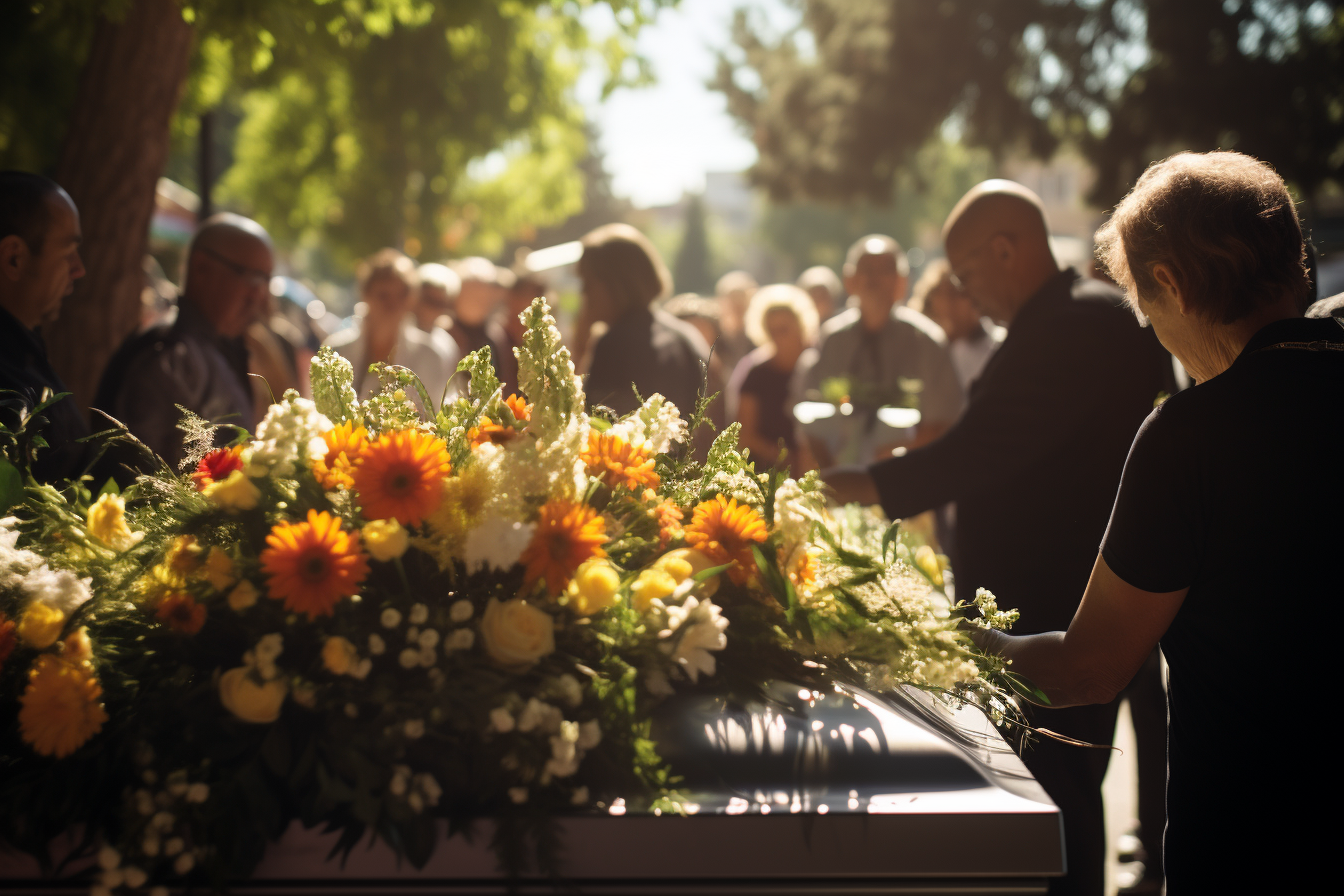
Mexico’s predominantly Catholic heritage shapes many attitudes and practices around death and dying. For those who share that background, customs such as favouring burial over cremation may feel familiar. Catholic wakes (velorios) are widespread: the body is typically laid out at home or in a funeral parlour for a vigil the night before burial, during which family, friends, and neighbours gather to pray the rosary, share food, and offer comfort to the bereaved. Burial generally takes place within 24 to 48 hours of death, in accordance with both the climate and longstanding tradition.
Indigenous communities throughout Mexico — from the Zapotec peoples of Oaxaca to the Purépecha of Michoacán — maintain their own distinctive funerary rites, which may differ considerably from mainstream Catholic practice and from what expats are used to. Expats living in or near indigenous communities are encouraged to approach local customs with respect and, where relevant, to discuss local expectations with neighbours or community leaders in advance.
What must you do when someone dies in Mexico? Who do you notify, how quickly, and in what order?
The steps below apply to an expected death — for example, following a terminal illness. If death is sudden or the circumstances are unexplained, the police or judicial authorities must be contacted first and the process will differ accordingly. In the case of an expected, attended death, you should not call an ambulance or the police unless there is any reason to suspect foul play.
- Contact a licensed physician. A doctor or individual authorised by the Mexican Secretary of Health must be reached promptly. They are required to confirm the date and time of death and to issue the preliminary death record (Certificado de Defunción) before the body can be transferred to a funeral home. If the person was under the care of a hospital or clinic, the attending physician can fulfil this role.
- Contact a funeral home. Once the Certificado de Defunción has been issued, a funeral home may take responsibility for the body. The funeral home will then care for the remains in accordance with the instructions of the next of kin. Where possible, select a funeral home with experience in handling the deaths of foreign nationals.
- Register the death at the Registro Civil. The death must be formally registered with the Civil Registry Office (Registro Civil) of the municipality in which the death took place. Registration is typically required within 24 to 72 hours of death. A representative of the funeral home usually accompanies a family member to carry out this formality.
- Obtain multiple certified copies of the death certificate (Acta de Defunción). At this stage it is essential to request additional certified copies of the death certificate — five or more is a practical minimum. Retain the original in a secure location. Multiple certified copies will be required by the consulate, insurers, banks, and various other institutions.
- Notify the deceased’s home country embassy or consulate. The death of a foreign national in Mexico must be reported to their country’s embassy or consulate so that an official Report of Death Abroad can be produced. This document is needed to resolve legal and estate matters in the home country. Contact the consulate as promptly as possible — ideally on the same day as the death or the following morning.
- Notify Mexico’s immigration authority (INM) if the deceased held a resident visa. A notification of change of immigration status is required whenever a Temporary or Permanent Resident dies in Mexico. Where the deceased was married, this involves informing INM of the surviving spouse’s change in marital status. The death certificate will be required.
- Notify insurers, banks, and other relevant institutions. Contact life and health insurance providers and banks without delay. Certified copies of the death certificate will be needed by each institution. The deceased’s property and valuables should be secured, and a person with appropriate legal authority — whether through power of attorney or court appointment — should take charge of financial matters.
- Arrange burial, cremation, or repatriation of remains. State regulations govern how quickly disposal of the body must take place. In Jalisco, for example, burial or cremation must occur within 48 hours, or the body must be embalmed. Comparable rules exist in other states. Confirm the specific requirements of the state in which the death occurred with your funeral home.
How is a death officially registered in Mexico, and what documents are needed?
The Certificado de Defunción is produced in three copies: one is retained by the Civil Registry, one goes to the medical institution involved, and one is submitted to the National Statistics Office (INEGI). The death certificate (Acta de Defunción) and the authorisation for burial or cremation are both issued by the Civil Registry of the municipality where the death occurred, and contain identifying information about the deceased together with the cause of death.
To register the death, the informant — typically a family member or legal representative — must present a Medical Death Certificate (Certificado Médico de Defunción) issued by a licensed physician, along with official identification for the deceased, such as their passport. Once the registration is complete, the informant receives the Acta de Defunción, which is required for dealing with inheritance, insurance claims, and the closing of bank accounts.
In practice, the Civil Registry formalities are most commonly handled by the funeral home on behalf of the family. However, the next of kin must also provide their own official identification and, if they are a foreign national, their immigration documents. Any documentation that establishes their relationship to the deceased will also be required — a spouse, for example, would need to produce a marriage certificate, while an executor would need to present a power of attorney.
If the deceased was a foreign national without Mexican identity documents, their passport, residency card, and birth certificate will be needed. Where the death occurred in Mexico, the death certificate must carry the official QR code to be considered valid for most official and administrative purposes.
What happens if a foreign national dies in Mexico — what are the specific steps for notifying their home country’s embassy or consulate, and what role does the consulate play?
When a foreign national dies in Mexico, their home country’s embassy or consulate plays a vital bridging role between Mexican legal procedures and the administrative requirements of the home country. The consulate does not assume management of the death — that responsibility remains with the family or legal representative and with Mexican authorities — but it provides indispensable documentation and practical guidance throughout the process.
The consulate of the deceased’s home country assists with coordinating the repatriation of remains and can issue a Consular Report of Death Abroad. Once the local Mexican death certificate has been obtained, consular staff can prepare this report, copies of which are provided to the next of kin or legal representative and may be used in the home country’s courts to settle estate matters. To produce the report, consular staff will require original proof of the deceased’s citizenship and identity together with the original Mexican death certificate.
Consular officers are there to assist when a citizen dies abroad, working alongside local authorities and the deceased’s legal representative in managing the process of returning remains to the home country. The consulate can supply a list of local funeral homes and recommend local lawyers with relevant expertise.
It is important to note that government consular services cannot meet the costs of returning a citizen’s remains or ashes, but they can direct families to the appropriate contacts and offices within Mexico. Mexican authorities will typically require identification documents for both the next of kin and the deceased — such as passports, birth certificates, or marriage certificates — so these should be kept readily accessible at all times.
Citizens of countries other than the United States should contact their own embassy or consulate in Mexico directly to obtain their specific procedures. Most major countries — including the UK, Canada, Australia, Germany, France, and many others — maintain embassies in Mexico City and, in some cases, consular representations in other cities. Contact details can be found on your home government’s foreign affairs or consular services website.
How are funerals typically arranged in Mexico, and what are the usual options for burial or cremation?
Funerals in Mexico are generally arranged through a funeral home (funeraria or agencia funeraria), which co-ordinates with the Civil Registry, health authorities, and — where applicable — the consulate. In predominantly Catholic communities, the traditional sequence involves a home or funeral parlour wake (velorio) the evening before, followed by a church mass, with burial in a local cemetery (panteón or cementerio) the following day.
One aspect of burial in Mexico that differs from some other countries is the nature of cemetery plots. Many cemeteries offer plots for purchase for a fixed period — commonly six years — after which remains are expected to be removed and relocated elsewhere. Unless arrangements for that relocation are made in advance, the remains may be moved to a communal grave. In densely populated areas, pressure on available cemetery space is an increasing concern.
Cremation is growing in acceptance across Mexico, though it remains less common than in many other countries and has historically encountered resistance in more traditionally Catholic communities. Many expats favour cremation because it allows loved ones to retain the ashes and involves fewer logistical and financial complications. Anyone wishing to be cremated should have a notarised document recording that preference.
Expats in regions with established foreign communities — such as Lake Chapala, San Miguel de Allende, Puerto Vallarta, and the Yucatán Peninsula — will generally find funeral homes accustomed to working with foreign nationals and experienced in liaising with consulates. Beyond these areas, a more active role may be required of the family in guiding the process.
What are the approximate costs of a funeral in Mexico, and are there any state or insurance-based funds that can help cover them?
Funeral costs in Mexico vary considerably depending on location, the level of service chosen, and whether the deceased is to be interred locally or repatriated abroad. A local burial or cremation is substantially less expensive than repatriation, which adds significant costs for documentation, body preparation, and international logistics.
For a basic local funeral involving cremation and the associated death certificate expenses, one practical guide suggested a minimum of around 15,000 Mexican pesos as of 2022; rates should be verified directly with local funeral homes as prices change over time. A complete burial service including a casket, cemetery plot, and wake facilities will cost more, and prices in tourist areas and expat communities tend to exceed those in smaller towns.
There is no national state funeral benefit in Mexico equivalent to, for example, the funeral support payments available in certain European countries. Public health insurers such as IMSS and ISSSTE do not offer funeral cost reimbursements that most expats can access. The financial responsibility for funeral arrangements falls on the family or the estate of the deceased.
Private life insurance, where held, may provide a death benefit that can be used to meet funeral costs. Some international health insurance plans include a repatriation-of-remains benefit. Expats planning to retire to or spend extended periods in Mexico are strongly advised to secure adequate repatriation insurance — particularly those residing temporarily who would wish to be returned to their home country in the event of death. Repatriation cover can be obtained as a standalone policy or as part of a comprehensive international health insurance package.
What is the process for repatriating the remains of a foreign national from Mexico to another country?
Repatriating remains from Mexico is a multi-stage process involving both Mexican and home-country authorities that typically takes several weeks to complete. The international shipment of remains carries not only considerable expense but a substantial administrative burden. Preparing in advance — and ideally securing dedicated repatriation insurance beforehand — significantly reduces the demands placed on grieving family members.
US and foreign laws generally require four documents in order to send remains to the United States: a consular mortuary certificate (prepared by a consular officer in English to facilitate orderly travel and customs clearance); the local death certificate issued by the Civil Registry, identifying the deceased by name, place, date, and cause of death; an embalming certificate; and a transit permit issued by Mexican health authorities. Requirements for other destination countries are broadly similar — consult the relevant consulate for details specific to your situation.
To export human remains from Mexico, you will need the death certificate, the embalming certificate, the shipper’s details, and information about the final destination. The relevant consulate will issue a Consular Mortuary Certificate enabling the remains to enter the destination country. For the export of cremated ashes, you will need the death certificate, the cremation permit, and the cremation certificate from the crematorium or funeral home. Some airports may request sight of the Consular Mortuary Certificate, and most airlines permit ashes to be carried as hand luggage.
A health permit from Mexican health authorities is also required before remains may be repatriated. A funeral home with experience in international repatriation will be able to manage all of these steps, but families should be aware that the entire process can take anywhere from two to six weeks — or longer — depending on the circumstances and the requirements of the destination country.
What happens to the estate of someone who dies in Mexico — how does probate or estate administration work, and are there inheritance taxes?
Estate administration in Mexico proceeds through a court-supervised process involving an executor (albacea). Mexican law provides two routes by which an estate can pass to heirs: through a valid will, or — in the absence of one — through a court process with jurisdiction over intestate succession. An estate is administered by one or more executors, who are either named by the testator in their will or appointed by a majority of the heirs in an intestate case.
One of the most significant points for expats to understand is that Mexico imposes no federal inheritance or estate tax. Property that passes on death is not subject to capital gains tax in Mexico, though in some municipalities real estate transfers may be subject to local transfer duties. A local tax adviser or notary should be consulted for current rules in the specific state and municipality where property is held.
While a will prepared outside Mexico is technically capable of being recognised there, having it accepted is a lengthy, complicated, and expensive undertaking. It requires apostilling or legalisation in the country where it was executed, followed by certified translation in Mexico. Expats who own Mexican property are therefore strongly advised to prepare a separate Mexican will, drafted in Spanish and executed before a Mexican notary public.
Many foreign nationals who own property on the Mexican coast hold it through a bank trust structure (fideicomiso). In such cases, beneficiaries are designated in the Trust Deed itself, which removes the need for a will in relation to that particular property. However, it is worth confirming whether only immediate family members may be named as trust beneficiaries. Bank accounts, vehicles, and personal possessions such as jewellery are typically not covered by the Trust Deed and may therefore require a will or a probate process in order to be transferred to heirs.
If an expat dies without a will in Mexico, what happens to their assets under local intestacy laws?
Dying without a will in Mexico — described legally as dying ab intestato — sets in motion a court-supervised intestate succession procedure. The applicable rules are set out in the Civil Code of each Mexican state, but the broad framework is consistent across the country. This route is significantly more costly, more time-consuming, and more legally demanding than dying with a valid will in place.
A foreign national who owns property in Mexico and dies without a will has that property distributed among their legal heirs. Mexican law generally directs that the estate be divided proportionately between the legal spouse — not a common-law or de facto partner — and any children. This means that unmarried partners, however longstanding the relationship, have no automatic right to inherit under Mexican intestacy rules — a critical consideration for expat couples who are not formally married.
The process is further complicated by the need to translate and certify foreign documents such as marriage certificates, prenuptial agreements, and birth certificates. Where heirs are residing abroad, proceedings become more protracted still, as documents must be apostilled and translated before Mexican courts will accept them. The cumulative effect is that the estate’s assets may remain frozen for many months — sometimes exceeding a year — while the formalities are completed.
The practical conclusion is clear: every expat living in Mexico should have a valid Mexican will prepared by a licensed Mexican notary. This is especially pressing for those who own property, hold significant bank balances or investments in the country, or whose family arrangements — such as unmarried partnerships or blended families — fall outside the categories that intestacy rules automatically recognise.
Frequently Asked Questions
Will my foreign health insurance be accepted by Mexican palliative care providers?
This depends on both your insurer and the specific provider. Many private hospitals and clinics in Mexico do accept international health insurance, but you should always confirm this in advance with both parties. Some insurers require pre-authorisation for palliative or hospice care. Non-profit palliative care organisations such as Mitigare typically base their charges on a sliding scale regardless of insurance status. Keep your insurance documents accessible at all times and store your insurer’s emergency contact number somewhere easy to retrieve.
Are documents in English — such as a will or medical directive — valid in Mexico?
Expats in Mexico should obtain a new advance directive rather than relying on a document prepared elsewhere or in English. A Mexican Voluntad Anticipada is required for a medical directive to be legally enforceable. For wills, a foreign will can in principle be recognised in Mexico, but the process is both slow and expensive — it requires apostilling or legalisation in the country where the will was made, followed by certified translation in Mexico. In almost every case, creating fresh Mexican legal documents while you are in good health is a simpler and more economical approach.
How long does the process of repatriating remains typically take?
Repatriation ordinarily takes a minimum of two to four weeks and can extend considerably beyond that if complications arise — such as a post-mortem examination being required, documents being incomplete, or consular offices experiencing delays. The Consular Report of Death Abroad alone takes time to process. Use a funeral home experienced in international repatriation, have all relevant documents — passports, residency cards, birth and marriage certificates — organised and accessible in advance, and if at all possible, purchase dedicated repatriation insurance before it is needed.
What support is available to bereaved family members remaining in Mexico?
The range of practical and emotional support available varies by location. In areas with sizeable expat communities — such as Lake Chapala, San Miguel de Allende, and Puerto Vallarta — expat organisations, churches, and community groups frequently provide informal networks of support. Some palliative care organisations, including Mitigare, offer bereavement counselling to family members for six months or more after the patient has died. Your home country’s consulate can also provide a list of local grief counsellors and other relevant support services.
Does the Mexican public health system cover palliative care for expat residents?
Expats who have voluntarily enrolled in IMSS may have access to some palliative care within IMSS facilities, but availability is uneven and frequently limited. Many IMSS hospitals have no dedicated palliative care unit, and those that do may be too distant to be of practical use. The majority of expats depend on private healthcare for end of life care. If you are an IMSS voluntary member, discuss with your local clinic what palliative services are realistically available to you before a health crisis makes the question urgent.
Can a surviving spouse or partner automatically stay in Mexico after their partner dies?
Immigration status in Mexico is individual and does not automatically carry over or remain valid following a partner’s death. If your right of residence was connected to your spouse’s immigration status, you will need to contact the Instituto Nacional de Migración (INM) promptly. Notification of a change in immigration status is required whenever a Temporary or Permanent Resident dies in Mexico, and where the deceased was married, this involves informing INM of the surviving spouse’s changed civil status. Seek advice from a Mexican immigration lawyer as soon as possible after a bereavement to understand your options and obligations.
What happens to a Mexican bank account or property when a foreign national dies?
Bank accounts and property held in the deceased’s name will generally be frozen while the estate is being settled. Where a valid Mexican will exists, the named executor can begin the process of distributing assets. In the absence of a Mexican will, the estate must pass through intestate succession before a judge, which is both slower and more expensive. Property held through a fideicomiso (bank trust) may transfer more smoothly if beneficiaries were named in the Trust Deed. Consult a Mexican notary or estate lawyer promptly following a death to understand the specific steps required.
Is it possible to pre-plan and pre-pay for a funeral in Mexico?
Yes, pre-planning and pre-paying for funeral arrangements is possible in Mexico and is offered by a growing number of funeral homes, particularly those in areas with significant expat populations. Pre-planning allows you to record your preferences for burial or cremation in a notarised document and to lock in costs at current prices. Contact your chosen funeral home for full details of what is available and whether prepayment is an option. Store all pre-arrangement documents alongside your other important end of life papers, and make certain that the people you have designated to act on your behalf know exactly where to find them.