
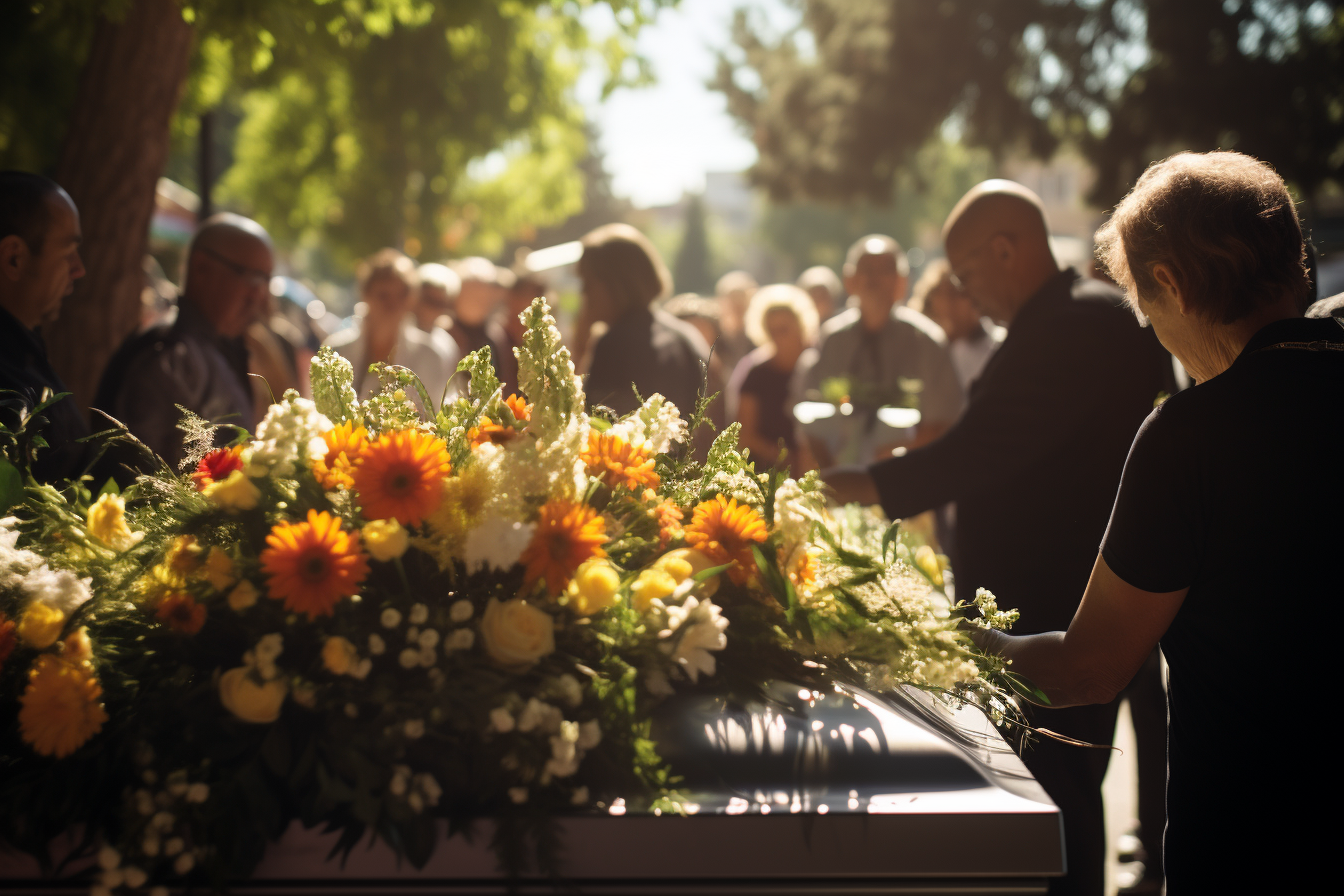
End of life care in Venezuela functions within a deeply overstretched public health system. While palliative services exist in principle, they are severely underfunded and concentrated almost exclusively in major urban centres. Euthanasia and assisted dying are prohibited by law. Following a death, notification must be made within 48 hours, and the subsequent administrative steps — covering death registration and repatriation — demand in-person attendance, local legal representation, and considerable perseverance.
| Item | Details |
|---|---|
| Death registration deadline | Within 48 hours of death (as of 2024) |
| Registering authority | Local Civil Registry (Registro Civil) or CNE |
| Death certificate fees | No fee for death certificate (as of 2024) |
| Euthanasia / assisted dying | Illegal in Venezuela |
| Palliative care availability | Limited; mainly in urban hospitals; private funding often required |
| Repatriation requirement | Embalming and special coffin mandatory; few undertakers equipped for this |
What end of life care options are available in Venezuela, and how does the system work?
Venezuela’s healthcare infrastructure encompasses both a public and a private sector, with the public component overseen by the Ministry of Popular Power for Health. In reality, however, neither sector is currently able to deliver fully adequate or modern healthcare across the country, and a humanitarian crisis of considerable scale continues to undermine the health system’s capacity.
End of life care in Venezuela is largely confined to hospital-based provision, informal home care managed by family members, and a small number of specialist palliative services that exist mainly in Caracas and other sizeable cities. Private clinics can offer more reliable standards of care, but at a substantially higher financial cost. Where private insurance or personal savings are not available, the responsibility for end of life support falls overwhelmingly on immediate family networks. Expats planning ahead for end of life care in Venezuela should not expect the level of institutional support that well-resourced public health systems elsewhere might provide.
Coordination between healthcare services and social services is uncommon across much of Latin America; Venezuela — along with Argentina, Uruguay, and Colombia — does recognise social work within healthcare settings in principle. However, the practical availability of such support varies greatly depending on location and resources.
What is palliative care in Venezuela, and who is eligible for it?
Palliative care is a form of specialised medical support aimed at improving the quality of life for patients and their families confronting life-threatening illness. It achieves this through the early identification, thorough assessment, and appropriate treatment of pain and other difficulties — whether physical, psychosocial, or spiritual in nature. In principle, any person in Venezuela living with a serious or terminal diagnosis may be eligible for palliative care; in practice, meaningful access is extremely restricted.
Data from the Atlas of Palliative Care in Latin America indicates that only approximately 7% of patients across the region actually receive palliative care, with services concentrated among cancer patients in larger population centres. In smaller towns and rural districts, palliative services are largely absent. Venezuela mirrors this broader regional picture.
Palliative care in Venezuela typically focuses on the management of pain and other physical symptoms, along with psychological and spiritual support for both patients and their families. Where specialist palliative teams do exist, they ideally include practitioners with foundational knowledge of palliative care at the primary care level; for patients and families in more complex circumstances, a psychologist, social worker, and chaplain may also be involved.
Because very few healthcare students receive dedicated undergraduate or postgraduate training in palliative care, there is a pronounced shortage of qualified providers throughout the region, Venezuela included. Expats facing serious or terminal diagnoses should plan for private medical support to whatever extent is possible.
Are there hospices in Venezuela, and how do you access them?
Dedicated freestanding hospice facilities of the kind common in Western Europe or North America are extremely scarce in Venezuela. Although hospice-style end of life care does exist in parts of the Americas, it is rarely free of charge or publicly financed. In Venezuela, what hospice-like provision does exist tends to be embedded within oncology departments of larger hospitals or delivered informally through family-based home care.
The Latin American Association for Palliative Care (ALCP) works to strengthen palliative care capacity across the region, including Venezuela, and is a useful starting point for identifying specialist services. The Pan American Health Organization (PAHO) supports training and capacity-building initiatives, though this work does not yet translate into widely available hospice beds on the ground.
For expats, the most practical route to accessing hospice-style care is through a private hospital or clinic in Caracas that operates an oncology or palliative care unit, or through a privately arranged professional home nursing service. Some religious organisations and charitable groups also provide informal end of life support, particularly in communities with strong Catholic networks. Families should contact private hospitals directly to enquire specifically about palliative or terminal care provision, as these services are not always publicly listed or advertised.
Is palliative or hospice care covered by public health insurance or the national health system in Venezuela, or does it need to be funded privately?
Across Latin America, palliative care is in principle provided without charge within hospitals and certain primary care centres. In Venezuela, however, the gulf between what the health system offers on paper and what is genuinely available has grown substantially due to chronic underfunding and resource shortages. Medicines, equipment, and specialist personnel are all in critically short supply in public facilities.
In some countries, palliative care falls within the scope of private health insurance coverage. For expats based in Venezuela, comprehensive international private health insurance is strongly advisable, and policyholders should verify explicitly — before it becomes necessary — whether their plan covers palliative and terminal care within Venezuela. Unlike systems such as the NHS in the United Kingdom or Medicare in Australia, Venezuela has no universal insurance structure that dependably covers end of life services for all residents.
Given the severe financial pressures on Venezuela’s healthcare system, families should anticipate that most meaningful end of life and palliative care will require private funding. It is essential to check the current situation with both your insurer and the specific healthcare provider you intend to use, as circumstances can change rapidly.
What legal documents should expats have in place before the end of life in Venezuela — such as a living will, advance directive, power of attorney, or healthcare proxy — and how do these work?
Although Venezuela’s legal system does not have a widely codified advance directive framework comparable to those found in many European countries or North America, there are several key legal instruments that expats should prepare in advance. The most important of these is a notarised poder notarial (power of attorney), which grants a trusted individual the authority to act on your behalf in legal, medical, and financial matters in the event that you become unable to do so yourself.
A power of attorney in Venezuela must be prepared before a notary (notaría) and executed in person. It may be general in scope — covering all decision-making — or specific, confining its authority to defined acts such as banking transactions or healthcare decisions. For end of life planning purposes, a broad general power of attorney tends to be more practical, enabling your designated representative to deal with hospitals, financial institutions, and civil authorities without requiring separate authorisations for each separate matter.
A testamento (will or testament) is equally essential. Venezuelan law recognises both notarial wills — prepared before a notary in the presence of witnesses — and holographic wills, which must be written entirely in the testator’s own hand, dated, and signed. A notarial will is generally considered more robust and is harder to challenge. Your will should clearly set out your assets, your intended beneficiaries, and any specific wishes relating to your care or funeral arrangements.
There is no formal statutory system for advance healthcare directives (living wills) in Venezuela equivalent to those established in countries such as Spain or France. Nevertheless, a written statement of your preferences regarding medical treatment — particularly concerning resuscitation and end of life interventions — can be attached to a notarised document. While not legally binding in precisely the same way as in some other jurisdictions, such a statement is likely to carry genuine moral weight with treating physicians. It is worth discussing this approach with both a Venezuelan notary and a doctor.
Are documents such as advance directives or powers of attorney made in another country legally recognised in Venezuela?
Foreign legal documents, including powers of attorney and advance directives, can be recognised in Venezuela but must ordinarily be authenticated through the Apostille process — provided the document originates in a country that is a signatory to the Hague Apostille Convention — or through full legalisation via the Venezuelan consulate in the country where the document was issued.
Foreign documents will require Apostille certification before Venezuelan authorities will accept them. Any documents that are not in Spanish must also be officially translated into Spanish by a certified translator and the translation itself certified. This means that a power of attorney issued abroad will need both apostille authentication and a certified Spanish translation before it can be relied upon in Venezuela.
In practical terms, expats residing in Venezuela for an extended period are strongly advised to have a new power of attorney drawn up locally before a Venezuelan notary, in addition to any equivalent documents held in their home country. This avoids complications and delays at a moment when prompt action may be critical. A Venezuelan lawyer (abogado) with expertise in civil law should be consulted for guidance tailored to your individual circumstances.
What are the laws around euthanasia or assisted dying in Venezuela?
Both euthanasia and assisted dying are unlawful in Venezuela. No legislation permits active euthanasia or physician-assisted suicide, and no legislative process is currently under way to introduce such provisions. In the vast majority of countries worldwide, euthanasia remains illegal and can even result in a murder charge against the administering physician; Venezuela firmly upholds this position.
Colombia stands alone in Latin America as the only country that permits and regulates medical aid in dying, joining a small global group that includes the Netherlands, Belgium, Luxembourg, Canada, and Spain. Venezuela, in common with most of its regional neighbours, has not moved towards legalisation.
The withdrawal or withholding of life-sustaining treatment at a patient’s or family’s request occupies a somewhat less clearly defined area of Venezuelan law. In practice, physicians and families do sometimes reach joint decisions to limit aggressive treatment for patients with terminal diagnoses, but this is not governed by any explicit legal framework. Expats confronting these decisions should seek guidance from the treating medical team and, where needed, from a legal adviser. Religious and cultural values carry considerable weight in end of life medical decisions in Venezuela, and engaging both medical staff and family in these conversations at the earliest possible stage is strongly recommended.
What are the local customs, traditions, and religious practices around death and dying in Venezuela?
Venezuelan attitudes and practices surrounding death are shaped primarily by Roman Catholicism, which remains the country’s predominant religion. Death is characteristically approached as a communal and family event, with deeply rooted traditions of collective mourning, prayer, and religious observance. It is customary for family members to maintain an overnight vigil (velorio) at the home or at a funeral parlour following a death, with friends, extended family, and neighbours coming to offer their condolences and pay their respects.
The Catholic practice of praying the rosary during the vigil is widespread, as are masses offered for the deceased (misas de difuntos), held both in the immediate aftermath of death and on subsequent anniversaries. All Souls’ Day, observed on 2 November, is a time for visiting cemeteries, tending graves, and honouring the memory of those who have died. In certain regions, particularly those with strong indigenous or Afro-Venezuelan cultural traditions, additional rituals and funerary practices may also be observed.
Burial remains far more common than cremation, reflecting both Catholic teaching and established cultural custom. Funeral ceremonies are typically conducted within 24 to 48 hours of death, partly because refrigeration infrastructure in many parts of Venezuela is extremely limited. Local morgue and forensic facilities are severely constrained and generally of poor quality; the deceased will ordinarily remain at a hospital or state mortuary, where conditions of storage are very poor and temperature-controlled facilities are available in only a few locations — mostly in Caracas — and at some private institutions and funeral homes.
Expats should be aware that the pace and character of funeral arrangements in Venezuela may differ considerably from what they are used to elsewhere. Flexibility and reliance on informed local guidance — including from a trusted funeral director — is strongly recommended.
What must you do when someone dies in Venezuela? Who do you notify, how quickly, and in what order?
The following steps should be taken as promptly as possible following a death in Venezuela. Urgency matters particularly given the limitations of storage infrastructure and the legal obligation to register the death within 48 hours.
- Obtain a medical death certificate: A doctor must certify the death and issue a medical certificate (certificado de defunción médico) recording the cause of death. If the person died in hospital, the attending physician will provide this document. If the death occurred at home, a doctor must be summoned to make the certification.
- Contact a local funeral director: Engage a local funeral home (funeraria) without delay. A local funeral director can help the family obtain the necessary documentation more efficiently and coordinate the logistical steps that follow — this is especially important given the severely limited capacity of state mortuaries.
- Report the death to the Civil Registry within 48 hours: Venezuelan law requires all deaths to be reported to the Civil Registrar within 48 hours of occurrence. Immediate family members, spouses, or partners in a registered common-law union, the captain of a vessel on which a death took place, or any civil, medical, military, or police authority with knowledge of an unidentified deceased person may report the death and obtain a registered death certificate.
- Register the death at the local Civil Registry (Registro Civil): In Venezuela, the local or municipal Civil Registry (Registro Civil) or the National Electoral Council (Consejo Nacional Electoral — CNE) is responsible for registering civil documents. The next of kin, or an appointed legal representative, must present themselves in person to the relevant civil registrar — there is no facility for obtaining civil records online in Venezuela.
- Notify the deceased’s embassy or consulate: If the deceased was a foreign national, contact their embassy or consulate in Venezuela as soon as possible (see the dedicated section below). Consular staff can provide practical guidance, a list of local funeral directors, and assistance in navigating the administrative process.
- Secure the deceased’s personal documents and belongings: Locate and safeguard the deceased’s passport, identity documents, will, insurance policies, and any other important papers. These will be required for both administrative purposes and the administration of the estate.
- Contact the deceased’s insurer: If the deceased held travel or life insurance, notify the insurer without delay. Where a valid travel insurance policy exists, the insurer will ordinarily appoint an international funeral director to coordinate repatriation through a local undertaker, who liaises with local funeral homes to ensure that all requirements in Venezuela are properly met.
- Begin estate administration: Engage a Venezuelan lawyer (abogado) to initiate the estate administration or probate process, particularly where the deceased held assets in Venezuela that must be dealt with.
How is a death officially registered in Venezuela, and what documents are needed?
In Venezuela, civil documents — including death registrations — are handled by the local or municipal Civil Registry or by the National Electoral Council, and the rules governing civil registration apply uniformly throughout the country. The body responsible for issuing death certificates is the Civil Registry in the locality where the death took place, or the National Electoral Council (CNE).
To register a death, the documents typically required are: the medical death certificate issued by the treating physician; the deceased’s national identity document (cédula de identidad) or passport where the deceased was a foreign national; and the identity document of the person registering the death. Venezuelan death certificates carry no security features, as they are copies of the entry in the registration book; each copy must bear a note — either stamped or incorporated into the standard wording — stating “es copia fiel del original,” along with the stamp and signature of the registry authority.
There is no charge for obtaining a death certificate from the Civil Registry (as of 2024). Death certificates are issued in Spanish and include details of the cause of death. Obtaining this information can be a protracted process, and Venezuelan authorities will not provide a copy of the death certificate to a third party such as embassy staff — the next of kin must appoint a legal representative for this purpose.
Once a death certificate has been registered, the deceased should automatically be removed from the Venezuelan Voter Registry (CNE). Processing times vary considerably, and delays are commonplace. Engaging a local lawyer or funeral director to assist with this process is strongly advisable.
What happens if a foreign national dies in Venezuela — what are the specific steps for notifying their home country’s embassy or consulate, and what role does the consulate play?
When a foreign national dies in Venezuela, their home country’s embassy or consulate in Caracas should be informed as soon as practicable. Most major embassies operate emergency consular lines outside regular office hours for situations of this kind. Consular staff can furnish a list of local lawyers and funeral directors, offer guidance on navigating Venezuela’s administrative procedures, and help facilitate communication with relevant authorities — though they are not able to act as legal representatives or take decisions on the family’s behalf.
Consulates typically provide assistance with: confirming the death to home country authorities; supplying a list of approved local undertakers; facilitating communication between the bereaved family and Venezuelan institutions; and, where applicable, issuing a consular death registration or notification. Registering a death overseas with the home country’s authorities is not obligatory in all cases; a consular death registration is sometimes possible but cannot serve as a substitute for a death certificate issued by Venezuelan authorities.
Obtaining a complete post mortem report can be a lengthy undertaking, and may take considerably longer if the examination has been carried out outside Caracas. Appointing a local funeral director will materially accelerate the process of obtaining this document. It is advisable to contact your embassy early in the process and to follow their specific guidance, since procedures can vary depending on bilateral agreements and the particular circumstances of the death.
How are funerals typically arranged in Venezuela, and what are the usual options for burial or cremation?
Funerals in Venezuela are customarily arranged through private funeral homes (funerarias). Shortly after a death, the family contacts a funeral director, who then takes charge of transporting the body, preparation, conducting the vigil, managing the funeral service, and arranging burial or cremation. Given that funerals in Venezuela typically take place within 24 to 48 hours, it is important to engage a funeral home without delay.
Burial is the predominant choice in Venezuela, consistent with both Catholic tradition and long-established cultural practice. Cemeteries are found in all municipalities. Cremation is available in certain urban areas, particularly in Caracas, but is considerably less common and may not be accessible outside the capital. Families considering cremation should confirm in advance that a crematorium is operating in the area where the death has occurred.
Where repatriation of the remains is planned, the funeral director plays a central role in coordinating embalming, specialist coffin preparation, and the requisite documentation (see the repatriation section below). Very few undertakers in Venezuela possess the expertise and equipment required for international repatriation, making it essential to identify a funeral director with specific experience in this area — particularly if the death has occurred outside Caracas.
What are the approximate costs of a funeral in Venezuela, and are there any state or insurance-based funds that can help cover them?
Funeral costs in Venezuela are difficult to quantify with any precision, as the country’s sustained economic instability and high inflation mean that prices fluctuate considerably and are frequently quoted in US dollars rather than bolívares. As of 2024–2025, a basic local funeral — covering body preparation, a modest coffin, the wake, and burial — may range from a few hundred to several thousand US dollars, depending on the funeral home and the level of service chosen. More elaborate private funerals involve significantly greater expense.
Venezuela has no national state funeral benefit or death grant comparable to schemes available in other countries, such as the Bereavement Support Payment in the United Kingdom. Some private health insurance plans and life insurance policies do include a funeral expense component; it is therefore worth reviewing the deceased’s policies carefully to determine what, if anything, is covered.
Mortuary holding costs will apply when a body is kept at a state mortuary, and these charges fall to the next of kin. Fees can accumulate quickly, particularly if administrative delays slow the process. Families should budget for mortuary costs in addition to funeral expenses, and should engage a funeral director as promptly as possible to minimise the time spent in state facilities.
Where the deceased held international travel insurance, the insurer may meet some or all of the costs associated with the funeral or repatriation. Notify the insurer immediately and ask specifically what funeral expense coverage the policy provides.
What is the process for repatriating the remains of a foreign national from Venezuela to another country?
Repatriating remains from Venezuela is a complex and document-heavy undertaking requiring both a local funeral director with relevant international experience and careful coordination with the deceased’s embassy. The process should be initiated as soon as a decision to repatriate has been made, since delays within Venezuela’s administrative system can add significant time to the overall timeline.
When remains are to be repatriated from Venezuela, embalming is mandatory and the body must be placed in a specialist coffin — yet very few undertakers in Venezuela are equipped to carry out these procedures. Identifying a suitably qualified funeral director is therefore essential, particularly where the death has occurred outside Caracas.
The documents required to ship the deceased or their remains include: a civil registry death certificate; the doctor’s death certificate indicating the cause of death; a certificate of embalming; and a permit authorising the transfer of the remains. Depending on the requirements of the receiving country, these documents will typically also need to be translated into the relevant language and may require apostille certification under bilateral arrangements.
Where the deceased held valid travel insurance, the insurer will ordinarily appoint an international funeral director to manage repatriation through a local undertaker. If there is no insurance in place, the next of kin will need to engage either an international funeral director or a local undertaker themselves. Given Venezuela’s limited infrastructure, families should anticipate that repatriation from Venezuela is likely to be more costly and time-consuming than from many other countries. All current documentary requirements should be verified with the relevant embassy and your chosen funeral director, as these requirements are subject to change.
What happens to the estate of someone who dies in Venezuela — how does probate or estate administration work, and are there inheritance taxes?
Estate administration in Venezuela is governed by the Civil Code (Código Civil) and is conducted through the courts. When a person dies leaving assets in Venezuela — such as property, bank accounts, vehicles, or business interests — the estate must pass through a formal succession process (sucesión). This ordinarily requires the services of a local lawyer (abogado) who can file the necessary documentation and represent the estate before the relevant authorities.
Venezuela does impose inheritance taxes (impuesto sobre sucesiones), regulated by the Law on Inheritance Tax and Donations (Ley de Impuesto sobre Sucesiones, Donaciones y Demás Ramos Conexos). Rates are progressive and determined by the degree of kinship between the deceased and the beneficiary, as well as by the total value of the estate. Close relatives — such as surviving spouses and children — benefit from lower rates and certain exemptions, while more distant relatives or unrelated beneficiaries are subject to higher rates. Venezuela’s tax system and economic environment remain subject to change; current rates and exemptions should always be confirmed with a Venezuelan tax lawyer at the time of administration.
Where the deceased held assets in more than one country, legal advice should be obtained in each relevant jurisdiction, as both Venezuela and the deceased’s home country may assert a claim over portions of the estate. International double-taxation treaties, where applicable, may affect the overall tax position. In complex cross-border situations, both a Venezuelan notary and an international estate lawyer should be engaged.
If an expat dies without a will in Venezuela, what happens to their assets under local intestacy laws?
Where a person dies intestate — that is, without a valid will — in Venezuela, their estate is distributed in accordance with the intestacy provisions of Venezuela’s Civil Code. Inheritance follows a broadly defined hierarchy: the surviving spouse and direct descendants (children and grandchildren) are the primary beneficiaries; in the absence of descendants, parents and other ascendants inherit; siblings and more distant relatives follow in order; and where no heirs can be identified at all, the estate passes to the Venezuelan state.
A surviving spouse is generally entitled both to a share of the marital estate and to inheritance rights in their own right. Children — including those born outside marriage who have been legally recognised — share in the inheritance on equal terms. The precise shares depend on the family composition at the time of death and on the nature of the assets — specifically, whether they constitute communal marital property or separate personal property.
For foreign nationals who die intestate in Venezuela, the situation can be further complicated by questions of which country’s law governs which assets. Venezuelan courts will generally apply Venezuelan law to immovable property (real estate) situated in Venezuela, while the law of the deceased’s home country may govern movable assets and overseas property. This reinforces the importance for expats of maintaining a valid, current will — both in Venezuela and in their country of origin — in order to avoid prolonged legal disputes and to ensure that their wishes are honoured.
Frequently asked questions
Will my international health insurance be accepted by Venezuelan hospitals and palliative care providers?
Many private hospitals and clinics in Venezuela, particularly in Caracas, are familiar with international insurance arrangements and may have direct billing agreements with major insurers. However, this cannot be assumed, and you should confirm your insurer’s network and direct billing arrangements in Venezuela before you require care. There are circumstances in which you may need to pay out of pocket and subsequently claim reimbursement. Always keep your policy documents and your insurer’s emergency contact details readily accessible, and notify the insurer as early as possible in the event of a medical emergency.
Are legal documents in a language other than Spanish valid in Venezuela?
Any documents that are not in Spanish must be officially translated and the translation certified before Venezuelan authorities will accept them. This requirement applies to powers of attorney, advance directives, wills, and other legal instruments. A certified translation must be prepared by an official translator (traductor público) recognised in Venezuela. Foreign documents will also typically require either apostille certification or consular legalisation before they can be relied upon in Venezuela.
How long does the process of repatriating remains from Venezuela typically take?
Repatriation from Venezuela can take anywhere from a few days to several weeks, depending on the circumstances surrounding the death, the availability of a suitably qualified funeral director, the speed with which Venezuelan authorities process the necessary documentation, and the requirements of the destination country. Factors such as a post mortem examination, a death in a remote location, or administrative backlogs can extend the timeline considerably. Obtaining a complete post mortem report can itself be a lengthy process, particularly if the examination was carried out outside Caracas. Engaging both an experienced local funeral director and your embassy from the outset will help to advance the process as efficiently as possible.
What support is available to bereaved family members in Venezuela?
Formal bereavement support services — including counselling, grief support groups, and structured psychological services — are limited in Venezuela, especially outside Caracas. Family and community networks, together with the Catholic Church and other religious organisations, fulfil the primary role in supporting those who are bereaved. Some private clinics may be able to refer patients to a psychologist or counsellor. Expatriate community networks and international organisations may also be able to help families identify additional support. Volunteers play a particularly valuable role in maintaining contact with patients and families requiring palliative care support at home; patients do not always need a doctor or nurse present, and compassionate, consistent volunteer support can make a meaningful difference.
Does Venezuela have a formal advance directive or living will system?
Venezuela does not currently have a comprehensive statutory framework governing advance healthcare directives or living wills in the manner that many European countries have established. There is no official government registry for such documents. The most practical option at present is to prepare a written statement of your healthcare wishes, have it notarised, and attach it to your broader legal documentation. You should also communicate your preferences clearly to your doctor, your designated power of attorney holder, and your close family members so that those around you are fully informed of your wishes well in advance.
Can a foreign national be buried in Venezuela if the family does not wish to repatriate?
Yes, a foreign national may be buried in Venezuela. The majority of municipalities operate cemeteries that accept burials irrespective of the deceased’s nationality. The family, or their appointed legal representative, will need to coordinate with the local civil registry, the chosen funeral home, and the relevant cemetery administration. There is no legal obligation to repatriate the remains of a foreign national who dies in Venezuela — the decision rests with the family and, where applicable, with the terms of any will left by the deceased. Cremation is also available in some urban areas, though access outside Caracas is limited.
What happens to a foreign national’s Venezuelan bank accounts and property after death?
Venezuelan bank accounts and real property held by a foreign national form part of the estate subject to Venezuelan succession law and inheritance tax. The beneficiaries of the estate, or a legally appointed administrator, will need to engage a Venezuelan lawyer to access and transfer assets. Banks will ordinarily freeze accounts once notified of the death, until the succession process has been concluded through the courts. This process can take a considerable period of time, and beneficiaries should anticipate delays — particularly where documents originating abroad require translation and authentication before they can be used in Venezuela.
Is there any obligation to notify Venezuelan authorities if a foreign national who was resident in Venezuela dies abroad?
If a foreign national who was resident in Venezuela dies outside the country, there is generally no automatic obligation under Venezuelan law to notify Venezuelan authorities — unless the deceased held Venezuelan assets, property, or debts requiring administration. In practice, where the deceased was registered as a legal resident in Venezuela, it may be necessary to notify relevant Venezuelan institutions — such as banks, property registries, or the tax authority — in order to administer their estate properly. A Venezuelan lawyer can advise on the specific steps required, based on the individual’s legal status and the nature of their assets in Venezuela.