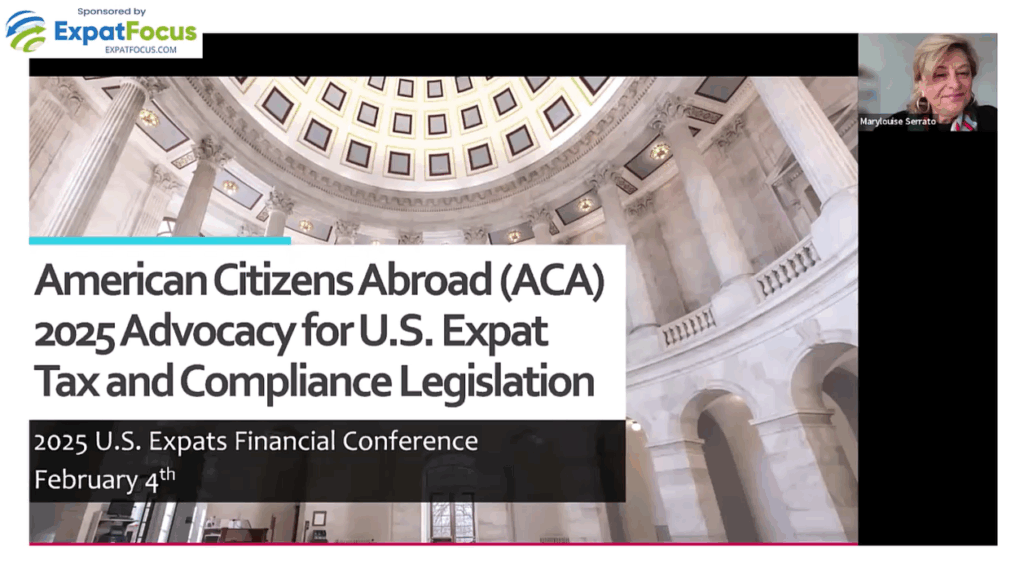
The following transcript was generated by AI and may contain inaccuracies.
Hugo: Welcome everyone. We’ll wait a couple of minutes before we get started to give the audience a chance to join. Marylouise, you were saying you are in DC today?
Marylouise: I’m in Washington, DC, just outside of DC, here in the capital.
Hugo: You’re saying it’s not too cold there at the moment?
Marylouise: No, we’ve gotten out of our cold snap. The one that everybody saw during the inauguration that week – it was really frigid temperatures, but we seem to be warming up. Though it may come back to haunt us. I know a lot of people on this call are probably in warmer locales.
Hugo: If you are watching, do drop into the chat function at the foot of the screen. Say hi. I’m in the UK where it’s probably not too cold compared to some places, but I think it’s pretty cold. So I’m well wrapped up. I imagine a lot of the audience are in warmer climates.
Let’s give the audience a minute more to join.
Marylouise: Great.
Hugo: Lots of people are joining, I can see. And you’ll tell us a little bit about ACA as part of the presentation?
Marylouise: I will. The first couple slides talk about the two organizations, so in case people aren’t familiar with us, happy to let them know what we’re all about.
Hugo: Most people probably are, but it’s good to do that for sure. Always good if we have newbies.
Hugo: I think we’ve got lots of people joining, so let’s get started. Hello everyone. Thank you for joining and welcome to day one of the 2025 US Expats Finance Conference sponsored by Expat Focus, the web’s favorite destination for anyone moving or living abroad, and Wise, the leading provider of low cost international money transfers and multicurrency accounts for expats.
We have a fantastic schedule for you consisting of nine sessions over three days, covering multiple aspects of financial information for Americans living abroad with perspectives from some of the world’s leading experts in their field.
Today is the first day of the 2025 conference, and for this our first session of the day, I’m delighted to be joined by Marylouise Serrato from American Citizens Abroad. We’ll be discussing ACA’s 2025 advocacy plans for US expat tax and compliance legislation.
Before we start though, please bear in mind that the information presented is for general educational purposes only. You should always seek your own personalized financial advice. Also, while the conference is free to attend, if you’d like to leave a tip for the organizers, you can do so using the PayPal link that I’ll drop in the chat window at the foot of your screen.
Marylouise will also be answering your questions after her presentation, so please add them in the Q&A popup at the foot of your screen whenever you think of them. We’ll try to answer them all at the end. So without further ado, over to you Marylouise.
Marylouise: Thanks Hugo, and thanks to the US Expat Financial Conference for inviting ACA and myself to this presentation and being, I think, the first to present.
I’m going to share my screen and start with my slides. In there, I’ll be able to explain a little bit more about the two organizations and about our advocacy for tax and compliance legislation in 2025. So hopefully I’ve got this right – I’m not very technologically savvy, but I think maybe I’ve done it.
Did I do it?
Hugo: Yeah, there it is.
Marylouise: Okay. For some reason it doesn’t want to… oh, there it is. You’ve got a full screen now?
Hugo: Yes.
Marylouise: Okay, great. Thanks. Sorry for that. Like I said, I’m not the most tech savvy person in the world. Anyway, thanks again for inviting us here to present.
We are thrilled to be able to share with you information on our two organizations actually, and on our advocacy work. So a quick overview of ACA and ACA-GF, which is ACA Global Foundation.
So we were founded back in 1978 in Geneva, Switzerland. A lot of our founding issues covered things other than tax. Primarily it was voting from abroad. At that time, US citizens who were living and working overseas had to physically come back to the United States if you wanted to vote. So that was one of the premier issues that we worked on with a number of other overseas organizations. Citizenship and representation in Congress – those were some of our key founding issues.
A couple of things to remember about ACA that’s really important: We’re nonpartisan. We work on behalf of the community for change. We have no political interest. This is really beneficial because we can work both sides of the aisle. That’s really beneficial up in Washington DC.
We’re a nonprofit. We’re actually registered nonprofits. And why is this important to Congress? It’s important because they understand who we are and how we’re formed. So we have ACA Inc, which is the advocacy organization – that is a 501(c)(4). And we have ACA Global Foundation, ACA-GF, which is the research and educational organization of ACA, and that is a 501(c)(3).
Those two filings for people in Congress are important because it tells them we’re legitimate. We’re registered, they know what they’re dealing with.
ACA, as you can see, started in Geneva, Switzerland. But back in 2012, we recognized that we really needed to have a presence in Washington DC. As it was, we were coming back and forth for annual “door knockers.”
Sometimes you hear organizations talk about the door knockers they do in Washington DC, and that’s what ACA was doing for many years. We would come once a year or twice a year to meet with Congress and meet with stakeholders. We recognized back in 2012 that we really had to be headquartered here to be able to have the influence that we needed and to create the awareness.
So the issues: Just briefly, all the issues that are taking up all the oxygen in the room. As many of you on this presentation are familiar with – it’s taxation, it’s compliance, it’s how do you invest when you’re living and working overseas, and how do some of the GILTI and transition tax issues affect small businesses.
We do still address issues, especially some specific issues for retirees – Social Security and Medicare. And we’re actually – it’s not in this presentation, but I’ll just take a moment to say that we’ve worked for years on repealing the Windfall Elimination Provision, which was a Social Security provision that actually reduced US Social Security benefits for individuals who were receiving foreign pensions.
And in January of this year, before he left office, President Biden signed that legislation into law. So WEP has been repealed. Individuals who are receiving US Social Security and also a foreign pension will no longer have their Social Security benefits reduced. So even though it took us quite a few years to get there, we had success.
Also issues with Medicare – it’s not available if you retire overseas. And we continue with our founding issues: voting, citizenship, and representation.
So the tax problems – that’s what most of you are here to hear about and to hear about the work that ACA is doing. The first few bullet points will be very familiar to most of you on this presentation. But as we look down that list and we see the problems, we start to see some solutions.
As many of you probably know, President Trump made a campaign promise to end double taxation. We don’t have any more detail on exactly what “end double taxation” means and what it’s intended to mean, but obviously we as an organization have interpreted it as being an opportunity for residence-based taxation.
And Congressman LaHood also recognized it as an opportunity for legislation that moves Americans away from taxing them based on their citizenship to tax them based on where their money is earned. If it’s foreign earned income, it is no longer taxable to the US Treasury.
So he introduced the Residence-Based Taxation for Americans Abroad Act in the last Congress, the 118th. And he will – we’ll talk about this in the presentation – the plans for this to be reintroduced in the 119th.
So let’s take a look at the Residence-Based Taxation for Americans Abroad Act, sometimes referred to in our documentation elsewhere as the LaHood legislation or the LaHood bill.
So what’s the basis of the legislation that’s introduced? So it excludes foreign earned income from US taxation. So it would align with how most of the industrialized world taxes their citizens when they’re earning in country – i.e. when you’re earning income in the United States, that remains taxable to the US Treasury. But if it is foreign earned income, it’s excluded.
The legislation uses a lot of the rules for non-resident aliens to get to residence-based policy. In the LaHood Bill, you have to have lived overseas at least three of the last five years, continuously. And also if you have lived outside the US since the age of 25, continuously, you can automatically opt into the legislation.
There is a departure tax for individuals who are considered high net worth. And this is really where the committees, the group of individuals, the committees are concerned with. They’re very much concerned with people who are at the high end, who will use this kind of legislation to evade taxes that they should be paying to the US Treasury. So the LaHood bill caps this at $13.6 million.
So if you’re above that threshold, which is the estate tax threshold, there would be a departure tax. You must prove residency where you’re living. So this excludes digital nomads who are moving about. You must file a declaration attesting that you want to be treated under residence-based taxation.
The GILTI rules would no longer apply – the GILTI regime. There would be no FBAR, FATCA reporting. And individuals can opt in – it’s not mandatory, because for some individuals, for example short-term expats, it might not be the optimal way for them to go. And the estate tax rules remain unchanged.
So the LaHood bill and ACA’s modeling: Many of you might be familiar with some modeling that ACA developed back in 2016 where we took the current tax code and also all the updates to the tax code since 2016. And we said, where do you have to carve into the current tax code to get to residence-based taxation?
ACA as an organization did not want to write the legislation. It’s always best to leave legislation – the drafting of legislation up to the committees and up to the congressional offices, but we wanted to give them a comparative, a roadmap to give them some ideas.
So a lot of the LaHood bill uses some of the ACA modeling. The ACA modeling uses the tax rules for non-resident aliens. We also have a transition tax for high net worth individuals. Ours is a bit lower than what we see in the LaHood bill.
We call for an annual attestation. The LaHood Bill, we think currently, calls for just a one-time attestation. Like the LaHood bill, our modeling calls for people to be tax compliant to get into RBT.
Our modeling removes FATCA filing, but not FBAR. Some of the thinking behind FBAR is that even though it’s not a tax filing report, and there could be some hesitation in congressional offices where they see this as a tool for terrorist financing. Some offices may be hesitant to sign on to something where FBAR has been removed. So we did not take it out of our modeling.
Long-term expats immediately qualify in our modeling. And again, ours is optional, like the LaHood. We have a few more controls we feel for abuse. Our modeling excludes individuals who are living in tax havens and terrorist countries, and currently the LaHood bill doesn’t call those out.
So what about transition tax and GILTI in the LaHood bill? As far as we can see, the transition tax, because it was sort of a one-time territorial for US businesses with subsidiaries, it’s not really intended for small US businesses created overseas.
Under an RBT regime, we believe that because this income would be foreign – because US citizens would be excluded, would be income earned foreign earned income – that it would not be taxable. And for small businesses under the legislation, you would no longer be considered a US shareholder, so there’d be no reporting under GILTI.
Tax reform in the new Congress: What’s going on there and what do we think is going to happen? We think this is a golden opportunity for residence-based taxation. Congress must address the expiring tax provisions for the Tax Cuts and Jobs Act that was passed in 2017.
We feel like RBT fits in well. We want this to be part of a larger bill, not as a standalone bill. The legislation has been drafted, the LaHood legislation, with an eye to reconciliation. Don’t ask me to explain reconciliation – we can do another presentation on that. But it is a process that requires certain elements of legislation in order to be passed under the reconciliation rules.
The LaHood Bill, the Residence-Based Taxation for Americans Abroad Act, will need a revenue number prior to being introduced. There’ll probably be a lot of horse trading and deal making. We’re hoping that RBT legislation will definitely be a part of this and we need to keep on top of that and understand what sort of trading is going on.
Our advocacy work and the developmental work is well known. It’s not like a lot of these offices in terms of looking at legislation aren’t starting from scratch. They’ve seen our data. A lot of the offices understand that this is good tax policy. There’s a strong awareness that this sort of tax policy is not only good for individuals, but it’s good for the economy.
So next we’re going to talk about ACA’s hundred-day commitment to support residence-based taxation and our tax strategies, why our research is important, and why ACA is important.
We put out a hundred-day commitment almost as soon as President Trump made his promise to end double taxation. Again, we saw this as a great opportunity for residence-based taxation, even though we don’t understand exactly what the president has in mind with ending double taxation.
We went out immediately and published a side-by-side comparative once the LaHood legislation was introduced. And we show how the LaHood legislation addresses or carves into the current tax code to get to residence-based taxation.
We also just recently published a technical explanation of the LaHood bill. We don’t believe that a technical explanation exists at this time, and these are really important because they get picked up by the media. Offices up in Congress can take a look at it and they can understand exactly what’s going on with the bill and what’s intended.
ACA is reviewing the LaHood legislation and we’re making recommendations on some of the points that we see in the legislation. We’re out there publishing op-eds. We began that almost immediately. We’re getting out in really good media outlets and what’s important to understand here is we’re also getting into media outlets that are read by members and offices up on Capitol Hill, so things like Tax Analysts and Tax Notes.
Many individuals aren’t reading or don’t have access to these, but these are really important. So we’re doing a lot of education in our kickoff. We’re using our research. We’re using a lot of our developmental work for RBT and using those to educate Congress.
So what is our strategy in 2025? We know that Congressman LaHood is making refinements to his bill and he is looking for feedback and we’re definitely helping on that front. An important element is going to be a revenue number. The LaHood bill definitely is going to receive a number and we want to make sure that it gets the best number possible.
Ideally you want the legislation not to cost the US Treasury or to cost the US Treasury very little. We’re building support in the House and the Senate. That’s classically what we’ve done – knocking on doors, going in there, making them aware of the need for tax reform and for the LaHood bill.
We’re pushing for hearings. I mean, this would be ideal to have Congress hold hearings on this, even if it’s in hearings for general tax reform. But it’s really important for Congress to understand how the current tax code affects US citizens overseas and how residence-based taxation is not just a solution for the super wealthy.
We’re also building bipartisan partnerships with like-minded organizations, other organizations in Washington DC that are working on tax reform using the RBT Coalition. This is a coalition not only of organizations like ACA, but AmChams and other organizations that recognize that this is good tax policy.
We’re also doing webinars, podcasts, presentations like the one today, roundtable events, really trying to build awareness.
So the importance of ACA research: Unbelievably, the IRS and the US Treasury and Congress lack complete tax compliance data on US citizens overseas. We have been able, through our research, which was done through ACA Global Foundation – we believe it’s the only private organization research on the community of US citizens overseas in relation to tax compliance.
This is really important because it’s filled in the gaps with the data that the IRS and US Treasury has. Our research is in the hands of the Joint Committee of Taxation. We know that they’re probably looking at our research when they’re looking at the LaHood Bill.
We worked with a professional, well-established DC consultancy here up on Capitol Hill to develop the research. We did two rounds of it. The consultancy is District Economics Group, so we did one round back in 2018, and then we updated our numbers so it gives these offices a really good size on the community – how big, because this is also a really important number for the tax committees to have.
We’re happy to see that the 9 million number that the State Department is using is slowly going away. They’ve recognized that the State Department could no longer really support that number. So they’re no longer publishing it. They’re using it for DOD purposes, but it may sound great to say there’s 9 million of us, but when you go over with the tax committees and you take 9 million and you look at the information that they have on compliance, it’s not a good number.
So you really need to start from a good base. We think our number of 4 million is an accurate number. It’s 4 million non-military, the size of the community overseas, and we find that actually quite a few are tax compliant. So our research really dispels a lot of myths about US citizens overseas – that they’re not tax compliant, that they’re super wealthy – and that’s really important for offices to have.
So why ACA? Why should ACA be leading the charge on this? And why should all of you be interested in supporting ACA?
We’re headquartered in Washington DC. This is really important. We’re available 24/7. We are a registered lobbyist through our political action committee. We have a professional team of in-house, DC-based experts in tax and compliance issues.
Our developmental work, like I’ve just talked about ad nauseam, is in the hands of Congress. It’s well understood. We have good historic relationships in offices. Yes, Congress turns around. New people come in, they have to be educated, but a lot of people up in Washington DC kind of shift around and remain up there for a long time. So we know them and they know us.
Major media outlets are coming to us, like I mentioned before, Tax Notes, but other outlets that hit the general public. They’re coming to us for our expertise. And that’s really important, helps get the word out. We’re getting op-eds regularly published.
ACA’s Global Foundation – again, we’ve got research that really is valuable up in these offices and up especially in the tax writing committees. And we can point to success. As I mentioned before, it took us a while to get the Social Security Fairness Act, which repealed WEP, passed into law. But after many years of work and the work not only on behalf of ACA but other groups, partnering together, which is important, we were able to get it done.
So relationships matter. That’s just a list of a lot of the committees that know us and other organizations that we have relationships with.
And how can you help? You can help by supporting ACA, joining ACA. Again, as a member of ACA, you can contribute to the ACA Political Action Committee.
Also we have a great benefit for individuals who need US stateside banking, through our membership with ACA you can apply for a bank account with the State Department Federal Credit Union. We sort of call this the insurance that all US citizens who are living overseas should apply for – State Department Federal Credit Union.
You know that they will always be able to serve US citizens who do not have a US address and are living overseas. Lately there’s been a lot of issues with US banks. Some banks will keep their clients, others will not. So this is really a good insurance policy.
Donate to ACA, support our advocacy work here. Donate to ACA-GF. We will be doing updates to our research and our educational work because that will be really important for the push for the legislation that we hope will soon be reintroduced into Congress.
And participate in our advocacy campaigns. I think many of you, if you visit our website, you’ll see that we have a list of advocacy campaigns. You can go right in there. We have two campaigns. This one is asking your representatives to support efforts for residence-based taxation. It’s really easy – two clicks and your messaging goes in.
These campaigns really do work because when we follow up with offices up on the hill, we hear from them and say, “Hey, we’ve heard about your organization. We’ve heard from a constituent,” so take a look at this campaign and others on our advocacy page of our website.
And thank you. Thank you for attending. Happy to take any questions. Don’t know if I can answer all of them, but I will do my best. There’s some contact information, but I’m sure that Hugo will pass some of that around after the presentation or post it online.
So with that, I will stop sharing. And there we go. Thank you. Thank you very much. So hopefully I haven’t bored you too much.
Hugo: That’s fantastic. Thank you very much. Really interesting. I’d genuinely encourage anyone who isn’t already involved with ACA to head over to americansabroad.org and get involved in some way. I noticed you’ve got a nice new website. I’m not sure when that launched, if that’s very recent, but yeah, thank you. Very nice.
So look, we’ve got a couple of questions here from the audience. One says, can you clarify that RBT would only apply to foreign earned income. For example, US citizen living abroad receives a US pension. Would RBT apply, or would you still need to file on that income?
Marylouise: So the first thing to remember, and I probably should have said this in the presentation, this is draft legislation. So as I mentioned, refinements are being made. So we don’t know at the end of the day exactly how residence-based taxation will finally look, even in this bill as the refinements are made and it’s reintroduced in the 119th.
Although the concept behind residence-based taxation is that if it’s foreign earned, it is excluded from taxation by the US Treasury. So anything that is earned in the United States, and that would be your US pension, your US Social Security benefits, investments that you have based in the United States or linked to US economic activity, that would still be taxable to the US Treasury. So the key thing here is foreign income is excluded.
Hugo: Another question is, Marylouise says, “I’m the only US citizen I know who lives in the UK and is tax compliant. My US citizen friends living here do not comply. There have been no repercussions. This in itself is an unfairness. Any comments on this?”
Marylouise: I mean, I’m not sure I understand the question. Compliance is important. When we are talking up on Capitol Hill, the biggest concerns in these offices that want to pass residence-based taxation want to do what is right is to make sure that this isn’t opening the door to abuse and tax compliance – if you’re not tax compliant, it doesn’t help the argument, let’s say. So tax compliance is important.
We do know that there are a lot of individuals that aren’t tax compliant because they’ve misunderstood the US tax rules for Americans living overseas. So for example, a lot of individuals say, “Well, there’s the foreign earned income exclusion.” And don’t quote me, I can’t remember exactly for last year, if it was $120,000, $126,000, something in that neighborhood that is excluded, foreign earned income that you can exclude on your tax return.
And a lot of individuals say, “Well, I make under that, you know, I make the equivalent of $80,000 US. So I wouldn’t be paying US taxes because I have the FEIE, so I’m not going to file.” Or they have tax credits and they say, “Well, you know, I live in Sweden and I’m paying, I don’t know, 70% tax rate. And on this income in the US I’d only be paying 23%. And so I have tax credits. I wouldn’t owe the US government anything. I’m just not filing.”
So they’ve misunderstood the tax rules. That said, if yes, you won’t owe the US Treasury, but currently, as the law stands, in order to prove that you must file and take advantage of the FEIE and of tax credits.
Hugo: I was going to say, so to add to that, I think the US government has a lot of data on Americans abroad from foreign banks and things like that. And at the moment it’s probably too much data to really do much about, and it’s probably not worth bothering with a lot of people. But, you know, I suppose with AI and things changing in the future that they may start enforcing on everyone. So yeah, I think you’re right. Compliance is important just to be safe really.
Marylouise: No, that’s a really good point. Because with the FATCA legislation and with more and more exchanges of data…
Hugo: Yeah, we don’t know what’s around the corner. So there’s a really interesting question here. France is proposing moving to citizenship-based taxation. And apparently, I just saw this question, I Googled it and apparently the UK’s looking at it too. And as the question says, I mean, do you know anything about that? Have you read about that and do you think that would impact whether the US moves away from it?
Marylouise: We’ve seen, or I’ve seen personally, some of the articles on the French legislation. And again, I think what they are trying to do, I can’t really speak – I’m, you know, this is just kind of my personal opinion from everything I’ve read, it’s really they’re looking for these high net worth individuals that are using the current tax rules to abuse and to get away from paying what they should be paying.
So I think part of it is that all jurisdictions are looking for tax revenue. So I think they’re starting to look at some ideas that are out there on the table, but we can’t really comment on how that’s all going to play out.
Hugo: Yeah. So somebody asked about the differences between FBAR and FATCA, and I’d say maybe that’s a question for a tax professional. We’ve got some other presentations on tax later today and over the next couple of days.
Jacqueline asks about the analysis that you’ve done for a change to RBT. And it says, does the analysis show the administrative burden to the IRS of taxing or having expats file, I suppose?
Marylouise: So the research that we did with ACA Global Foundation does not really touch upon that. That’s, you know, it’s a difficult number to come up with. But we do know in our conversations with the Joint Committee of Taxation, we presented our research to them. We had some insanely long meeting with them, like two hours. We presented after we did the 2022 update to the research.
We do know that JCT does have modeling, both on what the uptick for legislation means economically and what it could mean also for reduction in servicing by the IRS. So we know that they do look at that. Our research does not have that.
Hugo: A question, does the proposed RBT legislation also cover overseas capital gains?
Marylouise: So if it’s foreign earned, it is no longer taxable to the US Treasury under the current draft legislation.
Hugo: Somebody says, is RBT likely to go through in some form?
Marylouise: So, well this is the big question. We feel very confident that we have the opportunity in this Congress. As I mentioned in the presentation, the TCJA tax provisions have to be addressed. Those, there’s no doubt something’s happening there.
The big question right now, I wish I could answer this, is, you know, is it one big beautiful bill? Is it two bills? Are we going to do border and then do tax? The other day I read something where it said there was going to be three bills.
So that’s why it’s really important to have ACA in the mix here. Because we’re daily monitoring that, reaching out to stakeholders, people in the know that we work with here in Washington DC to really get on the inside track of this so that we can do the kind of advocacy to push this forward.
We think it has a good chance of getting through. Again, we see great awareness in congressional offices. A lot of this has to do with the past 10-12 years that we’ve been in Washington DC as an organization, but other organizations that are advocating up to Congress and representing other groups, all of it is really important.
So there’s great awareness. There are already champions in Congress. Many of you may remember – he’s no longer in Congress, but George Holding, who introduced a residence-based taxation style legislation back in 2017. Off of that, we had Congressman Beyer, who’s introduced, I think two or three in the past Congresses, the Americans Abroad Tax Simplification Act, I think.
Which was sort of a simplified tax filing for certain individuals who are underneath a certain threshold. Congresswoman Titus has picked up on two pieces of legislation that were originally introduced by Congresswoman Maloney.
She as well is no longer in Congress and one is to develop a commission to review all the issues of Americans living and working overseas, and the other is a safe harbor filing for FATCA, the Foreign Account Tax Compliance Act, where if you are legitimately in country and your bank accounts are in country, you would no longer, neither you or your bank would have to report on those bank accounts.
So those pieces of legislation may not seem important, but they’ve been in Congress, people are aware of them. They’re aware that there is a problem. They see that there is legislation that has been introduced that’s coming to the forefront. This is just not an aberration. There is something that needs to be fixed here.
So we really think, with the LaHood bill hopefully being reintroduced soon into the new Congress, that we have an excellent chance at success. But I won’t put a percentage on it. Don’t ask me that.
Hugo: Some great questions here. So, how would the new bill work in terms of receiving credits, like the child tax credit, I suppose the child tax credit that’s refundable currently. So some expats with American children abroad are filing taxes and receiving, claiming credits and so on, but also receiving a refundable credit. So what would be the impact of the new bill on those situations?
Marylouise: I’ll be honest, this question came up the other day and we’re looking into it. I don’t have an answer for them right now. But we can certainly have them send the question to ACA because like I said, we’re looking at the bill and we’re looking at areas in the bill where we have questions, or where we want to suggest refinements, not make refinements, but suggest them. So definitely send us an email on that and we can get back to you.
Hugo: Another one. I have investments in the US that generate interest and capital gains. They’re taxable in my home country. Under the proposed legislation, would I still get a tax credit if the proposed legislation went through? So if you’re paying tax on your US income or US sourced income, you’re living abroad if you no longer had to file, but would you still be able to claim those tax credits and avoid double taxation on US sourced income?
Marylouise: In your foreign jurisdiction, then the question is that, so that is, you know, a foreign jurisdiction tax question. I would imagine that if you know, their taxes paid, so you know, you would really have to see how that works in the jurisdiction where you’re living. But they are taxes paid. I mean, the logic is that you should be able to use them, but you know, I wouldn’t really know maybe one of the other panels.
Hugo: It is pretty theoretical. It’s a good question though, that would affect a lot of people. But at the moment, you can claim tax credits to avoid double taxation and the next question’s similar. I think that the ability to claim tax credits is within tax treaties.
The next question said, if the proposed legislation has passed, will it override tax treaties between the US and foreign countries? Because there are, at the moment in tax treaties, there are the ability to claim tax credits and also, for example, with some tax treaties, Social Security or pension distributions, you know, one country has the right to tax them and so on, depending on the treaty.
Marylouise: We believe right now that the legislation just removes the savings clause of those tax treaties.
Hugo: Okay. Which would…
Marylouise: But again, you know, refinements are being made. I mean, it’s great that these questions are coming up and I would suggest to people to send them into ACA because it’s very much what we’re doing right now is we’re, we ourselves are looking at the draft legislation. Congressman LaHood’s office has been asking for input. So a lot of these issues are definitely things that they want to hear about and that they want suggestions.
And so definitely send them in. Because again, it’s, at this point it’s just draft legislation, so a lot of these points we can’t say a definitive yes or no.
Hugo: Yeah. I can send you all the questions I think afterwards too. So would the proposed legislation end the obligation to file FBARs?
Marylouise: So as the LaHood legislation or the Residence-Based Taxation for Americans Abroad Act that was introduced, the draft legislation, it removes the filing of FATCA and FBAR.
Hugo: Maybe we should come back to the idea. Can you briefly, just, in 30 words or less ideally, or, you know, a minute or less, just describe the difference between FATCA and FBAR filing?
Marylouise: So, FATCA, the Foreign Account Tax Compliance Act, is a form that is filed with your tax return. FBAR is the Foreign Bank Account Report and it actually has nothing to do with tax filing. It has to do with terrorist financing, drug running, and it’s the filing of your bank accounts held overseas.
So there, I know that people are very confused about, you know, what goes on an FBAR and what goes on a FATCA. There are differences, but I don’t think this is the forum to address them. But there are two different filing regimes, let’s say. One is a tax and the other is informational, basically.
Hugo: A question about WEP no longer in force. So can somebody get their Social Security from the USA and pension from Japan without double taxation?
Marylouise: So WEP is not really a tax provision. What WEP, the Windfall Elimination Provision, what it did was if you were drawing on US Social Security and you were also drawing on a foreign pension, it would reduce in some cases, depending on how much you’re receiving from US Social Security, and how much you’re receiving from a foreign pension, it would reduce the amount that you received from Social Security.
So now with the repeal of WEP, you can receive your full Social Security benefits and your full foreign pension, there’ll be no reduction. It’s not a tax provision.
Hugo: Thank you. A question about your research into the number of Americans who live abroad. So a huge difference between the State Department figure of 9 million and 4 million, and how do you go about calculating that?
Marylouise: So we have a kind of top line on our website that highlights the research highlights, what we found, highlights a bit of the methodology we used or District Economics used. Used a lot of published information. The discrepancy – when we went out to the State Department and we asked for under a Freedom of Information Act, we asked for their methodology. We said, “This is how we did it. We took the numbers from these sources.” Quite frankly, off the top of my head, I can’t remember in our research that District Economics did.
We asked State Department, “What is the methodology?” And we were never able to get an answer to that. And what we learned from the State Department and from the whole exercise was that they were sourcing from a lot of registrations at embassies, births abroad, and they were also using these estimates for DOD for evacuation purposes.
So their approach to finding those numbers was based on something completely different than what ACA’s approach was. We want to know how many Americans are living out there and how many are tax compliant. I think the State Department was looking at how many Americans potentially we have to service if we have to evacuate Americans out there.
So I’m sure that in some cases, because they wanted to make sure that they had free evacuation purposes in particular, be able to address those needs. So again, we don’t know what the State Department methodology really entailed. They were unable to give it to us. And in our meetings with them, they and I think they’ve been quoted in the media to say they’re no longer going to be publicly publishing those numbers.
Hugo: Thank you. So the does the draft legislation apply to green card holders as well as US citizens?
Marylouise: No, it does not.
Hugo: And just looking for some, several similar questions. Do you think that the draft legislation would reduce the number of citizenship renunciations if it was enacted?
Marylouise: Certainly, the number of citizen renunciations we know, part of those renunciations – we don’t know entirely, but part of that push is obviously individuals who just could not deal with the complexity of filing. Were running into problems with their foreign banks in order to maintain – say they had a business, a line of credit, a mortgage.
So obviously we think this will make life a lot easier for some of those individuals who are running up against those problems where it’s becoming very difficult to live overseas, run a business overseas, and have been locked out of foreign banking. And also are running into problems with investing when they’re overseas. Many of them, as you know, want to invest. They want to retire overseas and they run into some tax issues, depending on how their investment is structured.
So we think this will definitely help.
Hugo: Thank you. I think that is the majority of the questions we’ve been sent in, so just thank you very much for that fantastic presentation.
Marylouise: Thanks.
Hugo: Thank you to everyone for joining us today. If you have more questions, reach out to Marylouise at americansabroad.org, and I urge you to get involved with ACA and their invaluable work for expats. And our next session is in just over an hour on health considerations and solutions for US expats in 2025.
So if you haven’t already registered for that, head over to usexpatconference.com. Thank you very much Marylouise and to our audience and see you all again soon.
Marylouise: Thanks Hugo. Thanks for having us. And again, please anybody on this call, reach out if you have questions. Happy to answer any question that we can. Take care, Hugo.
Hugo: Yeah.