

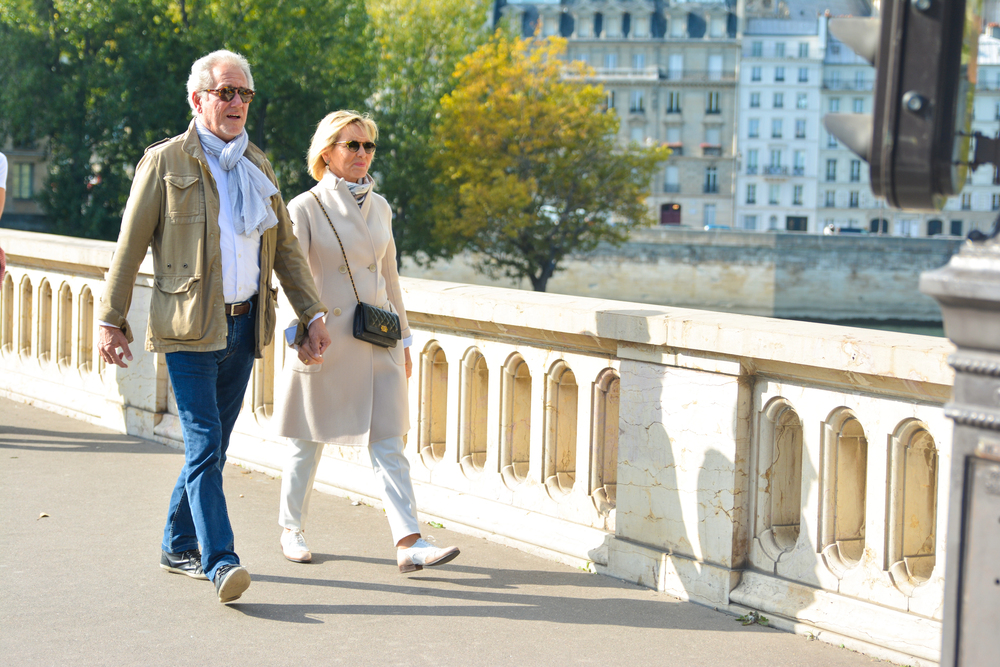
Growing older in France offers expats an appealing mix of independence, security and everyday ease, supported by a well-organised network of services and community resources. From town-hall support through the CCAS to national benefits like the APA, the system is built to help people stay in their homes for as long as they choose. With accessible healthcare, adaptable housing and lively social opportunities, France gives people the tools to enjoy later life with confidence and connection.
Understanding France’s Approach to Ageing
France places a strong emphasis on helping people remain in their homes for as long as they wish. A key part of this support is the CCAS (Centre Communal d’Action Sociale), based in each town hall. These local offices help residents access home-help services, transport assistance, social activities and financial support.
Complementing the CCAS is the APA (Allocation Personnalisée d’Autonomie), a national benefit for people aged 60+ who need help with daily living. It is granted based on need, not income, and can fund home carers, mobility aids or accessibility improvements.
Maintaining Health and Mobility
Access to high-quality healthcare is one of France’s greatest strengths for retirees. Once registered with Assurance Maladie, expats join a doctor-led system focused on continuity of care and prevention. Declaring a médecin traitant is essential for smooth navigation and proper reimbursement. Guidance is available on Ameli.
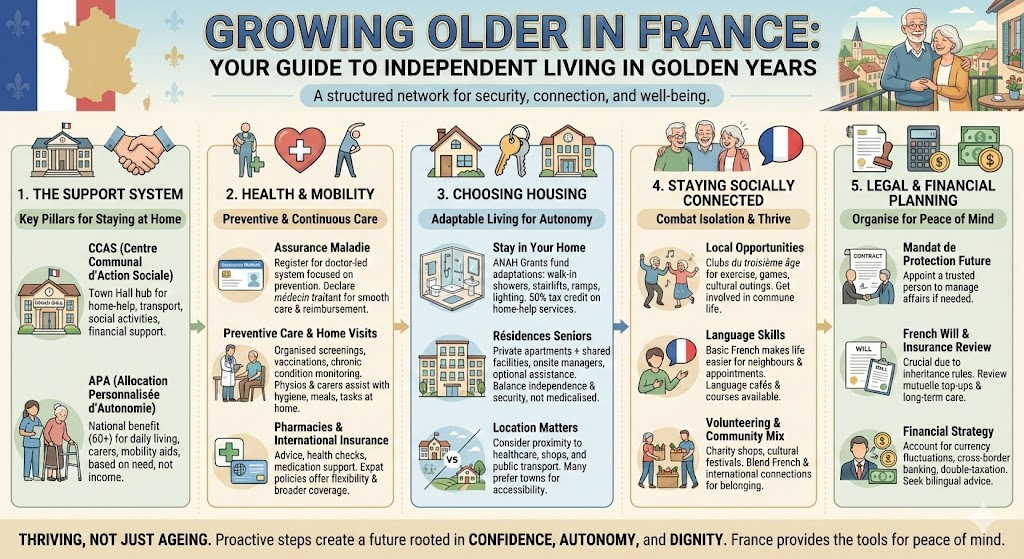
Preventive care is a normal part of life in France. Retirees benefit from organised screenings, vaccination programmes and regular monitoring of chronic conditions. Pharmacies play an important role, offering advice, health checks and support with medication. Physiotherapists often carry out home visits, and trained carers can assist with hygiene, meals and practical daily tasks. All of this helps people maintain mobility and stay safely within familiar surroundings for longer.
Many retirees moving to France also consider taking out international health insurance, especially during their first months in the country or to cover services beyond the state system’s reimbursements. These policies can offer greater flexibility, shorter waiting times and broader coverage when travelling or splitting time between countries.
Choosing Housing That Supports Independence
Your home determines much of your day-to-day autonomy. Rural living offers space and tranquillity, but it can become challenging if you need quick access to healthcare, shops or public transport. This is why many retirees eventually prefer to live closer to towns or small cities, where services are more easily accessible.
For those looking for a balance between independence and support, résidences seniors offer private apartments combined with shared facilities, onsite managers and optional assistance. These communities provide security and social contact without the medicalised environment of an EHPAD, which is designed for people who can no longer live on their own.
Those wishing to remain in their current home can turn to the ANAH, the national housing agency, which provides grants for adaptations such as walk-in showers, stairlifts, ramps or improved lighting. These adjustments can significantly reduce fall risks and help people remain comfortable in their homes for many years.
Staying Socially Connected
Social connection is a major part of staying independent, especially after moving to a new country later in life. French communes typically offer a wide range of opportunities to get involved. Local clubs du troisième âge organise exercise classes, games, cultural outings and social gatherings, helping older residents stay active and maintain routines.
Language skills also play a vital role. Even a basic conversational level in French can make everyday life much easier, from speaking with neighbours to managing appointments. Many towns offer language cafés or adult education courses designed specifically for older learners.
Expat communities provide friendship and practical support, but many retirees find the greatest sense of belonging comes from a mix of French and international connections. Volunteering—in charity shops, cultural festivals or community centres—can help build confidence, routine and meaningful engagement with local life.
Legal and Administrative Planning
Good administrative planning helps retirees stay in control of their decisions for as long as possible. One of the most useful tools in France is the mandat de protection future, which allows you to appoint someone you trust to manage your affairs if you ever become unable to do so.
If you own property or assets in France, a French will is also important. France’s inheritance rules differ from those in many English-speaking countries, and having a will can provide clarity and peace of mind. Reviewing insurance policies—such as mutuelle top-ups or long-term care cover—can also help avoid unexpected financial issues.
Financial Planning for Independent Living
Finances play a central role in maintaining independence. France offers valuable support, including a 50% tax credit on home-help services, which makes it more affordable to bring in help early—often one of the most effective ways to prolong autonomous living.
Expat retirees should also account for currency fluctuations, cross-border banking and double-taxation treaties. Speaking with a bilingual financial adviser can help avoid costly mistakes. Keeping your paperwork organised and regularly reviewing your pension income, expenses and savings can make long-term planning much more manageable.
Using Technology to Stay Independent
Technology is increasingly useful for people in later life. Telemedicine platforms allow you to consult doctors remotely—an advantage for those with mobility challenges or who live far from healthcare services. Devices such as fall-detection watches, automatic pill dispensers and simplified smartphones make daily routines safer and more manageable.
Smart-home tools can also provide reassurance. Automated lighting, heating controls, door sensors and home-monitoring systems help create a safer living environment while reducing reliance on others. Grocery and pharmacy delivery services offer added convenience, especially when driving becomes difficult.
Thriving, Not Just Ageing, in France
Growing older in France offers the chance to build a secure, social and fulfilling life. By understanding how the system works and taking proactive steps across health, housing, community, finances and planning, expats can shape a future rooted in confidence and independence. With the right preparation, France provides everything needed to enjoy later life with autonomy, dignity and peace of mind.