

Living abroad in retirement offers fresh experiences, new communities and the freedom to design daily life on your terms, but distance can still create moments of emotional pull—those times when you wish you could join a family dinner, watch a grandchild’s football match or simply sit beside someone you care about. Missing loved ones is a natural part of settling into a life overseas, and with a few intentional habits, staying connected can become a steady, reassuring part of your routine.
Why Staying Connected Matters For Your Health
Social connection plays a meaningful role in maintaining well-being later in life. Research highlights that loneliness can contribute to poorer mental health, diminished cognitive sharpness and increased risk of physical ailments. Organisations such as the World Health Organization underline the importance of connection for healthy ageing. For retirees abroad, these effects can feel more pronounced due to long-distance family relationships, unfamiliar cultural environments and, at times, a reduced local support network.
Even when the decision to retire abroad is positive and fulfilling, maintaining familiar relationships can act as an anchor—creating continuity during a major life transition. Regular conversations and shared updates help preserve identity, provide emotional support, and reinforce the sense that home is still present, even across borders. Communication doesn’t need to be constant to be meaningful; even brief exchanges add texture to day-to-day life and help counteract the more isolating aspects of distance.
Making Technology Your Friend: Simple Digital Tools
Communication technology has evolved to be straightforward and accessible, making it possible to stay in touch without complexity. A smartphone, tablet or laptop paired with a stable internet connection allows you to connect through video calls, voice messages and instant chats, which offer a sense of presence that written messages alone can’t always convey. Widely used apps such as WhatsApp, FaceTime, Zoom and Facebook Messenger are designed for everyday use, and once set up, they provide a reliable way to maintain close contact.
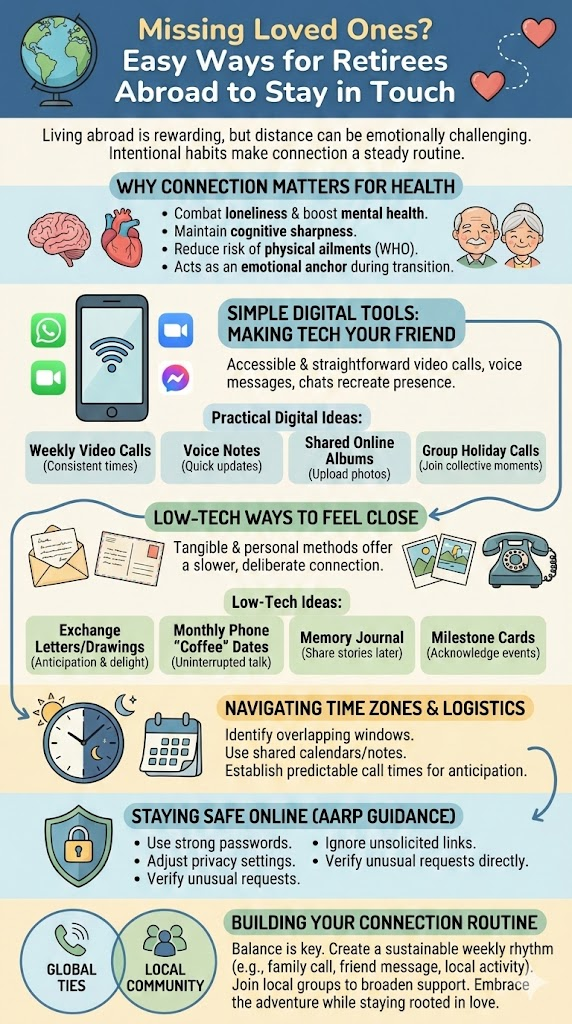
Video calling, in particular, can help recreate the familiarity of seeing someone’s expressions and surroundings. Research has shown that older adults who use digital communication tools often experience a boost in emotional well-being and reduced feelings of isolation. If you’re looking to build confidence with technology, organisations such as Age UK offer clear guides for beginners.
Practical Digital Connection Ideas:
- Set up weekly video calls at consistent times so they become part of your routine.
- Use voice notes for moments when you want to share an update without scheduling a call.
- Create a shared online photo album where family members upload new pictures.
- Join group video calls during holidays or milestones to stay part of collective moments.
Technology is simply a tool—one that, when incorporated naturally into your week, can keep you woven into the everyday lives of the people you love.
Low-Tech Ways To Feel Close, Even From Afar
Digital tools are helpful, but they aren’t the only way to nurture meaningful connection. Many retirees value communication that feels tangible, personal or reflective. Handwritten letters, thoughtful postcards or printed photographs offer a slower, more deliberate form of staying in touch. These small gestures often become keepsakes that family members hold onto for years.
Phone calls remain a strong option for connection, especially for those who prefer conversation without screens. For some families, establishing shared activities—such as reading the same book or listening to the same radio programme—provides a point of connection that can be revisited during calls or messages. These shared experiences help bridge distance and contribute to an ongoing sense of closeness.
Low-Tech Connection Ideas:
- Exchange handwritten letters or children’s drawings, creating moments of anticipation and delight.
- Establish a monthly phone “coffee” date, setting aside time for an uninterrupted conversation.
- Keep a journal of memories or stories to share during future calls.
- Send cards for birthdays, achievements or personal milestones to acknowledge important moments.
Low-tech methods bring variety and depth to your connection habits—reminding both you and your loved ones that communication can take many forms, each carrying its own emotional weight.
Working Around Time Zones And Daily Rhythms
Coordinating communication across time zones can be one of the trickier aspects of living abroad, but with some planning, it becomes manageable. Identifying a few reliable times of day when your schedules naturally overlap can simplify communication. Many families benefit from choosing two or three recurring windows each week that suit everyone—your early morning might match well with their late afternoon, for example.
Some retirees use shared calendars or simple weekly notes to track call schedules, reducing the need for constant coordination. If you’d like more regular communication, it’s reasonable to express this openly; often, loved ones appreciate clarity, especially when routines have become busy. Establishing predictable times for connection not only makes scheduling easier but also gives both sides something to anticipate throughout the week.
Staying Safe And Comfortable Online
As communication increasingly takes place online, maintaining digital safety becomes an important part of staying connected. Basic precautions—such as using strong passwords, ignoring unsolicited links and keeping personal information private—are effective and straightforward. If a message or request feels out of character, even if it appears to come from someone you know, it’s always worth confirming directly with them.
Adjusting privacy settings on social platforms ensures that photos and posts are shared only with people you trust. Organisations such as AARP provide practical guidance on safe digital communication tailored to the needs of older adults. With a few foundational habits, it becomes easier to navigate online spaces with confidence and focus on the benefits of staying connected.
Building Your Own Connection Routine
Staying in touch while living abroad works best when it feels balanced and sustainable. A simple weekly rhythm—perhaps a scheduled family call, a message exchange with a friend and one local activity—can create a strong foundation of connection. Building relationships within your new community is equally valuable. Joining local clubs, volunteer groups, hobby circles or expat networks can broaden your support system and enrich your day-to-day experience.
Connection doesn’t require constant communication; it requires consistency, authenticity and a willingness to integrate small habits into your life. When you combine digital tools, personal communication and thoughtful planning, distance becomes far less of an obstacle. Living abroad can strengthen relationships in unexpected ways, offering opportunities to share your experiences, stay involved in family life and maintain meaningful ties across borders—all while embracing the adventure of your new surroundings.