
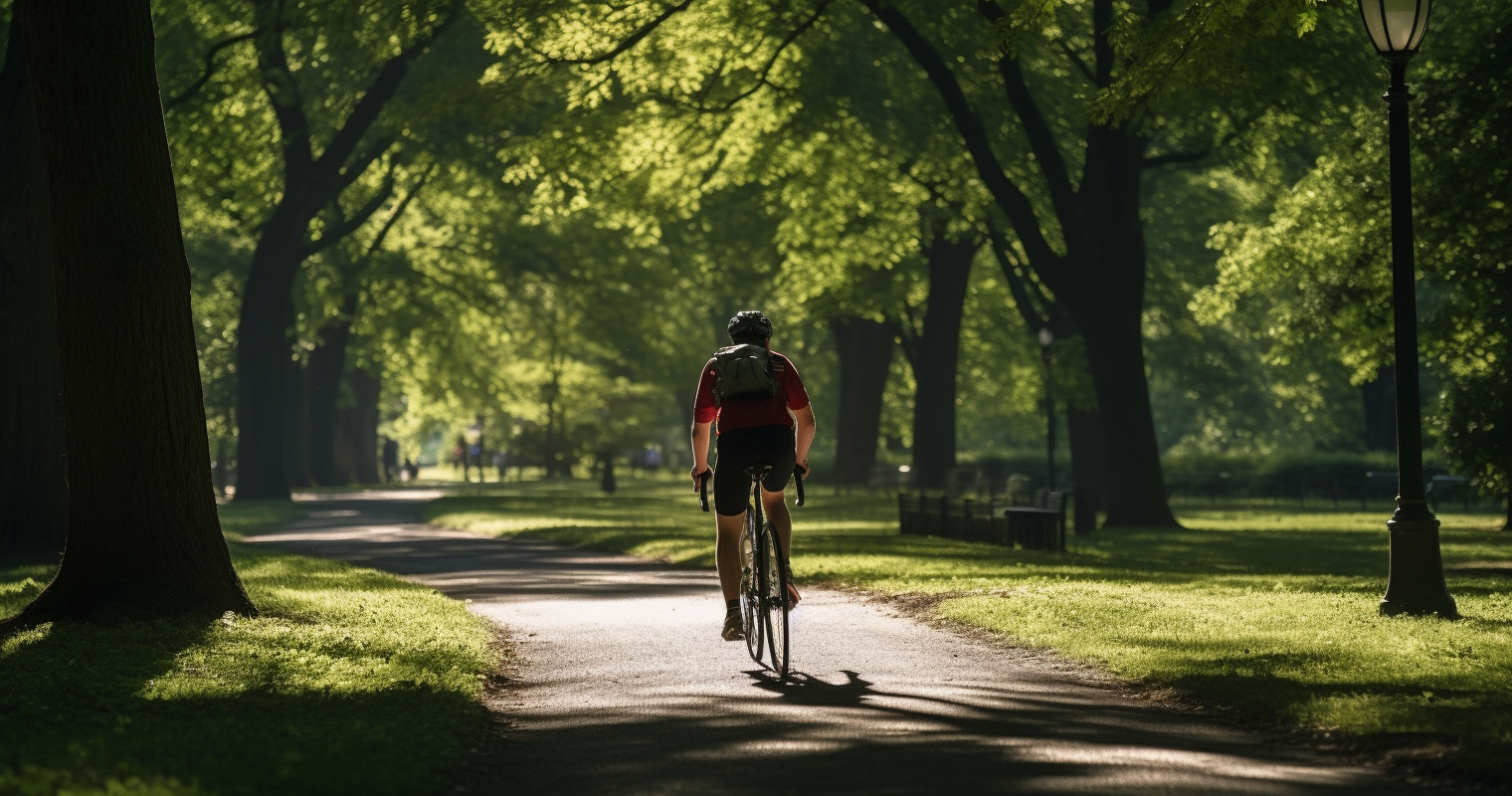
In Jordan, cycling is overwhelmingly a recreational and sporting pursuit rather than an everyday mode of transport. Purpose-built cycling lanes in urban areas are rare, and riding on city roads — particularly in Amman — presents real challenges for the average cyclist. That said, Jordan boasts dramatic off-road terrain, a nationally celebrated long-distance route, and a steadily expanding community of passionate riders, all of which make it an appealing destination for those drawn to leisure and adventure on two wheels.
| Item | Details |
|---|---|
| Cycling culture | Primarily recreational and sport; commuter cycling is very limited (as of 2025) |
| Dedicated infrastructure | Very few formal cycle lanes; largely absent outside parks and select Amman areas (as of 2025) |
| Helmet law | No specific national helmet law for pedal cyclists; strongly recommended in practice |
| Bike registration | Not required for standard pedal bicycles |
| Key long-distance route | Jordan Bike Trail — approximately 730 km from Umm Qais to Aqaba |
| Best riding seasons | Spring (March–May) and autumn (September–November) |
How popular is cycling in Jordan — is it a common way to get around?
Cycling in Jordan plays a very different role from what expats arriving from places like the Netherlands or Denmark might expect. In those countries, cycling is woven into the fabric of daily life, used by people of all ages and backgrounds to travel to work, school, and shops. In Jordan, using a bicycle as routine transport is still very much in its infancy. Car ownership is widespread, public transport networks are developing, and cycling to the office or to run errands is far from a social norm.
Local urban observers have noted that cycling has been growing as a phenomenon in Amman — not purely as a sport, but also as a practical option, with foreign workers increasingly spotted riding through downtown areas to reach their workplaces. This is an encouraging trend, yet it remains far from widespread. The bulk of everyday travel is done by car or minibus, and utility cycling is most visible among younger residents and members of the expat community in the capital.
Given Jordan’s agreeable climate for much of the year, many Jordanians have embraced cycling as a weekend activity, organising rides with friends and family through different parts of the country. This reflects the dominant character of cycling culture in Jordan: it is embraced enthusiastically as a leisure pastime rather than a workday obligation. The spirit is closer to the recreational cycling culture found across parts of the Middle East and North Africa than to the utility-driven habits of Northern Europe.
It is notable that survey data from Jordan shows high proportions of both male and female respondents indicating they would take up cycling if dedicated lanes were introduced — with those figures being remarkably close between genders. This suggests that pent-up demand exists across the population. The expanding local cycling scene, the popularity of weekend group rides, and growing adventure tourism events are all contributing to a gradual shift in attitudes toward the bicycle.
What is the cycling infrastructure like in Jordan?
Dedicated cycling infrastructure in Jordan is thin on the ground, and this represents one of the most tangible practical obstacles for expats hoping to incorporate cycling into their daily routine. Cities like Amsterdam or Copenhagen offer sprawling, well-protected cycle lane networks; even places like Berlin have invested significantly in marked routes and signposted cycling corridors. Amman and other Jordanian urban centres, by contrast, offer very little in the way of formal provision for cyclists.
Efforts to improve things have involved identifying routes most commonly used by existing cyclists, taking into account factors such as street gradients, traffic concentration, and available roadside space for potential cycle lanes. These proposals have been described as both a reflection of where cyclists already ride and an outcome of broader research into how Amman might be made safer for cycling. Such ideas have been showcased at public platforms like Amman Design Week, but tangible implementation on the ground has been slow.
Residents frequently cite obstacles including unsuitable road surfaces, insufficient traffic regulation, the city’s pronounced topography, and tough weather conditions at certain times of year. Amman sprawls across multiple hills, which makes finding flat, straightforward routes the exception rather than the rule. Combined with heavy motor traffic, riding through the city demands confidence, experience, and constant alertness.
Advocacy groups continue to press for improved conditions, and public acceptance of the concept of cycle lanes has been growing, partly driven by worsening traffic congestion and rising awareness of sedentary lifestyles. Outside the capital, the picture is even more limited. Rural roads can offer quieter conditions, but marked cycling routes and managed trail networks are generally accessed through specialist operators rather than through any nationally maintained pathway system. The Jordan Ministry of Transport and the Greater Amman Municipality hold responsibility for urban transport planning, and their official websites are worth monitoring for any future developments in cycling provision.
Is cycling safe in Jordan?
Local cycling advocates have been candid in acknowledging that fear of accidents remains one of the single biggest barriers preventing people from riding in Amman. The view widely held in the community is that if road safety for cyclists were meaningfully improved, the number of people taking to two wheels would increase substantially. This reflects a genuine concern: driver awareness of cyclists sharing the road is inconsistent, and mixing with fast-moving traffic on main roads carries real and serious risks.
Accidents involving cyclists have resulted in serious injuries on roads such as the Airport Highway, and fatalities have been recorded, making clear that major arterials and highways are particularly hostile environments for cyclists and should be avoided wherever possible. Much safer options include quiet backstreets, rural roads through the countryside, and purpose-built or well-established trail networks.
A view widely shared among local cyclists is that what Amman needs most is not simply a bike lane here and there, but a fundamental change in driver behaviour toward both pedestrians and cyclists — and that the city’s hilly topography adds another layer of difficulty on top of that. Urban road conditions can also include potholes, uneven surfaces, and inadequate lighting on certain stretches, all of which are especially hazardous after dark.
Jordan has no national law specifically requiring pedal cyclists to wear helmets, but doing so is strongly advised — especially on roads shared with motor vehicles. Helmets are available from local cycling retailers if you need to buy one after arriving in the country, including models fitted with integrated lights. For current road safety data, the Public Security Directorate of Jordan and the Ministry of Transport periodically publish traffic accident statistics.
Jordan experiences intense heat during the summer months, so scheduling rides during the cooler periods of spring (March to May) and autumn (September to November) is highly advisable. The risk of heat exhaustion is very real in summer, particularly in low-lying areas such as the Dead Sea basin and Wadi Rum.
What are the rules of the road for cyclists in Jordan?
Road use in Jordan is governed by the Traffic Law and its amendments, administered by the Public Security Directorate (Traffic Department). While the law applies to all road users, detailed provisions specifically addressing cyclists are less comprehensive than in countries with long cycling traditions — such as Germany or the Netherlands, where extensive cycling codes have been developed over decades. The following principles are relevant to cyclists riding on Jordan’s roads:
- Road position: Cyclists are required to ride on the right-hand side of the road, keeping as close to the kerb as is safely practical. Riding on main highways and expressways is dangerous and is generally prohibited or strongly discouraged.
- Helmets: Jordan has no national legislation requiring pedal cyclists to wear helmets, in contrast to countries such as Australia where helmet use is compulsory for all ages. Nonetheless, wearing one is strongly recommended in view of road conditions and traffic behaviour.
- Lighting: Cycling advocacy in Jordan has highlighted the importance of cyclists using reflective lights as a key safety measure. Riding after dark without lighting is both dangerous and ill-advised; front and rear lights are considered essential equipment.
- Pavements and pedestrian areas: Cycling on pavements is generally not permitted in urban areas, though enforcement varies in practice. Caution and consideration should be exercised around pedestrian zones.
- Alcohol: Jordan’s Traffic Law prohibits the operation of any vehicle under the influence of alcohol, and this provision applies to cyclists as well as drivers of motor vehicles.
- Age: There are no nationally published minimum age requirements specific to cycling on public roads, but children should always be supervised when riding on roads shared with motor traffic.
Rules and levels of enforcement can differ between municipalities. Always verify current requirements directly with the Traffic Department of the Public Security Directorate or the Ministry of Transport for the most accurate and up-to-date legal information before cycling on public roads.
Do I need to register my bike or have insurance to cycle in Jordan?
Standard pedal bicycles are not subject to any registration requirement in Jordan. Motor vehicles must be registered with the traffic authorities and carry mandatory third-party insurance, but bicycles fall outside that regime entirely. This aligns with the approach taken in the majority of countries worldwide, where registration of pedal cycles is either voluntary or simply does not exist.
There is equally no statutory obligation for cyclists to hold third-party liability insurance in Jordan. That said, given the road conditions described in earlier sections, taking out personal accident cover and ensuring your expat health insurance policy covers cycling-related injuries is strongly advisable. Most international health insurance plans that include sports and recreational activities will cover cycling; however, it is worth reading your policy terms carefully if you intend to ride on public roads or undertake off-road trail cycling, as some policies exclude activities deemed to carry elevated risk.
Participants in local cycling discussions have raised concerns about the cost and availability of bicycles in Jordan, as well as the impact of high import tariffs — a reflection of the fact that bikes and cycling equipment can carry a significant price premium on the local market. If you have questions about insurance products or regulatory requirements, the Central Bank of Jordan, which oversees the insurance industry, or a licensed insurance broker in Amman can point you toward current options and advice.
Are there public bike-sharing or rental schemes in Jordan?
Jordan does not currently have a large-scale public bike-sharing system in operation. There is nothing comparable to schemes such as Dublin’s Dublinbikes, Paris’s Vélib’, or the docked e-bike networks found across many European and Australian cities. As of 2025, no municipal docked-bike scheme exists in Amman or in any other major Jordanian city.
For expats and visitors looking to hire a bike, the main avenue is through specialist cycling operators. Amman-based companies such as Cycling Jordan have provided bike rentals with equipment fully prepared for longer journeys. Cycling Jordan, for example, offers guided day tours departing from Amman and riding the 70 km descent to the Dead Sea — a well-supported and popular option for those who want to explore the country without owning their own bike. Visit the Cycling Jordan website for current rental rates and availability, as pricing is subject to change.
Rental services aimed at tourists also operate in key visitor destinations including Petra and Aqaba, typically catering to day-trippers and short-stay visitors. Rates differ by operator and time of year. For the most up-to-date information on hire options and any newly launched schemes, the Jordan Tourism Board is a useful starting point, as is direct contact with local tour operators.
Where can I buy or service a bike in Jordan?
Dedicated bicycle retailers in Jordan are found exclusively in Amman, which means that expats living outside the capital — in cities such as Irbid, Zarqa, or Aqaba — will need to travel to the city to access specialist parts, quality equipment, or professional servicing. This is an important practical consideration before committing to cycling as a regular activity from a base outside Amman.
Local bike shops are a reasonable resource for routine maintenance, cleaning, and purchasing everyday accessories such as inner tubes, lights, and other commonly needed items. When requirements become more specialist, however, sourcing equipment abroad and importing it is often the more reliable approach, as Jordanian retailers are unlikely to carry niche or high-specification stock.
Some Amman-based stores do carry road and mountain bikes at entry to mid-range price points, and attentive service in certain shops makes purchasing locally a worthwhile experience. However, high import tariffs and customs duties applied to bicycles and cycling accessories mean that the local market is generally more expensive than many cyclists will be accustomed to from their home countries. There is no equivalent of the UK’s Cycle to Work scheme, which allows employees to obtain bikes in a tax-efficient way through their employer, so riders must meet the full retail cost of any local purchase.
A recurring theme among residents is that bicycle prices and repair costs in Jordan are felt to be steep, a consequence of tariffs that push up consumer prices across the board. If you own a high-quality bike that would be difficult or costly to replace locally, bringing it with you when you relocate is likely the most practical solution — subject to the customs considerations outlined in the following section.
Can I bring my bike when I move to Jordan, and are there any import rules?
Bringing a bicycle to Jordan as part of an international relocation is entirely permitted, and many expats choose to do so — particularly those with higher-specification bikes that would be expensive or difficult to source locally. However, import duties may apply, and the applicable rules depend on your residency status and how the goods are transported.
- Personal effects exemption: Foreign nationals relocating to Jordan may be eligible for a customs duty exemption on household goods and personal effects, provided the owner’s name appears on the relevant certificate at the Ministry of Trade and Commerce and the items are used rather than new. A well-used bicycle included as part of a household removal should potentially qualify under this exemption, but this must be verified with the customs authority before shipping.
- Owner presence required: The owner of the goods must be physically present at the time of customs clearance in Amman. Plan your shipping schedule so that your arrival and your consignment’s arrival are properly coordinated.
- Documentation: International shipments to Jordan require a commercial invoice, airway bill, and packing list. A certificate of origin is not obligatory but is common practice. For a personal bicycle forming part of a relocation shipment, engaging a licensed freight forwarder with experience of Jordanian customs procedures is strongly recommended.
- New bicycles and equipment: New items brought in as commercial imports or purchased abroad and carried into Jordan are subject to the standard customs tariff. High import duties on bicycles have been a point of concern within Jordan’s cycling community. Consult the current tariff schedule with Jordan Customs (Al-Jomrok) before making any decisions.
- Specialist advice: Always engage a licensed customs agent or freight forwarding firm familiar with Jordanian import regulations before shipping anything, as tariff rates and exemption conditions are subject to change.
For the most current import duty rates and personal effects exemption criteria, consult the Jordan Customs Authority directly. The Ministry of Industry, Trade and Supply also publishes import guidance relevant to both residents and businesses.
What are the best cycling routes or destinations in Jordan?
For expats and visitors who see cycling as a way to explore and unwind, Jordan has a remarkable amount to offer across a surprisingly varied landscape. The country’s highlights are best discovered via established routes, often with the support of knowledgeable local operators.
Jordan Bike Trail
The Jordan Bike Trail is a 730-kilometre mixed-terrain route that runs the full length of the country. Starting in the north amid rolling hills, olive groves, and farmland, it winds through the dramatic canyon landscapes of the Dead Sea region, passes through the Dana Biosphere Reserve and the ancient city of Petra, and concludes amid the extraordinary sandstone scenery of Wadi Rum before arriving at the Red Sea port of Aqaba. This is Jordan’s flagship cycling route and the most thorough way to experience the country from a saddle.
The trail is divided into three regions and twelve stages. The Northern Region encompasses four stages, running from Umm Qais to Madaba — the so-called “City of Mosaics” — taking in Roman Decapolis ruins, lush forested hillsides, and undulating farmland. The Central Region covers four stages between Madaba and the Crusader fortress of Shobak. The Southern Region also comprises four stages, beginning at Shobak and ending at Aqaba on the Red Sea coast.
Amman to the Dead Sea
Cycling Jordan operates day tours departing from Amman that cover the 70 km journey down to the Dead Sea. Although 70 km may sound daunting, the Dead Sea lies more than 400 metres below sea level, meaning gravity works largely in the rider’s favour throughout. This is a perennially popular route among Amman’s resident cyclists and offers extraordinary views during the descent.
Madaba to Mount Nebo and the Dead Sea
This ride opens with a gentle 7 km climb to Mount Nebo, widely believed to be the burial place of Moses, rewarding the effort with sweeping panoramic views across the valley below. From the summit, a thrilling descent leads all the way down to the shores of the Dead Sea. The route is well suited to intermediate riders and stands as one of the most beloved day rides in the country.
Wadi Rum Desert
Riding across the desert salt flats of Wadi Rum in the early morning is a genuinely singular experience, set against a surreal, otherworldly backdrop unlike almost anywhere else on the planet. Trail riding here is best arranged through a local operator with sound knowledge of desert navigation and conditions.
Northern Jordan: Jerash and Ajloun
Jordan’s northern region, characterised by its Mediterranean microclimate, dense forests, and well-preserved Roman ruins, offers some of the most verdant and varied cycling terrain in the country. Routes around Jerash, Ajloun, and the Jordan Valley provide an experience that contrasts sharply with the arid southern landscapes.
For route planning, the Jordan Bike Trail official website and the Jordan Tourism Board are the best starting points. The Jordan Cycling Federation can also supply information on organised events and additional routes across the country.
Frequently asked questions about cycling in Jordan
Is cycling a practical way to commute to work in Amman?
For the majority of people, using a bicycle for the daily commute in Amman is genuinely difficult. The city’s hills are steep, traffic is often heavy and moves quickly, and dedicated cycle lanes are nearly non-existent. That said, some residents — especially those whose homes and workplaces are relatively close together on more manageable terrain — do make it work. If you are a confident cyclist and your route avoids the busiest roads, commuting by bike is not impossible, but it demands thorough route planning and a willingness to share the road with motor traffic on your own terms.
Do I legally have to wear a helmet when cycling in Jordan?
No national legislation in Jordan compels pedal cyclists to wear helmets — unlike countries such as Australia or New Zealand, where helmet use is legally required for all ages. However, wearing a helmet is strongly advisable given the state of the roads, the behaviour of drivers, and the near-total absence of cycling-specific infrastructure. Putting on a helmet whenever you ride on roads shared with motor vehicles is simply good sense.
Are there cycling clubs or communities for expats in Jordan?
Yes. Amman has a lively and welcoming cycling community, with regular group rides, events, and active online groups. Companies such as Cycling Jordan and Experience Jordan run regular organised outings. Looking for cycling groups on social media platforms after you arrive is one of the quickest ways to connect with fellow riders and get your bearings on the local scene.
What is the best time of year to cycle in Jordan?
The spring months of March to May and the autumn period from September to November offer the most pleasant cycling conditions in Jordan. Temperatures are moderate and the weather is generally agreeable. The summer months of June to August bring intense heat, particularly at lower altitudes around the Dead Sea and Wadi Rum, where extended rides without careful hydration and planning can pose a genuine health risk.
Can I bring my bicycle on the plane to Jordan?
Most airlines will accept bicycles as oversized checked baggage, subject to applicable fees and specific packaging requirements — typically a cardboard box or a rigid hard case. Plenty of travellers have arrived in Amman successfully with their bikes in tow; simply confirm your airline’s policy on oversized sports equipment well before your departure date. On arrival, be prepared to show documentation confirming the bike is a personal belonging rather than a commercial import.
Is there a bike-sharing scheme in Amman?
As of 2025, no large-scale docked public bike-sharing network exists in Amman or any other Jordanian city. Those wishing to rent a bike can do so through specialist operators such as Cycling Jordan, which supplies bikes equipped for day tours or longer self-guided journeys. Check operator websites directly for up-to-date pricing and availability.
Where can I get my bike repaired in Jordan?
Bike shops and professional repair services are concentrated in Amman. Cyclists based elsewhere in the country will need to travel to the capital for specialist work. For anyone planning off-road or trail riding, the Jordan Bike Trail website advises carrying your own tools and a supply of spare parts, as roadside mechanical assistance is not readily available along rural stretches. Basic consumables such as inner tubes, lights, and pumps can be found in Amman’s cycling stores.
Is cycling safe for women in Jordan?
Women do cycle in Jordan — both expat residents and solo travellers. Awareness of local customs is important: opting for modest clothing when riding through or near populated areas shows cultural respect and tends to attract less unwanted attention. The road safety concerns that affect all cyclists in Jordan apply equally regardless of gender. Joining a local cycling club or signing up for an organised group ride is a great way to get started confidently and to meet people within the community.