
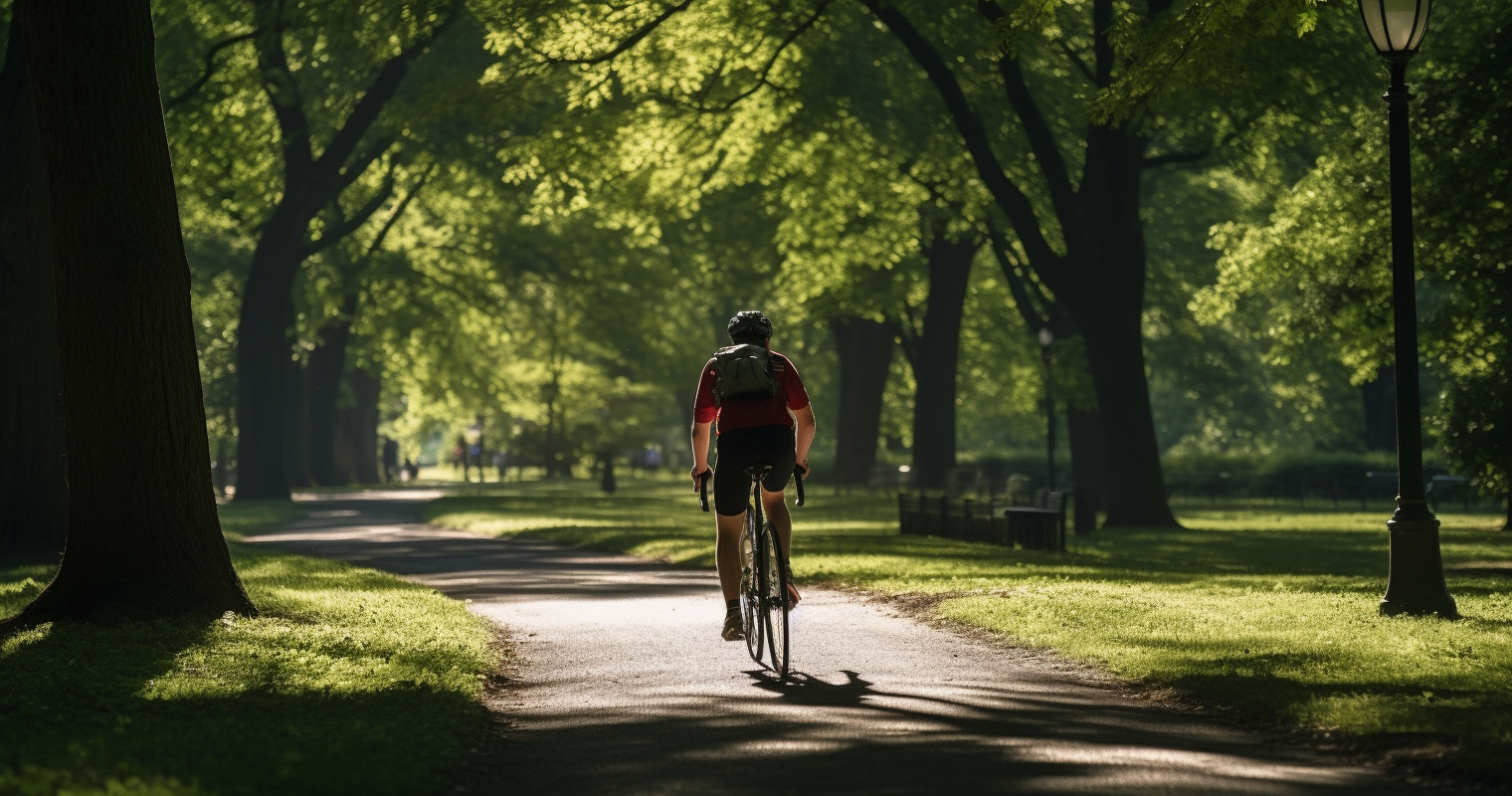
Cycling in Peru is an activity on the rise, though it remains far from fully established. In Lima, purpose-built infrastructure is slowly expanding, but coverage is uneven and tends to favour more affluent neighbourhoods. Beyond the capital, cycling is largely adventure-driven and recreational, with the Andean highlands offering internationally recognised mountain biking terrain. For those considering cycling as a daily commuting option, it is achievable but demands alertness to variable road surfaces and the realities of assertive local driving culture.
| Item | Details |
|---|---|
| Helmet requirement | Legally required under the National Traffic Regulation (RNT) as of 2024 |
| Bike lanes in Lima | Approximately 332 km as of 2023–2024, with expansion underway |
| Cycling modal share (Lima) | Approximately 0.6% of daily trips as of 2023 |
| Key legislation | Law No. 30936 (2019) — promotes and regulates bicycle use as sustainable transport |
| Bike registration | Not mandatory for bicycles in Peru |
| Customs import duty | Approx. 12% on goods exceeding personal effects exemption — check SUNAT for current rules |
| Key authority for cycling | Ministry of Transport and Communications (MTC); ATU (Lima urban transport) |
How popular is cycling in Peru — is it a common way to get around?
Cycling in Peru fills a modest but steadily expanding role within urban mobility. Public transport dominates Lima’s daily travel patterns, accounting for roughly half of all journeys, while cycling makes up less than one percent. This places Peru at a considerable distance from high-cycling nations such as the Netherlands or Denmark, where bikes account for a quarter to a third of all trips. A more useful comparison is with neighbouring countries like Colombia or Mexico, where cycling is cherished by enthusiasts and an emerging urban minority but has yet to penetrate mainstream commuting habits.
The cycling modal share in Lima climbed from roughly 0.3 percent of total journeys in 2012 to 0.6 percent in 2023 — a positive direction of travel, though the figures also underscore how much the absence of adequate infrastructure continues to hold cycling back. The COVID-19 pandemic proved to be an unexpected catalyst: with public buses and taxis suspended and roads largely emptied, rapidly installed pop-up bicycle lanes gave many Lima residents a practical and active way to move around the city.
The cycling scene in Lima has grown more vibrant, with an increasing number of bike clubs, community groups, and organised rides taking shape. Every Sunday, Avenida Arequipa is closed to motorised traffic between 7am and 1pm, giving cyclists exclusive use of one of the city’s major thoroughfares. Outside the capital, cycling as a daily travel mode is rare; it is associated primarily with leisure riding, adventure tourism, and mountain biking across the Andes.
Lima’s relatively flat topography and benign climate for much of the year create conditions that are, in theory, well suited to promoting cycling as a sustainable transport option. In practice, however, chaotic traffic and patchy infrastructure have long suppressed its uptake, and while conditions have improved since the pandemic years, significant challenges remain.
What is the cycling infrastructure like in Peru?
Lima currently has approximately 332 km of bicycle lanes, but network coverage is limited and fragmented, with few routes providing effective last-mile connections to major public transport hubs. By comparison, cities such as Amsterdam and Copenhagen boast networks that dwarf Lima’s on a per-capita basis, and even within Latin America, Bogotá has invested more substantially in protected cycling corridors.
Known locally as ciclovías, Lima’s bike lanes were virtually non-existent a decade ago. Today, they are most concentrated in popular residential and tourist districts such as Miraflores, San Isidro, and Lince, where dedicated cycling paths have become an established part of the streetscape.
In an effort to accelerate construction, many of Lima’s lanes were built as bidirectional routes running down the centre of major roads, leaving cyclists to navigate narrow channels with oncoming bike traffic on one side and fast-moving cars on the other. This design choice was partly driven by the presence of “combis” — aggressive minibuses that crowd the outer lanes and make frequent stops at the kerbside. The approach contrasts sharply with infrastructure models such as Germany’s, where cycle tracks are typically positioned beside footpaths and clearly separated from both pedestrians and motor vehicles.
Quality is notably inconsistent. The Avenida Universitaria bike path, despite being Lima’s longest cycling route at 14 kilometres, is plagued by potholes, accumulated rubbish, and a near-total absence of signage. Wealthier, more centrally located districts such as Miraflores tend to maintain their infrastructure far better than peripheral areas of the city.
On a more encouraging note, investment in cycling continues to move forward. Lima’s pandemic-era pop-up lanes added close to 100 km of new infrastructure within two years and helped shape subsequent planning efforts, including an ongoing project to design and construct 98 km of bicycle paths with financial support from the German Development Bank (KfW). A further 50 km of lanes is planned under a World Bank-backed programme, alongside work to establish a metropolitan public bike-share system.
The Sub-Management of Non-Motorized Transportation (STNM) has been driving efforts to expand the city’s bike lane network, and a Plan for the Implementation of Cycle Paths in Metropolitan Lima 2022–2024 was drawn up to provide a structured framework for cycle path development. Outside Lima, dedicated cycling infrastructure is largely absent; cycling in rural areas or smaller cities means sharing roads that are often in demanding condition. For current route maps and planned developments, consult the Ministry of Transport and Communications (MTC) and the Lima Urban Transport Authority (ATU).
Is cycling safe in Peru?
Road safety is a serious concern for cyclists in Peru. Vulnerable road users — pedestrians and cyclists combined — account for nearly 55 percent of all annual road fatalities, with the majority of incidents occurring at intersections. This is a sobering figure that anyone cycling in Peru, whether for commuting or recreation, should factor carefully into their decisions about where and how to ride.
Peru’s broader transport environment is characterised by high accident rates, an overstretched public transport system, and inconsistent respect for traffic regulations. The road network lacks the safe, direct, and well-integrated options that regular cyclists need, particularly on arterial routes where dedicated cycling space is scarce and traffic management is inadequate. Driver attitudes towards cyclists vary considerably: in districts where cycling culture is more established, such as Miraflores, motorists tend to be more aware of people on bikes, but on busy main roads and in outer suburbs, cyclists can find themselves sharing space with unpredictable and impatient drivers.
Not all of Lima’s bike lanes are physically separated from general traffic, meaning riders frequently have to hold their ground alongside the city’s famously aggressive driving. Weather adds another layer of risk: during the winter months, even light drizzle can make painted lane surfaces treacherous. Some bikeways in Miraflores and San Isidro use standard road paint rather than non-slip surfaces, which can become dangerously slick when wet.
Helmet use is a legal obligation (covered in the following section), and wearing high-visibility clothing along with front and rear lights is strongly recommended. The Ministry of Transport and Communications (MTC) established the National Road Safety Observatory (Observatorio Nacional de Seguridad Vial, ONSV) in 2015 to coordinate road safety initiatives. Readers should consult the ONSV for the most recent road safety data and advisories.
Bicycle theft is a further practical concern. Invest in a robust lock and avoid leaving your bike unattended in busy public spaces for any extended period, particularly in urban centres.
What are the rules of the road for cyclists in Peru?
Road rules in Peru applicable to cyclists fall under the Traffic and Road Safety Law (Ley de Tránsito y Seguridad Vial) and are enforced by the National Police of Peru alongside other local authorities. A landmark development came in 2019 with the enactment of Law No. 30936, which established a comprehensive legal framework promoting and regulating bicycle use as a sustainable form of transport. This legislation forms the foundation of cyclists’ rights and responsibilities in Peru.
The principal rules that cyclists are required to observe include:
- Helmets: The National Traffic Regulation (RNT) sets out the rules governing bicycle use and mandates the wearing of a safety helmet to minimise head injuries in the event of a fall. This is a statutory obligation, not simply good advice — in contrast to countries like the UK, where there is no national helmet law, or Denmark and Finland, where helmets are encouraged but not legally compulsory.
- Direction of travel: Cyclists are required to ride with the flow of traffic. Riding against oncoming traffic is prohibited.
- Use of cycle lanes: While no law compels cyclists to use designated bike lanes, riders are expected to use them where they exist.
- Lights: Lights are legally required at night and are strongly advised at all times to maximise visibility to other road users.
- Basic tool kit: Every bicycle must be equipped with a basic set of tools.
- Traffic signs: Cyclists must observe all traffic signals and signs, just as motor vehicle drivers are required to do; signage is also displayed within bicycle lanes.
- Alcohol: Peru’s drink-driving laws are strict, with a maximum permitted blood alcohol concentration of 50mg per 100ml of blood for motor vehicle operators. Cycling under the influence of alcohol is also prohibited under the general traffic framework.
Following the COVID-19 pandemic, Supreme Decree 012-2020-MTC introduced further regulation under Law No. 30936, supporting the development of cycling infrastructure, cycling education, and an entitlement for employees who commute by bicycle to an additional paid rest day per year. This “bicycle day” benefit has no direct equivalent in the labour laws of many other countries and represents a meaningful incentive for cycle commuters.
Rules may be supplemented or modified at district or municipal level. Always consult the official text of the Traffic and Road Safety Law via the MTC website for complete and up-to-date legal requirements.
Do I need to register my bike or have insurance to cycle in Peru?
Bicycle registration is not a legal requirement in Peru. Unlike motor vehicles, which must be registered with the National Superintendence of Land Transport (SUTRAN), bicycles are not subject to any formal registration obligation. There is no national or municipal scheme equivalent to, for example, the historical voluntary registration programmes that have existed in some European countries.
Third-party or personal liability insurance is equally not required by law for cyclists in Peru. While minimum third-party insurance is compulsory for motor vehicles, that requirement does not extend to bicycles. Nevertheless, regular commuters would be wise to consider personal accident insurance or travel insurance that specifically covers cycling-related incidents, given that medical expenses following a serious accident can be substantial.
Your home contents or personal property policy may include cover for bicycle theft, depending on its terms. It is worth checking with your insurer before you arrive in Peru. For the most current guidance on insurance products available to cyclists, consult the Superintendencia de Banca, Seguros y AFP (SBS), the authority responsible for regulating insurance in Peru.
Are there public bike-sharing or rental schemes in Peru?
A city-wide public bike-share system does not yet exist in Lima, but the groundwork is being laid. In 2024, the World Bank concluded an analysis of transaction models and financing options and is now assisting Lima’s Metropolitan Municipality in structuring a co-financed public-private partnership for a metropolitan Public Bicycle-Share (PBS) system. If realised, this would represent a significant leap forward, bringing Lima closer to the model of comprehensive city-wide schemes seen in cities like Paris (Vélib’) or Madrid (BiciMAD).
At district level, some localised hire options are already in place. The municipality of Miraflores has set up a bike rental system with two stations along the coastal cycling track linking San Isidro and Miraflores — a pleasant option for a leisurely ride along the cliff-top route above the Pacific Ocean.
Private rental services and tour operators offering bikes for hire are well established in Lima, Cusco, and other tourist destinations, with standard bicycles, mountain bikes, and increasingly e-bikes available. Lima has a growing number of electric bike providers; Cycla eBikes is one such operator offering various e-bike models. Prices vary by provider and type — contact operators directly for current rates, as these change frequently.
In Cusco, guided cycle tours and rental services are a well-developed part of the tourism offering, with operators supplying bikes, helmets, and guided routes into the Sacred Valley. For updates on Lima’s public bike-share development, check the ATU website and the Municipality of Miraflores for current availability and pricing.
Where can I buy or service a bike in Peru?
Purchasing a bicycle in Peru presents few difficulties in Lima and other major cities. The market spans everything from affordable local brands and imported mass-market models sold through large retail chains to specialist road, mountain, and hybrid bikes stocked by dedicated cycling shops. The highest concentration of quality cycle retailers is found in Lima’s middle- and upper-middle-class districts, including Miraflores, San Isidro, Surco, and San Borja.
In cities such as Cusco and Arequipa, a healthy bicycle market has developed, fuelled by both local riders and the strong adventure tourism sector. Riders who bring their own bike to Peru do not necessarily need to ship an extensive stock of spare parts, as components can be sourced locally. As outdoor cycling activity continues to grow in Peru, the availability of mountain bike parts in particular has increased steadily.
Several bike shops and rental outlets in Lima provide bicycles and sometimes e-bikes, many of which also offer repair and maintenance services. For high-specification or specialist components, availability can be more restricted outside Lima, and waiting times for ordered parts may be longer than riders from countries with mature cycling retail sectors are used to. If you ride an unusual groupset or specialist equipment, bringing a supply of critical spares when you relocate is a sensible precaution.
Consumer protection in Peru falls under the remit of the Instituto Nacional de Defensa de la Competencia y de la Protección de la Propiedad Intelectual (INDECOPI). Goods purchased in Peru should come with a manufacturer’s warranty, and consumer rights apply where products are found to be defective. Retaining receipts and warranty documentation is important for any future claims.
Second-hand bicycles are widely available via online platforms such as Facebook Marketplace and OLX Peru. Prices can vary considerably, and having any used bike inspected by a mechanic before completing a purchase is strongly recommended.
Can I bring my bike when I move to Peru, and are there any import rules?
If you are moving to Peru and want to bring your bicycle, the primary authority to consult is SUNAT (Superintendencia Nacional de Aduanas y de Administración Tributaria), which administers customs and import regulations. Bicycles are classified as personal goods rather than vehicles, which generally makes the process simpler than importing a car or motorbike.
When establishing residency in Peru, you may be entitled to import your personal belongings — including a bicycle — duty-free under the “menaje de casa” (household goods) exemption. This applies to used, personally owned items that you have had in your possession before arriving, imported within the designated timeframe following the establishment of residency. Any value that exceeds the permitted exemption threshold must be declared and is subject to import duty of approximately 12 percent of the declared value of the goods.
Bicycles that are new or commercially valued and do not qualify under the personal effects exemption may attract both import duties and VAT. As of 2024, Peru’s tariff rate on standard bicycles generally falls in the range of 0–12%, and Peru’s general IGV (VAT) rate of 18% applies to imported goods. These rates are subject to change with trade policy and international agreements. Always verify the current rates directly with SUNAT before shipping your bike, and consider engaging a licensed customs agent (agente de aduana) to guide you through the process.
When shipping a bicycle, ensure it is securely packaged — typically in a dedicated bike box — and retain purchase receipts and proof of ownership to present to customs officials. If your bike is clearly used and forms part of your personal effects, declare it accurately on your customs declaration form.
What are the best cycling routes or destinations in Peru?
Peru’s remarkable geographic range — stretching from Pacific coastal desert through the soaring Andes to the depths of the Amazon basin — makes it one of the most compelling destinations for adventure cycling anywhere in South America. Whether you are drawn to relaxed urban rides, extended multi-day touring, or technically demanding high-altitude descents, Peru has something to offer.
Lima — Coastal Circuit (Miraflores/San Isidro): The cliff-top route connecting Miraflores and San Isidro is among the most scenic rides the city has to offer, combining sweeping Pacific Ocean views with green open spaces and low-traffic streets. Sunday mornings are particularly enjoyable, when Avenida Arequipa is closed to cars and given over entirely to cyclists and pedestrians.
Cusco and the Sacred Valley: Departing from Cusco, riders can spend multiple days exploring the Sacred Valley on ancient Inca-built singletrack. These trails thread through remote villages with living weaving traditions, dramatic mountain scenery, and lesser-visited Inca archaeological sites. A three-day mountain biking itinerary covering the finest trails in the Cusco region and the Sacred Valley of the Incas is widely regarded as one of the premier cycling experiences in South America and is accessible to riders of varying fitness levels.
Inka Jungle Trail — Machu Picchu by bike: Combining cycling with hiking to reach the iconic citadel via Santa Teresa or the challenging Backdoor Trail ranks among the country’s top mountain biking adventures. This multi-day route involves exhilarating descents from high-altitude cloud forest down into lush jungle terrain.
Colca Canyon, Arequipa Region: The Arequipa region offers diverse terrain for cyclists, from descents down the flanks of the Misti and Chachani volcanoes to explorations of the spectacular Colca Canyon. Cross-country, downhill, and uphill riding opportunities abound around the canyon, the volcanoes, and the Salinas lagoon — a landscape that suits enthusiastic downhill riders in particular.
Andes to Amazon — Cusco to Puerto Maldonado: For those with strong fitness and good altitude acclimatisation, a multi-day ride crossing the Andean mountain range and descending through cloud forest into the Amazon jungle offers an entirely new perspective on Peru’s extraordinary natural environment. Covering some of the most spectacular terrain in South America, this itinerary is best suited to experienced riders and can be completed over a full day or extended across a week.
For route planning and information on national cycling events, the Peru Tourism Board (PromPerú) is a valuable resource. Tour operators based in Cusco and Arequipa can arrange guided routes, bicycle hire, and full logistical support for multi-day expeditions.
Frequently asked questions about cycling in Peru
Is cycling a realistic option for commuting in Lima?
It is achievable, but careful route planning is essential. Lima has approximately 332 km of bicycle lanes as of 2023–2024, though network coverage and connectivity remain limited. The most cycle-friendly areas for commuters are Miraflores, San Isidro, Lince, and the surrounding districts. Beyond these zones, cyclists will frequently find themselves sharing roads with heavy, assertive traffic, so thoroughly evaluating your specific route is advisable before committing to a regular cycling commute.
Are helmets compulsory for cyclists in Peru?
Yes. The National Traffic Regulation (RNT) legally requires all cyclists to wear a safety helmet to reduce the risk of head injury in a fall. This is a statutory obligation under Peruvian traffic law, not merely a recommendation. Unlike countries such as the UK or the Netherlands, where helmet use is a matter of personal choice, riding without one in Peru is a breach of the law and could affect the outcome of any insurance claim following an accident.
Do I need to register my bicycle in Peru?
No. There is no legal requirement to register a bicycle in Peru, either nationally or at municipal level. That said, recording your bike’s serial number and keeping photographs of it can significantly assist in the event of theft or when making an insurance claim.
What is the safest way to cycle in Lima as a newcomer?
Begin by riding in the well-maintained districts of Miraflores and San Isidro, where cycling infrastructure is at its best and drivers are generally more accustomed to sharing the road with cyclists. The cliff-top coastal route is an excellent place to build confidence. Always secure your bike with a quality lock, even during brief stops — opportunistic theft is a real risk. Wear a helmet, use lights, ride with the flow of traffic, and exercise particular care at intersections, which are statistically the most hazardous locations for cyclists.
Can I bring my bicycle to Peru when I move there?
Yes. A bicycle may be imported as part of your household goods (menaje de casa) when taking up residency, potentially duty-free if it qualifies as used personal property. New bicycles or those of high commercial value that fall outside the personal effects threshold may be subject to import duty and VAT. Always verify current rates and procedures with SUNAT before shipping your bike, and consider enlisting a licensed customs agent to help navigate the process.
Is mountain biking popular in Peru and where should I go?
Mountain biking is a relatively recent but rapidly growing sport in Peru, with new trails opening up regularly and outstanding riding available across the country. The most celebrated areas include Cusco and the Sacred Valley, the Colca Canyon near Arequipa, and the descent routes from the Andes into the Amazon. Guided tours are widely available and are strongly recommended for anyone tackling high-altitude or remote terrain.
Is there a public bike-share scheme I can use in Lima?
A full metropolitan bike-share system is currently being developed, with the World Bank helping Lima’s municipality to structure a public-private partnership for the project. In the meantime, the municipality of Miraflores operates a bike rental service with two stations along the coastal cycling track. Private hire operators also offer bikes across tourist districts. Check the ATU and Municipality of Miraflores websites for the latest information on availability and pricing.
Are there any specific rules about cycling at night in Peru?
Peruvian traffic law requires cyclists to use lights when riding after dark. A white front light and a red rear light are the standard configuration and are strongly recommended whenever you ride, not just at night. Reflective clothing is also highly advisable, as street lighting can be unreliable outside central Lima and in provincial cities. For the full current requirements, consult the Ministry of Transport and Communications (MTC).