
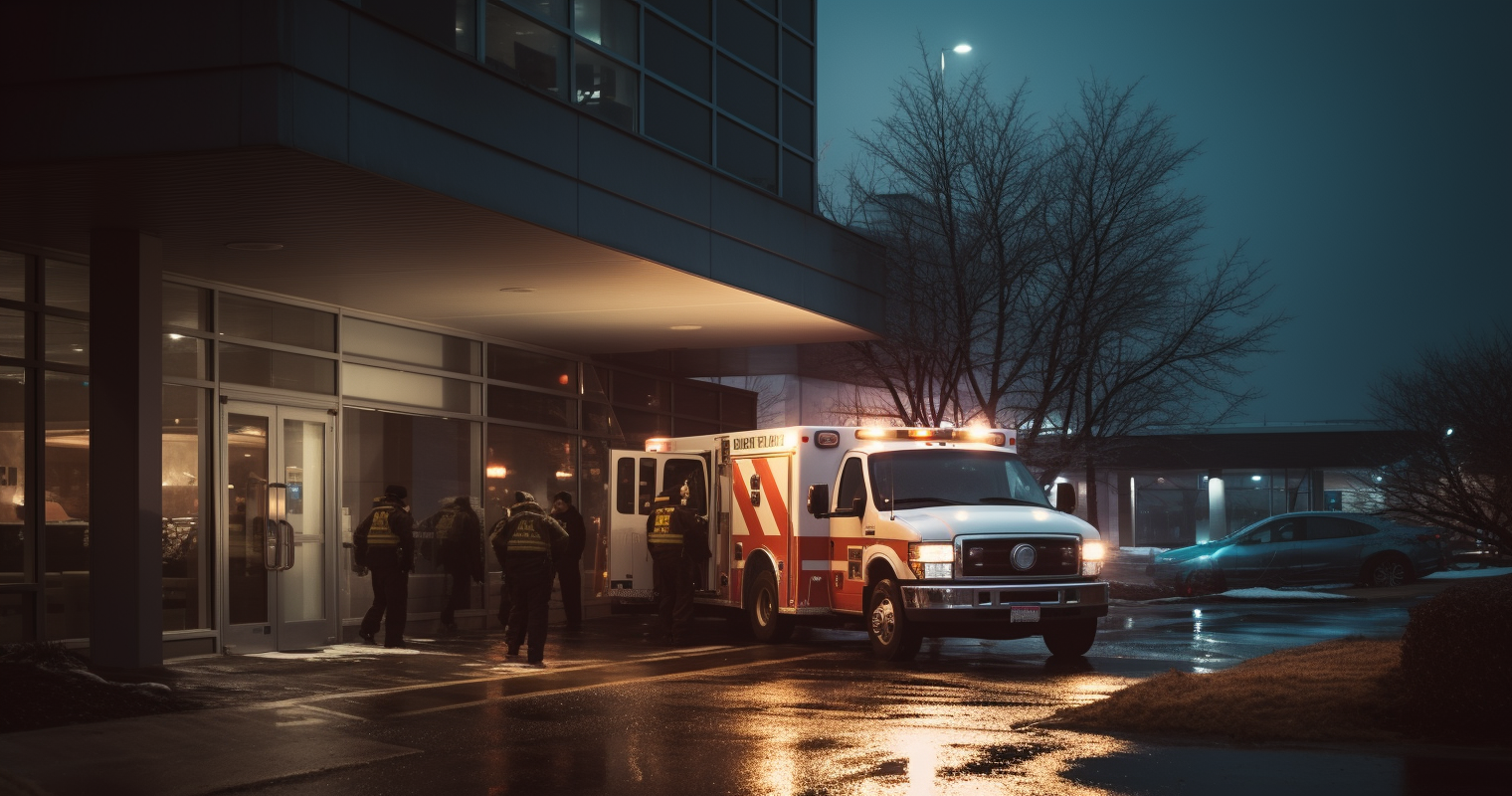
Qatar operates a single, unified emergency number — 999 — that gives callers around-the-clock access to police, fire, and ambulance services in multiple languages. The international mobile alternative is 112. Ambulance dispatch falls under the responsibility of the Hamad Medical Corporation (HMC), and the immediate emergency response carries no upfront cost — although ongoing treatment expenses vary depending on your residency status and insurance arrangements.
| Item | Details |
|---|---|
| Main emergency number | 999 (police, fire, ambulance) — as of 2025 |
| International mobile emergency number | 112 — as of 2025 |
| Emergency services for the Deaf | 992 (SMS, video call) — as of 2025 |
| Ambulance response time (average) | Approximately 8 minutes — as of 2024; verify with HMC |
| Mandatory Visitor Health Insurance cost | QR 50 per month — as of 2024; verify at moph.gov.qa |
| Visitor emergency medical coverage limit | Up to QR 150,000 per policy period — as of 2024 |
| Mandatory health insurance for non-Qatari residents | Required under Law No. 22 of 2021 |
| HMC main contact | +974 4439 2222; Nesma’ak helpline: 16060 |
What is the single emergency number in Qatar, and does it cover police, fire, and ambulance?
Qatar’s sole emergency number is 999, available every hour of every day, connecting callers to police, fire, and ambulance services through a single point of contact. There is no requirement to memorise separate numbers for each service — operators will route your call to the relevant team according to what you describe. This is directly comparable to dialling 999 in the UK or 000 in Australia, where one number covers all three emergency services.
Call handlers are able to assist in numerous languages, including Arabic, English, French, Chinese, Tagalog, and Urdu. This multilingual capability reflects Qatar’s highly diverse expatriate population, ensuring that people from a wide range of national backgrounds can communicate effectively in a crisis.
If you are using a mobile phone — whether in Qatar or abroad — you may also reach emergency services via the international number 112. Deaf callers and those with hearing impairments can contact emergency services by dialling 992, which accepts both SMS messages and video calls. The Qatar Ministry of Interior has confirmed through official channels that the 999 service runs continuously and handles police and ambulance requests in multiple languages. Always cross-check current numbers with the Qatar Ministry of Interior.
How do you call for emergency medical assistance in Qatar, and what should you expect?
When you need an ambulance in Qatar, dial 999 and tell the operator clearly that you require medical help. Speak calmly, describe the situation as accurately as you can, and follow any instructions the operator provides. Give your location in as much detail as possible — if you are in a city area, include the building name, floor number, or a nearby recognisable landmark.
In most cases, help will be with you within 15 minutes or sooner. Ambulances are typically staffed by one EMT and an intermediate paramedic and generally arrive within around eight minutes (as of 2024 — confirm current response standards with HMC). Helicopter emergency medical services and air evacuation are also available for those in remote locations or with critical injuries.
If you are Deaf or hard of hearing, you can reach emergency services via the number 992 using a 4G-enabled device for a video call, or by sending a text message clearly describing your situation, the service needed (ambulance, fire, or police), your full name, address, and any injuries. Alternatively, you can email [email protected], though this channel is unlikely to be appropriate in fast-moving emergencies.
When making an emergency call, aim to communicate the following clearly: the nature of the medical problem; how many people are affected; your exact location; and your phone number in case the call drops. Visitors in need of further guidance can also contact the tourism helpline on 106.
What should you do in a mental health crisis in Qatar?
Qatar does not yet have a dedicated standalone mental health crisis line equivalent to services such as the Samaritans in the UK or Lifeline in Australia. That said, support is available through the national hospital network and a small number of specialist bodies.
If you or someone you know is experiencing a mental health emergency, several hospitals within Qatar’s public system are equipped to help. Hamad General Hospital, Al Wakra Hospital, and Al Khor Hospital all have trained psychiatrists on hand who can carry out assessments, provide treatment, and offer guidance. Their emergency departments are able to manage acute psychiatric cases alongside physical emergencies.
Weyak, Qatar’s mental health association, operates a consulting line on 080 09395. This can be a helpful first step for people facing emotional distress who do not yet need hospital-level intervention. In any situation where life is at immediate risk — such as a suicide attempt or self-harm in progress — call 999 without delay. Verify current contacts through the Hamad Medical Corporation website.
Where can you go for emergency medical treatment in Qatar?
Emergency medical care in Qatar is available through the public hospital network run by the Hamad Medical Corporation (HMC) as well as through a number of private hospital facilities. HMC is a government-funded, not-for-profit organisation and serves as the principal provider of public healthcare across the country.
Key HMC hospitals with emergency departments include:
- Hamad General Hospital (main A&E) — contact: +974 4439 4444; Rumailah Hospital — +974 4024 7777; Al Khor Hospital — +974 4474 5555; Al Wakra Hospital — +974 4011 4422; The Cuban Hospital — +974 4439 3333; Heart Hospital — +974 4439 5838.
- Paediatric Emergency Centres (PEC) are available at Al Saad (+974 4439 6001/6002), Al Airport (+974 4467 7672/7674), Al Rayyan (+974 4481 9989), and Al Daayen (+974 4412 9488).
Although some private hospitals provide their own ambulance services, the HMC ambulance network offers the broadest coverage and fastest response times. For urgent but non-life-threatening needs, polyclinics and urgent care facilities run by the Primary Health Care Corporation (PHCC) are distributed throughout the country, with over 30 locations spanning the northern, central, and western regions. You can locate your nearest facility via the PHCC website or the Nar’aakom app. Always confirm current opening hours and locations directly with providers, as these are subject to change.
Is emergency medical treatment free in Qatar, or is there a charge?
Whether emergency treatment is free or charged depends on your status — Qatari national, registered resident, or short-term visitor — and whether you hold a valid health insurance policy. The framework has changed considerably in recent years, so it is essential to understand how things currently stand (as of 2024–2025).
Qatar introduced a Mandatory Visitor Health Insurance Scheme in 2023 to ensure that all visitors can receive quality medical care when needed. Since 2023, all visitors to Qatar — with the exception of GCC nationals — are required to meet the costs of any medical treatment they need during their stay. Under the mandatory scheme, however, visitors are covered for emergency care.
Through this visitor medical insurance programme, tourists and short-term visitors (excluding GCC nationals) can access up to QR 150,000 in emergency medical coverage, along with QR 35,000 for ambulance transport and medical evacuation (as of 2024). The full policy costs QR 50 per month (as of 2024 — verify the current premium at moph.gov.qa).
Under Law No. 22 of 2021, all non-Qatari residents must hold a Ministry of Public Health (MOPH)-approved health insurance policy. The Basic Mandatory Plan, which starts at QAR 50 per month, includes cover for emergency services; most expats choose to supplement this with enhanced private insurance to access a broader range of private hospitals and higher coverage limits (as of 2025). If HMC does not have a direct billing arrangement with your insurer, you will need to pay upfront and reclaim costs from your insurance provider later. Always carry your insurance documentation and verify that your insurer is on HMC’s approved list before travelling or relocating.
Do expats in Qatar need travel or health insurance to access emergency care?
Health insurance is a legal obligation for both residents and visitors in Qatar. Without appropriate coverage, medical costs can become a considerable financial burden — all the more so given that health insurance is now a statutory requirement for all non-Qatari residents.
For expats living and working in the country, Law No. 22 of 2021 requires every non-Qatari resident to hold an MOPH-approved health insurance policy. Employers commonly include private health insurance within their employment packages, but it is advisable to review what your policy actually covers and whether the limits are sufficient for your circumstances.
Visitors who require a pre-arrival visa must have a valid health insurance policy in place before entering Qatar, as insurance is a mandatory condition of visa approval. Visitors eligible for a visa on arrival are not subject to the insurance requirement for the first 30 days of their stay, though having coverage in place is still strongly recommended.
Qatar’s healthcare standards are high, but expats generally rely on the private sector for most non-emergency needs, and private healthcare costs are considerably higher than those in public facilities. Without insurance, even a routine consultation or diagnostic tests at a private clinic or hospital in Doha can result in a significant bill. If you are uncertain whether your condition constitutes a medical emergency, HMC recommends speaking to the insurance coordination team in the Emergency Department, who can direct you to the appropriate facility.
Are there bilateral health agreements entitling some foreign nationals to reduced-cost emergency treatment?
Qatar does not maintain a wide network of reciprocal healthcare agreements of the kind seen within the European Union through the European Health Insurance Card (EHIC) system, or the bilateral healthcare arrangements that exist between selected Commonwealth countries. There is no equivalent to the mutual healthcare access agreements in place between, for instance, Australia and the United Kingdom.
The mandatory visitor health insurance requirement does not apply to GCC nationals, who may travel to Qatar without needing to purchase coverage under the scheme — a reflection of the regional solidarity arrangements underpinning the Gulf Cooperation Council. This is loosely analogous to the way EU citizens enjoy reciprocal access within the European single market, but is specifically limited to citizens of Bahrain, Kuwait, Oman, Saudi Arabia, and the United Arab Emirates.
For nationals of every other country, no bilateral agreements provide entitlement to free or reduced-cost emergency treatment beyond the coverage offered under the Mandatory Visitor Health Insurance Scheme. This represents a substantially different situation from travelling within EU member states or to countries bound by formal health treaties. You should consult your home country’s foreign ministry or embassy for the latest information, as agreements can be updated. Confirm the current position with the Qatar Ministry of Public Health.
How does Qatar’s emergency healthcare system compare to systems expats may be familiar with?
Qatar’s healthcare model is a mixed public-private system, with the Hamad Medical Corporation forming the backbone of publicly delivered emergency services. HMC operates as a non-profit, government-run organisation providing the country’s primary hospitals and polyclinics — in some respects comparable to the NHS in the United Kingdom or Medicare in Australia. The key distinction, however, is that non-Qatari residents and visitors do not receive free care by default and must hold valid insurance coverage.
Whereas the NHS provides emergency treatment free of charge to anyone physically on UK soil regardless of nationality, Qatar’s framework requires non-Qatari individuals to be insured. Some public services are provided at no cost, while others are heavily subsidised and involve a nominal patient contribution. This places Qatar closer to systems such as those in the United States or Singapore — where insurance or upfront payment is standard — than to fully universal healthcare models.
Roughly 70% of Qatar’s healthcare provision comes from private facilities, meaning that most expatriates will deal primarily with private providers for everyday health needs. Treatment in these settings is available either on a self-pay basis or through an international health insurance plan. Despite this, the overall quality of care is strong: Qatar’s healthcare system is widely regarded as among the most advanced in the Middle East.
What emergency services exist beyond medical — how do police and fire services work in Qatar?
Qatar’s police can be reached by calling 999. The type of unit that responds will depend on the circumstances — possible responders include traffic police, internal security forces (Lekhwiya), the Royal Guard (Amiri), or the rescue police unit known as Al Fazaa. Al Fazaa officers, identifiable by their black and white vehicles, are typically deployed to handle general security and emergency response situations. This mirrors how tiered policing works in other countries — where a road traffic incident might bring a specialist traffic unit rather than a general patrol officer.
Fire emergencies are managed by Qatar’s fire department, which is responsible for fire safety and responding to fire-related incidents. Since the system is centralised, calling 999 and explaining your situation is all that is required — the operator will transfer you to the appropriate service. There is no separate number to dial for the fire brigade.
One further number worth storing is 991, which connects you to Kahramaa (Qatar General Electricity and Water Corporation) in the event of a power outage or water infrastructure failure. You can also contact the internet service helpline on 111 for connectivity-related issues.
If you witness a crime or theft, you can either call the police or report the incident digitally through the Metrash2 app. Qatar has a relatively low crime rate overall, but expats should be aware that local laws diverge considerably from those in many other countries. Behaviour that is perfectly lawful elsewhere — including public displays of affection, drinking alcohol outside of licensed premises, or certain forms of online communication — can carry serious legal consequences in Qatar. Familiarise yourself with local legal requirements via the Qatar Ministry of Interior.
Are there country-specific emergency risks in Qatar?
Qatar enjoys political stability and low crime levels, but several specific hazards deserve attention from anyone living in or visiting the country.
Extreme heat is the most pressing environmental threat. Between June and September, air temperatures can exceed 50°C. Heat exhaustion and heatstroke can set in with alarming speed, especially during any outdoor activity or when air conditioning fails. Drink water consistently, avoid outdoor physical exertion during the hottest part of the day (generally 10am–4pm in summer), and move to a shaded or air-conditioned environment at the first signs of heat illness.
Air quality presents an ongoing concern. Dust storms and elevated particle pollution are frequent occurrences, and people with respiratory conditions or other sensitivities may find their symptoms worsen considerably. Check air quality forecasts regularly and carry any relevant medication at all times.
Flash flooding, while uncommon, can occur during rare but intense winter rainfall. Roads can become impassable in a very short time. Heed guidance from local authorities and never attempt to drive through standing or moving floodwater.
Regional security is worth monitoring. Although Qatar itself has a stable domestic environment, the broader Gulf region can experience tensions that escalate rapidly and with little forewarning. Large public gatherings and protests can arise unexpectedly. Take official advisories seriously and keep track of updates from your embassy.
Road traffic accidents remain one of the leading causes of death in Qatar, making road safety a genuine and serious concern. Always drive defensively, wear your seatbelt, and exercise particular caution on highways.
What should expats do to prepare for emergencies before they arise in Qatar?
Thorough preparation can make a critical difference when an emergency strikes. The following steps are recommended for all expats residing in or travelling to Qatar.
- Register with your home country’s embassy or consulate. Most governments offer registration services that enable embassies to reach you during a crisis. Enrol in your government’s official traveller registration scheme (such as the US STEP programme) — doing so allows consular staff to contact you or a nominated emergency contact when needed. Visit your government’s foreign affairs website for details.
- Store key emergency numbers in your phone. Save 999, 112, 992 (Deaf emergency line), 991 (Kahramaa), and your embassy’s 24-hour emergency number before you need them. Also add direct numbers for major HMC hospitals, including Hamad General Hospital (+974 4439 4444) and the Nesma’ak helpline (16060).
- Put your health insurance arrangements in order. Every non-Qatari resident must hold an MOPH-approved health insurance policy under Law No. 22 of 2021. Keep both a physical and a digital copy of your policy details and your insurer’s emergency contact number accessible at all times.
- Create a communication plan with trusted contacts. Make sure a family member, your employer, or a host organisation knows your whereabouts at all times, so that someone can act on your behalf if you are unable to communicate.
- Identify your nearest emergency hospital in advance. Locate the closest HMC emergency department to both your home and your workplace before any incident occurs. This is especially important for households with children or individuals with pre-existing health conditions.
- Take heat-related emergencies seriously. Keep an adequate supply of water at home and in your vehicle. Learn to recognise the warning signs of heatstroke — including confusion, cessation of sweating, and a dangerously elevated body temperature — and treat this as a 999 emergency.
- Follow official alerts. Stay informed through local media and be ready to adjust your plans if the situation changes. Monitor the social media channels of both your embassy and the Qatar Ministry of Interior for timely updates.
- Keep your documents accessible and secure. Store copies of your passport, residence permit (QID), and insurance policy in a safe place that is separate from the originals.
Where can expats get official and up-to-date emergency information for Qatar?
The sources listed below are the most authoritative for checking current emergency procedures, contact details, and requirements in Qatar. These should always be consulted in preference to informal blogs or community forums, where information may be outdated or inaccurate.
- Qatar Ministry of Interior (MOI) — moi.gov.qa — the definitive source for emergency numbers, police procedures, and the Metrash2 digital services application.
- Hamad Medical Corporation (HMC) — hamad.qa — for hospital locations, emergency department contact numbers, and the Nesma’ak helpline (16060).
- Qatar Ministry of Public Health (MOPH) — moph.gov.qa — for health insurance requirements, lists of approved insurers, and public health guidance.
- Primary Health Care Corporation (PHCC) — phcc.qa — for locating your nearest health centre and using the Nar’aakom appointment application.
- Your home country’s embassy in Doha — provides traveller registration services, emergency consular assistance, and country-specific travel advisories. Find your embassy through your government’s foreign ministry website.
- National travel advisory services — for example, the UK Foreign, Commonwealth & Development Office (gov.uk), Australia’s Smartraveller (smartraveller.gov.au), and the US Department of State (travel.state.gov) each publish regularly updated travel advice for Qatar.
Frequently asked questions about emergencies in Qatar
What number do I call in a medical emergency in Qatar?
Call 999 — this number operates around the clock and connects you to police, fire, and ambulance services. From a mobile phone you can also dial the international emergency number 112. Deaf callers can dial or send an SMS to 992. Always confirm these numbers are current by checking with the Qatar Ministry of Interior at moi.gov.qa.
Will I have to pay for an ambulance call-out in Qatar?
Emergency medical care through Hamad Medical Corporation (HMC) hospitals is accessible to everyone without any payment required at the point of response. The ambulance call-out and initial emergency treatment are provided without upfront charge; however, costs for any subsequent treatment will depend on your insurance status and residency. Make sure your insurance details are readily available for hospital staff when you arrive.
Is private health insurance compulsory for expats living in Qatar?
Yes — under Law No. 22 of 2021, every non-Qatari resident is required to hold a Ministry of Public Health (MOPH)-approved health insurance policy. Many employers include this as part of the employment package, but you should verify that your cover is active and meets the minimum standards required. Check the latest requirements at moph.gov.qa.
What happens if I arrive at a hospital without insurance?
If you are uncertain about your coverage or how your case will be categorised, HMC advises you to speak with a member of the insurance coordination team in the Emergency Department, who will assist you or refer you to the most appropriate facility. If HMC has no direct billing arrangement with your insurer, you will be required to pay for treatment upfront and then reclaim the costs from your insurance provider. Always carry your insurance documentation with you.
Is there a mental health crisis line in Qatar?
Weyak, Qatar’s mental health association, operates a consulting line on 080 09395. For acute mental health crises that require immediate assessment, attend the emergency department at Hamad General Hospital, Al Wakra Hospital, or Al Khor Hospital, all of which have psychiatric staff. If someone’s life is in immediate danger, call 999 at once.
Are GCC nationals exempt from Qatar’s mandatory visitor health insurance?
Yes — the mandatory visitor health insurance requirement applies only to non-GCC visitors. GCC nationals may enter Qatar without purchasing the required insurance. Citizens of all other countries — whether tourists or short-term visitors — are subject to the mandatory scheme unless they already hold an MOPH-approved international policy.
What are the biggest health risks for expats in Qatar?
Summer temperatures can exceed 50°C between June and September, making heat-related illness a serious and immediate risk. Air quality is frequently poor due to dust and particle pollution, and those with respiratory or cardiovascular conditions may be particularly vulnerable. Road traffic accidents are also among the leading causes of death in Qatar, so road safety warrants genuine attention.
How do I register with my embassy in Qatar?
Each country administers its own registration programme. Signing up with your government’s official traveller registration scheme allows consular staff to contact you or your emergency contact if a crisis arises. Visit your government’s foreign ministry website to access the relevant registration portal. For example, the UK’s FCDO, Australia’s Smartraveller, and the US STEP programme all offer free enrolment and send regular security alerts to registered nationals in Qatar.