

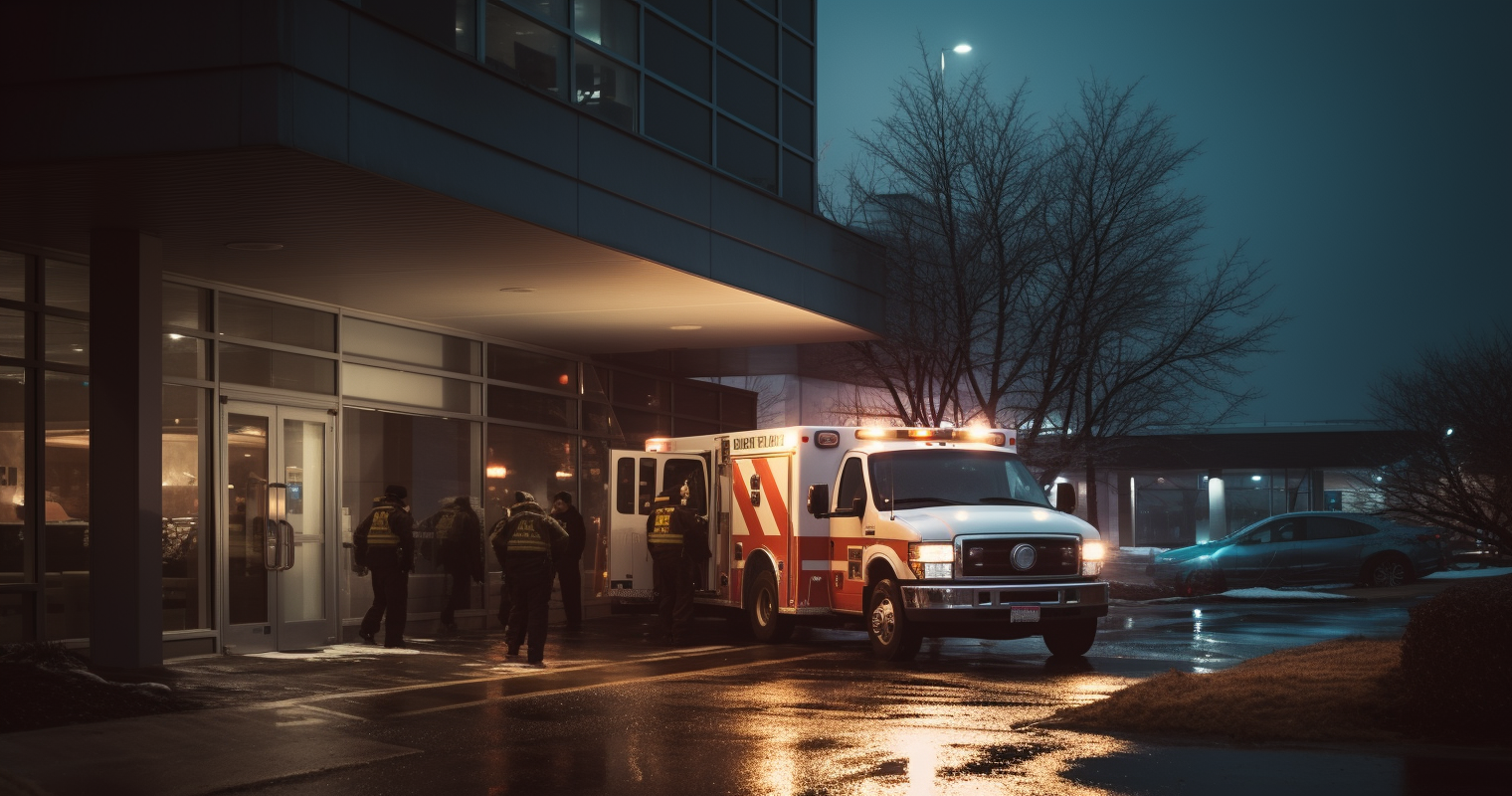
In Romania, 112 is the unified emergency number for police, fire, and ambulance — available free of charge from any telephone at any hour, including from foreign SIM cards operating on roaming. Emergency medical treatment at public hospitals is provided to everyone at no cost at the point of care, irrespective of insurance status, although EU citizens carrying an EHIC and residents registered with CNAS gain the widest access to subsequent care. Private health insurance is strongly advisable for all expats.
| Item | Details |
|---|---|
| Single emergency number | 112 (police, fire, ambulance, SMURD, gendarmerie — all services) |
| Emergency SMS (hearing/speech impaired) | 113 (requires prior registration) |
| Cost of emergency treatment | Free at the point of use for all, regardless of insurance status (as of 2025) |
| EHIC accepted? | Yes — EU/EEA citizens can use EHIC; UK citizens can use GHIC |
| Key natural hazard risks | Earthquakes, floods, landslides, extreme weather, forest fires |
| Public alert system | RO-ALERT (cell broadcast) and electronic sirens for major events |
What is the single emergency number in Romania, and does it cover police, fire, and ambulance — or are there separate numbers for each service?
112 is the sole number for reaching the Police, the Fire Brigade, the Ambulance, the SMURD, and the Gendarmerie, accessible from both landlines and mobile phones at no cost. In contrast to countries that maintain separate numbers for different services — such as 999 for police in the UK, or 15, 17, and 18 for medical, police, and fire respectively in France — Romania channels all emergency calls through a single unified point of contact.
Launched in 2004, the National Unique System for Emergency Calls replaced the individual numbers that had previously served each emergency agency, enabling more efficient and coordinated handling of dangerous situations across the country. This streamlined arrangement makes the system straightforward for anyone unfamiliar with Romania to use.
The 112 service handles emergency calls in the main international languages. Foreign nationals in Romania may also use the European Emergency Number — 112. This is especially reassuring for those who have not yet acquired Romanian, since operators are trained to assist callers in multiple languages.
People with hearing or speech impairments can reach the emergency services by sending a Short Message Service (SMS) to 113. Note that the SMS 113 service requires advance registration — visit the Special Telecommunications Service website at sts.ro for current registration details.
An emergency is defined as any situation in which life, property, and/or the environment face imminent danger and require immediate intervention from the relevant agencies: Ambulance, SMURD (Mobile Emergency Service for Resuscitation and Extrication), Police, Gendarmerie, or Mountain Rescue. All of these services are reachable through 112.
How do you call for emergency medical assistance in Romania, and what should you expect when you call?
Dialling 112 connects you to an emergency dispatcher who will assess your call and direct it to the appropriate service. Your call is initially answered by an STS operator within the 112 Emergency Service; the operator asks targeted questions to identify the nature of the emergency and simultaneously compiles a case file using the information you provide.
The STS call-taker will verify your location, connect you with the dispatchers of the relevant agencies based on the type of emergency, and forward the case file to them. Those dispatchers will then ask additional questions to gather further details essential to the response and dispatch their teams to the scene.
When contacting 112 you should provide: the type of emergency; the location of the incident; your precise address; the phone number you are calling from; and your name. Remaining calm and responding to each question clearly will help the dispatcher deploy the right resources as swiftly as possible.
Emergency ambulance services in Romania are operated by county ambulance services and are free of charge to the patient. The country also maintains a fleet of medical aircraft for the most critical emergencies. Be aware that ambulance coverage may be more limited in rural settings. If you are in a remote location and it is safe to move, making your own way to the nearest hospital could be faster than waiting for an ambulance to arrive.
Romania’s SMURD service (Serviciul Mobil de Urgență, Reanimare și Descarcerare) is a specialist mobile emergency, resuscitation, and extrication unit that works alongside the standard ambulance service, particularly at serious road accidents and complex medical incidents. It too is reached by calling 112.
What should you do in a mental health crisis in Romania — is there a dedicated mental health emergency line, and can you go to a hospital emergency department?
Romania does not currently have a single, nationally recognised dedicated mental health emergency line comparable to crisis lines found in some other countries. In the event of a mental health emergency, the primary course of action is the same as for any other emergency: call 112. Dispatchers can alert medical teams or police as appropriate to the circumstances.
Attending a hospital emergency department (UPU — Unitate de Primire Urgențe) is an option during a mental health crisis. A medical or surgical emergency that puts life at risk — or may do so — is treated until the immediate danger has passed, and no admission ticket is required for this type of care. This applies equally to psychiatric emergencies and physical ones.
Some larger public hospitals, particularly in Bucharest and other major cities, have dedicated psychiatric emergency units. Private hospitals with psychiatric departments also operate in larger urban centres. If you are supporting someone experiencing a mental health crisis, calling 112 and clearly describing the situation — including any risk to life — will help operators dispatch the most appropriate response.
For non-emergency mental health support, Telefonul Copilului (116 111) provides assistance for children and young people, while various NGOs operate helplines. Expats seeking ongoing mental health care should explore both public psychiatry services — available through CNAS-contracted providers — and private clinics, where multilingual therapists can often be found, particularly in Bucharest and Cluj-Napoca. Always confirm the current availability of specific helplines with official or local sources, as these can change over time.
Where can you go for emergency medical treatment in Romania — are there public hospitals, private hospitals, urgent care clinics, or other facilities, and how do you find the nearest one?
Romania has a mix of state hospitals, private hospitals, and clinics, many of which are staffed by the same physicians. Emergency departments in public hospitals — referred to as UPU (Unitate de Primire Urgențe), or CPU (Compartiment de Primire Urgențe) in smaller facilities — are the primary destination for serious emergencies and operate around the clock.
In major urban centres, medical facilities are generally well-equipped, with world-class private healthcare available alongside the public system. In rural areas and smaller towns, the standard of healthcare can be considerably lower. Where there is a genuine choice, travelling to a larger city hospital in a serious emergency will typically provide access to more specialists and better-equipped facilities.
The following are among the main public emergency hospitals in Romania’s largest cities (verify current operational status with official sources):
- Bucharest: Spitalul Clinic de Urgență Floreasca (the principal national trauma and emergency centre), Spitalul Clinic de Urgență Sfântul Pantelimon, Spitalul Universitar de Urgență București
- Cluj-Napoca: Spitalul Clinic Județean de Urgență Cluj
- Timișoara: Spitalul Clinic Județean de Urgență “Pius Brânzeu”
- Iași: Spitalul Clinic de Urgență “Sf. Spiridon”
Major private hospital networks present in Romania include Regina Maria, Sanador Hospital, Medicover Hospital, Monza Hospital, and Ponderas Academic Hospital. These private facilities generally offer more modern environments and multilingual personnel, but treatment carries a cost unless covered by insurance. Despite being well-equipped, private hospitals will often transfer patients with serious emergencies to a public hospital, since public hospitals typically have a broader range of specialists on hand for complex cases.
The National Health Insurance House (CNAS) publishes lists of contracted healthcare providers at cnas.ro. For a wider directory of hospitals and clinics, the Ministry of Health website at ms.ro serves as the official reference point.
Is emergency medical treatment free in Romania or is there a charge — and does this differ for residents versus tourists or short-term visitors?
Emergency services are provided free of charge to all people, whether insured or not. This encompasses treatment in emergency units and emergency surgery — and it applies universally, regardless of a person’s insurance status. This is a significant distinction: unlike routine healthcare, which is conditioned on CNAS insurance contributions, acute emergency care represents a universal entitlement at the point of access.
Citizens of the European Union, together with Romanian citizens who are not covered by paid insurance, are entitled to free emergency medical assistance. For non-EU visitors, emergency care is similarly available at public hospitals — costs may be pursued after the fact, but no one will be turned away from life-saving treatment due to an inability to pay at the time.
For residents enrolled with CNAS — Romania’s national health insurer — certain health services such as public hospital admission are available free of charge, although some services including outpatient medication and rehabilitation may require substantial co-payments. For in-patient hospital services, each unit sets its own co-payment level, generally ranging between 5 and 10 lei; however, patients hospitalised as emergencies must not be required to make a cash co-payment (as of 2025 — verify current figures with CNAS at cnas.ro).
For short-term visitors who are not EU/EEA residents and do not hold an EHIC or equivalent card, the practical reality is that a bill may arise for treatment beyond immediate emergency stabilisation. Carrying valid travel or health insurance to cover any costs that emerge is strongly advisable. Always check official sources for the most up-to-date position on charges.
Do expats in Romania need travel or health insurance to access emergency care, and what happens if they turn up without insurance or without the ability to pay?
Emergency treatment will not be withheld due to a lack of insurance — public hospitals are legally obliged to provide emergency care to anyone in need. However, insurance has a considerable bearing on what follows: the quality of subsequent care available to you, and who bears the cost.
Proof of medical coverage is a mandatory requirement for non-EU expats when applying for resident status in Romania. Non-EU expats should ensure they have arranged a private health insurance plan before arriving. This is more than a bureaucratic formality — it determines access to the broader healthcare system beyond immediate emergencies.
Although Romanian public health insurance can meet most medical needs, many expats also take out a private health insurance plan in order to access private healthcare with greater resources. Proof of medical coverage is additionally required for non-EU expats applying for resident status.
International health insurance is particularly well-suited to expats and frequent travellers, as it commonly includes emergency evacuation and repatriation benefits — an important consideration in Romania, where for very serious conditions medical evacuation to another country may be the preferred course. If you present at a hospital without insurance and without the means to pay, emergency stabilisation will still be provided, but costs may be pursued afterward. Lack of insurance also restricts access to non-emergency follow-up care within the public system unless you are enrolled with CNAS.
To obtain a visa, expats relocating to Romania are typically required to hold private medical insurance that provides comprehensive coverage and permits use of private facilities. Regardless of visa requirements, thorough health insurance is regarded as essential rather than optional by most healthcare advisers for expats residing in Romania.
Are there any bilateral health agreements between Romania and other countries that entitle some foreign nationals to reduced-cost or free emergency treatment?
As a member state of the EU, Romania participates in the European Health Insurance Card (EHIC) scheme. Holders of an EHIC are entitled to medically necessary treatment during a temporary stay in Romania. Medically necessary treatment refers to care that cannot reasonably wait until the person returns home — for instance, in the event of a sudden illness or injury.
EHIC holders are not required to pay for treatment directly, as the local health insurance house reimburses the healthcare provider for care given on the basis of the EHIC. The EHIC does not guarantee entirely free treatment in all circumstances — you will pay the same amount as locally insured residents, including any applicable co-payments.
During short visits, EU citizens may use their European Health Insurance Card (EHIC) to access public healthcare in Romania, provided it was issued by another EU country. UK citizens may use their Global Health Insurance Card (GHIC), which replaced the EHIC for UK nationals following Brexit. The GHIC functions on a broadly similar basis to the EHIC — covering medically necessary care at the same rates as local residents — though the precise scope of coverage should be confirmed with the relevant UK authority before travelling.
For nationals of countries outside the EU and UK, Romania has concluded a number of bilateral social security and healthcare agreements with various individual states. The details of these arrangements — which countries are covered, what treatments are included, and how to make a claim — differ considerably. You should contact your home country’s relevant social security or health authority, and Romania’s CNAS (cnas.ro), to confirm whether a bilateral arrangement applies to your nationality before relying on it. Do not assume coverage exists without verification.
How does the emergency healthcare system in Romania compare to systems expats may be familiar with?
The Romanian healthcare system is publicly administered, overseen and coordinated by the Ministry of Health. Social health insurance is compulsory. The National Health Insurance House (CNAS) operates at the national level and coordinates the work of 43 regional health insurance houses. In broad terms this structure resembles social insurance systems found in France, Germany, or the Netherlands — though with a lower per-capita funding level.
For emergency care specifically, the underlying principle is closer to a fully public model such as the NHS in the UK or the public hospital system in Canada: you are not required to pay or produce insurance documentation to receive acute emergency treatment. However, the experience that follows varies substantially depending on whether you are insured and where you receive care.
Measured against other European countries, the standard of public healthcare in Romania is, in many settings, comparatively lower. Numerous public facilities can face shortages of medical staff and equipment. This is especially true outside major urban centres. In large cities, medical facilities are generally well-equipped, and world-class private healthcare is also available.
Romania’s private healthcare sector more closely resembles a standard fee-for-service or insurance-based model, similar to private healthcare in many continental European countries. Private hospitals are generally the preferable choice for those seeking more consistent standards, with private medical facilities concentrated mainly in major cities such as Bucharest, Cluj-Napoca, Timișoara, Constanța, and Iași, where personnel are typically well-trained and often speak multiple languages.
In summary: Romania operates a hybrid model — universal emergency access through the public system, but with quality and experience varying markedly between urban and rural settings, and between public and private facilities. Expats accustomed to well-funded public systems may find urban public hospitals adequate for emergencies; those familiar with insurance-based systems will find the private sector more recognisable and often preferable for non-urgent care.
What emergency services exist beyond medical — how do police and fire services work in Romania, and are there any important differences in how to contact or interact with them?
112 is the sole number for reaching the Police, the Fire Brigade, the Ambulance, the SMURD, and the Gendarmerie, accessible from both landlines and mobile phones at no charge. All services are reached through the same number — there is no need to know a separate number for police or fire, as is the case in some other countries.
Romania has two distinct law enforcement bodies that expats may encounter. The Poliția Română (Romanian Police) handles general law enforcement, criminal investigation, and urban policing. The Jandarmeria Română (Romanian Gendarmerie) is a militarised force responsible for public order, rural policing, border areas, and large public events. Both are contactable via 112. For non-urgent police matters — such as reporting a theft after the fact in order to obtain a report for insurance purposes — you may attend a local police station in person.
The ISU (Inspectoratul pentru Situații de Urgență — General Inspectorate for Emergency Situations) coordinates fire and rescue services across the country. In December 2004, the General Inspectorate for Emergency Situations (IGSU) was established by merging the Military Fire-fighters Corps and the Civil Protection Command under the Ministry of Internal Affairs. For mountain rescues, the dedicated Salvamont mountain rescue service is also contactable via 112.
When dealing with Romanian police, it is standard practice to carry identification — a passport or, if you are a registered resident, your residence card. Officers may ask to see ID during routine checks, particularly in border areas. Non-Romanian speakers should not be alarmed if communication is initially difficult; requesting an interpreter is a reasonable step, especially for formal procedures.
Are there any country-specific emergency risks in Romania — such as natural disasters, extreme weather, civil unrest, or endemic diseases — and what official alert or warning systems exist?
The principal hazards in Romania include: flooding, drought, forest fires, landslides, earthquakes, nuclear and radiological accidents, chemical accidents, major accidents involving building collapses and hazardous substances, epidemics, animal epidemics, and zoonosis. These are not theoretical concerns — several have caused significant harm in recent decades.
Earthquakes rank among the most serious hazards. Romania faces one of the highest earthquake risks of any EU country, with thousands of lives lost and tens of thousands of buildings damaged over the past two centuries. More than 75% of the population lives in areas of high seismic hazard. Bucharest is regarded as the EU capital most exposed to earthquake risk, with over half its residents living in highly vulnerable buildings erected before modern seismic building codes were introduced.
Flooding is a recurring and serious threat. In September 2024, floods across central Europe severely affected Romania — more than 6,900 households were impacted, 300 people were evacuated, and seven lives were lost. Flash floods can develop with little warning, particularly in mountain river valleys.
Disease risks worth noting include: Romania has a high rate of tuberculosis — approximately six times higher than the EU average — so close contact with infected individuals should be avoided. Tick-borne encephalitis and Lyme disease are present in forested areas; use appropriate repellent and check for ticks after outdoor activities. Rabies remains present in wild animal populations; seek immediate medical attention after any animal bite.
Romania’s public alert system for major emergencies is RO-ALERT. Post-earthquake information and guidance on recommended measures are communicated to the population via cell broadcast messages through RO-ALERT and voice messages through electronic sirens. RO-ALERT sends alerts directly to mobile phones in the affected area — even without a local SIM card, phones connected to a Romanian network via roaming will typically receive these messages. Ensure that your phone’s emergency alert settings are activated and not muted.
What should expats do to prepare for emergencies before they arise in Romania?
Preparing ahead of time is far easier than trying to act during a crisis. The following steps are strongly recommended for anyone living in or relocating to Romania:
- Register with your home country’s embassy or consulate. Most countries operate a registration scheme — for example, the US STEP programme, the UK’s FCDO travel registration, or equivalent services — that enables your government to reach you during a crisis, natural disaster, or civil emergency. Registration is generally free and takes only a few minutes online. Find your nearest embassy at mae.ro (Romania’s Ministry of Foreign Affairs maintains a list of foreign embassies in Bucharest).
- Save key numbers in your phone. Store 112 as your primary emergency contact. Also save the number for your nearest public hospital emergency department, your private clinic or GP, your insurance provider’s emergency line, and your embassy’s out-of-hours emergency number.
- Know your location. In Romania, particularly in rural areas, addresses and GPS coordinates can be difficult to communicate quickly. Familiarise yourself with the nearest landmark, village name, or road number to your home and frequent destinations.
- Understand RO-ALERT. Cell broadcast messages via RO-ALERT and voice messages via electronic sirens are used to relay emergency information to the public. Confirm that your mobile phone is configured to receive these alerts and is not set to a mode that would block them.
- Prepare a basic emergency kit. Romania’s civil protection authorities, in line with EU guidance, recommend that households maintain basic emergency supplies: water, non-perishable food, copies of essential documents, a first aid kit, a torch, and a battery-powered or hand-crank radio. This is especially relevant given the earthquake and flood risk.
- Secure appropriate health insurance. Verify that your policy covers emergency evacuation and repatriation, as well as in-country treatment. Keep a physical copy of your insurance documents alongside your passport.
- Learn basic Romanian emergency phrases. Even a handful of words — “ajutor” (help), “urgență” (emergency), “accident” (accident), “incendiu” (fire) — can make a meaningful difference when you need to communicate rapidly in a crisis.
- Know your building’s evacuation procedures. Given the seismic hazard, particularly in Bucharest, take time to identify the safest spots and exits in your home and workplace, and learn the drop-cover-hold-on earthquake procedure.
Where can expats get official and up-to-date emergency information for Romania?
The following official and authoritative sources are recommended for current, accurate emergency information relating to Romania. Always verify specific figures, fees, and procedures directly with these sources, as details change over time:
- Special Telecommunications Service (STS) — 112 Emergency Service: sts.ro/en — the official body that operates the 112 service, with guidance on how to call, SMS 113, and the eCall vehicle system.
- Romanian Ministry of Health (Ministerul Sănătății): ms.ro — official information on the public healthcare system, hospital listings, and public health alerts.
- National Health Insurance House (CNAS): cnas.ro — for information on health insurance entitlements, EHIC arrangements, and contracted healthcare providers.
- Department for Emergency Situations (DSU) / General Inspectorate for Emergency Situations (IGSU): igsu.ro — for civil protection, fire safety, and emergency preparedness guidance.
- RO-ALERT system: roalert.ro — information on Romania’s public emergency cell broadcast alert system.
- Romanian Ministry of Foreign Affairs: mae.ro/en — lists foreign embassies and consulates operating in Romania.
- European Commission — 112 information: digital-strategy.ec.europa.eu — for EU-wide context on 112 and EHIC arrangements.
- Your home country’s foreign ministry travel advice — for example, the UK’s FCDO Romania travel advice, the US State Department’s travel.state.gov, or the equivalent for your country — for current safety assessments and emergency consular contacts.
Frequently asked questions
What number do I call in a medical emergency in Romania?
Dial 112 — it is the single, free emergency number covering all services in Romania, including ambulance, police, and fire. It can be reached from any landline or mobile phone, including foreign handsets operating on roaming, and operators can communicate in multiple international languages. People who are deaf or have speech impairments may send an SMS to 113 (prior registration required).
Will I be treated at a Romanian hospital if I have no insurance?
Yes. Emergency medical treatment at Romania’s public hospitals is free at the point of care for everyone, regardless of insurance status or nationality. Life-saving treatment will not be refused because you lack insurance or cannot pay immediately. However, costs for non-emergency follow-up care may be billed to uninsured patients, which is why comprehensive health insurance is strongly recommended.
Can I use my EHIC card in Romania?
Yes. EU and EEA citizens can present their European Health Insurance Card (EHIC) at CNAS-contracted public healthcare providers in Romania to receive medically necessary care on the same basis as locally insured residents. UK citizens may use the UK Global Health Insurance Card (GHIC) on a similar basis. Show your card at the hospital or clinic and confirm that the provider accepts it before receiving non-emergency treatment. Neither the EHIC nor the GHIC covers private healthcare.
Is the ambulance service free in Romania?
Yes. Emergency ambulance services in Romania are operated by county ambulance services and are provided free of charge to the patient (as of 2025). Call 112 to request an ambulance. Note that in rural and remote areas, response times may be longer and the service less comprehensive than in urban centres.
What is RO-ALERT and will I receive it on a foreign phone?
RO-ALERT is Romania’s public emergency cell broadcast alert system, used to notify people of earthquakes, floods, and other major incidents by transmitting a message directly to all compatible mobile phones in the affected zone. Phones connected to a Romanian mobile network — including through international roaming — will generally receive RO-ALERT messages. Verify that your phone’s emergency alert settings are not turned off.
How serious is the earthquake risk in Romania?
Romania carries one of the highest earthquake risks among EU member states. The Vrancea seismic zone, in the eastern Carpathians, generates frequent earthquakes — some of considerable magnitude. Bucharest is regarded as particularly vulnerable owing to the age of much of its building stock. Expats should familiarise themselves with the drop-cover-hold-on procedure, identify the safest areas in their home, and ensure their mobile phone is configured to receive RO-ALERT notifications.
Is there a dedicated mental health crisis line in Romania?
Romania does not currently have a single, nationally standardised mental health emergency line. In a mental health crisis involving a risk to life, call 112. You may also present at a hospital emergency department (UPU), which is legally required to provide emergency psychiatric care. For non-crisis support, various NGOs and private practitioners offer services, particularly in larger cities. Always confirm the current availability of specific helplines with local sources.
Do I need to register with my embassy when living in Romania?
Registering with your home country’s embassy or consulate is not a legal requirement in Romania, but it is strongly advised. Registration enables your government to contact you during a major emergency, natural disaster, or political crisis, and to offer consular assistance. Most countries provide free online registration — consult your foreign ministry’s website for details. Romania’s Ministry of Foreign Affairs lists foreign embassies in Bucharest at mae.ro/en.