

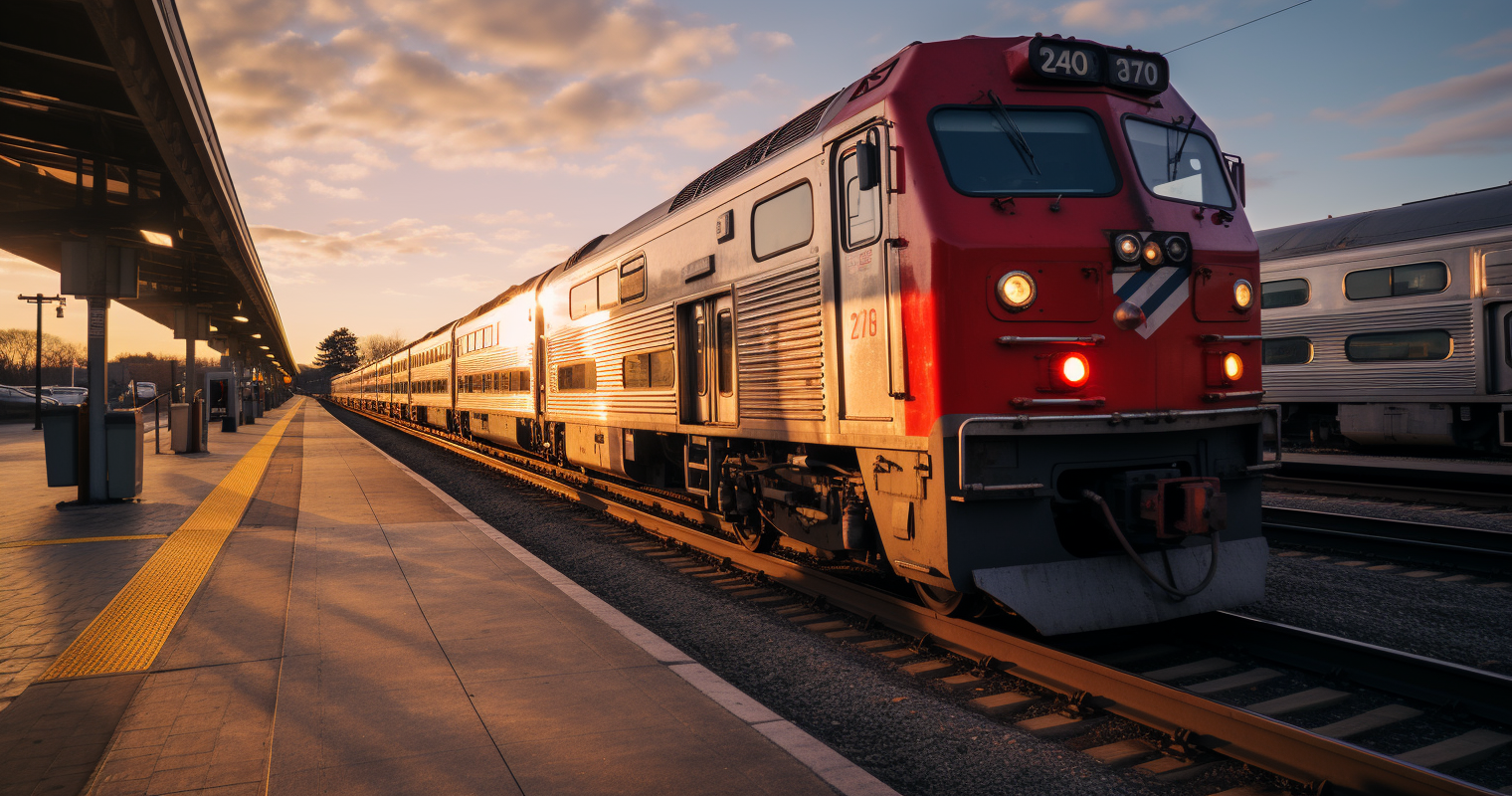
Thailand’s national rail network, run by the State Railway of Thailand (SRT), covers more than 4,400 kilometres and reaches 47 of the country’s 77 provinces. It cannot rival the speed or precision of high-speed networks found in Japan or Germany, yet it provides genuinely low-cost long-distance travel. Bangkok, meanwhile, has a steadily expanding urban rail system well suited to everyday journeys around the city.
| Item | Details |
|---|---|
| National operator | State Railway of Thailand (SRT) |
| Network length | Over 4,400 km of metre-gauge track (as of 2026) |
| Provinces served | 47 of 77 provinces |
| Advance booking window | 90 days for long-distance Special Express/Express trains; 30 days for most others (as of 2024) |
| SRT hotline | 1690 (English-speaking operators available) |
| Bangkok urban rail | BTS Skytrain, MRT (Blue, Purple, Yellow, Pink lines), SRT Red Line, Airport Rail Link — 141+ stations across 211+ km (as of 2025) |
| Official booking website | www.dticket.railway.co.th |
What is the overall standard of rail travel in Thailand?
Thailand’s railway system is a country-wide transport network linking major urban centres, regional towns, and rural communities. It is managed by the State Railway of Thailand (SRT), a state-owned enterprise operating under the Ministry of Transport. The network is broad in reach but should be judged on its own merits: it bears little resemblance to the fast, electrified systems of Japan or Germany, yet it fulfils a genuinely vital function in keeping the country connected.
Rail transport is central to moving both people and freight across Thailand’s diverse regions, with service options ranging from intercity expresses and commuter trains to mass rapid transit, monorail lines, and dedicated airport connections. The SRT’s intercity network stretches across 4,845.1 kilometres, touching 47 provinces throughout the country.
As of 2020, SRT maintained 4,044 km of track, almost entirely metre gauge. Roughly 91% of this consisted of single-track railway, with approximately 6% — mostly critical stretches near Bangkok — comprising double track. The heavy reliance on single-track has historically produced delays, as trains must yield to oncoming services at passing loops. This situation is changing: a number of key routes now feature double or triple tracking, improving both capacity and on-time performance.
Thailand’s rail sector, long held back by ageing and slow infrastructure, is at last receiving the investment it has needed for decades. Current development work includes expanding double-track coverage to cut delays and raise capacity, as well as high-speed rail initiatives such as the Bangkok–Nong Khai corridor and the Thailand–China rail link, with phased opening expected after 2027.
Passenger services are graded by speed and stopping pattern: Special Express trains halt only at key stations and are the quickest; Express, Rapid, and Ordinary services become progressively slower as the number of stops increases. The network is best suited to scenic long-haul travel and regional connections rather than rapid city-to-city commuting. For daily travel within Bangkok, the metropolitan rail network is far more practical.
Krung Thep Aphiwat Central Terminal in Bangkok serves as Thailand’s principal rail hub, linking the country’s various rail modes under one roof. At 274,192 square metres, it holds the distinction of being the largest railway station in Southeast Asia.
What classes of rail travel are available in Thailand, and what are the differences between them?
Thai train travel is divided into three main categories: First Class Sleeper, Second Class Sleeper or Seat, and Third Class Seat. Which classes are on offer depends on the type of train you are catching — not all services carry every class.
First Class is the premium option and is exclusively available on Special Express and Express trains. First Class Sleeper carriages are fully air-conditioned, and each train typically carries just one such carriage. Cabins offer hotel-style privacy on the move: each lockable compartment contains two berths — upper and lower — making it ideal for couples or anyone seeking maximum seclusion. Passengers enjoy their own individual air conditioning controls and a private washbasin, with fresh bed linen and toiletries included in the ticket price. On high-demand routes such as Bangkok–Chiang Mai, certain services deploy newer Chinese-built CNR carriages, which offer upgraded facilities compared to older rolling stock.
Second Class is the most widely used and popular option in Thailand. Seats and berths run along both sides of the carriage. During the day, the lower berths fold into forward-facing seats. At night, the steward rearranges the seats into full berths and makes them up with clean linen, which is included in the fare. A curtain around each berth defines personal space and affords a degree of privacy. Second Class sleepers come in two versions: air-conditioned and fan-cooled. Air-conditioned cars tend to be newer and better maintained. For most residents making overnight journeys, Second Class strikes the right balance between comfort and affordability.
Third Class offers two rows of basic bench seating, each accommodating two or three passengers. The majority of Third Class carriages are not air-conditioned but have ceiling fans and windows that open. Fares are the lowest available on the network. Third Class is the most wallet-friendly way to travel in Thailand and is well suited to shorter trips, local hops, or travellers on the tightest budgets. For journeys of up to around four hours it is entirely adequate; for anything longer, upgrading to Second Class makes a noticeable difference to your comfort.
Many long-distance trains include a dining car, and passengers in First or Second Class can order food through their steward and have it brought to their seat. Certain services also carry a dedicated carriage reserved for women and their children — a rule that is strictly observed.
Where can you find rail timetables and ticket prices in Thailand?
The main authoritative source for SRT schedules, fares, and reservations is the SRT’s own ticketing platform, D-Ticket (dticket.railway.co.th). Timetables are published here first and fare information is the most reliably current. Always consult this site before making plans, as schedules shift seasonally and fares can be revised.
The SRT official website (railway.co.th) offers route maps, station details, and general network information. For regulatory matters and infrastructure development, the Department of Rail Transport (DRT) — the government oversight body — publishes statistics and project updates.
A number of established third-party resources are widely relied upon by residents for journey planning. Thai Train Guide by Richard Barrow (thaitrainguide.com) is especially well respected for timely, practical guidance in several languages, including current schedules, sleeper carriage advice, and booking tips. As of February 2026, platforms such as YesMyTrips had manually cross-checked their timetables against the SRT master schedule, highlighting that many travel sites were still showing outdated 2024/2025 data — a useful reminder to confirm everything against the official D-Ticket portal before committing to a booking.
For Bangkok’s urban rail, timetables and fare calculators appear on each operator’s own site: BTS Skytrain (bts.co.th) and Bangkok Expressway and Metro / MRT (bemplc.co.th). Route maps and fare details for both systems are also accessible through their respective mobile apps.
How do you buy rail tickets in Thailand, and can you book in advance?
There are several ways to purchase SRT intercity tickets, and the most suitable method will depend on which service you are travelling on.
- Online via D-Ticket: The official SRT booking portal at dticket.railway.co.th lets you search routes, check seat availability, and pay for long-distance tickets online. SRT accepts e-tickets displayed on your smartphone or tablet — simply show the ticket to staff on board. An English-language option is available on the site.
- At the station ticket office: You can purchase a ticket at any SRT station by presenting your passport, stating your intended route, and paying in cash. Ticket offices at major stations are generally well organised, and staff are usually experienced at helping passengers who do not speak Thai.
- By phone: Since 1 February 2017, tickets have been purchasable by calling 1690. The SRT hotline employs English-speaking operators who can assist with bookings and queries.
- Through third-party agents: Several authorised platforms — including 12Go Asia and BusOnlineTicket — sell SRT tickets and may levy a small service charge. These can be a helpful alternative for those who find the D-Ticket portal unfamiliar.
Advance booking: Since 1 February 2024, tickets for all long-distance Special Express and Express trains go on sale 90 days ahead of departure. Tickets for most other services become available up to 30 days in advance. For local ordinary trains and commuter services, tickets can only be purchased on the day at the station.
Booking ahead is strongly recommended for popular overnight trains. Around major Thai public holidays and school breaks, demand can be intense and desired services may fill within hours of tickets going on sale. The busiest periods are the New Year, Songkran (Thai New Year, April), and Loy Krathong (November).
Since May 2024, a waiting list function has been added to the D-Ticket system, enabling registered users to queue for a ticket when their preferred service is fully booked.
What types of rail tickets are available in Thailand, and are there discount schemes?
SRT tickets are issued as single (one-way) journeys tied to a specific train, date, and seat or berth. There are no open-dated tickets or flexible multi-journey passes equivalent to those available on various European networks. Return tickets exist but are simply two separate one-way tickets combined — booking a return confers no price advantage over two individual singles.
The principal ticket categories reflect the class and train type:
- First Class Sleeper (AC): A private, lockable cabin with two berths, a washbasin, and bedding provided. Available only on Special Express trains. The priciest ticket category on the network.
- Second Class Sleeper (AC or Fan): Open-plan berths screened by curtains, with bedding included. The air-conditioned version is newer and cooler; fan sleeper seats are around 30% less expensive than their AC equivalents, though they can feel uncomfortable in warmer months.
- Second Class Seat (AC or Fan): Daytime seating arrangements. The AC version delivers a comfortable, climate-controlled seat that suits daytime travel and shorter journeys, often with reclining seats and power points.
- Third Class Seat: The lowest-cost way to travel on the network, with basic fan-cooled bench seating. Well suited to short hops, local travel, or passengers on a strict budget.
Discount schemes: The SRT operates a socially conscious pricing model, keeping third-class fares very low so that rail travel remains within reach of lower-income passengers. There is no national rail card comparable to those found in several European countries. Certain groups do benefit from reduced fares, however:
- Children: Children below a specified height threshold typically travel free or at a reduced rate — consult the SRT official website for the current qualifying criteria.
- Thai military personnel: Reduced fares apply on selected services.
- Students and senior citizens: Discounted fares are available on certain SRT services for Thai nationals. Check the current eligibility conditions and discount levels via the SRT official website or by calling 1690, as these schemes and their terms can change.
For Bangkok’s urban rail, the BTS Skytrain One-Day Pass offers unlimited travel on the Green Line for a flat price of 150 THB per day (as of 2025). Thai citizens who register their Mangmoom Card through the Pao Tang app qualify for a government-subsidised flat fare of THB 20 per trip on MRT lines. Foreign residents and visitors currently pay standard distance-based fares (as of 2025 — confirm the latest position via the MRTA or the relevant operator). All fares quoted here should be verified against official sources before travel, as they are subject to revision.
How accessible is the rail network in Thailand for disabled passengers?
The level of accessibility across Thailand’s rail network varies considerably depending on the service type and the age of the infrastructure involved. The overall standard sits well below that of the fully accessible systems found in countries such as the Netherlands or Australia, though progress is being made.
On the SRT intercity network, older rolling stock and station facilities can pose real difficulties for passengers with mobility impairments. Platforms are frequently low-level, meaning that boarding a train — which involves steps — is challenging for wheelchair users without assistance. That said, the SRT has been fitting accessible features to newer trains. A Second Class Carriage with a Wheelchair Lift and Accessible Toilets has been introduced on the Trang route, indicating that purpose-built accessible provision is being phased in on specific services. Travellers with mobility requirements are advised to contact the SRT directly on 1690 before their journey to arrange assistance and to confirm which trains offer accessible carriages on their chosen route.
The situation is considerably more encouraging on Bangkok’s urban rail. All BTS and MRT stations are fitted with lifts and accessibility features. Station staff are generally willing to assist passengers using wheelchairs or other mobility aids. A small number of older BTS stations provide only escalators at street level, though staff can direct passengers to alternative access points. Bangkok’s newer MRT lines — the Yellow, Pink, and Purple Lines — were constructed to contemporary accessibility standards throughout, with step-free access from street to platform.
Both Thai and English-language audio announcements and visual displays are standard on Bangkok’s urban rail: stations call out stops in both languages and display boards show upcoming stations and network maps. On SRT intercity services, the quality of announcements differs by train, and older rolling stock may lack visual information systems entirely.
Passengers with disabilities planning SRT intercity travel are encouraged to contact the railway in advance via the hotline (1690) or through the SRT official website to discuss their assistance needs before booking. MRT accessibility information is available through the Mass Rapid Transit Authority of Thailand (mrta.co.th).
Are there metro or urban rail systems in Thailand’s cities?
Bangkok has by far the most developed urban rail network in Thailand and ranks among the most extensive in the whole of Southeast Asia. The mass rapid transit system serving Bangkok and its surrounding areas has been in operation since 1999. It encompasses elevated, at-grade, underground, and under-river electric rail lines spanning 211.94 kilometres across 11 routes and 141 stations. The network continues to grow, with five new lines and six route extensions currently under construction, out to tender, or in the preparation phase.
The principal elements of Bangkok’s urban rail network are:
- BTS Skytrain (Green Line): The network currently runs across approximately 68.5 km via two lines: the Sukhumvit Line (Light Green), stretching 54.25 km from Kheha in Samut Prakan to Khu Khot in Pathum Thani with 47 stations, and the Silom Line (Dark Green), covering 14 km from Bang Wa to National Stadium with 14 stations. Operated by BTSC, the Skytrain is Bangkok’s primary elevated rapid transit line. Visit bts.co.th for maps and fares.
- MRT (Blue, Purple, Yellow, Pink Lines): Operated under concession by Bangkok Expressway and Metro (BEM), the MRT Blue Line runs beneath central Bangkok and connects to the main intercity rail terminus. The Yellow Line links Lat Phrao to Samrong, serving the eastern suburbs; the Pink Line crosses the northern part of the city, connecting Nonthaburi to Min Buri. Visit bemplc.co.th for further information. The MRT is regulated by the Mass Rapid Transit Authority of Thailand (mrta.co.th).
- SRT Red Line: A commuter rail service running northward to Don Mueang Airport and Rangsit. It departs from and arrives at Krung Thep Aphiwat Central Terminal and is especially convenient for residents based north of the city.
- Airport Rail Link: Links Suvarnabhumi Airport to central Bangkok. It operates as a separate system from the BTS and MRT but has interchange points with both.
Ticketing across Bangkok’s urban rail: Since 2025, the Mangmoom Card has unified access across all MRT-operated lines (Blue, Purple, Pink, and Yellow), allowing passengers to travel seamlessly on a single card. The Rabbit Card is accepted on five Bangkok metro lines: the Sukhumvit Line, Silom Line, Gold Line, Yellow Line, and Pink Line. BTS and MRT operate separate ticketing systems; transferring between them requires leaving one network, walking to the adjacent station, and paying a new fare or using the appropriate stored-value card. As of 2025, BTS base fares start at around 17 THB and reach a ceiling of 62 THB for the longest trips — always check the operator’s website for the most up-to-date fare structure.
Outside Bangkok, dedicated urban rail is limited. Khon Kaen in northeastern Thailand has a long-anticipated light rail project, with construction expected to begin as part of the province’s broader Smart City Development Programme. Other regional cities are at various stages of planning. For now, Bangkok remains the only city in Thailand with a fully operational urban rail network capable of serving daily commuters.
What should expats know about using the rail network day-to-day in Thailand?
Main station in Bangkok: All long-distance overnight trains out of Bangkok now leave from Krung Thep Aphiwat Central Terminal. This station replaced the historic Hua Lamphong as the primary long-distance hub. Hua Lamphong continues to handle some shorter regional services. When booking, always confirm which station your train departs from, as the two are located in different parts of the city.
Signage and announcements: On Bangkok’s BTS and MRT systems, station signs are clearly displayed in both Thai and English, and stops are called out in both languages. This makes the urban rail highly manageable for newcomers. On SRT intercity services, major stations carry bilingual signage, but smaller rural stops may have Thai-only displays. Long-distance train announcements are made in Thai, though staff at principal stations tend to have some working knowledge of English.
Seat reservations: On Special Express and Express trains, seat reservations are compulsory and come included with your ticket — your ticket specifies your exact seat or berth number. First and Second Class tickets are inspected before boarding. In Third Class, you find a seat and the conductor passes through to check tickets. If you have not had time to buy a ticket in advance, you may purchase one from the conductor on board at the same price as at the station counter.
Luggage: The SRT does not impose strict baggage weight limits on intercity passengers, though common sense should prevail. Bags can be stored on overhead racks or tucked beneath seats. On Bangkok’s urban rail, travelling with compact bags is advisable — bulky luggage makes already-crowded trains much harder to navigate for everyone.
Peak hours and Thai holidays: Bangkok’s urban rail becomes very crowded during morning rush hour (7:30–9:00 AM) and the evening peak (5:30–7:30 PM). On SRT intercity trains, the key dates requiring early planning are Songkran (April), the New Year period, and Loy Krathong (November), when demand is at its highest.
Cultural norms: The atmosphere on Thai trains is generally relaxed and sociable. At major stops — particularly in Third Class — vendors board to sell local snacks and drinks at very low prices, which is one of the distinctive pleasures of travelling by train through Thailand. In sleeper carriages at night, quiet and tidiness are appreciated. Priority seating for monks, elderly passengers, pregnant women, and people with disabilities is the norm and is well respected.
Staying informed: SRT intercity punctuality can be unpredictable, especially on single-track sections where one delay cascades along the line. Build spare time into any connections and avoid booking onward transport with a narrow window after a long-distance train. The Thai Train Guide provides real-time service updates alongside practical tips drawn from long-term resident experience.
Frequently asked questions
Is the overnight sleeper train from Bangkok to Chiang Mai a practical option for residents?
The trip from Bangkok to Chiang Mai takes roughly 12 to 15 hours by overnight train. It is a popular and sensible choice for residents heading north, since it combines travel and accommodation into a single cost. A 2nd Class AC sleeper offers the best combination of comfort and value; book as early as possible, particularly around Thai public holidays when berths disappear quickly.
How far in advance should I book SRT tickets?
Since February 2024, tickets for long-distance Special Express and Express trains go on sale 90 days before departure; most other tickets become available up to 30 days ahead. For busy routes and holiday seasons, booking at the earliest possible date is highly recommended. A waiting list option has been available through the D-Ticket system since May 2024 for fully sold-out services.
Can I use contactless payment on Bangkok’s metro and Skytrain?
As of 2025/2026, EMV contactless credit cards (Visa/Mastercard) can be used to tap in and out of MRT Blue, Purple, Yellow, and Pink lines directly. For the BTS Skytrain, the Rabbit Card stored-value card is the most practical choice. The Mangmoom Card, introduced in 2025, now provides unified access across all MRT-operated lines on a single card.
Are there any rail passes for long-term residents making multiple journeys?
The SRT does not currently offer a nationwide rail pass of the kind available in Europe or Japan. Tickets are purchased individually for each journey. For the BTS urban rail in Bangkok, a One-Day Pass is available for 150 THB (as of 2025), covering unlimited Green Line travel within that day. Stored-value cards — the Rabbit Card for BTS and the Mangmoom Card for MRT — offer everyday convenience and occasional promotional rates for regular travellers.
Is English widely used at train stations in Thailand?
Bangkok’s major stations and stations at key tourist destinations have bilingual Thai–English signage, and ticket counter staff are generally able to help with basic English. The SRT hotline (1690) has English-speaking operators on hand. At smaller rural stations, English-language signage and staff language ability may be limited. Bangkok’s BTS and MRT systems make all stop announcements in both Thai and English, making them straightforward to use without any Thai language knowledge.
Can I take the train to the airport from Bangkok?
Yes. The Airport Rail Link connects Suvarnabhumi Airport to central Bangkok, with interchange points for both the BTS and MRT networks. For Don Mueang Airport — Bangkok’s main budget carrier terminal — the SRT Red Line commuter service runs directly between Don Mueang and Krung Thep Aphiwat Central Terminal, where connections to other urban and long-distance services are available.
How reliable are SRT intercity trains?
Punctuality on SRT long-distance services is variable. Delays occur most frequently on single-track stretches, where trains must hold at passing loops. Double-tracking work completed between 2019 and 2025 has improved on-time performance along a number of key corridors. For long-distance journeys, treat the published arrival time as approximate and leave a generous buffer before any onward connections.
What is the cheapest way to travel long-distance by train in Thailand?
Third Class Seat Fan is the most economical ticket on the network, providing fan-cooled bench seating at very low cost — ideal for short journeys or highly budget-conscious travel. For longer trips, a 2nd Class Fan Sleeper delivers far greater comfort for a modest additional outlay; fan sleeper seats are around 30% cheaper than their AC equivalents. Always check current fares on the official D-Ticket portal before booking.