

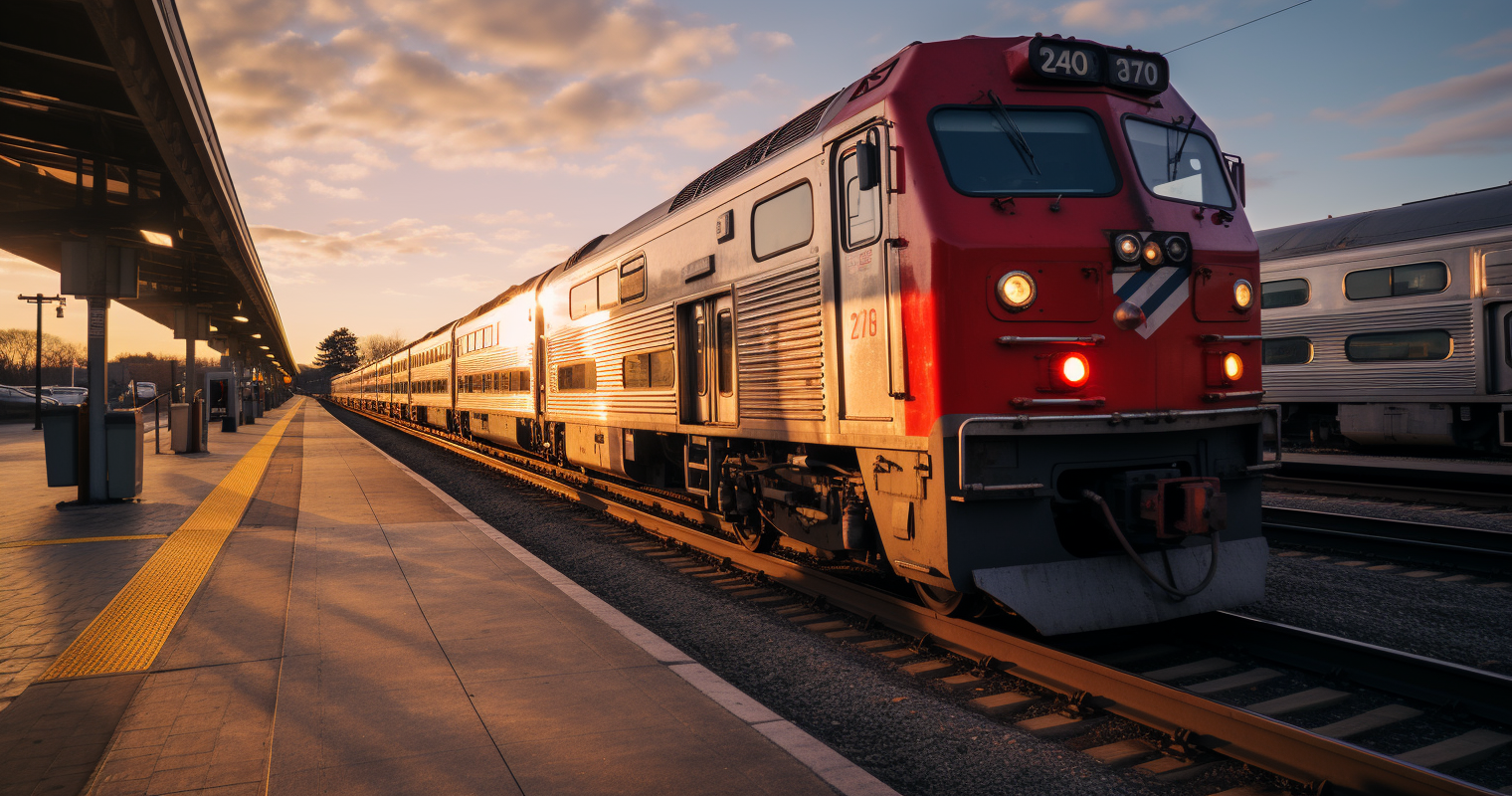
Taiwan’s rail system ranks among Asia’s finest, weaving together a high-speed western route, a conventional railway that encircles the entire island, and mature urban transit networks across multiple major cities. From daily commutes to cross-island adventures or scenic east coast journeys, the train is a dependable, cost-effective, and comfortable way to get around in Taiwan.
| Item | Details |
|---|---|
| Main rail operators | Taiwan High Speed Rail (THSR/HSR) and Taiwan Railways Corporation (TRC, formerly TRA) |
| HSR top speed | 300 km/h; Taipei to Kaohsiung in as little as 96 minutes (as of 2025) |
| HSR network length | ~350 km along the western corridor, 12 stations |
| HSR seat classes | Business Class, Standard Class (reserved), Non-Reserved Standard |
| Non-reserved HSR ticket price | Approximately 70% of the standard reserved fare (as of 2025; verify current fares at en.thsrc.com.tw) |
| TPASS monthly pass (Northern region) | TWD 1,200 for unlimited MRT, LRT, buses and unreserved TRC trains in the Taipei/New Taipei/Keelung/Taoyuan area (as of 2025; check tpass.thb.gov.tw for current pricing) |
What is the overall standard of rail travel in Taiwan?
Taiwan consistently earns recognition as a global leader in public infrastructure, and its rail network is no exception. Two principal operators form the backbone of the system: Taiwan High Speed Rail (THSR), which whisks passengers between cities along the western seaboard, and Taiwan Railways Corporation (TRC, formerly the Taiwan Railways Administration or TRA), which runs conventional services across the entire island.
Given Taiwan’s high population density — concentrated especially along the western coastal plain — rail transport plays a central role in daily life. The network encompasses conventional mainline railways, urban rapid transit systems, high-speed rail, and even specialised tourist and industrial lines. This multi-layered structure allows most residents to combine services seamlessly for both routine commutes and longer excursions.
The THSR operates a single line stretching roughly 350 km down the island’s western flank, linking Taipei in the north with Kaohsiung in the south. Service began on 5 January 2007, with trains reaching a maximum speed of 300 km/h; the full run from Nangang to Zuoying can be completed in as little as one hour and 45 minutes. Technologically derived from Japan’s Shinkansen, the system’s punctuality and passenger comfort are on par with the finest high-speed railways in Europe and Northeast Asia.
Alongside the HSR’s speed and precision, TRC’s express and local services deliver dependable coverage to smaller cities and rural communities throughout the island. Crucially, the HSR is confined to the west coast, so travellers heading to eastern destinations such as Yilan, Hualien, and Taitung must rely on TRC, which completes a full circuit of the island.
What classes of rail travel are available in Taiwan, and what are the differences between them?
THSR passengers may choose from three ticketing options: Business Car, Standard Car, and Non-Reserved Car. Business Car and Standard Car ticket holders are assigned specific seats, whereas non-reserved ticket holders may occupy any available seat in the designated non-reserved coaches on the day of travel.
Each THSR train consists of 12 cars with a combined capacity of 977 seats: one Business Class car (Car 6, with 66 seats) and eleven Standard Class cars (totalling 911 seats). Business Class delivers a premium experience through wider, more reclined seating, complimentary refreshments, and a tranquil environment. Standard Class, while more affordable, remains spacious and comfortable by any international measure. Every THSR train comes fitted with Wi-Fi, power sockets, spotless restrooms, and overhead luggage storage. For longer journeys, Business Class adds a welcome degree of luxury, though Standard Class already surpasses the expectations of most travellers.
Non-reserved seats are physically identical to standard reserved seats; the difference lies solely in how the ticket works. Passengers holding non-reserved tickets may sit in any unoccupied seat within the designated coaches (usually coaches 10–12). If all seats are taken when a passenger boards, they may need to stand in the aisle — though this is uncommon except during holiday periods, Friday evenings, or Sunday afternoons. Non-reserved tickets are priced at approximately 70% of the standard reserved fare but are only sold for and valid on the day of travel.
The TRC operates an array of train categories ranging from slow local services to faster express options, each identified by distinct names. Certain Tze Chiang Express trains also offer a Business Class option, which grants passengers broader seats, electrical outlets, internet connectivity, and complimentary snacks and drinks. For the majority of TRC journeys, standard class seats on express services are air-conditioned, clean, and well suited to everyday commuting.
Where can you find rail timetables and ticket prices in Taiwan?
The definitive source for THSR schedules and fares is the operator’s own English-language website at en.thsrc.com.tw, which hosts a comprehensive timetable and fare search tool. Because promotional pricing and schedule revisions occur periodically, fares listed on the official portal should always take precedence over figures cited in third-party guides.
TRC timetables and fares are published on the official Taiwan Railways Corporation website, which additionally provides route maps and information on the various train categories. As with the HSR, it is always advisable to confirm the latest details through these official channels rather than relying on external sources.
On routes served by both operators — such as those between Taipei and Taoyuan, Taichung, Chiayi, Tainan, or Kaohsiung — the HSR is generally around twice as quick but also roughly twice the price of an equivalent TRC journey. This price differential makes TRC an appealing choice for budget-minded regular travellers, and both official websites provide easy side-by-side timetable comparisons to help residents make informed decisions.
Each of Taiwan’s urban metro systems maintains its own information portal: the Taipei Metro at english.metro.taipei, the Kaohsiung MRT at krtc.com.tw/eng, and the Taoyuan MRT at tymetro.com.tw. Each site offers fare calculators, route maps, and live service updates.
How do you buy rail tickets in Taiwan, and can you book in advance?
Taiwan’s rail ticketing infrastructure is designed to be user-friendly and highly accessible for newcomers. The following step-by-step overview covers the principal purchasing options for THSR tickets:
- Official THSR website: Book online at en.thsrc.com.tw up to 28 days before departure. Payment can be made by credit card. After booking, you can pick up a physical ticket at any HSR station or convenience store.
- THSR App: The official THSR app (available on iOS and Android) allows ticket booking, seat selection, and digital ticketing. THSRC has established a transfer information system for passengers to consult, and provides transfer information at each HSR station on its corporate website and THSRC app.
- Ticket vending machines at stations: Every HSR station is equipped with self-service machines featuring English-language menus. Purchases are straightforward and credit card payment is accepted.
- Station ticket counters: Counter staff are available to help with bookings and ticket issuance, making this option particularly useful for complex itineraries, group reservations, or passengers who prefer face-to-face assistance.
- Convenience stores: After booking online, the paper ticket can be picked up at HSR stations or local convenience stores including 7-ELEVEN, FamilyMart, Hi-Life, and OK Mart.
- Phone booking: Reservations can be made by telephone; the international hotline number is +886-2-4066-3000.
Tickets become available for purchase up to 28 days ahead of the departure date. TRC express trains tend to fill seats earlier than the HSR, partly because the higher HSR fares naturally reduce demand, and partly because non-reserved HSR tickets always remain an option. During major public holidays — most notably Lunar New Year and National Day — booking TRC reserved seats as far in advance as possible is strongly advisable.
TRC tickets can equally be purchased online through the TRC website or app, or at station windows and vending machines. The EasyCard smartcard is accepted on TRC services that do not require seat reservations, enabling a tap-in/tap-out journey without the need for a paper ticket.
What types of rail tickets are available in Taiwan, and are there discount schemes?
Tickets are available for single rides, multi-rides for commuters, flexible tickets, and as part of mixed flexible tickets with the standard railway. Early-bird discounts are provided, and so are periodic, multi-ride, senior citizens’, and children’s tickets. Always verify the latest pricing and eligibility at the THSR official website, as discount thresholds change.
The principal discount and pass categories currently offered by the THSR (as of 2025) are as follows:
- Early-bird discounts: Purchasing tickets online in advance can unlock savings of roughly 15% off standard fares. Consult the official THSR website for current promotional rates, as these are updated regularly.
- Student discounts: University and college students are eligible for THSR discounts of 50%, 25%, or 12%, depending on the specific offer. These reductions are restricted to passengers holding a Taiwanese-issued national ID or a currently valid Taiwan-issued student card.
- Senior citizens’ tickets: Concessionary fares are available for qualifying older passengers; current eligibility criteria should be confirmed on the official THSR site.
- Children: Child fares are set at half the full adult fare.
- Multi-ride and periodic passes: Tailored for frequent travellers, these options reduce the effective cost per trip. Up-to-date pricing can be confirmed directly at en.thsrc.com.tw.
For residents who rely on public transport across a wider urban area, the TPASS monthly pass is the most valuable option available. The programme is divided into three regional zones: Northern, Central, and Southern Taiwan. The Northern TPASS (sometimes marketed as the “Megacity Pass”) encompasses Taipei City, New Taipei City, Keelung, and Taoyuan — including the Airport MRT — at TWD 1,200 per month (as of 2025). The Southern TPASS covering Tainan, Kaohsiung, and Pingtung is priced at TWD 999 per month (as of 2025). Always verify current pricing and zone coverage at tpass.thb.gov.tw.
A TPASS enables unlimited journeys on MRT and LRT networks, local and some intercity buses, certain ferry services, and trains not requiring seat reservations, all within the applicable region. Each pass is valid for 30 days and does not extend to the HSR network. Rather than being a separate card, the TPASS is simply loaded onto an existing EasyCard.
How accessible is the rail network in Taiwan for disabled passengers?
Taiwan’s principal rail infrastructure has been developed with inclusivity as a guiding principle, particularly at newer and larger stations. Both the THSR and TRC networks include provisions for passengers with mobility impairments, visual limitations, and hearing difficulties, though the extent of these provisions varies between urban hubs and more remote rural stations.
On THSR trains, Coach No. 7 is dedicated to passengers with physical disabilities, featuring a barrier-free toilet and a designated space for wheelchair users. THSRC collaborates with multiple public transport operators to provide connecting and shuttle services at various locations, including dedicated pick-up and drop-off arrangements for passengers with physical disabilities. Anyone requiring special assistance is encouraged to contact THSR customer services ahead of travel via en.thsrc.com.tw or by phoning +886-2-4066-3000.
Major HSR and TRC stations in urban centres are generally equipped with step-free access routes, lifts connecting concourse and platform levels, tactile paving for visually impaired travellers, and bilingual audio announcements in Mandarin and English. Smaller TRC stations — particularly along branch lines and on the east coast — may offer more limited accessibility infrastructure. Residents with specific access requirements are advised to check individual station facilities in advance through the TRC website.
The Taipei Metro provides single-journey and discounted tickets for elderly and disabled passengers. The network is widely regarded as meeting high international accessibility standards, with lifts, tactile guidance paths, and accessible toilet facilities installed at every station on the main lines — comparable in quality to newer metro systems in cities such as Singapore or Tokyo, though older branch stations may vary.
EasyCard Corporation works in partnership with government agencies to extend services to senior citizens and those holding disability or student identification. Passengers with a government-issued disability certificate may apply for concessionary EasyCards that offer reduced fares across most urban transit modes. Current eligibility details can be obtained from the relevant transit authority or from EasyCard Corporation at easycard.com.tw.
Are there metro or urban rail systems in Taiwan’s cities?
Beyond the island-wide HSR and TRC networks, Taiwan’s major cities each operate their own metro, light rail, or rapid transit systems. While administered independently, these networks are largely unified through shared smartcard payment, making cross-system travel straightforward.
The Taipei Metro (MRT) is Taiwan’s largest and most extensive urban rail network. The EasyCard — a contactless smartcard originally designed for Taipei Metro use — has evolved into a near-universal payment tool accepted on buses, metros, and other public transport services across Taiwan, as well as at convenience stores, department stores, supermarkets, taxis, and various other retailers. The Taipei Metro spans multiple lines covering central Taipei, New Taipei City, and connects directly to the Taoyuan Airport MRT. Full details are available at english.metro.taipei.
The Taoyuan Metro is anchored by the Airport MRT, an essential link for anyone travelling to or from Taiwan Taoyuan International Airport. This line connects Taiwan’s busiest airport with central Taipei and Zhongli in Taoyuan, making it indispensable for newly arrived expats. Schedules and fares can be found at tymetro.com.tw.
Kaohsiung runs both an MRT and a light rail (LRT) network. The city has introduced a set of monthly passes called MeN-GO, which offer unlimited travel on the MRT, LRT, and local buses, along with up to 30 minutes of bike-share use and up to four ferry trips per month. The Kaohsiung MRT website is at krtc.com.tw/eng.
Taichung operates a growing MRT network, with its Green Line currently in service and further route extensions planned. All of these urban systems accept both the EasyCard and iPass smartcards. These two cards represent the dominant transit payment options across Taiwan: EasyCard originated as a Taipei MRT card while iPass was introduced for the Kaohsiung MRT. Although the two were once geographically restricted — EasyCard in the north, iPass in the south — both are now accepted across virtually the entire island, with EasyCard maintaining the broadest overall coverage.
Looking ahead, Taipei Metro passengers will be able to enter stations using credit cards or Apple Pay’s Express Contactless Protocol (ECP) from July 2026, as confirmed by Taipei Rapid Transit Corp. From January 2026, both the Taipei Metro and city bus networks will begin accepting QR code payments through widely used electronic payment platforms in Taiwan.
What should expats know about using the rail network day-to-day in Taiwan?
All HSR stations feature bilingual Chinese and English signage, and connecting local transit options are clearly indicated at every exit. On both HSR and TRC mainline services, on-board announcements are delivered in Mandarin and English, with some services also broadcasting in Taiwanese Hokkien and Hakka. This level of multilingual provision makes navigation manageable even for those still building their Mandarin skills.
HSR stations are expansive, modern facilities resembling compact airports, complete with convenience stores, dining outlets, luggage storage lockers, and a range of other amenities. Major TRC stations in city centres similarly offer convenience stores, ATMs, and coin-operated lockers. Ticket barriers use an insert-and-collect system for paper reserved tickets, while EasyCard and iPass holders simply tap in and out.
Many HSR stations — particularly those outside Taipei — are situated in suburban or peri-urban locations rather than within city centres. As a result, passengers frequently need a short onward connection by MRT, city bus, or taxi to reach their final destination. Some cities operate complimentary shuttle buses for HSR ticket holders — simply present any valid same-day HSR ticket to board. TRC stations, by contrast, tend to be positioned in or close to town centres, making them more convenient for shorter urban hops without onward transfers.
Understanding seat reservation etiquette is important for a smooth experience. On THSR and reserved TRC trains, your ticket identifies a specific car and seat number; occupying another passenger’s reserved seat and declining to vacate it is considered impolite. In the non-reserved coaches, while seats are unassigned, passengers are expected to queue in an orderly fashion within the marked waiting zones on the platform. Inside carriages, a quiet atmosphere is the norm: brief, low-voiced phone calls are acceptable, but playing audio through device speakers is generally frowned upon.
One charming aspect of TRC travel is the railway bento — a meal box sold on board trains and at major stations that has become a celebrated feature of conventional rail journeys in Taiwan. These bento boxes are something of a cultural institution and offer an accessible and enjoyable introduction to everyday Taiwanese cuisine for newly arrived residents.
For baggage, THSR passengers may use the overhead racks and the storage areas at the ends of each car. There are no formal size restrictions comparable to airline policies, but luggage should be manageable without obstructing aisles or encroaching on other passengers’ space. Many residents take advantage of parcel delivery services — such as t-cat (Black Cat courier) — to send bags between cities in advance of their travel, eliminating the hassle of lugging heavy cases onto trains.
The official THSR app and the Taiwan Railways app — both available in Chinese and English — allow users to check timetables, purchase tickets, and receive real-time service notifications; installing them promptly after arriving in Taiwan is highly recommended. For multi-modal journey planning across MRT, TRC, and bus networks, Google Maps integrates reliably with Taiwan’s public transport data and provides accurate door-to-door routing.
Frequently asked questions about rail travel in Taiwan
Do I need to book HSR tickets in advance, or can I just turn up?
Walk-up non-reserved HSR tickets are available on the vast majority of services and can be purchased on the day of travel at the station. That said, during major holidays — including Lunar New Year, Tomb Sweeping Day, and the National Day period — demand surges sharply and trains reach capacity quickly. If your travel date is fixed, securing a reserved seat online or through the THSR app well in advance is the safest approach.
Can I use my EasyCard for both the metro and the conventional TRC trains?
EasyCard is available for all Taiwan Railways lines except the Puyuma Express, Taroko Express, cruise-style trains, group trains, and other specified trains, and gives a 10% discount for trips within 70 km. For metro journeys, the EasyCard is accepted on all major MRT systems across the island. It cannot be used to purchase HSR tickets, which must be bought separately through the THSR’s own channels.
What is the TPASS, and is it worth it for residents?
The TPASS is a monthly unlimited travel pass loaded onto an EasyCard. Taiwan’s TPASS and MegaCity transit pass programs provide unlimited access to regional rail, bikeshare, LRT/MRT systems, and local and intercity bus networks for approximately TWD 1,200 (Northern) or TWD 999 (Southern) per month. These multi-agency pass programs have been key to Taiwan’s strong ridership growth post-pandemic. For anyone commuting regularly by bus and MRT, the pass typically delivers substantial savings. Current pricing and zone details are available at tpass.thb.gov.tw.
Is the east coast of Taiwan accessible by train?
The HSR is limited to the western corridor, while the TRC completes a full circuit of Taiwan. For east coast destinations such as Yilan, Hualien, and Taitung, TRC services are your only rail option. The eastern route is celebrated for its dramatic coastal and mountain scenery, and TRC’s express trains provide both a dependable and visually spectacular way to reach these areas.
Are station signs and announcements available in languages other than Mandarin?
Yes. Every HSR station features bilingual Chinese and English signage throughout. Announcements on HSR and TRC mainline services are broadcast in Mandarin, English, Taiwanese Hokkien, and sometimes Hakka. The Taipei Metro likewise uses English signage and bilingual announcements at all stations, allowing passengers to navigate confidently before they have acquired Chinese reading skills.
Can children travel free on Taiwan’s trains?
Children aged 0–5 travel free on both TRC and HSR services but are not entitled to a separate seat. Child fares — typically applicable for ages 6–11 — are priced at half the standard adult fare. Age thresholds and specific conditions should be verified on the official THSR and TRC websites before travelling, as the rules may be updated.
How do I get between the HSR station and the city centre?
Most intermediate HSR stations are located outside the urban cores they serve; however, a variety of transfer options, such as free shuttle buses, conventional rail, and metros, have been constructed to facilitate transport connections. Taichung and Zuoying (Kaohsiung) benefit from direct MRT links into the city, while certain cities offer free shuttle bus services to passengers presenting any valid same-day HSR ticket.
Is the THSR suitable for daily commuting, or is it mainly for long-distance trips?
Although the HSR is principally associated with inter-city travel, some residents do use it for regular commuting — particularly on the shorter Taipei–Hsinchu or Taipei–Taichung corridors. Multi-ride commuter passes are available for the THSR. For most urban commuters, however, a combination of TRC conventional rail, local MRT services, and the TPASS monthly pass offers considerably better value than commuting by HSR every day.