
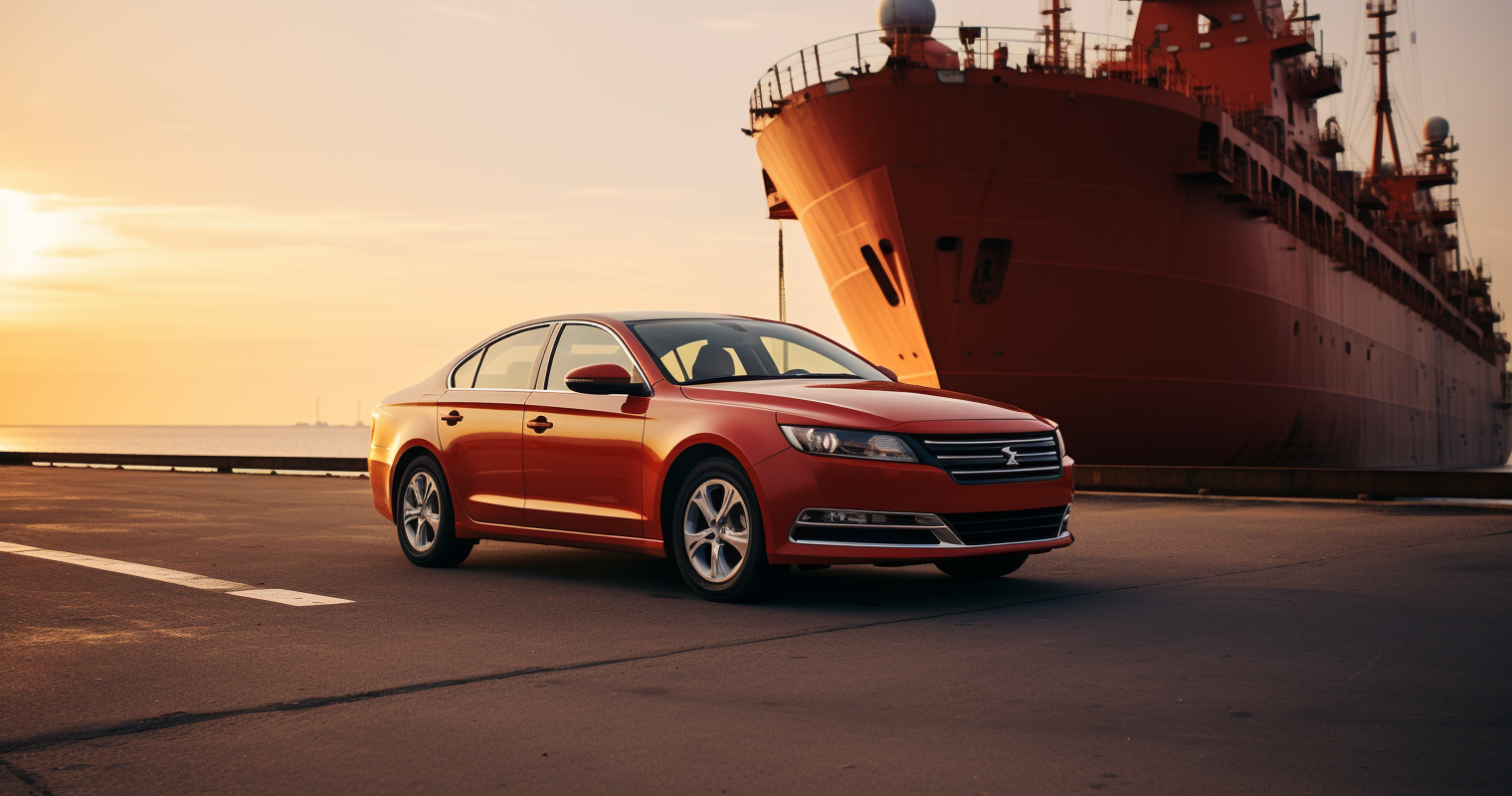
Purchasing a vehicle in Ecuador as a foreign resident is, on the whole, a manageable process — though the local market has some notable characteristics worth knowing about in advance: new car prices tend to run considerably higher than in many other countries owing to import duties, the range of available makes and models is relatively narrow, and — perhaps most importantly — foreign nationals are not permitted to import a personal vehicle into Ecuador. This right is reserved for returning Ecuadorian citizens and accredited diplomats. The vast majority of expats, therefore, buy their vehicles within Ecuador, whether new or secondhand.
| Item | Details |
|---|---|
| Can foreigners import a vehicle? | No — private vehicle import is restricted to returning Ecuadorian citizens and diplomats (as of 2024) |
| Vehicle registration fee (matrícula) | Approx. USD $300–$700 for newer cars (as of 2024); verify with ANT |
| Mandatory insurance (SOAT/SPPAT) | Required; now paid as part of annual registration fee |
| Import duty on vehicles (general) | Approx. 65% of CIF value for standard commercial imports (as of 2024); verify with SENAE |
| Driving licence grace period | Foreign licence valid for up to 90 days; Ecuadorian licence required for residents |
| Key authorities | SENAE (customs), ANT (registration & licensing), SRI (tax identification) |
How do I buy a new car in Ecuador as a foreigner?
Purchasing a new car in Ecuador is a reasonably accessible process, though language differences, unfamiliar procedures, and the risk of paying over the odds can make it feel daunting at first. Dealerships operate in all major urban centres, and the general experience of visiting a showroom and negotiating a sale is not entirely unlike what you may be used to elsewhere — but there are a few important distinctions to understand before you commit to anything.
New vehicle prices in Ecuador are typically 20–30% higher than in markets such as the United States, a direct consequence of the significant import duties the country applies to vehicles. Ecuador also offers a more limited range of makes and models than buyers might expect — brands such as Buick, Subaru, and Tesla are simply not available, and even common manufacturers like Ford, Chevrolet, Toyota, Honda, and Kia offer only a subset of their global model ranges here. Beyond affecting your choice of vehicle, this also has practical consequences for servicing and sourcing spare parts.
To complete a new car purchase at a dealership, you will generally need to present a valid passport, your Ecuadorian cédula de identidad (the national identity document issued to residents), proof of your home address, and a tax identification number from the Servicio de Rentas Internas (SRI) — Ecuador’s national tax authority, fulfilling a role comparable to HMRC in the UK or the IRS in the United States. Foreign nationals will usually also need to provide a certificate of residency.
Some dealerships and Ecuadorian banks offer financing, but lenders frequently require borrowers to demonstrate a well-established local credit profile and a reliable income stream within the country. For expats who have only recently arrived and have limited banking history in Ecuador, paying by cash or international bank transfer is usually the more practical approach. If financing is something you wish to explore, speak to your bank directly about their specific lending criteria for foreign nationals, as these differ meaningfully from one institution to another.
Once the paperwork is finalised and the remaining balance settled, the dealership will generally take care of the initial registration formalities on your behalf. Even so, it is worth confirming directly with both your dealership and the Agencia Nacional de Tránsito (ANT) — Ecuador’s authority for vehicle registration and road safety — exactly what documentation is required in your particular situation as a foreign national, as requirements can be updated. The ANT’s official website can be found at www.ant.gob.ec.
How do I buy a used car in Ecuador?
The secondhand vehicle market in Ecuador comes with its own pricing dynamics. Because many Ecuadorians are priced out of new car ownership, used vehicles are in high demand and tend to hold their value well — in some instances they even appreciate over time. As a result, buyers should not expect the kind of depreciation curves they might be accustomed to in other markets; secondhand cars here often cost more relative to their age and condition than a comparable vehicle elsewhere.
Conducting thorough checks before agreeing to any private purchase is absolutely essential. Acquiring a stolen vehicle will result in its confiscation, and any unpaid fines registered against a vehicle become the new owner’s responsibility. Before handing over any money, verify the car’s registration status, legal standing, and outstanding fines through the ANT’s online portal, which allows searches by licence plate and chassis number. The SRI can also be consulted to confirm whether any outstanding tax obligations are attached to the vehicle.
When dealing with a private seller, ask to see the original registration certificate (matrícula), the document establishing legal ownership, a copy of the seller’s cédula, and confirmation that all annual road taxes and accumulated fines have been paid and cleared. For higher-value transactions in particular, engaging a notary or legal professional to formalise the transfer is a sensible precaution.
Once a price has been agreed, both parties must execute a sales agreement (contrato de compraventa). Ownership of the vehicle must then be formally transferred through the ANT, which will update the registration in the new owner’s name and issue the relevant documentation accordingly. Until this transfer is officially recorded, some liability for the vehicle may remain with the previous owner — which is a strong incentive for both parties to complete the process without delay. Since procedures can be updated periodically, always verify current transfer requirements directly with the ANT.
Can I import a vehicle into Ecuador, and how does the process work?
This is one of the most critical points for any expat planning a move to Ecuador: for the overwhelming majority of foreign nationals, importing a vehicle into the country is simply not permitted. This prohibition covers cars, trucks, motorcycles, golf carts, and any other combustion-powered vehicle used for transportation. The rules are firm and are frequently misunderstood by those planning a relocation.
A particularly common — and expensive — misconception is that a vehicle can be brought in duty-free as part of a household goods shipment (menaje de casa). In practice, this benefit is available almost exclusively to returning Ecuadorian migrants (migrantes retornados) who satisfy a series of specific criteria, including having lived outside the country for a minimum number of years. For virtually all foreign residents, any vehicle imported into Ecuador must go through a standard commercial importation process and is subject to the full applicable taxes and duties.
Only two categories of individual are eligible to import a vehicle:
- Returning Ecuadorian citizens: A returning citizen must have resided abroad for a minimum of three years. To qualify for a tax exemption, the vehicle must be inspected at its point of origin before shipping. Motorcycles must not exceed USD $8,000 in value and must have an engine displacement of no more than 650cc. Standard vehicles are subject to import duties of approximately 65% of CIF (cost, insurance, and freight) value (as of 2024). The vehicle must be shipped alongside household goods, must be no more than four years old, and must be valued at less than $32,000 (as of 2024 — verify current limits with SENAE).
- Accredited diplomats: Diplomats may bring in new or used vehicles free of import duty, provided they have obtained authorisation from the Ministry of Foreign Affairs.
The importation and registration of vehicles is overseen by two principal state bodies: the Servicio Nacional de Aduana del Ecuador (SENAE), which is responsible for customs and import procedures, and the Agencia Nacional de Tránsito (ANT), which manages vehicle registration and road safety regulation.
For those who do qualify, the importation process unfolds as follows:
- Obtain an import permit: The import permit must be approved in Ecuador prior to import. Apply through SENAE’s Ecuapass electronic customs platform before the vehicle leaves its country of origin.
- Obtain the vehicle subcategory code from the SRI: Diplomatic and non-diplomatic owners must obtain the vehicle subcategory code at the SRI (Servicio de Rentas Internas) in order to obtain any applicable exemption from taxes and duties.
- Engage a licensed customs agent: Importing a vehicle legally requires the involvement of a licensed customs agent (agente de aduanas), who will manage the customs declaration procedure through the Ecuapass electronic system on your behalf. A directory of authorised customs brokers is published on the SENAE website.
- Assemble your documentation: You will need the original purchase invoice or a notarised copy bearing the importer’s name and confirming the vehicle’s value, along with a title of ownership. The vehicle must appear at the end of the packing list and in the bill of lading, with full specifications included.
- Arrange shipment: The vehicle may be transported by sea or overland. Sea shipments must arrive at one of Ecuador’s designated authorised ports. If the vehicle is being imported as part of a household goods consignment, it must travel in the same container.
- Observe arrival timing requirements: The owner must enter Ecuador before the vessel carrying the vehicle arrives. The shipment may arrive as early as two months before the owner’s arrival but no later than six months after it.
- Pay import taxes and clear customs: On arrival, import taxes must be paid. The exact amount depends on the vehicle’s age, category, and declared value. SENAE’s online calculator can be used to estimate these costs in advance.
- Submit to technical inspection: Following payment of import taxes, the vehicle must be examined by the relevant technical inspection authority before it can be registered.
- Register with the ANT: Once customs clearance has been completed, submit all documentation to the ANT to receive Ecuadorian licence plates and an official matrícula (registration certificate).
Consult SENAE (www.aduana.gob.ec) and ANT (www.ant.gob.ec) for current official guidance. Given that rules can and do change, always verify requirements thoroughly before making any shipping arrangements.
What are the costs involved in importing a car to Ecuador?
Importing a vehicle into Ecuador is a costly undertaking, and anyone considering it should plan their budget carefully before committing. The principal cost components for those who qualify to import are:
| Cost item | Approximate figure / notes |
|---|---|
| Import duty (ad valorem) | Approx. 65% of CIF value for standard vehicle imports; reduced or waived for qualifying returning Ecuadorian citizens |
| VAT (IVA) | Ecuador levies VAT on imported goods, calculated on the CIF value of the shipment. The standard rate is 15% (as of 2024 — confirm the current rate with SRI at www.sri.gob.ec) |
| Special Consumption Tax (ICE) | Ecuador applies a special consumption tax (ICE) to certain goods deemed luxury items. Vehicles above specific value thresholds may be subject to ICE — check current rates with SENAE or SRI. |
| Customs broker fee | Fees charged by the licensed customs agent vary depending on the broker and the complexity of the shipment — obtain quotes from several authorised brokers before proceeding. |
| Shipping (sea freight) | Costs vary by country of origin and container type — typically USD $1,000–$3,000+ from North America or Europe; request quotes from licensed freight forwarders. |
| Technical inspection fee | Charged at the time of the arrival inspection; confirm the current fee schedule with SENAE. |
| ANT registration (matrícula) | Registration of a newer vehicle typically falls in the $300–$700 range (as of 2024 — verify current fees with ANT). |
In many countries, residents relocating from abroad can take advantage of a personal effects or removal goods exemption that allows them to import a vehicle duty-free. Ecuador’s framework is far more restrictive by comparison, and the widespread belief that a car can simply be included in a household goods shipment is one of the most expensive misunderstandings among arriving expats. For the great majority of people moving to Ecuador, the combined cost of import duties, VAT, freight, and compliance expenses makes buying a vehicle locally the more economical path — even after accounting for Ecuador’s elevated domestic vehicle prices.
Always confirm current rates with SENAE (www.aduana.gob.ec) and SRI (www.sri.gob.ec) before entering into any financial commitments, as tariff structures and tax rates are subject to revision.
How do I register a vehicle in Ecuador?
Vehicle registration (matriculación) in Ecuador falls under the jurisdiction of the Agencia Nacional de Tránsito (ANT), the national body responsible for road safety and vehicle administration. The registration document issued to owners is known as the matrícula vehicular, and it is a legal requirement to keep it in the vehicle at all times.
Before any vehicle can be registered — regardless of whether it was bought locally or imported — it must successfully pass the Revisión Técnica Vehicular (RTV), a compulsory roadworthiness and emissions inspection. Broadly speaking, this functions along similar lines to the annual MOT test in the United Kingdom or the WOF (Warrant of Fitness) in New Zealand, though the RTV is tied directly to the annual registration renewal cycle and must be passed afresh each year. Without a current, valid RTV certificate, registration renewal cannot proceed.
For a brand-new vehicle purchased from a dealership, the dealer will ordinarily assist with the initial registration on your behalf. For used vehicle purchases or imported vehicles, you will need to attend an ANT office in person. The documentation typically required includes:
- Original purchase contract or bill of sale (for a used vehicle purchase)
- Original customs clearance documentation (for an imported vehicle)
- Valid passport and cédula de identidad
- Evidence of payment of all applicable taxes and import duties
- Valid SOAT/SPPAT insurance (see the insurance section below)
- A current passing RTV certificate
Once all submitted documentation has been verified, the ANT will issue Ecuadorian licence plates and your official matrícula vehicular. Registration fees for a newer vehicle generally fall in the $300–$700 range (as of 2024), though the precise amount depends on the vehicle’s age, type, engine displacement, and province of registration. Confirm current fees with your local ANT office or at www.ant.gob.ec.
Traffic camera fines (fotomultas) are logged against the vehicle’s registration record. Outstanding fines must be fully settled before a matrícula can be renewed. If you are buying a used vehicle, it is essential to check for any accumulated fines before finalising the transaction.
What insurance do I need to drive legally in Ecuador?
Ecuador’s compulsory insurance framework differs substantially from those found in many other countries. The mandatory coverage is the Seguro Obligatorio de Accidentes de Tránsito (SOAT) — now formally known as the Sistema Público para Pago de Accidentes de Tránsito (SPPAT) — which is collected as part of the annual vehicle registration fee. Driving without it is an offence.
The SOAT/SPPAT scheme operates as a state-administered accident levy rather than a conventional motor insurance policy. Its purpose is to ensure that anyone injured in a road accident receives medical treatment at the nearest available facility, with the associated costs covered by the scheme. It does not, however, provide any cover for damage to your own vehicle, to other vehicles involved in a collision, or to third-party property.
This distinction is worth emphasising, particularly for expats arriving from countries where mandatory third-party liability insurance is the norm — as it is across much of the European Union, for example, where such policies typically cover both bodily injury and property damage to third parties. Ecuador’s compulsory scheme covers only the treatment of physical injuries; it is not a general liability policy. Beyond the mandatory SOAT/SPPAT levy, there is no legal obligation to hold any additional motor insurance.
That said, it is strongly advisable to purchase a comprehensive private insurance policy to supplement the basic mandatory cover. Optional collision and comprehensive policies are available in Ecuador’s private market. Full coverage for a mid-range vehicle typically costs around $1,400 per year (as of 2024 — actual premiums vary; obtain quotes from multiple providers). The insurance supervisory authority in Ecuador is the Superintendencia de Compañías, Valores y Seguros — their website at www.supercias.gob.ec carries a directory of authorised insurers.
No formal mechanism exists in Ecuador’s private insurance market for recognising no-claims bonuses or clean driving records earned abroad. Insurers will generally treat you as a new policyholder regardless of your history elsewhere, which may result in higher initial premiums. It is worth shopping around and asking individual insurers whether they will take an overseas driving record into account, even on an informal basis.
What driving licence do I need in Ecuador as an expat?
Under Ecuadorian law, tourists and short-term visitors are permitted to drive using a valid foreign driving licence, provided it corresponds to the equivalent category of an Ecuadorian non-professional driving licence (Licencia tipo B). You may be asked to present your passport to confirm your date of entry and the nature of the visa under which you entered.
An International Driving Permit (IDP) is accepted in Ecuador, though it does not serve as a replacement for a valid national driving licence. Foreign nationals who intend to drive in Ecuador for longer than 90 days are required to obtain an Ecuadorian licence. In practice, once you have secured long-term or permanent residency, applying for a local licence is strongly recommended.
The body responsible for issuing driving licences and permits in Ecuador is the Agencia Nacional de Tránsito (ANT). Ecuador maintains licence exchange agreements (canje/homologación) with a number of countries, among them Spain, Chile, Peru, and South Korea. Holders of licences from these countries may be able to exchange their foreign licence for an Ecuadorian one by completing only the vision and reaction-time tests, without sitting the full written and practical examinations. A sworn Spanish translation of the foreign licence is a mandatory requirement for this process.
If your country does not have an exchange agreement with Ecuador, you will need to apply as a first-time driver and pass all components of the licence examination. The standard process for obtaining a Type B licence (covering private passenger vehicles) is as follows:
- Obtain an apostilled and certified copy of your foreign driving licence from the issuing authority in your home country, so that it is recognised as a valid document in Ecuador.
- Have the licence and any accompanying driving history documents translated into Spanish by a certified sworn translator.
- Undergo a mandatory psicosensométrico medical assessment — a test measuring your vision, hearing, coordination, and reaction times — at an ANT-authorised testing centre. This assessment typically costs approximately $50–$60 and takes one to two hours to complete (as of 2024).
- Obtain a blood type certificate, which is available from most medical laboratories at minimal cost.
- Pass the ANT’s written theory examination, which requires candidates to answer correctly at least 16 of 20 questions on Ecuadorian traffic regulations. A question bank (banco de preguntas) is freely accessible on the ANT website for preparation purposes.
- Generate a payment order through the ANT website and pay the licence fee at an authorised bank. The current fee for a new Type B licence is approximately $68 (as of 2024 — confirm the current amount with the ANT before proceeding).
- Once all examinations have been passed and your documentation submitted at the ANT office, your licence is typically printed and issued on the same day.
The licence takes the form of a credit-card-sized plastic card and is valid for five years. Visit the ANT at www.ant.gob.ec for current requirements and appointment booking, as procedures are periodically revised.
How do I sell a car in Ecuador?
When you are ready to sell a vehicle in Ecuador, a clear process needs to be followed. Begin by pulling together the necessary paperwork: the original purchase agreement, the registration certificate (matrícula), the licence plates, and your insurance documentation. Before listing the vehicle for sale, make sure that all outstanding road taxes, registration fees, and traffic fines have been fully paid — any unresolved fines are recorded against the vehicle’s registration and will be visible to prospective buyers who check through the ANT portal.
To find a buyer, you can advertise through online vehicle sales platforms or place a classified advertisement in a local publication. Once a potential buyer has been identified, negotiating the price is a standard part of the process — haggling is common practice in Ecuador’s secondhand vehicle market, so expect some back and forth before a final figure is agreed.
With the price settled, the transaction must be formalised in writing. Both parties are required to sign a sales agreement (contrato de compraventa) setting out the full terms of the sale. The registration certificate and licence plates must then be transferred into the buyer’s name, and this change of ownership must be officially recorded with the ANT. Until the ANT has updated its records to reflect the new owner, the seller may retain some degree of liability for the vehicle — making prompt completion of this step firmly in the seller’s interest.
Using a notary to certify the sale is advisable, particularly for private transactions involving significant sums. Ecuador does not generally impose a specific capital gains tax on the sale of a personally owned vehicle at the individual consumer level, but you should consult the SRI (www.sri.gob.ec) or a qualified local tax adviser for up-to-date guidance — especially if the vehicle has been used commercially, or if you are selling multiple vehicles within a single tax year. Tax legislation can change, and a competent Ecuadorian tax professional remains the most reliable source of current advice.
Are there any ongoing costs or obligations for vehicle ownership in Ecuador?
Owning a vehicle in Ecuador entails a set of recurring annual obligations that apply to all owners, whether Ecuadorian or foreign. These are broadly comparable in structure to the combination of road tax, periodic roadworthiness testing, and insurance renewal found in many countries, though the specifics differ in important ways.
Annual registration renewal (matrícula): The matrícula must be renewed each year. For a newer vehicle, the renewal fee typically falls between $300 and $700 (as of 2024), with the exact amount varying according to vehicle type, age, engine capacity, and the province in which the vehicle is registered. The mandatory SOAT/SPPAT insurance levy is included within this annual fee.
Revisión Técnica Vehicular (RTV): Completing the annual registration renewal requires passing the RTV inspection. This is a combined roadworthiness and emissions test — conceptually similar to the ITV inspection in Spain or the MOT in the UK — and it must be completed successfully before the registration can be renewed. Vehicles that fail the inspection must be repaired and submitted for re-testing. Inspections are carried out at authorised testing centres (Centros de Revisión y Control Vehicular) located throughout the country.
Traffic fines: Traffic camera fines (fotomultas) are logged on the vehicle’s registration record, and all outstanding fines must be cleared before the matrícula can be renewed. Making a habit of regularly reviewing your fine status via the ANT website helps avoid unpleasant surprises at renewal time.
Pico y placa restrictions: Quito and Guayaquil both operate a traffic restriction scheme called pico y placa, which bars vehicles from using certain roads during peak hours based on the final digit of their licence plate. In Quito, restricted hours are Monday to Friday from 7:00 to 9:30 AM and 4:00 to 7:30 PM, with the excluded plate digit rotating on a daily basis — for example, plates ending in 1 or 2 are restricted on Mondays, while those ending in 3 or 4 are restricted on Tuesdays. Breaching these restrictions carries a financial penalty. If you live in or regularly travel through either of these cities, factoring pico y placa into your daily schedule is essential.
Fuel costs: Ecuador subsidises domestic fuel prices, keeping running costs relatively modest by international standards. Fuel prices are determined by government policy and may change — check current prices locally.
For a full and current breakdown of registration fees and technical inspection requirements, refer to the ANT at www.ant.gob.ec.
Frequently asked questions
Can I drive in Ecuador with my foreign driving licence?
Tourists and visitors on short stays may drive in Ecuador using a valid foreign driving licence of the equivalent class to an Ecuadorian non-professional driving licence. Those who plan to drive for more than 90 days are required to obtain an Ecuadorian driving licence. Once you have obtained residency status, applying for a local licence through the ANT is strongly recommended. Visit www.ant.gob.ec to verify current requirements.
Do I need to be a resident to buy a car in Ecuador?
There is no absolute legal requirement to hold permanent residency before buying a vehicle, but in practice you will almost certainly need an Ecuadorian cédula, a tax identification number from the SRI, and proof of your local address. For most purchasers, this effectively means having some form of legal residency already in place. Check the current requirements with the ANT and with your chosen dealership or notary before proceeding.
Can I import my existing vehicle into Ecuador when I move there?
For the vast majority of foreign nationals, the answer is no — bringing a vehicle into Ecuador is not permitted unless you are a returning Ecuadorian citizen. The household goods exemption that some expect to apply does not extend to foreign nationals. Most relocation advisers recommend selling your vehicle before the move and purchasing one locally once you have settled in Ecuador.
What is the SOAT and do I need it?
The SOAT — now officially designated the SPPAT — is a mandatory accident insurance levy collected as part of the annual vehicle registration fee. Driving without it is unlawful. The scheme ensures that anyone injured in a road accident can receive medical treatment at the nearest facility, with costs covered by the insurance. It does not, however, cover damage to vehicles or property. Supplementary private insurance is optional under the law but highly advisable in practice.
How often does my car need to pass the RTV inspection in Ecuador?
The RTV (Revisión Técnica Vehicular) must be passed every year as part of the vehicle registration renewal process. It is an annual roadworthiness and emissions check, broadly comparable to the UK’s MOT. A valid RTV certificate is a prerequisite for renewing your matrícula. For information on inspection centre locations and how to book an appointment, visit the ANT at www.ant.gob.ec.
Are there restrictions on driving in certain cities based on my number plate?
Yes — both Quito and Guayaquil operate a pico y placa system that restricts vehicles from driving during peak hours according to the final digit of their licence plate. The specific hours and rotation schedules vary between cities and may be subject to change. Before driving during rush hours in either city, always confirm the current pico y placa schedule that applies.
Will my no-claims discount or clean driving history from abroad be recognised in Ecuador?
No formal bilateral arrangement exists for the recognition of overseas no-claims histories in Ecuador’s private insurance market. Local insurers will generally treat you as a new policyholder, which may lead to higher initial premiums. Bringing documentation of your driving record from abroad is worthwhile — while there is no guarantee it will be accepted, some insurers may consider it informally. The Superintendencia de Compañías, Valores y Seguros maintains a list of authorised insurers at www.supercias.gob.ec.
What happens to outstanding fines when I sell or buy a used car?
Any unpaid fines attached to a vehicle at the time of sale become the responsibility of the new owner, and they must be cleared before the matrícula can be renewed. Always use the ANT’s online portal to check for any accumulated fines before completing a used vehicle purchase, and ensure the seller has resolved all outstanding charges before you sign the sales agreement or transfer any funds.