
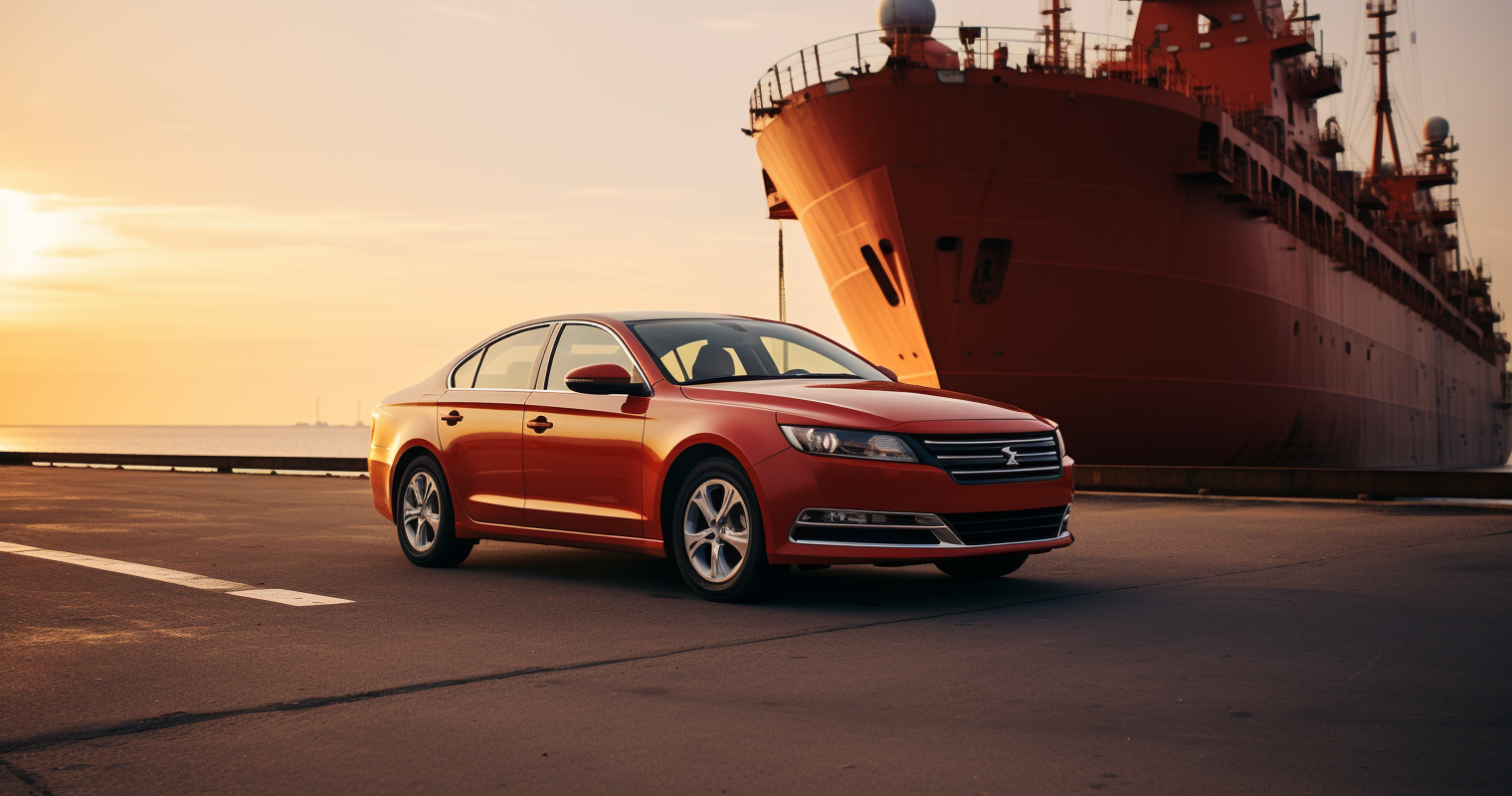
Foreign nationals can buy or import a vehicle in India, though neither process is without its complications. Purchasing a locally assembled or manufactured car through an authorised dealer is the more accessible route and requires only the appropriate documentation. Bringing in a vehicle from abroad, however, means navigating steep customs duties, strict eligibility criteria, mandatory compliance testing, and a right-hand drive requirement. Plan your budget carefully: when all charges are added together, the total cost of an imported car can comfortably surpass the vehicle’s original purchase price.
| Item | Details |
|---|---|
| Basic customs duty on new CBU cars (CIF value over USD 40,000) | 70% of CIF value, plus AIDC of 40% and 28% IGST (as of 2025). Always verify current rates with CBIC. |
| Customs duty on used cars | Approximately 125% of CIF value; used cars must be no more than 3 years old (as of 2025) |
| Transfer of Residence (TR) vehicle import | One vehicle allowed for foreign nationals/NRIs relocating permanently; must not have lived in India for at least 2 years prior |
| Drive side requirement | All vehicles must be right-hand drive; left-hand drive must be converted before registration |
| Total landed cost of an import | Typically 150–200% of the car’s original value, including all duties, GST, and fees (as of 2025) |
| Homologation authority | Automotive Research Association of India (ARAI) |
How do I buy a new car in India as a foreigner?
Neither Non-Resident Indians (NRIs) nor foreign passport holders face significant legal barriers when it comes to purchasing or selling vehicles in India. For the majority of expats, acquiring a domestically produced or assembled car through an authorised dealer is both the most practical and the most financially sensible option. Locally manufactured vehicles carry no customs duties, which makes them considerably cheaper than comparable imported models, and sourcing replacement parts and arranging servicing tends to be far simpler.
When foreign nationals or NRIs approach an authorised dealership, they will be asked to present proof of their identity and current residence. For foreign nationals, this generally means providing a valid passport, a current visa or residency permit, and documentation confirming a local address — such as a tenancy agreement, a utility bill, or official correspondence addressed to you. In most cases, the dealership will manage the registration process on the buyer’s behalf and submit the necessary paperwork to the local Regional Transport Office (RTO).
Acceptable forms of identity include a PAN card, Aadhaar card, passport, Voter ID card, driving licence, or another government-issued document. Foreign nationals who have not yet obtained an Aadhaar card or Indian PAN should present their passport alongside a secondary document confirming their address. Some dealerships may additionally ask for an employment contract or a letter from the buyer’s employer.
If you are considering financing your purchase, lenders will typically want to see a full year of bank statements, three months of salary slips, and copies of income tax returns. Expats on fixed-term contracts or those who have not yet built up a credit history in India may struggle to meet dealership finance criteria; cash purchases are accordingly more common in these circumstances. For information on your rights as a borrower, consult your bank, the dealership’s own finance team, or refer to the Reserve Bank of India, which regulates lending in the country.
When purchasing a new car, the dealership will often arrange insurance and handle registration paperwork on your behalf, but you are under no obligation to take up insurance through them. That said, a valid insurance policy is a legal requirement both when registering a vehicle and when driving it. It is worth comparing policies from independent providers before committing to whatever the showroom puts in front of you.
How do I buy a used car in India?
India’s second-hand car market is substantial and well-established, with vehicles on offer through private vendors, dedicated used-car dealerships, and online platforms. Widely used listing sites include CarDekho, Cars24, and OLX Autos. As in any pre-owned vehicle market, careful research before committing to a purchase is essential to avoid taking on problems — and liabilities — that belonged to the previous owner.
Before agreeing to buy, you should check the vehicle’s registration status, whether insurance is current, whether any road tax remains outstanding, and whether any fines or loans are attached to it. The Vahan portal, run by the Ministry of Road Transport and Highways, lets anyone check a vehicle’s registration certificate details, fitness status, and outstanding tax obligations by entering the registration number. This serves a similar purpose to checking a vehicle against a hire-purchase register in other countries.
The key checks to carry out before purchasing a used car in India include:
- Verify that the Registration Certificate (RC) matches the seller’s identity documentation
- Check whether any outstanding hypothecation (finance or loan) is registered against the vehicle — if so, a No Objection Certificate (NOC) from the lending institution must be secured before ownership can be transferred
- Confirm that road tax payments are up to date and that any applicable fitness certificate is still valid
- Review the insurance documents and, where possible, look into the vehicle’s accident or claims history
- For vehicles over 15 years old, be aware that many states have introduced restrictions on renewing registrations for high-emission older cars
At the point of sale, the seller is required to hand over the original RC book (Registration Certificate), a valid insurance certificate, a signed Form 29 (notice of transfer) and Form 30 (application for transfer of ownership). Both parties are generally expected to attend the local RTO to complete the transfer, though in some states the forms may be submitted by post. Ownership transfer must be reported to the RTO within 30 days of the transaction. Until that transfer is formally recorded, the previous registered owner continues to carry legal responsibility for the vehicle. Always obtain a written receipt and retain copies of every document exchanged.
Can I import a vehicle into India, and how does the process work?
NRIs and foreign nationals may import a single vehicle under specific conditions. The most relevant mechanism for an expat moving to India is the Transfer of Residence (TR) scheme, which permits one vehicle to be brought into the country when an individual is permanently relocating their residence.
To qualify, the foreign national or NRI must not have been resident in India for at least two years before the move, must intend to stay in India for a minimum of one year following the transfer, and must not have previously used the Transfer of Residence facility within the three years preceding the current application.
Only one member of a family may make use of this scheme per transfer, by completing the Transfer of Residence Form. The vehicle must arrive in India within six months of the applicant relocating, and the sale of that vehicle is not permitted for at least two years following the transfer.
Every vehicle entering India must conform to Indian safety and emissions standards. Left-hand drive vehicles may technically be imported, but they must be converted to right-hand drive before registration can take place, and must comply with safety and emission standards under the Motor Vehicles Act. Such conversions are both technically demanding and costly; most specialists advise importing a right-hand drive vehicle from the outset to avoid this complication.
Used cars are also subject to an age restriction — typically no more than three years from the date of manufacture at the time of import — and must satisfy the right-hand drive requirement and be accompanied by valid roadworthiness documentation. They are generally only permitted entry through designated ports.
The step-by-step import process is as follows:
- Check eligibility: Confirm that the vehicle satisfies India’s requirements — right-hand drive configuration (or account for conversion), age limit for used cars, and compliance with applicable emissions standards.
- Obtain pre-shipment documentation: Secure a pre-shipment roadworthiness or testing certificate if Indian customs requires one for your vehicle type.
- Arrange shipping and insurance: Organise shipping and insurance under CIF (Cost, Insurance, and Freight) incoterms, since Indian customs duties are calculated on the CIF value.
- File a Bill of Entry: Submit a Bill of Entry through a licensed Customs House Agent (CHA) at the port of arrival. The primary ports used for vehicle imports are Mumbai, Chennai, and Kolkata.
- Pay customs duties: Settle all applicable customs duties, cesses, and IGST at this stage.
- Obtain customs clearance: Collect the customs clearance certificate and delivery order from the relevant customs authority.
- Complete homologation: Fulfil homologation requirements and complete ARAI (Automotive Research Association of India) formalities to verify the vehicle’s compliance with Indian safety and emissions standards. Timelines depend on how much pre-shipment compliance work has been done and the availability of testing slots at ARAI.
- Register the vehicle: Register the vehicle at the local RTO — on either a temporary or permanent basis as required — and pay the applicable road tax.
Where documentation is complete and no complications arise, customs clearance may take anywhere from a few days to a couple of weeks. Homologation and compliance testing can add several additional weeks on top of that. In total, the end-to-end process for a permanent import should be expected to take anywhere from several weeks to a few months.
For up-to-date, authoritative guidance, refer to: the Central Board of Indirect Taxes and Customs (CBIC) for duty schedules and customs procedures; the Directorate General of Foreign Trade (DGFT) for Transfer of Residence notifications and import licensing; and the Automotive Research Association of India (ARAI) for homologation and compliance requirements.
What are the costs involved in importing a car to India?
Once all duties, taxes, and compliance expenses are factored in, importing a vehicle to India will typically cost between 150 and 200% of the car’s own purchase price. This places India among the most expensive countries in the world for vehicle imports — comparable in overall impact, though structured differently, to the very high tariff regimes seen in parts of Southeast Asia. A thorough landed-cost calculation is essential before you commit to shipping anything.
The principal cost components, as of 2025, are as follows:
| Cost Component | Indicative Rate / Notes |
|---|---|
| Basic Customs Duty (BCD) — new CBU, CIF over USD 40,000 | 70% of CIF value |
| Agriculture Infrastructure and Development Cess (AIDC) | 40% of CIF value (introduced 2025 Budget, replacing Social Welfare Surcharge for cars) |
| Integrated GST (IGST) — petrol/diesel cars | 28% on (CIF + BCD + AIDC) |
| Compensation Cess | 15–22% depending on engine size and vehicle dimensions |
| Landing charge | 1% of CIF value |
| Used car customs duty | Approximately 125% of CIF value |
The 2025 Union Budget removed the Social Welfare Surcharge (SWS) previously applied to cars priced above USD 40,000, which might have suggested a reduction in import costs. However, a 40% Agriculture Infrastructure and Development Cess (AIDC) was introduced at the same time, leaving the effective overall tariff burden broadly the same as before. Duty rates are subject to revision with every annual Budget, so always confirm current figures with the CBIC before making any financial decisions.
All internal combustion engine (ICE) four-wheelers sold in India attract 28% IGST regardless of category. Electric vehicles (EVs) are taxed at only 5% IGST, and the same lower rate applies to imported EVs. This substantial differential in tax treatment between EVs and conventional vehicles may be a relevant factor when deciding what type of vehicle to import.
Beyond customs duties and GST, you should also allow for:
- Homologation and ARAI testing fees: These vary depending on the vehicle model and the degree of compliance work needed. Vehicles that fall short of Indian safety or emissions standards will need to be modified before ARAI certification can be issued.
- Conversion costs (if applicable): Converting a left-hand drive car to right-hand drive is technically involved and expensive; if your vehicle is left-hand drive, this must be included in your budget.
- Shipping and marine insurance: These vary considerably depending on the country of origin; obtain quotes as early as possible.
- Customs House Agent (CHA) fees: A licensed CHA manages the customs clearance process on your behalf and will charge a professional fee for doing so.
- Road tax and RTO registration fees: Some states levy higher road tax on imported vehicles, and in certain metropolitan areas this is collected as a one-off payment based on a percentage of the vehicle’s value. These charges are separate from import duties and vary by vehicle type and cost.
In many cases, the accumulated taxes and charges alone will exceed the car’s original value by a wide margin. Engage a reputable CHA or customs consultant to produce a detailed, itemised cost estimate before the vehicle is dispatched.
How do I register a vehicle in India?
Every vehicle driven on Indian public roads must be registered with the Regional Transport Office (RTO), the state-level authority responsible for vehicle licensing and registration under the Ministry of Road Transport and Highways. Because the system is administered at state level, procedures, fees, and processing times can differ depending on where you are based. The central Parivahan portal gives access to a wide range of registration and transport-related services online.
Once customs formalities are concluded for an imported vehicle, you may obtain a temporary registration from the RTO to move the vehicle within a local area, and then proceed to apply for permanent registration. This requires submitting customs clearance documents, the purchase invoice, proof of insurance, a PUC (Pollution Under Control) certificate, homologation documentation, and copies of your identity and address proofs.
For a new car purchased from a local dealership, the dealer typically takes responsibility for the registration process on the buyer’s behalf. The documents generally required include:
- Proof of identity (passport for foreign nationals)
- Proof of address (tenancy agreement, utility bill, or equivalent)
- Purchase invoice from the dealership
- Valid motor insurance certificate
- PUC (Pollution Under Control) certificate — provided at the time of sale for new vehicles
- Form 20 (application for registration) — usually completed and submitted by the dealer
Upon successful registration, the RTO issues a Registration Certificate (RC) in the owner’s name. This document serves as the primary proof of ownership and must be kept in the vehicle at all times. For used vehicles changing hands, both Form 29 and Form 30 must be lodged with the RTO within 30 days of the sale. Certain states may decline to register particular types of imported vehicle — especially older used cars — or may impose additional inspection requirements; it is advisable to check with your local RTO in advance.
What insurance do I need to drive legally in India?
Under the Motor Vehicles Act, 1988, motor insurance is a legal requirement for every vehicle owner in India. Its purpose is to provide financial protection against losses arising from accidents, theft, fire, or natural disasters, and to cover any liabilities owed to third parties.
The minimum requirement imposed by law is third-party liability insurance, which covers loss or injury caused to other people and damage to their property. This is conceptually similar to the compulsory third-party arrangements found in many other jurisdictions — for instance, Australia’s mandatory CTP (Compulsory Third Party) insurance, or the minimum liability cover required across EU member states. Comprehensive cover, which extends to damage sustained by your own vehicle, is available from a broad range of private insurers and is strongly advisable, particularly for imported or high-value cars.
India’s motor insurance sector is privately operated and regulated by the Insurance Regulatory and Development Authority of India (IRDAI). Base premiums for third-party cover on new private cars are set according to a tariff structure established by the IRDAI and linked to engine capacity, meaning the third-party premium is standardised across insurers for any given vehicle type. Premiums for comprehensive insurance, however, are set competitively by individual insurers.
Foreign no-claims histories are generally not formally acknowledged by Indian insurers in the way that, for instance, a no-claims record built up in one European country might be recognised when taking out a policy in another. As a result, most expats will need to start fresh with a new policy and build up their no-claims record in India from scratch. Once an imported vehicle has been registered with the RTO, it must be covered by an Indian motor insurance policy before it can be driven legally on Indian roads. Always arrange insurance before the vehicle leaves the port or showroom. For the most current information on premiums and policy conditions, consult the IRDAI or a licensed Indian insurance broker.
What driving licence do I need in India as an expat?
India is a party to the 1968 Vienna Convention on Road Traffic. A valid foreign driving licence is generally accepted for driving in India for a limited period — ordinarily up to one year from the date of your arrival. It is strongly recommended that you also carry an International Driving Permit (IDP), obtained in your home country before travelling, alongside your domestic licence. The IDP provides a standardised, multilingual rendering of your licence details and is more readily recognised by traffic authorities and vehicle hire companies throughout India.
If you plan to stay in India for longer than one year, or if you wish to obtain a full Indian driving licence, you will need to apply to your local RTO. The standard application involves submitting your foreign licence (with a certified translation if it is not in English), your passport with a valid visa, proof of address, and a medical fitness certificate. You will normally be required to sit a driving test and, in some cases, a written examination on road rules — unless a reciprocal arrangement between India and your home country exists that waives this requirement.
India does not operate a widespread network of bilateral licence exchange agreements of the kind that, for example, facilitate automatic licence conversions among some EU member states or between countries such as Australia and the United Kingdom. Consequently, most foreign licence holders will need to go through at least part of the standard application procedure at the RTO rather than obtaining a straightforward exchange. The relevant national authority is the Ministry of Road Transport and Highways / Parivahan Seva portal, and all driving licence applications are handled by the local RTO. Confirm the precise current requirements — including which categories of foreign licence are accepted and whether a test may be waived — with your local RTO before starting the process.
How do I sell a car in India?
Transferring ownership of a vehicle in India requires a formal registration of that transfer with the RTO. Until the change of ownership is reflected in the official records, the seller continues to be the registered owner and may therefore retain legal exposure in connection with the vehicle. It is very much in the seller’s interest to push through the transfer without delay and to hold onto copies of all relevant paperwork.
The seller’s principal obligations are:
- Hand over to the buyer the original Registration Certificate (RC book), a valid insurance certificate, service records, and — if the vehicle was bought on finance — a No Objection Certificate (NOC) from the lender
- Sign Form 29 (notice of transfer of ownership) and Form 30 (application for transfer of ownership), both of which must be lodged with the RTO
- Submit Form 28 (application for a No Objection Certificate) if the buyer intends to register the vehicle in a different state
- Ensure that all outstanding road tax, fines, and challans (traffic penalty notices) have been cleared before the sale proceeds
- Keep a copy of the sale agreement and the buyer’s identity documents for your own records
Buyer and seller typically attend the RTO together to process the transfer, though many transactions are completed by submitting the required forms by post or through the Parivahan portal, depending on the state and the specific RTO’s procedures.
On the question of taxation: if a private car is sold at a profit, that gain may in principle be subject to capital gains tax under the Income Tax Act 1961, depending on how long the vehicle was held and the nature of the asset. In practice, personal-use vehicles are generally exempt from capital gains tax for private individuals, but if the car was imported under a Transfer of Residence scheme, remember that its sale is prohibited for at least two years from the date of that transfer. Seek advice from a qualified Indian tax adviser for guidance specific to your situation, particularly where a high-value imported vehicle is involved.
Are there any ongoing costs or obligations for vehicle ownership in India?
Owning a vehicle in India comes with a set of recurring expenses and regulatory duties that apply to all owners, including expats. The framework differs in several respects from the annual vehicle excise duty and periodic roadworthiness inspection regimes familiar to drivers in many other countries.
Road tax: In contrast to the annual Vehicle Excise Duty charged in, for example, the United Kingdom, road tax in India is generally collected as a single one-time payment at the point of registration for new vehicles, calculated as a proportion of the vehicle’s value. The applicable rate varies by state and vehicle type. Certain states apply higher rates to imported cars, and in some major cities it is levied as a one-off sum representing a percentage of the vehicle’s value. Contact your local RTO for the precise rate applicable where you live.
Fitness certificate (periodic roadworthiness inspection): India mandates periodic fitness inspections, though the rules differ between newer private vehicles and older or commercial ones. For new private passenger cars, the first fitness renewal falls due after 15 years, with further renewals required every five years after that. Older vehicles and commercial vehicles are subject to more frequent checks. This is broadly analogous in concept to an MOT-style certificate found in other countries, though the intervals for newer private cars are considerably longer.
Pollution Under Control (PUC) certificate: A PUC (Pollution Under Control) certificate is a condition of the registration process and must remain valid for as long as you own the vehicle. Every vehicle must carry a current PUC certificate at all times. For new vehicles, the first PUC test falls due after one year and must be renewed every six months thereafter. This is comparable in function to periodic emissions or smog-check programmes in jurisdictions such as California or parts of Europe, and is actively enforced at roadside checks.
Annual insurance renewal: Motor insurance policies in India run on an annual basis and must be renewed each year. Third-party liability cover is compulsory; driving without it is illegal. Driving without a valid PUC certificate or adequate insurance can result in financial penalties, and repeated offences may lead to suspension of the driver’s licence.
Congestion and local levies: A number of Indian cities — Delhi being a prominent example — have introduced specific restrictions or charges relating to vehicle age or fuel type. Under orders issued by the National Green Tribunal (NGT), petrol vehicles over 15 years old and diesel vehicles over 10 years old may be deregistered or prohibited from use on public roads in certain states and metropolitan areas. Research the rules in force in the city where you reside, as these can have a material effect on the practical lifespan of an imported or older vehicle.
Frequently Asked Questions
Can a foreigner on a short-term visa buy a car in India?
There is no outright legal prohibition on foreign nationals purchasing a locally manufactured car in India, but dealerships will ordinarily require evidence of a residential address in the country together with a valid visa. For those on tourist visas or very short stays, the process is likely to be impractical, since vehicle registration demands a local address and insurance must be arranged through an Indian insurer. If you are relocating on a long-term work or residency visa, buying a local car is relatively uncomplicated compared to importing one. Confirm the current requirements with the relevant dealership and RTO before proceeding.
Is it possible to import a left-hand drive car to India?
Left-hand drive vehicles may be brought into India, but they must undergo conversion to right-hand drive before they can be registered. This is both technically demanding and expensive to carry out. The strong practical recommendation from most specialists is to import a right-hand drive vehicle from the start, unless the particular model you want is simply unavailable in right-hand drive configuration anywhere in the world.
How old can a used car be for it to be imported into India?
Used cars imported into India are subject to an age cap — typically no more than three years from the date of manufacture at the time of import. They must also comply with the right-hand drive requirement and arrive with appropriate roadworthiness documentation. Vintage vehicles (broadly those over 50 years old) are governed by a separate process that requires Ministry of Commerce approval. Always confirm the current age limit with the CBIC and DGFT before arranging shipment.
What is the Transfer of Residence (TR) scheme, and can I use it to bring my car to India?
The Transfer of Residence scheme allows foreign nationals and NRIs to import a single vehicle when they are permanently relocating to India, provided they have not been resident in India for at least two years before the move and intend to remain in India for at least one year thereafter. The vehicle must be imported within six months of the applicant’s relocation, and it may not be sold for a minimum of two years following the transfer. The TR scheme may offer some concession on duty, but homologation and RTO registration are still required regardless. Check current conditions with the DGFT.
Will my foreign no-claims bonus be recognised by Indian insurers?
Indian motor insurers do not, as a general rule, formally recognise no-claims histories accumulated abroad in the same way that, for example, certain European insurers accept proof of a no-claims record from another EU country. You will typically have to start afresh and build up a no-claims record in India from the beginning. The IRDAI tariff structure sets third-party liability premiums for new private cars at a fixed level that does not reflect no-claims history; only the own-damage component of a comprehensive policy may attract a no-claims discount over time. Contact the IRDAI or a licensed Indian insurance broker for current guidance.
Do I need an International Driving Permit to drive in India?
A valid foreign driving licence is generally recognised in India for up to one year from the date of your arrival. An International Driving Permit (IDP) is not a legal requirement, but it is highly advisable because it provides a standardised, multilingual summary of your licence details and is more uniformly accepted by traffic authorities and vehicle hire companies. Once you have been resident for more than one year, you should apply to your local RTO for an Indian driving licence. Current requirements can be confirmed via the Parivahan portal.
What happens if I sell a car imported under the Transfer of Residence scheme before two years?
Vehicles brought into India under the Transfer of Residence scheme are subject to a prohibition on sale for at least two years from the date of the transfer. Selling the vehicle before this period has elapsed is likely to be treated as a breach of the import conditions, which could result in the full rate of customs duty becoming payable on the vehicle along with additional penalties. If you are considering any action of this kind, seek specialist advice from a customs lawyer or consultant beforehand.
Are there restrictions on older vehicles being driven in Indian cities?
Yes. Several major Indian cities, most notably Delhi and the wider National Capital Region, have enforced prohibitions on older petrol and diesel vehicles in response to National Green Tribunal (NGT) rulings. Petrol vehicles over 15 years old and diesel vehicles over 10 years old may be deregistered and banned from public roads in certain jurisdictions. The precise rules vary from state to state and city to city, and are subject to amendment. Check with the relevant state transport authority or the Ministry of Road Transport and Highways for the restrictions currently in force in your area.