
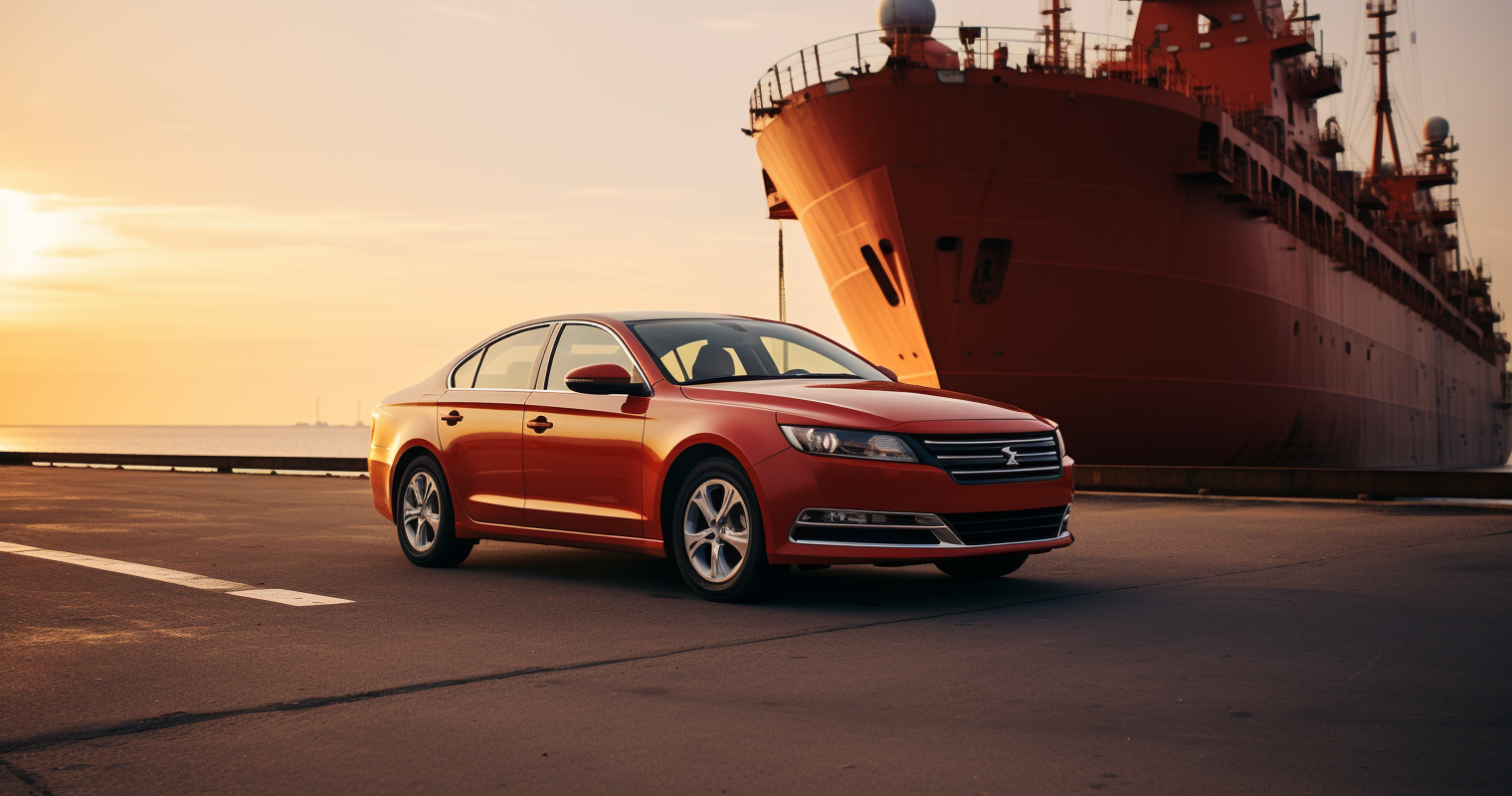
Purchasing or importing a vehicle in Singapore is a far more involved — and costly — undertaking than in the vast majority of countries. The government intentionally restricts the number of vehicles on its roads through a quota-driven Certificate of Entitlement (COE) system, and the total cost of ownership frequently surpasses the vehicle’s sticker price. Foreign nationals are legally permitted to own a vehicle, provided they hold a valid long-term pass and a Foreign Identification Number (FIN).
| Item | Details |
|---|---|
| Certificate of Entitlement (COE) | Mandatory quota permit; valid for 10 years. Category A/B prices exceeded S$110,000 in late 2025 (as of 2025 — check LTA for current prices) |
| Excise duty on imported cars | 20% of Open Market Value (OMV), as of 2025 — verify with Singapore Customs |
| GST on imports | 9%, applied to CIF value plus duties, as of January 2024 |
| Additional Registration Fee (ARF) | Calculated as a percentage of OMV on top of all other fees — verify current rates at OneMotoring (LTA) |
| Drive side | Left-hand traffic; right-hand drive vehicles required for permanent registration |
| Foreign licence validity | Valid for up to 12 months from last entry; conversion required after that |
How do I buy a new car in Singapore as a foreigner?
Foreign nationals are permitted to purchase a car in Singapore, but the process begins with securing a Certificate of Entitlement (COE) — the mandatory quota-based permit that grants legal authorisation to own and register a vehicle in the country for a ten-year period. In most other countries, buying a car means visiting a showroom and completing a sale. In Singapore, obtaining the COE is the essential first step; without it, no vehicle can be registered in an individual’s name.
Foreign nationals are required to present their Employment or Immigration pass card displaying their Foreign Identification Number (FIN), issued either by the Ministry of Manpower (MOM) or the Immigration & Checkpoints Authority of Singapore (ICA). A valid passport and proof of residential address are also necessary. The vehicle registration must be completed under the same identification used for the COE application, making it critical to use the correct documents from the start.
Prior to each bidding round, the Land Transport Authority (LTA) publishes the available vehicle quota for each category. For instance, in November 2025, 1,306 COEs were made available for Category A and 800 for Category B. Category A encompasses cars with engines up to 1,600cc and electric vehicles with an Open Market Value not exceeding S$60,000, while Category B covers larger or more powerful vehicles. Quotas shift with each exercise, and demand frequently outpaces supply.
Bids may be submitted online by individuals through DBS and POSB websites, or through UOB and Maybank when purchasing as a company. A bank account with one of these institutions is required, along with sufficient funds to cover the S$10,000 bid deposit and an administration fee ranging from S$2 to S$10. Once submitted, a bid cannot be withdrawn.
Singapore’s strict management of road congestion means the COE adds substantially to a car’s total cost — in November 2025, the COE price stood at S$110,002 for Category A and S$115,001 for Category B. These figures shift at every bidding exercise, so always review the latest results on the LTA OneMotoring portal before making any financial commitments.
On the subject of financing: some local banks and licensed finance companies do extend car loans to foreigners on valid long-term passes, though eligibility requirements tend to be more stringent than for Singapore citizens or permanent residents. Lenders may demand a larger down payment or additional supporting documents. Banks generally advise keeping vehicle-related expenditure within 30% of annual income. Many expatriates — particularly those on fixed-term contracts — carefully weigh whether the full cost of ownership is worthwhile, given how rapidly vehicles depreciate in Singapore as their COE tenure diminishes.
From 1 January 2025, new registrations of diesel and diesel-natural gas cars — including imported used cars — are no longer permitted. New registrations of diesel-electric and diesel-electric (plug-in) cars remain allowed. This represents a significant policy shift for prospective buyers deciding which vehicle type to pursue. Always verify the prevailing rules with the LTA before committing to a purchase.
How do I buy a used car in Singapore?
Purchasing a used car in Singapore follows much the same path as buying new — a valid COE must be attached to the vehicle, or a fresh one must be obtained through bidding if the existing COE is nearing its end. Used vehicles are available through licensed dealers or via private sales, and pricing reflects both the car’s physical condition and the remaining COE tenure.
The COE framework causes cars in Singapore to lose value swiftly. A vehicle that is five years old with only five years of COE remaining commands a considerably lower price than a newer car with a full ten-year entitlement, since the residual value of the COE is factored into the sale price. This means annual depreciation can be pronounced, and ownership tends to offer limited financial return. This dynamic sets Singapore apart from markets where a used car’s value is primarily determined by mileage and mechanical condition.
Thorough due diligence is essential before buying any used vehicle. The LTA OneMotoring portal enables buyers to check a vehicle’s registration status, outstanding road tax, inspection history, and COE expiry date by entering the registration number. This is the equivalent of checking a vehicle’s service history or outstanding finance in other countries — always perform these checks before parting with any funds.
Verify whether there are any unpaid fines, traffic summonses, or outstanding hire purchase agreements. A vehicle encumbered by an active hire purchase arrangement cannot be transferred to a new owner until the finance is fully discharged. Confirm with the seller that the vehicle is free of encumbrances, or that the outstanding loan will be settled at the point of sale.
At the time of sale, both parties must complete an ownership transfer through the LTA. This is done online via the OneMotoring portal using Singpass two-factor authentication. A transfer fee is payable to the LTA. Once the transfer is officially registered, the seller is released from legal responsibility for the vehicle. Until that point, the seller remains the registered owner and bears liability for any offences or incidents involving it — making prompt completion of the transfer process vital for both parties.
The Additional Registration Fee (ARF) and excise duty are based on the vehicle’s market value. For a second-hand car changing hands between private buyers in Singapore, no new ARF is assessed at the time of transfer, as those charges were levied when the vehicle was originally registered. However, if a used car is imported from another country, these fees become applicable at the point of registration.
Can I import a vehicle into Singapore, and how does the process work?
Importing a private vehicle into Singapore is achievable but requires navigating a detailed regulatory framework managed by two principal authorities: Singapore Customs (responsible for duties and GST) and the Land Transport Authority (LTA) (which governs vehicle standards, registration, and COE requirements). There is no personal effects or removal goods concession for vehicles that would allow a duty-free importation when relocating to Singapore — all imported motor vehicles are classified as dutiable goods regardless of how long the owner has held them.
Singapore operates left-hand traffic, so the vast majority of vehicles are right-hand drive. Only right-hand drive cars are accepted for permanent registration. Narrow exceptions apply to special-purpose and diplomatic vehicles, and foreign-registered vehicles may operate on a temporary basis provided a “Left Hand Drive” label is displayed on the rear windscreen. This means that a left-hand drive vehicle from continental Europe or North America cannot be permanently registered for everyday use.
The age of a used vehicle is calculated from the date of its first registration in a foreign country. If a car was first registered on 16 September 2016, it would be deemed three years old on 15 September 2019. Where the first registration date cannot be established, the vehicle’s age is reckoned from the first day of the year of manufacture.
All imported used cars must comply with Singapore’s prevailing exhaust emission and noise emission standards as set out in the Environmental Protection and Management (Vehicular Emissions) Regulations. From 1 January 2025, new registrations of diesel and diesel-natural gas cars — including imported used cars — are no longer permitted, while diesel-electric and diesel-electric (plug-in) cars remain registrable. Petrol, hybrid, and fully electric vehicles that satisfy Singapore’s emission requirements continue to be eligible for import and registration.
The step-by-step import process is as follows:
- Obtain LTA approval: Before the vehicle arrives, submit an application to the LTA for permission to import. You will need to supply technical specifications, the vehicle’s original registration documents, and your identification — including your FIN if you are a foreign national. The LTA will assess whether the vehicle satisfies Singapore’s safety, emission, and noise standards.
- Arrange shipping: Engage a licensed freight forwarder or shipping company to transport the vehicle to Singapore. On arrival, it will be held in a Free Trade Zone (FTZ) pending customs clearance. A Free Trade Zone is a designated area where goods may be stored and handled without duties or GST being levied until they are removed for use or sale within Singapore.
- Apply for Singapore Customs valuation: Submit the vehicle’s purchase documents, shipping invoices, and insurance records to Singapore Customs, which will determine the Open Market Value (OMV) — that is, the cost of importing the vehicle into Singapore, encompassing the purchase price, freight, insurance, and all other delivery charges. The OMV forms the basis for calculating excise duty and ARF.
- Pay excise duty and GST: Once Singapore Customs issues an approval letter, the importer must lodge an In-Payment (Duty and GST) permit through the TradeNet system within three months of the date specified in the approval letter. A licensed declaring agent or freight forwarder may be appointed to handle this submission.
- Bid for a COE: A valid Certificate of Entitlement must be held before the vehicle can be registered. The COE bidding process for imported vehicles operates identically to that for locally purchased cars.
- Submit registration application to LTA: Once duties have been paid and a COE secured, lodge the vehicle registration application with the LTA together with all required documentation, including the original foreign registration certificate, manufacturer’s technical specifications, and proof of duty payment.
- Vehicle inspection: The vehicle must pass an inspection at an LTA-authorised inspection centre to confirm it meets Singapore’s roadworthiness, safety, and emissions standards before a registration number is issued.
- Affix registration plates: You will be notified of your registration on the spot if all documentation is in order. Registration number plates must be fitted to the vehicle within three days of registration and must be obtained from a licensed sign craft shop using your assigned number.
Always confirm current procedural requirements with the LTA’s official importation guide and Singapore Customs’ importing dutiable motor vehicles page, as requirements are subject to revision.
What are the costs involved in importing a car to Singapore?
Bringing a vehicle into Singapore involves a layered system of taxes and charges that can drive the total cost well above the vehicle’s original purchase price abroad. Understanding each component in advance is essential before committing to an import.
| Cost Item | Rate / Basis | Notes |
|---|---|---|
| Excise Duty | 20% of OMV (cars); 12% of OMV (motorcycles) | As of 2025 — verify with Singapore Customs |
| GST | 9% of CIF value + duties | As of January 2024 — confirm with IRAS |
| Additional Registration Fee (ARF) | % of OMV (tiered, based on OMV bands) | Verify current rates at LTA OneMotoring |
| Certificate of Entitlement (COE) | Market-determined via bidding (exceeded S$110,000 in late 2025) | Highly variable — check current prices at LTA |
| VES Surcharge or Rebate | Up to ±S$25,000 depending on emissions band | Applied to ARF; as of 2025 |
| Shipping & Freight | Varies by origin country | Included in CIF value for GST calculation |
| Vehicle Inspection Fee | Set by LTA-authorised inspection centres | Required for all imported vehicles before registration |
| Modifications / Homologation | Varies; can be substantial | If vehicle requires adaptation to meet Singapore standards |
For all passenger cars and classic or vintage cars manufactured before 1940, excise duty is levied at 20% of the customs value of the vehicle. For motorcycles and scooters, the rate is 12% of customs value. To illustrate the scale of these charges: if overseas freight, handling, and insurance costs to ship a car to Singapore amount to S$1,000, and the vehicle was purchased at S$100,000 (FOB), the customs value would be S$101,000 and the resulting excise duty payable would be S$20,200.
GST at 9% is also payable on imported vehicles and is calculated on the total cost of importation — including the vehicle price, insurance, freight, and any duties already paid. This stacking of GST on top of excise duty significantly increases the effective tax burden, in contrast to regimes in certain other countries where sales tax and import duty are each calculated separately against the base vehicle value.
The Additional Registration Fee (ARF) is a levy imposed at the point of vehicle registration, determined as a percentage of the Open Market Value (OMV). It operates on a tiered progressive structure — the greater the OMV, the higher the applicable percentage. Consult the LTA’s ARF page for the current rate schedule, which is periodically updated.
Singapore’s Vehicular Emissions Scheme (VES) was revised in 2024 with the aim of encouraging the uptake of cleaner vehicles. The updated scheme features enhanced rebates and steeper surcharges, now tied to a vehicle’s CO2 emissions. Cars in the A1 VES band — those with zero tailpipe emissions, such as fully electric vehicles — qualify for a rebate of S$25,000 as of 2025. Conversely, vehicles with high emissions attract surcharges of up to S$25,000, applied against the ARF. Always verify the current VES band schedule with the LTA before selecting a vehicle to import.
In addition to taxes, set aside a budget for any modifications required to bring your vehicle into compliance with Singapore’s standards — for example, headlamp alignment adjustments, speedometer recalibration to km/h, and conformity with noise emission limits. These costs depend significantly on the vehicle in question and should be discussed with an LTA-authorised workshop beforehand.
How do I register a vehicle in Singapore?
Every vehicle operated on Singapore’s roads must be registered with the Land Transport Authority (LTA), which serves as the national vehicle licensing and transport authority. No vehicle may be driven on a public road without a valid registration number issued by the LTA.
For new vehicles purchased through a dealership, the motor dealer prepares and lodges the vehicle registration application on the buyer’s behalf. Once submitted, the buyer receives an SMS notification to log in to the LTA’s OneMotoring portal via Singpass two-factor authentication to accept the COE transfer and confirm the vehicle registration before the deadline specified in the message.
For imported vehicles — whether new or used — the owner must submit the registration application directly to the LTA after all duties have been paid and a COE obtained. Documents typically required include: the original foreign vehicle registration certificate, technical specifications issued by the manufacturer, the In-Payment permit from Singapore Customs as proof of excise duty and GST payment, a valid COE, and the owner’s identification (passport and FIN card for foreign nationals).
All imported vehicles must pass an inspection at an LTA-Authorised Inspection Centre (AIC) before a registration number will be assigned. The inspection verifies roadworthiness, adherence to safety standards, emissions compliance, and that the vehicle’s engine and chassis numbers correspond with the submitted documentation. Unlike some countries where roadworthiness testing applies only to older vehicles, Singapore mandates this inspection for every imported vehicle regardless of age or condition.
If all documentation is in order, registration confirmation is issued on the spot. The registration number plates must be affixed to the vehicle within three days of registration, and must be sourced from a licensed sign craft shop using the number assigned to the vehicle.
When a new vehicle is registered, all upfront vehicle costs become payable. Beyond the Open Market Value (OMV) assessed by Singapore Customs on the basis of cost, insurance, and freight, these costs encompass the COE, ARF, excise duty, GST, and any applicable VES surcharge or rebate. Always refer to the LTA’s vehicle tax structure page for the most up-to-date breakdown before proceeding.
What insurance do I need to drive legally in Singapore?
Motor insurance is compulsory for all vehicles operated in Singapore. A vehicle must carry valid insurance covering the entire road tax renewal period before road tax can be renewed. At a minimum, coverage must extend to third-party liability for deaths and bodily injury. This broadly resembles third-party insurance obligations in countries such as Germany or France, though the specifics of Singapore’s insurance market differ.
Unlike jurisdictions with government-run or state-mandated insurance schemes — such as certain no-fault arrangements in parts of Australia or New Zealand — Singapore’s motor insurance market is competitive and privately operated. Policies are offered by licensed general insurers regulated by the Monetary Authority of Singapore (MAS). The General Insurance Association of Singapore (GIA) provides consumer guidance and oversees the Motor Claims Framework.
Three main categories of motor insurance are available in Singapore:
- Third-party only: The legal minimum. Covers bodily injury and death caused to third parties. Damage to the policyholder’s own vehicle is not covered.
- Third-party, fire and theft: Provides the above third-party protection, together with coverage if the insured vehicle is stolen or damaged by fire.
- Comprehensive: Encompasses third-party liability as well as damage to the policyholder’s own vehicle arising from accidents. Comprehensive premiums typically exceed S$1,250 annually as a rough indicator, though actual costs vary considerably based on the driver’s profile, vehicle type, and chosen insurer.
For expatriates, a common practical concern is whether a foreign no-claims discount (NCD) record will be acknowledged by Singapore insurers. Many local insurers do accept a foreign NCD certificate, though the transfer process and the proportion recognised vary from one insurer to another. An official letter from the previous insurer confirming the applicant’s claims history is typically required. It is worth approaching multiple insurers and enquiring explicitly about NCD portability before taking out a policy.
In the event of a road incident, the Motor Claims Framework published by the General Insurance Association of Singapore sets out the process for making a claim. Always notify your insurer without delay following any incident, even where no visible vehicle damage is apparent. Failure to do so may jeopardise the validity of a subsequent claim.
Road tax renewal in Singapore is contingent on valid insurance being in force — the two obligations are directly linked, meaning an uninsured vehicle effectively cannot remain on the road lawfully. Always ensure insurance is renewed before road tax falls due for renewal.
What driving licence do I need in Singapore as an expat?
Singapore’s Traffic Police require foreigners living in Singapore to hold a valid foreign driver’s licence and to be at least 18 years of age. A foreign licence is recognised for driving purposes in Singapore, but the conditions depend on how long the individual has been residing in the country.
Foreigners from ASEAN member countries do not need an International Driving Permit (IDP). However, anyone who has been resident in Singapore for more than 12 months from their most recent date of entry is required to convert their foreign licence to a Singapore licence. This 12-month window allows newly arrived or short-stay expatriates to drive on their home licence, but those residing long-term must complete the conversion.
All foreigners visiting or residing in Singapore who are not from ASEAN countries must carry an International Driving Permit (IDP) issued by their home country together with their foreign driving licence at all times when driving. The IDP is valid for one year. If the foreign licence is not printed in the Latin alphabet, an official English translation must also be carried.
To convert a foreign licence to a Singapore driving licence, applicants should apply through the Traffic Police (TP), which is the authority responsible for issuing driving licences in Singapore. The conversion process typically involves submitting the foreign licence, identity documents including the FIN card, and paying an application fee. Depending on the issuing country and whether Singapore has a bilateral recognition arrangement in place, applicants may be required to sit a basic theory test, a final theory test, or a practical driving test — or may be exempt from some or all of these assessments.
Foreigners issued with a Singapore licence receive a licence of limited duration, which must be renewed within a window spanning one month before expiry through to three years after expiry. Outside this window, the full conversion procedure — including any applicable theory and practical tests — must be undertaken again. It is important to monitor the expiry date carefully, as the consequences of missing the renewal period are considerable.
Singapore has bilateral licence exchange arrangements with a number of countries that simplify or eliminate testing requirements for qualifying applicants. The list of recognised countries and the applicable conditions may change over time, so always verify the current arrangements on the Traffic Police website or by contacting them directly before submitting an application.
How do I sell a car in Singapore?
Selling a vehicle in Singapore is a well-defined process regulated by the LTA. The overriding principle is that the seller retains full legal responsibility for the vehicle — including road tax obligations and any traffic offences incurred — until the ownership transfer is formally recorded with the LTA. It is therefore very much in the seller’s interest to ensure the transfer is completed without delay.
Before advertising a vehicle for sale, confirm that all road tax has been paid and is current; any outstanding traffic fines or summonses have been cleared; no hire purchase agreement remains active on the vehicle; and a valid periodic inspection certificate is in place if one is due. A prospective buyer will likely verify all of these points through the LTA OneMotoring portal before agreeing to purchase.
The steps involved in completing a private sale are as follows:
- Agree the sale price and terms with the buyer, taking into account the remaining COE tenure, the vehicle’s condition, and prevailing market values.
- Complete the ownership transfer online via the LTA OneMotoring portal using Singpass authentication. Both seller and buyer must verify the transaction. A transfer fee is payable to the LTA — confirm the current amount on the portal.
- Arrange insurance transfer or cancellation. The seller should notify their insurer once ownership has been formally transferred. The buyer must have valid insurance coverage in place before driving the vehicle.
- Address road tax. Remaining road tax is not automatically refunded on a private sale. The seller may apply to the LTA for a pro-rata refund of unused road tax once the transfer has been completed.
- Keep your records. Retain a copy of the LTA transfer confirmation as evidence that you are no longer the registered owner of the vehicle.
Singapore does not impose a capital gains tax, so any profit realised from selling a vehicle is generally not taxable. However, if a vehicle is sold in the context of a business activity or the seller is considered to be engaged in commercial vehicle trading, different tax treatment may apply. Seek guidance from the Inland Revenue Authority of Singapore (IRAS) if there is any uncertainty about your tax position.
When a vehicle’s COE expires and is not renewed, the owner must deregister the vehicle. A COE authorises ownership for a period of 10 years, after which the vehicle must either be scrapped or have a further COE obtained to permit an additional 5 or 10 years of use. On deregistration, the owner receives a PARF (Preferential Additional Registration Fee) rebate and a COE rebate, both of which are calculated according to the amounts originally paid and the COE tenure remaining at deregistration.
What are the ongoing costs of vehicle ownership in Singapore?
Beyond the upfront purchase and registration costs, vehicle ownership in Singapore entails a range of recurring financial obligations. Careful budgeting for these is important, as they can add up considerably over time.
Road Tax: Road tax forms part of Singapore’s vehicle ownership obligations. Every registered vehicle must carry valid road tax, renewable for periods of six or twelve months. The rate is determined by engine capacity for petrol vehicles, or by power output for electric vehicles, and is payable to the LTA. This is broadly analogous to a vehicle excise duty in other countries. Road tax must be renewed before it lapses, as late renewal attracts fines and additional fees. Keeping a vehicle on the road without valid road tax may result in prosecution. Renewal can be completed online via the LTA OneMotoring portal, through AXS services, or by GIRO arrangement.
Periodic Vehicle Inspection: Owners whose vehicles are due for periodic inspection will receive a notice approximately three months before their road tax expiry date. Inspections are conducted at LTA-Authorised Inspection Centres (AICs). For private cars, inspections are typically required once a vehicle reaches a specified age — comparable in concept to an MOT-style check in countries such as the UK or Germany, though Singapore’s inspection schedule and frequency differ. Completion of the inspection is a prerequisite for road tax renewal.
Insurance: As covered in the insurance section, valid third-party motor insurance is a legal requirement for road tax renewal. Comprehensive policies are widely taken out and generally cost upwards of S$1,000 per year, depending on the driver’s profile and vehicle.
Electronic Road Pricing (ERP): The LTA operates an Electronic Road Pricing (ERP) scheme to manage congestion on busy roads during peak periods. The system functions through electronic gantries positioned above designated roads, and vehicles must be fitted with an In-Vehicle Unit (IU). Charges are deducted electronically from a stored-value card inserted in the IU each time the vehicle passes beneath a gantry. Singapore is in the process of introducing a next-generation GPS-based ERP system to eventually replace fixed gantries — confirm the current state of this rollout with the LTA.
Fuel: Singapore’s fuel market is served by a small number of major multinational operators selling unleaded petrol. As a small city-state without domestic oil production, fuel prices are subject to fluctuations in global commodity markets and local taxation. Drivers crossing into Malaysia are legally required to have at least three-quarters of a full tank of fuel in their vehicle — travelling with less constitutes an offence under Singapore’s Vehicle Fuel Rules.
Maintenance and Parking: Car park charges in Singapore’s city centre and commercial areas can be significant, administered through a mix of electronic parking systems and coupon-based schemes in certain locations. Regular vehicle servicing is advisable given the tropical climate, as heat and humidity can accelerate wear on various components.
For a comprehensive breakdown of ongoing vehicle costs, use the LTA OneMotoring portal, which provides road tax calculators and inspection scheduling tools. For tax-related matters, consult the Inland Revenue Authority of Singapore (IRAS).
Frequently Asked Questions
Can a foreigner on a short-term visa buy a car in Singapore?
In practice, purchasing and registering a car in Singapore requires a Foreign Identification Number (FIN), which is issued to holders of long-term passes such as Employment Passes, S Passes, and Dependent Passes. Holders of short-term visit passes are generally not eligible to register a vehicle in their own name. If you hold a long-term pass, you may participate in COE bidding and complete a purchase. Always confirm eligibility with the LTA and your pass-issuing authority — either MOM or ICA — for the most up-to-date requirements.
What is a COE and why does it cost so much?
The COE system operates through an open bidding mechanism — bidders specify the maximum amount they are prepared to pay (the reserve price), and the system places a bid one dollar above the highest unsuccessful bid. Prices fluctuate in line with the number of vehicles in the quota at each exercise; the government sets the quota by taking into account factors such as the volume of vehicles being deregistered and overall market demand. When demand significantly exceeds quota, prices rise sharply. Always check the latest COE results on the LTA OneMotoring portal.
Is there any exemption from import duties when I move to Singapore with my car?
No. Singapore does not offer a personal effects or removal goods exemption for motor vehicles. Vehicles are classified as dutiable goods, and excise duty (20% for cars as of 2025) and GST (9% as of January 2024) are payable on all imported vehicles regardless of prior ownership or duration of ownership abroad. Verify current rates with Singapore Customs before making any decision.
Can I drive a left-hand drive car in Singapore?
For standard use on Singapore’s roads, only right-hand drive cars are permitted. Exceptions apply to special-purpose vehicles, diplomatic vehicles, and foreign-registered vehicles making temporary visits, which must display a “Left Hand Drive” label on the rear windscreen. For long-term or permanent registration, only right-hand drive vehicles are accepted.
How long does the vehicle import and registration process take?
The timeline depends on various factors including the complexity of the application, the vehicle’s country of origin, and the speed with which all documentation can be gathered. As a general guide, allow several weeks to months from the vehicle’s arrival in Singapore until you receive a registered number plate — accounting for the Singapore Customs valuation process, COE bidding (which takes place on a fixed schedule, typically twice monthly), and the LTA inspection and registration stages. Engaging a licensed declaring agent can help streamline the process considerably.
Will my foreign no-claims discount (NCD) be recognised by Singapore insurers?
Many Singapore insurers will take a foreign NCD history into consideration, though their individual policies vary. You will typically be required to provide an official letter from your previous insurer confirming your claims-free record. The percentage of NCD recognised may differ from what you accumulated abroad. It is advisable to obtain quotes from several GIA member insurers and ask each one specifically about NCD portability before selecting a policy. The General Insurance Association of Singapore can offer further guidance.
What happens to my COE when my car’s 10-year period ends?
At the end of a 10-year COE tenure, the vehicle must either be scrapped or have a further COE obtained — either for five or ten additional years of use. Only ten-year COEs are eligible for a subsequent renewal; five-year COE extensions are fixed in duration and cannot be extended further. When a vehicle is deregistered, the owner receives both a PARF (Preferential Additional Registration Fee) rebate and a COE rebate from the LTA, calculated according to the original amounts paid and the remaining COE tenure at the time of deregistration. Always verify current rebate structures with the LTA, as these are subject to revision.
Where can I find official and current information about buying or importing a car in Singapore?
The primary official sources are: LTA OneMotoring (vehicle registration, COE, road tax, inspection, and licence conversion); Singapore Customs (import duties and GST on vehicles); IRAS (GST and tax queries); Singapore Traffic Police (driving licences and road rules); and the General Insurance Association of Singapore (motor insurance). Always consult these official sources to verify current fees, rates, and procedures, as the figures cited in this article are subject to change.