

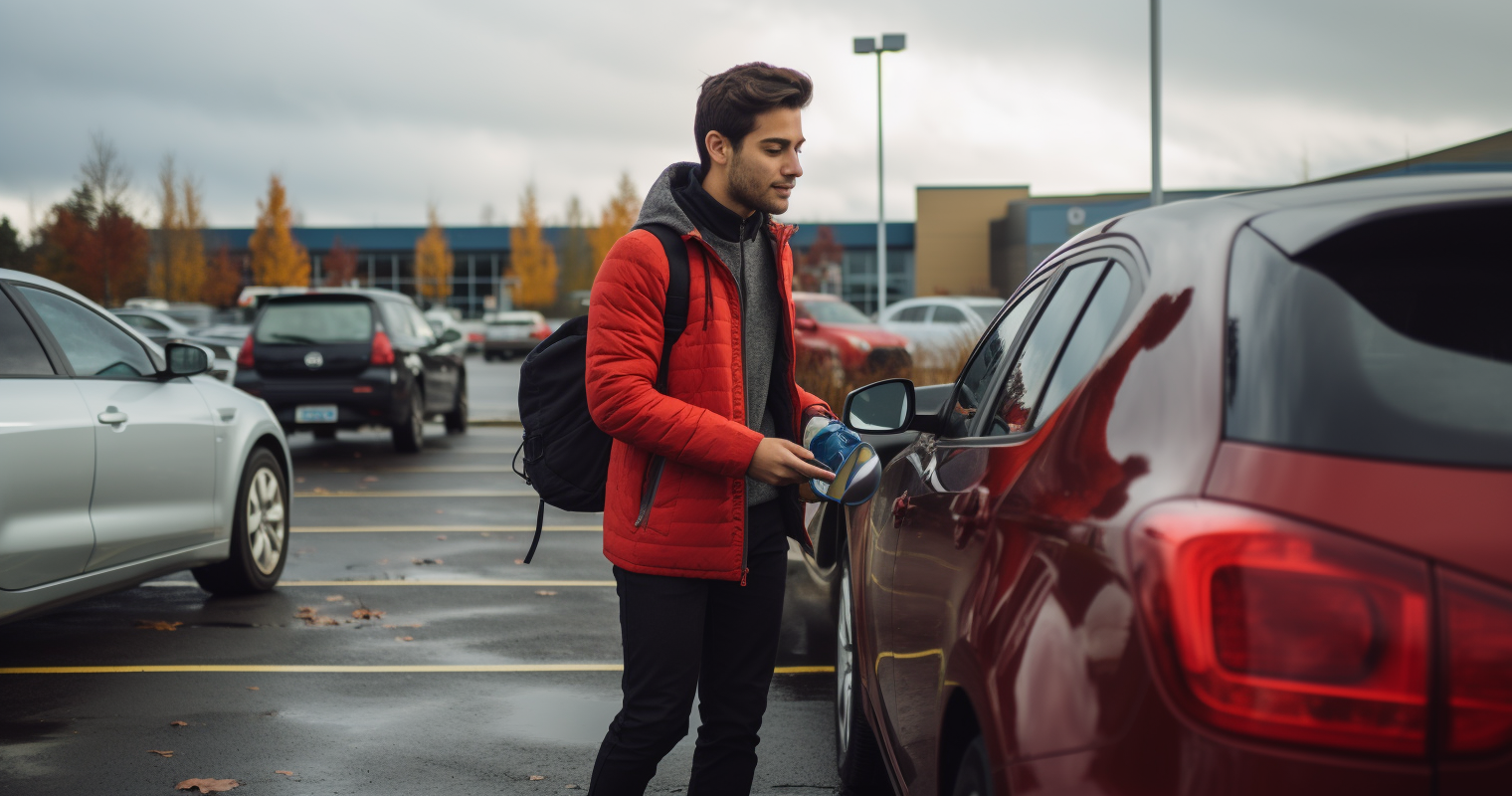
Hiring a car in Brazil is a manageable process for short-stay visitors: you will need a valid driving licence held for a minimum of two years, a passport, a physical credit card in the driver’s name, and an International Driving Permit (IDP) is strongly advisable. Both major global chains and homegrown Brazilian companies serve all significant cities and airports. Traffic flows on the right-hand side, speed cameras are common throughout the country, and a zero-tolerance policy on drink-driving is firmly enforced.
| Item | Details |
|---|---|
| Minimum rental age | Generally 21 (as of 2025); some premium categories require 23–25. Young driver surcharge may apply under 25. |
| Licence held for | At least 2 years prior to rental date (as of 2025) |
| IDP requirement | Strongly recommended; required by many rental companies and after 180 days of residency |
| Foreign licence validity | Up to 180 days from date of entry into Brazil (as of 2025) |
| Credit card deposit hold | Typically R$1,000–R$3,000 depending on vehicle category and insurance level (as of 2025) |
| Drink-drive limit | Zero tolerance (0.00% BAC) — always verify with SENATRAN |
What are the rules and requirements for renting a car in Brazil?
The majority of car hire companies in Brazil set the minimum driver age at 21, though certain vehicle classes — particularly premium and luxury categories — may push that threshold to 23 or even 25. Agencies typically insist on a credit card registered to the driver and will often require that the driving licence was first issued no fewer than two years before the rental date. Individual company policies can be more demanding than the legal baseline, so it is worth checking directly before you book.
Visitors from overseas may drive using their home-country licence together with their passport. Renters must have reached the age of 21, hold a valid original driving licence that has been active for at least two years, and present a valid passport. These conditions reflect the position as of 2025 — confirm current requirements with your chosen rental firm, as companies are free to impose stricter conditions.
Renters who have not yet turned 25 will encounter a young driver surcharge, a standard practice applied across Brazil’s leading rental operators. If you fall into this age bracket, build this additional cost into your travel budget from the outset.
The documents you will generally be expected to produce at the rental desk are:
- Your original, valid driving licence (physical card — not a photocopy or digital version)
- Your passport
- An International Driving Permit (IDP) — strongly recommended and obligatory at many agencies
- A physical credit card in the driver’s name carrying enough headroom for the security deposit hold
A physical credit card with an adequate limit to cover the deposit hold is a firm requirement. Whether the card is approved is entirely at the rental company’s discretion. Debit cards and virtual cards are typically refused as security deposits in Brazil — a notable difference from parts of Europe where debit cards are routinely accepted for this purpose.
Brazil follows right-hand traffic and uses the metric system exclusively. Speed limits are posted in kilometres per hour, seatbelts are compulsory for every occupant of the vehicle, and using a mobile phone at the wheel is prohibited. Traffic enforcement cameras issue fines regularly, so strict compliance is essential.
For the most authoritative and up-to-date requirements, refer to the Brazilian National Traffic Secretariat (SENATRAN) and the state traffic department (DETRAN) covering the region in which you intend to drive.
Which major car rental companies operate in Brazil, and where can I find them?
Localiza is a Brazilian car rental company founded in 1973 in Belo Horizonte and holds the position of the largest car hire operator across Latin America. It maintains a network of 584 branches spanning Brazil and eight additional countries, with a presence in 406 cities throughout the country. Reservations can be made at localiza.com.
Movida occupies the second-largest position in the Brazilian car rental market. Movida Rent a Car has been active in the vehicle hire sector since 2006 and has built a strong reputation as one of the country’s most recognised operators. Bookings can be placed at movida.com.br.
The merger of Localiza with Unidas produced a combined fleet of roughly 631,639 vehicles, establishing a dominant position across car hire, long-term fleet leasing, and used-car sales. Unidas continues to trade under its own name at many locations — visit unidas.com.br for more information.
Multinational brands including Hertz, Avis Budget, Enterprise, and Sixt concentrate their operations on premium travellers at the main international gateways, drawing on the advantage of global loyalty programmes and familiar booking interfaces. Their respective websites are hertz.com, avis.com, budget.com, enterprise.com, and sixt.com.
Domestic operators such as FOCO Rent a Car provide cost-conscious options at regional airports, while newer subscription-oriented services like Turbi appeal to city-based drivers through app-managed monthly plans. These local alternatives can be competitively priced, especially for extended hire periods or travel away from the main tourist routes.
International rental companies generally maintain desks at all international airports and in major city centres, with the widest vehicle selections available in São Paulo, Rio de Janeiro, and Brasília. At most airports the rental counter is found in the arrivals hall, with the vehicle collection area typically reachable by a short shuttle ride.
How does car rental pricing work in Brazil, and what should I watch out for?
Standard rental rates in Brazil usually incorporate Value Added Tax (VAT), basic liability insurance, and fire insurance. However, the quoted base rate rarely reflects the final amount you will pay — extras such as insurance upgrades, additional driver fees, GPS hire, child seat charges, and one-way drop-off fees can collectively add a significant sum to the total bill.
Basic Collision Damage Waiver (CDW) is commonly included within the initial quote but carries a substantial excess and leaves you exposed in the event of theft, vandalism, or damage to tyres, glass, and the underside of the vehicle. For broader peace of mind, look at supplementing with a “Super CDW” or “Full Protection” product offered by the agency.
Adding a mid-tier inclusive insurance product typically raises the daily rate by around US$5 to US$15, while the highest level of cover available — which eliminates the excess entirely and extends protection across most scenarios — adds approximately US$15–US$25 per day. These figures are indicative for 2024–2025 and will differ by company, vehicle class, and booking method. Always confirm exact costs directly with your rental provider.
Most agencies require a credit card hold of between R$1,000 and R$3,000, varying according to the vehicle class and the level of insurance selected. Choosing minimal or no additional cover results in a higher hold amount. The deposit is released when the car is returned in undamaged condition, though funds can remain blocked on your card for several days after return.
Supplemental insurance bought at the counter on arrival tends to cost more than the same product added when booking online. If additional coverage is something you know you will want, securing it at the time of booking is the more economical approach. Unlike markets where insurance is bundled transparently into a single hire price, Brazilian rental quotes separate the base hire fee from optional add-ons — read each line of the itemised quote carefully before confirming.
Many Brazilian rental companies apply different terms to “urban” and “rural” coverage. If your itinerary includes areas beyond major cities, verify in advance that your policy extends to rural and off-road conditions, or you may face unexpected liability charges.
Traffic fines are forwarded to the address associated with the registered vehicle. When you are driving a hire car, this means the rental company will pass the fine charge directly to your credit card. Speed cameras are particularly dense in urban areas, and speed limits often change with little advance warning, so constant attention is required.
At the point of collection, inspect the vehicle thoroughly before driving it away. Record all pre-existing marks, scratches, and dents with photographs and insist that every item is noted on the rental agreement. Brazilian rental companies have been known to pursue customers for damage that existed prior to the hire. Taking a short video recording of the entire exterior and interior before you leave the lot provides the most robust evidence if a dispute arises.
If you encounter unfair charges or a billing dispute, Brazil’s consumer protection body, consumidor.gov.br (Procon), operates an online complaints platform where formal complaints against businesses operating in the country can be submitted.
Do I need an International Driving Permit (IDP) to rent a car in Brazil?
Foreign visitors may drive in Brazil on a valid home-country licence for up to 180 days. Even so, you are also required to carry either a sworn Portuguese translation of your licence or an International Driving Permit (IDP). The IDP effectively functions as the official translation and is accepted by traffic authorities and rental companies alike, making it by far the more practical option.
Rental agencies and insurers regularly insist on an IDP or a certified translation as a condition of their policies or to simplify verification. Major international brands such as Hertz, Avis, and Localiza commonly require an IDP even for brief visits. Even where the law does not strictly demand one, having an IDP in your wallet greatly reduces the chances of difficulties at the rental counter or during a roadside check.
The 1949 International Driving Permit is valid across much of South America, but not in Brazil or Uruguay. Brazil recognises IDPs issued under the 1968 Vienna Convention on Road Traffic. Brazil ratified the 1968 Vienna Convention in 1980, which means permits issued by Brazilian authorities meet the standards established by that convention and are similarly recognised in other signatory countries.
Licence holders from other countries may drive in Brazil if their country is a signatory to the Vienna Convention on Road Traffic or party to an equivalent bilateral arrangement with Brazil. If you are uncertain whether your licensing country holds such an agreement, consult the Brazilian consulate in your home country before you travel.
It is strongly advisable to carry either an officially certified Portuguese translation of your licence or an IDP that includes a pictogram page in Portuguese. Even where this may no longer be a strict legal requirement under Brazilian law, some drivers have experienced difficulties with traffic police without it. Certain hire companies may also make this a condition of rental. Carrying both your original licence and an IDP eliminates any ambiguity.
Always verify the current position with the relevant road authority in your country and your chosen rental company before departure, as requirements are subject to change. As of 2025, travelling with an IDP alongside your original licence and passport is considered best practice for all foreign drivers in Brazil.
What types of roads and driving conditions should I be prepared for in Brazil?
Brazil’s total road network extends to approximately 1.6 million kilometres, and driving remains one of the most practical ways to explore the country — whether you are touring the southern regions, following the Atlantic coastline, or reaching national parks, historic towns, beaches, and nature reserves.
Road quality across Brazil differs considerably from one region to the next. The country encompasses coastal areas and vast interior territories, and standards vary markedly between the south, east, west, and north. Major highways are generally maintained to a reasonable standard, but rural roads can be unpredictable, with potholes, unmarked hazards, and sparse signage.
A large proportion of roads throughout the country remain unpaved, and certain routes — particularly in the Amazon basin — are effectively impassable for much of the year owing to heavy seasonal rainfall. For any journey into remote or northern areas, check road conditions before departure and consider reserving an SUV or 4WD vehicle.
Tolls feature throughout the road network, with booths typically appearing every 35 to 70 kilometres. Payment can be made in cash or using an electronic tag — the Brazilian “tag” system, which operates on a similar principle to transponder-based toll systems in Europe or the E-ZPass network in the United States. Some rental companies hire out a tag device for a small daily surcharge, which can be a worthwhile time-saver at congested toll plazas.
To ease traffic congestion, Brazil operates a licence plate rotation scheme during peak hours — 7–10 AM and 5–8 PM — restricting vehicles with certain plate endings from driving in city centres on specified weekdays. This scheme is active in cities including São Paulo and is monitored by cameras; transgressing it produces a fine. Before driving into a city centre during restricted hours, check whether your rental vehicle’s plate ending falls under that day’s restriction.
Brazil’s drink-drive limit stands at 0.00% — absolute zero tolerance. This threshold is stricter than the legal limit in the majority of countries worldwide and is enforced through roadside testing. No exceptions or allowances are made.
All vehicle occupants are required by law to wear seatbelts, and children under 7.5 years of age must travel in appropriate child seats. Driving in sandals or flip-flops is not permitted. It is also a legal offence to run out of fuel on a highway — stopping on a major road because the tank is empty can attract a fine.
Service stations in Brazil operate on a full-service basis — you do not pump your own fuel; the attendant handles the entire process. When refuelling, ask for “gasolina” (petrol) or “etanol” (ethanol, which is widely available across the country). A large share of vehicles in Brazil are flex-fuel models capable of running on either fuel type.
Driving after dark on rural highways is best avoided where possible. Road conditions on some routes are poor, signage can be inadequate, and certain stretches pass through areas where wildlife crossing the road in low visibility poses a genuine hazard.
What insurance do I need when renting a car in Brazil?
Car insurance is a legal requirement in Brazil. Any driver behind the wheel of a hire vehicle must have at minimum third-party liability cover. Rental companies are obligated to include this as a baseline, though the scope of what is actually covered can differ significantly from one provider to the next.
All major agencies in Brazil incorporate basic Loss Damage Waiver or Physical Damage Waiver (LDW/PDW) protection in their pricing, which provides cover against theft, collision, and third-party damage. What remains your decision is whether to add zero-excess insurance, which reduces your out-of-pocket liability to nothing in the event of a claim. Without this upgrade, you remain personally responsible for a potentially sizeable excess if anything goes wrong.
For the most thorough protection available, consider adding a “Super CDW” or “Full Protection” product to your booking. Although this raises your daily rate by roughly 25–30%, it substantially reduces or entirely eliminates the excess, and typically extends cover to theft and third-party liability scenarios. These percentages are indicative for 2024–2025 — verify current pricing with your rental company before booking.
Before finalising your insurance arrangement, confirm whether roadside assistance is included. Brazilian highways can be extremely remote in some areas, and roadside cover is sometimes structured as a separate optional extra rather than forming part of the standard insurance tiers.
Many rental agencies in Brazil will accept credit card-based rental cover in place of their own supplemental products. If you plan to rely on your credit card’s travel insurance, you should decline all additional insurance offered by the agency — accepting the rental company’s CDW or equivalent product frequently invalidates any credit card rental car protection you may otherwise have had. This is an important distinction from some other markets, where layering card-based coverage on top of the rental company’s own insurance is common practice.
Before travelling, contact your card issuer directly to confirm the precise terms of its rental car coverage in Brazil. Policy details vary widely — certain countries, vehicle classes, or rental durations may fall outside the scope of the cover. Equally, check with your rental company prior to arrival that it will accept card-based cover in lieu of its own optional products, rather than discovering the position at the counter.
In Brazil, a driver who collides with the rear of another vehicle is presumed to be at fault unless they can demonstrate otherwise. Accidents resulting in personal injury may give rise to both civil claims and criminal proceedings, with possible consequences including fines, compensation orders, and imprisonment depending on the severity. Comprehensive insurance cover is therefore highly advisable.
Are there any specific rules for expats or long-term residents renting cars in Brazil?
Foreign nationals aged 18 and over are permitted to drive in Brazil — provided their licence remains valid — for up to 180 days from the date of their entry into the country. A passport must be carried alongside the driving licence at all times. Once 180 days have elapsed from the date of entry, the overseas driver is required to obtain a Brazilian driving licence. This rule, established under Resolução do CONTRAN nº 933 of March 2022, applies equally to tourists and those taking up residency.
If you are planning to settle in Brazil or your stay will exceed 180 days, you will generally need to acquire a Carteira Nacional de Habilitação (CNH) — the Brazilian national driving licence. The conversion pathway depends on your country of origin: a number of countries hold reciprocity agreements with Brazil that enable a straightforward licence exchange without the need for formal testing.
Nations such as Portugal, Germany, and Spain are among those that benefit from reciprocity arrangements with Brazil. Where no such agreement exists, you will be required to undergo medical assessments and complete both theoretical and practical driving tests through the Brazilian system. It is also worth noting that procedures can differ slightly between states, as each state’s DETRAN office retains a degree of autonomy in how it implements the process.
To obtain a CNH as a foreign national, you must hold legal residency status, evidenced by a valid CRNM (Carteira de Registro Nacional Migratório — the residency document issued by the Federal Police) and a CPF (taxpayer identification number), together with proof of a Brazilian address. The CRNM replaced the former RNE as the standard residency card for foreign nationals in Brazil.
Beginning the CNH application as soon as residency is established is strongly advisable. Acting promptly avoids any risk of accruing fines or encountering legal complications from driving on an expired foreign licence entitlement. The process is administered by your state’s DETRAN office — details for each state can be found at gov.br/senatran.
For long-term residents who need to hire a car while awaiting their CNH, most rental companies will still require your foreign licence to be valid and will typically also ask for an IDP. As of 2025, always confirm the current position with both your rental company and your state DETRAN office before relying on your foreign licence, as the rules governing residency-based driving obligations can be updated.
The step-by-step process for obtaining a Brazilian CNH as a foreign resident is as follows:
- Confirm your legal residency status with a valid CRNM and CPF number issued by the Brazilian Federal Revenue Service.
- Visit your state DETRAN office (or its official website) to determine whether your country of origin has a reciprocity agreement with Brazil that allows a direct licence conversion.
- If a reciprocity agreement applies, submit your valid foreign licence, passport, CRNM, CPF, proof of address, and passport photos. Pay applicable fees — check your state DETRAN for current figures, as fees vary by state.
- If no reciprocity agreement applies, enrol in a Brazilian driving school (auto escola), complete the mandatory medical and psychological examinations, pass the theoretical test, and then the practical driving test.
- Once approved, collect your Brazilian CNH from the DETRAN office. The CNH is valid for five or ten years depending on age and category.
Frequently asked questions
What is the minimum age to rent a car in Brazil?
The minimum age set by most rental companies in Brazil is 21, though certain vehicle categories — particularly higher-end models — may carry a minimum age of 23 or 25. Renters who are under 25 will generally be subject to a young driver surcharge on top of the standard daily rate. Always check the age policy directly with your chosen company before making a reservation, as requirements can vary between operators and vehicle classes. These figures apply as of 2025.
Can I rent a car in Brazil without an International Driving Permit?
A valid foreign driving licence permits you to drive in Brazil for up to 180 days, but you must additionally carry either a sworn Portuguese translation of your licence or an International Driving Permit (IDP). While some hire companies may be willing to accept a foreign licence on its own for brief visits, major operators including Hertz, Avis, and Localiza typically insist on an IDP regardless of the length of stay. Arranging an IDP before you leave home is strongly advisable.
What happens if I have an accident in my rental car in Brazil?
If you are involved in a collision while driving a hire vehicle, immediately notify both your insurer and the rental company. A crucial point of Brazilian law to keep in mind: if you strike the rear of another vehicle, you are assumed to be at fault unless you can demonstrate otherwise. Record all damage with photographs, obtain a police report (Boletim de Ocorrência), and follow the accident procedures stipulated in your rental agreement.
Can I take a rental car across the border into neighbouring countries?
Cross-border travel in a rental vehicle is generally prohibited unless the rental company has granted written authorisation in advance. Localiza, for example, has historically permitted crossings into Argentina subject to an additional insurance fee. Always secure written consent from the rental company before attempting any border crossing, and verify that your insurance policy provides cover in the destination country. Taking a rental car across a border without authorisation may void your insurance and result in the vehicle being seized.
Do I need to return the car with a full tank of fuel?
Fuel arrangements differ between companies and should be established clearly at the time of booking. The most widely used arrangement is “full-to-full” — the car is collected with a full tank and must be returned in the same condition. Returning the vehicle with less fuel than when collected will trigger a refuelling charge, typically billed at a rate well above what you would pay at the pump. Bear in mind that Brazilian service stations are entirely full-service — attendants carry out all refuelling — so allow adequate time before your return to stop and fill up.
Are there restrictions on where I can drive my rental car in Brazil?
A number of Brazilian rental companies draw a distinction between “urban” and “rural” insurance coverage in their contracts. If your plans extend beyond the main cities, you should verify explicitly that your policy covers driving on rural roads and, where relevant, off-road terrain, to avoid being held liable for damage in areas not included in your cover. Some agreements also exclude specific unpaved routes or areas with environmental protection status. Reviewing your rental contract thoroughly before leaving the main highway network is strongly recommended.
Do I need to worry about the licence plate restriction system in São Paulo?
Brazil operates a licence plate rotation scheme in certain major cities to manage peak-hour congestion, with restrictions running during the hours of 7–10 AM and 5–8 PM and different plate endings barred from the city centre on different weekdays. This scheme encompasses rental vehicles. Before driving in São Paulo’s central zone during restricted hours, check the final digit of your rental car’s plate and confirm whether it is subject to a restriction on the day you are travelling. Breaches are detected by camera, and any resulting fine will be charged to your credit card by the rental company.
How long after becoming a resident in Brazil can I still drive on my foreign licence?
Foreign nationals may drive in Brazil on their overseas licence for up to 180 days following their date of entry. After that point, a Brazilian driving licence (CNH) must be obtained. This reflects the position as of 2025 under Resolução do CONTRAN nº 933 of March 2022. Check the current rules with your state’s DETRAN office before your 180-day entitlement expires, as enforcement practices and procedures can differ between states.
Is my credit card travel insurance sufficient cover for a rental car in Brazil?
Many rental agencies in Brazil will accept credit card coverage as an alternative to their own supplemental insurance products. However, it is important to be aware that taking the rental company’s own insurance often cancels out any credit card rental cover you may have assumed would apply. Before travelling, speak directly with your card issuer to understand precisely what its rental car policy covers in Brazil — exclusions relating to specific countries, vehicle types, or hire durations are common. Likewise, confirm with your rental company ahead of arrival that it will accept card-based protection instead of its own optional add-ons.