
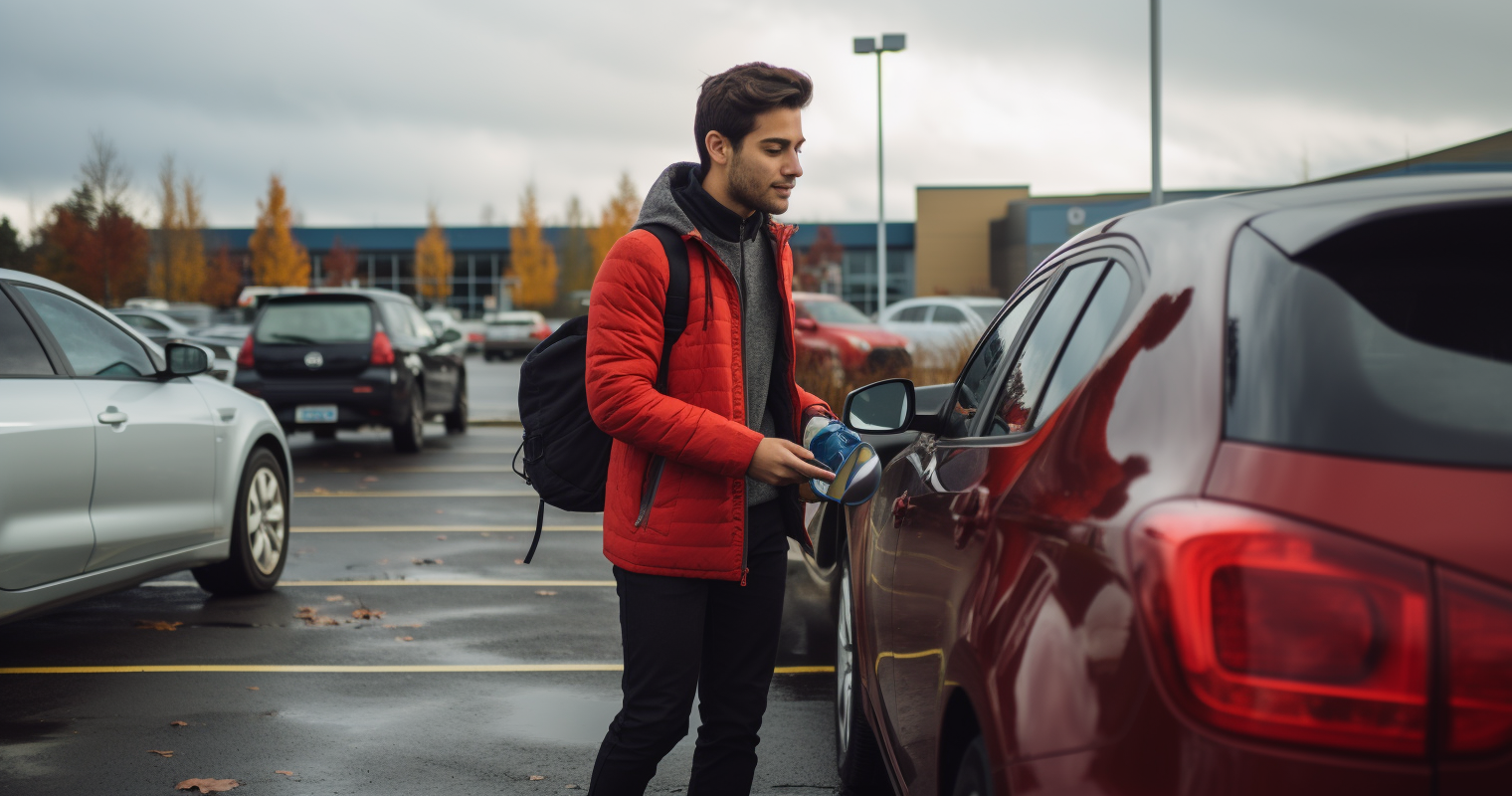
For most visitors and expats, hiring a car in Malaysia is a relatively simple process — but understanding the key requirements before you collect your vehicle will save you time and stress. Drivers must generally be at least 21–23 years of age depending on the rental company, hold a valid driving licence, and in most cases carry an International Driving Permit (IDP). Traffic in Malaysia moves on the left, toll roads are common throughout the country, and well-known international operators including Hertz, Avis, Europcar, and Mayflower all have a presence here.
| Item | Details |
|---|---|
| Minimum rental age | Typically 21–23 years old, depending on company (as of 2025); young driver surcharges may apply for those under 25 |
| Licence requirement | Valid foreign driving licence in English, or accompanied by a certified IDP/translation; ASEAN and Commonwealth licences may be exempt from IDP requirement (verify with your rental company) |
| IDP validity | 1 year; must be carried alongside your original national licence |
| Security deposit | Typically RM 400–RM 4,000 by credit card (as of 2025); some companies accept debit cards with a higher deposit |
| Speed limits | 110 km/h on highways; 50 km/h in urban areas (as of 2025) |
| Driving side | Left-hand side |
What are the rules and requirements for renting a car in Malaysia?
The minimum age to rent a car in Malaysia is generally 23, though certain operators will accept drivers from age 21 subject to specific conditions. Drivers aged between 21 and 25 are typically subject to a young driver surcharge. At the other end of the scale, the maximum age for standard rentals is usually 75, while many luxury vehicle categories cap eligibility at 65. Because policies differ between companies, always confirm the age requirements with your chosen operator prior to making a reservation.
All renters must present a valid driving licence, a passport, and a credit card for payment and deposit purposes. The security deposit — held on a credit card in the renter’s name — generally falls between RM 400 and RM 4,000 (as of 2025). Hertz Malaysia, for instance, specifies a RM 600 deposit for customers paying by debit card when collecting the vehicle at the counter.
Foreign nationals may drive in Malaysia on a valid International Driving Permit (IDP) or a foreign driving licence, provided the licence is written in English. If your licence is issued in another language, a certified translation must accompany it. Drivers holding a current licence from any of the 10 ASEAN member states — Myanmar, Laos, Cambodia, Vietnam, Brunei, Malaysia, Indonesia, Singapore, Thailand, and the Philippines — are permitted to drive across other ASEAN countries without needing to obtain a separate IDP.
Driving without insurance is illegal in Malaysia. Rental companies are required to include basic coverage — typically third-party liability and rental vehicle damage protection — in every agreement. Seatbelts must be worn by all occupants at all times. Speed limits stand at 110 km/h on expressways and 50 km/h within built-up areas. Malaysia enforces strict laws around drink-driving, and penalties are severe.
For the most current and authoritative information on driving requirements — including any regulatory changes — visit the Road Transport Department Malaysia (Jabatan Pengangkutan Jalan, or JPJ) website, or confirm details directly with your rental company ahead of your trip.
Step-by-step: How to rent a car in Malaysia
- Check your eligibility: Confirm you meet the minimum age requirement (typically 21–23) and that your licence has been held for at least one year.
- Obtain an IDP if needed: If your licence is not in English or issued by an ASEAN country, obtain an International Driving Permit from the relevant automobile association in your home country before travelling.
- Book in advance: Reserve your vehicle online through the rental company’s website or a comparison platform. Advance bookings typically attract lower rates.
- Gather your documents: Bring your valid national driving licence, IDP (if applicable), passport, and the credit card you used for the booking.
- Inspect the vehicle on collection: Before signing the contract, ensure the car is in good condition, and if something is wrong, ask the agency to fix it. Photograph or video any existing scratches, dents, or damage and ensure these are noted in the rental agreement.
- Get a Touch ‘n Go card: Toll payments in Malaysia can be made either with cash or through convenient prepaid cards like Touch ‘n Go, which can be easily purchased and topped up at local grocery stores or selected highway booths. Many rental companies will provide one, or you can purchase one on arrival.
- Return the car: Return the vehicle with the agreed fuel level, at the correct location, and on time to avoid additional charges.
Which major car rental companies operate in Malaysia, and where can I find them?
Malaysia’s car rental sector is led by a handful of prominent operators, including Avis Rent a Car LLC, Hertz Corporation, Europcar, Mayflower, and Hawk. These companies typically maintain offices in or close to the major cities and offer online reservation systems through their websites.
Here is an overview of the main operators and where to find them:
| Company | Type | Key Locations | Website |
|---|---|---|---|
| Hertz Malaysia | International | KLIA, major cities, East Malaysia | hertzmalaysia.com |
| Avis Malaysia | International | KLIA, city centres, corporate accounts | avis.com.my |
| Europcar Malaysia | International | KLIA (two airport locations), Kuala Lumpur city | europcar.com |
| Mayflower Car Rental | Regional/Local | Peninsular Malaysia, corporate and leisure | mayflower.com.my |
| Hawk Car Rental | Local | Multiple branches across Malaysia | hawk.com.my |
| Sixt Malaysia | International | Kuala Lumpur International Airport, Kota Kinabalu | sixt.com |
Several of these operators offer strong airport coverage, with dedicated counters at KLIA and locations serving East Malaysian cities such as Kuching. Malaysia-focused operators commonly serve both daily rental customers and travellers requiring airport transfers, making them accessible to inbound tourists and city-based users alike.
Beyond the international names, a growing number of local and regional providers have established themselves in the market. GoCar, a Malaysia-based platform, offers short-term rentals alongside longer subscription arrangements — a useful option for expats or those on project-based assignments. Budget-friendly alternatives such as Goso, KCLR, and Nexx Car Rental are well regarded in Kuala Lumpur and may offer more convenient pickup and delivery arrangements, including direct collection from your accommodation. Comparing rates across platforms such as Rentalcars.com or VIPCars alongside direct bookings can help you identify the best deal across multiple operators.
How does car rental pricing work in Malaysia, and what should I watch out for?
Rental costs fluctuate depending on the time of year and the type of vehicle selected. As a rough guide, a compact car can be hired for around USD 18 (approximately RM 84) per day, while an automatic SUV may cost around USD 36 (approximately RM 168) per day (as of 2025). Rates at airport counters tend to be higher than those reserved in advance online, so planning ahead and comparing options is a sensible approach.
Rental pricing in Malaysia broadly follows a model familiar to travellers from other markets — a base daily rate with optional extras layered on top. There are, however, several specifics worth knowing:
- Collision Damage Waiver (CDW): A CDW policy limits your financial liability if the rental vehicle is damaged, but it typically comes with an excess amount — meaning you may still be responsible for a portion of repair costs.
- Super CDW (SCDW): This enhanced option can substantially reduce — or entirely eliminate — the excess payable under a standard CDW, offering greater peace of mind in the event of a collision or theft.
- Theft protection: This cover is frequently sold as an add-on separate from CDW; verify whether your rental agreement includes it, especially for city-centre rentals where vehicle theft risk may be elevated.
- Fuel policy: The vast majority of Malaysian rental companies operate a full-to-full fuel arrangement — the vehicle is collected with a full tank and must be returned the same way. Returning with less fuel will attract a per-litre charge at a premium rate. Retain your fuel receipt in case any disagreement arises on return.
- One-way fees: If you do not intend to return the vehicle to the same location from which you collected it, you may arrange a one-way rental within Malaysia by selecting a different drop-off point at the time of booking. One-way charges between major cities or airports vary, so clarify this cost before confirming your reservation.
- Toll roads: Malaysia operates an extensive toll expressway network, and charges depend on the route and distance travelled. Tolls are not incorporated into rental rates and remain the driver’s responsibility throughout the hire period.
- Security deposit holds: Not all companies will accept debit cards for the security deposit, and those that do may require a larger sum. Carrying a credit card will help you avoid complications when collecting the vehicle.
Unlike some European markets where tolls or fuel may be bundled into the rental price, Malaysian quotes are typically broken down on an item-by-item basis — so review every line of your quote carefully before confirming. If a billing dispute arises after returning the car, both the Malaysia Tourism Authority (Tourism Malaysia) and the Ministry of Domestic Trade and Cost of Living offer consumer complaint channels, though raising the matter directly with the rental company should always be your first step.
Do I need an International Driving Permit (IDP) to rent a car in Malaysia?
The IDP landscape in Malaysia has shifted in recent years, and clarifying the current position before you travel is one of the most important steps you can take. The straightforward answer is: an IDP is strongly recommended for most drivers, and from early 2025 major rental operators appear to be applying IDP requirements more consistently for licences issued outside the ASEAN region and Commonwealth countries.
One traveller renting through Avis in Malaysia in 2025 reported being asked to produce an International Driving Permit at the counter, with signage indicating this applied from February 2025 onwards. ASEAN and Commonwealth licence holders were noted as exceptions. This suggests requirements are being tightened — though practice may vary between operators — so confirming the policy with your chosen company before departure is essential.
Holders of a valid driving licence from any of the 10 ASEAN member states — Myanmar, Laos, Cambodia, Vietnam, Brunei, Malaysia, Indonesia, Singapore, Thailand, and the Philippines — may use their national licence in other ASEAN countries without needing an IDP.
Licences that use a non-Roman alphabet, such as Greek or Cyrillic script, must be supported by an International Driving Permit. The IDP functions as a supplement to your national licence, not a replacement — you must carry both together. It is also worth noting that an IDP is valid for one year only; always check the expiry date before travelling.
If you arrive without a required IDP, some rental agencies may refuse to hand over the vehicle. Even if a company does release the car, operating without the required documentation could render your entire insurance coverage void — including any basic protection included in the rental. Obtaining an IDP in advance is a straightforward precaution that eliminates this risk entirely.
To verify the current position, consult the JPJ (Road Transport Department Malaysia) and check directly with your rental company before travel, as policies are subject to change and may differ between operators.
What types of roads and driving conditions should I be prepared for in Malaysia?
Traffic in Malaysia travels on the left-hand side of the road. Drivers arriving from left-hand traffic countries will adapt quickly, while those accustomed to right-hand driving should take particular care at roundabouts and unfamiliar junctions, especially in busy urban areas.
Road quality in Malaysia spans a wide spectrum. The national expressway network provides efficient, well-maintained connections between major cities, whereas rural routes — particularly in East Malaysia’s Sabah and Sarawak — can be considerably narrower and in poorer condition, especially following heavy rain. Remaining alert and adjusting your speed to road conditions is essential regardless of where you are driving.
Toll roads form a significant part of the expressway network, and you will encounter them regularly when travelling between cities such as Kuala Lumpur and Penang. Parking fees are also common in urban centres. A Touch ‘n Go prepaid card allows you to handle both toll and parking payments conveniently without relying on cash. Many rental companies include a Touch ‘n Go card with the vehicle and may pre-load it with a balance — confirm this at the point of collection.
Peak-hour congestion in Kuala Lumpur can be considerable, particularly during morning and evening commuting periods. Factoring in extra travel time during these windows will help you avoid unnecessary delays. Navigation apps such as Waze are widely used across Malaysia and offer live traffic data, making them an invaluable tool for drivers unfamiliar with local roads. Downloading offline maps before setting off is advisable when travelling in highland areas or the more remote parts of East Malaysia, where mobile connectivity can be unreliable.
Road signage in Malaysia meets international standards and is generally presented in both Malay and English. All drivers are required to wear seatbelts, and using a handheld mobile phone while driving is prohibited.
When visiting areas such as Cameron Highlands, Fraser’s Hill, or the interior of Sabah, an SUV or 4WD vehicle is the practical choice. Vehicles such as the Honda HR-V or Mitsubishi Outlander are well suited to longer journeys or travel with substantial luggage, while a minivan like the Toyota Innova works well for group travel. Always review your rental agreement for any clauses restricting off-road or unsealed-road use, as these can affect your insurance entitlement.
What insurance do I need when renting a car in Malaysia?
Malaysian law requires all vehicles on the road to be insured. While a baseline level of cover is built into most rental agreements, it may not be sufficient for all scenarios. Taking time to understand the coverage options available before signing any agreement is well worthwhile.
The main insurance products you will typically encounter are:
- Collision Damage Waiver (CDW): CDW waives damage costs but comes with a high excess payable — figures cited from third-party insurers suggest this excess can run from MYR 19,456 for cars to MYR 29,184 for larger vehicles. LDW (Loss Damage Waiver) combines CDW with Theft Protection. The excess payable for any damage can be very high.
- Super Collision Damage Waiver (SCDW): Super CDW reduces your remaining excess towards MYR 0. It can be purchased at a rate of approximately MYR 116–175 per day, with the highest price tier typically eliminating the excess entirely. (as of 2025; check the official rental company website for current rates)
- Theft Protection: Often sold alongside CDW/LDW; covers the vehicle in the event of theft, subject to conditions in the agreement.
- Personal Accident Insurance: Compensates you for personal injuries, including those of passengers. It is optional at the rental desk and is also available in many travel insurance policies.
- Roadside Assistance: Covers roadside costs such as towing, fuel, and key lockout, and can be purchased for approximately MYR 39–58 per day (as of 2025; verify current rates with the rental company).
It is important to be aware that standard CDW cover typically excludes certain types of damage. Windscreen chips and cracks, tyre punctures and replacements, headlight damage, and underbody damage are commonly excluded by rental companies in Malaysia. Study the exclusions listed in your agreement carefully before deciding whether to decline any optional coverage.
Many frequent travellers check with their credit card provider, as a number of cards include supplementary rental car cover that can reduce out-of-pocket liability and add an extra layer of protection. That said, credit card rental cover terms differ considerably between issuers and card products — some require you to have declined the rental company’s CDW to activate the benefit, while others limit cover to certain vehicle classes or rental lengths. Always confirm precisely what is and is not covered under your card’s terms before assuming this protection applies to your Malaysian rental.
Are there any specific rules for expats or long-term residents renting cars in Malaysia?
Visitors on a short-term stay — typically up to 90 days — can generally hire a car in Malaysia using a valid foreign driving licence provided it is in English, or accompanied by an IDP. Once that period is exceeded, the rules change considerably.
Anyone residing in Malaysia for more than 90 days — whether for work, study, or other purposes — is required to either convert their existing foreign licence or obtain a Malaysian driving licence. Citizens of certain countries, including Singapore, Japan, and the United Kingdom, are eligible for direct conversion, while nationals of other countries must pass both a theory examination and a practical driving test administered by JPJ.
Since 2025, JPJ has enabled online applications and appointment scheduling through the MyJPJ app, making the licence conversion process considerably more accessible than it was when in-person attendance was the only option. The JPJ website and the MyJPJ app are the definitive sources for current conversion requirements and applicable fees — both of which are subject to change — so always verify directly with JPJ before initiating the process.
The Road Transport Department Malaysia (Jabatan Pengangkutan Jalan or JPJ) is the body responsible for issuing driving licences and administering all foreign licence conversions. Required documentation may be updated periodically, so consulting the JPJ office before you begin an application is the safest approach.
Expats on long-term visas such as the Malaysia My Second Home (MM2H) programme or employment passes should note that continuing to drive on a foreign licence beyond the permitted period may invalidate your rental car insurance. If you plan to rent vehicles regularly or are considering buying a car in Malaysia, comprehensive motor insurance is worth exploring for long-term residents.
If you already hold a Malaysian driving licence, the rental process is the same as for any local resident — you will need your MyKad or passport, a credit card, and must satisfy the rental company’s minimum age and driving experience requirements.
Frequently asked questions
What is the minimum age to rent a car in Malaysia?
The minimum age is typically 23, with some companies allowing drivers from 21 under certain conditions. Drivers aged between 21 and 25 are generally subject to a young driver surcharge. Certain operators, such as Sixt, set their own lower threshold at 21 provided the applicant has held their licence for at least two years. Always confirm the precise age policy with your chosen company before making a booking, as requirements vary by operator (as of 2025).
Can I drive a rental car across the border into Singapore or Thailand?
Some agencies permit travel to Singapore but require advance authorisation, additional paperwork, and in some cases supplementary insurance. Crossings into Thailand are prohibited by the majority of operators, with only a small number of local companies offering this option. If you are planning an international trip, discuss this with the rental company before committing to a booking. Sixt Malaysia, for example, explicitly prohibits cross-border rentals. Failing to disclose a planned border crossing in advance could invalidate your insurance cover entirely.
What happens if I have an accident in a rental car in Malaysia?
In the event of an accident, contact the police by dialling 999 and notify the rental company as soon as possible. Unless the vehicle presents a safety hazard or is obstructing traffic, do not move it from the scene. Photograph the damage, record the details of all parties involved, and follow the instructions of your insurer. Any traffic incident must be reported within 24 hours. Retain all documentation — particularly the police report number — as this will be required when making an insurance claim.
What is Touch ‘n Go, and do I need it?
Touch ‘n Go is a prepaid card widely used in Malaysia to pay for toll fees and parking charges without the need for cash or coins. Toll roads and parking fees are common in major cities, and having the card makes these transactions faster and more convenient. Many rental companies include a Touch ‘n Go card with the vehicle. If your rental does not come with one, cards can be purchased and topped up at petrol stations and convenience stores across the country. Toll fees vary by expressway and are not covered by your rental rate.
What if I return the car with less fuel than when I collected it?
The majority of rental companies in Malaysia use a full-to-full fuel arrangement — you receive the car with a full tank and are expected to return it in the same condition. Returning with a lower fuel level will result in a charge for the shortfall, usually calculated at a rate well above standard pump prices. Refuel before returning the vehicle and hold onto the receipt as evidence should any dispute arise.
Does my credit card cover rental car insurance in Malaysia?
A number of credit cards include supplementary rental car insurance as a cardholder benefit, which can help reduce your overall financial exposure. However, the extent of this cover varies significantly between card issuers and product types. Some policies become void if you have accepted CDW from the rental company, while others apply only to specific vehicle categories or rental periods. Contact your card provider before you travel to establish exactly what protection is — and is not — available to you in Malaysia.
Do I need to convert my foreign driving licence to a Malaysian licence?
If you are living in Malaysia for more than 90 days — whether for work, study, or any other reason — you are required to convert your foreign licence or apply for a Malaysian driving licence. Some nationalities qualify for direct conversion, while others must undergo a theory test and practical assessment under JPJ. For the most up-to-date information on eligible countries and the steps involved, consult the JPJ website or the MyJPJ app, as requirements may change (as of 2025).
Are automatic transmission cars widely available in Malaysia?
Malaysia’s rental fleet is dominated by automatic transmission vehicles, which reflects broader local market preferences. A wide range of models is available, from economical city cars such as the Perodua Axia and Proton Saga, through to mid-size sedans, SUVs, and minivans. Manual transmission cars have become increasingly scarce in the rental market. If you specifically need a manual vehicle, make this request when booking rather than assuming one will be available at the counter.