

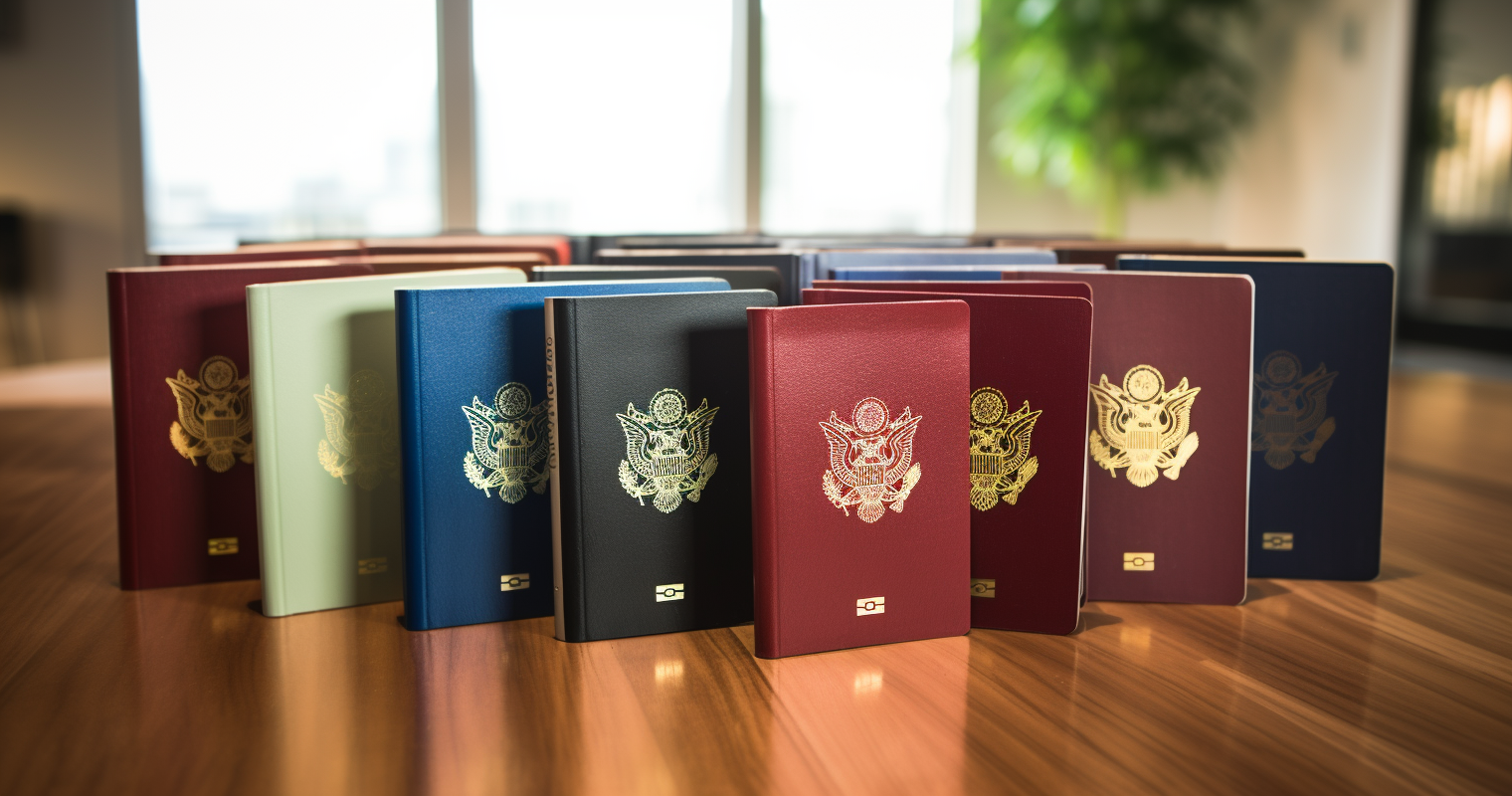
Barbados provides multiple pathways to citizenship, including naturalisation following at least five years of lawful residence, citizenship by descent for individuals with a Barbadian-born parent, and registration for spouses of Barbadian nationals. No citizenship by investment programme exists. Barbados formally permits dual nationality, so in most circumstances you will not be required to give up your existing citizenship — though you should independently confirm the rules in your home country.
| Item | Details |
|---|---|
| Minimum residency for naturalisation | 5 years (Commonwealth citizens & Irish citizens); 5+ years for others (as of 2025) |
| Application fee (naturalisation) | BDS $300 on submission; BDS $1,500 if approved (as of 2025 — verify current figures at immigration.gov.bb) |
| Citizenship by investment? | No — Barbados has no CBI programme |
| Dual citizenship permitted? | Yes — recognised under the 1966 Constitution |
| Barbados passport ranking | Visa-free or visa-on-arrival access to 165 countries (Henley Passport Index, 2025) |
| Official application body | Barbados Immigration Department (immigration.gov.bb) |
Who is eligible to apply for citizenship in Barbados?
Barbadian nationality law is governed by the 1966 Constitution of Barbados, the Barbados Citizenship Act (Cap. 186), and associated legislation. These legal instruments determine who qualifies as a Barbadian national or is entitled to become one. Four principal routes exist for prospective citizens: birth, descent, registration, and naturalisation.
Citizenship by birth
Under Section 4 of the Constitution of Barbados, citizenship is automatically granted to any individual born on Barbadian soil. This birthright entitlement does not extend, however, to children born to a father who holds diplomatic immunity and serves as a representative of a foreign state, or to those born to an enemy alien in an area of Barbados under enemy occupation at the time of birth.
Citizenship by descent
If either of your parents was born in Barbados and holds Barbadian citizenship by birth, you are considered a citizen of Barbados from birth under Section 5 of the Constitution and may apply to the Immigration Department for a Certificate of Citizenship.
Where a Barbadian citizen by descent has a child born outside Barbados, that child does not automatically inherit citizenship by descent. The child may, however, qualify for Barbadian citizenship if they have lived in Barbados for a minimum of seven years. This means the by-descent entitlement extends only one generation from a Barbadian-born parent and does not pass automatically to subsequent generations born abroad.
Citizenship by registration (marriage/civil partnership)
Nationals of Commonwealth countries or Ireland who have resided in Barbados or served in government employment for at least five years may be eligible for registration. The spouse of a Barbadian national who acquired citizenship after independence — provided she is living with her husband — may also register upon taking an Oath of Allegiance. It should be noted that Barbados’s spousal registration provisions have historically been framed in gendered language; applicants are advised to confirm current eligibility requirements directly with the Immigration Department, given that the Barbados Citizenship Bill, 2025 is currently working through Parliament and may revise these provisions.
Citizenship by naturalisation
Standard naturalisation is open to adults of full legal capacity who, during the 12 months preceding their application, have been resident in Barbados, can demonstrate good character, and intend to continue residing there. A minimum of five years of qualifying residence is required. This threshold is broadly consistent with the UK’s five-year qualifying period for settled status holders and Australia’s four-year residence requirement, making it familiar to those acquainted with those systems.
The Immigration Department requires that applicants have not been absent from Barbados for more than 90 days in any single year throughout the qualifying period. Additionally, applicants must show good character and conduct, which involves submitting a clear police clearance certificate from both Barbados and from any other country in which they have lived for more than six months during the preceding five years.
Applicants are also expected to demonstrate financial self-sufficiency, showing that they can support themselves without drawing on the Barbadian public welfare system.
Is there a citizenship by investment route?
Barbados currently has no citizenship by investment programme, though it does operate a special work visa scheme. While certain residency permits may ultimately lead to naturalisation eligibility, Barbadian nationality law does not permit the acquisition of a passport through financial investment alone. That said, meaningful financial contributions to the local economy may help accelerate the process of obtaining permanent residency, which itself provides a direct path toward naturalisation.
Pending legislative changes (2025)
On 12 August 2025, the Minister of Home Affairs introduced to Parliament both the Immigration Bill, 2025 and the Barbados Citizenship Bill, 2025, as part of a broader legislative effort to address the island’s population and skills challenges. The proposed legislation seeks to modernise immigration law by removing outdated terminology, placing established practices on a clear statutory footing, and introducing a points-based system for skilled migrants. Prospective applicants should keep a close watch on the official government website, as these Bills may alter residency thresholds and registration rights once they become law.
What are the steps involved in applying for citizenship in Barbados?
The Barbados Immigration Department, operating under the Office of the Prime Minister, is the body responsible for processing all citizenship applications. Submissions must be made in person at the Immigration Department’s headquarters in Bridgetown. The official website is immigration.gov.bb.
- Confirm your eligibility. Establish which pathway applies to your situation — whether naturalisation, descent, or registration — and verify that you satisfy the relevant residency or relationship criteria. Consult the current guidance available on the Immigration Department’s citizenship page.
- Assemble your documents. You will need to prepare a personal statement providing comprehensive details from birth to the date of your application, covering every country in which you have lived, all employment and educational history, and the names and contact details of former employers. Supporting documents include your original birth certificate, a valid passport, a marriage certificate where relevant, police clearance certificates, and medical forms for applicants aged 16 or over. Any certificates or documents not in English must be accompanied by a certified English translation.
- Arrange your photographs. Three passport-sized photographs are required. One must be certified by a Justice of the Peace or Notary Public, who should also certify the application form itself.
- Submit your application and pay the fee. A non-refundable application fee of BDS $300 is due at the point of submission. Payment by credit or debit card is accepted at the Immigration Department for applicants submitting in person in Barbados.
- Attend an interview. Following initial processing of your application, you will be called for an interview with immigration officers. This gives officials the opportunity to assess your familiarity with Barbados and evaluate how well you have integrated into Barbadian society.
- Wait for a decision. The Minister for Immigration considers each application to determine whether the standard criteria have been met and whether the applicant presents any concern regarding national security or public policy. Processing times are not formally standardised and can vary considerably; check the official website for the most current guidance.
- Pay the approval fee. Should your application be successful, a further fee of BDS $1,500 becomes payable. Always confirm the current fee schedule on the Immigration Department’s official website, as these figures are subject to revision.
- Take the Oath of Allegiance. Successful applicants must take an Oath of Allegiance before citizenship is formally conferred. This ceremony, administered by the Immigration Department, represents the final legal step in the process.
- Receive your Certificate of Naturalisation and apply for a passport. With your certificate in hand, you may then apply for a Barbadian passport, which functions as the principal evidence of your new citizenship. Passport applications are processed by the Immigration Department; current guidance is available at gov.bb/apply-passport.
Always consult the official Immigration Department website for the most up-to-date fees and document requirements, as these are reviewed and updated from time to time.
What tests, interviews, or ceremonies are required as part of the citizenship process in Barbados?
Barbados does not require applicants to sit a formal written civics or language examination — a contrast with countries such as the United States, which administers a civics test, Australia, which requires a citizenship test, or the United Kingdom, which uses the Life in the UK test. The Barbadian approach instead centres on an interview-based assessment.
There is no formal language examination, though applicants are expected to demonstrate a working command of English, which is the official language of Barbados. This requirement exists to ensure that new citizens can integrate effectively into Barbadian society and engage meaningfully in civic life.
Applicants should also have a reasonable grounding in Barbadian history, culture, and the structure of government. While no formal test is administered, immigration officials may explore this knowledge during the interview. Sensible preparation would include reading about Barbados’s history as an independent nation since 1966, its system of government, and its transition to a republic in November 2021.
Evidence of good character and conduct is required, including clean police clearance certificates from Barbados and from any country in which the applicant has lived for more than six months over the preceding five years. A medical examination is a further requirement for applicants aged 16 or over.
The Oath of Allegiance is a mandatory legal step. Taken at the Immigration Department upon approval of the application, it represents the formal act through which an applicant is accepted as a Barbadian citizen and is the prerequisite for the issuance of a Certificate of Naturalisation.
What are the benefits of citizenship in Barbados?
Acquiring Barbadian citizenship brings a wide array of rights and practical advantages that are unavailable to those holding only residency permits or temporary visas.
Right to vote and stand for public office
Barbadian citizens are entitled to participate in national elections and referendums. Citizenship also opens the door to appointment or election to positions in government, the judiciary, and the civil service that are reserved exclusively for nationals.
Freedom of movement and permanent right of residence
Unlike individuals on time-limited work permits or visas, citizens hold an unconditional and permanent right to live in Barbados. There is no need to renew immigration status, adhere to visa conditions, or face the risk of removal should employment circumstances change.
CARICOM freedom of movement
As a Barbadian national, you benefit from enhanced freedom of movement within the Caribbean Community bloc and may be entitled to rights comparable to those enjoyed by other CARICOM citizens. Holders of CARICOM passports can travel freely between member states for periods of up to 180 days.
A highly regarded travel document
As of 2025, Barbadian citizens enjoy visa-free or visa-on-arrival access to 165 countries and territories, placing the Barbadian passport 21st globally for travel freedom according to the Henley Passport Index. Among CARICOM passport holders, the Barbados passport ranks first for both travel freedom and visa-free access.
Barbados has concluded a short-stay visa waiver agreement with the European Union, permitting Barbadian citizens to visit Schengen Area countries for up to three months within any six-month period without requiring a visa. The Barbados passport is also among only two Caribbean passports that grant entry to Canada through the Electronic Travel Authorization scheme.
Access to public services and education
Citizens enjoy full access to Barbados’s publicly funded healthcare system as well as free public education. While many of these services are available to those holding valid permits, citizenship eliminates any ambiguity regarding entitlement and removes conditions attached to residency status.
Consular protection when abroad
As a citizen, you are entitled to comprehensive consular support from Barbadian embassies, high commissions, and consulates around the world should you find yourself in difficulty while travelling or living overseas.
Does Barbados allow dual citizenship, or will you have to renounce your existing nationality?
Dual nationality was acknowledged in the 1966 Constitution. Barbadian law permits dual citizenship, meaning that from Barbados’s perspective, there is generally no requirement to surrender your existing nationality when you become a Barbadian citizen.
Barbados’s acceptance of dual citizenship allows individuals to hold on to their original nationality while obtaining Barbadian citizenship through naturalisation or descent. This flexibility means that new citizens can enjoy the advantages of Barbados’s stable economy and attractive way of life without being compelled to abandon their prior citizenship.
Nevertheless, the stance of your home country matters equally. Even though Barbados is permissive on this point, it is vital to establish whether your home country accepts dual citizenship, as policies differ considerably across jurisdictions. Some countries automatically treat the voluntary acquisition of a foreign nationality as a basis for losing their own citizenship, while others impose no such restrictions. Before proceeding, you should consult your home country’s immigration authority or ministry of foreign affairs, as the implications can include automatic loss of your original nationality, forfeiture of specific rights, or complications relating to taxation and military service obligations.
As for the loss of Barbadian citizenship itself: Barbadian nationals who are 21 years of age or older and of full legal capacity may voluntarily renounce their nationality, provided they can demonstrate that they hold citizenship of another country that is not at war with Barbados. Renunciation may be declined if it would present a threat to the state.
It is also worth being aware of a meaningful distinction in terms of legal protections: citizens who acquired their status through registration do not benefit from the same constitutional safeguards against deprivation of citizenship as those who are citizens by birth or descent. While naturalised citizenship is entirely legitimate, it carries marginally different constitutional protections compared with citizenship acquired by birth.
How long does it typically take to become a citizen of Barbados?
The overall journey from first arriving in Barbados to receiving citizenship depends on your chosen pathway, how swiftly you accumulate the necessary qualifying residence, and the administrative processing times in effect at the time. The following provides a realistic outline of what to expect.
| Stage | Approximate timeframe |
|---|---|
| Establish lawful residency (work permit, immigrant status, etc.) | From arrival — varies by visa category |
| Qualifying residency period (naturalisation) | Minimum 5 years of lawful residence |
| Gather documents and submit application | Several weeks to months depending on document sourcing |
| Immigration Department processing and interview | Varies — several weeks to several months |
| Oath of Allegiance ceremony and certificate issued | Shortly after approval |
| Passport application processing | Typically a few weeks |
To qualify for ordinary naturalisation, applicants must have been resident in Barbados during the 12 months immediately before submitting their application, be of good character, and intend to remain. A minimum of five years’ residence is a prerequisite. For those who have obtained permanent residency through investment-related routes, meaningful financial engagement with the local economy may speed up the acquisition of that permanent residency status, which in turn opens the direct pathway to naturalisation. However, converting permanent residency into citizenship still requires genuine settlement on the island.
Once submitted, the Immigration Department will review your application. The time taken to reach a decision can range from several weeks to a number of months, depending on current application volumes. There is no publicly guaranteed processing timeframe, so applicants should allow additional time in their planning. For the most current information on processing times, consult the Immigration Department website, as these can change.
What are the main reasons an application for citizenship in Barbados might be refused?
The Minister for Immigration retains discretionary authority to refuse a citizenship application. The most common grounds for refusal include the following.
- Inadequate residency. An inability to demonstrate the required number of years of lawful, continuous residence — or having exceeded the permitted allowance of absences — is among the most frequent reasons applications are unsuccessful. The Immigration Department specifies that applicants must not have been absent from Barbados for more than 90 days in any year of the qualifying period.
- Character concerns or criminal history. All applicants must be able to demonstrate good character. A criminal conviction, particularly of a serious nature, whether in Barbados or in another country, is likely to lead to refusal. Police clearance certificates are required from every country of prior residence.
- National security or public policy considerations. The Minister for Immigration assesses whether an applicant may pose a threat to national security or to the public interest. This is a broad discretionary ground that may encompass a wide range of concerns beyond criminal history alone.
- Incomplete or inaccurate documentation. A common source of difficulty is failure to supply a complete set of documents, particularly evidence of uninterrupted residency. Missing paperwork, discrepancies in names across certificates, or the absence of certified English translations of foreign documents are procedural issues that can delay or derail an application.
- Fraudulent information in the application. Citizenship may be refused — or, once granted, subsequently revoked — on grounds including treason or disloyalty, criminal acts, fraud in the application process, or service to a foreign military or government. Providing misleading or false information at any stage carries serious consequences.
- Failure to demonstrate financial self-sufficiency. Applicants who cannot show that they are capable of supporting themselves financially may be refused on the basis that they would place an undue burden on public services.
Barbados does not publish a formally structured and publicly accessible appeals process for refused citizenship applications. If your application is unsuccessful, it is strongly advisable to seek guidance from a qualified Barbadian lawyer with expertise in immigration and nationality law before reapplying or pursuing any form of challenge.
Where can you find reliable, up-to-date information about citizenship in Barbados?
Fees, requirements, and processing timelines are subject to revision — and with the Barbados Citizenship Bill, 2025 currently before Parliament, the legislative landscape may shift substantially in the near future. Only official government sources should be treated as authoritative.
- Barbados Immigration Department — the primary official authority for all citizenship and naturalisation matters: immigration.gov.bb/pages/Citizenship.aspx
- Government of Barbados official portal — for passport applications and broader government services: gov.bb
- Ministry of Foreign Affairs and Foreign Trade of Barbados — for consular services and applications made from overseas: foreign.gov.bb
- Barbados Parliament Bills Archive — to follow the progress of the Citizenship Bill, 2025: barbadosparliament.com
- Barbados Law Courts — Statutes — for the full text of the current Barbados Citizenship Act, Cap. 186: barbadoslawcourts.gov.bb
Blogs, online forums, and third-party migration websites may provide useful background context but should never be the basis for decisions about specific fees, procedural requirements, or eligibility criteria. The Immigration Department’s website and official Barbadian diplomatic missions abroad remain the only reliable and authoritative sources of current information.
Frequently asked questions
Do children born in Barbados automatically acquire citizenship?
Section 4 of the Constitution of Barbados automatically confers citizenship on any individual born on Barbadian territory. The principal exceptions cover children born to fathers who hold diplomatic immunity and represent a foreign state, or those born to enemy aliens in an area under enemy occupation. Children of unknown parentage discovered in Barbados — foundlings — are also generally treated as citizens by birth.
Can citizenship be lost or revoked?
Barbadian nationals may be stripped of their citizenship in cases involving treason or disloyalty, serious criminal offences, fraud committed during the naturalisation process, or service rendered to a foreign military or government. Of particular note, citizens who obtained their status by registration do not enjoy the same constitutional protections against deprivation of citizenship as those who are citizens by birth or descent.
What happens if I move abroad while my citizenship application is being processed?
The naturalisation requirement specifies that applicants must have been resident in Barbados during the 12 months preceding submission of their application. Relocating overseas before or during the processing period could compromise the continuous residency requirement and put your application at risk. If travel abroad is unavoidable during this time, seek advice from the Immigration Department or a qualified lawyer beforehand.
Can I apply for citizenship from outside Barbados?
If you are living abroad and wish to claim citizenship by descent, physical presence in Barbados is not required to submit your application. You should contact the nearest Barbadian embassy, consulate, or High Commission for assistance. For naturalisation applications, you will ordinarily need to be residing in Barbados, since in-person attendance is required at several stages of the process.
Are minor children included in a parent’s citizenship application?
Minor children of a Barbadian national may be registered as citizens at the discretion of the Minister for Immigration. Parents should include documentation for their children as part of, or alongside, the main application — including birth certificates and certified photographs. If the application forms are signed by anyone other than the parents, a notarised consent letter is required.
Does Barbados have a citizenship by investment programme?
No citizenship by investment programme currently exists in Barbados, although a special work visa scheme is available. While direct acquisition of a Barbadian passport through financial investment is not possible, certain programmes allow investors to secure permanent residency, which in turn creates a pathway to citizenship through naturalisation.
How does Barbados’s residency requirement compare with other countries?
Ordinary naturalisation in Barbados requires a minimum of five years of lawful residency. This places Barbados in line with the United Kingdom, which also requires five years of qualifying residence for settled status holders seeking naturalisation. Australia mandates four years of lawful residence, and the United States typically requires five years of lawful permanent residence. Barbados’s threshold therefore falls squarely within the mainstream of international practice.
Will I need to pay tax in Barbados as a citizen?
Tax liability in Barbados is determined primarily by residency and the source of income rather than by citizenship alone. Barbados applies a territorial tax system, which differs fundamentally from the approach taken by countries such as the United States, which taxes its citizens on worldwide income regardless of where they are based. It is strongly advisable to consult a qualified tax professional with expertise in both Barbadian and your home country’s tax regulations before making any decisions.
What is the Barbados Citizenship Bill, 2025, and how might it affect my application?
On 12 August 2025, the Minister of Home Affairs laid before Parliament both the Immigration Bill, 2025 and the Barbados Citizenship Bill, 2025, as part of a package of measures designed to tackle the population and skills challenges facing the island. Among its key proposals, the Bill would grant the right of registration as a citizen to any person who has held immigrant status for at least three years prior to the legislation coming into force. Those with immigrant status who do not fall into that category would be eligible to apply for permanent residency, with a statutory route from there to Barbadian citizenship. Until these Bills are enacted, the existing law continues to apply. Keep up to date by monitoring barbadosparliament.com and the Immigration Department website.
Can I hold a Barbados passport and a passport from my home country at the same time?
Under Barbadian law, dual citizenship is permitted, so from Barbados’s standpoint you may hold both documents concurrently. Whether your home country allows this is an entirely separate question governed by its own laws. Some countries treat the voluntary acquisition of another nationality as grounds for automatic loss of their own citizenship — you must verify the position with your home country’s immigration authority or ministry of foreign affairs before submitting a citizenship application in Barbados.