
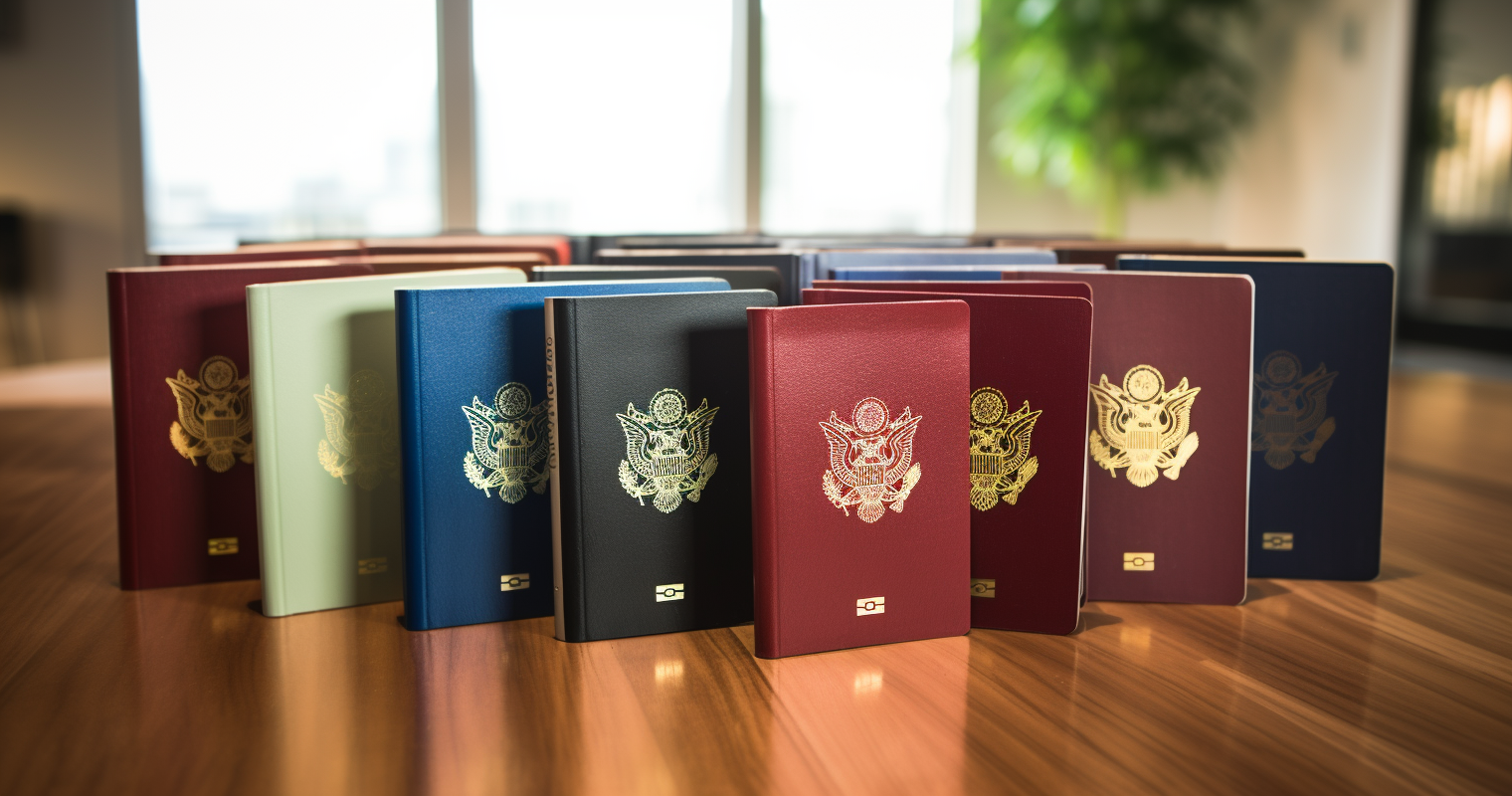
Acquiring citizenship in Hong Kong is synonymous with becoming a Chinese national, since Hong Kong has no distinct citizenship of its own. For foreign residents, the principal pathway is naturalisation through the Hong Kong Immigration Department, which typically demands long-term residence, close family connections, or other valid grounds. Because the People’s Republic of China does not formally recognise dual nationality, the majority of successful applicants are obliged to relinquish their original nationality.
| Item | Details |
|---|---|
| Citizenship type | Chinese nationality (no separate Hong Kong citizenship exists) |
| Minimum residency (general) | 7 years of ordinary residence in Hong Kong |
| Application fee (as of 2025) | HK$3,460 total (HK$1,730 initial, non-refundable; balance due on approval) |
| Processing authority | Hong Kong Immigration Department (IMMD) |
| Dual nationality | Not officially recognised; renunciation of prior nationality generally required |
| HKSAR passport travel access (as of 2026) | Visa-free or visa-on-arrival access to 175 countries and territories |
Who is eligible to apply for citizenship in Hong Kong?
“Hong Kong citizenship” has no existence as an independent legal status. Because sovereignty over Hong Kong rests with the People’s Republic of China, residents are Chinese nationals who hold a right of domicile in Hong Kong. For those who do not already hold Chinese nationality, the route to citizenship lies through naturalisation under the Nationality Law of the People’s Republic of China.
Foreign nationals seeking to become Chinese citizens may do so under Article 7 of the Chinese Nationality Law, provided they satisfy certain qualifying conditions. Article 7 sets out three possible avenues through which a non-Chinese person can acquire Chinese citizenship: having a close relative who is a Chinese national; being a long-term resident of China, which encompasses Hong Kong; or having other relevant circumstances.
In practical terms, foreign nationals may naturalise if they have an immediate family member who holds Chinese nationality, if they hold permanent residency in mainland China or in one of its special administrative regions, or if they can demonstrate other “legitimate reasons”. This means that simply holding Hong Kong Permanent Residency — the Right of Abode — after seven years represents a compelling but not automatically decisive basis for a naturalisation bid.
According to the Hong Kong Immigration Department, every application is weighed individually on its own merits. The factors examined include: whether the applicant has a close relative who is a Chinese national with the right of abode in Hong Kong; whether the applicant holds the right of abode in Hong Kong; whether the applicant habitually resides in Hong Kong; whether the primary members of the applicant’s family are based in Hong Kong; whether the applicant has a reliable income; whether they have fulfilled their tax obligations in accordance with the law; whether they are of good character and sound mind; whether they possess adequate knowledge of the Chinese language; and whether they genuinely intend to continue living in Hong Kong.
Additional supporting circumstances can strengthen a naturalisation application, including owning a business or property in Hong Kong or on the mainland, being married to a person of Chinese ethnicity, or being able to communicate in Chinese. Unlike systems in countries such as Australia or Germany — where a minimum period of residence combined with a language test and a civics examination forms the standard qualifying benchmark — naturalisation in Hong Kong is a largely discretionary process with no single automatic threshold that unlocks approval.
The standard eligibility criteria for permanent residency — a factor that significantly reinforces a naturalisation application — require a non-Chinese citizen to have resided continuously in Hong Kong for at least seven years while having established Hong Kong as their permanent home. Certain categories of person, including foreign domestic helpers and officials from the mainland government, are expressly excluded from qualifying for Hong Kong permanent resident status.
By descent, any individual born within the PRC automatically receives Chinese nationality at birth if at least one parent is a Chinese national. Children born abroad to at least one Chinese parent are also Chinese nationals, unless they hold foreign citizenship at birth and the Chinese-national parent has acquired either permanent residency overseas or foreign citizenship.
The acquisition of permanent residency by birth follows a modified framework: Chinese nationals born in Hong Kong become permanent residents automatically, while foreign nationals born in Hong Kong must have at least one parent who holds the right of abode. The entitlement to right of abode solely by virtue of birth in Hong Kong was eliminated following the handover. In general, no right of abode arises from birth in Hong Kong alone unless both parents hold Chinese nationality.
What are the steps involved in applying for citizenship in Hong Kong?
In Hong Kong, all naturalisation applications are administered by the Immigration Department in accordance with the Chinese Nationality (Miscellaneous Provisions) Ordinance (Cap. 540 of the Laws of Hong Kong). The procedure unfolds across several distinct phases, beginning with establishing permanent residency and culminating in the issuance of a Certificate of Naturalisation.
- Establish Hong Kong Permanent Residency (Right of Abode). A foreign national seeking permanent residency must have ordinarily resided in Hong Kong for a continuous period of at least seven years. Once eligible, submit Form ROP 145 (for non-Chinese applicants) to confirm entitlement to a permanent identity card. Processing normally takes around six weeks provided all supporting documentation is in order, though more complex cases or high volumes of applications may extend this timeline.
- Obtain a Hong Kong Permanent Identity Card. Once eligibility for a permanent identity card has been confirmed, any existing conditions on the applicant’s stay are lifted. Applicants aged 11 or over must attend the Registration of Persons Office in person to complete their permanent identity card application.
- Prepare your naturalisation application. Assemble all required supporting materials, which may include your HKID card, birth certificate, passport or travel documents, evidence of financial means, proof of any close relationship with a Chinese national, and any other documentation requested by the Department. Applicants aged 18 or over should complete form ID 874 themselves; for those under 18, the form must be completed by a parent or legal guardian.
- Submit the application and pay the initial fee. Applications submitted by post to the HKSAR Immigration Department should include photocopies only — original documents must not be mailed and will be required for verification at a later interview. The total application fee is HK$3,460 (as of 2025), split into an initial non-refundable payment of HK$1,730 due at the time of application and a further HK$1,730 payable upon issuance of the Certificate of Naturalisation, subject to confirmation that the applicant no longer holds foreign nationality. Applications may also be lodged online via the GovHK portal, or through a Chinese Diplomatic or Consular Mission when applying from abroad.
- Attend an interview. The Immigration Department will arrange an interview at a later stage. The purpose of this meeting is to verify the applicant’s circumstances, evaluate their connections to Hong Kong, gauge their language ability, and confirm their intention to remain in the territory.
- Renounce your existing nationality. After the Immigration Department issues written confirmation that the application will be approved, the applicant must formally surrender their current citizenship and submit evidence of having done so. The Certificate of Naturalisation is then issued upon receipt of that proof.
- Apply for a permanent identity card and HKSAR passport. Following the grant of Chinese citizenship through the Certificate of Naturalisation, the applicant must apply for an updated identity card. They are then automatically entitled to apply for an HKSAR passport by completing the relevant application form through the Immigration Department.
Always consult the HKSAR Immigration Department’s official website for the most current fees, forms, and processing times, as these details are subject to revision.
What tests, interviews, or ceremonies are required as part of the citizenship process in Hong Kong?
Hong Kong’s naturalisation process does not replicate the structured, examination-based model found in countries such as the United States — where applicants sit a formal civics test — or the United Kingdom, which requires candidates to pass a Life in the UK test alongside a recognised language qualification. The approach in Hong Kong is instead holistic and conducted through interview.
The Immigration Department considers whether an applicant commands sufficient knowledge of the Chinese language as part of its overall assessment. This is not evaluated by way of a standardised external examination; rather, a departmental officer will judge the applicant’s practical ability to communicate in Chinese — either Cantonese or Mandarin — during the interview itself.
Applicants are required to disclose all criminal convictions handed down by any court, whether in Hong Kong or overseas, for any offence they have committed. This disclosure forms part of the character evaluation, and a comprehensive background check is carried out during the application process.
There is no formal public oath-taking ceremony of the kind conducted in Australia or Canada as part of becoming a citizen. The confirmation of citizenship is handled administratively: once the application is approved and proof of prior nationality renunciation has been provided, a Certificate of Naturalisation is issued. Applicants should expect at least one face-to-face interview with an Immigration Department officer, who will verify documents and assess the applicant’s ties to Hong Kong.
While only one of the criteria specified in Article 7 technically needs to be satisfied, in practice the Immigration Department will seek to establish that more than one applies. Officers therefore use the interview to form a rounded picture of the applicant’s life in Hong Kong, encompassing employment history, family circumstances, language proficiency, and long-term intentions for residence.
What are the benefits of citizenship in Hong Kong?
Obtaining Chinese nationality via the Hong Kong naturalisation route confers both benefits specific to Hong Kong and broader entitlements as a Chinese national. Those who naturalise successfully acquire the same rights as persons who were Chinese nationals from birth.
Right to an HKSAR Passport and travel access. Hong Kong issues its own passport, but the territory has no citizenship of its own. Naturalisation as a Chinese national is a prerequisite for eligibility to hold a Hong Kong passport. As of 2026, HKSAR passport holders enjoy visa-free or visa-on-arrival access to 175 countries and territories, placing the document 13th globally according to the Henley Passport Index. This gives the HKSAR passport substantially greater travel reach than a standard mainland Chinese passport — as of 2025, mainland Chinese residents may visit 83 destinations without obtaining a visa in advance.
Right of Abode and immunity from deportation. Permanent residents have an unrestricted right to live and work in Hong Kong and cannot be removed from the territory regardless of their nationality. Naturalised citizens who hold Chinese nationality enjoy this right unconditionally, without any risk of forfeiting it through prolonged absence — a vulnerability to which non-Chinese permanent residents remain exposed.
Protection against automatic loss of permanent residency. Foreign permanent residents who naturalise as Chinese nationals become exempt from the automatic forfeiture of their right of abode, though they must relinquish their previous nationality upon successful application. Non-Chinese permanent residents automatically lose their right of abode if they have been absent from Hong Kong for more than 36 months following the cessation of ordinary residence there. Naturalised citizens are not bound by this rule.
Access to the full range of public rights. Legal entitlements in Hong Kong derive from the statuses of Chinese nationality and Hong Kong permanent residence and are not contingent on ethnicity. Persons who are not of Chinese descent may qualify for permanent residence in Hong Kong and may also apply for naturalisation as Chinese nationals; if successful, they will enjoy the same legal rights in Hong Kong as individuals born there of Chinese heritage.
Eligibility for public roles. Chinese nationality is a prerequisite for certain public appointments, including standing for election to the Legislative Council and holding senior positions in government. Permanent residents who do not hold Chinese nationality are disqualified from these roles.
Travel to mainland China. As a Chinese national holding Hong Kong permanent residency, travel between Hong Kong and mainland China is conducted using a Mainland Travel Permit (回鄉證, widely known as the Home Return Card) rather than a foreign passport or visa. This simplifies cross-border movement considerably for those who travel frequently between the two territories.
Does Hong Kong allow dual citizenship, or will you have to renounce your existing nationality?
The PRC does not recognise dual nationality and actively discouraged the practice through treaties concluded with Indonesia, Nepal, and Mongolia in the 1950s. This foundational position remains in force and applies equally to naturalisation through Hong Kong. In the overwhelming majority of cases, applicants are required to surrender their existing nationality before their Certificate of Naturalisation is issued.
Article 8 of the Nationality Law of the PRC obliges foreigners to renounce their original nationality upon acquiring Chinese citizenship. This is a substantive legal requirement rather than a procedural formality: the remaining balance of the application fee is only collected at the point of issuing the Certificate of Naturalisation, and this is conditional on proof that the applicant has not retained their prior foreign nationality.
There is, however, a significant historical exception that applies to certain long-standing Hong Kong residents. Many individuals in Hong Kong held foreign nationality under the laws of other states before the territory’s return to the PRC in 1997. These individuals were permitted to keep such nationalities, producing a sizeable cohort of Hong Kong residents holding foreign — most commonly British or Portuguese — nationality alongside Chinese nationality.
The Chinese Nationality Law does not accommodate dual citizenship. However, the Standing Committee of the National People’s Congress has issued explanatory guidance on the implementation of the Chinese Nationality Law in the Hong Kong SAR, under which HKSAR passport holders may hold a passport issued by another country without forfeiting their Chinese nationality. That foreign passport is not, however, recognised while the holder is in Hong Kong, and such individuals are treated as Chinese nationals without any entitlement to consular protection from the foreign state.
This creates a practical distinction between physically holding a foreign passport and having that foreign nationality given recognition by Chinese authorities in Hong Kong. Many long-established Hong Kong residents hold both an HKSAR passport and, for instance, a British National (Overseas) document, but the foreign document carries no legal standing within Hong Kong or mainland China.
The laws of your home country are also directly relevant. Certain countries — including Canada, Australia, and numerous EU member states — permit their nationals to hold the citizenship of another country without losing their original status. Others require formal renunciation. Before proceeding with a naturalisation application, you should consult your home country’s official immigration or foreign affairs authority to understand how acquiring Chinese nationality may affect your existing citizenship. Do not assume that your original nationality will be automatically preserved or automatically extinguished — the rules differ considerably from one country to another.
How long does it typically take to become a citizen of Hong Kong?
The overall journey from first arriving in Hong Kong to receiving a Certificate of Naturalisation is a lengthy one, and prospective applicants are advised to plan well ahead. Unlike some other jurisdictions, there is no expedited investor or exceptional talent pathway that circumvents the residency requirement for citizenship.
Stage 1 — Accumulating ordinary residence (minimum 7 years). Foreign nationals seeking permanent residency must have ordinarily resided in Hong Kong for a continuous period of no less than seven years. Travel and periods of absence do not necessarily interrupt this qualifying period. Ordinary residence is maintained even during temporary absences — for holidays, business travel, or study exchanges — provided the applicant can demonstrate that Hong Kong remains their settled home and that departures are temporary in nature.
Stage 2 — Permanent Residency (Right of Abode) application (approximately 6 weeks). Once all supporting documentation is in order, this stage typically takes around six weeks to complete, though cases involving greater complexity or periods of higher application volumes may take somewhat longer. This stage is a prerequisite for, or at minimum runs concurrently with, the naturalisation application.
Stage 3 — Naturalisation application (variable). The Immigration Department does not publish a fixed timeframe for processing naturalisation applications. Because each case is assessed individually and may necessitate multiple interviews, document verifications, and coordination with mainland authorities, the process can extend well beyond the permanent residency stage — often running to many months, and potentially longer in more involved cases. Consult the official Immigration Department website for the most current guidance on expected processing times, as these are subject to change.
Realistic overall timeline. A typical applicant should allow for a minimum of seven to eight years from their arrival in Hong Kong as a resident to the receipt of citizenship — and that estimate presumes a straightforward case with no complications. Applicants who already have strong existing ties to Hong Kong, such as a spouse who is a Chinese national with the right of abode or children who hold Chinese nationality, may present stronger cases, but they remain subject to the same overall process.
What are the main reasons an application for citizenship in Hong Kong might be refused?
Naturalisation applications in Hong Kong are refused more often than in many comparable jurisdictions, in part because the process is discretionary rather than rights-based. Satisfying a single criterion does not guarantee approval.
There have been cases in which non-ethnic Chinese applicants have been unable to obtain Chinese citizenship. Although only one of Article 7’s criteria technically needs to be met, in practice the Immigration Department looks to satisfy multiple criteria. A number of failed naturalisations have involved ethnic minorities who grew up in Hong Kong and considered themselves Hongkongers, yet whose applications were nonetheless rejected.
Common grounds for refusal include:
- Insufficient ties to Hong Kong. If the Immigration Department judges that an applicant’s family, employment, financial, or social connections to Hong Kong are not sufficiently strong, the application is likely to fail even where the residency threshold has been met.
- Criminal record. Applicants must declare all convictions recorded against them by any court, whether in Hong Kong or abroad, for any crime or offence. A significant criminal history — wherever it was incurred — is a frequent basis for refusal.
- Inadequate Chinese language ability. The Immigration Department assesses whether applicants have sufficient knowledge of the Chinese language. A demonstrable inability to communicate in either Cantonese or Mandarin significantly undermines an application.
- Tax non-compliance. The Immigration Department may require applicants to demonstrate that all taxes levied upon them have been duly paid. This consideration applies equally to naturalisation applications.
- Failure to show genuine intention to remain in Hong Kong. An inability to persuade the Department that the applicant genuinely intends to continue living in Hong Kong following naturalisation represents a significant obstacle to approval.
- Incomplete documentation. Absent or unverified documents will delay or prevent the processing of an application. If insufficient information is provided, the Immigration Department may be unable to progress the case.
There is no formal statutory appeals mechanism for refused naturalisation applications equivalent to the immigration appeal tribunals that exist in countries such as the UK or Canada. However, cases have arisen in which a rejected application was subsequently overturned on grounds of racial discrimination under the Race Discrimination Ordinance, Cap. 602. If you believe a refusal was unlawful or procedurally defective, you should seek advice from a qualified Hong Kong immigration lawyer.
Where can you find reliable, up-to-date information about citizenship in Hong Kong?
Given that fees, processing times, and procedural requirements are subject to frequent revision, you should always consult official government sources rather than relying solely on third-party guides — including this article. Official channels remain the only authoritative reference for current requirements.
- Hong Kong Immigration Department (IMMD) — The principal authority for all matters relating to nationality, permanent residency, and passport applications in Hong Kong. Its website provides official guidance, application forms, fee schedules, and processing time estimates. Visit: immd.gov.hk — Naturalisation as a Chinese National
- GovHK Online Application Portal — The official portal for submitting naturalisation applications online and accessing a range of government services: gov.hk — Online Naturalisation Application
- Right of Abode eligibility guidance — For information on permanent residency eligibility, visit: immd.gov.hk — Eligibility for Right of Abode
- Community Legal Information Centre (CLIC) — Maintained by the University of Hong Kong, CLIC offers plain-language explanations of Hong Kong nationality and immigration law, which can be helpful for understanding the broader legal framework: clic.org.hk — Chinese Nationality FAQs
- HKSAR Passport visa-free access list — For information on the travel access available to HKSAR passport holders: immd.gov.hk — Visa-free Access for HKSAR Passport
For questions about how acquiring Chinese nationality may affect your existing citizenship, contact your home country’s official immigration authority, embassy, or consulate in Hong Kong. Do not rely on unofficial forums or community advice for this question, as the rules vary considerably from country to country.
Frequently asked questions about citizenship in Hong Kong
Do children born in Hong Kong automatically acquire citizenship or permanent residency?
The automatic entitlement to right of abode by birth alone in Hong Kong was removed following reunification. No right of abode arises purely from being born in Hong Kong unless both parents hold Chinese nationality. A foreign national who has entered Hong Kong with a valid travel document, has ordinarily resided there for at least seven years, and has made Hong Kong their permanent home may qualify for permanent residency on that basis. A child born in Hong Kong to two non-Chinese parents will not, however, automatically be a Hong Kong permanent resident.
Can I apply for citizenship without first obtaining permanent residency?
Permanent residency (Right of Abode) and naturalisation as a Chinese national are closely interrelated but remain technically separate processes. Nonetheless, holding the right of abode in Hong Kong is among the most significant factors the Immigration Department weighs when evaluating a naturalisation application — it is explicitly listed as one of the key criteria assessed. In practice, the great majority of successful naturalisation applicants are also permanent residents.
Is there a citizenship-by-investment route in Hong Kong?
No formal citizenship-by-investment programme exists in Hong Kong. Unlike certain other jurisdictions that offer expedited citizenship or residency in return for capital investment, while the ownership of a business or property in Hong Kong may be taken into account as a supporting factor in a naturalisation application, no investment on its own is sufficient to secure citizenship. Every application is evaluated holistically on its individual merits.
Can citizenship be lost or revoked after it is granted?
Chinese nationals with mainland residency who voluntarily acquire foreign citizenship automatically lose their Chinese nationality. Chinese nationals holding the right of abode in Hong Kong may only be stripped of that status if they cease to hold Chinese nationality. In practical terms, a naturalised citizen in Hong Kong who later voluntarily acquires foreign citizenship risks losing Chinese nationality and, with it, their right of abode.
What happens to my naturalisation application if I move abroad during the process?
While applicants are ordinarily present in Hong Kong when lodging a naturalisation application, it is possible to apply from outside Hong Kong. Where the applicant is abroad, they must provide the name and address of a local referee whom the Immigration Department can contact to produce original documents for verification. That said, an extended absence from Hong Kong during the application process is likely to weaken the case considerably, as continued habitual residence in Hong Kong is a key factor in the assessment.
Will I lose my existing passport immediately when I apply?
No. The process of transitioning from your current nationality to Chinese nationality is structured so as to prevent statelessness. Both your home country’s consular authorities and the Hong Kong Immigration Department are expected to cooperate to avoid this outcome. The obligation to renounce your prior nationality arises only after you have received written confirmation that your application has been approved, and proof of that renunciation must be furnished before the Certificate of Naturalisation is formally issued.
Do I need to speak Cantonese, or is Mandarin acceptable?
The Immigration Department requires applicants to demonstrate sufficient knowledge of the Chinese language but does not mandate a particular dialect. Both Cantonese and Mandarin (Putonghua) are forms of Chinese, and either may be spoken during the interview. Since Cantonese is the predominant spoken language in Hong Kong, a functional command of Cantonese is generally recommended, though proficiency in Mandarin is also viewed favourably.
Can foreign domestic helpers or mainland Chinese government officials apply for naturalisation?
Certain occupational categories — including foreign domestic helpers and officials from the mainland Chinese government — are expressly excluded from qualifying for Hong Kong permanent resident status. Since permanent residency is a critical supporting factor in naturalisation applications, these individuals face a substantial structural obstacle to obtaining citizenship through the standard naturalisation route.
Does a BN(O) passport count as foreign nationality that must be renounced?
This is a nuanced area. China did not recognise British nationality acquired under the British Nationality Selection Scheme, and holders of such nationality acquired under that scheme continue to be regarded as Chinese nationals under Hong Kong and Chinese law. Their UK passports carry no recognition in Hong Kong or elsewhere in China, and those individuals are not entitled to UK government protection anywhere within China. Individuals who acquired full British citizenship through routes other than the selection scheme should obtain specific legal advice on how this affects both their naturalisation application and their dual nationality position.
Are there any age-related special rules for children applying for citizenship?
Applicants aged 18 or over should complete form ID 874 in their own name. For those under 18, the form must be completed by a parent or legal guardian on the applicant’s behalf. Children holding foreign nationality who were born in Hong Kong and who hold permanent residency by descent automatically lose their right of abode upon turning 21, at which point they are granted the right to land. They may subsequently seek to re-establish the right of abode on the basis of a seven-year period of residence.
Where do I travel to mainland China once I become a Chinese national in Hong Kong?
Once you hold Chinese nationality and Hong Kong permanent residency, you no longer use a foreign passport to enter mainland China. Instead, you apply for a Mainland Travel Permit (回鄉證), issued by the Immigration Department, which serves as the standard travel document for Hong Kong residents visiting the mainland. Although mainland China, Hong Kong, and Macau constitute a single country, freedom of movement across all three jurisdictions is not guaranteed for Chinese citizens; each maintains its own immigration regime and retains the right to refuse entry to Chinese citizens who are not ordinarily resident within that particular territory.