
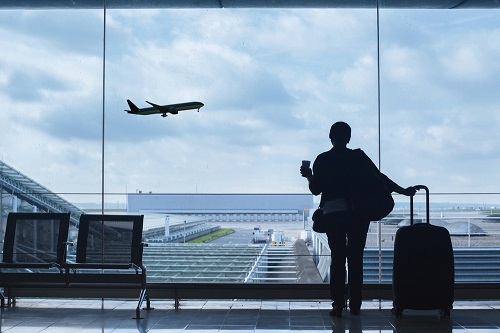
Hong Kong is anchored by a single, outstanding international airport — Hong Kong International Airport (HKIA) at Chek Lap Kok — which functions as one of Asia’s foremost aviation gateways. Given that Hong Kong is a compact Special Administrative Region with superb road, rail, and ferry infrastructure, no domestic air network exists within the territory. For expats, flying is almost entirely an international affair: remarkable connections to mainland China, across Asia, and around the globe, from an airport that consistently ranks among the finest on earth.
| Item | Details |
|---|---|
| Main international airport | Hong Kong International Airport (HKIA / HKG), Chek Lap Kok, Lantau Island |
| Daily flight movements (as of 2025) | Over 1,100 daily flights by 120+ airlines to 220+ destinations worldwide |
| Airport Express fare to city centre (as of June 2025) | HKD 130 (one-way) to Hong Kong Station; approx. 24-minute journey |
| Domestic air travel within HK territory | Not applicable — Hong Kong is a single, compact urban territory |
| Flag carrier | Cathay Pacific (Oneworld alliance) |
| Low-cost carrier | HK Express (Cathay Pacific subsidiary); Greater Bay Airlines |
| Airport accolades (2025) | World’s Leading Airport – Customer Experience 2025 (World Travel Awards) |
What is domestic air travel in Hong Kong like, and which routes are served?
Hong Kong has no domestic aviation network in the traditional sense. As a Special Administrative Region encompassing a relatively small, densely linked peninsula and a scattering of islands, the territory is thoroughly covered by road, rail, ferry, and bus services — rendering scheduled internal air routes entirely superfluous. Nothing comparable to the short-distance domestic flight networks found in large continental nations such as Australia, the United States, or India exists here.
What Hong Kong possesses in extraordinary measure is regional and international air connectivity. Hong Kong International Airport spans a network of over 220 destinations worldwide through more than 1,100 daily flights operated by more than 120 airlines, ranking it among the most globally connected airports anywhere in Asia. For the majority of expats, the relevant question is how to reach mainland Chinese cities, Southeast Asian destinations, Europe, or further afield — and HKIA performs at the highest level on all such journeys.
Residents of Hong Kong’s outlying islands — including Lantau, Cheung Chau, and Lamma — travel to the main urban area by ferry rather than by air. These ferry services run frequently, cost relatively little, and integrate smoothly into everyday routines. Expats considering a move to one of Hong Kong’s quieter island communities should plan around ferry timetables rather than flight schedules when thinking about their daily commute.
Hong Kong Airlines has expressed its intention to leverage the airport city infrastructure at HKIA and the surrounding aviation ecosystem to strengthen ties with cities in the Greater Bay Area, advancing intermodal travel concepts such as seamless “air-land-air” connections via the Hong Kong–Zhuhai–Macau Bridge. This reflects broader reality: for cross-border travel to Macau, Shenzhen, Guangzhou, and other Pearl River Delta destinations, residents typically use road and rail crossings or ferry services rather than domestic flights.
Which airlines operate routes from Hong Kong, and are low-cost carriers available?
Hong Kong’s national carrier is Cathay Pacific, a full-service airline and member of the global Oneworld alliance. Cathay Pacific, Hong Kong Airlines, and China Eastern together maintain a robust network of non-stop services to China, with Cathay Pacific running year-round flights to Chengdu, Beijing, Chongqing, Guangzhou, Haikou, Hangzhou, Nanjing, Ningbo, Qingdao, Shanghai, Wuhan, Xi’an, and Xiamen, among other cities. Cathay Pacific also operates extensive long-haul services to Europe, North America, the Middle East, Africa, and Australasia, making it the airline most frequently chosen by expats travelling to and from their countries of origin.
Hong Kong Airlines, based in Hong Kong and operating from HKIA, serves a network of 33 destinations as of November 2025 — comprising one domestic route within China and 32 international routes across 14 countries. Its operations focus largely on key Asian cities such as Tokyo, Bangkok, and Seoul, supplemented by selected long-haul services to Vancouver, Sydney, and Malé. The carrier underwent significant restructuring from 2019 onwards and has since been on a steady path of expansion.
For travellers keeping a close eye on their budget, Hong Kong offers a genuine low-cost carrier alternative: HK Express, a subsidiary of Cathay Pacific, operates an expanding portfolio of affordable routes throughout Asia. HK Express delivers competitive pricing by unbundling its fares, charging only for the services a passenger actually selects — a model well-established among European budget carriers such as Ryanair and easyJet, and Southeast Asian operators such as AirAsia. Greater Bay Airlines is another Hong Kong-based operator providing regional services, particularly to mainland China and Northeast Asian destinations.
More than 95 international airlines schedule around 900 passenger and all-cargo flights daily between Hong Kong and approximately 160 destinations across the globe. This means expats are far from reliant on Hong Kong-registered carriers — major global names including Emirates, Singapore Airlines, Thai Airways, Japan Airlines, Korean Air, Air France, British Airways, Lufthansa, United Airlines, and numerous others all serve HKIA regularly. The resulting competition keeps fares on popular corridors broadly reasonable, particularly on high-frequency routes such as Hong Kong–Tokyo, Hong Kong–Seoul, and Hong Kong–Singapore.
The single busiest international route in 2024 was Hong Kong (HKG) to Taipei (TPE), recording 6.8 million seats and a 48% capacity increase between 2023 and 2024. Cathay Pacific led the market on this route with 42% of available seats, followed by EVA Airways at 21% and China Airlines at 12.6%. This degree of competition on key routes benefits expats who travel frequently.
How do you book flights from Hong Kong — what are the options and booking platforms?
Reserving flights from Hong Kong is a straightforward process, and residents have access to the complete spectrum of global booking channels. The most direct approach is purchasing through airline websites directly — Cathay Pacific (cathaypacific.com), HK Express (hkexpress.com), Hong Kong Airlines (hongkongairlines.com), and Greater Bay Airlines (gba.com) all provide online booking facilities alongside regular promotional fare offers.
Major global online travel agencies (OTAs) familiar to residents elsewhere — including Expedia, Skyscanner, Google Flights, and Booking.com — operate without restriction in Hong Kong and are widely used for cross-carrier price comparisons. Trip.com (formerly Ctrip) enjoys particular popularity in the region for both flights and hotels, and frequently features competitive fares on routes to mainland China and across Asia more broadly.
Klook and KKday are Asia-based platforms primarily associated with activities and experiences, but they also sell Airport Express tickets and various flight-adjacent products. Booking Airport Express tickets through these platforms often yields a discount compared to standard pricing; based on user experience, savings of at least 10% are common, and promotional offers can bring discounts as high as 30%.
Traditional travel agents continue to serve a practical purpose in Hong Kong, especially for multi-leg itineraries or group travel. The city supports a well-established travel services sector with agencies spread throughout commercial districts. For standard direct bookings on popular routes, however, booking online — whether via airline sites or OTAs — typically delivers the best combination of speed and value. During high-demand travel periods such as Lunar New Year, China’s Golden Week (early October), and the summer months, booking well ahead is strongly advisable as both fares and seat availability deteriorate quickly.
One particularly useful feature available to Hong Kong departing passengers is the Airport Express In-Town Check-In service: travellers flying with participating airlines such as Cathay Pacific or Hong Kong Airlines may check their luggage at Hong Kong Station or Kowloon Station before travelling to the airport. This convenience is rarely available in other cities and meaningfully reduces the pressure of airport departures.
What do flights from Hong Kong typically cost, and what should expats budget for?
Flight prices out of Hong Kong differ considerably based on route, season, carrier, and lead time. As a broad indicator, short-haul regional fares on budget carriers such as HK Express can be extremely low — flash-sale fares to destinations like Tokyo, Osaka, Bangkok, or Taipei occasionally start from as little as HKD 300–600 (approximately USD 40–80) one-way, though such prices are promotional and not reliably available. Always check current fares directly on airline websites, as these shift continuously.
For full-service economy class tickets on Cathay Pacific or Hong Kong Airlines, short-haul routes within Asia generally range from HKD 1,500–4,500 (roughly USD 190–580) return, depending on the season and how far in advance you book. Medium-haul routes to Australia or the Middle East on a full-service carrier typically fall in the HKD 4,000–9,000 (USD 510–1,150) return range in economy class as of 2025 — though prices fluctuate, and checking airline websites directly for current fares is essential.
Long-haul economy class fares to Europe or North America on Cathay Pacific start from approximately HKD 5,000–8,000 (roughly USD 640–1,025) return during quieter travel periods as of 2025, but peak-season travel — particularly summer school holidays and the Christmas/New Year period — drives prices considerably higher. Cathay Pacific is positioned as a premium full-service carrier, and its pricing reflects this — budget-focused expats flying long-haul often will find it worthwhile to compare fares on partner airlines and competitors.
Peak travel windows — most notably Lunar New Year (January/February), the summer school break (July–August), and Golden Week (early October) — trigger pronounced fare increases and shrinking seat availability, particularly on routes to mainland China, Japan, and South Korea. Demand for the Christmas and Lunar New Year seasons is consistently very strong, with some routes reaching 90% capacity well in advance. Booking early remains the most dependable strategy for securing competitive fares during these periods.
When travelling on a low-cost carrier, be mindful of the ancillary fee structure. HK Express applies a standard change fee of HKD 580 per customer per segment for any alteration. Checked baggage, seat selection, and meals are all charged as add-ons, consistent with global budget carrier practice. Factor these costs into your total when comparing headline fares against full-service alternatives.
What are the main airports in Hong Kong, and which ones are most relevant for expats?
Hong Kong International Airport (HKG) — widely known internationally as Chek Lap Kok Airport — stands as one of the most technically advanced, smoothly run, and architecturally distinctive aviation hubs in the world. Situated on the reclaimed island of Chek Lap Kok off Lantau Island, it is the sole commercial passenger airport serving Hong Kong and handles essentially all international and regional air traffic for the territory. No secondary commercial airport exists for scheduled passenger services.
With the completion of its ambitious three-runway system (3RS) — a programme that began with land reclamation in 2016 and culminated in full runway commissioning in November 2024 — HKIA has entered a significant new phase of capacity. This expansion materially increases the number of aircraft movements the airport can accommodate, enabling it to handle greater throughput than most competing Asian hubs. Over the first ten months of 2025, HKIA processed more than 50 million passengers, with flight movements totalling 325,330, representing year-on-year growth of 15.1% and 8.9% respectively compared to the same period in 2024.
The airport ranked as Asia’s busiest for passenger traffic in 2010 and has held the title of world’s busiest cargo airport since 2021. In terms of international passenger traffic, it ranks third globally and has been the busiest cargo hub since operations commenced in 1998. For arriving and departing expats, this matters: HKIA is a genuine world-class hub offering direct connections to virtually every major city, not merely a regional stopover point.
Access to and from the airport is exceptionally well provided for. The Airport Express train, run by the MTR Corporation, is the swiftest option. The journey from the airport to Hong Kong Station in Central takes roughly 24 minutes, with roomy carriages, generous luggage space, complimentary Wi-Fi, and charging points throughout. One-way fares as of June 2025 stand at HKD 80 to Tsing Yi Station, HKD 115 to Kowloon Station, and HKD 130 to Hong Kong Station. Taxis, bus services, and ferry links also connect the airport to different parts of the territory as well as to Macau.
HKIA was named “World’s Leading Airport – Customer Experience 2025” at the World Travel Awards, distinguishing itself from a competitive international field. In 2025, the Hong Kong Immigration Department also received the “Best Airport Immigration Service” award from Skytrax — its fifth such honour. Expats arriving from destinations with slower or more cumbersome border procedures are likely to find HKIA’s efficiency a welcome change.
For expats travelling between Hong Kong and the Chinese mainland, it is also worth noting that HKIA operates as a departure point for cross-border ferry services to cities including Guangzhou, Zhuhai, Macau, and Shenzhen, reinforcing its status as a multimodal transport hub. The official HKIA website provides current information on ferry and cross-boundary transport options.
Are there any rules, restrictions, or practicalities at Hong Kong’s airports expats should know?
International arrivals at HKIA pass through Hong Kong Immigration and Customs. A valid passport is required for all travellers arriving from abroad; Hong Kong Permanent Identity Card (HKID) holders may use their card when returning to the territory. Citizens of many countries — including EU member states, the US, Canada, the UK, Australia, and others — benefit from visa-free access to Hong Kong for varying durations. Always confirm your individual situation with the Hong Kong Immigration Department ahead of travel, as rules are subject to change.
Departing passengers should follow airline-specific check-in guidance, though a general rule of thumb is to arrive at least 2–3 hours before your scheduled international departure. HKIA is well regarded for its orderly, technology-driven operations: real-time passenger flow updates, automated systems, clear bilingual signage, and some of the fastest baggage-handling services in Asia collectively make for a smooth experience. During peak periods — Lunar New Year, summer, and Golden Week — longer queues at check-in and security are possible, so additional buffer time is advisable.
Hong Kong enforces strict biosecurity and customs rules governing what may be brought into the territory. Fresh produce, plants, and certain animal products may be inspected or restricted. Duty-free allowances apply for alcohol and tobacco. The Hong Kong Customs and Excise Department publishes comprehensive lists of prohibited and restricted items — reviewing these before arrival is worthwhile, particularly for those relocating with personal effects or household goods. Cash holdings of HKD 120,000 or the equivalent in other currencies (as of 2025) must be declared upon arrival or departure.
For getting around the terminal, Google Maps, Apple Maps, and the HKIA mobile app all offer real-time indoor and outdoor navigation, complemented by extensive bilingual (English and Chinese) directional signage throughout. Despite its considerable size, the airport is laid out with passenger movement in mind, and an automated people mover links the principal concourses efficiently.
Baggage allowances differ considerably by airline and fare class. Full-service carriers such as Cathay Pacific typically include checked baggage within standard fares, whereas low-cost operators like HK Express charge separately for each item. Confirm your allowance with the airline at the point of purchase — oversize and overweight charges can be steep, particularly on budget carriers.
How does air travel connectivity in Hong Kong affect day-to-day expat life?
For expats, Hong Kong’s aviation links represent one of the territory’s most tangible lifestyle advantages. Unlike living in a smaller or less strategically positioned city, residents here can reach virtually any major world destination — frequently on a direct service. With a network spanning more than 220 destinations and over 1,100 daily flights operated by more than 120 airlines, Hong Kong’s breadth of connections rivals almost any city on the planet. Regular visits to a home country, wherever that may be, are genuinely uncomplicated from Hong Kong.
For those commuting frequently between Hong Kong and mainland Chinese cities for work or personal reasons, flight options are extensive. HKIA connects to more than 50 destinations across mainland China and Taiwan, encompassing Beijing, Shanghai, Chengdu, Guangzhou, Chongqing, and a range of secondary cities. The density of these services — together with rapid rail connections to Shenzhen and Guangzhou from the High-Speed Rail terminus at West Kowloon — gives expats working across the Greater Bay Area genuine flexibility in choosing how to travel.
No part of Hong Kong is underserved or difficult to access by air, because all flights originate from a single central airport that is easily reached by public transport. In contrast to countries with highly dispersed domestic networks — where certain regions can feel genuinely remote without a nearby airport — every Hong Kong resident effectively shares equal proximity to the same world-class international hub.
The key practical consideration for frequent business travellers is transit time to the airport. The Airport Express covers the distance from the airport to Hong Kong Station in approximately 24 minutes, meaning residents based in Central, Kowloon, or the New Territories can reach departures without difficulty. Those living on outlying islands may need to add ferry travel time before boarding the Airport Express, but this rarely adds more than 30–45 minutes from Lantau or Discovery Bay.
All told, regular international travellers — whether flying for business or to maintain contact with family overseas — will find Hong Kong among the world’s most convenient cities from which to depart. The multi-carrier competitive environment, the quality of the airport’s facilities, and the exceptional breadth of direct routes combine to make flying a notably low-stress dimension of expat life here, particularly compared with many other international postings.
What should expats know about travel insurance and passenger rights when flying in Hong Kong?
Hong Kong does not operate a statutory passenger rights framework equivalent to the European Union’s EC Regulation 261/2004, which entitles passengers departing EU airports to compensation of up to €600 for substantial delays, cancellations, or denied boarding. Nor does it have anything comparable to the US Department of Transportation (DOT) rules, which require airlines to pay cash compensation for involuntary denied boarding in defined circumstances. In Hong Kong, passenger entitlements in disruption scenarios are governed primarily by individual airline conditions of carriage and the general principles of Hong Kong contract law.
In practical terms, this means that if your flight is cancelled or experiences a significant delay, what you are owed depends chiefly on the affected airline’s own policies and the specific terms attached to your ticket. Full-service carriers such as Cathay Pacific generally maintain clearly documented disruption procedures covering rebooking assistance, meal vouchers, and hotel accommodation for extended delays. Budget carriers tend to offer considerably less. Reviewing fare rules and conditions of carriage before you buy — and retaining all documentation should disruption occur — is always prudent.
The Civil Aviation Department (CAD) of Hong Kong is the territory’s aviation regulatory body and the appropriate authority for information on aviation safety standards and regulatory matters. Passengers wishing to lodge complaints about airline service should raise these directly with the relevant carrier; where matters remain unresolved, the Consumer Council of Hong Kong offers an avenue for further recourse.
Given the lack of a statutory compensation regime, comprehensive travel insurance is strongly advisable for all expats flying out of Hong Kong. A well-structured policy should cover trip cancellation, significant delays (with a defined minimum threshold, typically 6–12 hours), missed connections, lost or delayed baggage, and overseas medical costs. Many Hong Kong-based expats find that annual multi-trip travel insurance policies offer strong value relative to the frequency with which they typically fly. Comparing policies across multiple providers and examining the full terms — not merely marketing summaries — is essential.
Credit card travel insurance, often bundled with premium cards issued in Hong Kong, can provide a useful secondary layer of protection, especially for flight delays and cancellations. However, the scope, limits, and exclusions of such policies vary considerably between issuers; always read the complete policy document before assuming any level of coverage.
Booking flights step by step from Hong Kong
- Identify your route and preferred dates. Use a flight comparison tool such as Google Flights, Skyscanner, or Trip.com to get an overview of available carriers, flight times, and indicative prices for your route.
- Choose your carrier type. Decide whether you want a full-service airline (such as Cathay Pacific) or a low-cost option (such as HK Express). Factor in the total cost including checked baggage, meals, and any change fees, not just the headline fare.
- Book directly or via an OTA. Purchase directly on the airline’s website for the simplest post-booking management, or use an OTA such as Expedia, Trip.com, or Skyscanner if you find a meaningfully better fare. For HK Express specifically, booking directly via hkexpress.com is generally recommended for straightforward fare management.
- Add extras at the time of booking. Select and pay for checked baggage, seat preferences, and meals at the time of booking to avoid higher fees added later, particularly on budget carriers.
- Register for frequent flyer or loyalty programmes. If you will be flying regularly from Hong Kong, enrol in Cathay Pacific’s Asia Miles programme or the relevant programme for your preferred carrier. Loyalty points accumulate quickly for frequent travellers.
- Arrange airport transport in advance. For departures, consider purchasing Airport Express tickets online — platforms such as Klook often offer discounts. If your airline supports in-town check-in at Hong Kong or Kowloon Station, take advantage of it to drop luggage early and travel to the airport more comfortably.
- Check in online and monitor for disruptions. Most airlines open online check-in 24–48 hours before departure. Sign up for flight status alerts via the airline app or a third-party tracker to stay informed of any schedule changes.
Frequently asked questions about air travel in Hong Kong
Is there any domestic air travel within Hong Kong itself?
No. Hong Kong has no domestic aviation network. The territory is fully served by road, rail, bus, and ferry connections, and no scheduled air services operate between different parts of Hong Kong. All commercial passenger flights are international or bound for mainland Chinese cities, and all depart from Hong Kong International Airport (HKIA) at Chek Lap Kok.
Which airlines fly from Hong Kong, and is there a low-cost carrier?
Hong Kong’s principal carrier is Cathay Pacific, a full-service Oneworld alliance member. Hong Kong Airlines and Greater Bay Airlines also operate from HKIA. HK Express, a Cathay Pacific subsidiary, serves as the main low-cost carrier with budget fares across Asia. More than 95 international airlines additionally serve HKIA, offering a wide variety of carriers and price points across all major routes.
How do I get from Hong Kong International Airport to the city centre?
The quickest option is the Airport Express train, operated by the MTR Corporation, which delivers passengers to Hong Kong Station in Central in approximately 24 minutes. As of June 2025, one-way fares range from HKD 80 to HKD 130 depending on destination station. Taxis, buses, and hotel shuttle services are also available. Consult the MTR official website for the latest fares and timetables.
Can I check in for my flight in the city, not at the airport?
Yes. The Airport Express In-Town Check-In service enables passengers flying with participating airlines — including Cathay Pacific, Hong Kong Airlines, Singapore Airlines, and Emirates — to check in and deposit their luggage at Hong Kong Station or Kowloon Station, between 24 hours and 90 minutes before departure. This is a particularly convenient option for residents living near the MTR network.
When is the best time to book flights from Hong Kong to avoid peak fares?
The costliest and most congested travel periods are Lunar New Year (late January/February), the summer holidays (July–August), and China’s Golden Week (early October). Fares rise sharply and availability contracts during these windows. Booking at least 6–8 weeks ahead for peak periods — and 2–4 weeks for other times of year — typically secures better prices. Fare alert tools on platforms such as Google Flights or Skyscanner are useful for tracking price movements over time.
Does Hong Kong have a passenger rights compensation scheme for flight delays?
Hong Kong has no statutory passenger compensation framework comparable to the EU’s EC 261/2004 regulation or US DOT rules. Entitlements in cases of delay or cancellation are determined primarily by individual airline conditions of carriage. Comprehensive travel insurance is strongly recommended to cover costs arising from disruption. For aviation regulatory guidance, consult the Civil Aviation Department at cad.gov.hk.
What documents do I need for international travel from Hong Kong?
A valid passport is required for all international departures. Hong Kong Permanent Residents may use their HKID card when returning to Hong Kong. Depending on your destination, you may additionally require a visa, travel authorisation such as an eTA, or proof of onward travel. Always verify entry requirements for your specific destination well ahead of travel through official government or embassy channels, as requirements differ considerably by nationality and destination.
Is travel insurance necessary when flying from Hong Kong?
Travel insurance is not a legal requirement, but it is strongly recommended. Because Hong Kong lacks a statutory flight compensation framework, a good travel insurance policy provides meaningful financial protection against disruptions, cancellations, medical emergencies abroad, and lost baggage. Many expats favour annual multi-trip policies, which represent strong value for those who fly frequently. Always compare products from multiple providers and study the full policy terms, including all exclusions, before purchasing.