
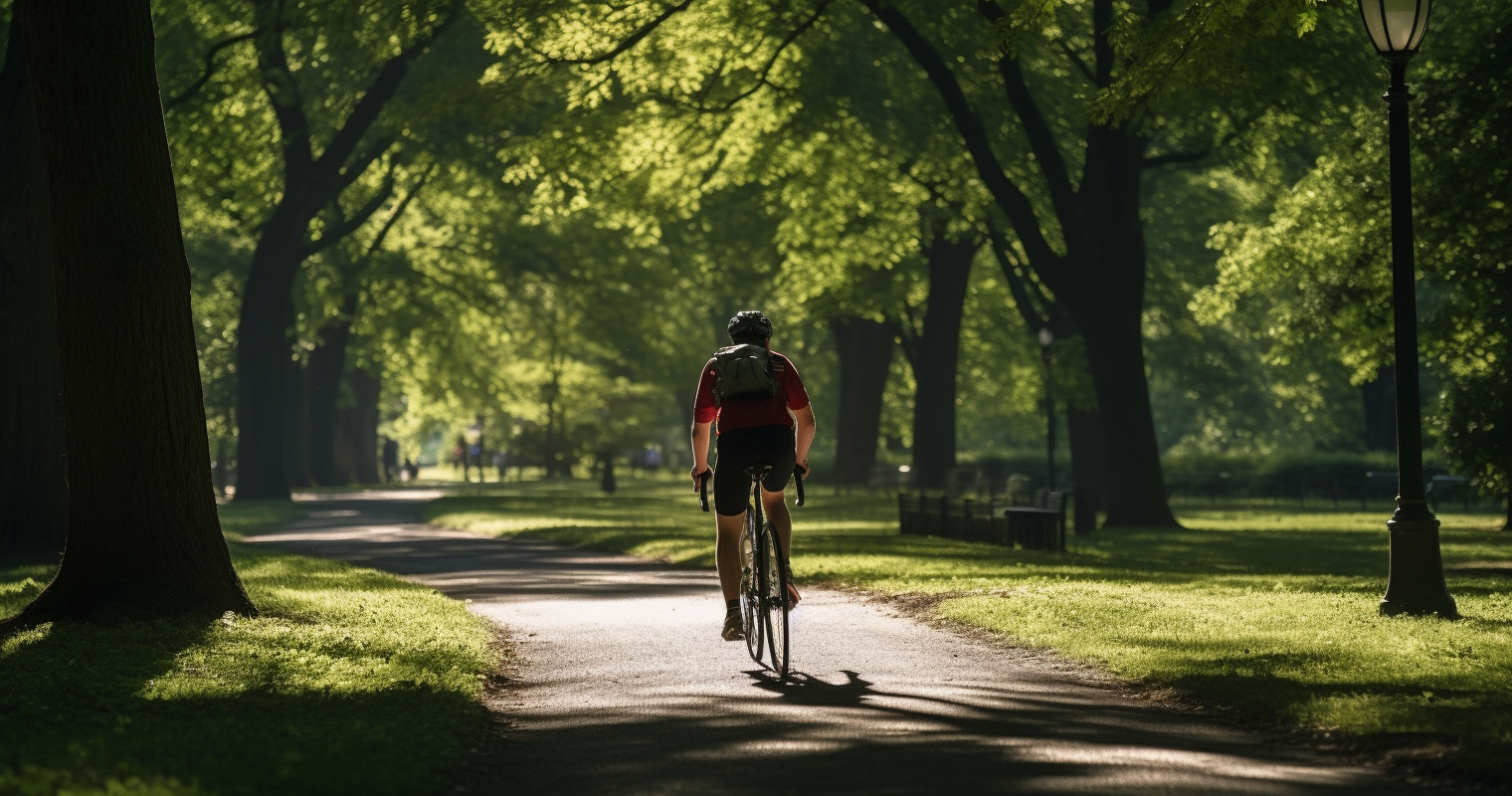
Cycling in India presents a fascinating duality: it is simultaneously woven into the fabric of everyday life for tens of millions of people and yet hampered by serious safety concerns and inconsistent infrastructure. A substantial portion of the population depends on bicycles to get around, yet dedicated cycling facilities remain incomplete, motorists frequently show little regard for cyclists, and road conditions differ wildly from one location to the next. For expats, cycling works best in a handful of forward-thinking cities and is generally more suited to recreation or sport than to effortless daily commuting.
| Item | Details |
|---|---|
| Cycle commuter share (as of 2024) | Approx. 20% of all commuters use bicycles as primary transport; 21% rural, 17% urban |
| Helmet law for cyclists | No specific law mandating helmets for pedal cyclists; strongly recommended; Motor Vehicles Act Section 129 applies to motorised two-wheelers |
| Cyclist fatalities (as of 2022) | 1,445 deaths reported on Indian roads (MoRTH Road Accidents Report 2022) |
| Cities with dedicated cycle lanes | Approximately 41 cities, with Pune having the most extensive network |
| Bicycle registration | Not mandatory for pedal cycles in India |
| Key government body | Ministry of Road Transport and Highways (MoRTH); Ministry of Housing and Urban Affairs (MoHUA) for urban cycling initiatives |
How popular is cycling in India — is it a common way to get around?
Looking at the overall picture of how people move around, roughly 20% of all commuters in India rely on bicycles as their main form of transport — 21% in rural settings and 17% in urban ones. These figures are considerably higher than cycling’s share in most Western European nations outside of the Netherlands or Denmark, where purpose-built infrastructure and a celebrated cycling culture go hand in hand. In India, however, the elevated numbers speak more to economic necessity than to lifestyle choice.
The conventional bicycle sector is underpinned by a long-standing and deeply practical cycling tradition, with bicycles fulfilling vital transport roles for working people, students, and rural communities alike. This utility-driven relationship with cycling is quite distinct from the sport-and-leisure framing common in many other parts of the world. Historically, the bicycle has served India as an essential and affordable tool rather than a recreational accessory.
The rapid spread of motorised vehicles following independence gradually eroded cycling’s role as the dominant means of getting around. More recently, however, growing anxiety about environmental damage, urban gridlock, and the health consequences of sedentary living has reignited enthusiasm for cycling. Cities such as Delhi, Mumbai, Bangalore, and Pune have all seen expanding cycling communities, driven by infrastructure investment and sustained advocacy.
According to an Ipsos report published in June 2022, 67% of urban Indians say they cycle at least once a week — the highest proportion of any country surveyed — pointing to a robust recreational foundation. Additionally, 21% of urban Indians use bicycles for short everyday trips, reflecting a broad-based familiarity with the activity.
At the same time, aspirations linked to social advancement mean that car ownership carries considerable status in India, creating a cultural current that works against cycling as a commuting choice — particularly among urban professionals. Expats arriving from societies where cycling is socially prestigious, such as the Netherlands or Germany, are likely to find this contrast striking.
Today, India’s cycling landscape is varied and dynamic, spanning recreational rides, competitive racing, everyday commuting, and fitness pursuits. Cycling clubs, organised group outings, and dedicated events are multiplying across major cities, fostering a vibrant community. Expats with a passion for sport or fitness cycling will find genuine enthusiasm and a growing network of like-minded riders in most large urban centres.
What is the cycling infrastructure like in India?
Around 41 cities across India have introduced separate cycle lanes designed to improve the safety and ease of cycling. In practice, however, the quality, continuity, and day-to-day usability of these facilities varies enormously. In contrast to Germany’s extensive, well-marked national cycling network or the Netherlands’ fully integrated system, India’s cycle lanes tend to be fragmented, confined to particular corridors, and rarely joined up into a coherent whole.
Much of the cycling infrastructure that does exist was built in disconnected phases, without the overarching vision needed to make cycling a genuinely mainstream option for urban travel. The absence of long continuous routes and properly organised lanes means that what has been built often functions as a cosmetic addition to the urban environment rather than a transformative mobility solution.
The vast majority of Indian cities still have a long way to go in providing safe, dedicated space for cyclists. Even Mumbai — which now offers bicycle-sharing access at certain metro stations — still lacks the lanes, parking facilities, and traffic management arrangements that would make road cycling safe and practical. Without a joined-up network of dedicated tracks, navigating Mumbai by bike remains genuinely difficult.
Pune stands out as the city with the most developed cycling network in the country, with over 80 kilometres of bicycle lanes — the most extensive in India. Bangalore has also made meaningful progress: working in partnership with the Directorate of Urban Land Transport and Bangalore Smart City Ltd, a 17-kilometre cycle lane was established along the Outer Ring Road, becoming India’s first pandemic-era pop-up cycle lane. However, the same city has also seen 17 kilometres of cycle tracks removed to make way for metro construction — a reminder of how competing urban priorities can set back cycling progress.
Encouraging signs exist at the policy level. The Cycles4Change Challenge, initiated by the Ministry of Housing and Urban Affairs (MoHUA), prompted cities to embed cycling within their broader mobility plans. Cities involved in the programme have earmarked over 400 kilometres of main roads and more than 3,500 kilometres of neighbourhood streets as candidates for cycling-friendly treatment, and have hosted over 150 public Open Streets events since 2020.
Pimpri Chinchwad’s transport policy sets an ambitious target of having 90% of all journeys completed by bicycle, on foot, or via public transport by 2036. The Harit Setu NMT Master Plan and the Urban Streetscapes Program are designed to better connect residential areas and strengthen cycling infrastructure across the city, which ranks among the fastest-growing urban centres in India. This target represents one of the boldest cycling integration commitments made by any Indian municipality.
Expats are advised to consult the Ministry of Housing and Urban Affairs website and their local municipal transport authority for up-to-date route maps and details of planned improvements in their particular city.
Is cycling safe in India?
The Road Accidents in India 2022 Report, published by the Ministry of Road Transport and Highways (MoRTH), recorded 1,445 cyclist fatalities on Indian roads in 2022 — a figure that road safety experts argue could be significantly reduced through the provision of proper dedicated cycling infrastructure. These statistics are updated annually, and expats should refer to the MoRTH official website for the most recent road safety data.
Research conducted by the Indian Institute of Technology (IIT) Delhi found that, although urban cyclists typically cover shorter distances than other road users, their estimated fatality risk per kilometre travelled is more than twice that of motorcycle riders and approximately 40 times higher than for car occupants. This sobering statistic highlights just how exposed cyclists are when sharing road space with heavier and faster traffic.
“It’s such a practical mode of transport, though poor infrastructure and rash driving makes it a dangerous way to travel on Indian roads.” This widely shared view among cycling advocates encapsulates the fundamental tension: cycling makes abundant practical sense, but road culture has not yet evolved to treat cyclists as legitimate and protected users of the road.
Even where dedicated cycle tracks do exist, the reality of sharing road corridors with heavy vehicle traffic continues to pose a meaningful danger. High temperatures, intense humidity, and flood-prone roads during the monsoon season add further layers of difficulty and risk to urban cycling throughout much of the year.
On the question of helmets for pedal cyclists specifically: Indian law contains few provisions that target bicycle safety in particular, and cyclists are generally advised to apply the same safety thinking as other two-wheeler users. Although no statute explicitly requires pedal cyclists to wear a helmet — unlike motorcycle riders — doing so is strongly encouraged at all times. Expats should also wear high-visibility clothing, especially after dark, and always use front and rear lights in low-light conditions.
Additional safety concerns frequently raised include the scarcity of segregated lanes, inadequate street lighting, and — for women cyclists in particular — personal security. Female cyclists report being subjected to aggressive honking and harassment, while social and family pressure discourages many from cycling at all, pushing them towards more expensive private or school transport options instead. Advocacy organisations and government bodies have acknowledged these problems, but meaningful systemic change has been slow to materialise.
What are the rules of the road for cyclists in India?
Traffic law in India is principally governed by the Motor Vehicles Act, 1988, together with its subsequent amendments. Although the detailed provisions of this legislation are primarily directed at motorised vehicles, cyclists are nonetheless bound by general road rules and are expected to observe traffic signals, keep to the left-hand side of the road, and respect road markings. India follows left-hand traffic, which will feel natural to expats from the UK, Australia, or Japan.
No specific regulations exist requiring pedal cyclists to wear helmets; the rules applicable to motorcycle helmets are a useful reference point to bear in mind. While helmet use is not a legal obligation for those on pedal bicycles, road safety authorities universally recommend wearing a properly fitted helmet whenever you ride. If you also use a motorised scooter or moped, helmets become legally compulsory under Section 129 of the Motor Vehicles Act.
For motorised two-wheeler riders, the permissible blood alcohol content (BAC) limit is 0.03%, equivalent to 30 mg per 100 ml of blood. A first offence can result in a fine of up to ₹10,000 or six months’ imprisonment. Pedal cyclists are likewise strongly advised never to ride under the influence of alcohol, both on safety grounds and because general laws relating to public nuisance or endangerment may be applied.
The key road rules that all two-wheelers — including pedal cycles — should follow are:
- Ride on the left side of the road at all times
- Respect all traffic signals and stop signs — running a red light is a serious offence that can result in a fine of up to ₹5,000
- Do not ride on footpaths or pedestrian areas where prohibited by local bylaws; regulations differ between municipalities
- Use front and rear lights in poor visibility or after dark — reflective markings on vehicles are now compulsory to improve nighttime visibility
- Indicate turns clearly using hand signals
- Never use a mobile phone while cycling
Specific rules governing where cyclists may ride — including restrictions on certain roads, pedestrian zones, or parks — differ between states and municipalities. Some roads in cities such as Kolkata have at times imposed restrictions on cyclists. Always confirm the applicable rules with your local municipal transport authority or traffic police. The Ministry of Road Transport and Highways publishes the national traffic law framework.
Do I need to register my bike or have insurance to cycle in India?
Registration of pedal bicycles is not a legal requirement in India. Unlike motorised two-wheelers, which must be registered with the Regional Transport Office (RTO), an ordinary push-bike requires no official registration and carries no registration plate or vehicle logbook equivalent.
In the same way, third-party or personal liability insurance is not legally required for pedal cyclists. This stands in clear contrast to the rules for motorised vehicles, where third-party insurance is compulsory — failing to carry it for a motorised two-wheeler can attract a fine of ₹2,000 for a first offence. Pedal cyclists are presently outside this obligation.
Even so, taking out personal accident or cycling-specific insurance is strongly advisable, particularly for expats riding on busy urban roads. International health or travel insurance policies that many expats hold may already cover cycling accidents — it is worth reading your policy documents carefully to establish what is and is not included. Dedicated bicycle insurance products are available in India, covering theft, accidental damage, and personal liability, though the market is less mature than in countries like Germany or the UK, where specialist cycle cover is widely offered.
For e-bikes, the applicable rules depend on the motor’s power output. Under current Indian regulations, e-bikes fitted with a motor of up to 250W and a maximum speed of 25 km/h are treated as pedal cycles and require no registration, licence, or insurance. More powerful electric bikes may be reclassified as motorised vehicles, bringing them within the full registration and insurance framework. Check with the Ministry of Road Transport and Highways or your local RTO for the current classification criteria before buying an e-bike.
Are there public bike-sharing or rental schemes in India?
A number of Indian cities have introduced bicycle-sharing programmes, though their coverage and reliability falls considerably short of the polished systems operating in cities like Paris (Vélib’) or Amsterdam. Provision is concentrated in larger urban centres and typically delivered through public-private partnership arrangements.
In Mumbai, the expansion of the metro network has brought bicycle-sharing options with it, with facilities installed at various metro stations to support last-mile connectivity. Ridership of the bicycle-sharing scheme along Mumbai Metro Line 2A and 7 stations has been growing. The Mumbai Metropolitan Region Development Authority (MMRDA) partnered with private provider MYBYK to establish the arrangement at these stations.
The India National Smart Cities Mission has prompted the creation of pop-up cycle lanes and community-driven cycle hire initiatives in Bengaluru and other cities around the country. Cities including Pune, Hyderabad, Bhopal, and Delhi have hosted or continue to operate docked or dockless bike-sharing schemes, managed by a mix of private operators and municipal authorities.
One persistent obstacle is the near-total absence of secure bicycle parking at most metro or bus stations, which discourages commuters from combining cycling with public transport and undermines last-mile connectivity. This limits bike-sharing’s practical value as a seamless multi-modal option — a stark contrast to cities like Tokyo or Copenhagen, where cycling and transit are tightly integrated.
Typical pricing for bike-sharing schemes starts at around ₹5–₹10 per 30-minute ride, though rates vary by operator and city. For current pricing, availability, and app-based booking, expats should consult operators such as MYBYK, Yulu, or Bounce directly, as well as their local municipal transport authority. As of 2025, the sector is evolving rapidly, with several new e-bike hire schemes entering major cities.
The growing availability of electric bicycles is widely expected to broaden cycling’s appeal to a wider range of commuters. App-based e-bike hire in particular is expanding quickly in cities such as Bangalore and Pune. Given how frequently conditions change in this sector, always check individual operators’ official websites for the latest availability and pricing.
Where can I buy or service a bike in India?
India’s bicycle market combines well-established domestic manufacturers with a growing presence from international premium brands. Prominent Indian names include Hero Cycles, Atlas, Avon, and Firefox, while global brands such as Trek, Giant, Specialized, and Cannondale are accessible in larger cities, typically through authorised dealers.
The mid-range segment accounts for roughly 72% of the total India bicycle market in 2025. This tier has attracted the largest share of buyers by offering a compelling balance of quality, specification, and price that resonates strongly with India’s expanding middle class. For most everyday cycling purposes, finding a dependable and well-equipped bicycle at a reasonable price is entirely achievable.
Northern India holds around 33% of the market in 2025, a dominance explained by its concentration of manufacturing facilities, high population density, and well-developed bicycle retail networks across major urban areas. Cities such as Delhi, Ludhiana (a key manufacturing hub), Pune, Bangalore, and Mumbai offer the most developed retail and after-sales ecosystems.
Second-hand bicycles are readily available through local markets, specialist cycling shops, and online platforms including OLX and Facebook Marketplace. Standards vary considerably, so it pays to inspect any used purchase carefully or have an experienced local mechanic assess it before you commit.
Bicycle repair workshops — known locally as “cycle repair shops” or “puncture shops” — are remarkably widespread throughout India, present even in small towns and villages in a way that is unusual by international standards. A basic service or puncture repair typically costs very little, often between ₹20 and ₹100 as of 2024, making upkeep extremely affordable. For more complex or high-end work, a dedicated cycling shop in a major city will generally provide the most reliable service. Consumer protection in India is governed by the Consumer Protection Act, 2019; always obtain a warranty card and receipt when purchasing from a registered dealer.
Can I bring my bike when I move to India, and are there any import rules?
Bringing a bicycle into India is subject to customs duty, which can be considerable. As a general principle, bicycles imported as new goods attract basic customs duty. If, however, you are relocating to India and including your bicycle among your personal household effects, you may qualify for a duty exemption or reduction under the Baggage Rules, 2016, administered by the Central Board of Indirect Taxes and Customs (CBIC).
Under India’s Baggage Rules (as of 2024), passengers who have been living abroad for over a year and are moving to India may bring personal belongings — including sporting equipment — into the country duty-free up to a specified value threshold. Crucially, the rules draw a distinction between items that have been personally used and those considered new or commercial in nature. A bicycle that has been in regular personal use and is clearly part of your household is far more likely to qualify for relief than a brand-new, boxed bicycle. Since thresholds and classifications are subject to change, always verify the current rules directly with the Central Board of Indirect Taxes and Customs (CBIC) before shipping anything.
If your bicycle does not meet the criteria for baggage exemption, standard import duties can include basic customs duty, IGST (Integrated Goods and Services Tax), and various handling charges. The combined effective rate can be substantial — in some cases exceeding 30–40% of the declared value as of 2024 — although precise rates depend on the bicycle’s HS classification and any applicable exemptions. Review the CBIC Customs Tariff for the most up-to-date rates before making your decision.
Since good-quality bicycles are available at competitive prices throughout India, many expats conclude it makes more sense to sell their bike before leaving and buy a new or used one once they arrive, rather than contending with the import process. If you own a high-value specialist bicycle you would find difficult to replace, seeking professional customs advice before shipping is strongly recommended.
What are the best cycling routes or destinations in India?
India’s remarkable geographic diversity — stretching from high Himalayan passes to tropical coastlines and arid desert plains — creates an extraordinary variety of terrain for multi-day cycling tours, heritage circuits, and adventure expeditions. Whatever type of riding you favour, India almost certainly has a landscape to match.
Among the most celebrated cycling destinations and routes are:
- Manali–Leh Highway (Himachal Pradesh/Ladakh): Widely regarded as one of the planet’s most iconic high-altitude cycling routes, this demanding multi-day journey crosses mountain passes exceeding 5,000 metres above sea level. It requires strong fitness, careful acclimatisation, and thorough preparation, but the scenery is breathtaking.
- Spiti Valley (Himachal Pradesh): A remote and starkly beautiful route through Tibetan-influenced settlements and dramatic mountain scenery, drawing serious adventure cyclists from across the world.
- Kerala Backwaters: Gentle, shaded cycling through landscapes of coconut palms, paddy fields, and river channels makes this an excellent introduction to cycling in India, well suited to leisure riders and those new to the country.
- Rajasthan Heritage Circuit: Connecting Jaipur, Jodhpur, Jaisalmer, and Udaipur through desert vistas and historic forts — most enjoyable during the cooler winter months from November to February.
- Coorg (Karnataka): Undulating hills blanketed in coffee and spice plantations, with temperatures noticeably cooler than the surrounding plains.
- Bir Billing (Himachal Pradesh): An emerging hub for cycling tourism, with e-bike infrastructure under development to open up valley exploration. A facility in Bir allows riders to recharge their e-bikes at no charge, supporting eco-tourism by encouraging slower, environmentally conscious travel.
The India cycle tourism market was valued at USD 3.48 billion in 2024 and is projected to grow to USD 10.30 billion by 2033. Both domestic and international travellers are increasingly turning away from conventional sightseeing in favour of active journeys that offer an immersive, ground-level engagement with landscapes and local communities.
For route planning, the India Tourism official website is a useful starting point. The Cycling Federation of India (cyclingfederationofindia.org) is the national governing body for the sport and can direct you to affiliated clubs and upcoming events. Many expats also find that local cycling groups discoverable through Strava, Facebook Groups, or platforms like SpokHerd are an invaluable source of route knowledge and practical safety advice for their specific city.
Frequently asked questions about cycling in India
Is it practical to cycle to work every day in an Indian city?
The answer depends largely on where you live and the length of your commute. In cities with a reasonable degree of cycling infrastructure — such as Pune or certain parts of Bangalore — short to medium distances of 5–10 km are manageable for many cyclists. In denser, more chaotic cities like Mumbai or Delhi, the combination of traffic intensity, poor road conditions, and extreme heat makes daily cycling considerably more challenging. Most expats who do cycle commute in India tend to do so selectively, pairing cycling with metro or bus rides for longer legs of their journey.
Do I legally need to wear a helmet when cycling in India?
Indian law contains relatively few provisions dealing specifically with pedal bicycle safety, and cyclists are generally advised to follow the traffic safety and helmet rules that apply to other two-wheeler users. No statute explicitly requires pedal cyclists to wear a helmet. That said, a good-quality helmet is strongly recommended on every ride, given the realities of Indian traffic and road conditions. For motorised scooters and mopeds, helmet use is a legal requirement under the Motor Vehicles Act.
Are there cycle lanes in Indian cities?
Around 41 cities in India have introduced separate cycle lanes. In practice, however, these facilities are often fragmented, irregularly maintained, and prone to being blocked by parked vehicles or other obstructions. Cycle tracks frequently end abruptly mid-route, creating safety hazards rather than resolving them. Contact your local municipal authority to find out what cycling infrastructure currently exists in your city.
What is the best city in India for cycling as an expat?
Pune is broadly considered India’s most cycle-friendly major city, home to the country’s most extensive dedicated lane network. Bangalore and Hyderabad are both making progress on cycling infrastructure, and smaller cities such as Pimpri Chinchwad and Chandigarh are committing significant resources to non-motorised transport. Climate is also worth considering: southern cities can be oppressively hot and humid for much of the year, while northern cities offer more tolerable winter cycling conditions.
Can I take my bicycle on the metro or train in India?
A number of metro systems across India now permit passengers to bring bicycles on board. Kochi Metro, for instance, allows full-sized bicycles, while systems in cities like Bangalore and Hyderabad permit foldable cycles, supporting the goal of seamless multi-modal travel. Rules differ between cities and individual metro lines, so check with your local metro authority before planning a journey with your bike.
Is cycling safe for women in India?
Both road safety and personal security concerns are genuine factors for women cyclists. Reports of aggressive honking, harassment, and social or family pressure discouraging cycling are well documented, and fear around these issues causes many women to abandon cycling in favour of private or school transport. Joining a cycling group, selecting routes with care, sticking to daylight hours, and favouring well-lit roads can all improve the experience. Many cities now have active women’s cycling communities that provide safer group-riding environments alongside invaluable local knowledge.
Do I need to register a bicycle in India or carry any documents?
No. Pedal bicycles do not need to be registered with the Regional Transport Office (RTO), and there is no obligation to carry any registration documentation when you ride. E-bikes with a motor rated at under 250W and a maximum speed of 25 km/h are treated in the same way and are equally exempt from registration. Higher-powered electric bikes may fall into the motor vehicle category and be subject to registration requirements; consult the Ministry of Road Transport and Highways for current classifications.
Where can I find cycling clubs or communities as an expat in India?
Cycling clubs, group rides, and organised events are expanding steadily across India’s major cities, creating a welcoming and energetic community. Most large cities have active clubs that can be found through Strava, Facebook Groups, Meetup, or platforms such as SpokeHerd. The Cycling Federation of India (cyclingfederationofindia.org) is the national governing body and can link you with affiliated clubs and events. Riding in a group is also widely regarded as significantly safer than cycling alone in urban traffic.
What should I do if I am involved in a cycling accident in India?
Get yourself to safety if you can, then call 112 — India’s unified emergency services number. In the case of a serious incident, you are legally entitled to receive treatment at the nearest hospital. Photograph the scene, collect the contact details of any witnesses, and report the matter to the local police station, filing an FIR (First Information Report) if the circumstances require it. Notify your health insurer as promptly as possible. The MoRTH Road Safety portal provides further guidance on procedures following a road accident.