
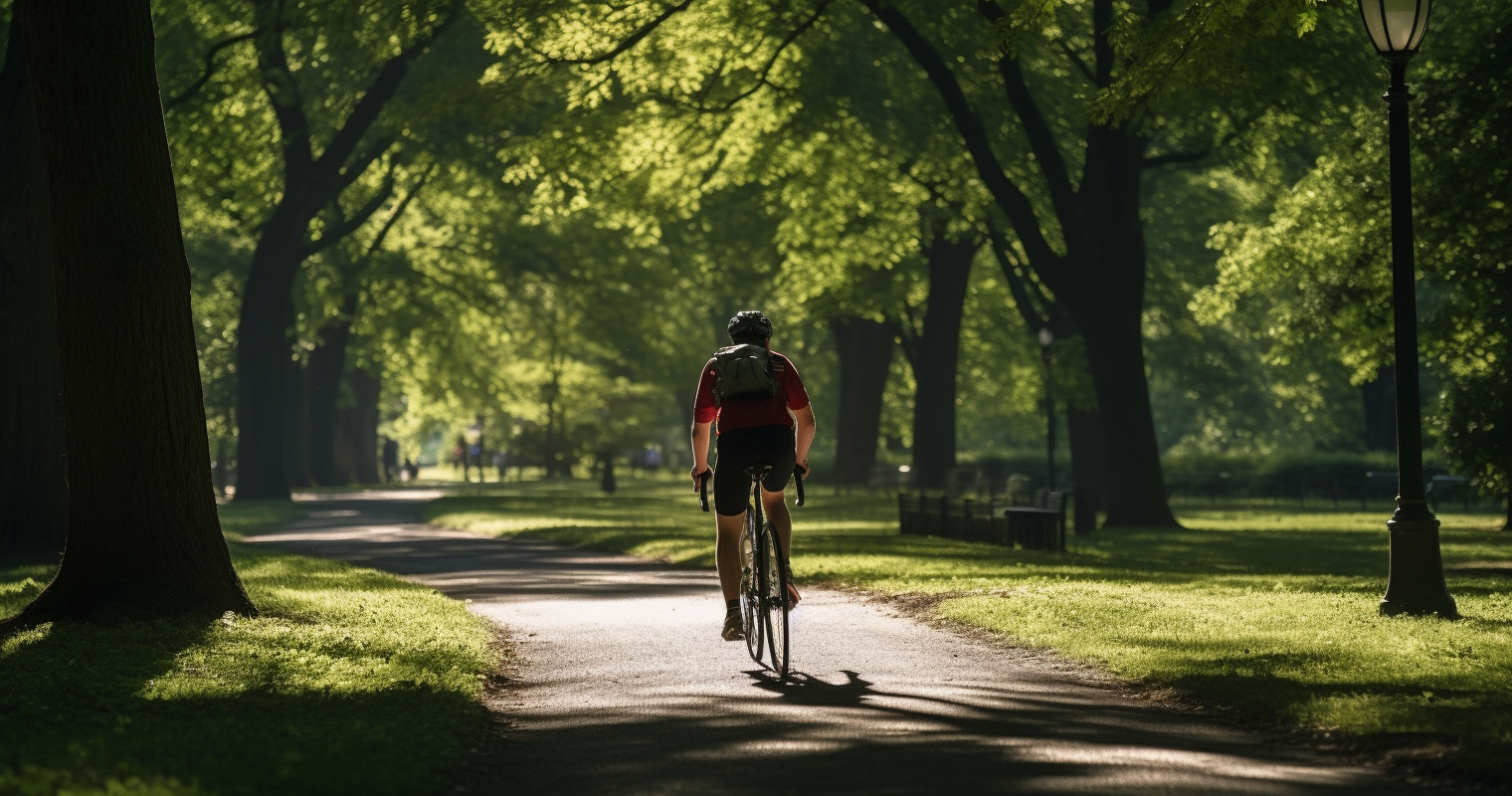
In Qatar, cycling is enjoyed primarily as a recreational pursuit and sporting endeavour rather than as an everyday means of getting from place to place. The country’s deeply car-centric culture, punishing summer temperatures, and a road network designed with motor vehicles firmly in mind mean that pedalling to work or running errands by bike is far from the norm. Nevertheless, Qatar has channelled considerable investment into purpose-built cycling infrastructure, and the expanding web of leisure and sport-focused cycle tracks is making the country an increasingly rewarding destination for fitness riders and weekend cyclists alike.
| Item | Details |
|---|---|
| Helmet requirement | Legally mandatory for all cyclists (as of 2025) |
| Reflective jacket | Legally required when cycling in low light or at night |
| Cycling fine (improper lighting) | QAR 300 (as of 2026) |
| Olympic Cycling Track length | 33 km (world-record continuous car-free path) |
| Total cycling/pedestrian paths built by Ashghal | 2,131 km between 2013–2022 |
| Standard import customs duty | 5% of CIF value for most goods, including bicycles (as of 2025) |
How popular is cycling in Qatar — is it a common way to get around?
Cycling plays a very different role in Qatari daily life compared with countries such as the Netherlands or Denmark, where millions of people depend on their bikes for everyday journeys. Bicycles are perfectly legal in Qatar, but they are rarely seen as a practical urban transport solution, largely because of the country’s intense climate. Infrastructure has traditionally been planned around car travel, and the overwhelming majority of residents — both expatriates and Qatari nationals — rely on private cars or taxis to get around.
That said, cycling is anything but marginal here. A lively and enthusiastic community of recreational riders, sports clubs, and fitness-driven cyclists has taken root. Those considering cycling in Doha will encounter genuine hurdles: the weather above all, but also uneven provision of dedicated paths in certain areas and inconsistent driver awareness of cyclists. Counterbalancing these difficulties are well-maintained road crossings in many zones, expanding infrastructure, shade trees along several routes, and widely available affordable bicycles.
The overall picture resembles cycling culture in other Gulf states such as the UAE more closely than it does any European model. Authorities actively promote cycling as sport and leisure, and infrastructure spending is on an upward trajectory, but a genuine commuter cycling culture has not yet emerged. Newcomers would do well to calibrate their expectations: Qatar offers genuinely enjoyable cycling for recreation and fitness, but treating a bicycle as your primary means of commuting remains unusual and, across much of the country, impractical.
What is the cycling infrastructure like in Qatar?
Over the past decade, Qatar has made concrete and measurable commitments to cycling infrastructure. The Public Works Authority (Ashghal) delivered a combined total of 2,131 km of pedestrian and cycling tracks between 2013 and 2022. While this figure is striking, it is worth noting that a considerable proportion of these routes are shared pedestrian and cycling paths rather than fully separated cycle lanes, and the bulk of provision is concentrated in Doha and its surrounding urban corridors.
All new road projects are now required by policy to incorporate pedestrian and cycling tracks, supporting non-motorised travel and micro-mobility options including bicycles and e-scooters. This forward-looking requirement — confirmed by the Ministry of Transport in 2024 — reflects a sustained governmental commitment to network expansion. A comprehensive field survey was carried out as part of Stage 2 of the Qatar Bicycle Master Plan (QBMP), which seeks to integrate cycle routes with public transport hubs and improve safety at road junctions.
Where dedicated cycling routes exist, they are physically separated from motor traffic, run as uninterrupted tracks reserved exclusively for cyclists, and provide a noticeably safer environment than mixed-traffic roads. Connectivity between different sections of the network, however, is still developing, and not every path joins seamlessly with the next. Urban parks are a particular highlight: many across Qatar have purpose-built cycling tracks suited to beginners and families, among them Oxygen Park, Al Bidda Park, 5/6 Park, Umm Al Saneem, and Al Gharaffa Park.
Away from the capital, provision becomes significantly thinner. Rural and desert roads are typically broad and well-maintained but carry fast-moving motor traffic with little consideration for cyclists. For up-to-date route maps and information on planned developments, the Public Works Authority (Ashghal) website and the Ministry of Transport, which oversees the Qatar Bicycle Master Plan, are the authoritative sources.
Is cycling safe in Qatar?
Road safety for cyclists in Qatar involves genuine hazards that anyone new to the country should understand before setting out on public roads. Driver awareness of cyclists is inconsistent, and this has been flagged by local riders as a meaningful concern. The large 4×4 vehicles that are ubiquitous in Qatar can have significant blind spots, a problem compounded by the prevalence of drivers using mobile phones at the wheel.
In response, the Ministry of Interior (MoI) has repeatedly urged cyclists to observe road safety rules in full. The MoI conducts regular road safety campaigns and traffic police issue fines to cyclists on a daily basis; frequently observed violations include riding on pavements, cycling without a helmet, failing to keep to the right side of the road, and riding without adequate lighting at night.
Helmet wearing is not simply good practice — it is a statutory obligation (covered in detail in the rules section below). Failure to comply with safety requirements can lead to serious accidents, and breaching traffic regulations in Qatar may result in a bicycle being confiscated and impounded. For recreational riders, fully dedicated off-road tracks — the Olympic Cycling Track being the prime example — offer the safest experience, as motor vehicles are entirely absent from these environments.
Qatar’s Ministry of Interior publishes road safety data, and the General Directorate of Traffic maintains enforcement records. Readers are encouraged to consult the Ministry of Interior for the most recent published figures. Cycling on major highways and motorways is strongly discouraged and, in reality, extremely dangerous given the speeds at which traffic travels.
What are the rules of the road for cyclists in Qatar?
The rules governing cyclists in Qatar are set out in Traffic Law No. 19 of 2007 and are actively enforced by the General Directorate of Traffic under the Ministry of Interior. Unlike some countries where helmet rules are limited to younger riders — for instance, cycling in France requires helmets only for children under twelve on public roads — Qatar mandates helmets for every cyclist regardless of age.
Under Qatari law, any person riding a bicycle must wear a bicycle helmet and a reflective or phosphorescent jacket to remain visible in low-light conditions. Equipment standards are equally demanding: the law requires cyclists to have a rearview mirror fitted to the handlebar, a working front light, a rear reflector, a dynamo to power the front light, and reflectors on the sides of the pedals to ensure adequate visibility in darkness or poor light.
Rules on road positioning are explicit. Cyclists must ride as far to the right of the carriageway as possible, and where no designated cycling lane is present, they must travel in single file. Where a dedicated cycle lane is marked, cyclists are forbidden from using lanes intended for motor vehicles.
Further obligations under Traffic Law No. 19 of 2007 include:
- Cyclists must keep both hands on the handlebars at all times, except when making hand signals to indicate direction.
- It is prohibited to hold onto a moving vehicle, lift a wheel from the ground during riding, or carry or tow items that obstruct the flow of traffic or endanger the rider or other road users.
- Carrying an additional passenger on a bicycle is prohibited unless the bicycle has been specifically adapted and equipped for that purpose.
- Riding without functioning lights between sunset and sunrise carries a fine of QAR 300 (as of 2026), as does failing to observe correct road positioning for cyclists.
No separately published alcohol limit exists specifically for cyclists in Qatar; the country takes a zero-tolerance approach to alcohol for all road users, and riding under the influence would constitute a serious offence. For the complete and current text of Qatar’s traffic regulations, the Ministry of Interior and the Ministry of Transport are the definitive references.
Do I need to register my bike or have insurance to cycle in Qatar?
Qatar does not currently operate a mandatory registration scheme for private recreational or commuter bicycles that is in any way equivalent to the vehicle registration system applied to cars and motorcycles. Whereas motor vehicles must be formally registered with the General Directorate of Traffic, ordinary pedal bicycles do not require a licence plate or any registration with a government authority.
Likewise, there is no legal requirement for individual cyclists to hold third-party liability insurance or personal accident cover as a condition of riding. This stands in contrast to motorcycles, for which insurance is compulsory under Qatari law. Nevertheless, given the road environment and the relatively sparse provision for cyclists on many public routes, obtaining personal accident cover — or ensuring that an existing health or travel insurance policy extends to cycling activity — is strongly advisable, particularly for those intending to ride on public roads rather than dedicated tracks.
Cyclists operating commercially, such as delivery riders, face additional requirements including employer registration and relevant operational permits. For privately owned bicycles used for personal transport or recreation, no registration fee or insurance premium is currently required by law. It is always wise to verify the current position directly with the Ministry of Interior or a licensed insurance provider in Qatar, as this area of regulation can change.
Are there public bike-sharing or rental schemes in Qatar?
Qatar does not yet have a large-scale docked public bike-sharing network on the scale of London’s Santander Cycles or Paris’s Vélib’. However, several rental and micro-mobility services are available, and this sector continues to expand.
Lime, the world’s largest operator of shared electric vehicles, runs electric bikes and scooters across Doha. Through the Lime app, users can locate and unlock e-bikes and e-scooters for short trips around the city, with charges calculated on a per-minute basis (visit the Lime Doha page for current pricing, which is subject to change).
Saikl, a Qatari rental service, was originally established to make cycling accessible to women, children, and newcomers at low cost, and has since grown into one of the country’s most established rental operations. Saikl offers bicycle hire and guided touring support, making it an excellent first step for expats who wish to explore cycling in Qatar before deciding whether to invest in their own machine. Current availability and rates can be found at saiklqtr.com.
Lusail International Circuit opens its facilities to cyclists, runners, and skaters on Tuesday evenings (for ladies and children only) and Wednesday evenings between October and June, when the circuit is not in use for motorsport — bicycles are available to rent on site. A number of parks with their own cycling tracks also offer bike hire at reasonable rates.
Where can I buy or service a bike in Qatar?
Purchasing a bicycle in Qatar is relatively uncomplicated, and the market has broadened considerably as the sport’s popularity has grown. Doha is home to a range of dedicated cycle retailers stocking road bikes, mountain bikes, hybrids, and children’s models from well-known international brands. Major sports retailers and hypermarkets, including Decathlon (with outlets across several Doha shopping centres), carry a wide selection at varying price points, making it straightforward to acquire an entry-level to mid-range bicycle without needing to import one from abroad.
Specialist cycling shops serving performance road cyclists and triathletes are clustered in Doha, particularly around the Aspire Zone and neighbourhoods that attract the cycling community. Servicing and repair facilities are available at most dedicated retailers, and the active local cycling scene means that word-of-mouth recommendations for trustworthy mechanics are easy to obtain. The Qatar Cycling and Triathlon Federation is a helpful community contact for retailer and workshop recommendations.
Pre-owned bicycles can be found through online classifieds platforms such as Qatar Living and through various social media groups. Consumer warranty norms broadly follow GCC retail conventions — bicycles purchased new from reputable retailers will generally carry a manufacturer’s warranty, though the level of after-sales protection may not match what buyers from markets with stronger statutory consumer rights frameworks, such as the European Union’s two-year minimum guarantee, are used to. Always clarify return policies and warranty terms before completing a purchase.
Can I bring my bike when I move to Qatar, and are there any import rules?
If you are relocating to Qatar and wish to bring your bicycle with you, the most important factor is whether the bike travels as part of a personal effects consignment or is imported separately as a standalone commercial shipment.
- Personal effects exemption: The General Authority of Customs (GAC) provides exemptions for non-Qataris arriving to take up employment for the first time, covering personal luggage and used household items shipped to Qatar. A bicycle included in a genuine household goods consignment at the time of your initial arrival may qualify for a duty exemption — but the precise conditions of this exemption must be confirmed with the GAC before you arrange any shipment.
- Standard import duty: All goods imported into Qatar are generally subject to customs duties of around 5% of the value of goods. Should your bicycle not qualify for a personal effects exemption — for example, if it is shipped separately after you have already taken up residence — a 5% duty calculated on the declared CIF (cost, insurance, freight) value will typically apply (as of 2025).
- Low-value threshold: Personal shipments and incoming parcels with a CIF value exceeding QAR 1,000 are liable to 5% customs duties (as of 2021). Most adult bicycles of any reasonable quality will surpass this threshold, so this cost should be factored into your planning from the outset.
- GCC customs union exemptions: Under the Gulf Cooperation Council (GCC) Customs Union, more than 800 categories of goods are exempt from customs duties, alongside exemptions afforded to certain institutions and individuals under Customs Law No. 40 of 2004. It is worth confirming whether bicycles fall within any active GCC exemption category at the time of your move.
- Check before shipping: Customs regulations are revised periodically. Following Amiri Decree No. 98 of 2024, the Integrated GCC Customs Tariff came into effect on 1 January 2025, so always confirm the current position with the General Authority of Customs (GAC) before making any shipping arrangements.
What are the best cycling routes or destinations in Qatar?
Qatar’s centrepiece cycling destination is the Olympic Cycling Track — holder of the Guinness World Record for the longest continuous car-free cycle path anywhere on earth — stretching 33 km and linking Doha to Al Bayt Stadium in Al Khor. The track is 7 metres wide, features 29 underpasses and five bridges to allow non-stop riding, is engineered for speeds of up to 50 km/h, and is fully illuminated for night use. It represents the ideal environment for road cyclists, club training rides, and anyone seeking a serious, traffic-free workout.
Complementing this route, Qatar also has shared pedestrian and cycling tracks running along the eastern side of Al Khor Road for 38 km, connecting with the Olympic Cycling Track on the western side of the highway. Together these form a substantial corridor linking Doha with the north of the country.
For those who prefer a more scenic urban ride, the Doha Corniche provides a pleasant route with views across the water to the city skyline. The cycling path extending from C-Ring Road all the way to Hamad International Airport is a favourite with families, featuring landscaping and planted verges, while the coloured lighting along the expressway makes it a memorable experience after dark.
Further afield, a family-oriented cycling adventure begins near the Ash-Shahaniya camel racing track and continues to the Al Dossari Zoo and Game Reserve, with the path stretching more than 30 km northward through Qatar’s interior — ideal for a longer day outing. Doha Festival City Mall is encircled by a 2.7 km dedicated track that incorporates optional skills features including a pump track, rock garden, and rollers, making it a popular spot for developing technique and particularly appealing to families with children.
For organised events, detailed route maps, and information on club rides, the Qatar Cycling and Triathlon Federation is the national governing body and the natural first point of contact for any cyclist looking to engage with the broader community. The Visit Qatar tourism board also maintains information on cycling tourism and forthcoming events.
Frequently asked questions about cycling in Qatar
Is cycling practical for daily commuting in Qatar?
For the great majority of people living in Qatar, cycling is not a viable primary commuting method. Ferocious summer heat running from June through September, a road network conceived around motor vehicles, and remaining gaps in the cycle lane network combine to make car-free commuting extremely difficult. During the more temperate months from October to April, short journeys along designated paths become considerably more manageable, and some residents do indeed cycle to nearby workplaces — but this remains the exception rather than any kind of established norm.
Do I legally have to wear a helmet when cycling in Qatar?
Yes, without exception. All cyclists, together with any passengers they carry, are required by law to wear an appropriate helmet. This is a statutory obligation under Qatar’s Traffic Law No. 19 of 2007, not a mere recommendation. Riding without a helmet exposes you to fines and, potentially, the impoundment of your bicycle. No age-based exemption applies: the requirement extends to every rider.
Can I cycle on pavements and footpaths in Qatar?
No. Riding on pavements is among the most frequently recorded cycling offences in Qatar. The law requires cyclists to use designated cycle lanes wherever these exist, or otherwise to keep as far to the right of the road as possible. Cycling on pedestrian pavements is prohibited and can result in a fine. In practice, some riders do use pavements out of concern about sharing the road with fast-moving traffic, but this is technically unlawful and subject to enforcement.
What is the best time of year to cycle in Qatar?
Qatar’s usable cycling season spans broadly from October through to April or the very beginning of May, when temperatures are pleasant — generally in the range of 15°C to 30°C. The summer months from June to September bring daytime temperatures that regularly climb above 40°C, rendering outdoor cycling hazardous for most riders. Early morning or evening sessions on fully lit tracks such as the Olympic Cycling Track provide a more tolerable option in summer, though extreme caution and thorough hydration remain essential even then.
Are there organised cycling clubs or groups in Qatar?
Yes — Qatar has a thriving cycling community. The Qatar Cycling and Triathlon Federation serves as the national governing body, organising competitions and events throughout the year. Community groups such as Qatar Chain Reaction (QCR) host regular group rides and road safety initiatives. Social media and platforms like Qatar Living are valuable for discovering local club rides across road, mountain bike, and family cycling disciplines.
Do I need insurance to cycle in Qatar?
No legal requirement currently compels recreational cyclists in Qatar to hold third-party or personal liability insurance. That said, given the road environment and the varying standards of driver behaviour, taking out personal accident insurance — or verifying that your existing health or travel policy covers cycling-related injuries — is highly advisable. A licensed insurer in Qatar will be able to advise on suitable cover options.
Is it safe to cycle at night in Qatar?
Qatari law requires cyclists riding after dark to wear a reflective or phosphorescent jacket and to have a functioning front light, rear reflector, and reflectors on the pedals. Several of Qatar’s dedicated cycling tracks, including the Olympic Cycling Track and the C-Ring to Airport path, are comprehensively illuminated, making night cycling on these routes considerably safer than venturing onto public roads after dark. During the summer, night riding on lit tracks has become a popular way to enjoy the sport while avoiding dangerous daytime heat.
Where can I find the latest official cycling route maps for Qatar?
The Qatar Cycling and Triathlon Federation’s “Where to Ride” page is the most current community resource for route information. For maps of existing infrastructure and details of planned new paths, the Public Works Authority (Ashghal) and the Ministry of Transport — which oversees the Qatar Bicycle Master Plan — are the authoritative official sources.