
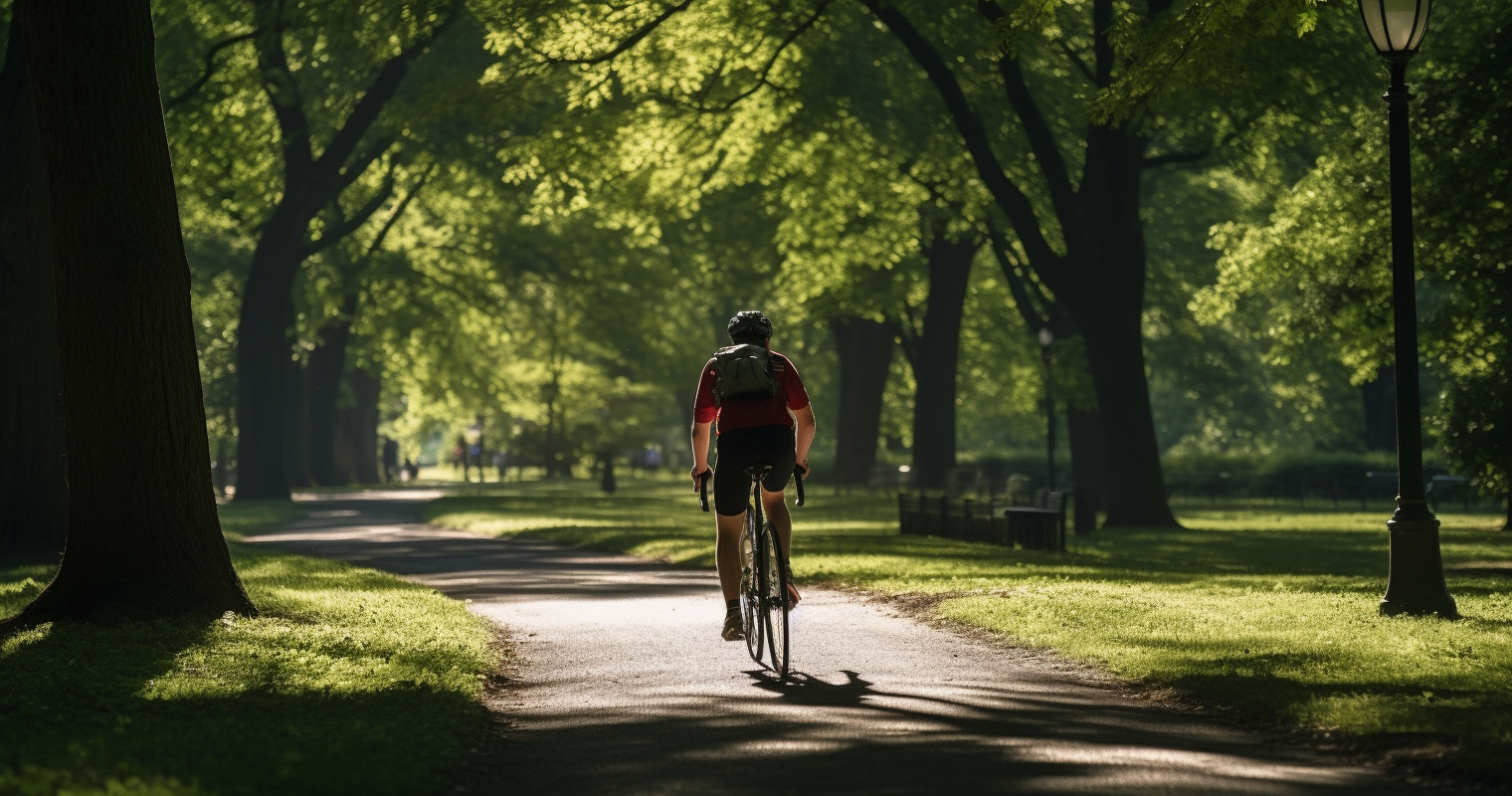
Romania is steadily establishing itself as a destination worth knowing for cyclists, with breathtaking riding on offer across the Carpathian Mountains, the Danube Delta, and the medieval villages of Transylvania. For everyday urban commuting, however, cycling is still a minority activity — infrastructure remains fragmented in most cities and a car-first mindset persists among many drivers. Ambitious investment programmes and growing grassroots advocacy are beginning to shift this, making Romania a country in genuine transition for two-wheeled travel.
| Item | Details |
|---|---|
| Helmet law (adults) | Not legally required for adults; mandatory for children under 16 (as of 2025) |
| Reflective clothing | Mandatory when cycling at night or in low-visibility conditions (as of 2025) |
| Bike registration | Not mandatory nationwide (as of 2025) |
| Bike insurance | Not legally required; recommended for personal protection |
| Bucharest bike lane network | Approx. 25 km of operational lanes; Velo Plan targets 150 km main network within 10 years (as of 2024) |
| National cycle route investment | €120 million proposed under Romania’s National Recovery and Resilience Plan for 3,000 km of touristic cycle routes (as of 2024) |
| I’Velo bike-share | Active in 6 cities including Bucharest, Timișoara, Brașov, Constanța (as of 2024) |
| Bikes on trains | Permitted on Regio and InterRegio train services |
How popular is cycling in Romania — is it a common way to get around?
Cycling in Romania occupies a very different place in daily life compared to countries like the Netherlands, Denmark, or Germany, where the bicycle is a thoroughly ordinary means of getting to work, visiting friends, or doing the weekly shop. In Romania, using a bike for regular transport — particularly in larger urban centres — remains the exception rather than the rule, with car travel having long dominated and public attitudes continuing to shift only gradually.
The legacy of the post-communist era still has a bearing on this situation. Active outdoor pursuits such as cycling and mountain hiking never gained widespread popularity in that period, and for many Romanians the bicycle remains linked to leisure and sport rather than a no-fuss way of making daily journeys.
Nevertheless, things are moving. Younger city-dwellers and expat residents in particular have embraced cycling with growing enthusiasm, and an active advocacy community has emerged to push for better conditions and greater recognition of cyclists’ rights. Cycle tourism is on an upward trajectory, and Romania hosted four UCI calendar events in 2024 — a sign of the sport’s rising profile. If you are arriving from a country where cycling is deeply embedded in everyday transport culture, adjusting your expectations will help; but if you are drawn to recreational riding and long-distance touring, Romania has a great deal to offer.
What is the cycling infrastructure like in Romania?
Urban cycling infrastructure across Romania is still in its formative stages. The gap between Romanian cities and well-established cycling capitals is considerable: Bucharest currently has somewhere between 25 and 32 kilometres of bike lanes, a figure that looks modest against Paris’s roughly 1,200 kilometres. The quality of existing provision is also uneven.
Although new lanes continue to appear in various cities, much of the current network consists of short, disconnected sections that are poorly maintained and sometimes obstructed. Obstacles placed in the path of bike lanes are not uncommon, and pedestrians frequently walk along them — partly because parked cars block pavements, and partly out of simple habit. Anyone who has cycled in cities where lanes were retrofitted rather than planned from the outset will recognise this pattern.
Progress is being made, however. Bucharest’s City Hall has completed a Velo Masterplan that maps out a structured network of bike lanes in two tiers — main and secondary — designed to promote active mobility across the capital. The primary network is planned to grow from its current 25 km to 150 km within ten years, while the secondary network across the city’s six districts could extend to as much as 400 km.
At national level, the ambitions are equally notable. Romania’s National Plan for Recovery and Resilience sets aside €120 million for a programme called “Velo Romania,” which seeks to build approximately 3,000 kilometres of cycling routes to promote sustainable travel and bicycle tourism. This approach mirrors what a number of other EU member states have done in deploying post-pandemic recovery funds to support active transport development.
Beyond city boundaries, conditions vary widely. Rural areas in many parts of the country still feature unpaved roads that become difficult after rain or snowmelt, though EU membership has driven significant road improvement programmes and the situation continues to get better year on year. The Velo România national coordination centre (centrulnationaldecoordonarevelo.ro) is a valuable resource for following route development and planned infrastructure. The Ministry of Transport maintains its own portal at mt.ro.
Is cycling safe in Romania?
Road safety for cyclists is a serious issue in Romania, one that has drawn attention at EU level. Bucharest ranks among the European Union’s cities with the highest pedestrian mortality rates, and the capital has come under repeated pressure to fundamentally rethink how street space is shared between motor vehicles, pedestrians, cyclists, and people with mobility needs. Driver awareness of cyclists in many parts of the country remains inconsistent, and sharing road surfaces with fast-moving traffic without adequate protection can be daunting.
The scale of the challenge is illustrated by the fact that the European Union co-funded a 30-month safety project — following a survey of 20,000 kilometres of roads across South-Eastern Europe that identified significant cycling safety deficiencies — covering Romania and 13 other countries in the region. This kind of targeted intervention gives a candid picture of where things stood at the baseline.
In practice, safety varies enormously depending on where you ride. Quiet secondary roads in rural areas away from major transit routes can be low-traffic and deeply enjoyable, making them very well suited to touring. Riding in major urban centres — Bucharest in particular — calls for considerably more alertness: mixed-use road surfaces, inconsistent lane marking, and drivers who are simply not used to sharing roads with cyclists all warrant careful attention.
Stray dogs represent an occasional concern in rural regions. While the majority pose no threat, some will give chase. This is a practical matter for rural riders to be aware of rather than a reason to avoid the countryside altogether — most seasoned touring cyclists soon develop strategies for handling such encounters.
On helmets: while they are not a legal requirement for adults in Romania, wearing one is strongly advisable. Children under 16 must wear a helmet by law. Romania takes the same approach as the majority of continental European countries — permissive for adults — in contrast to nations like Australia and New Zealand, where helmet use is compulsory across all age groups. Regardless of legal obligation, wearing a helmet is straightforward good sense, and most experienced riders in Romania do so. Current road safety data can be found via the Romanian Police website at politiaromana.ro.
What are the rules of the road for cyclists in Romania?
Romania’s traffic code includes a clear set of rules specifically applying to cyclists. Familiarising yourself with these before you start riding — especially if you are coming from a country where the norms differ — will help you stay on the right side of the law and ride with confidence.
The key obligations for cyclists include:
- Alcohol and substances: Riding a bicycle under the influence of alcohol or narcotic substances is prohibited.
- Pavement riding: Cycling on pavements is not permitted unless a dedicated cycle track has been established there.
- Riding abreast: When cycling alongside another person or encountering other cyclists on the road, you must ride in single file. Side-by-side cycling is only permitted during organised competitive events.
- Hands and feet: Both hands must remain on the handlebars and both feet on the pedals at all times while riding.
- Towing and carrying: Attaching yourself to a moving vehicle or being towed is forbidden, as is carrying bulky or heavy loads that compromise your control of the bicycle or pose a risk to others.
- Passengers: Carrying a passenger on your bicycle is not permitted, unless the bicycle has been specifically designed for that purpose.
- Night riding and visibility: Riding after dark or in conditions of reduced visibility without appropriate lighting and reflective gear is prohibited. Romanian traffic law requires a reflective vest to be worn when cycling at night or in low-light conditions, and clothing incorporating fluorescent and reflective elements is mandatory in these circumstances.
- Helmets (children): Children under 16 are legally required to wear helmets. Adults are not legally obliged to do so, though it is strongly recommended.
- Access restrictions: Cyclists must not enter road sections marked with a sign prohibiting bicycle access.
These rules apply at national level. Individual municipalities may impose additional local requirements — for instance around pedestrian zones or shared-use paths — so it is worth consulting your local authority for city-specific guidance. The full Romanian Highway Code is administered by the Romanian Police (Poliția Română). The government information portal workandlive.ro also provides a useful plain-language summary of cyclists’ legal obligations.
Do I need to register my bike or have insurance to cycle in Romania?
As of 2025, bicycle registration is not a national legal requirement in Romania. Motor vehicles must be registered with the national vehicle authority (Direcția Regim Permise de Conducere și Înmatriculare a Vehiculelor — DRPCIV), but no equivalent obligation applies to bicycles. Some local authorities have explored voluntary registration initiatives, though these remain piecemeal and non-compulsory.
Third-party liability insurance is likewise not legally required for cyclists in Romania. This contrasts with the direction of travel in some other European countries, where cycling insurance is increasingly encouraged or incentivised. That said, personal accident cover or a dedicated cycling insurance policy is well worth considering — particularly for daily urban commuting or extended touring. Various Romanian and pan-European insurers offer standalone cycling policies, and cycling cover is often available as an add-on to home or personal insurance packages.
If you own a high-value bike, logging its serial number with your local police station — even on an informal basis — can considerably improve the chances of recovery if it is stolen. For the most current and authoritative guidance on registration and insurance requirements, consult the Ministry of Transport and the Financial Supervisory Authority (ASF), which oversees the Romanian insurance sector.
Are there public bike-sharing or rental schemes in Romania?
Romania’s public bike-sharing network is expanding, with the best-known operator being I’Velo, run by Green Revolution. Following the launch of its Timișoara service in May 2024, I’Velo extended its reach to a total of six cities. The scheme now covers Bucharest, Timișoara, Brașov, Constanța, Aiud, and Corabia, with a fleet of more than 850 bicycles and over 1.2 million registered users.
In Timișoara, residents can access the service at no charge. The I’Velo Timișoara network comprises more than 160 bicycles spread across nine stations positioned at key locations throughout the city. Pricing structures differ between cities and are updated periodically; always verify current tariffs and station locations on the operator’s official website at ivelo.ro before setting out.
Sibiu runs its own separate scheme — Sibiu Bike City — which has taken the additional step of incorporating adapted tricycles into its fleet, broadening access for older residents and people with disabilities. This is a commendable development in a context where accessible active transport options have historically been scarce.
For tourist-focused rentals, bike shops in cities including Cluj-Napoca, Brașov, Sibiu, and Bucharest typically offer daily and multi-day hire of standard bicycles and e-bikes. Specialist cycle touring operators — such as Bike in Time, which organises road, gravel, and leisure trips around Romania — are also worth approaching for guided tours and hire arrangements. Prices change seasonally, so always check the operator’s current website. Your city’s municipal transport authority website is the most reliable source for up-to-date bike-share information.
Where can I buy or service a bike in Romania?
Purchasing a bicycle is uncomplicated in Romania’s larger cities. Bucharest, Cluj-Napoca, Timișoara, Brașov, and Iași all have dedicated bike retailers offering new models across the price spectrum, from affordable urban commuters to higher-specification road and mountain bikes. International brands such as Trek, Giant, Specialized, and Cube are stocked by authorised dealers, and by Western European standards Romania remains relatively affordable — accessories and mid-range bikes in particular can represent good value.
The second-hand market is healthy, with platforms such as OLX.ro — Romania’s counterpart to Gumtree or Craigslist — listing a large variety of used bikes at a wide range of prices and conditions. As with any pre-owned purchase, it pays to examine the bicycle thoroughly before handing over money, and to check that the serial number is intact and unaltered.
Consumer protections in Romania are grounded in EU law, since Romania is a full EU member state. Purchases from registered retailers carry the standard EU minimum warranty of two years for new goods, with the retailer bearing responsibility for defects. Anyone who has bought goods elsewhere in the EU — France, Germany, Spain, and so on — will be familiar with this framework.
Repair services are readily available in most cities, but smaller towns and rural communities may offer only limited options. In more remote locations, general mechanics or bicycle hire outlets can often handle basic repairs. If you rely on your bike for daily transport or plan extended rural rides, it is sensible to carry a basic repair kit comprising inner tubes, tyre levers, a multi-tool, and a pump.
Can I bring my bike when I move to Romania, and are there any import rules?
Romania’s EU membership means the rules governing the import of personal possessions — bicycles included — depend primarily on whether your move originates from within the EU or from a country outside it.
Relocating from within the EU: If you are moving to Romania from another EU member state, no customs duties or import taxes apply to personal effects, including bicycles. The free movement of goods within the EU means you can bring your bike as part of your household belongings without any special formality.
Relocating from outside the EU: If you are arriving from a non-EU country, you may be entitled to “transfer of normal residence” relief, which permits personal effects — bicycles among them — to be imported free of duty subject to certain conditions. As a general rule, you must have resided outside the EU for a minimum of 12 months, the items must have been in your ownership for at least six months prior to the move, and you must be taking up permanent residence in Romania. The relief must ordinarily be claimed within 12 months of your arrival (as of 2025). Bicycles imported for commercial purposes — sale or business use — are not covered by this exemption.
If you do not meet the conditions for relief, standard EU import duty and Romanian VAT may be payable. Applicable duties under the EU’s Common Customs Tariff vary according to the bicycle type and country of manufacture; the EU’s TARIC database can be used to check the current classification. For precise, up-to-date guidance before you ship your belongings, contact the Romanian Customs Authority (Autoritatea Vamală Română) directly.
What are the best cycling routes or destinations in Romania?
Romania’s greatest advantage for cyclists lies in its landscapes. In recent years, improving infrastructure has brought some exceptional road rides onto the international radar — most notably the Transfăgărășan Highway and the Transalpina Road. These two mountain roads are Romania’s most celebrated cycling climbs, but they represent only a fraction of what cycle tourism has to offer here.
The Carpathian Mountains sweep in a broad arc from the north-east of the country, curving westwards through its centre and wrapping around the Transylvanian plateau. This range is home to some of Europe’s largest intact virgin forest outside Russia, and offers both mountain biking trails and road routes across its major passes.
Key routes and destinations for expat cyclists include:
- EuroVelo 6 (Atlantic–Black Sea route): In Romania, EuroVelo 6 runs from Baziaș on the Serbian border to the Black Sea. The section from Baziaș to Drobeta Turnu-Severin passes through dramatic scenery in the Banat Mountains, before continuing across a quieter plain towards the Delta. Be aware that certain stretches follow busy roads without dedicated cycling lanes; check the latest route status on EuroVelo’s official website.
- Transylvania touring route: A well-regarded circuit departs Bucharest and heads north to Brașov, then tracks westward through Tălișoara, Viscri, Sighișoara, and Cartă before arriving in the medieval city of Sibiu. This route is widely praised for combining historical depth with pleasant rolling terrain and manageable climbs.
- The Danube Delta: Flat, tranquil, and richly scenic, the Delta makes for unhurried, rewarding riding. The Danube Delta in south-eastern Romania is the largest and best-preserved river delta in Europe and holds UNESCO World Heritage status for its lakes, wetlands, and exceptional biodiversity.
- Carpathian mountain biking: The Carpathians are outstanding mountain biking territory, with forested trails and unspoiled natural environments. Sinaia, Poiana Brasov, and the Apuseni Natural Park are all popular bases for off-road riding.
- Bucharest and surroundings: Bucharest is surrounded by extensive green spaces, and the predominantly flat terrain of the surrounding region suits relaxed cycling. The city itself has modern facilities, and its infrastructure is gradually improving.
Bicycles are permitted on Regio and InterRegio train services in Romania, making it straightforward to combine rail travel with cycling on longer touring itineraries. The Romanian Cycling Federation (Federația Română de Ciclism) and the national tourism board, Romania Tourism, are both useful resources for route planning and official cycling tourism information.
Frequently asked questions about cycling in Romania
Is cycling a practical way to commute to work in Romanian cities?
The answer depends largely on which city you are in and how far you need to travel. In Timișoara, Brașov, and Cluj-Napoca, expanding bike lane networks have made cycling a workable choice for a growing number of commuters. In Bucharest, however, the picture is more challenging — the operational lane network stood at around 25 km as of 2024, and heavy traffic can make cycling through the city demanding. Conditions are improving incrementally, and an increasing number of people cycle to work, especially on shorter routes. Combining cycling with public transport — for example, riding to a metro station — is also becoming a practical and popular approach.
Do I legally have to wear a helmet when cycling in Romania?
Adult cyclists are not legally required to wear helmets in Romania, though doing so is strongly recommended. Children under 16 must wear a helmet by law. Romania follows the approach taken by most of continental Europe in leaving helmet use optional for adults, unlike countries such as Australia and New Zealand where mandatory helmet laws apply to all age groups. Whatever the legal position, wearing a helmet is sound practice.
What safety equipment is legally required for cycling at night in Romania?
Under Romanian traffic law, a reflective vest must be worn when cycling after dark or in conditions of reduced visibility. More broadly, clothing incorporating fluorescent and reflective elements is mandatory at night or whenever visibility is poor. Functioning front and rear lights are also required. Failing to comply with these requirements can result in a fine.
Can I use bike-sharing schemes as a tourist or new arrival before I buy my own bike?
I’Velo operates across six Romanian cities — Bucharest, Timișoara, Brașov, Constanța, Aiud, and Corabia — with a fleet of over 850 bicycles. In certain cities the service is available free of charge. Rental shops in major tourist destinations also provide day hire, making bike-sharing a low-commitment and convenient way to start cycling in Romania before committing to buying your own bicycle.
Are there any restrictions on cycling on pavements or in pedestrian areas?
Romanian traffic law prohibits riding on pavements unless a designated cycling track has been established there. Some shared-use paths in parks and pedestrianised zones do permit cycling, but the rules differ from one municipality to another. Always look for signage clarifying whether cycling is allowed, and yield priority to pedestrians on any shared path.
Will I face import duties if I bring my bicycle when relocating to Romania from outside the EU?
If you are moving to Romania from a non-EU country and satisfy the conditions for “transfer of normal residence” relief — which generally requires at least 12 months of residency outside the EU and at least six months of prior ownership of the goods — you may be able to import your bicycle free of duty (as of 2025). If you do not qualify, standard EU customs duties and Romanian VAT may apply. Always seek advice from the Romanian Customs Authority before dispatching your belongings.
Is cycling in rural Romania safe and enjoyable?
Rural Romania can be an excellent environment for cycling — many secondary roads carry little traffic, the scenery is often spectacular, and visitors typically receive a warm reception from local communities. The main practical points to bear in mind are road surface quality — dirt tracks that become boggy after rain or snowmelt are still common in some areas — and the occasional presence of stray dogs. A gravel or mountain bike handles rural touring considerably better than a lightweight road bike. Carry a basic repair kit and plan your route carefully using resources such as Velo România.
What is the national plan for cycling infrastructure development in Romania?
Romania’s National Plan for Recovery and Resilience allocates €120 million to the “Velo Romania” component, with the goal of developing approximately 3,000 kilometres of cycling routes to promote sustainable transport and bicycle tourism. Bucharest additionally has its own Velo Masterplan, which targets a 150 km primary bike lane network within ten years. These are substantial commitments, though implementation timelines may evolve; tracking progress via the National Cycling Coordination Centre and the Ministry of Transport is advisable.