
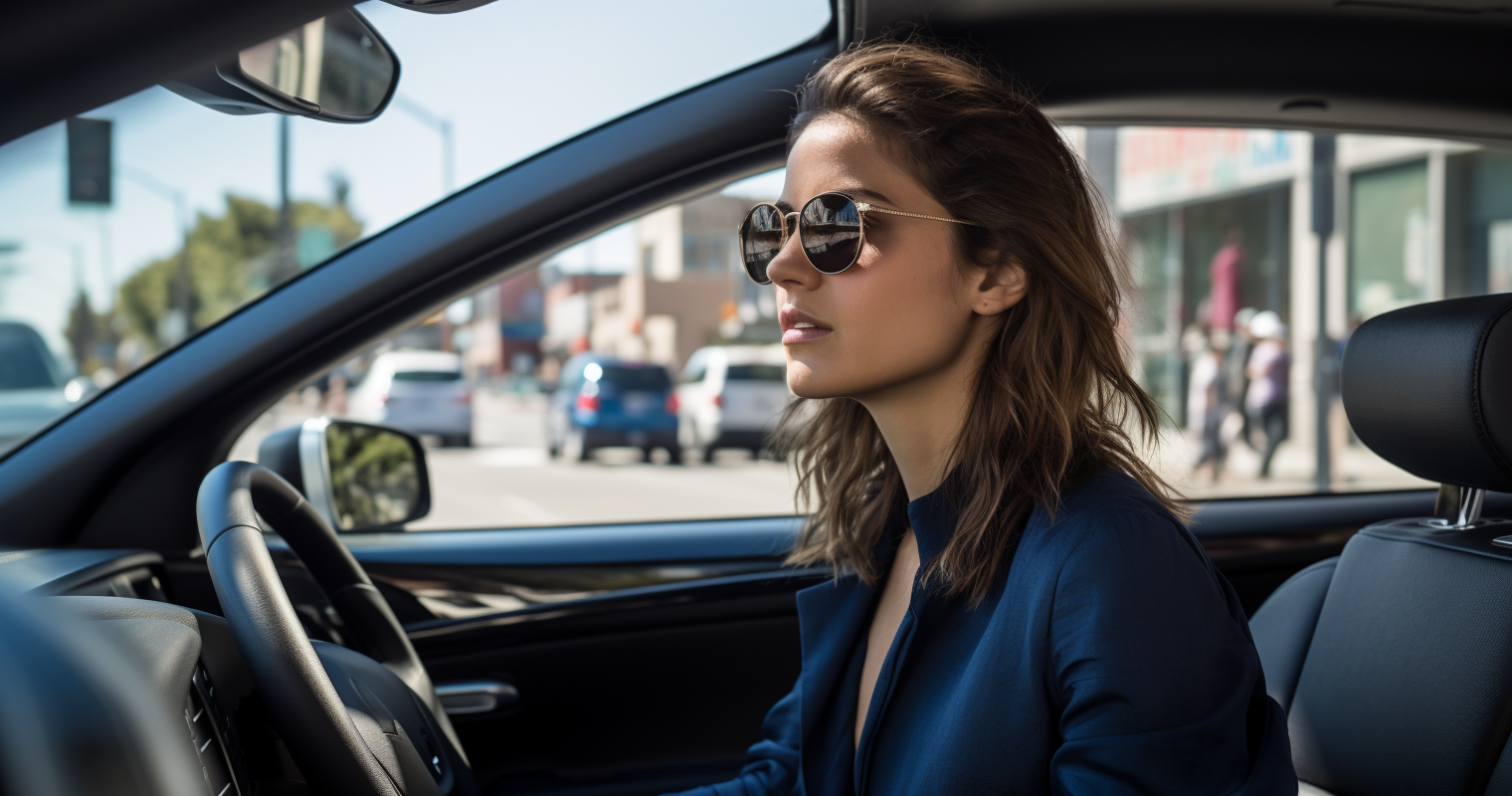
Getting behind the wheel in New Zealand means driving on the left, following a clear set of road regulations, and navigating a network that ranges from well-maintained motorways to demanding rural routes. A foreign licence remains valid for up to 18 months; if your licence is not issued in English, you will need an International Driving Permit (IDP). Speed limits, alcohol regulations, and road safety enforcement are taken seriously throughout the country.
| Item | Details |
|---|---|
| Side of road | Left-hand side |
| Speed limits (as of 2024) | 50 km/h urban; 100 km/h open road/motorway |
| Drink-driving limit (as of 2024) | 50 mg/100 ml blood (age 20+); zero for under 20s |
| Foreign car licence validity | Up to 18 months from last entry into New Zealand |
| IDP required? | Yes, if licence is not in English |
| Road deaths (2025, provisional) | 272 (down from 292 in 2024) — NZ Police |
| Emergency number | 111 (police, fire, ambulance) |
Is New Zealand safe to drive in?
New Zealand has been recording meaningful gains in road safety over recent years. The provisional road death toll for 2025 stands at 272, a reduction from 292 in 2024 and the third consecutive annual decline — a trend widely credited to strengthened police enforcement and advances in vehicle safety technology. Even so, genuine hazards remain, and newcomers should treat driving here with appropriate caution.
Approximately 68% of road fatalities occur on rural roads, which reflects the character of the country’s network. In contrast to heavily urbanised Western European nations where long-distance travel largely takes place on multi-lane motorways, journeys between New Zealand’s cities frequently involve single-carriageway state highways shared with oncoming traffic, livestock crossings, and sharp corners. Multi-lane motorways are limited, and many roads are narrow and twisting — meaning travel times are often much longer than distances suggest.
Urban roads have a fatal crash rate of 0.47%, compared to 1.85% on open and rural roads — nearly four times greater. This striking difference means that intercity driving carries substantially more risk than city commuting. New arrivals should exercise particular care on rural state highways, especially during bad weather or when travelling unfamiliar routes.
Excessive speed remains one of the primary causes of serious crashes in New Zealand, contributing to 109 of 285 fatal crashes (38%) in 2021. Impaired driving is also a leading factor in road deaths, with drug and alcohol use affecting a disproportionate number of incidents. During the 2024/25 financial year, police conducted close to four and a half million breath alcohol tests and issued more than half a million speeding infringements — a clear signal that enforcement is both active and consistent. For the latest road safety figures, visit the Ministry of Transport’s road safety annual statistics page.
The KiwiRAP (New Zealand Road Assessment Programme) was launched in 2008 as a collaborative initiative between the NZ Automobile Association, the Ministry of Transport, the NZ Transport Agency, ACC, and NZ Police, with the aim of evaluating and improving the safety of the country’s major highways. Of the 35 highest-risk highways identified by the programme, 26 have since undergone significant safety upgrades, with some corridors recording reductions of more than 78% in fatal and serious crashes between 2009 and 2023.
What side of the road do you drive on in New Zealand?
Traffic in New Zealand travels on the left-hand side of the road, with the steering wheel positioned on the right. This is consistent with Australia, Japan, the United Kingdom, and much of Asia and the Pacific. If you are coming from a country where traffic flows on the right — such as the United States, Canada, or most of continental Europe — a deliberate mental adjustment will be necessary.
The highest-risk moments for drivers switching sides tend to occur at junctions, after a stop, or when making turns. Turning right across oncoming traffic (the equivalent of a left-turn in right-hand-traffic countries) requires crossing active lanes and warrants close attention. Roundabouts in New Zealand circulate in a clockwise direction, which is the reverse of what drivers from right-hand-traffic countries will be accustomed to.
Fatigue and inattention are well-established factors in wrong-side driving errors among newly arrived motorists. Taking regular breaks, avoiding lengthy drives straight after a long-haul flight, and spending time familiarising yourself with local roads before driving alone are all advisable. A number of expats find it helpful to place a visible note reading “KEEP LEFT” on the dashboard during their first few weeks as a simple but practical reminder.
What are the main driving rules in New Zealand?
New Zealand’s road rules are established under the Land Transport (Road User) Rule 2004 and enforced by New Zealand Police. While broadly comparable to those in the UK and Australia, there are a number of specifics that every driver should understand before taking to the road.
Speed limits
The default speed limit is 100 km/h on open roads and highways, and 50 km/h within towns and urban areas, unless road signs indicate a different limit. Some roads are designated as Limited Speed Zones (LSZ), marked by a sign displaying the letters “LSZ”, where no fixed speed limit applies but drivers must travel at a speed appropriate to current conditions. Certain roads may operate under reduced limits of 70 km/h or 80 km/h. Signage should always be checked carefully, as local limits can differ considerably from the defaults.
Drink-driving limits
The legal alcohol limit for drivers aged 20 and over is 250 micrograms (mcg) per litre of breath, or 50 milligrams (mg) per 100 millilitres (ml) of blood (as of 2024). For drivers under 20, the limit is zero. This is more stringent than in several comparable countries — for instance, the United States sets its blood alcohol limit at 0.08%, while New Zealand’s equivalent is 0.05%. Police carry out frequent random roadside breath tests, particularly in tourist-heavy areas such as Queenstown. The safest course of action is to avoid any alcohol before driving.
Mobile phones
Using a hand-held mobile phone while driving is prohibited in New Zealand. Only hands-free use is permitted. This covers making and receiving calls, sending texts, and operating apps while holding the device. Using a phone secured in a cradle for navigation purposes is generally allowed, but the device must not be picked up or held at any point while the vehicle is moving.
Seatbelts and child restraints
All drivers and passengers must wear a seatbelt or appropriate child restraint at all times, in both front and rear seats. The driver bears legal responsibility for ensuring that all passengers under 15 are properly secured in a suitable seatbelt or child restraint. Children must be placed in car seats that meet the required safety standards, and no child under twelve may travel in the front of a vehicle without an appropriate restraint system.
Give way and priority rules
At uncontrolled intersections, New Zealand operates a “give way to the right” rule, similar to the Australian system. Vehicles turning right must yield to all oncoming traffic and to pedestrians who are crossing. Single-lane bridges are a frequent feature of rural roads. Signage at each bridge indicates which direction has priority — sometimes you must stop and wait, sometimes the traffic coming the other way does. Always approach these bridges slowly, confirm the right of way, and never assume you may proceed without checking.
Overtaking rules
Overtaking is prohibited where a yellow centre line runs along the middle of the road. The yellow line signals that passing is too hazardous in that location. Turning left at a red traffic light is not permitted in New Zealand — you must remain stationary until a green signal is displayed, unless a dedicated filter arrow permits a turn in a specific direction.
Drug driving
It is an offence to drive while impaired by any substance, or while drugs are present in the body at levels indicating recent use. The law applies equally to illicit drugs, legal recreational substances, and prescription medications, as all have the potential to impair driving ability. If you are prescribed medication, consult your doctor about whether it is safe to drive before getting behind the wheel.
For comprehensive information and current penalty details, refer to the NZ Transport Agency Waka Kotahi Road Code and the New Zealand Police road safety pages.
What equipment are you legally required to carry in your car in New Zealand?
New Zealand’s mandatory in-vehicle equipment requirements are comparatively modest when measured against many other countries. Unlike France, where drivers must carry a breathalyser and a warning triangle by law, or Germany, where a first aid kit and warning triangle are required, New Zealand places no legal obligation on private vehicle drivers to carry first aid kits, warning triangles, high-visibility vests, fire extinguishers, or breathalysers.
Nevertheless, there are strict vehicle compliance requirements that all cars must satisfy. Any vehicle used on New Zealand roads must hold a current Warrant of Fitness (WoF) — a periodic roadworthiness inspection — along with current vehicle registration. Both must be kept valid and appropriately displayed. Driving a vehicle with an expired WoF or lapsed registration can lead to fines and the vehicle being prohibited from use on public roads.
If you are towing a trailer, the law requires that it be fitted with lights, a towbar, trailer brakes, stop lamps, reflectors, and direction indicators, and that it holds its own Warrant of Fitness and vehicle registration label. These are legal requirements rather than optional recommendations.
Although not compulsory, it is strongly advisable to carry a first aid kit, a reflective warning triangle or road flares, a torch, and a high-visibility vest — particularly if you intend to travel on rural roads, mountain passes, or in regions subject to harsh weather. For vehicles imported from overseas and registered locally in New Zealand, the same WoF and registration rules apply. For the most current compliance information, consult the NZ Transport Agency Waka Kotahi (NZTA).
What are the most important road signs in New Zealand?
Road signage in New Zealand follows standard international symbols, and all distances are shown in kilometres (km). New Zealand is a contracting party to the 1949 Geneva Convention on Road Traffic but is not a signatory to the 1968 Vienna United Nations Convention on Road Traffic. In practice, the vast majority of signs will be familiar to drivers accustomed to international road sign conventions, though a handful are specific to New Zealand or regularly cause confusion among new arrivals.
Signs unique to or commonly misunderstood in New Zealand
- LSZ (Limited Speed Zone): Where a sign bearing the letters “LSZ” is displayed, no fixed speed limit is in force. Instead, drivers must select a speed that is appropriate and safe for prevailing conditions. This concept does not exist in most other countries and frequently surprises drivers who are new to New Zealand roads.
- One-lane bridge signs: Dedicated signs at single-lane bridges use a large arrow to indicate the direction with right of way and a smaller arrow for the direction required to give way. These signs appear very frequently on rural roads throughout the country.
- Yellow centre lines: Where a yellow line rather than a white line marks the centre of the road, overtaking is prohibited. The yellow colour signals that passing another vehicle in that location is too dangerous.
- No-passing lines: A solid white or yellow centre line means overtaking is not permitted. A broken line indicates that overtaking is allowed when it can be done safely.
- Broken yellow edge lines: A broken yellow line running along the roadside edge means parking is prohibited at all times. These markings also appear around bus stops as a reminder that stopping or parking there is not allowed.
Traffic lights
Traffic lights in New Zealand follow the standard international sequence: red (stop), amber (prepare to stop, or proceed with caution if stopping safely is not possible), and green (go). There is no combined red-amber phase before green, as found in some European countries such as Germany or Sweden — the signal moves directly from red to green.
Left turns on a red light are not permitted in New Zealand. You must wait for a green signal to proceed. Some junctions have dedicated green filter arrows that allow turns in specific directions. Red-light cameras operate at many intersections in major cities, and running a red light is treated as a serious offence enforced both by cameras and police patrols.
What must you do if you have a road accident in New Zealand?
Being involved in a road accident in New Zealand brings with it clear legal duties. Leaving the scene or failing to exchange information after a collision is a criminal offence. The steps below reflect current legal obligations — always confirm with official sources, as requirements may be subject to change.
- Stop your vehicle. You are legally obliged to remain at the scene of any accident involving injury, property damage, or a collision with another vehicle, animal, or structure. Driving away is not permitted.
- Check for injuries and contact emergency services if necessary. Call 111 to reach police, fire, or ambulance. Clearly state your location and the nature of assistance required. This number is free from any phone, including mobile phones without credit.
- Make the scene as safe as possible. If conditions allow, move vehicles out of the traffic flow. Switch on hazard lights and, if you have them available, position warning triangles or flares to alert approaching drivers.
- Exchange details. You are legally required to provide your name, address, and vehicle registration number to any other driver involved, as well as to anyone whose property has been damaged. Obtain the same information from the other party.
- Report to police where required. If any person has been injured, you must report the accident to New Zealand Police as soon as reasonably practicable. If police attend the scene, they will complete a Traffic Crash Report. For damage-only accidents where the other party cannot be located, the incident should be reported to the nearest police station.
- Inform your insurer. Notify your insurance provider as promptly as possible, even if you do not believe you were at fault. Supply all information collected at the scene, including any photographs taken.
- Accident Compensation Corporation (ACC). New Zealand operates a no-fault injury compensation scheme administered by the Accident Compensation Corporation (ACC). If you or any other person sustains injuries in a road accident, ACC can cover medical treatment costs and lost earnings regardless of who was responsible. This entitlement applies to everyone in New Zealand, including temporary visitors and residents.
Road accidents in New Zealand are handled directly by New Zealand Police — there is no dedicated traffic police force. For non-emergency reporting, use the New Zealand Police website. Always verify current reporting obligations with New Zealand Police, as these may be updated (as of 2024).
Where can you find up-to-date road traffic information for New Zealand?
Keeping up with road conditions is particularly important in New Zealand, where weather can shift rapidly — especially on South Island alpine passes — and rural routes may be disrupted by flooding, slips, or livestock on the road. A range of official and widely used resources are available to help drivers stay informed.
Official government resources
- Waka Kotahi Journey Planner / Traffic NZ: The NZ Transport Agency operates journeys.nzta.govt.nz, which delivers real-time traffic updates, road closure notifications, incident reports, and estimated travel times on state highways nationwide.
- Ministry of Transport: The Ministry of Transport website offers policy guidance and safety information, including comprehensive road safety statistics.
Navigation and mapping apps
Google Maps and Apple Maps are both in wide use across New Zealand and offer real-time traffic data, congestion information, and alternative route suggestions. Waze is also popular, particularly among regular commuters in Auckland and Wellington. These applications perform reliably on New Zealand roads and are frequently updated, though coverage may be patchy in very remote locations.
Radio traffic services
New Zealand radio stations broadcast regular traffic bulletins, especially during morning and evening peak hours. Stations including Newstalk ZB and various local commercial broadcasters carry traffic updates for Auckland, Wellington, and Christchurch. In areas where mobile coverage is limited, radio remains the most dependable real-time source of road information.
Winter and hazard information
For mountain passes and alpine crossings — including the Crown Range Road, Lewis Pass, and Arthur’s Pass — the MetService weather service provides detailed road weather forecasts. The New Zealand Automobile Association (AA) also publishes travel alerts and road condition updates at aa.co.nz. Checking conditions before any alpine journey in winter is strongly recommended.
How does parking work in New Zealand?
Parking in New Zealand is governed by a combination of national legislation and local council bylaws, meaning rules and charges differ noticeably between cities and regions. Unlike certain European cities where parking meters are exclusively coin-operated or vignette-based, New Zealand’s urban parking infrastructure increasingly relies on apps and electronic payment machines.
On-street paid parking
In city centres, paid parking is generally managed through ticket machines or dedicated parking apps. ParkMate, Parkable, and council-specific apps such as AT Park in Auckland are commonly used. Time-limited parking zones — such as “P60” indicating a maximum stay of 60 minutes — are widespread in urban areas. Always check signs carefully for time restrictions and hours of operation. A broken yellow line along the road edge indicates that parking is prohibited at all times; these markings are also found around bus stops as a reminder that stopping there is not permitted.
Parking in major cities
Auckland carries the country’s heaviest traffic volumes and some of its most intricate parking arrangements. Auckland Transport (AT) oversees on-street and off-street parking across the city. Wellington and Christchurch also have paid parking zones managed by their respective city councils. For current rates and permit information, contact the relevant authority directly: the Auckland Transport website, Wellington City Council, or Christchurch City Council. Charges vary and are revised periodically — always check the official council website for up-to-date figures (as of 2025).
Resident parking permits
Most major councils offer resident parking permit schemes in high-demand areas. Eligibility requirements and associated costs vary between councils. Applications are typically submitted through the relevant local council’s website and require proof of residence and current vehicle registration details. Contact your local council for current application processes and fee structures.
Disabled parking permits
The disabled parking permit system in New Zealand is administered by the NZ Transport Agency Waka Kotahi (NZTA). A New Zealand disabled parking permit (the equivalent of a blue badge) allows holders to use designated disabled parking spaces and, in certain cases, to remain longer in time-restricted zones. Applications are submitted through NZTA and must be supported by appropriate medical documentation.
Overseas disabled parking permits — including those issued under EU or UK schemes — are not automatically recognised in New Zealand. If you have a mobility-related disability, you should apply for a New Zealand permit through NZTA upon arrival. The AA can also provide assistance with the application process. Refer to the NZTA website for the most current eligibility criteria and application fees (as of 2025).
Can you drive in New Zealand on a foreign or international licence?
New Zealand offers reasonably generous provisions for drivers holding overseas licences, but the applicable rules depend on the language of your licence, your intended length of stay, and whether you have previously held a New Zealand licence.
Driving on a foreign licence
You may drive using a foreign car licence for a maximum of 18 months from your most recent date of entry into New Zealand. An overseas motorcycle or truck licence is valid for up to 12 months. Each time you re-enter New Zealand, a new 18-month period (for car licences) or 12-month period (for motorcycle and truck licences) begins.
If your overseas licence is not written in English, you must also carry an accurate English translation or a valid International Driving Permit (IDP). An IDP may be current or expired by up to 6 months (for car licences only), but your current overseas licence must be carried alongside it at all times.
International Driving Permit (IDP)
New Zealand is a signatory to the 1949 United Nations Convention on Road Traffic, which recommends that visitors hold an International Driving Permit. An IDP must be obtained in your country of residence before you travel to New Zealand, and it serves as confirmation that you hold a valid licence in your home country. The IDP is recognised for 12 months in New Zealand, after which you will need to obtain a New Zealand driver licence.
Being caught driving without an acceptable English translation or IDP may result in prosecution for driving unlicensed or without an appropriate licence, carrying an infringement fee of NZ$400, or up to NZ$1,000 if the matter proceeds to court (as of 2024). You may also find that your insurance cover is invalidated in the event of an accident.
Applying for a New Zealand driver licence
Once your entitlement to drive on a foreign licence has expired, or when you become a permanent resident, you will need to obtain a New Zealand driver licence. This process is managed by NZ Transport Agency Waka Kotahi (NZTA). Depending on your country of origin, it may be possible to convert your licence without a practical driving test, or you may be required to pass a theory and/or practical test. Countries with bilateral recognition agreements with New Zealand — including Australia, the UK, South Africa, Canada, and several others — may benefit from simplified conversion pathways. Always confirm the current list of recognised countries and required tests directly with NZTA, as these arrangements are periodically reviewed.
The process for applying for a New Zealand driver licence as a new resident is as follows:
- Visit an NZTA-authorised agent or AA centre in person.
- Provide your current valid overseas licence (and a certified translation or IDP if it is not in English).
- Provide proof of identity and your New Zealand residency or visa status.
- Complete a vision screening test at the agent’s premises.
- Pass a theory (Road Code) test if required for your licence category or country of origin.
- Pass a practical driving test if required (this depends on your home country and licence type).
- Pay the applicable licence fee — check the NZTA website for current fees (as of 2025).
- Receive your New Zealand driver licence card, typically within days of approval.
For the most current requirements, fees, and list of recognised overseas licences, always check directly with NZ Transport Agency Waka Kotahi before making arrangements.
Frequently Asked Questions About Driving in New Zealand
Do I need car insurance to drive in New Zealand?
New Zealand does not impose a legal requirement for comprehensive or third-party property insurance in order to drive, which sets it apart from many other countries. A minimum of third-party insurance is required, however, and it is prudent to be able to demonstrate coverage. New Zealand’s Accident Compensation Corporation (ACC) scheme covers personal injury costs arising from accidents regardless of fault, funded through vehicle licensing levies. Despite this, you remain personally liable for any damage caused to other vehicles or property, making comprehensive motor insurance strongly advisable.
Are there toll roads in New Zealand?
Yes, New Zealand operates a small number of toll roads, located mainly in Auckland and Tauranga. These function entirely electronically — there are no physical toll booths. Payment can be made in advance or within a set number of days after travel through the NZTA toll roads website or by phone. Rental car companies usually provide guidance on toll arrangements. Failing to pay within the required window results in a fine.
What are the penalties for drink-driving in New Zealand?
Drink-driving penalties are substantial. Drivers aged 20 and over found with a blood alcohol level between the legal limit and twice that level may face fines and demerit points. Those significantly over the limit or those who reoffend face escalating consequences including criminal charges, licence disqualification, and imprisonment. Drivers under 20 detected with any alcohol in their system face immediate sanctions under the zero-tolerance rule. Consult the Ministry of Transport for current penalty schedules (as of 2024).
Are there winter driving requirements in New Zealand?
There is no national law in New Zealand requiring winter tyres or snow chains. However, alpine passes — including the Lindis Pass, Lewis Pass, Crown Range Road, and Milford Road — can be icy or snow-covered during winter (June–August). NZTA may enforce chain controls on specific routes during severe weather. If you are planning to drive in alpine or high-country areas during winter months, carrying snow chains and checking NZTA road conditions before setting out is strongly advisable.
Can I drive with children in New Zealand, and what child seat rules apply?
Children aged 0–6 must travel in an approved child seat. No child under twelve may sit in the front of a vehicle without a suitable restraint system. The driver is legally responsible for ensuring that all passengers under 15 are secured in an appropriate seatbelt or child restraint. Child car seats must comply with approved safety standards — consult the NZTA website for details on approved seat types and correct installation.
What should I do if I break down on a New Zealand road?
If your vehicle breaks down, pull as far off the road as you safely can, activate your hazard lights, and deploy warning triangles or flares if you have them. The NZ Automobile Association (AA) provides a round-the-clock breakdown service. Members of international automobile clubs affiliated with the FIA/AIT can present their membership card to the AA on arrival in New Zealand and access breakdown assistance at no charge. For emergencies involving injuries, call 111. For non-emergency police matters, call 105.
Can I use my satellite navigation or GPS device while driving in New Zealand?
Yes. Operating a GPS device or phone that is secured in a mount for navigation purposes is legal in New Zealand, provided you do not pick up or hold the device at any point while the vehicle is in motion. Hand-held mobile phone use — whether for calls, texting, or any app — is prohibited while driving. Using voice-activated navigation through a mounted device is the recommended approach for staying on course without breaking the law.
Is it safe to drive at night in New Zealand?
Night driving in New Zealand calls for heightened vigilance, especially on rural roads where livestock, deer, and possums frequently wander onto the carriageway. Streetlighting is largely absent outside urban centres, and roads can be narrow with tight bends. Headlights are compulsory at night and should also be used during the day whenever visibility is reduced by rain, fog, or when passing through tunnels — being visible to others is as important as being able to see the road ahead. If you are fatigued from a long drive or a recent flight, always stop and rest rather than continue — driver fatigue is a significant contributor to road deaths in New Zealand.