

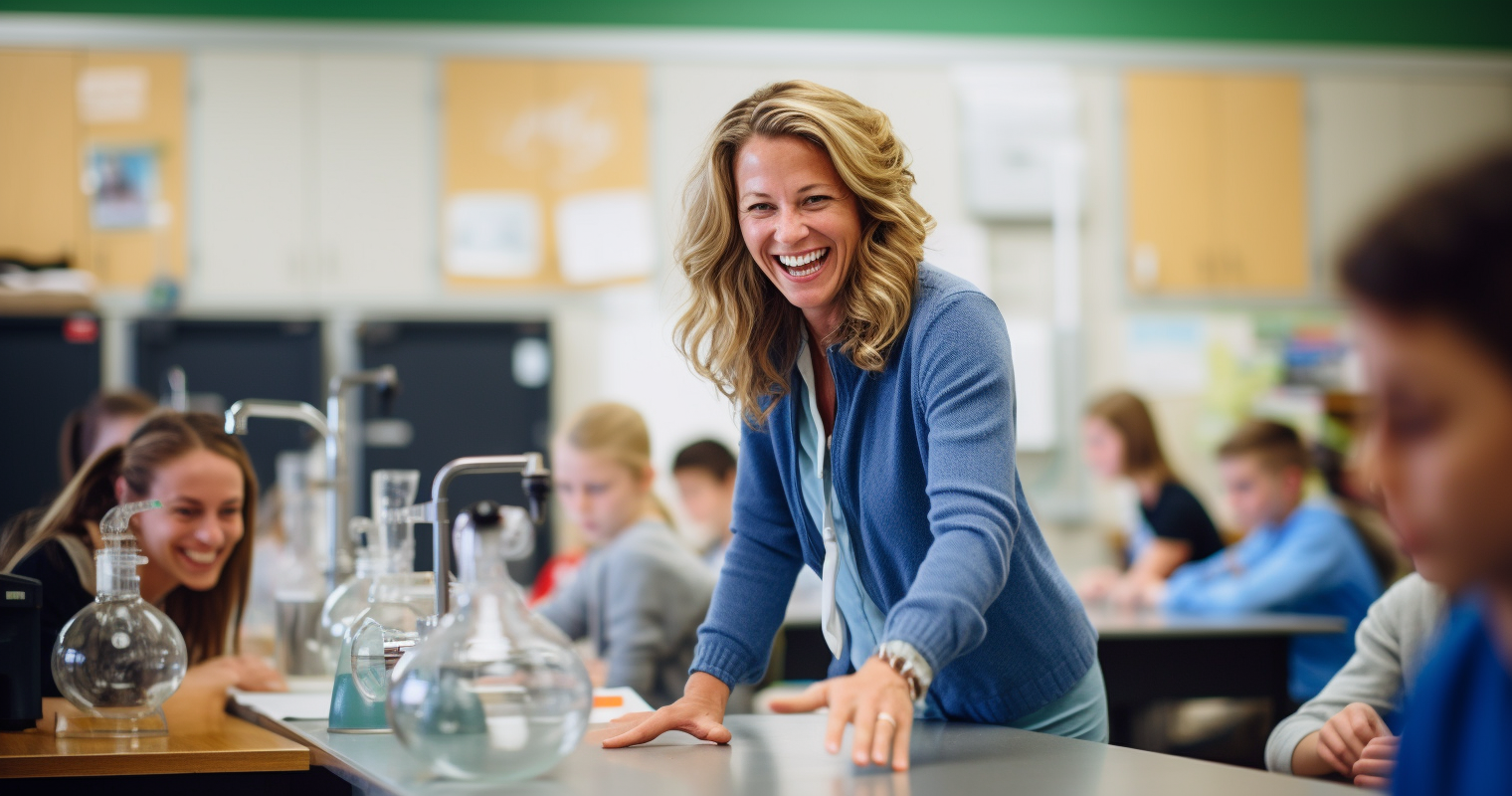
Poland provides a well-organised, state-funded education system that is compulsory between the ages of 6 and 18 and commands solid international respect. Public schools are free of charge and accessible to all children living in the country, with the system spanning pre-primary, eight-year primary, and upper secondary levels. Expat families relocating to Poland will also find a steadily expanding range of private, bilingual, and international school options concentrated in the country’s larger cities.
| Item | Details |
|---|---|
| Compulsory education age range | Age 6 (pre-primary year) to age 18 (as of 2025) |
| Primary school duration | 8 years (ages 7–15), known as szkoła podstawowa |
| State school tuition | Free for all resident pupils at public schools (as of 2025) |
| Private school fees (Warsaw) | Approx. PLN 700–3,300/month; international schools PLN 40,000–126,000/year (as of 2025) |
| University tuition (non-EU students) | Approx. EUR 2,000–6,000/year at public institutions (as of 2024) |
| School year start | 1 September each year |
How good is the education system in Poland?
Poland’s schools have built a strong reputation internationally, most notably at the primary level. In the 2022 OECD TIMSS assessment, Polish pupils in fourth grade achieved a mean score of 546 points in mathematics and 550 in science, placing them among the highest-performing nations in the study. These results offer considerable reassurance to expat families weighing up whether to enrol their children in local schools.
In the 2018 PISA cycle, Polish secondary pupils ranked third in Europe in both mathematics and science, and fourth in reading comprehension — improvements across all three domains compared with the 2015 results. According to the 2022 PISA data, however, secondary-level performance in mathematics and science declined between 2018 and 2022, even though results continued to exceed the EU average. Families seeking the most current picture should consult the OECD’s Education GPS portal and the European Commission’s Education and Training Monitor, which produces annual country-level reports covering Poland.
In the creative thinking component of the 2022 PISA cycle, Polish students scored above the EU average. One persistent structural issue is the challenge of recruiting and retaining teachers: despite over 75% of young people acknowledging the vital role that teachers play in Poland’s future, the profession struggles to attract new entrants due to low pay, heavy workloads, and limited social prestige. This difficulty is common across many European systems and is worth noting, particularly in comparison with countries that have made significant recent investments in teacher remuneration.
Taken as a whole, Poland’s state education system is academically robust, particularly at primary level. The country has a deep-rooted tradition of valuing learning, literacy rates are very high, and the system has undergone extensive modernisation following Poland’s accession to the EU in 2004.
At what age is education compulsory in Poland, and how is schooling structured by age?
Compulsory education in Poland extends until the age of 18. All children who have turned six are required to attend a mandatory preschool year — either at a nursery school or in a preparatory class attached to a primary school. This “zero year” (zerówka) serves as a transitional stage between early childhood provision and formal schooling, fulfilling a similar function to reception classes found in other European countries.
Formal instruction in Grade 1 of primary school begins at age 7. Six-year-old children may also begin first grade at their parents’ request, provided they attended kindergarten during the preceding school year or hold a positive assessment from a psychological and pedagogical counselling centre.
The eight-year primary school (szkoła podstawowa) is split into two phases: the first phase covers Grades I to III and delivers integrated early education, while the second phase covers Grades IV to VIII and introduces subject-based teaching. The primary cycle concludes with a compulsory eighth-grade examination; together with the primary school leaving certificate, the examination results form the basis for admission to post-primary institutions.
General secondary schools (liceum ogólnokształcące) serve pupils aged 15 to 19 over a four-year programme. Vocational and technical pathways are primarily offered through technical schools (technikum), which run for five years and lead to the Matura qualification. Full-time compulsory schooling — whether in a school setting or otherwise — applies to young people who have completed primary school and continues until the age of 18.
The following table summarises the structure of schooling by age in Poland as of 2025:
| Stage | Age range | Duration | Polish name |
|---|---|---|---|
| Compulsory pre-primary (zero year) | 6 | 1 year | Zerówka / Przedszkole |
| Primary school (Stage I: integrated) | 7–10 | 3 years (Grades I–III) | Szkoła podstawowa |
| Primary school (Stage II: subject-based) | 10–15 | 5 years (Grades IV–VIII) | Szkoła podstawowa |
| General upper secondary | 15–19 | 4 years | Liceum ogólnokształcące |
| Technical secondary | 15–20 | 5 years | Technikum |
| Vocational school (Stage I) | 15–17/18 | 2–3 years | Branżowa szkoła I stopnia |
What types of schools are available in Poland?
The public sector is by far the dominant force in Polish education: the number of state schools and the pupils they serve vastly outnumbers that of non-public institutions. In the 2024/2025 school year, approximately 3.2 million children attended around 14,000 primary schools, with 88.4% of those pupils enrolled in public establishments.
The minister responsible for school education sets national standards, including core curricula, while communes (gmina — the lowest tier of local government) bear organisational and financial responsibility for primary schools in their area and make decisions about the local school network, staffing, and resources.
The principal categories of school available to families in Poland are:
- Public state schools (szkoły publiczne): Attendance at public primary schools is free of charge for all pupils. These schools follow the national core curriculum and represent the default choice for the great majority of families. School places are allocated according to defined catchment zones.
- Non-public private schools (szkoły niepubliczne): A review of several dozen private schools in Warsaw indicates that monthly tuition fees range from PLN 700 to PLN 3,300, with a figure at or just above PLN 1,000 per month being most typical. Private schools must adhere to the national core curriculum but may supplement it with enhanced programmes, smaller class sizes, or distinctive pedagogical methods.
- Social schools (szkoły społeczne): A category particular to Poland, these non-public schools are managed by parents’ associations or educational societies and often deliver alternative or enriched programmes. Their fees are generally more modest than those of fully private schools.
- Faith schools (szkoły wyznaniowe): Predominantly Catholic in character, these non-public schools incorporate religious education into their provision. They are subject to the same core curriculum requirements as other registered schools.
- International schools: Found mainly in Warsaw, Kraków, Wrocław, and Gdańsk, international schools follow overseas frameworks such as the British, American, or International Baccalaureate (IB) curriculum. Their fees are considerably higher than those of domestic private schools — details are provided in the dedicated section below.
- Bilingual schools: Certain public and private schools offer bilingual programmes in which a proportion of lessons are delivered in a second language, most frequently English or German. These can represent a practical middle ground for expat families who wish to integrate their children into the Polish system while maintaining a second language of instruction.
Primary schools may be public or non-public, and public schools can in some circumstances be established or run by private bodies. The requirement for compulsory classes to follow the national core curriculum for general education applies equally to all primary schools, regardless of their legal status.
What curriculum and qualifications do schools in Poland follow?
Poland operates a unified national core curriculum (podstawa programowa), issued by the Ministry of Education. The education system is governed by Acts of Parliament and ministerial regulations, with the Minister of National Education responsible for pre-school, general, and vocational education. All public schools and registered non-public schools must teach to this core, although they retain a degree of flexibility in how the content is delivered.
At the close of primary school (Grade 8), pupils sit the eighth-grade examination, a written assessment covering three compulsory subjects: Polish language, mathematics, and a foreign language of the pupil’s choosing. There is no pass mark as such — the exam cannot technically be failed — but results carry significant weight in secondary school admissions, broadly comparable in function to standardised primary-leaving assessments in other European countries.
Students who complete a general secondary school (liceum) over four years become eligible to sit the Matura (egzamin maturalny), Poland’s school-leaving examination and the principal gateway to higher education. Its standing is broadly equivalent to that of the French Baccalauréat or the German Abitur. The Matura includes compulsory written papers in Polish, mathematics, and a modern foreign language, alongside optional extended-level subjects selected by the student.
The overarching Act on the Integrated Qualifications System of 2015 established the eight-level Polish Qualifications Framework (PQF), referenced to the European Qualifications Framework (EQF). This alignment means that Polish qualifications are formally recognised across EU member states — a practical reassurance for families who may subsequently relocate to another European country.
For internationally mobile families, it is worth knowing that more than 30 international schools across Warsaw, Kraków, Wrocław, and Gdańsk offer British, American, IB, and other internationally recognised curricula. The IB Diploma Programme in particular is accepted by universities around the world and has become an increasingly popular choice for expat families planning to pursue higher education outside Poland.
What are typical school hours and holidays in Poland?
Lessons typically begin at 8 a.m. and conclude around 2–3 p.m. in single-shift schools, though they may finish later where two-shift arrangements are in operation. Each lesson lasts 45 minutes, with breaks ranging from around 5–10 minutes to 25 minutes. Two-shift systems are more common in larger urban schools where classroom space is at a premium.
The length of a child’s school day also depends on the size of the school building, the number of available classrooms, and the after-school facilities on offer. Many schools provide extended-day supervision (świetlica) for younger pupils, which can run until 4 or 5 p.m. and offers working parents a supervised childcare option once formal lessons have ended. School lunches are typically paid for separately through the school canteen.
The Polish school year begins on 1 September and concludes on 31 August of the following year. The academic calendar generally follows this pattern:
- Autumn semester: September through January, incorporating a two-week winter break (ferie zimowe) that falls in January or February and is staggered across different regions of the country.
- Spring semester: February through June, including an Easter holiday of roughly one week and a long summer vacation from late June to the end of August.
- Public holidays: Schools are closed on all Polish national public holidays, including All Saints’ Day (1 November), Independence Day (11 November), and Constitution Day (3 May).
The exact dates of the winter mid-year break differ by voivodeship (region), as various parts of Poland take their holidays at different points across January and February. Families should consult their regional education authority (kuratoria oświaty) or the school directly for precise dates each academic year.
How do you enrol a child in school in Poland?
Access to public schools is organised through catchment zones, which are legally designated areas within a commune’s jurisdiction, comprising one or more localities or parts thereof. Children who reside within a school’s catchment area have a statutory entitlement to attend it, and this entitlement is taken into account during the admissions process. In practice, this means the local state school is a guaranteed option for most families.
The typical steps for enrolling a child in a state primary school are as follows:
- Identify your catchment school: Contact your local commune (gmina) office or use the online tools provided by your municipality to establish which school is designated for your home address.
- Gather documentation: You will generally need your child’s birth certificate (or a certified Polish translation), proof of address in Poland such as a tenancy agreement or utility bill, the child’s health and vaccination records, and any previous school certificates or reports. Documents in a language other than Polish may require certified translation.
- Submit an application to the school: Schools hold formal enrolment windows, usually between February and April for entry the following September. Contact the school’s secretariat (sekretariat) to obtain and submit the relevant application forms.
- Await confirmation: Children in the catchment area are guaranteed a place. Applications from children living outside the catchment zone are considered in a second round if spaces remain, based on criteria set by the school or local authority.
- Complete any supplementary assessments: Certain bilingual or specialist public schools apply additional admission criteria, such as language assessments. Check with the individual school whether any further steps are needed.
For private and international schools, admissions procedures differ considerably between institutions. Most operate September entry with waiting lists for oversubscribed year groups, and families are advised to apply at least 6–12 months in advance. Documentation requirements are broadly similar to those for state schools, but institutions may additionally request references, conduct interviews, or set entrance assessments.
For authoritative guidance on enrolment procedures and required documentation, consult Poland’s Ministry of Education (Ministerstwo Edukacji) or the regional education authority (kuratoria oświaty) covering your area. Requirements are subject to change, and it is always advisable to confirm current rules directly with the school or local authority before proceeding.
What international schools are available in Poland?
Poland is home to more than 30 international schools located across Warsaw, Kraków, Wrocław, and Gdańsk, offering British, American, IB, and various other internationally recognised curricula. The British curriculum is the most widely used, adopted by around half of all international schools in the country, partly owing to its established Cambridge accreditation; IB programmes are growing in popularity among families who anticipate further international moves.
Fees at international schools span a wide range. Annual tuition costs run from approximately PLN 40,000 to PLN 126,000 (as of 2025), varying by school and year group. Mid-range institutions such as British International School Wrocław or International School Kraków offer quality provision at PLN 47,000–64,000 per year, while budget bilingual schools begin at around PLN 33,000 annually. At the premium end, one of Warsaw’s most prestigious international schools levies an annual tuition fee of roughly PLN 84,400, together with an enrolment fee of PLN 3,000 and a refundable deposit of PLN 4,000. All fees should be confirmed directly with individual schools, as they are subject to annual revision.
International schools in Poland typically offer internationally portable qualifications — including IB, A-Levels, and AP — recognised by universities worldwide, alongside smaller classes of around 12–20 pupils compared with 25–30 in Polish state schools, and a multicultural community drawing children from 40–60 nationalities.
The majority of international schools are based in Warsaw, with a smaller but growing number in Kraków, Wrocław, Gdańsk, and Poznań. These schools have historically catered to diplomatic and corporate expatriate communities; while they were once attended almost exclusively by foreign nationals and diplomats’ families, the growing affluence of Polish society and heightened awareness of international education have broadened their intake considerably.
To locate accredited international schools in Poland, the following directories are useful starting points:
- Council of International Schools (CIS) — lists accredited schools meeting verified quality standards
- International Schools Consultancy (ISC Research) — a comprehensive global directory of international schools
- IB World Schools directory — to identify IB-authorised schools operating in Poland
What higher education options are available in Poland?
Poland’s higher education sector comprises two categories of Higher Education Institution (HEI). Both types offer first- and second-cycle programmes as well as long-cycle Master’s degree programmes, but only university-type HEIs are authorised to deliver third-cycle doctoral programmes and confer doctoral degrees. Poland is home to a number of internationally respected institutions, among them the University of Warsaw and the Jagiellonian University in Kraków — one of the oldest universities in the world, founded in 1364.
Post-secondary pathways include bachelor’s, master’s, doctoral, and postgraduate programmes, the majority of which are free of charge at public institutions for eligible full-time students. Eligibility for tuition-free study is determined by residency and citizenship status.
Full-time study conducted in Polish at state HEIs is free for Polish nationals and for foreign students who qualify to study on the same basis as Polish citizens. This category includes citizens of EU and EEA member states and holders of the Polish Charter (Karta Polaka). All other international students are required to pay tuition fees, which average around EUR 2,000 per year for first-, second-, and long-cycle programmes, and EUR 3,000 per year for postgraduate courses. The overall range is EUR 2,000 to EUR 6,000 per year depending on the institution and programme (as of 2024). MBA programmes may cost substantially more — fees should always be verified directly with individual institutions.
A growing number of Polish universities now offer degree programmes delivered in English, making higher education accessible to students who have not yet achieved fluency in Polish. The official Polish study portal, study.gov.pl, maintained by the Polish National Agency for Academic Exchange (NAWA), provides authoritative information on available programmes, admissions processes, and eligibility for tuition-free study.
What should expat parents know about language of instruction in Poland?
Polish is the language of instruction throughout the state school system. For expat families whose children do not yet speak the language, this represents the most significant practical obstacle to integrating into local schools. Unlike some countries that place newly arrived pupils in dedicated language reception classes before transitioning them to mainstream education, Poland’s approach to language support within state schools varies considerably depending on the municipality.
State schools are obliged to provide some level of assistance to children who arrive without Polish language skills, and schools in larger cities — particularly Warsaw, Kraków, and Wrocław — tend to have greater experience supporting non-Polish-speaking pupils. This has been reinforced in part by the substantial influx of Ukrainian children since 2022: special regulations were introduced to ensure access to education for Ukrainian citizens benefiting from temporary protection, and these measures have encouraged a number of schools to develop more effective language integration practices for all newcomers.
Children typically pick up conversational Polish relatively quickly through classroom immersion — often within one to two school years — but attaining the level of academic fluency needed to perform well across all subjects in a linguistically demanding language like Polish takes considerably longer. Families should factor this into their planning. Younger primary-age children generally adapt more readily than adolescents.
For families who require instruction in another language, bilingual and international schools offer the most practical solution. International schools provide a multilingual, multicultural setting with students drawn from 40–60 nationalities, and most deliver their entire curriculum in English, enabling a child to continue their studies without interruption regardless of their Polish language proficiency. Many also run dedicated English as an Additional Language (EAL) or Language Support programmes for newly enrolled pupils.
One long-term benefit of attending a local Polish school is that children are likely to develop genuine bilingualism — a substantial advantage in later life. That said, families should be honest with themselves about the initial transition period and make thorough enquiries about the language support that any prospective state school can realistically provide before committing to enrolment.
What financial support or subsidies are available for education in Poland?
Public primary school education is free of charge for all children resident in Poland, irrespective of nationality. This is a meaningful benefit for expat families: no tuition fees are levied at state schools, and the catchment zone system guarantees every child a local school place. The mandatory pre-primary year for six-year-olds is likewise provided without charge at public preschools and in preparatory classes at primary schools.
While state schooling itself carries no cost, families should be aware of ancillary expenses. School textbooks were traditionally purchased by parents, though Poland has introduced a textbook provision scheme in recent years. School meals, transport, and after-school care (świetlica) are charged separately, generally at rates that are modest by local standards. Families are advised to enquire with their specific school about current arrangements, as these can vary between institutions and municipalities.
There is no general government subsidy for private or international school fees in Poland. Private primary schools managed by non-public bodies do receive grants from local government budgets to offset part of their running costs — one reason why some private and social schools are able to set fees below those of entirely independent establishments — but this funding flows to the school rather than directly to parents.
At higher education level, the Polish National Agency for Academic Exchange (NAWA) administers scholarship programmes such as the Stefan Banach Scholarship, which supports students from developing countries in undertaking second-cycle studies in engineering, science, and related disciplines at Polish institutions. Individual universities also maintain their own scholarship funds. Families should consult Poland’s Ministry of Education and their local municipal authority for the most current information on any available financial assistance, as entitlements and programmes are subject to change.
Frequently asked questions about education in Poland for expats
Can my child attend a Polish state school if we are not Polish citizens?
Yes. Every child residing in Poland, regardless of nationality, has the right to attend a public state school free of charge. You will need to provide proof of your address in Poland along with standard documents such as a birth certificate. Because of the catchment zone system, your child is guaranteed a place at the local school serving your area. For guidance on which school is assigned to your address, contact your local commune (gmina) office.
Will my child receive support with the Polish language in a state school?
Schools are obliged to offer some level of Polish language support to children who arrive without Polish language skills, but the extent and quality of provision vary considerably between schools and municipalities. Institutions in larger cities that have more experience with international pupils generally provide better assistance. Before enrolling, ask any prospective school directly about its language integration programme. If your child requires more intensive support, bilingual or international schools may be a more suitable option in the near term.
How are foreign school qualifications recognised in Poland?
Foreign school certificates can be recognised for the purposes of gaining admission to a Polish school or university. Depending on the type of qualification, recognition is handled either by a school head or by a regional education authority (kuratoria oświaty). For higher education admissions, foreign degrees may need to be formally recognised (nostrified) or independently assessed. The Polish National Agency for Academic Exchange (NAWA) provides guidance on this process through its website at nawa.gov.pl.
Are there waiting lists for international schools in Poland?
Most international schools admit pupils in September and maintain waiting lists for oversubscribed year groups; families are generally advised to apply 6–12 months ahead of their intended start date. Entry points at the early years and secondary levels fill up particularly quickly, especially at highly regarded schools in Warsaw and Kraków. Get in touch with schools as soon as your relocation is confirmed, and have essential documents — birth certificate, previous school reports, vaccination records — ready to submit without delay.
Can I, as an adult expat, study at a Polish university?
Full-time programmes at state Higher Education Institutions in Poland are free for EU and EEA citizens, as well as for holders of the Polish Charter (Karta Polaka), provided they study in Polish on the same terms as Polish nationals. Students from outside the EU pay tuition fees, which typically range from EUR 2,000 to EUR 6,000 per year (as of 2024) — a figure that remains competitive by European standards. Many universities now offer programmes taught in English. Visit study.gov.pl for official listings of programmes and admissions guidance.
What childcare options exist for children under school age?
Children below the age of three may attend a żłobek (nursery or crèche), which falls under a separate regulatory framework from the school system and typically involves fees, though subsidies are available in certain municipalities. Children aged three to five are eligible to attend a przedszkole (kindergarten or preschool), with state-run options available at little or no cost in many areas. The compulsory pre-primary year for six-year-olds (zerówka) is provided free of charge. The availability of state nursery places varies significantly by location — demand frequently outstrips supply in major cities, so it is advisable to register your interest as early as possible.
Does Poland offer home education as an alternative to school?
Under the Law on School Education, children may fulfil their compulsory education obligation outside of a school setting — that is, at home under parental instruction. Home-based education requires a permit issued by the head of the relevant educational institution, granted upon the parents’ request. Parents must provide a declaration confirming that they will create the conditions necessary for their child to follow the national core curriculum, and they must ensure the child sits annual qualifying examinations at the end of each school year. Home education is lawful in Poland but relatively uncommon; families considering this route should seek guidance from the relevant school or local authority before proceeding.
Is the International Baccalaureate (IB) available in Poland?
Yes. An increasing number of international schools in Poland have been authorised to deliver IB programmes, including the Primary Years Programme (PYP), the Middle Years Programme (MYP), and the IB Diploma Programme (IBDP) at upper secondary level. The IB is becoming an ever more popular choice for families who envisage further international moves, given that the Diploma is recognised by universities throughout the world. To find IB World Schools in Poland, use the official IB School Finder at ibo.org.