
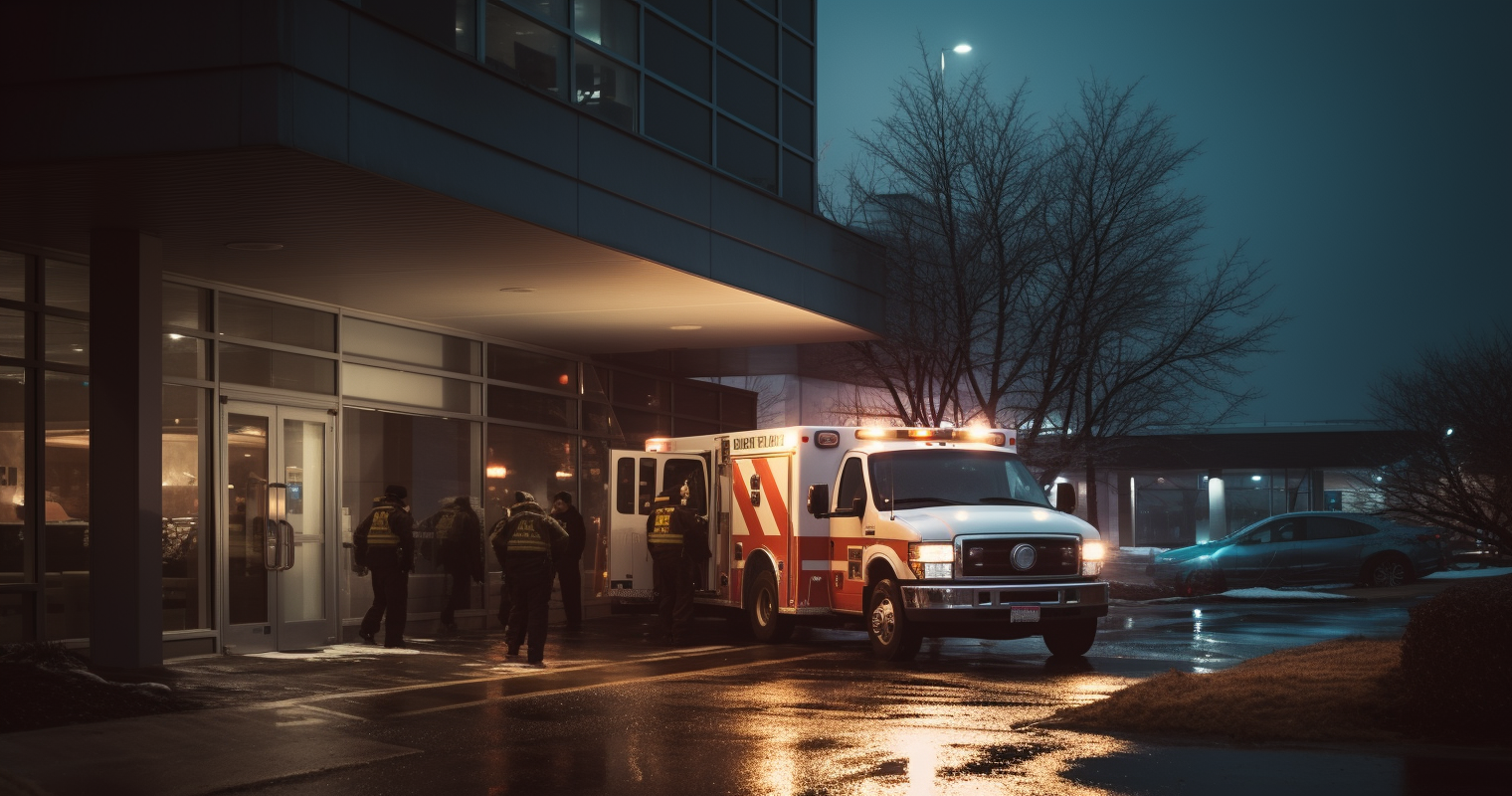
As of 2025, Barbados uses three separate emergency numbers rather than a single unified line: 211 for police, 311 for fire, and 511 for ambulance. Around-the-clock emergency medical care is available at the public Queen Elizabeth Hospital. While Barbadian citizens and established residents benefit from heavily subsidised treatment, visitors and non-residents are generally billed for services — a strong reason why comprehensive health or travel insurance is a practical necessity for any expat living on the island.
| Item | Details |
|---|---|
| Police emergency number | 211 (as of 2025) |
| Fire emergency number | 311 (as of 2025) |
| Ambulance emergency number | 511 (as of 2025) |
| Mental health crisis line | Lifeline Barbados: +1 (246) 536-4500 — free, 24/7 (as of 2025) |
| Main public hospital | Queen Elizabeth Hospital (QEH), Bridgetown — 24/7 A&E, tel: +1 246 436 6450 |
| Emergency treatment cost for non-residents | Fees apply — residents/citizens receive subsidised care; verify current fees with the QEH or the Barbados Ministry of Health |
| Hurricane season | 1 June – 30 November annually |
| Key disaster management body | Department of Emergency Management (DEM): +1 (246) 438-7575 |
What are the emergency numbers in Barbados, and do they cover police, fire, and ambulance?
Many countries channel all emergency calls through a single number — 112 across the European Union, 999 in the United Kingdom, or 911 throughout much of North America. Barbados operates differently, assigning a distinct number to each of the three main emergency services. This is a crucial distinction that every expat should commit to memory before an emergency ever occurs.
The numbers are: Ambulance: 511; Fire: 311; Police: 211. These are confirmed by the UK Foreign, Commonwealth & Development Office (FCDO), which updates its Barbados travel guidance on a regular basis. Programme all three into your mobile phone as soon as you arrive on the island.
It is important to understand that 211, 311, and 511 are short-dial local numbers — they cannot be reached by prefixing the international country code +1 246. If you are using a SIM card issued by a network in another country, you may find yourself unable to dial these lines. Obtaining a local Barbadian SIM card is therefore a sensible precaution, and one worth factoring into your settling-in arrangements.
How do you summon emergency medical help in Barbados, and what can you expect?
To call for an ambulance, dial 511 from a local number. This line connects to the ambulance service operated in conjunction with the Queen Elizabeth Hospital (QEH). When the call is answered, be ready to provide your exact location, a clear description of the emergency, and basic information about the patient — including whether they are conscious and breathing.
The QEH Accident and Emergency Department operates around the clock, every day of the year, handling medical, surgical, and other acute care needs. If the circumstances allow and you prefer not to wait for an ambulance, you can go directly to the hospital; the main switchboard number is +1 246 436 6450.
Like emergency departments in other countries, the QEH’s A&E operates on a triage basis: the most critically ill or injured patients receive attention first, regardless of arrival order. Waiting times can be considerable during busy periods, and you should expect to remain until tests have been carried out and results reviewed. Bring your identification and a list of any current medications whenever you attend.
Emergency physicians at the QEH are trained in emergency medicine and call upon specialist colleagues as the situation demands. Where the assessment indicates a need for specialist follow-up or admission, appropriate referrals will be made during or after your visit.
What steps should you take during a mental health crisis in Barbados?
A dedicated crisis support line is available at all hours to anyone in Barbados experiencing a mental health emergency. Lifeline Barbados can be reached on +1 (246) 536-4500. The service is free of charge, open 24 hours a day including public holidays, and is accessible to everyone on the island irrespective of nationality or residency status. As with any contact number, it is worth verifying that this number remains current before a crisis occurs.
Where a mental health emergency involves immediate risk of harm — either to the individual or to others — you should also dial 511 for an ambulance, or proceed without delay to the Accident and Emergency Department at the Queen Elizabeth Hospital in Bridgetown. The QEH offers a broad range of care including psychotherapy, and A&E staff are equipped to assess the situation and connect patients with appropriate mental health services.
Expats are also encouraged to identify a local therapist or counsellor before any crisis develops. The upheaval of relocating to a new country can place considerable strain on mental wellbeing, and having a professional contact in place ahead of time can make a significant difference. Your GP or the Ministry of Health can provide referrals to accredited practitioners operating on the island.
Where can you receive emergency medical treatment in Barbados?
The primary destination for emergency medical care in Barbados is the Queen Elizabeth Hospital (QEH), situated on Martindale’s Road in Bridgetown, Saint Michael. As the island’s principal acute care facility, the QEH offers an extensive range of medical specialties and is comprehensively equipped to manage emergencies.
Surgical services are available, and the hospital’s specialist capabilities span gynaecology, paediatrics, obstetrics, cardiac surgery, plastic surgery, psychotherapy, radiology, radiography, and ophthalmology. However, given the scale of the island, some complex or highly specialised cases may ultimately require emergency medical evacuation — most commonly to the United States or Trinidad. This makes evacuation cover a particularly important element of any health insurance policy taken out before relocating.
Several private facilities and urgent care options are also available to expats:
- Sandy Crest Medical Centre, Holetown — tel: +1 246 419 4911 (conveniently located for those living on the west coast, in the St. James area)
- FMH Emergency Centre, Bridgetown — tel: +1 246 228 6120
- Urgent Care Mobile — tel: +1 246 538 3838
Across Barbados’s parishes, eight government polyclinics offer free treatment for a range of minor ailments. These are a useful first port of call for conditions that are not life-threatening, particularly during weekday hours. A full list of polyclinic locations is available on the Barbados Ministry of Health website. Always confirm opening times and contact details directly, as these are subject to change.
Is emergency medical care free in Barbados, or will you be charged?
Barbadian citizens are entitled to universal healthcare, funded through general taxation, meaning that nationals and persons formally registered as ordinarily resident in Barbados receive subsidised or free treatment at the QEH and government polyclinics. The standard of care is considered high and facilities are widely accessible to those within this entitlement.
The position for visitors and non-resident expats is quite different. The QEH Fee Regulations — established in 2006 — set out a schedule distinguishing between “citizens and persons ordinarily resident in Barbados” and “others,” with higher charges applying to the latter group. Because this fee schedule is revised from time to time, you should confirm current costs directly with the QEH or the Barbados Ministry of Health rather than relying on figures cited in older sources.
For non-residents — whether tourists passing through or newly arrived expats who have not yet established residency — the potential costs of emergency hospitalisation, specialist consultations, diagnostic imaging, and surgery can be substantial. This is broadly consistent with the situation across much of the Caribbean and Latin America, where upfront payment or demonstrated insurance coverage is often required. It contrasts sharply with systems such as the NHS in the United Kingdom, which extends free emergency treatment to all persons lawfully present in the country.
Do expats require travel or health insurance to access emergency care, and what happens without it?
There is no legal barrier preventing anyone from presenting at the QEH’s Accident and Emergency Department without insurance. However, the financial exposure of doing so as a non-resident can be severe. Before relocating, it is strongly advisable to secure health insurance tailored to your circumstances and budget. Coverage should encompass both emergency and routine medical care, and — critically — should include provision for medical evacuation to your home country or an appropriate regional centre when treatment cannot be delivered locally.
It is also worth establishing in advance how private clinics handle insurance at the point of care. Some may not accept insurance directly as payment, instead requiring patients to pay the bill themselves and then claim reimbursement from their insurer. To avoid being caught short, carry your insurance documentation and your insurer’s emergency contact number with you whenever you leave home.
At private facilities such as Sandy Crest Medical Centre, patients who cannot demonstrate an ability to pay may face delays in receiving non-emergency treatment. In a genuine life-threatening emergency, initial stabilisation should be provided in any case, but a bill will follow. The QEH, as a public institution, remains more accessible in practice, though fees still apply to non-residents. Anyone facing serious financial difficulty should contact their embassy or consulate without delay — consular staff can assist with contacting insurers, notifying family members, or exploring other options.
Do any bilateral health agreements entitle foreign nationals to reduced-cost treatment?
The European Health Insurance Card (EHIC) system grants EU citizens access to state healthcare in other participating countries on comparable terms to local nationals. Similarly, some Commonwealth nations have historically maintained reciprocal healthcare arrangements with one another. Barbados, however, does not participate in any widely known bilateral healthcare framework that would automatically entitle foreign nationals to free or reduced-cost emergency treatment at the QEH on the basis of their nationality alone.
Citizens of other CARICOM member states may in practice benefit from certain access arrangements within the wider Caribbean Community context, and inter-governmental cooperation agreements do exist within the regional disaster management framework — though these primarily address disaster response coordination rather than routine healthcare entitlements. If you hold citizenship of a CARICOM country, it is worth raising the question directly with both the Barbados Ministry of Health and your own government to determine what entitlements, if any, may apply.
For the majority of expats arriving from outside the Caribbean region, the prudent default assumption is that no bilateral treaty will absorb your emergency healthcare costs in Barbados, and that independent health or travel insurance is therefore essential. Confirm the current position with your home government’s foreign ministry and with the Barbados Ministry of Health before travelling or relocating.
How does Barbados’s emergency healthcare compare to systems expats may already know?
Barbados operates a mixed public-private healthcare system. The publicly funded Queen Elizabeth Hospital sits at its centre, providing universal access for citizens and residents in a way that bears some resemblance to fully public systems such as the NHS or the state-funded models found across much of Europe. The critical difference, however, is that this public safety net does not extend to non-residents, who face charges for treatment at the QEH.
The scope of the Barbadian system is not as broad as that of the UK’s NHS. As a small island nation, Barbados — while possessing a well-staffed and reasonably well-equipped main hospital — cannot match the range of highly specialised procedures available at a large metropolitan teaching hospital. For major trauma, serious cardiac events, or conditions demanding cutting-edge specialist intervention, transfer to a larger regional facility is sometimes the only option.
Expats arriving from countries where private health insurance is standard practice — such as the United States — will recognise certain aspects of the system: the existence of a public hospital providing baseline emergency care, alongside private clinics catering to those with means or insurance. The crucial distinction from the US context is that charges still apply to non-residents even at the public facility. For expats from countries where emergency care is universally free at the point of access, this represents an important adjustment in expectations — and underscores why private health insurance is not a discretionary extra but a genuine necessity.
What non-medical emergency services exist — how do police and fire services operate in Barbados?
Alongside the ambulance service, Barbados maintains dedicated emergency lines for both police and fire. As confirmed by the UK FCDO, the police emergency number is 211 and the fire service number is 311. Like the ambulance line, both are short-dial local numbers inaccessible via the international dialling prefix +1 246.
The Royal Barbados Police Force is responsible for law enforcement across the island, encompassing criminal investigations, traffic incidents, and the maintenance of public order. Expats needing to report a crime — whether for immediate assistance or to obtain documentation for an insurance claim — should call 211. For non-urgent matters, police stations are located in each of the island’s parishes and can be visited in person.
The Barbados Fire Service attends fires, road traffic collisions, and other rescue situations, and also plays a supporting role in emergency management operations when natural disasters strike. In common with emergency services across other small island nations, the fire and rescue service is resourced at a scale commensurate with the size of the island. Expats accustomed to the capabilities available in larger countries should factor this into their planning — it is another reason why medical evacuation insurance has practical value.
When dealing with Barbadian police, expats should carry identification at all times and maintain a calm, cooperative demeanour. Obstructing or resisting a police officer carries serious legal consequences, as it does in most jurisdictions. Should you become involved in any legal matter, contact your embassy or consulate promptly to obtain appropriate guidance.
What country-specific emergency risks should expats be aware of in Barbados?
Barbados faces a range of natural hazards common to the wider Caribbean region, including flooding, drought, tropical weather systems, earthquakes, landslides, and tsunamis. Of these, the most consistently significant seasonal risk is the Atlantic hurricane season.
The hurricane season runs annually from 1 June to 30 November. During this window, expats should monitor the Barbados Meteorological Service and the Department of Emergency Management (DEM) closely. The alert hierarchy works as follows: a bulletin is released when a noteworthy weather system is detected in the vicinity; an advisory follows at regular intervals once a tropical storm or hurricane is first identified; and a warning is issued when hurricane conditions are expected to arrive within 36 hours.
Barbados has committed substantial investment to its early warning infrastructure in recent years. The country’s Multi-Hazard Early Warning System (MHEWS) — for which a formal policy has recently been approved, establishing clear roles, sustainable financing, and accountability — has been credited with reducing the human toll of severe weather events. The Barbados Meteorological Service, the Department of Emergency Management, and the Government Information Service work in concert to ensure warnings reach the public promptly.
Beyond hurricanes, expats should be alert to the risk of water-borne illnesses, dengue fever (which is endemic throughout the region), and the hazard posed by strong rip currents and rough sea conditions on certain beaches. Always heed local advice regarding safe swimming spots. Ensure your health insurance policy includes treatment for tropical diseases. Political instability in Barbados is uncommon, and the island is widely regarded as one of the more stable and secure countries in the Caribbean.
How should expats prepare for emergencies in advance?
The groundwork for emergency preparedness should be laid well before any crisis materialises. The following steps are strongly recommended for anyone moving to or living in Barbados:
- Register with your embassy or consulate. Most governments provide a voluntary registration service — examples include the US government’s STEP programme and the UK government’s equivalent — enabling officials to reach you during an emergency, share critical updates in the event of a disaster, and assist with evacuation when necessary. Visit your government’s foreign ministry website to find the relevant scheme and complete your registration before you leave home.
- Save emergency numbers to your phone. Programme in 211 (police), 311 (fire), and 511 (ambulance), together with the QEH main line (+1 246 436 6450), Lifeline Barbados (+1 246 536-4500), and the Department of Emergency Management (+1 246 438-7575) — all before you need them.
- Take out comprehensive health insurance. Your policy should cover both emergency and routine care, and ideally include medical evacuation for situations where treatment cannot be provided locally. Study the terms carefully, paying particular attention to exclusions and any requirements for pre-authorisation before treatment.
- Assemble a hurricane emergency kit. Before the start of hurricane season, put together a supply of bottled water, non-perishable food, essential medications, torches, spare batteries, important documents stored in waterproof bags, and a battery-powered or wind-up radio capable of receiving official emergency broadcasts.
- Locate your nearest official shelter. The Department of Emergency Management maintains a National Disaster Plan identifying the facilities designated as official shelters across the island. Contact the DEM to find the shelter closest to your home and familiarise yourself with how to get there before any emergency arises.
- Monitor official channels throughout hurricane season. Sign up for alerts through the DEM website and keep an eye on official broadcasts from 1 June onwards. Social media platforms are unreliable sources during rapidly evolving weather events and should not be your primary information channel.
- Secure copies of key documents. Keep both physical and digital copies of your passport, visa or residency documentation, insurance policy, and emergency contact details somewhere secure but accessible. Storing digital copies in a password-protected cloud service provides an additional safeguard if originals are lost or destroyed.
Where can expats find reliable, up-to-date emergency information for Barbados?
When seeking emergency and safety information, always go directly to official government sources rather than relying on social media, expat forums, or travel blogs. The key authoritative sources for Barbados are as follows:
- Department of Emergency Management (DEM): dem.gov.bb — the official authority for hurricane preparedness, national disaster planning, and the emergency alert system. Tel: +1 (246) 438-7575.
- Barbados Ministry of Health and Wellness: health.gov.bb — for information on public hospital services, polyclinics, and healthcare access policies.
- Queen Elizabeth Hospital: qehconnect.com — for A&E service details, visiting arrangements, and hospital contact information.
- Barbados Meteorological Service: For weather warnings, storm tracking data, and hurricane season bulletins.
- Caribbean Disaster Emergency Management Agency (CDEMA): cdema.org — for regional disaster response coordination and Caribbean-wide hazard intelligence.
- Your home country’s foreign ministry travel guidance: For example, the UK FCDO Barbados travel advice, the US State Department, or the equivalent body in your country. These pages are regularly refreshed and include embassy and consulate contact details.
A widely shared piece of advice among experienced international travellers and residents is to save all relevant emergency numbers to your phone well in advance, removing the need to search for them under the stress of an actual emergency. Always cross-check any numbers or fee information you encounter against the official sources listed above, since details do change over time.
Frequently asked questions
What number do I call in a medical emergency in Barbados?
Dial 511 to request an ambulance in Barbados (as of 2025). This connects you to the ambulance service associated with the Queen Elizabeth Hospital. For fire emergencies, call 311; for police, call 211. All three are short-dial local numbers that cannot be dialled using the international prefix +1 246. Save all three to your phone before you need them.
Is the Queen Elizabeth Hospital free for expats?
The QEH applies different fee structures depending on residency status. Barbadian citizens and persons formally registered as ordinarily resident in Barbados are entitled to subsidised care, while non-residents — including tourists and newly arrived expats who have not yet established residency — are charged for treatment. Because the fee schedule is revised periodically, verify current costs directly with the QEH or the Barbados Ministry of Health rather than relying on older figures. Comprehensive health insurance is strongly recommended for all non-residents.
Are there private hospitals or urgent care clinics in Barbados?
Yes. In addition to the public QEH, private options include Sandy Crest Medical Centre in Holetown (+1 246 419 4911), the FMH Emergency Centre in Bridgetown (+1 246 228 6120), and the Urgent Care Mobile service (+1 246 538 3838). Private clinics may ask for upfront payment or evidence of insurance coverage, so check their payment policies in advance wherever possible.
Is there a mental health crisis line in Barbados?
Yes. Lifeline Barbados (+1 246 536-4500) operates a free, 24/7 mental health and emotional support line open to everyone in Barbados regardless of nationality, including on public holidays. Where someone faces immediate physical danger, call 511 for an ambulance or go directly to the QEH Accident and Emergency Department.
Does Barbados have a hurricane warning system?
Yes. The Department of Emergency Management and the Barbados Meteorological Service jointly issue bulletins, advisories, watches, and warnings throughout the hurricane season, which runs from 1 June to 30 November each year. Barbados has recently formalised its Multi-Hazard Early Warning System (MHEWS) through a dedicated policy framework. Keep the DEM website (dem.gov.bb) bookmarked and listen to local radio for official alerts during the season.
Do I need travel insurance to visit or live in Barbados?
There is no legal requirement to hold insurance as a condition of entry, but taking out cover is strongly advisable. Non-residents are charged for emergency care at the QEH, private clinics may require payment in advance, and in serious cases a costly medical evacuation to a larger regional facility may be necessary. Make sure your policy includes emergency medical treatment, hospitalisation, and medical evacuation coverage.
Can I use the European Health Insurance Card (EHIC) in Barbados?
No. The EHIC (or the UK equivalent, the GHIC) is valid only within the European Economic Area and a limited number of countries covered by specific reciprocal agreements. It provides no entitlement to free or reduced-cost treatment in Barbados. No known bilateral healthcare agreement between Barbados and the EU or the UK exists that would provide such cover. Independent travel or health insurance is essential.
What should I do if a major natural disaster occurs while I am in Barbados?
Follow official instructions from the Department of Emergency Management (dem.gov.bb, +1 246 438-7575) and the Barbados Meteorological Service. Tune in to local radio for authoritative guidance and avoid relying on social media. Contact your embassy or consulate to confirm you are safe and to receive further advice. If you have registered with your home government’s emergency notification service, you will receive direct communications. Comply with the directions of local authorities regarding whether to shelter in place or relocate to an official evacuation centre.