
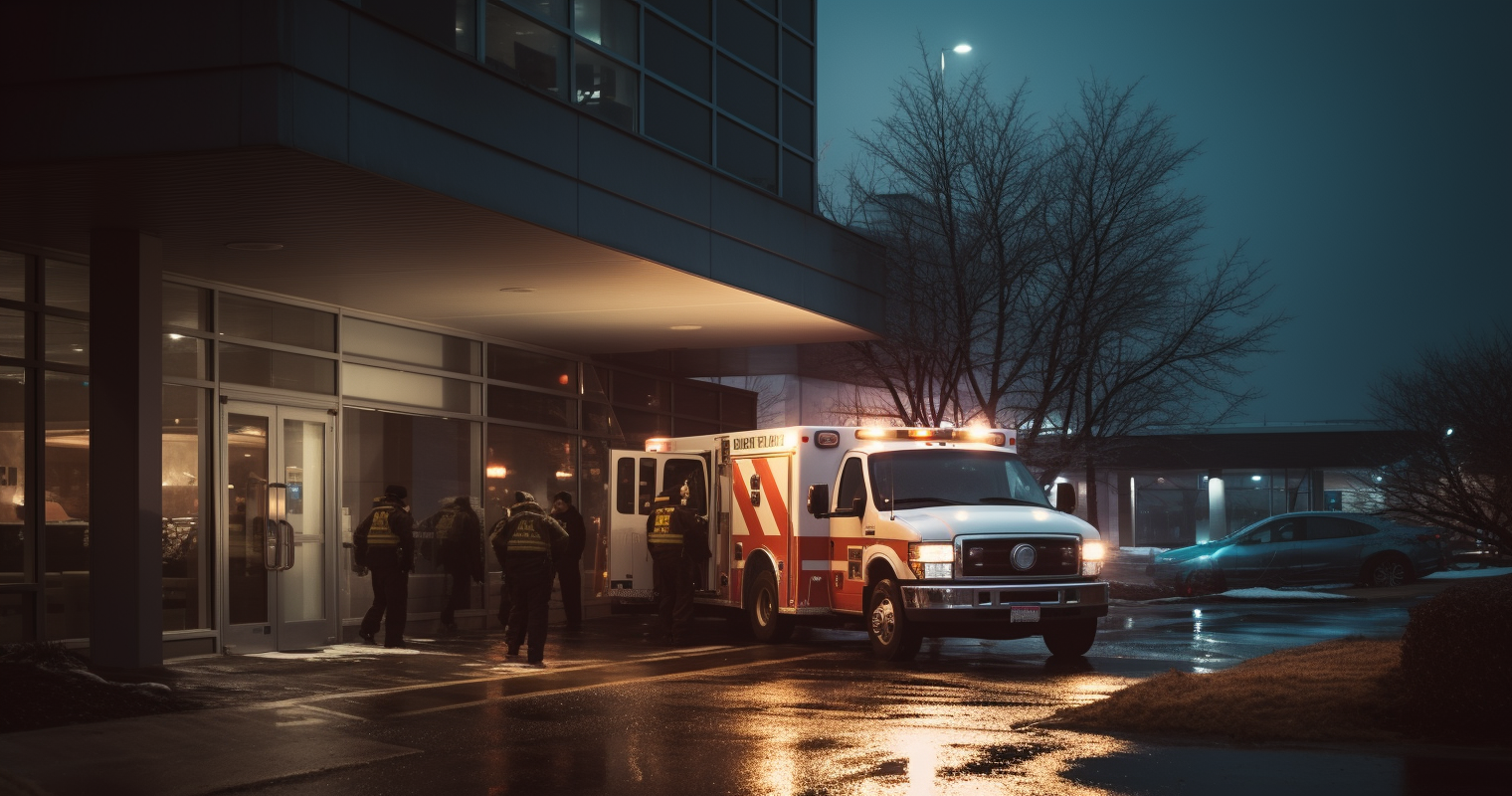
Israel’s emergency services each operate on their own dedicated line: 101 connects you to the ambulance service (Magen David Adom), 100 reaches the police, and 102 is the number for fire and rescue. The internationally recognised numbers 112 and 911 are also functional and will route callers to the relevant local service. Hospital emergency departments are open to everyone, but tourists and non-residents will be billed for treatment received — a reality that makes robust health insurance a necessity for anyone in Israel without permanent residency status.
| Item | Details |
|---|---|
| Ambulance (MDA) | 101 (as of 2025) |
| Police | 100 (as of 2025) |
| Fire & Rescue | 102 (as of 2025) |
| International redirect numbers | 112 and 911 both redirect to local services |
| Urgent care clinic visit cost (non-insured) | Approx. 300–500 NIS / USD $150–250 (as of 2024–2025; verify current figures) |
| Emergency treatment for tourists | Charged at point of care; travel insurance strongly recommended |
What is the single emergency number in Israel, and are there separate numbers for each service?
Rather than routing all emergency calls through one unified number as some countries do — the UK’s 999 or the EU-wide 112, for instance — Israel maintains distinct numbers for each category of emergency service. The police are contacted on 100, the ambulance service Magen David Adom answers on 101, and the fire department is reached by dialling 102. All three short-form numbers function from both landlines and mobile phones across Israel, as of 2025.
Travellers carrying GSM mobile handsets will find that dialling 112 — the standard pan-European emergency number — connects to local emergency services from within Israel, as it does in any country where GSM networks operate. Dialling 911 while in Israel similarly routes the call to local services at no charge to the caller. In the chaos of an emergency, any of these numbers will get help on the line.
For those with hearing or speech difficulties, Magen David Adom provides alternative contact routes including text message to 052-7000101, fax to 1-800-500-101, and email at [email protected]. The Israel Police also accommodates callers who cannot speak via text and fax alternatives. As these contact details may be updated over time, always confirm them through official channels before you travel.
How do you call for emergency medical assistance in Israel, and what should you expect?
Established in 1930, Magen David Adom (MDA) serves as Israel’s sole national emergency medical service, dividing its operations across 11 distinct geographic regions that together cover the entire country. Calling 101 puts you through to an MDA dispatcher who will ask for your precise location, what has happened, and how many people are affected.
When you call, state your location clearly, describe the nature of the emergency, and indicate how many people require assistance. If it is safe to do so, have someone wait at the entrance or roadside to direct the ambulance crew when they arrive. MDA dispatchers regularly handle calls in languages other than Hebrew, so a language barrier should not stop you from making contact.
Israel’s ambulance fleet operates at two service levels — basic and advanced life support. The country has five hospitals that function at a standard equivalent to US Level 1 trauma centres, offering the full spectrum of specialist services on-site, alongside a broader network of hospitals with varying specialist capabilities. The prehospital crew assesses the patient’s condition and determines which hospital is most appropriate given proximity and available services.
Ambulance charges in Israel are generally settled by the patient and then reclaimed from their health insurer. Reimbursement is not always guaranteed — insurers apply their own eligibility criteria, and claims that fall short of those criteria may be disputed or rejected. Israeli residents enrolled in a Kupat Cholim (public HMO) may face different billing arrangements. Always have your insurance documents on your person.
What should you do in a mental health crisis in Israel?
If you or someone nearby is experiencing a psychiatric emergency involving immediate risk to life, call the main emergency numbers straight away. Israel also operates a national 24/7 emotional support and mental health counselling line. ERAN, the crisis and emotional support service, can be contacted on 1201 at any hour of the day or night — confirm this number via official sources before your travel, as service details are subject to change.
Under Israel’s emergency care framework, individuals who self-refer or are referred to a psychiatric hospital emergency department fall within certain exemption categories. This means that during a mental health crisis, presenting directly to a hospital emergency department is a legitimate option. Major urban medical centres throughout Israel have emergency rooms with staff who are experienced in responding to psychiatric presentations.
For a directory of psychiatric emergency rooms across Israel, the Yad L’Olim Mental Healthcare Guide is available online. Where there is an immediate threat to the safety of the individual or those around them, calling 101 for MDA or 100 for the police is appropriate — both services are equipped to respond to psychiatric emergencies. Expats should also be aware that attitudes toward mental health and the approaches taken within the healthcare system may differ from what they have experienced at home, so seeking guidance from your embassy or a local support organisation in advance can be helpful.
Where can you go for emergency medical treatment in Israel?
Any general hospital emergency department in Israel is open to all patients without restriction. Large public hospitals are found in each of Israel’s principal cities: Ichilov/Sourasky in Tel Aviv, Hadassah Ein Kerem and Hadassah Mount Scopus in Jerusalem, Rambam in Haifa, and Soroka in Beer Sheva, among others.
For visitors, Terem operates a network of urgent care clinics across Israel, providing emergency medical services around the clock, every day of the year. Each Terem location offers a comprehensive range of services under one roof, including on-site X-ray and laboratory testing. These walk-in clinics are particularly well-suited to conditions that are serious enough to warrant prompt attention but do not constitute an immediately life-threatening emergency.
An uninsured patient can expect to pay between 300 and 500 NIS for an urgent care visit (as of 2024); hours vary by clinic, so it is worth checking in advance which location is accessible during late-night hours. When attending either an urgent care clinic or a hospital emergency room, bring your passport, insurance documentation, and any existing referrals from doctors or specialists. Inform attending staff of your full medical history and any medications you are currently taking.
For lower-level health needs, pharmacies (Beit Merkachat) are plentiful throughout Israel, with some operating on a 24/7 rotating basis — check local listings or enquire at your accommodation. The Israeli Ministry of Health website includes a hospital locator tool, and calling 101 will also allow you to ask about the nearest emergency department.
Is emergency medical treatment free in Israel, or is there a charge?
Under Israel’s National Health Insurance Law, a visit to a hospital emergency department is a chargeable service, with fees set according to the Ministry of Health’s published tariff. The amount owed depends on a number of factors: how you arrived at the hospital, whether you were subsequently admitted as an inpatient, and whether you hold membership in one of the country’s public HMOs (Kupat Cholim).
Israeli residents enrolled in the public health system may qualify for fee reductions or waivers in specific circumstances. These exemptions include sudden medical emergencies requiring ambulance transport from a public location, attendance during the hours of 1:00 a.m. to 6:00 a.m., and visits that are later determined by the HMO to have been medically necessary.
For visitors, healthcare coverage does not extend automatically from Israeli citizens’ entitlements. Seeking medical attention in Israel as a tourist means engaging with what is effectively a private-pay system. A routine consultation at a private clinic may cost upwards of USD $150–$250, while an emergency room visit — even one that does not result in admission — can run into several hundred dollars. Any scenario involving hospitalisation, surgery, or specialist intervention carries the potential for bills numbering in the tens of thousands of dollars. Always confirm current fee schedules via the Israel Ministry of Health’s official page on emergency room payments.
While no one experiencing a genuine emergency will be turned away, failure to settle outstanding bills can have serious consequences. Israeli authorities reserve the right to prevent departure from the country until medical debts are cleared. This reality underscores the critical importance of arranging adequate insurance well before any emergency arises.
Do expats need travel or health insurance to access emergency care in Israel?
Israel’s public healthcare system covers its citizens but does not extend to tourists or temporary residents, who are required to hold private health insurance. Expats working in Israel benefit from a provision under the Israeli Foreign Workers Law that obligates employers to arrange private medical insurance covering the full period of employment.
Travel insurance is indispensable for managing any medical situation that arises during a stay in Israel and for covering the associated costs. Without sufficient coverage, the financial exposure from even a moderate medical emergency can be substantial. Travel insurance policies must be secured before departure — coverage cannot be arranged retrospectively once you have already left for Israel.
Each of Israel’s Kupot Cholim (HMOs) offers a non-citizen health plan that tourists can purchase directly — a particularly worthwhile option for those staying for an extended period, arriving on longer-term visas, or planning to make Aliyah during their time in Israel. Tourists who carry travel health insurance from their home country will typically pay for services out of pocket at the time of treatment and then submit receipts to their insurer for reimbursement.
The reimbursement process varies between insurers, but one important practical consideration is that many insurance providers will not process claims supported by billing documentation written in Hebrew. Requesting bills and receipts in a language your insurer accepts — English being the most common alternative — is advisable. The hospital’s billing department or a doctor’s medical secretary can usually accommodate this request.
Even without insurance, a life-threatening emergency will not result in care being withheld. However, the financial and legal consequences of an unpaid medical bill in Israel are significant. Relying on this as a fallback is not a sound strategy — comprehensive cover should be in place before you travel or take up residence.
Are there bilateral health agreements between Israel and other countries?
The reciprocal healthcare arrangements familiar to many Europeans — whereby EU citizens can use the European Health Insurance Card (EHIC) to access reduced-cost or free treatment in other member states — do not apply in Israel. Israel is not part of the European Union, and no equivalent multilateral agreement covers most nationalities visiting the country.
The National Insurance Institute of Israel (Bituach Leumi) has entered into international social security conventions designed to protect the rights of individuals moving between countries and to prevent situations where a person pays into two national insurance systems simultaneously. These arrangements primarily concern Israeli nationals working abroad and the portability of their social security contributions — they do not, as a general rule, grant foreign nationals entitlement to free or subsidised emergency healthcare in Israel.
Some bilateral social security agreements do include limited healthcare-related provisions, though these are typically structured around avoiding duplicate contributions rather than establishing broad treatment rights for foreign visitors. The specifics differ considerably from one country to another. It is essential to check with your home country’s social security authority or foreign affairs ministry, and with the Israeli government’s official portal, to establish whether any such agreement applies to your personal circumstances. Never assume coverage is in place without explicit, verified confirmation from authoritative sources.
For those formally immigrating to Israel under the Law of Return (Aliyah), the picture is different. It is strongly advisable to arrange private health insurance before arriving and to maintain that coverage until eligibility under Bituach Leumi is confirmed. Returning residents may eliminate the waiting period by making a payment of 16,860 NIS (as of 1 January 2026) to Bituach Leumi, following which enrolment in a Kupat Cholim becomes possible approximately two to three weeks later.
How does Israel’s emergency healthcare system compare to systems expats may be familiar with?
Healthcare in Israel operates on a universal basis for residents, with compulsory participation in a health insurance plan enshrined in law. Every Israeli resident has a legal entitlement to a defined basket of healthcare services, established under the National Health Insurance Law of 1995, which requires all citizens residing in Israel to enrol in one of four official health funds — the Kupot Cholim — which are structured as non-profit organisations and are legally prohibited from refusing membership to any Israeli resident.
In broad structural terms, this arrangement resembles managed public-funding models seen in countries such as Germany and the Netherlands, where residents must register with regulated, non-profit insurance funds. It differs from the UK’s NHS model, which is entirely tax-funded and requires no individual choice of fund, and it differs from the United States system, where uninsured patients are routinely billed at full private rates with no guaranteed minimum standard of coverage.
One notable feature of Israel’s system is that the gap in care quality between the public and private tiers is narrower than in many comparable countries — the primary distinctions relate to waiting times, the range of supplementary services available, and the facilities at private hospitals. Roughly 40% of Israeli residents hold supplementary private insurance on top of their Kupat Cholim membership to gain faster access and broader coverage.
For tourists and those without residency, however, the system effectively mirrors the experience in countries that lack universal reciprocal agreements: all medical services must be paid for privately, and the costs can be considerable. There is no entitlement to treatment at subsidised rates, and the financial consequences of attending a hospital without adequate insurance can be severe.
What emergency services exist beyond medical — how do police and fire services work in Israel?
For any active emergency or crime taking place in the moment, dial 100 for the police. When reporting a past incident — such as a theft that has already occurred or a missing item — visiting the nearest police station in person is generally more practical than calling the emergency line. In high-traffic tourist areas such as Jerusalem and Tel Aviv, dedicated Tourist Police units operate; these officers are often multilingual and well-practised in assisting visitors. Your hotel or a local tourist information office can direct you to their location.
If you need to report a fire or require fire and rescue services, dial 102. In the event of a fire, evacuate promptly and calmly, closing doors behind you as you go to slow the fire’s spread — but only when it is safe to do so. Never use lifts during a fire; take the stairs. These instructions align with standard fire safety protocols used internationally, so the procedures should feel intuitive to most expats.
One aspect of emergency services that distinguishes Israel from most other countries is the extensive civil defence infrastructure that exists in response to the regional security environment. While the vast majority of visitors are never directly affected, Israel maintains a highly developed system of public alerts and protective infrastructure. Security checks at shopping centres, public buildings, and transport hubs — including routine bag searches — are a normal part of daily life and should be approached with patience and cooperation. Police in Israel also carry a substantial counter-terrorism mandate, which shapes the nature of their presence in public spaces.
In cases of poisoning or hazardous substance exposure, Israel’s Poison Control Centre is reachable on 04-777-1900, where medical professionals provide immediate advice. Confirm this number remains current before you travel, as contact details can change over time.
Are there country-specific emergency risks in Israel, and what official alert systems exist?
Expats relocating to or visiting Israel should familiarise themselves with a range of security and environmental hazards that are specific to the country. The most distinctive of these is the threat of rocket fire and the civil defence alert system that accompanies it.
The air raid alert — known as “Tzeva Adom” (Red Colour) — takes the form of a rising and falling siren tone. In communities close to Gaza, a pre-recorded voice announcement saying “Tzeva Adom” is used in place of or alongside the siren. Once an alert sounds, the time available to reach shelter is extremely limited — between 15 seconds and 90 seconds, depending on your location relative to the threat.
Hotels, shopping centres, and most public buildings are equipped with bomb shelters or designated safe rooms. To locate your nearest shelter, the Home Front Command app — operated by the Israel Defense Forces Home Front Command (Pikud HaOref) — is an invaluable tool. Available in multiple languages, it also delivers real-time location-specific alerts directly to your phone. The app and additional guidance can be found at oref.org.il.
If a rocket alert sounds while you are outdoors or on public transport with no shelter accessible, lie flat on the ground immediately and protect your head with your arms. If you are in a vehicle, pull over, exit the car, and lie beside it on the ground rather than remaining inside. Stay in position for at least 10 minutes before resuming normal movement. These instructions are issued by the Home Front Command and are communicated widely throughout the country — committing them to memory is strongly advised for anyone living in or travelling to Israel.
Beyond security-related risks, Israel is also subject to a range of environmental hazards. Extreme heat is a serious concern, particularly in the Negev Desert and Jordan Valley regions. Flash flooding can develop rapidly in desert wadis (dry riverbeds) following heavy rainfall, sometimes with little warning. The country sits in a seismically active zone along the Dead Sea Transform fault, making earthquake preparedness relevant. Summer months also bring an elevated risk of wildfires, particularly in forested areas. The Israel Meteorological Service (ims.gov.il) issues weather warnings and should be monitored for alerts.
What should expats do to prepare for emergencies before they arise in Israel?
- Register with your home country’s embassy or consulate. Most governments provide a free registration service for nationals abroad — the US operates the STEP (Smart Traveler Enrollment Program), the UK uses the FCDO travel registration system, and Australia runs Smartraveller. Registering means your government has a way to reach you during a crisis and can offer consular assistance when needed. Find your relevant embassy at embassies.gov.il.
- Download the Home Front Command (Pikud HaOref) app. Most malls, hotels, and public buildings include shelters, and the Home Front Command app helps you locate the nearest one. It also delivers real-time rocket alerts tailored to your specific location.
- Store emergency numbers before you need them. Write these numbers down on paper as a physical backup in case your phone runs out of battery or is lost. The essential numbers are: MDA Ambulance 101, Police 100, Fire 102, Poison Control 04-777-1900.
- Secure comprehensive health insurance before departure. Insurance policies must be purchased prior to leaving for Israel — coverage cannot be applied retroactively. Verify that your policy includes emergency hospitalisation, medical evacuation, and repatriation.
- Identify your nearest shelter upon arrival. When you check into any accommodation in Israel, ask staff immediately where the mamad (safe room) or nearest public shelter is located. This is routine practice among Israeli residents.
- Keep key documents accessible. Carry your passport, insurance documentation, and any medical referrals whenever you attend a clinic or emergency room. Store photocopies of your original documents separately in case the originals are lost or stolen.
- Learn a handful of essential Hebrew terms. Recognising “Tzeva Adom” (rocket alert), “Beit Holim” (hospital), and “Chadar Miyun” (emergency room) can make a meaningful difference in a fast-moving emergency situation.
- Check official travel advisories regularly. Your home government’s travel guidance for Israel should be reviewed frequently, as the security situation can shift quickly. The Israeli government portal (gov.il) and the Home Front Command also publish real-time updates and guidance.
Where can expats get official and up-to-date emergency information for Israel?
The sources listed below are the most authoritative for emergency and safety information relating to Israel. Always verify the details — including phone numbers, fees, and procedures — directly with these sources, as they are subject to change.
- Israel Ministry of Health: health.gov.il — hospital locations, emergency room payment schedules, and health regulations.
- Magen David Adom (MDA): mda.org.il — Israel’s national ambulance and emergency medical service. Dial 101.
- Israel Police: police.gov.il — emergency contacts, crime reporting, and tourist police information. Dial 100.
- Home Front Command (Pikud HaOref): oref.org.il — shelter locations, rocket alert information, and civil defence guidance. Also available as a smartphone application.
- Israel Meteorological Service: ims.gov.il — weather warnings, flood alerts, and extreme heat advisories.
- National Insurance Institute (Bituach Leumi): btl.gov.il — health insurance eligibility, contribution information, and international social security conventions.
- Israeli Government Portal: gov.il — the central hub for official government information, including emergency-related guidance across all departments.
- Your home country’s embassy in Israel: Contact details for all foreign embassies are available at embassies.gov.il.
Frequently asked questions about emergencies in Israel
What is the ambulance number in Israel?
Israel’s ambulance service is provided by Magen David Adom (MDA), which can be reached by dialling 101. This number is operational from both mobile phones and landlines throughout the country. Alternatively, dialling 112 or 911 from a mobile phone will redirect the call to local emergency services.
Will I be treated in an Israeli emergency room if I have no insurance?
No genuine emergency will result in treatment being withheld, but failing to pay the resulting bills can lead to serious consequences — including being detained until the debt is resolved. Israeli authorities can also restrict your ability to leave the country if you have outstanding medical bills. While care is never refused in a life-threatening situation, the financial aftermath makes having insurance essential rather than optional.
Is there a mental health crisis line in Israel?
Yes. ERAN provides a round-the-clock emotional support and crisis counselling service. The number commonly cited for this service is 1201, though you should confirm this via official sources before travel as contact information can change. Where there is an immediate threat to life, calling 101 (MDA) or 100 (police) is the appropriate course of action — both services are trained to respond to psychiatric emergencies. Attending a hospital emergency department directly is also an option.
Does my European Health Insurance Card (EHIC) work in Israel?
No. Israel sits outside the European Union and has no participation in the EHIC scheme. No general reciprocal healthcare arrangement between Israel and EU member states entitles visitors to free or subsidised treatment through this card. Visitors from EU countries — as with visitors from all other countries — require separate travel or international health insurance to cover medical costs in Israel.
What should I do if I hear an air raid siren in Israel?
You will have between 15 seconds and 90 seconds — depending on your distance from the threat — to reach a shelter from the moment the siren sounds. Move immediately to the nearest shelter or safe room. If no shelter is within reach, lie flat on the ground and cover your head with your arms. If you are travelling in a vehicle, stop the car, get out, and lie beside it on the ground rather than staying inside. Remain in position for at least 10 minutes before moving again. Installing the Home Front Command app before you arrive is strongly recommended.
As a new immigrant (oleh), when am I eligible for public health insurance?
New immigrants arriving under the Law of Return are entitled to enrol in Israel’s public health system via Bituach Leumi, though a waiting period may apply before full coverage activates. Returning residents can eliminate this waiting period by paying 16,860 NIS (as of 1 January 2026) to Bituach Leumi, after which enrolment in a Kupat Cholim is possible roughly two to three weeks later. Purchasing private health insurance before arriving in Israel and maintaining it until your public coverage is confirmed is strongly recommended.
Are there urgent care walk-in clinics in Israel for non-emergency situations?
Yes. Terem operates a network of urgent care clinics throughout Israel that are open 24 hours a day, seven days a week, specifically catering to tourists and visitors as well as local residents. Each clinic provides services including on-site X-ray and blood tests. For uninsured patients, fees typically fall between 300 and 500 NIS (as of 2024) — check current pricing directly with the clinic before attending. These centres offer a practical alternative to a hospital emergency room for conditions that are serious but not life-threatening.
What happens if I need emergency care in a remote area of Israel, such as the Negev Desert?
Being transported to a major hospital from a remote location such as the Negev Desert or the Dead Sea area can involve significant medical evacuation costs. Make sure any travel insurance policy you purchase explicitly includes medical evacuation coverage. MDA provides emergency medical cover across Israel including remote regions, but response times will naturally be longer in isolated areas. Whenever heading into desert or remote terrain, carry ample water, keep your phone fully charged, and have emergency contact information readily accessible.