

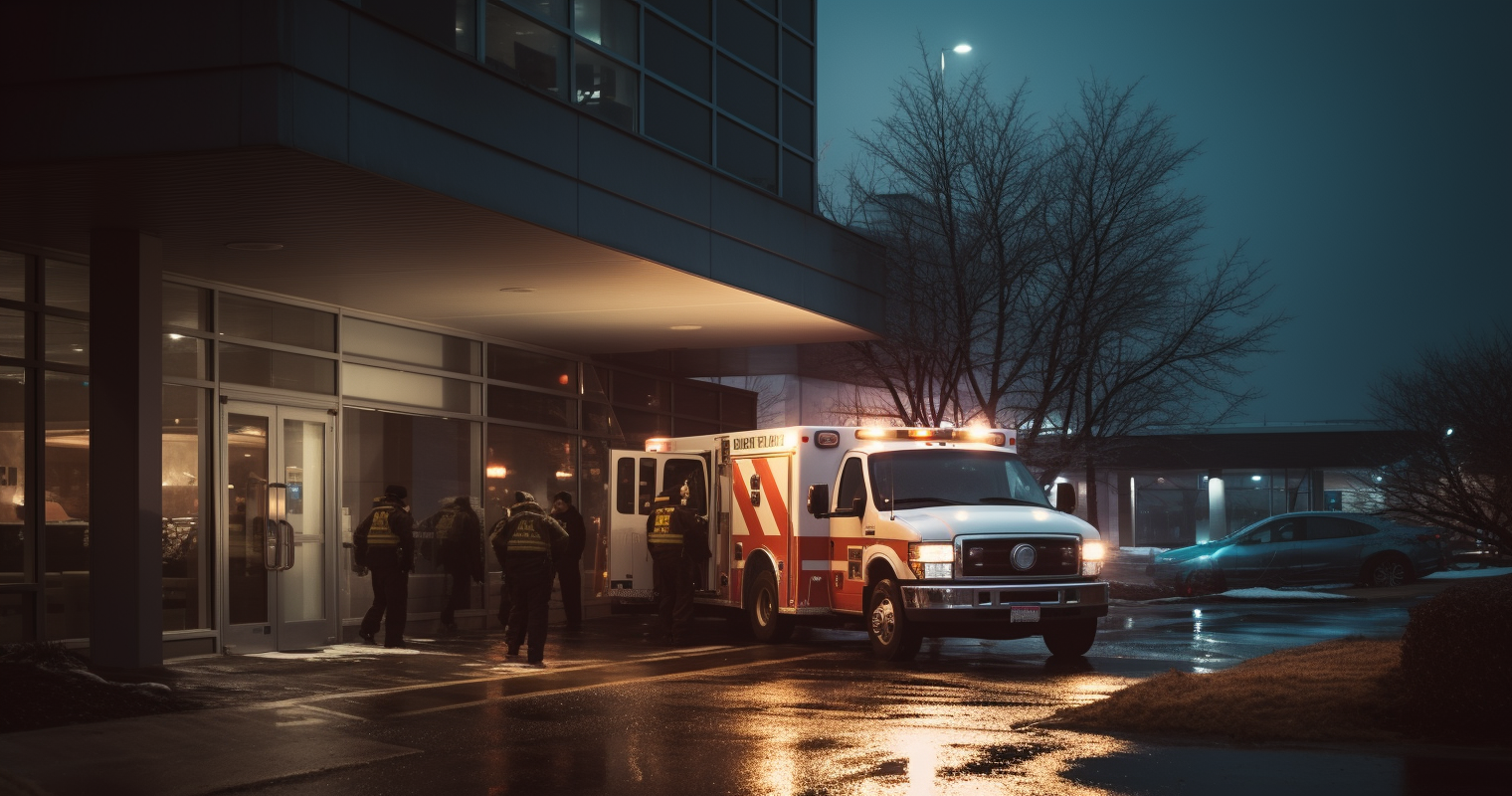
Jordan uses a single emergency contact number for all crises — whether medical, police-related, or fire-related — and that number is 911. It costs nothing to call and is staffed continuously, day and night. Individual dedicated lines for each service are also available. Emergency stabilisation is broadly available at public hospitals, but what patients are charged afterwards — and what insurance will cover — differs considerably based on residency status and the type of policy held. Every expat and visitor is urged to secure adequate health insurance prior to entering the country.
| Item | Details |
|---|---|
| Universal emergency number | 911 (free, 24/7 — police, fire, and ambulance), as of 2025 |
| Dedicated ambulance number | 191, as of 2025 (verify with official sources) |
| Dedicated police number | 192, as of 2025 (verify with official sources) |
| Dedicated fire number | 193, as of 2025 (verify with official sources) |
| Emergency treatment costs | Stabilisation generally provided, but uninsured visitors typically charged; insurance strongly recommended |
| Current travel risk level | Multiple governments advise reconsidering travel; check your national foreign ministry for the latest guidance |
What is the single emergency number in Jordan, and does it cover police, fire, and ambulance?
Anyone requiring emergency assistance in Jordan — whether medical, police, or fire-related — should dial 911. This number functions as a centralised gateway, routing the caller to whichever service is required. There is no charge to make the call, and operators are trained to communicate in both Arabic and English, ensuring that those unfamiliar with Arabic can still access help when it matters most.
Alongside this unified number, Jordan also maintains individual lines for each emergency service. The ambulance service is reached on 191, the fire brigade on 193, and the police on 192. These direct lines can be useful when you already know which service you need and prefer to connect without routing through a central dispatcher. As with any contact information of this kind, it is advisable to verify these numbers through an official local source when you arrive, since they are subject to change.
The structure is conceptually similar to the 999 system in the United Kingdom or the 112 number used across much of Europe — a single, easy-to-remember number that can reach any emergency service — while also keeping standalone lines for each service available. When uncertain, 911 is the safest choice.
How do you call for emergency medical assistance in Jordan, and what should you expect?
To summon an ambulance in Jordan, call either the central emergency line 911 or the ambulance-specific number 191 (current as of 2025 — confirm with official sources). Speak as clearly as possible, provide your location, describe the nature of the emergency, and indicate how many people are affected. If you are anywhere outside central Amman, having your address written in Arabic can help dispatchers and crews locate you more quickly.
Jordan’s emergency medical services are generally reliable, and dialling 911 will put you in contact with the right people to send an ambulance to your location. That said, response times are not uniform across the country. In the heart of Amman, help may arrive relatively promptly, but in rural regions, desert areas, or locations far from main roads, delays can be substantial. Anyone spending time outside the capital should take time beforehand to identify the location of the nearest medical facility.
Once you reach hospital, clinical staff will carry out an assessment and provide stabilising treatment regardless of whether you have paid. Be prepared to produce identification, describe any relevant medical history — including allergies or ongoing conditions — and present your insurance documentation. Carrying a concise medical summary card, printed in both Arabic and your native language, is a practical precaution that can make a real difference in urgent situations.
What should you do in a mental health crisis in Jordan?
Jordan does not currently have a dedicated national mental health emergency telephone service comparable to, for example, the Samaritans’ 116 123 helpline in Ireland or similar crisis lines operating in various other countries. If someone is in immediate danger as a result of a mental health emergency, the correct course of action is to dial the unified emergency number 911 and explain the circumstances clearly. Ambulance crews will transport the person to a hospital emergency department, where an initial psychiatric evaluation can take place.
Emergency departments at both government and private hospitals in Jordan are, for the most part, appropriately staffed and equipped. They are capable of managing acute mental health presentations and can facilitate onward referral to specialist psychiatric services where needed. Expats living in Jordan would benefit from identifying in advance which nearby private hospital offers psychiatric or psychological support, since this varies from one facility to the next.
For mental health concerns that do not constitute an immediate emergency, private clinics and non-governmental organisations based in Amman provide counselling and psychological services, including provision tailored to the international community. Your employer’s occupational health programme or your private insurance plan may also be able to point you towards suitable resources. Given how frequently the landscape of available services changes, it is worth checking directly with providers to confirm what is currently on offer.
Where can you go for emergency medical treatment in Jordan?
Jordan’s healthcare infrastructure encompasses a public sector, a private sector, and a refugee insurance system. Within the public sector, services are delivered through the Ministry of Health (MOH), the Royal Medical Services (RMS), and semi-governmental institutions including Jordan University Hospital and King Abdallah the First Hospital.
The Ministry of Health serves around 60% of Jordanians, largely through the civil insurance programme, and all residents are entitled to access subsidised MOH healthcare. Ministry of Health hospitals are distributed throughout the country and represent the principal public option for emergency care. The Royal Medical Services — originally created to serve military personnel and dependants — also provide emergency treatment and are widely regarded as well-resourced facilities.
Among expatriates relocating to Jordan, private healthcare facilities tend to be preferred because of shorter waiting times and a broader range of services, even though costs are higher. Leading private hospitals in Amman — such as the Islamic Hospital, Al-Khalidi Medical Center, and Jordan Hospital — are well equipped, several hold international accreditation, and many routinely handle international patients and work with overseas insurers. Most accept a wide range of international insurance plans, though it is always worth confirming your coverage before any planned procedure.
Beyond Amman, the availability of well-resourced facilities diminishes. Public hospitals exist in cities such as Aqaba in the south and Irbid in the north, but for serious emergencies in more isolated locations — such as Wadi Rum or the eastern desert — transfer to the capital may be necessary. Before travelling to any region of Jordan, it is wise to find out the name and contact details of the nearest reliable medical facility.
Is emergency medical treatment free in Jordan, or is there a charge?
Emergency treatment is available across Jordan, but the question of who pays — and how much — is more complicated. Jordanian nationals and registered residents enrolled in the civil insurance scheme or Royal Medical Services receive subsidised care, but the situation for uninsured overseas visitors is markedly different.
Foreign nationals requiring medical attention in Jordan may be asked to pay upfront, with reimbursement sought subsequently from their insurer. In practice, public hospitals will typically stabilise a patient in an acute life-threatening emergency without first demanding payment, but bills will follow. Private hospitals, as is common in countries without a universal public system, frequently require proof of insurance or an upfront deposit before admitting patients for non-emergency care — and sometimes even after the immediate crisis has been managed.
This stands in clear contrast to systems such as the National Health Service in the United Kingdom, where emergency treatment is provided at no cost to anyone at the point of use regardless of nationality. Jordan extends no equivalent universal entitlement to foreign nationals, and the financial exposure for those without adequate cover can be substantial. Health insurance should be regarded as a necessity, not an optional extra.
Do expats need health insurance, and what happens if they arrive without it?
Before travelling to Jordan, it is essential to verify with your insurance provider that your policy includes cover for medical treatment outside your home country. Comprehensive health insurance is strongly advised for anyone spending time in Jordan. For those taking up long-term residency, health insurance is commonly a prerequisite of the permit process itself.
Many employers in Jordan include health insurance as part of their benefits package. Where employer-provided cover is not available, both local and international insurers operating in Jordan offer a variety of plans suited to expatriate needs. Ensure your chosen policy covers inpatient stays, outpatient clinic visits, dental emergencies, and — critically — emergency treatment.
If you present at a hospital uninsured and without the means to pay, you are unlikely to be refused care in a genuinely life-threatening situation — Jordanian medical practice and the general approach at public hospitals means stabilisation will generally be provided. However, costs will accumulate, and private hospitals in particular may seek a financial guarantee before continuing treatment beyond the immediate emergency. In some scenarios, this could result in transfer to a public facility. Keeping your insurer’s emergency contact number, your embassy’s contact details, and a trusted personal emergency contact readily accessible is vital if you ever find yourself in this position.
Travel insurance purchased prior to departure should also be considered, with close attention paid to whether it includes evacuation assistance and trip cancellation cover. Medical evacuation cover is especially important for anyone venturing beyond major urban centres, as air ambulance costs can be extraordinarily high.
Are there bilateral health agreements covering emergency treatment in Jordan?
Within the European Union, the European Health Insurance Card (EHIC) entitles holders to state-provided healthcare in other member states, and certain Commonwealth countries have reciprocal healthcare arrangements between themselves. Jordan is not party to any comparable broad multilateral agreement that would grant foreign nationals automatic entitlement to free or subsidised emergency treatment on the basis of their nationality.
Jordan does have bilateral cooperation arrangements with various countries in the fields of health and medical education, but these are primarily diplomatic and institutional frameworks. They do not create individual entitlements for patients seeking care. No publicly available information from the Jordanian Ministry of Health or from major foreign embassies based in Amman indicates that any nationality benefits from automatic free emergency healthcare in Jordan through a reciprocal treaty. If you believe your country may have concluded a relevant agreement, contact your national embassy in Amman or your home country’s foreign ministry directly before relying on it.
The practical conclusion is straightforward: regardless of which passport you hold, personal health insurance is essential when in Jordan. Do not assume any agreement exists without independent verification through official channels.
How does Jordan’s emergency healthcare system compare to systems expats may know?
Jordan is home to one of the more developed health systems in the Middle East region. The overall structure — a public sector operating alongside a private sector and a separate refugee insurance scheme, all functioning within a relatively constrained budget — has more in common with healthcare models found in the United States, parts of Asia, or Latin America than with fully tax-funded universal systems such as the NHS. In those analogous systems, a public option exists but privately insured patients tend to opt for the private sector.
Government health insurance covers approximately 64.30% of the total population, but this coverage is largely available to Jordanian nationals and long-term registered residents enrolled in the civil scheme or Royal Medical Services. For expats and visitors who fall outside that framework, the model effectively becomes one of self-funding or insurance dependency — you or your insurer meet the costs, and reimbursement is claimed thereafter. This is a considerable departure from systems where emergency care is universally free regardless of who you are or where you come from.
Jordan’s standing as a regional hub for medical tourism means that private hospitals in Amman in particular are well practised in dealing with international patients. Multilingual staff, familiarity with overseas insurance processes, and internationally recognised standards of care at accredited facilities are genuine assets. The flipside is that the financial consequences of being without insurance at such facilities can be equally significant.
What emergency services exist beyond medical — how do police and fire work in Jordan?
Jordan’s police operate under the Public Security Directorate (PSD), which sits within the Ministry of Interior. The dedicated police emergency line is 192. Officers in Amman and in tourist-heavy areas are generally familiar with interacting with foreign nationals, and basic English is spoken in many of these contexts. Further afield, however, English-language capability among officers may be limited, and having a translation app or access to a local contact who can assist is a practical measure.
Anyone who becomes the victim of a crime while in Jordan should report it to the nearest police station without delay. Obtaining an official police report is essential — insurers will require it to process any related claim. The process of formally recording a complaint may be more time-consuming than in some other countries, and a calm, measured approach tends to produce better results. For serious matters, informing your embassy promptly is also advisable.
The fire service is contactable on 193 (current as of 2025 — verify upon arrival). Drivers in Jordan should be aware that all vehicles are required by law to carry a fire extinguisher and warning triangle. In the event of a road traffic accident, both police and ambulance services should be contacted; police attendance is typically required before vehicles can be moved and before insurance and legal procedures can begin.
Compared to countries where police, fire, and ambulance are seamlessly integrated under a single dispatch system, Jordan’s services operate with more separation between them. The 911 number helps consolidate access, but knowing the individual numbers for each service provides a useful fallback if the unified line is unreachable.
Are there country-specific emergency risks in Jordan?
Security and geopolitical risks: Terrorism poses a genuine threat in Jordan, and attacks may occur at any time and in any location. While demonstrations in Jordan are generally peaceful, some have escalated into violence; all protests and large gatherings should be avoided. Many demonstrations take place on Thursday evenings near government buildings, and on Fridays near mosques following midday prayers.
The towns of Mansheyat al Ghayyath and Ruwayshid, and Jordan’s borders with Syria and Iraq, carry a sustained risk of cross-border violence, terrorist activity, and crime. Conditions in these border zones can deteriorate rapidly and without warning. Expats should avoid these areas unless there is a compelling professional justification and, even then, should follow the specific guidance provided by their employer and embassy.
Weather and natural hazards: Jordanian roads become significantly more dangerous during the rainy season, which runs from October through March. Heavy snowfall in the winter months — typically December to February — can render major routes impassable for days at a time. Flash flooding presents a serious hazard, particularly in wadis (dry riverbeds) that can fill with extraordinary speed and without prior warning. The Zara/Ma’in flash flood tragedy of 2018, in which tourists lost their lives, is a stark reminder of how severe this risk can be.
Jordan also lies within a seismically active zone — the Dead Sea Rift runs along its western boundary — making earthquakes an ongoing background risk. While significant seismic events are not frequent, earthquake preparedness remains sensible. Extreme summer heat, particularly in the Jordan Valley and Aqaba, creates real risks of heatstroke and dehydration, especially for those not yet acclimatised to the conditions.
If a security alert or missile threat is issued, move immediately to a reinforced enclosed shelter, preferably underground or at ground level. If no such shelter is available, seek an interior room away from windows. Follow all instructions issued by local authorities throughout any such event.
What should expats do to prepare for emergencies before they arise?
- Register with your embassy or consulate. Most countries provide a registration scheme for their nationals living or travelling abroad. Enrolling in your government’s programme — such as the US Smart Traveler Enrollment Program (STEP), the UK FCDO’s registration service, or Australia’s Smartraveller — allows the embassy or consulate to reach you or your nominated emergency contact when a crisis arises, whether that is a natural disaster or a personal emergency.
- Obtain comprehensive insurance. Arrange health insurance that covers emergency treatment, hospitalisation, and medical evacuation before you travel or as soon as you establish residency. Keep your policy documents, policy number, and your insurer’s emergency contact number somewhere easily accessible at all times.
- Know your emergency numbers. Store 911, 191 (ambulance), 192 (police), and 193 (fire) in your mobile phone. Also save the address and direct telephone number of your nearest hospital and your country’s embassy in Amman.
- Identify your nearest hospitals. Every new resident should invest time in locating nearby hospitals and key healthcare providers before an emergency makes the search urgent — this is especially important for anyone with existing medical conditions. Find both a public Ministry of Health hospital and a reputable private facility close to your home or place of work.
- Monitor official alerts. Keep track of local news and steer clear of large public gatherings. Subscribe to travel alerts from your foreign ministry and follow your embassy’s social media channels for timely updates during any period of elevated risk.
- Keep copies of important documents. Maintain both digital and physical copies of your passport, residency permit, insurance documents, and emergency contacts, stored securely and separately from the originals.
- Be aware of road risks. Exercise particular caution when driving in Jordan — road accident rates are high, and road conditions outside Amman can be poor. Traffic accidents are among the most common reasons for emergency hospital admissions.
Where can expats get official and up-to-date emergency information for Jordan?
The sources listed below should be your starting point for current, authoritative guidance on emergency preparedness and personal safety in Jordan. Given the pace at which the regional security landscape can shift, consulting these resources before and throughout your time in Jordan is strongly recommended.
- Jordan Ministry of Health: moh.gov.jo — hospital locations, health system information, and public health guidance.
- Jordan Public Security Directorate (PSD): psd.gov.jo — police contacts and emergency telephone numbers.
- Jordan Government Portal (Jordan Gate): jordan.gov.jo — official government contacts and essential numbers.
- US State Department — Jordan Travel Advisory: travel.state.gov — regularly updated security assessments and alerts.
- Australian Government Smartraveller — Jordan: smartraveller.gov.au — comprehensive travel and safety advice updated in real time.
- UK Foreign, Commonwealth & Development Office — Jordan: gov.uk/foreign-travel-advice/jordan — safety guidance and entry requirements.
- WHO Eastern Mediterranean — Jordan: emro.who.int/jordan — public health advisories and health system information.
- Your own country’s embassy in Amman: Register your presence, save the emergency contact number, and review the specific advice issued for nationals in Jordan.
Always cross-check any telephone numbers, fees, or procedures referenced in any guide — including this one — against current official Jordanian government sources before acting on them, as details are subject to change without notice.
Frequently asked questions about emergencies in Jordan
What is the most important emergency number to remember in Jordan?
Call 911 for any emergency — whether you need an ambulance, the police, or the fire service. This unified number is free to dial, operates around the clock, and operators can communicate in both Arabic and English (as of 2025). Direct lines are also available: 191 for ambulance, 192 for police, and 193 for fire — but 911 is the easiest number to recall under pressure. Confirm these numbers against official sources upon arrival.
Will I be treated in a Jordanian hospital if I cannot pay?
Public hospitals in Jordan will generally provide stabilising treatment in a genuine life-threatening emergency regardless of your ability to pay at that moment. That said, costs will follow, and private hospitals may request a financial guarantee before proceeding with care beyond the immediate crisis. The financial exposure for anyone without insurance can be very high. Comprehensive health insurance is strongly recommended for all expats and visitors.
Is there a dedicated mental health emergency line in Jordan?
No dedicated national mental health crisis helpline exists in Jordan comparable to similar services in other countries. If someone is at immediate risk of harm due to a mental health emergency, call 911. Hospital emergency departments are equipped to conduct an initial assessment and refer patients to appropriate psychiatric services. For non-emergency mental health support, private clinics and NGOs based in Amman provide psychological services, including provision for the international community.
Do I need travel insurance if I already have private health insurance in my home country?
Not necessarily — but you must review your policy carefully. Many domestic health insurance plans either exclude treatment abroad entirely or impose significant restrictions on international coverage. Travel insurance that includes emergency medical cover and, crucially, medical evacuation is strongly recommended for anyone visiting Jordan. Contact your insurer before you travel to confirm exactly what is and is not covered.
Is Jordan safe for expats, and what are the biggest emergency risks?
Jordan is generally considered one of the more stable countries in the region, and the vast majority of visits pass without serious incident. However, as of March 2026, a number of governments — including the US, Australia, and others — have elevated their travel advisory levels for Jordan in response to regional security tensions. The primary risks include terrorism, civil unrest near the borders with Syria and Iraq, flash flooding in wadi areas, hazardous road conditions in winter, and extreme summer heat. Always consult your foreign ministry’s current travel advice before and during your stay.
Can I use the European Health Insurance Card (EHIC) in Jordan?
No. The EHIC provides entitlement to state-provided healthcare only within the European Economic Area and a limited number of countries that have concluded specific bilateral agreements with EU member states. Jordan is not included. EU nationals cannot claim free or reduced-cost emergency treatment in Jordan by virtue of holding an EHIC. All visitors, irrespective of nationality, should arrange their own health insurance before travelling.
How do I find the nearest hospital in Jordan?
The Jordan Ministry of Health publishes details of public hospitals throughout the country at moh.gov.jo. Amman is home to several well-equipped private hospitals, including Jordan Hospital, the Islamic Hospital, and Al-Khalidi Medical Center. Before travelling outside Amman, research the nearest available medical facility in advance. In a genuine emergency, calling 911 will trigger dispatch of an ambulance to transport you to the most suitable nearby facility.
What should I do if there is a security incident near me in Jordan?
Act immediately on any instructions issued by local authorities. Leave the vicinity of the incident in a calm and deliberate manner. If an imminent attack warning is given, move to a reinforced enclosed shelter — ideally underground or at ground level. If no such shelter is available, find an interior room with no windows. Contact your embassy and keep track of official government alerts. Refrain from sharing your location on social media while an incident is ongoing.